You found the perfect recipe. The page is buried under ads, autoplay videos, and a 900-word story about the author's grandmother — but the actual recipe is right there, and you want it later. Printing it wastes paper and ink. Copying the URL into a notes app takes too many steps. And leaving the tab open means it's gone the moment your browser crashes or your phone restarts.
There are several solid ways to save a recipe digitally, each with real trade-offs. This guide walks through the most practical methods — from things you can do right now with zero extra tools, to a one-click approach that keeps your saved recipes visual, searchable, and available on every device. No printing required.
Method 1: Use Your Browser's Built-In Options
Every modern browser gives you at least two no-install ways to save a recipe page.
- Bookmark it. Press Ctrl+D (Windows) or Cmd+D (Mac) to bookmark the current tab. Fast, but bookmarks have no visual thumbnail, no description, and a folder full of them quickly becomes a graveyard you never open.
- Save as PDF. Go to File → Print, then choose "Save as PDF" instead of a printer. This captures the whole page — ads included — as a file on your hard drive. It's -safe but bulky, hard to search across multiple recipes, and still requires a few clicks and a file name decision every time.
- Use Reader Mode. Chrome, Firefox, and Safari all have a reader or "distilled" view that strips ads and sidebars. You can then save that cleaner version as a PDF. Better output, same multi-step friction.
For a handful of recipes, bookmarks work fine. For anything you want to actually find and use again, they fall short fast.
Method 2: Copy the Recipe Into a Notes App
If you want the recipe text stored locally — independent of whether the website stays online — copying it manually into a notes app is a legitimate approach.
- Select the ingredients and method text on the page, copy, and paste into Apple Notes, Google Keep, Notion, or any plain text editor.
- Add the source URL yourself so you can go back to the original if needed.
- Grab a screenshot of any photos if the visuals matter to you.
This gives you to the text and lets you edit the recipe — cross off an ingredient you're skipping, jot a substitution you tried. The real cost is time: for a single recipe it might take two or three minutes. Do that twenty times and you've spent a half hour on admin instead of cooking.
For recipes you want to save quickly and revisit occasionally, the copy-paste route creates more friction than it solves. That's where a one-click clipper earns its place.
Method 3: Save with a One-Click Web Clipper
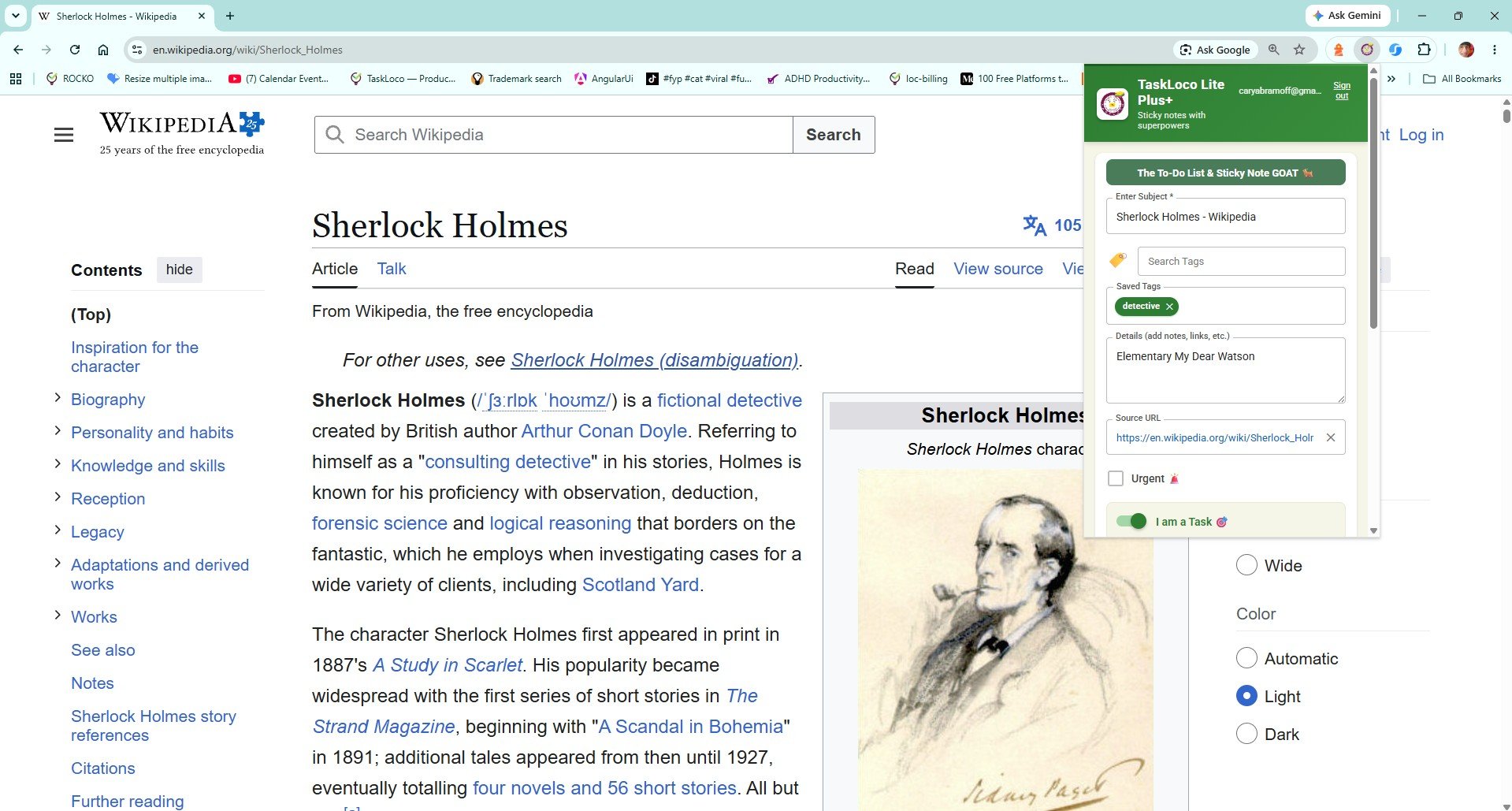
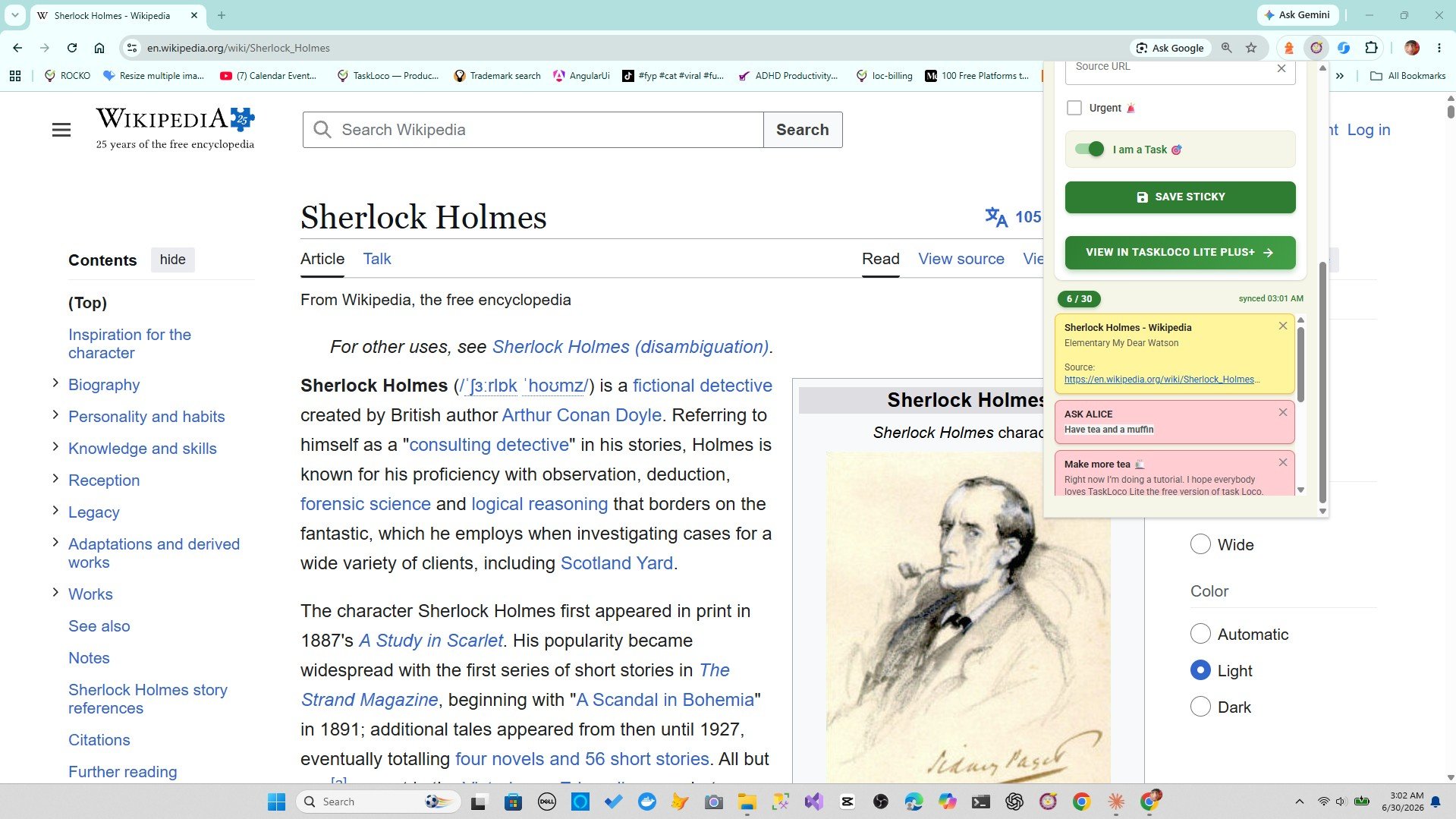
A browser extension built for saving pages removes every step between "I want this" and "it's saved." The Sticky Note Web Clipper for Chrome is free and works like this:
- You land on any recipe page.
- You click the extension icon in your Chrome toolbar.
- The page is instantly saved as a visual sticky note — title and URL already filled in, no typing required.
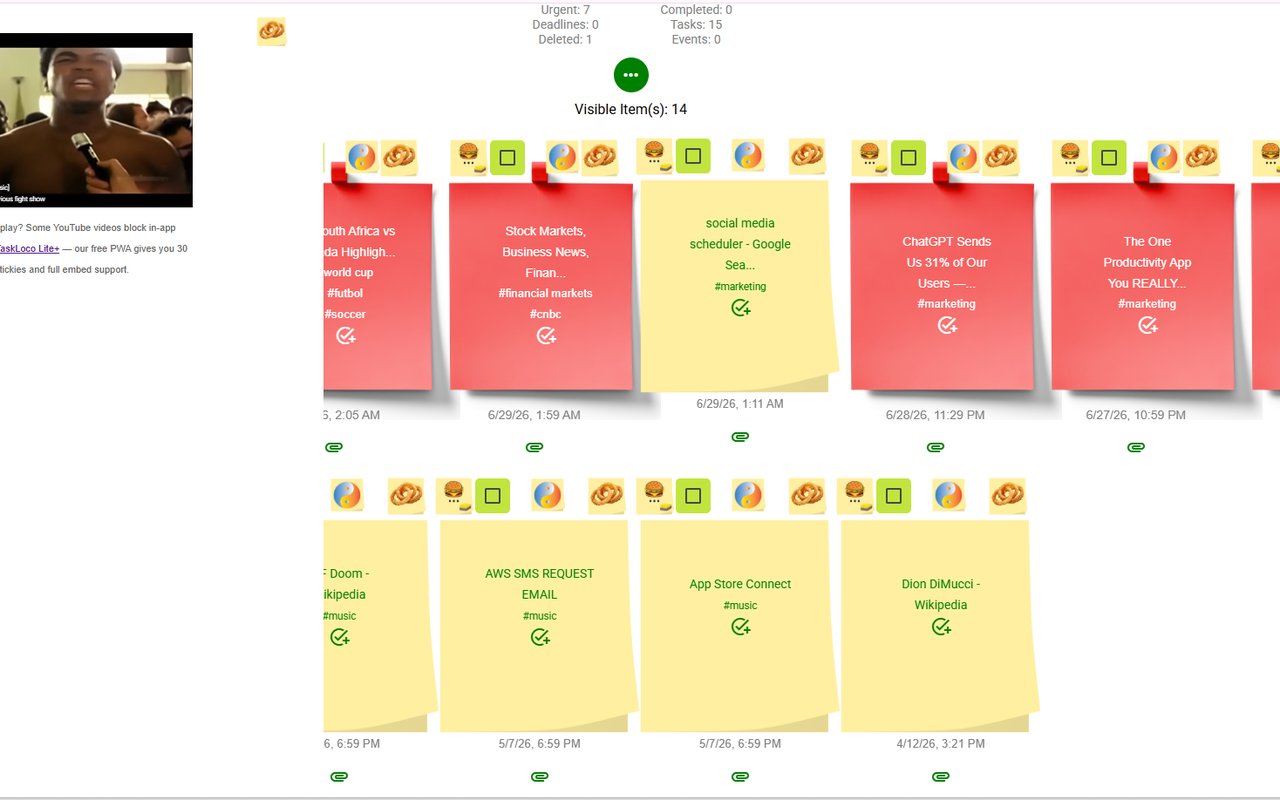
That note lives on your TaskLoco wall, which syncs across Chrome, desktop, iPhone, and Android — so the recipe is on your phone when you're standing at the kitchen counter. You can add tags like "weeknight", "vegetarian", or "tried and loved" and search across everything you've saved later.
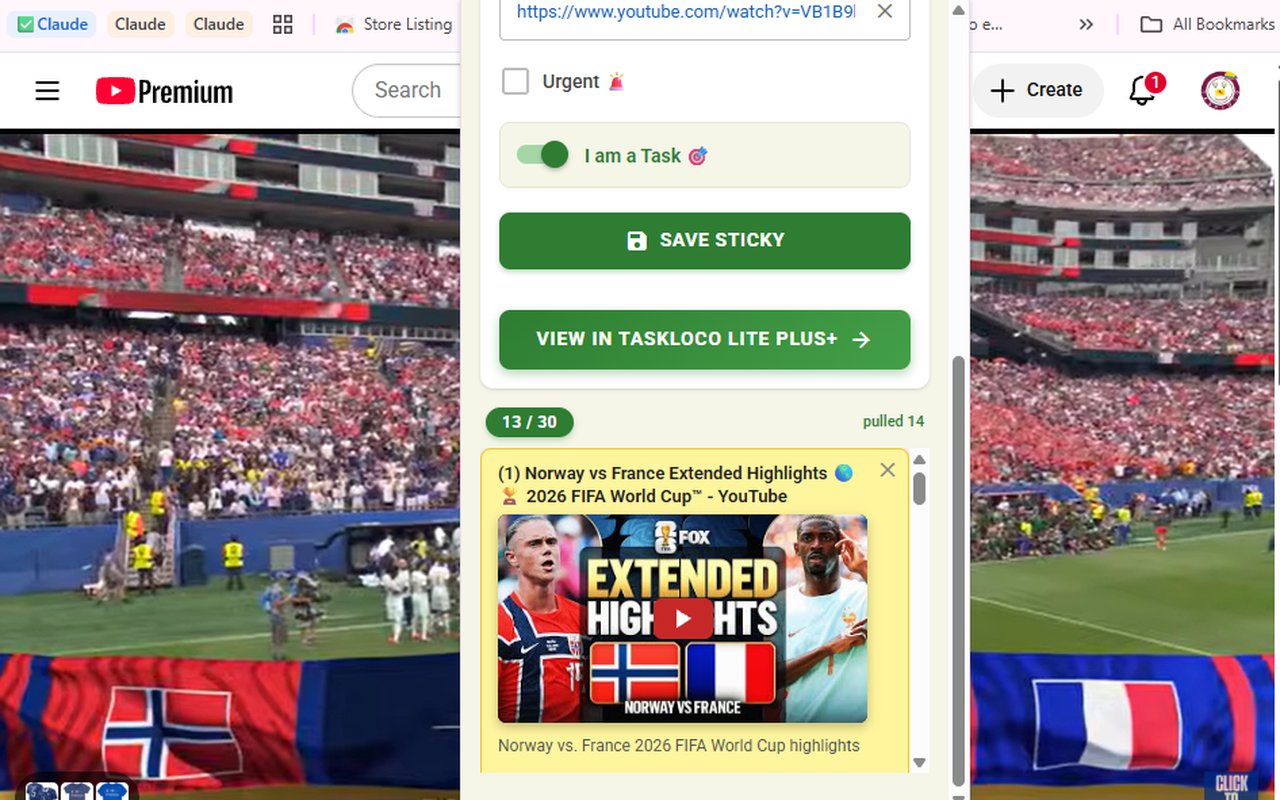
YouTube cooking videos are also clippable the same way, and they embed directly inside the note so you can watch the technique without leaving your saved collection.
Which Method Fits Your Situation?
There's no single right answer — the best method depends on what you need from a saved recipe.
- Bookmarks: Fine if you save fewer than ten recipes total and you're confident you'll remember what each link is. Falls apart at scale.
- Save as PDF: Best when you genuinely need the recipe to. Good for archiving family recipes long-term.
- Copy into notes: Best when you want to annotate, edit, or adapt the recipe heavily — and when you have a few minutes to do it properly.
- One-click clipper: Best for everyday saving while you browse — recipe blogs, food magazines, YouTube how-tos. Captures in one click, stays visual, syncs everywhere.
Most people doing regular recipe collecting will end up mixing approaches: the clipper for fast discovery saves, a notes app for the recipes they've made their own. The important thing is that nothing gets lost in an open tab or forgotten on a printed sheet stuck to the fridge.
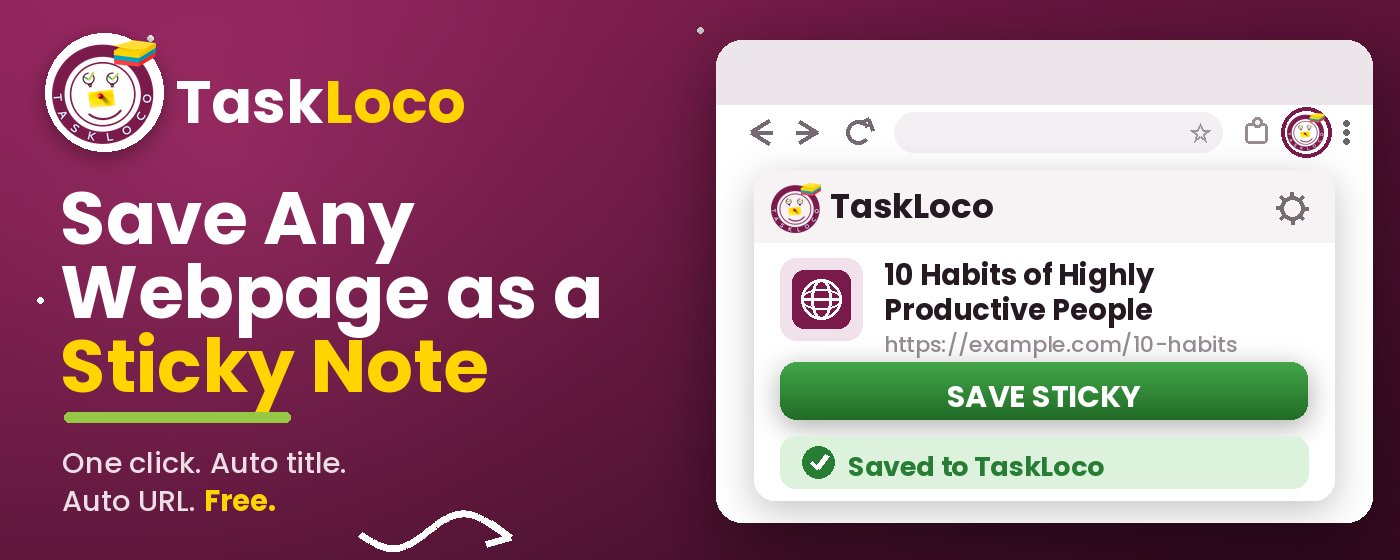
The Sticky Note Web Clipper is free. Install it from the Chrome Web Store, sign in with Google, and every page you clip becomes a sticky note you can find later.
Your clipped notes sync to TaskLoco across Chrome, desktop, iPhone, and Android — also free to start. No credit card to begin.
Get the Free Clipper
Sticky Note Web Clipper
- Free Chrome extension
- One-click save — any page, article, or video
- Title & URL auto-filled
- Tags & search
- Free forever
Synced to TaskLoco
- Sign in free with Google
- Your wall on Chrome, desktop, iPhone, Android
- YouTube videos embed & play in notes
- Visual sticky-note wall
- Free to start
Add It to Chrome — Free
One click saves any page, article, or YouTube video as a sticky note. Title and URL auto-filled.
Add to Chrome — FreeSee TaskLoco in Action
Frequently Asked Questions
What is the easiest way to save a recipe from a website without printing?
The easiest method is a one-click web clipper extension. Install the free Sticky Note Web Clipper for Chrome, click its toolbar icon on any recipe page, and the page is instantly saved as a sticky note with the title and URL auto-filled. No printing, no copy-pasting, no multi-step saving dialogs.
Will my saved recipe still work if the original website goes down?
A web clipper saves the title and URL of the recipe — it is a live link, not a static copy of the text. If the original site goes, the link will not work. If you need a permanent copy, save the page as a PDF through your browser's print dialog or manually copy the text into a notes app. The clipper is best for recipes you plan to access while connected.
Can I save recipe videos as well as written recipes?
Yes. The Sticky Note Web Clipper saves YouTube recipe videos the same way it saves any page — one click. YouTube videos embed and play directly inside the saved note, so you can watch the technique without navigating back to YouTube.
How do I organise saved recipes so I can find them later?
After saving with the Sticky Note Web Clipper, you can add tags to each note — for example 'vegetarian', 'quick', or 'baking'. TaskLoco's search lets you find any saved recipe by title, tag, or keyword. This is significantly more useful than a flat list of bookmarks with no labels.
Will my saved recipes be available on my phone?
Yes. Notes saved with the Sticky Note Web Clipper sync to TaskLoco, which is available on iPhone, Android, and desktop — so the recipe you clipped on your laptop is accessible from your phone while you cook.
Is the Sticky Note Web Clipper free?
Yes — the extension is completely free. TaskLoco also has a free tier. Install the Sticky Note Web Clipper from the Chrome Web Store, sign in with Google, and start saving recipes immediately.
Is saving recipes as bookmarks good enough?
Bookmarks work for a small number of saves, but they have no images, no descriptions, and no tagging. A folder of forty recipe bookmarks is nearly impossible to navigate. A visual sticky note with tags and search is far more practical once your collection grows beyond a handful of links.
Born in Brooklyn. Powered by AWS. Your data stays yours.
TaskLoco is available on iPhone, Android, Chrome, and every web browser.