You found the perfect line. A statistic, a passage, a definition that belongs in your research, your argument, or your writing. So you copy it. Then you paste it somewhere — a doc, a notes app, a random text file — and a week later you have no idea where it came from. The URL is gone. The source is gone. The quote is now unreliable.
This is one of the most common and most fixable problems in research workflows. Saving a quote without its source attached is only slightly better than not saving it at all. The fix is simpler than most people think, and it works whether you use a browser extension, a notes app, or just a disciplined copy-paste habit.
The Manual Method: Copy the Quote and the URL Together
If you want a no-tool approach that works right now, here is the cleanest method: every time you copy a quote, immediately copy the page URL from the address bar and paste both into your note — quote first, then source URL below it, separated by a line.
A simple template that works in any notes app, Google Doc, or word processor:
- Quote: Paste the text you copied here.
- Source: Paste the full URL here.
- Page title or author (optional): Note it while the tab is still open.
The discipline is the hard part. The moment you close the tab or navigate away, the context is gone. That is why the template has to be non-negotiable — paste the URL in the same motion as the quote, not later.
This method costs nothing and requires no extension. Its weakness is that it breaks down under volume — when you are moving fast through multiple sources, the copy-URL-paste step gets skipped, and the damage only becomes visible later when you cannot verify a quote.
A More Reliable System: Structured Quote Logging
Researchers, journalists, and writers who handle many sources regularly use a structured quote log — essentially a running document or spreadsheet with fixed columns: the quote text, the URL, the date accessed, and optionally the author or publication. The structure removes the decision-making at the moment of capture, which is when you are most likely to cut corners.
In a spreadsheet, three columns is all you need: Quote | URL | Notes. In a document, a consistent heading format for each entry works just as well.
- Keep the log open in a pinned tab while you research so switching to it takes one click.
- Use keyboard shortcuts to copy the URL quickly: Ctrl+L (or Cmd+L on Mac) selects the address bar, then Ctrl+C copies it — no mouse required.
- If you use a browser with tab groups, group your active research tabs so you can find the source again if you need to re-verify.
The structured log approach scales well for long projects. Its limitation is that it still requires deliberate switching between your source tab and your notes, which introduces friction and the occasional lost quote when you get absorbed in reading.
The One-Click Approach: Save the Whole Page as a Sticky Note
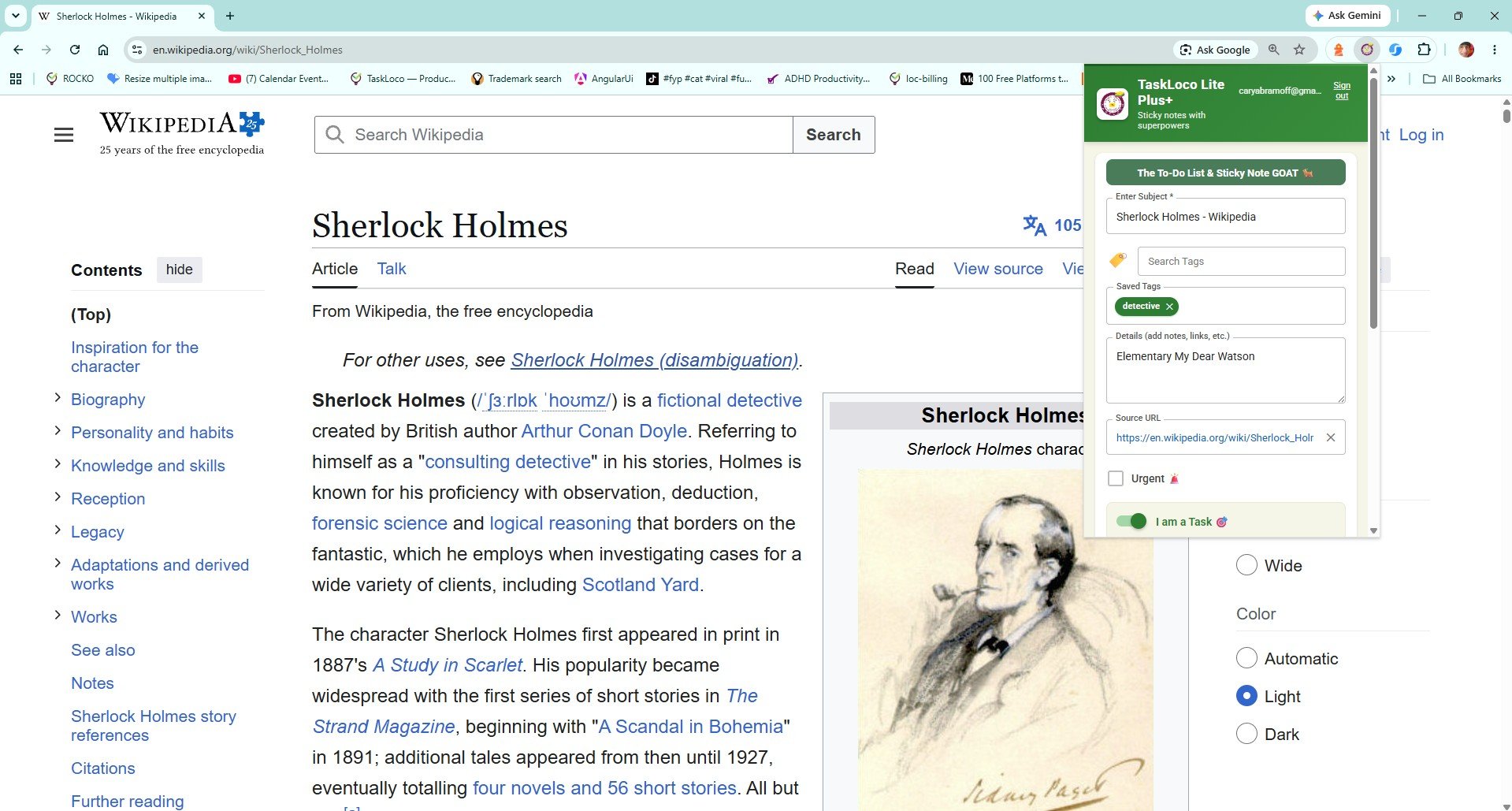
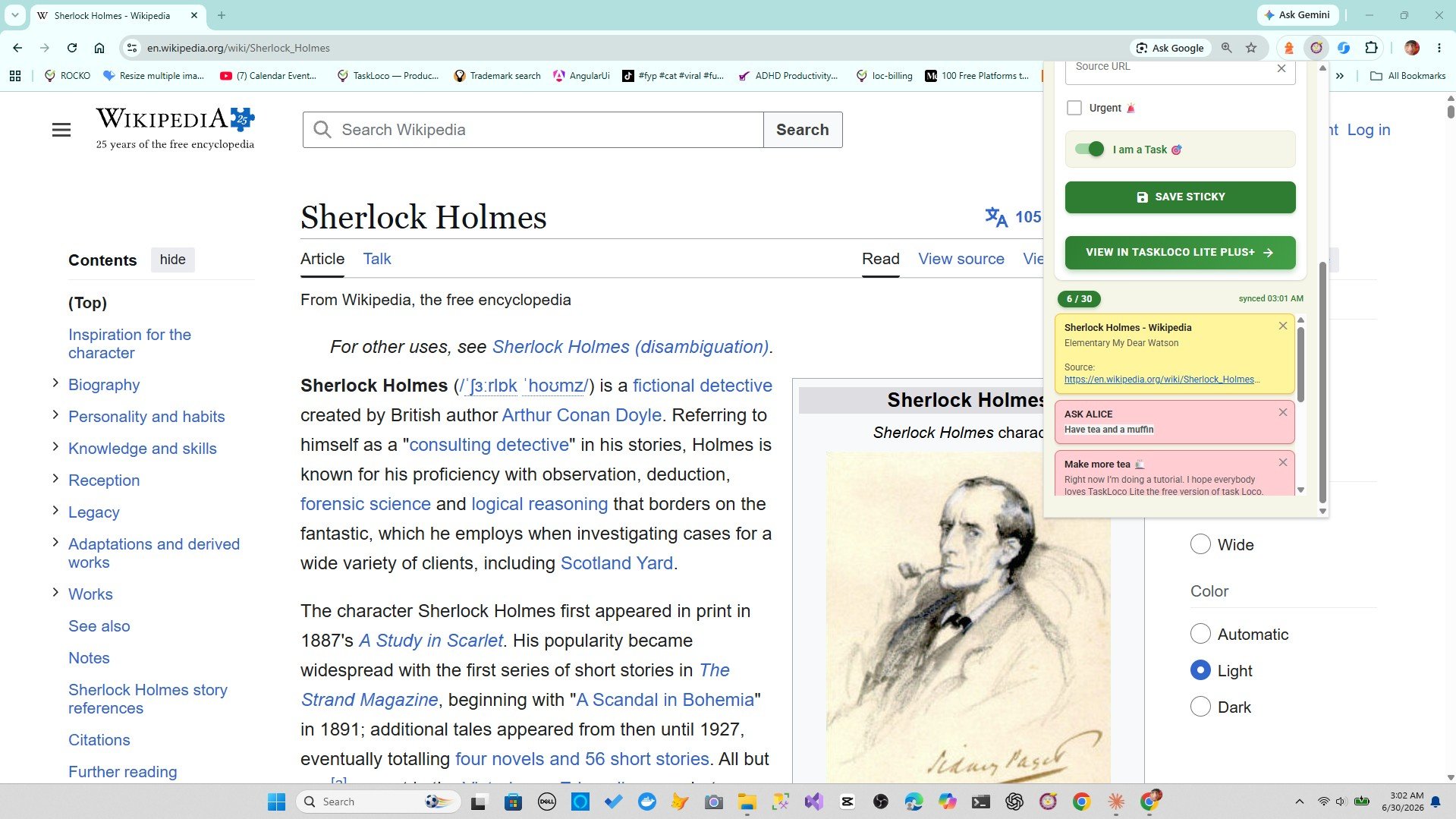
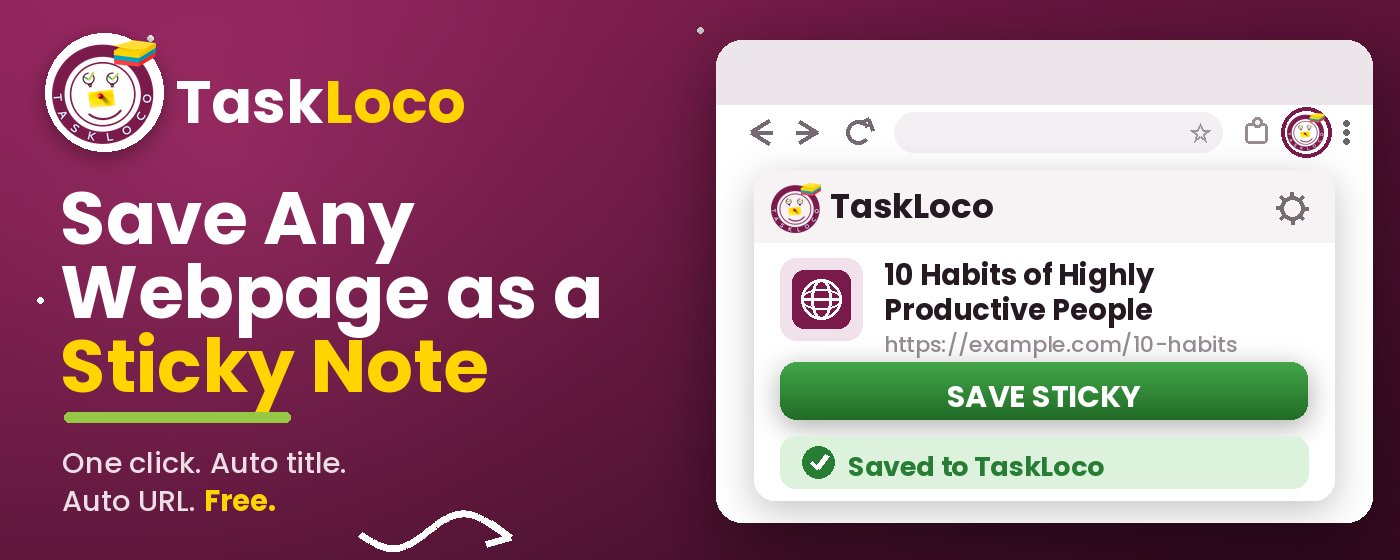
When you are moving fast — skimming articles, watching research pile up — the two-step manual method still breaks down. The Sticky Note Web Clipper takes a different approach: instead of capturing just the quote, it captures the whole page as a sticky note in one click, with the title and URL already filled in.
Here is how the workflow changes:
- You find a page with a quote you want to keep. Click the clipper icon in your Chrome toolbar.
- A sticky note is created instantly with the page title and URL auto-filled — no typing, no switching apps.
- You can add the quote text directly into the note body, knowing the source is already attached and will not get separated.
- The note syncs to TaskLoco, where it is available on your phone and desktop whenever you need to reference it.
The result is a note that is already anchored to its source the moment it is created. The quote and the URL cannot get separated because they live together in the same note from the start.
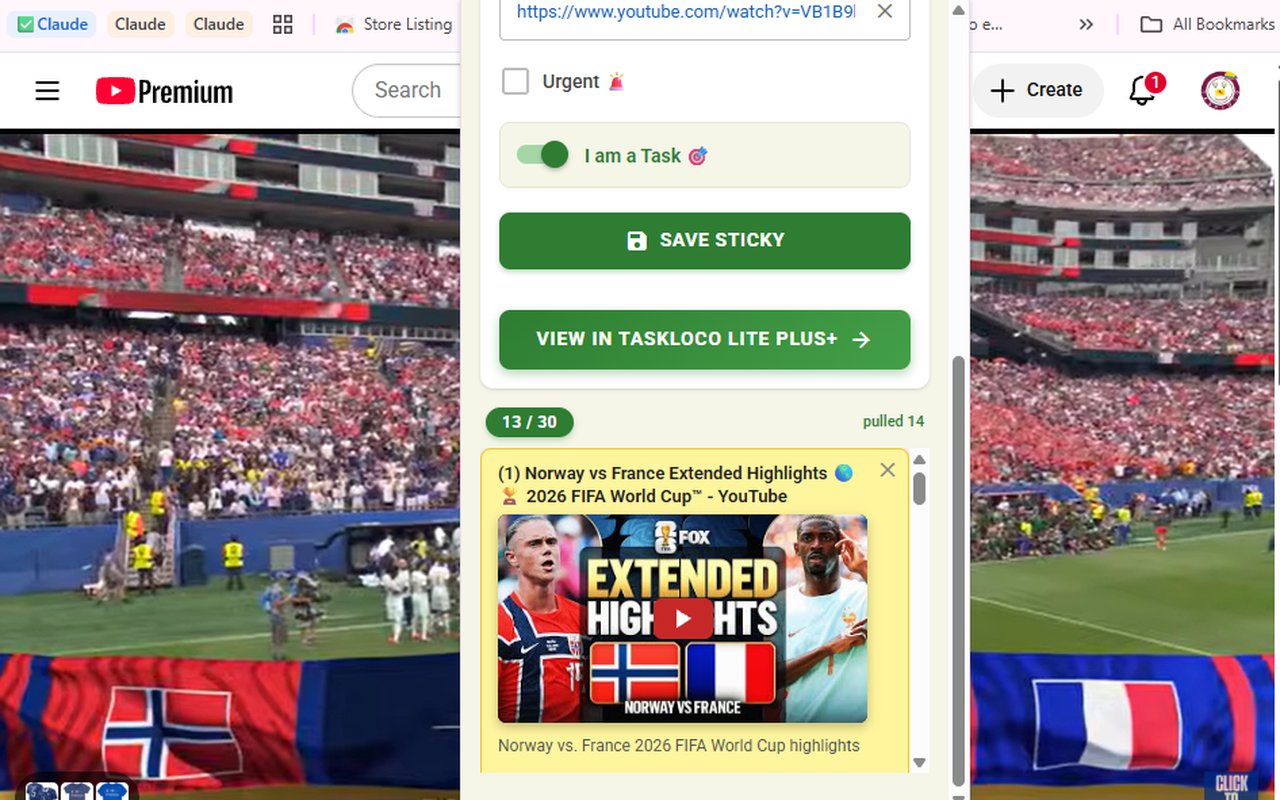
This works especially well for articles, news pages, and research sources. If the page you are clipping is a YouTube video, the video embeds inside the note so you can play it directly — useful when the quote is spoken rather than written.
Staying Organized Once You Have Saved the Quote
Saving a quote with its URL is step one. Being able to find it three weeks later when you need it is step two. A pile of unorganized notes — even perfectly sourced ones — can slow you down almost as much as unsourced quotes.
A few habits that work regardless of which method you use:
- Tag by topic or project immediately when you save. Retrofitting tags to a large backlog is tedious; doing it at capture costs five seconds.
- Use search as your primary navigation. A good notes system lets you search the body of notes, not just titles — so searching a keyword from the quote itself finds the right note even if you tagged inconsistently.
- Keep source notes separate from writing notes. A note with a raw quote and URL is a source. A note where you are synthesizing and drafting is your work. Mixing them makes both harder to use.
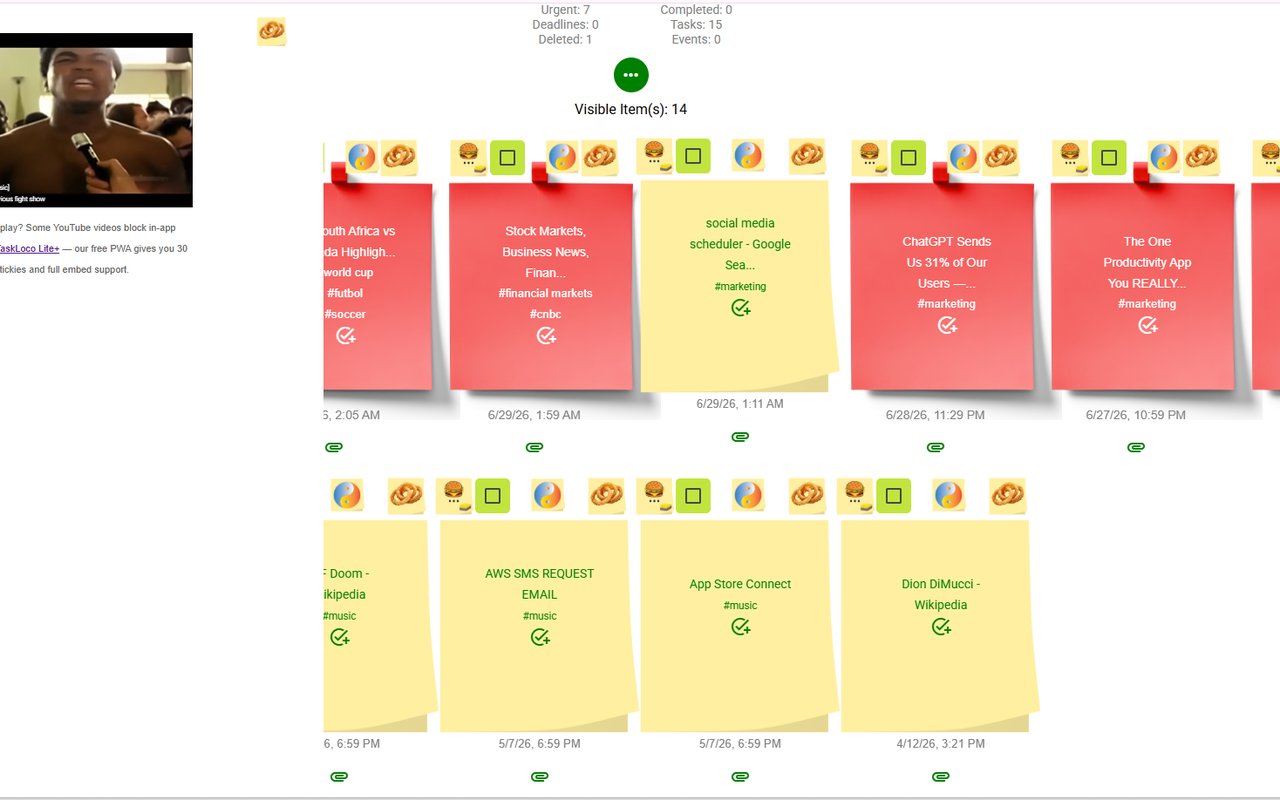
In TaskLoco, each saved sticky note is searchable and can be tagged, which means a library of clipped research sources becomes genuinely navigable rather than just a visual pile. The wall view also lets you see everything at once and move notes around — helpful when you are grouping quotes by argument or theme.
If you are doing any amount of web research and losing sources is a recurring problem, the simplest fix is also the fastest one: install the Sticky Note Web Clipper, clip the page the moment you find a useful quote, and add the quote text into the note body. Two actions, permanently linked source, done.
The Sticky Note Web Clipper is free. Install it from the Chrome Web Store, sign in with Google, and every page you clip becomes a sticky note you can find later.
Your clipped notes sync to TaskLoco across Chrome, desktop, iPhone, and Android — also free to start. No credit card to begin.
Get the Free Clipper
Sticky Note Web Clipper
- Free Chrome extension
- One-click save — any page, article, or video
- Title & URL auto-filled
- Tags & search
- Free forever
Synced to TaskLoco
- Sign in free with Google
- Your wall on Chrome, desktop, iPhone, Android
- YouTube videos embed & play in notes
- Visual sticky-note wall
- Free to start
Add It to Chrome — Free
One click saves any page, article, or YouTube video as a sticky note. Title and URL auto-filled.
Add to Chrome — FreeSee TaskLoco in Action
Frequently Asked Questions
What is the fastest way to save a quote from a web page with the URL?
The fastest method is to use the free Sticky Note Web Clipper Chrome extension. One click saves the current page as a sticky note with the title and URL auto-filled. You then add the quote text into the note body, and the source URL is already attached — nothing gets separated.
How do I copy a quote and keep the URL with it in a plain notes app?
Use a two-paste rule: copy the quote, paste it into your note, then immediately copy the URL from the address bar with Ctrl+L followed by Ctrl+C, and paste it directly below the quote. Never close the tab until both are in your notes. A consistent template — Quote / Source URL / Notes — makes this repeatable under pressure.
Can I save a web quote with its source URL to sync across my phone and computer?
Yes. The Sticky Note Web Clipper saves pages as sticky notes in TaskLoco, which syncs across Chrome, desktop, iPhone, and Android. Clip a page on your laptop and the note — with the URL already attached — is available on your phone without any extra steps.
Does the Sticky Note Web Clipper cost anything?
The extension is free. TaskLoco also has a free tier. Install it from the Chrome Web Store, sign in with Google, and start saving quotes with their source URLs in one click.
What happens if I forget to save the URL with a quote?
Check your browser history first — if you can find the page again, clip it or copy the URL before you lose it again. Going forward, build the URL copy into the same motion as the quote copy so it becomes automatic. The clipper removes this problem entirely since the URL is auto-filled the moment you save.
Can I save a quote from a YouTube video and keep the video link?
Yes. The Sticky Note Web Clipper saves YouTube pages as sticky notes and the video embeds directly inside the note so you can play it without leaving TaskLoco. The URL is auto-filled, so if the quote is spoken in the video, you have the source link ready to share or cite.
How do I find a saved quote later when I have dozens of saved notes?
Use tags and search. When you save a note, tag it by topic or project immediately — it takes a few seconds and saves a lot of hunting later. TaskLoco's search lets you look through the content of your notes, not just titles, so searching a word from the quote itself will surface the right note even if you cannot remember what you tagged it.
Born in Brooklyn. Powered by AWS. Your data stays yours.
TaskLoco is available on iPhone, Android, Chrome, and every web browser.