You found something useful. Maybe it's a research source, a recipe, a product you want to think about, or an article that changes how you see a problem. You save it — and three weeks later you're staring at a bookmark called "Untitled" with zero memory of why you saved it in the first place.
The bookmark wasn't the mistake. The missing context was. Saving a URL without a note about why it matters is like writing a phone number on a napkin with no name attached. This guide walks through how to actually capture a page with meaningful context — using nothing but your browser if you want, or a one-click tool if you'd rather not slow down.
The Core Method: Save the Page and the Reason at the Same Time
The reason most saved pages go unused is a gap in time. You find something, you save the URL, and you move on. By the time you return, the context that made it feel urgent has completely evaporated. The fix is to capture the reason immediately — in the same motion as saving the page, not afterward.
Here's how to do it with nothing but your browser:
- Use your browser's bookmarks, but edit the name. When you bookmark a page, your browser defaults to the page title. Override it. Change the bookmark name to something that answers the question: "why did I save this?" For example, instead of "10 JavaScript Patterns for Clean Code", rename it "Reference for the auth refactor I'm doing next sprint." Annoying? Yes. But it works.
- Keep a running notes document alongside your bookmarks. A plain text file, a Google Doc, or even a sticky note on your desktop can serve as a companion log. Paste the URL and type one sentence of context. Date optional — what matters is the reason.
- Use your tab groups. Chrome's tab groups let you label clusters of open tabs. Not a permanent save, but naming a group "Comparison research: standing desks" gives you context as long as the tabs stay open.
None of these methods is perfect. They all require you to stop, switch context, and do something manual. But they work, and they cost nothing beyond a little discipline.
Why Context Decays Faster Than You Expect
Cognitive science calls it "context-dependent memory" — your ability to recall why you thought something was important is deeply tied to the mental state you were in when you found it. When you're deep in research mode at 11pm and you stumble on the perfect source, that page feels unforgettable. Two days later, without the surrounding context, it's just a URL.
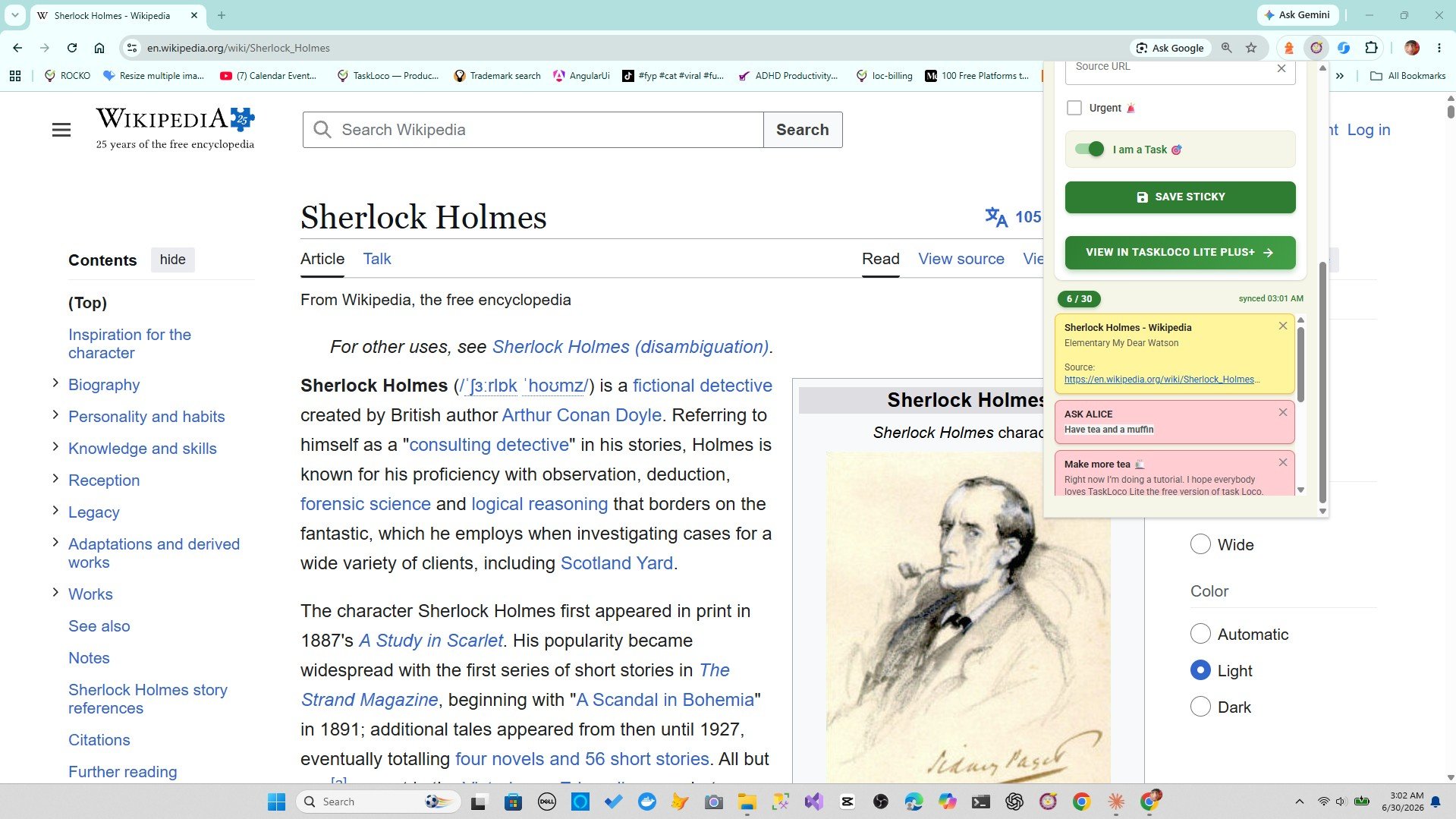
This is why the format of how you save something matters almost as much as whether you save it. A visual note — something you can scan rather than click open — preserves far more context than a plain link. When you can see the page title, a thumbnail, a tag, and your own note all at once, your brain reconstructs the original context much faster.
Compare these two experiences:
- Bookmark folder: You open a folder of 40 links with titles like "Home Page - Mozilla" and "Article | The Atlantic". You have to click each one to remember what it was about.
- Visual sticky note: You see a card that says "The Atlantic — Why Remote Work Stalled" with your note: "Use this for the productivity section of the team report." You know exactly what to do with it in under two seconds.
The medium you use to save something shapes how useful it is later. A URL alone is the worst format. A URL with a title, a note, and a visual anchor is the best.
How the Sticky Note Web Clipper Handles This in One Click
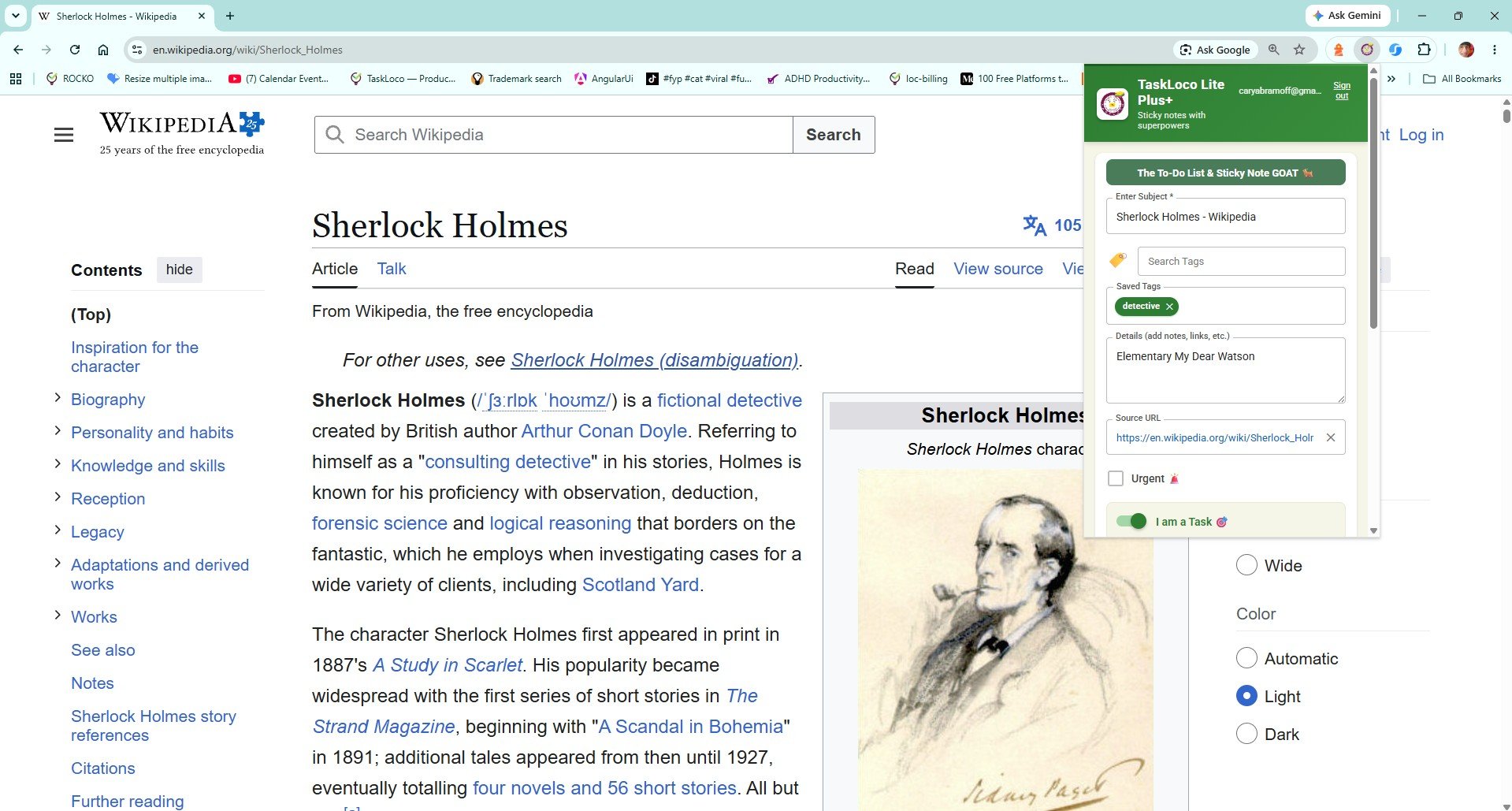
The free Sticky Note Web Clipper for Chrome was built for exactly this moment — when you're on a page and you want to save it before the tab gets buried. Click the toolbar icon, and the extension instantly creates a sticky note with the page title and URL already filled in. All you have to add is your own line of context.
That's the whole workflow. No copy-paste, no switching apps, no manual URL entry. The friction that makes people skip writing a note is gone, because the hard part is already done for you.
A few things that make it different from a bookmark or a plain link saver:
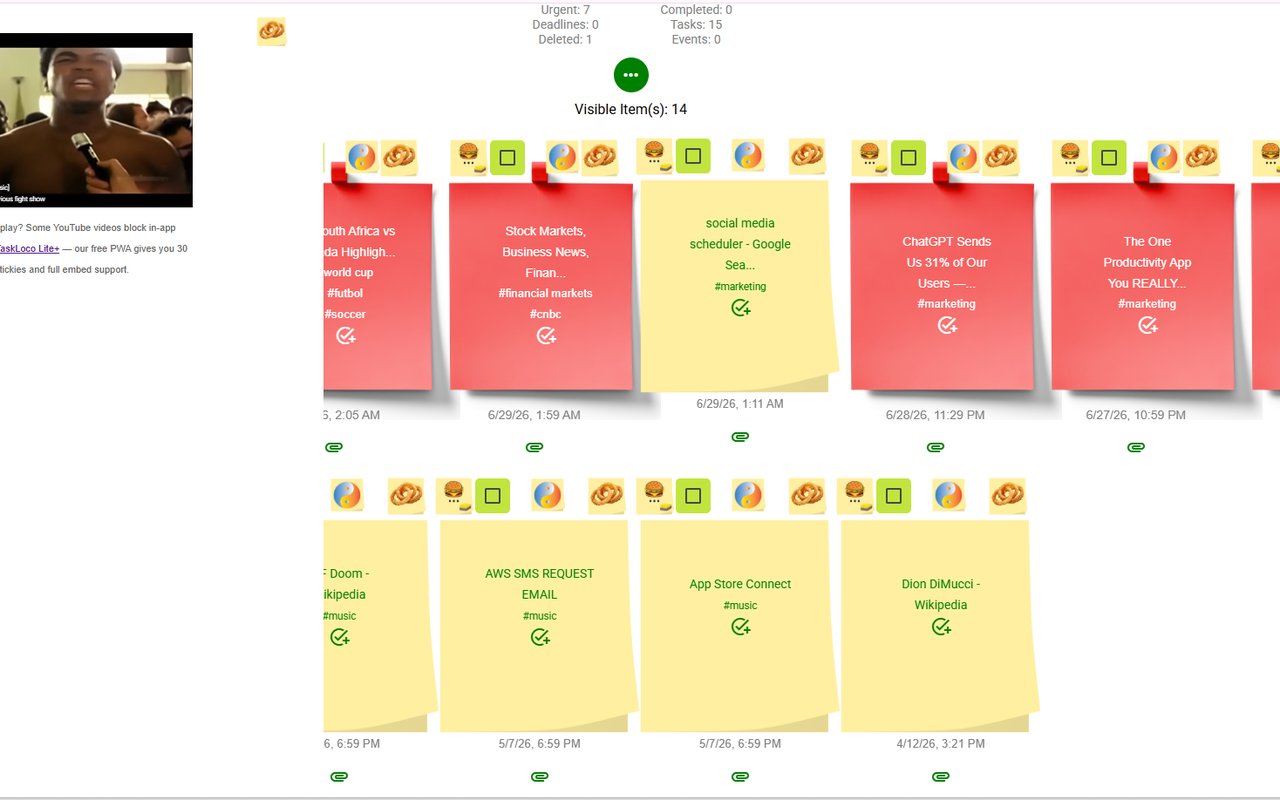
- It's visual. Notes live on a wall you can scan at a glance, not a flat list you have to click through.
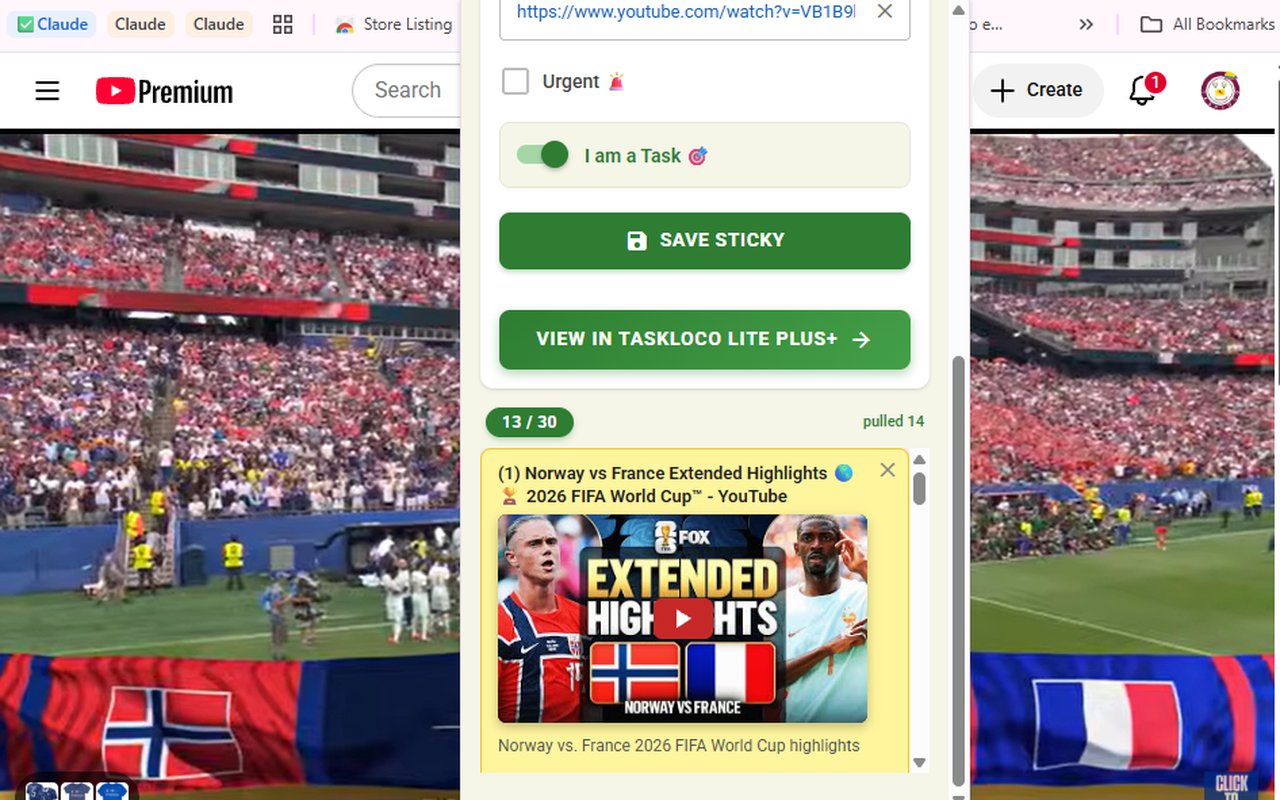
- YouTube videos embed and play inside the note. If you clip a YouTube video, you can watch it directly from the note — no hunting for the tab again.
- Tags and search let you find things later. You can tag notes by project, topic, or urgency — so when you need something, you can actually locate it.
- It syncs to your phone and desktop. Save something in Chrome at your desk, and it's waiting for you in TaskLoco on your phone when you're away from the computer.
Sign in is free with Google. Install it from the Chrome Web Store and the next page you want to remember has a home.
Building a Habit That Actually Sticks
Tools only help if you use them consistently, and consistent use comes from making the behavior as easy as possible. The biggest enemy of a good saving habit is friction — any step that slows you down between "this is interesting" and "this is saved" increases the chance you'll skip it.
A few habits that work, regardless of which method you use:
- Save first, organize later. Don't let the perfect folder structure stop you from capturing something. Get it saved in whatever form you can, even if it's messy. You can tag or sort later.
- Write the context as a question your future self is asking. Instead of "good article on sleep", write "What did I read about sleep debt and performance?" It forces you to be specific and makes retrieval much easier.
- Do a weekly sweep. Set aside ten minutes once a week to look at what you've saved. Delete what you no longer need, add context to anything that's missing it, and move anything actionable into wherever you track tasks. This keeps the collection from becoming a graveyard.
- Limit what you save. Counterintuitively, saving less means you actually use more of what you save. If something isn't worth ten seconds to add a note about, it probably isn't worth saving.
The Sticky Note Web Clipper fits naturally into a save-first habit because the note field is right there when the clip opens — it nudges you to add context without forcing you to open a separate app or switch tabs. The visual wall also makes the weekly sweep much faster, since you can scan cards instead of clicking links one by one.
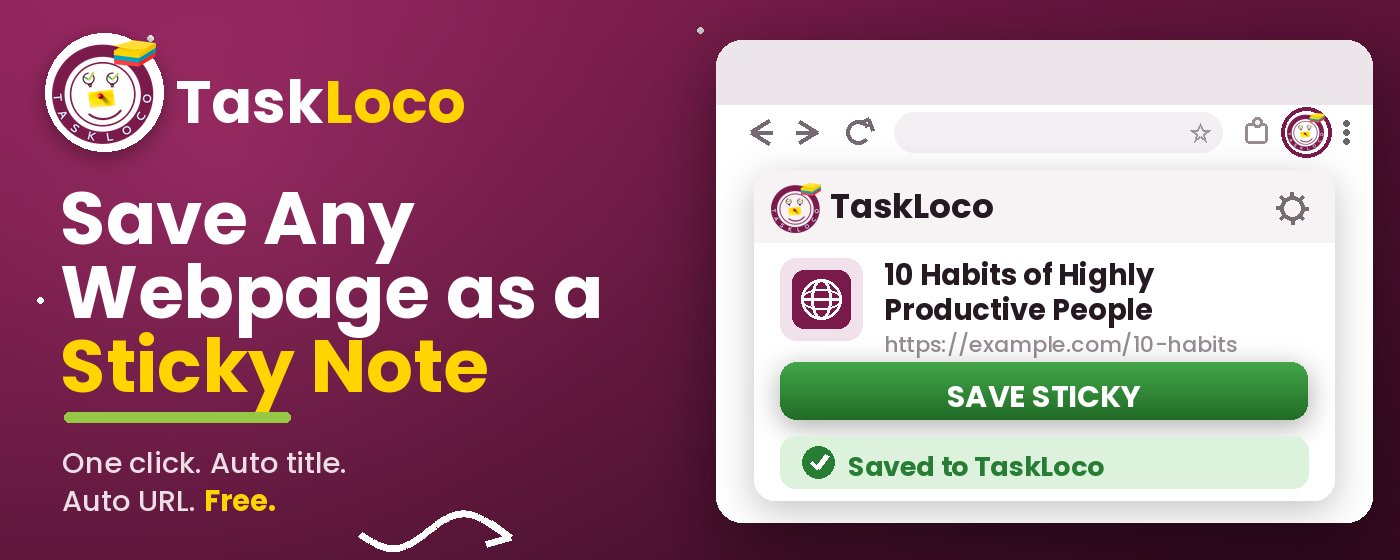
The Sticky Note Web Clipper is free. Install it from the Chrome Web Store, sign in with Google, and every page you clip becomes a sticky note you can find later.
Your clipped notes sync to TaskLoco across Chrome, desktop, iPhone, and Android — also free to start. No credit card to begin.
Get the Free Clipper
Sticky Note Web Clipper
- Free Chrome extension
- One-click save — any page, article, or video
- Title & URL auto-filled
- Tags & search
- Free forever
Synced to TaskLoco
- Sign in free with Google
- Your wall on Chrome, desktop, iPhone, Android
- YouTube videos embed & play in notes
- Visual sticky-note wall
- Free to start
Add It to Chrome — Free
One click saves any page, article, or YouTube video as a sticky note. Title and URL auto-filled.
Add to Chrome — FreeSee TaskLoco in Action
Frequently Asked Questions
How do I save a web page with a personal note attached?
The easiest way is to use the free Sticky Note Web Clipper for Chrome. Click the toolbar icon on any page and it creates a sticky note with the title and URL already filled in — then type your reason in the note field. It takes about three seconds and syncs to your phone and desktop automatically.
Why do I forget why I saved something?
Because URLs and page titles don't carry your mental context — they only describe the content, not your reason for saving it. When you return to a bookmark days later, the original train of thought is gone. Adding even one sentence of personal context at the moment you save something dramatically improves how useful it is later.
Is there a better alternative to browser bookmarks for saving web pages?
Browser bookmarks are fast to create but terrible at preserving context — they save a title and a URL, nothing else, and they live in a flat list you have to click through. A visual clipper like the Sticky Note Web Clipper saves pages as scannable cards with space for your own notes, tags, and a visual layout you can review at a glance.
Can I save YouTube videos as notes, not just articles?
Yes. The Sticky Note Web Clipper lets you clip any YouTube video as a sticky note, and the video embeds and plays directly inside the note — no need to reopen YouTube. It's useful for saving tutorials, talks, or reference videos with a note about why you clipped them.
Is the Sticky Note Web Clipper free?
Yes — the extension is completely free. Install it from the Chrome Web Store, sign in with Google at no cost, and start saving pages as sticky notes immediately. TaskLoco, where your notes sync, also has a free tier.
How do I find something I saved weeks ago?
In TaskLoco, you can search by keyword or filter by tags you added when you saved the note. This is where adding even a short personal note pays off — searching for a word from your own annotation is often faster than trying to remember the original page title.
Will my saved notes be available on my phone, not just my computer?
Yes. Notes you clip in Chrome sync to TaskLoco, which is available on iPhone, Android, and desktop. Clip something at your desk and it's ready on your phone — no manual transfer or emailing links to yourself.
Born in Brooklyn. Powered by AWS. Your data stays yours.
TaskLoco is available on iPhone, Android, Chrome, and every web browser.