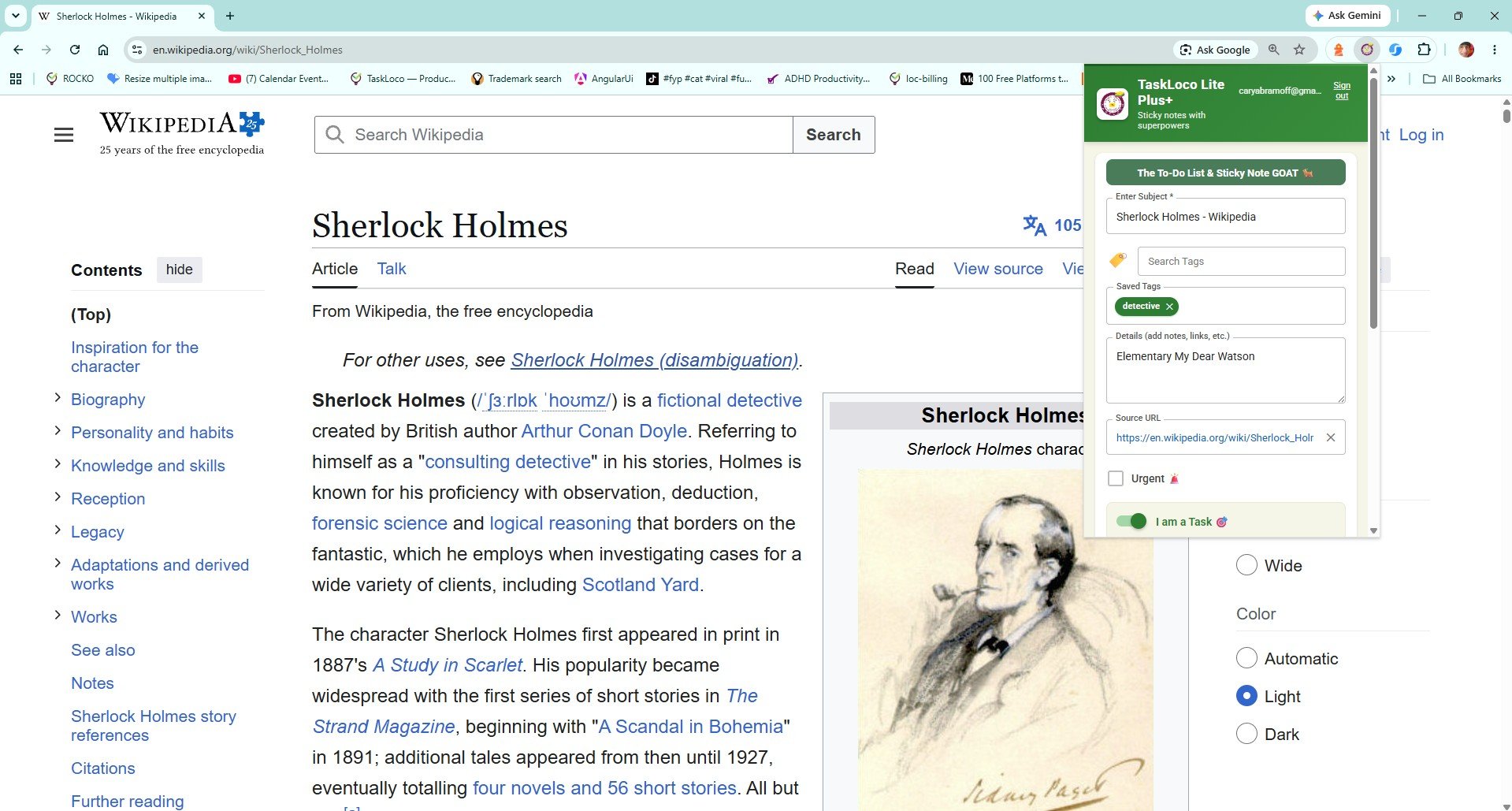
You're reading an article, watching a YouTube video, or scanning a news story — and something clicks. A quote, a method, a product, a link you need later. You think: I'll come back to that. You don't come back. The tab closes, the browser restarts, and the idea is gone.
This isn't a memory problem. It's a friction problem. Every method that requires more than one step — copying a URL, opening a notes app, writing a title, pasting the link — adds just enough resistance that you skip it. The idea has to be capturable in the moment it appears, or it's gone. Here's how to actually do that.
Why Ideas Disappear Before You Act on Them
The problem isn't that the internet is too big or that you're too busy. The problem is the gap between seeing something and saving it. That gap is usually measured in seconds — and it's filled with friction.
When you bookmark a page, you're trusting a flat alphabetical list you rarely revisit. When you leave a tab open, you're betting on your future self to remember why that tab matters. When you copy a URL into a notes app, you're doing manual work that your brain correctly identifies as annoying. So you don't do it.
Research on prospective memory — remembering to do something in the future — consistently shows that intention without a physical anchor fails. Thinking "I'll save that later" is not a system. It's a wish. The anchor has to happen at the moment of discovery, in the same context where the idea appeared: the browser.
That's the bar any saving method has to clear. Not "pretty good" or "organized enough." It has to be faster than doing nothing.
The Methods That Actually Work (and Why Most Don't Stick)
There are several legitimate ways to capture ideas from web pages. Here's an honest look at each:
- Browser bookmarks: Built-in and instant, but the result is a long, unsorted list with no context. You saved a URL — not the idea. When you go back, you often can't remember why the page mattered.
- Copy-paste into a notes app: More context, but more steps. You have to switch apps, create or find a note, paste, maybe write a title. This is the method everyone intends to use and rarely does consistently.
- Leave the tab open: The most common approach by far. It works as a short-term reminder but not as a real capture system. Tabs accumulate, the browser slows down, and eventually you close them all in frustration.
- Screenshot: Fast but unsearchable. You end up with a camera roll full of screenshots you scroll past without acting on.
- Email it to yourself: Surprisingly durable as a method — your inbox is somewhere you actually look — but clutters an already-noisy channel and has no visual organization.
The pattern across all of these: they either lack context (bookmarks, tabs) or they add friction (copy-paste, email). The ideal method captures the page with enough context to be useful later, and requires almost no effort to do.
How to Build a One-Click Capture Habit That Holds
Habit research is pretty clear: a behavior sticks when the cue is obvious, the action is easy, and the reward is immediate. For capturing web ideas, that translates to:
- The cue: You see something worth saving — right now, in your browser.
- The action: One click. Not two. Not switching apps. One click on a browser toolbar button.
- The reward: The page appears as a visual sticky note, title and URL already filled in, sitting in a place you'll actually look.
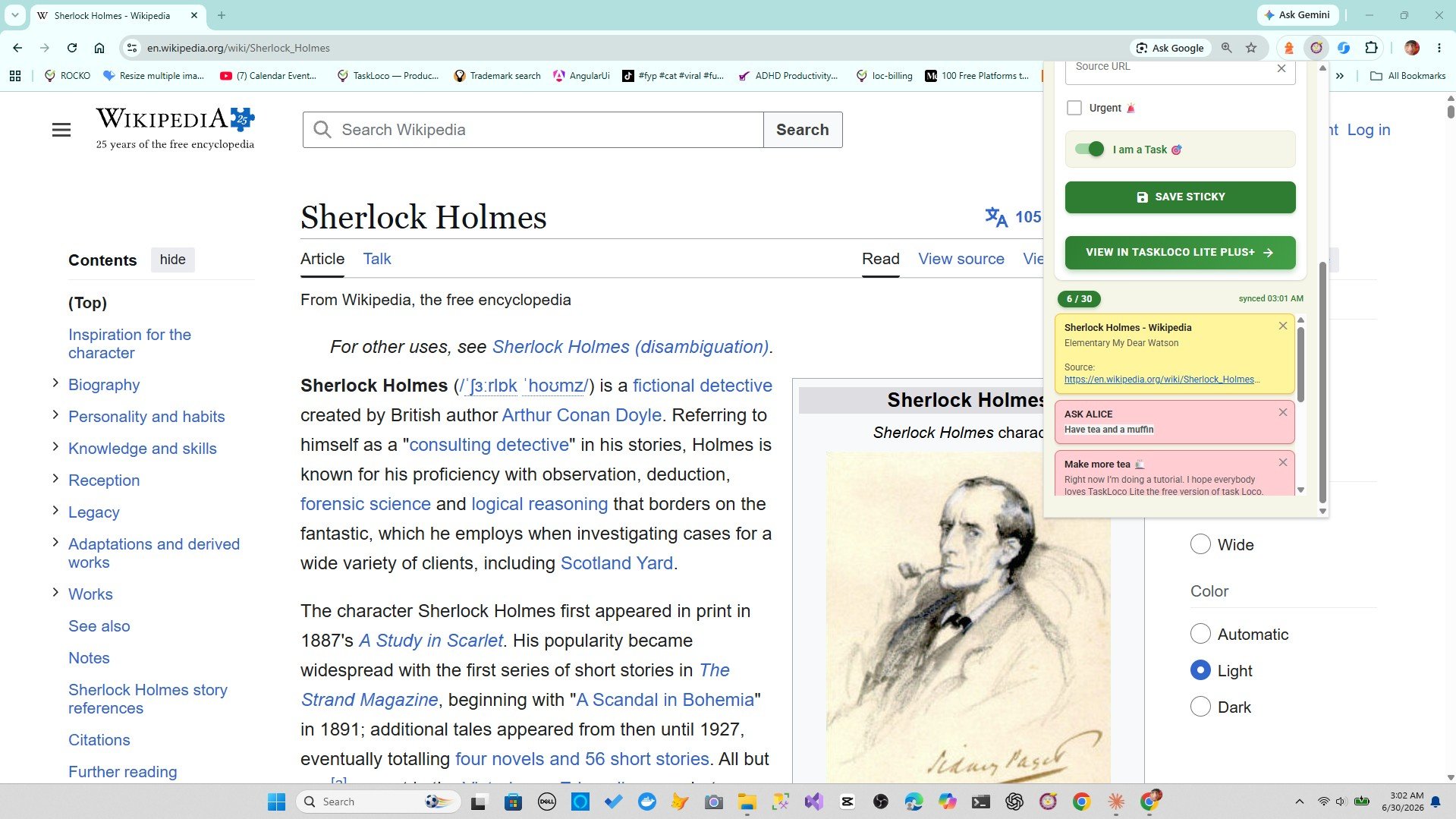
This is exactly what the Sticky Note Web Clipper does. Install it from the Chrome Web Store, sign in free with Google, and a small icon appears in your toolbar. When you hit a page worth keeping, you click it. Done. The note is created, the page title and URL are auto-filled, and you're back to reading in under two seconds.
Because the action costs almost nothing, you stop filtering. You don't have to decide "is this worth the effort of saving?" — you just save it. That's the shift. When capture is free in terms of effort, you save more things, which means you lose fewer ideas.
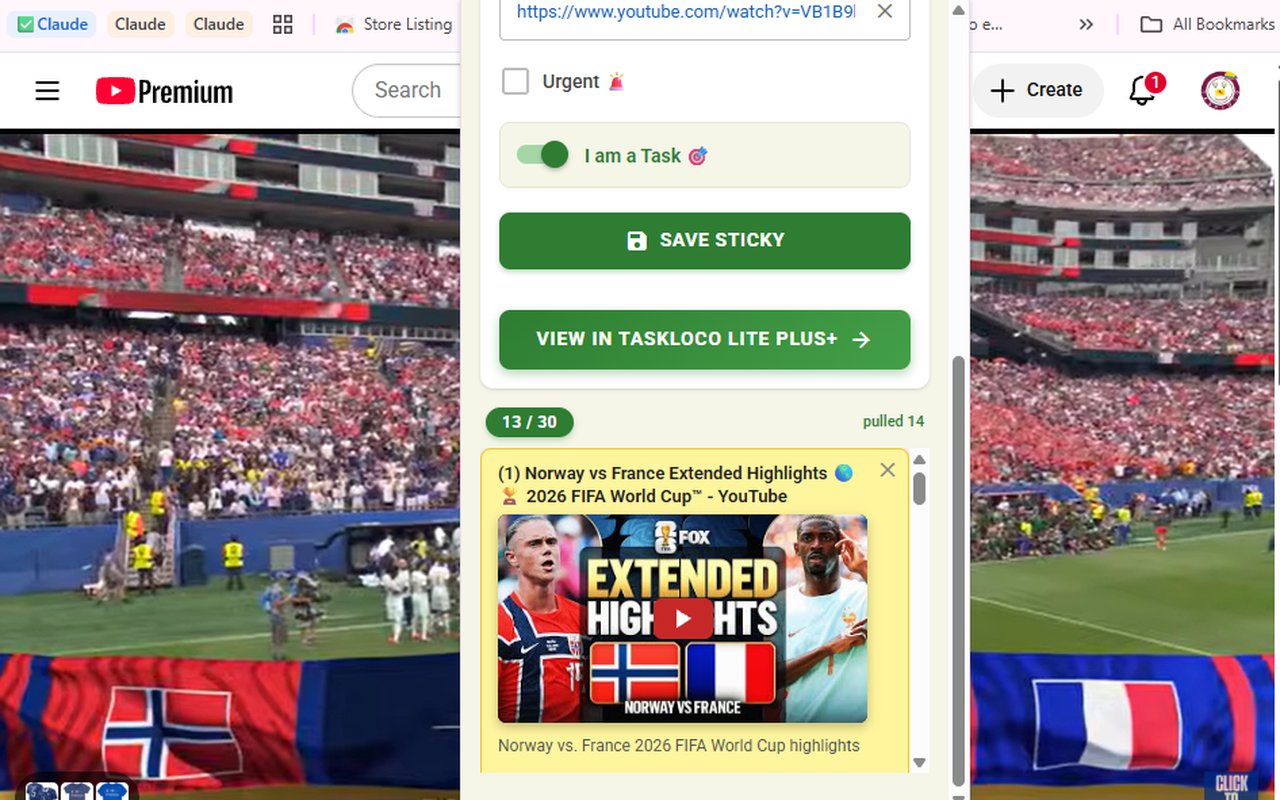
Saved notes sync automatically to TaskLoco — free to use — so they're accessible from your phone and desktop, not just the browser tab where you made them. YouTube videos saved this way embed directly inside the note and play without leaving your wall, which is genuinely useful when you want to revisit a tutorial or talk later.
Making Saved Ideas Actually Useful Later
Capturing is only half the problem. The other half is retrieval — being able to find the thing you saved when you need it, not just knowing you saved it somewhere.
A few practices that make a real difference:
- Add a tag when the context is clear. If you clip a page about a specific project, client, or topic, tag it immediately. One word is enough. You don't need a filing system — you need a searchable signal.
- Write one sentence in the note body. Not an essay. Just the reason you saved it: "use this for the intro section" or "compare this pricing model to ours." Future you will thank you.
- Don't curate before you capture. The biggest mistake is deciding at the moment of discovery whether something is truly worth saving. Save it, then decide later when you have more context. Friction at capture is the enemy.
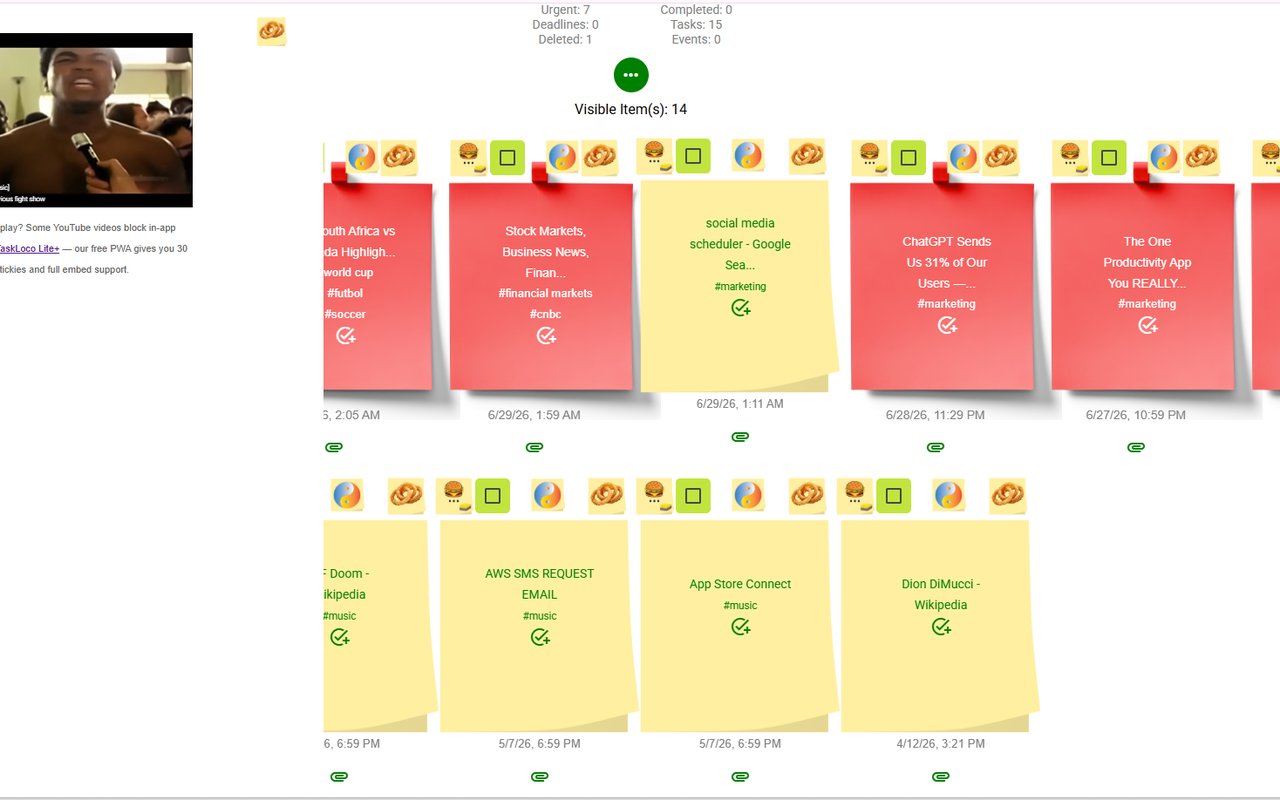
The Sticky Note Web Clipper's visual wall layout helps here — notes look like actual sticky notes, so scanning your saved items feels like looking at a physical desk rather than parsing a list of URLs. You tend to notice things you'd miss in a flat list.
Search works across titles, tags, and note content, so even if you saved something weeks ago with no tag, you can usually find it by typing a word you remember from the page title. That's the safety net for the times you didn't tag.
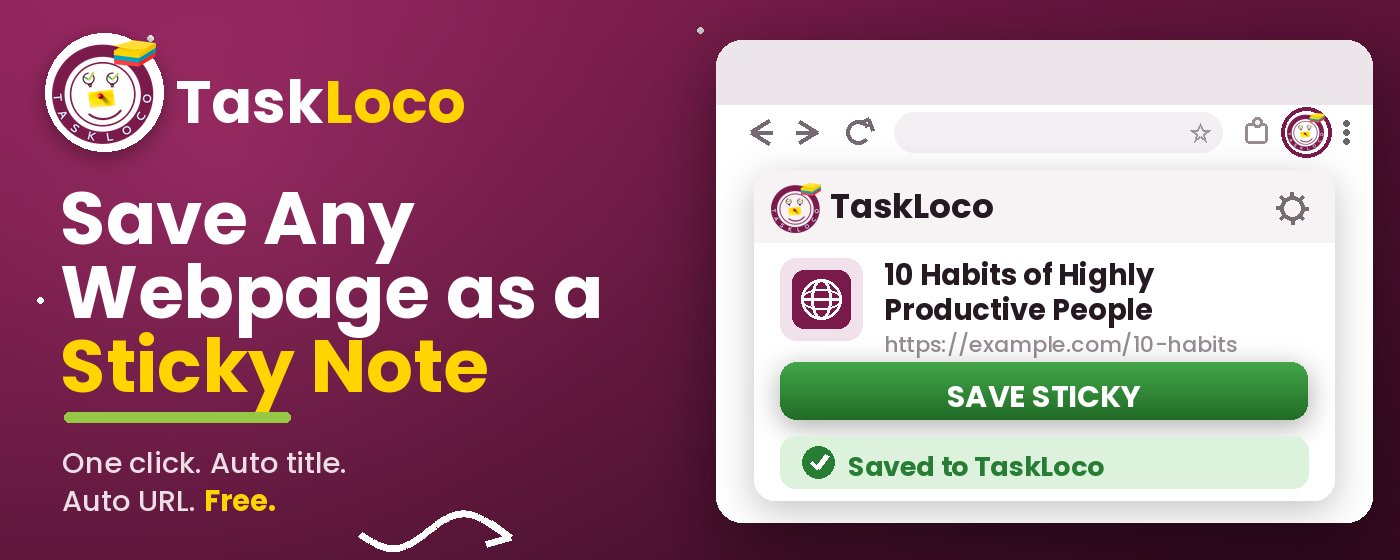
The Sticky Note Web Clipper is free. Install it from the Chrome Web Store, sign in with Google, and every page you clip becomes a sticky note you can find later.
Your clipped notes sync to TaskLoco across Chrome, desktop, iPhone, and Android — also free to start. No credit card to begin.
Get the Free Clipper
Sticky Note Web Clipper
- Free Chrome extension
- One-click save — any page, article, or video
- Title & URL auto-filled
- Tags & search
- Free forever
Synced to TaskLoco
- Sign in free with Google
- Your wall on Chrome, desktop, iPhone, Android
- YouTube videos embed & play in notes
- Visual sticky-note wall
- Free to start
Add It to Chrome — Free
One click saves any page, article, or YouTube video as a sticky note. Title and URL auto-filled.
Add to Chrome — FreeSee TaskLoco in Action
Frequently Asked Questions
What's the fastest way to save a web page idea without losing it?
Click the Sticky Note Web Clipper icon in your Chrome toolbar. The current page is saved as a sticky note with the title and URL already filled in — no copy-pasting, no switching apps. It takes about one second.
Why doesn't leaving a tab open work as a capture method?
Tabs work as a short-term reminder but not a real system. They accumulate, slow your browser, and carry no context about why you saved them. When you eventually close them, the ideas go with them. A saved note with a title, URL, and optional tag is a far more durable record.
Is the Sticky Note Web Clipper free?
Yes — the extension is completely free. TaskLoco, where your notes live, also has a free tier. Install from the Chrome Web Store, sign in with Google, and start clipping immediately.
Can I save YouTube videos, not just articles?
Yes. When you clip a YouTube page with the Sticky Note Web Clipper, the video embeds directly inside the note and plays without you leaving your wall. It's genuinely useful for tutorials, talks, or any video you want to revisit.
How is this different from just bookmarking a page?
A bookmark saves the URL with no context. A sticky note saves the title, the URL, and gives you a visual card you can tag, annotate, and search. When you look back at a wall of sticky notes versus a flat list of URLs, you actually remember why each item was worth saving.
Will my saved notes be available on my phone?
Yes. Notes sync to TaskLoco, which works on iPhone, Android, and desktop. Anything you clip in Chrome on your computer shows up on your phone — no manual export needed.
What if I want to add context to something I just clipped?
After clipping, open the note and type a quick sentence in the body — just the reason you saved it. You can also add a tag for the project or topic it belongs to. Both take seconds and make retrieval much easier later.
Born in Brooklyn. Powered by AWS. Your data stays yours.
TaskLoco is available on iPhone, Android, Chrome, and every web browser.