A factory floor doesn't operate like a to-do list. Nothing gets done in strict sequence. Three things are happening at once in Bay 2, Bay 5 is waiting on a parts delivery, and the QA station is cycling through a batch that started yesterday. If you flattened all of that into a vertical list ranked by priority, you'd lose the spatial relationships that make the whole system legible at a glance.
Todoist is a genuinely good app — clean, fast, and well-designed for what it is: a personal task manager built around the inbox and the linear list. But when people try to run multi-person, multi-stage workflows through it, they keep hitting the same wall. The list format isn't a UI preference problem. It's a structural one. This article explains why — and what the underlying principles of factory-style workflow actually require from any tool.
What 'Running Like a Factory' Actually Means
The phrase gets used loosely, but it has a specific meaning rooted in how production systems are designed. A factory — whether it builds cars, packages food, or processes insurance claims — operates on a few core principles that a linear task list violates by design.
Parallel workstreams. Multiple stages run simultaneously. Inventory is being received at the same time the previous batch is being assembled and the finished goods from the batch before that are being shipped. These aren't sequential steps to check off. They're concurrent zones of activity, each with its own state.
Positional meaning. Where something sits on the floor tells you something. A pallet in the staging area means something different from the same pallet in the loading dock. Position encodes status. In a linear list, position only encodes priority — and priority alone doesn't tell you what stage something is at.
Visual signal over text description. In manufacturing, this is called andon — the idea that the state of the system should be readable at a glance without reading anything. A red light means stop. A yellow bin means replenish. You shouldn't need to open a task and read its notes to know what's happening.
Pull systems, not push lists. Lean manufacturing made famous the idea that work should be pulled by downstream demand, not pushed by an upstream schedule. This means the flow of tasks is driven by what the next stage is ready to receive — not by whoever assigned the task or set the due date. A ranked list is inherently a push system: someone decides what's important, puts it at the top, and expects it to get done in that order.
Where Todoist's Linear List Breaks Down for This Kind of Work
Todoist's core interface is the task list — a vertical sequence of items, ordered by priority, due date, or project. It's fast to capture, easy to read, and genuinely excellent for personal task management. The problem isn't that it's poorly built. The problem is that a linear list is the wrong data structure for factory-style workflow.
You can't see parallel state. In Todoist, every task looks like every other task until you open it. A task that's blocked, a task that's in progress, and a task that hasn't been started yet all appear as items in a list. You can add labels or priority flags, but none of that creates the spatial separation that makes parallel stages readable without clicking.
Projects don't show flow. Todoist organizes work into projects, and within projects into sections. Sections can approximate columns, but they're rendered as nested list segments — not as spatial zones with visual weight. You can't look at a Todoist project and instantly see how work is distributed across stages the way you can on a Kanban board.
Collaboration adds noise, not clarity. When multiple people are working out of the same Todoist project, the list grows and the signal-to-noise ratio drops. Todoist has comments, assignees, and shared projects — but it has no way to give each person a visual lane, or to show at a glance who has too much in progress and who's idle.
Completed tasks disappear. In a factory, the concept of done is visible and meaningful — finished goods stack up in a defined location. In Todoist, completed tasks vanish from the default view. That's fine for a personal inbox. It's a problem for a production system where the throughput of completed work is itself a signal worth tracking.
What a Factory-Style Workflow Actually Needs From a Tool
If you're trying to run a repeatable, multi-stage process — whether that's a content production pipeline, a client onboarding sequence, an order fulfillment workflow, or anything else that resembles a factory in structure — here's what the tool needs to support:
- Spatial columns that represent stages. Not labeled list sections — actual columns with visual separation, where moving a card from one column to another is the primary gesture for advancing work through the system.
- Work-in-progress limits. A factory controls WIP because overloading any station creates bottlenecks. Your tool should make it easy to see how much is in each stage, so you can enforce limits deliberately rather than discovering pile-ups after the fact.
- Card-level status at a glance. Without opening anything, you should be able to see who owns a task, what its current state is, whether it's blocked, and roughly how long it's been sitting there. Color, position, and label should carry that information visually.
- Assignee lanes or swimlanes. When multiple people are working in parallel, horizontal lanes by person (or by team or by client) let you see load distribution instantly. A single shared list collapses all of that into a queue.
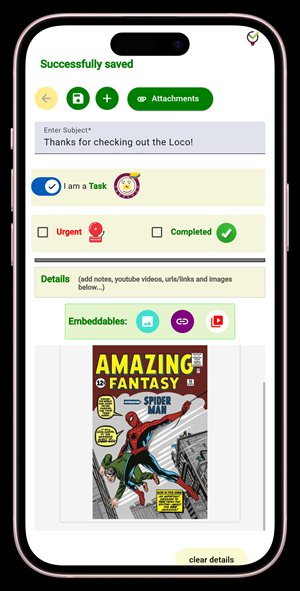
- Attachments and context pinned to the work item. On a factory floor, the work order travels with the part. In a digital workflow, the brief, the file, the reference image, and the approval should live on the card — not in a separate email thread or shared drive folder you have to hunt down.
- Reminders that bring you back to the specific task. A push notification that deep-links you directly to the relevant note or task — not just to the app home screen — is the digital equivalent of a tap on the shoulder at exactly the right station.
That last point matters more than it sounds. Most reminder systems notify you that something exists. A reminder that drops you directly into the task is the difference between a signal and an action.
One Practical Way to Apply This: TaskLoco's Wall
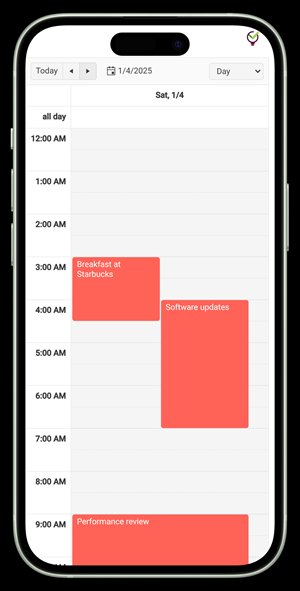
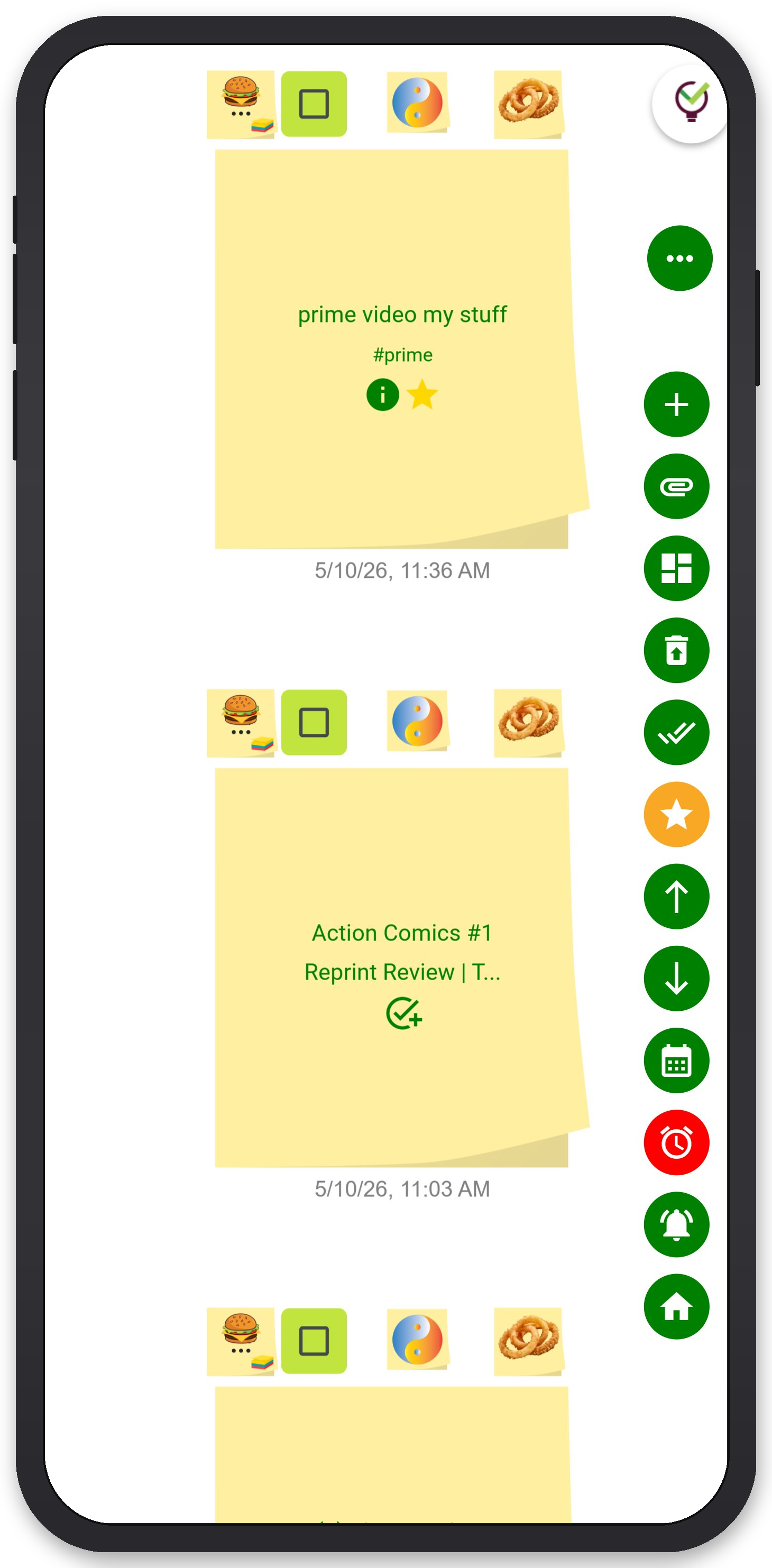
TaskLoco was built around sticky notes — the same mental model that production teams have used on physical whiteboards for decades. Its Wall view is a spatial canvas where notes occupy actual positions, and moving a note from one area to another is as natural as rearranging cards on a board.
That spatial quality is what makes it work for factory-style thinking. You can organize columns by stage — Backlog, In Progress, Review, Done — and see the distribution of work across all of them at once, without clicking into anything. Blocked items sit in a lane. Ready items sit in another. The position carries the meaning.
Each note on the Wall can hold files (Premium includes 10GB of file storage), so the context travels with the work. And reminders are delivered as push notifications that deep-link back to the specific note — so when a task needs attention, the notification drops you directly into it, not into a generic app dashboard.
TaskLoco's team sharing works like email: you share a note and the recipient clones it as their own. No permission levels, no access management overhead. It's fast enough that it doesn't interrupt the flow of work.
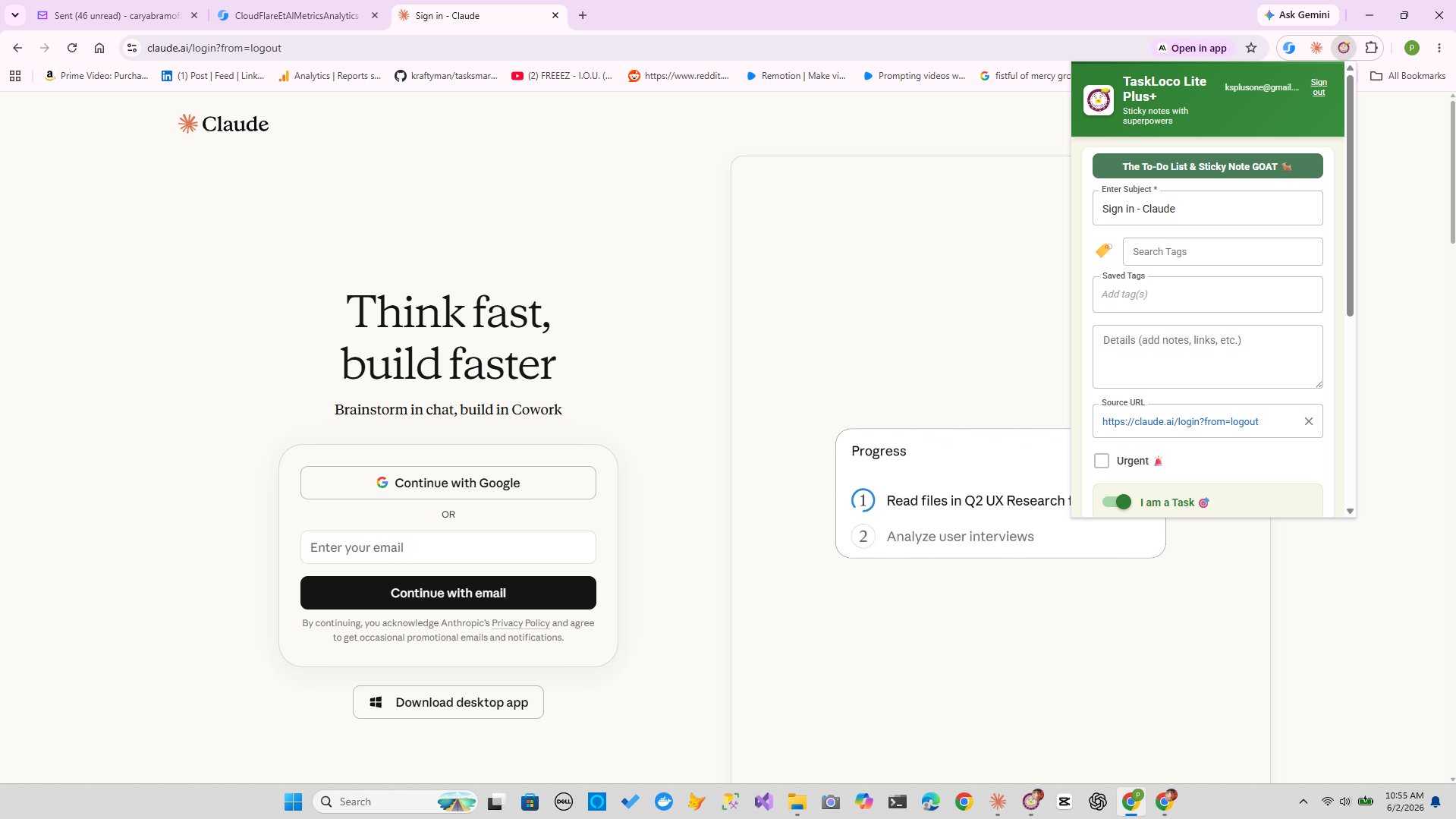
The Chrome extension is worth mentioning for content and research workflows specifically: one click captures any webpage as a note on the Wall, which means the reference material for a task lands directly alongside the task itself — no copy-pasting URLs, no switching tabs to find the source.
TaskLoco Premium is regularly $9.99/month per person. Right now, charter members can lock in 50% off the regular price — forever. That means $4.99/month per person today. And if our price ever goes up, you still pay half. Always.
Code CHARTER50 auto-applies at checkout. First 500 spots only — once they're gone, this offer is gone permanently. Act fast while spots last.
Every Premium subscription includes unlimited notes, 10GB file storage, reminders, calendar, and team sharing. Each team member requires a separate subscription. 7-day free trial — no charge until day 8. Cancel anytime.
Free Options: TaskLoco
TaskLoco Lite
- Native iPhone & Android app
- Completely anonymous — no sign-in
- Data stays on your device
- Up to 20 notes
- Free forever
TaskLoco Lite Plus+
- Web app + Chrome extension
- Sign in with Google
- Wall syncs across all devices
- Up to 30 notes
- Free forever
Lock In 50% Off — Forever
7-day free trial. No charge until day 8. CHARTER50 auto-applies at checkout.
🔒 Lock In My Charter SpotSee TaskLoco in Action
Frequently Asked Questions
Why can't Todoist handle factory-style workflows?
Todoist is a linear list manager — tasks are ordered by priority or due date in a vertical sequence. Factory-style workflows require parallel stages, spatial layouts, and at-a-glance status across multiple simultaneous workstreams. A vertical list can't represent that structure without hiding critical information behind clicks. It's not a design flaw in Todoist — it's a structural mismatch between the tool's format and the workflow's requirements.
What does 'running like a factory' mean for a digital workflow?
It means organizing work around stages rather than a priority queue, running multiple workstreams in parallel, making the state of the system visible at a glance without reading anything, and controlling work-in-progress to prevent bottlenecks. These principles come from lean manufacturing — specifically Kanban — and apply just as well to content pipelines, client onboarding sequences, order fulfillment, and any other repeatable multi-step process.
What's the difference between a Kanban board and a to-do list?
A to-do list encodes priority through vertical order — the most important item is at the top. A Kanban board encodes stage through horizontal position — the leftmost column is the earliest stage, the rightmost is done. The Kanban model lets you see parallel workstreams and stage distribution simultaneously. The list model shows you one dimension of information (priority) and hides the rest. For multi-person, multi-stage work, the board wins on legibility every time.
Can Todoist be set up to work more like a Kanban board?
Todoist has a board view in some plans that arranges sections as columns. It gets closer to Kanban-style layout, but the underlying model is still task-list-first — sections are rendered as list segments given column formatting, rather than true spatial zones with visual weight. It can approximate the structure for simple workflows, but for anything with real parallel complexity, the experience tends to feel like a list trying to be a board rather than a board built to work that way from the start.
What tools are actually built for factory-style workflow?
Tools that work spatially and support parallel stages natively include Trello, Notion databases in board view, Linear (for software teams specifically), and sticky-note-first tools like TaskLoco. The right choice depends on whether you need deep project dependencies and Gantt timelines (Asana, Monday, Jira) or fast, visual, parallel-stage organization without enterprise overhead (TaskLoco, Trello). The key is finding a tool whose core data structure — board, canvas, or spatial wall — matches the way your workflow actually moves.
How does TaskLoco handle multi-stage workflows?
TaskLoco's Wall view is a spatial canvas where notes occupy actual positions. You organize columns by stage, move notes across them as work advances, and see the full distribution at a glance. Each note can hold files (10GB storage with Premium), reminders deliver push notifications that deep-link directly back to the specific note, and team sharing lets teammates clone shared notes as their own without permission management overhead. $9.99/month per person (currently $4.99/month per person for first 500 charter members with code CHARTER50)
What's wrong with using a linear list for team production workflows?
Three things: you lose parallel visibility (everything looks the same until you open it), you lose positional meaning (order only tells you priority, not stage), and collaboration adds noise rather than clarity (a shared list grows and becomes harder to read as more people and tasks are added). The more people and stages involved, the faster a shared linear list degrades as a coordination tool.
Born in Brooklyn. Powered by AWS. Your data stays yours.
TaskLoco is available on iPhone, Android, Chrome, and every web browser.