You sit down to work on something important. Within four minutes you've checked Slack, opened a new tab, remembered an email you forgot to send, and now you're reading about something completely unrelated. Sound familiar? This isn't laziness or low willpower. Your attention has been systematically dismantled — and the culprits are the same tools you use to stay productive.
The average knowledge worker switches tasks every three minutes and twenty-nine seconds, according to research by Gloria Mark at UC Irvine. After an interruption, it takes over twenty minutes to return to the original task at full depth. Do the math: if you're interrupted a dozen times a day, you may never reach deep focus at all. But this is fixable — if you understand what's actually happening.
The Neuroscience of Why Your Brain Keeps Jumping
Your prefrontal cortex — the part responsible for sustained attention, planning, and resisting impulse — is in a constant tug-of-war with your limbic system, which is wired to respond to novelty and perceived threat. Every notification is a small novelty signal. Every unread badge is a mild threat signal. Your brain responds to both the same way: by redirecting attention.
This system evolved to keep you alive in environments where ignoring a sudden sound could get you eaten. It was not designed for an environment where you receive 150 emails, 40 Slack messages, and 12 push notifications before noon. The problem isn't that you're weak-willed. The problem is that your environment is actively hostile to the kind of focused work that creates real output.
There's also a chemical component. Switching between tasks — even small micro-switches — triggers small dopamine releases. Your brain begins to associate task-switching itself with reward. Over time, staying on one thing starts to feel actively uncomfortable. Boredom, which is just the absence of stimulation, starts to feel unbearable. This is attention fragmentation, and it compounds over months and years.
Five Practical Methods That Actually Rebuild Focus
Understanding the problem is step one. These are the methods that have real evidence behind them — not hacks, actual structural changes.
1. Time-blocking with hard boundaries. Schedule specific tasks to specific time slots and treat those slots like meetings you cannot cancel. The key word is specific — "work on project" is not a time block. "Write the first draft of the Q3 brief" is. When the task is concrete, your brain has less reason to escape into ambiguity.
2. The two-minute capture rule. The single biggest focus-killer is the floating thought — the thing you suddenly remember mid-task that you're afraid you'll forget. Instead of acting on it immediately, capture it instantly in a single trusted system and return to what you were doing. The thought is safe. Your focus is preserved. This only works if your capture system is fast and frictionless — any friction and you'll either act on the distraction or lose the thought.
3. Notification triage, not notification silence. Turning off all notifications is impractical for most people. Instead, separate notifications into tiers: truly urgent (someone needs you now), important but not urgent (can wait 90 minutes), and informational (can wait until end of day). Most people discover that nearly everything falls into tier three. Silence tier three entirely during focus blocks.
4. Single-tasking rituals. Before starting a deep work session, write down exactly one thing you are doing for the next block of time. Put it somewhere visible. When you feel the urge to switch, look at it. This sounds trivially simple. It works because externalizing the intention removes the cognitive load of re-deciding what to work on every few minutes.
5. Scheduled distraction. Counterintuitively, giving yourself a defined time to check messages, browse, and respond to non-urgent things makes it easier to resist doing those things outside that window. When your brain knows distraction is coming, it doesn't need to chase it now. Cal Newport calls this idea "productive meditation" — your wandering mind needs a designated outlet, not permanent suppression.
The Hidden Role Your Task System Plays
Most people think of their to-do app as a passive list. It isn't. The structure of your task system directly shapes how fragmented your attention becomes. A list with 87 items creates anxiety every time you open it — your brain sees an impossible mountain and instinctively retreats to easy tasks or avoidance. A system that forces you to see everything at once, constantly, creates the illusion of urgency around things that aren't urgent.
The antidote is a system that surfaces only what's relevant right now, buries what isn't, and makes capture genuinely instant. The goal is what David Allen calls a "mind like water" — a state where your brain trusts that nothing is being forgotten, so it can fully commit to the thing in front of it. That trust comes from the system, not from trying harder to concentrate.
A few structural rules that help: keep your active task list to seven items or fewer. Use a separate inbox for capture — everything goes in raw, gets processed later. Review and prioritize once per day, not continuously. And critically: keep your capture and task system in the same place. Every tool you have to switch between is a context switch, which is exactly what you're trying to eliminate.
Physical sticky notes on a desk work well for this for some people — they're visible, tactile, and limited by space. When your desk is full of notes, you know you've over-committed. Digital systems can replicate this if they're designed around simplicity rather than feature density.
How TaskLoco Fits Into a Focus-First Workflow
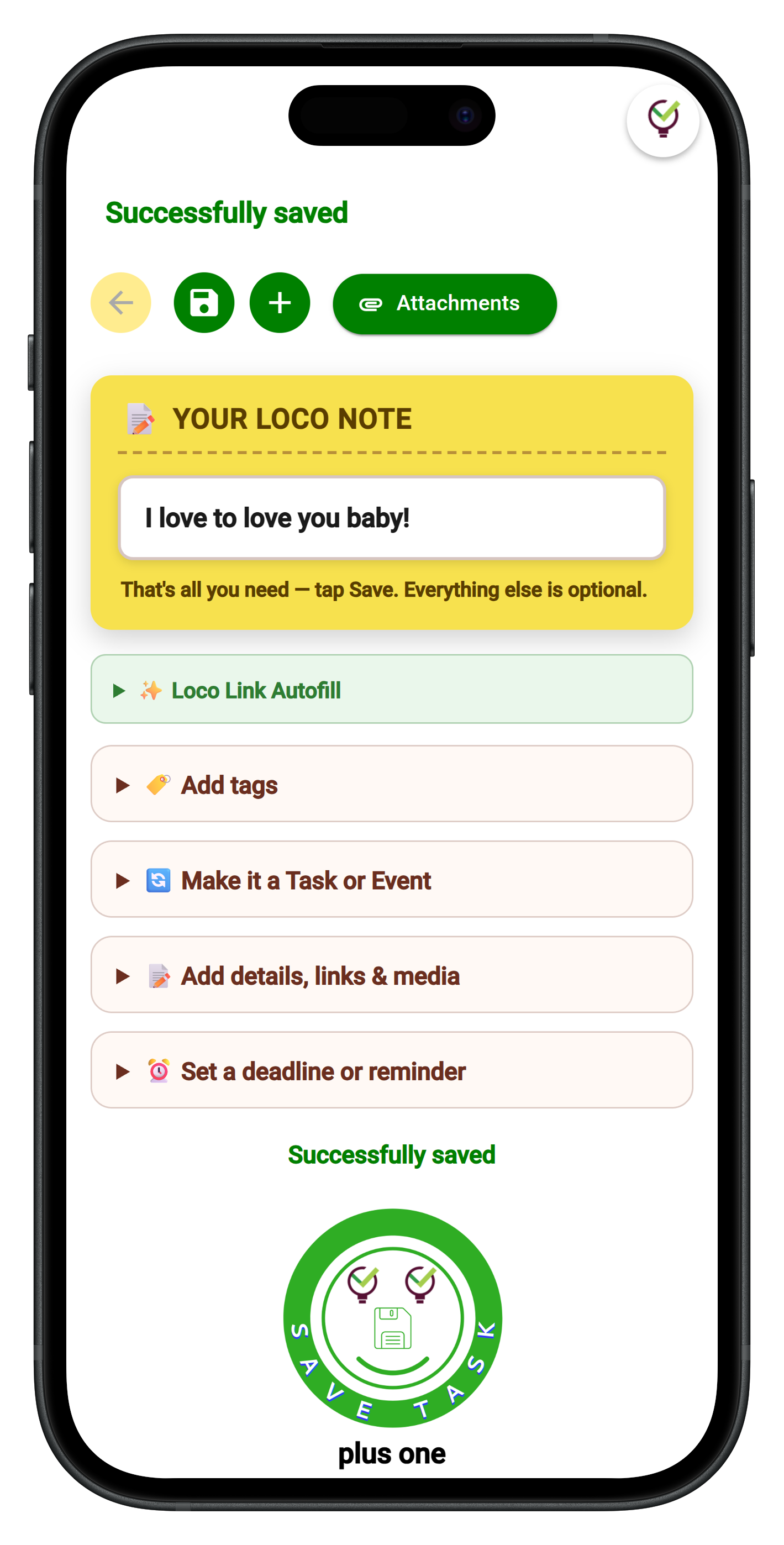
If you want a digital tool that matches the mental model above — fast capture, minimal visual noise, one place for everything — TaskLoco is worth a look. It's built around sticky notes, which means the interface mirrors how most people actually think: quickly jotted, visually scannable, and easy to move around.
The free TaskLoco Lite app (native iPhone and Android) lets you capture up to 20 notes anonymously — no account, no sign-in, nothing to slow you down. It stores everything locally on your device. If you just need a fast capture habit and nothing else, this is as frictionless as it gets.
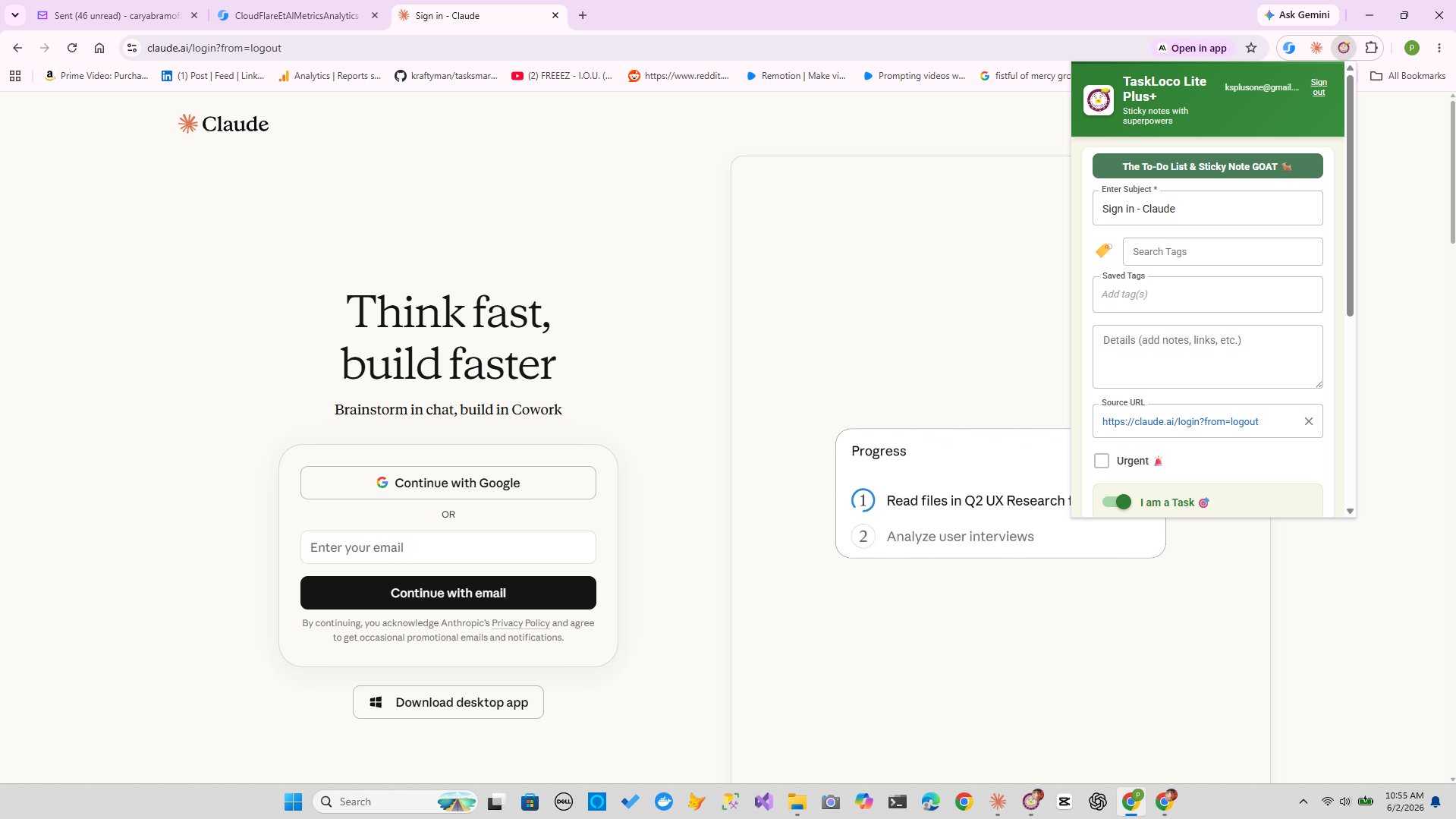
If you work across devices, TaskLoco Lite Plus+ (free, web app and Chrome extension) syncs up to 30 notes across everything and lets you capture any webpage in one click via the Chrome extension — useful for corralling research without opening seventeen tabs.
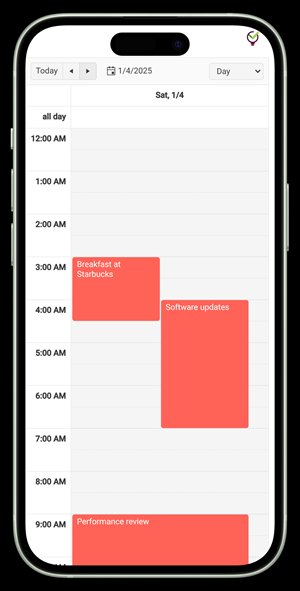
TaskLoco Premium adds reminders that deep-link back to the original note — so when a push notification fires, one tap puts you exactly where you need to be, no hunting required. You also get a calendar view, file attachments (10GB), and full team sharing that works the way email does: share a note, the recipient clones it and owns their copy. No permission hierarchies, no access levels to manage.
The design philosophy is intentionally anti-complexity. There's no timeline view, no dependency mapping, no custom field builder. If your work requires those things, TaskLoco isn't the right tool. But if what's breaking your focus is an overengineered system that demands constant maintenance, a sticky-note-first approach might be exactly the reset you need.
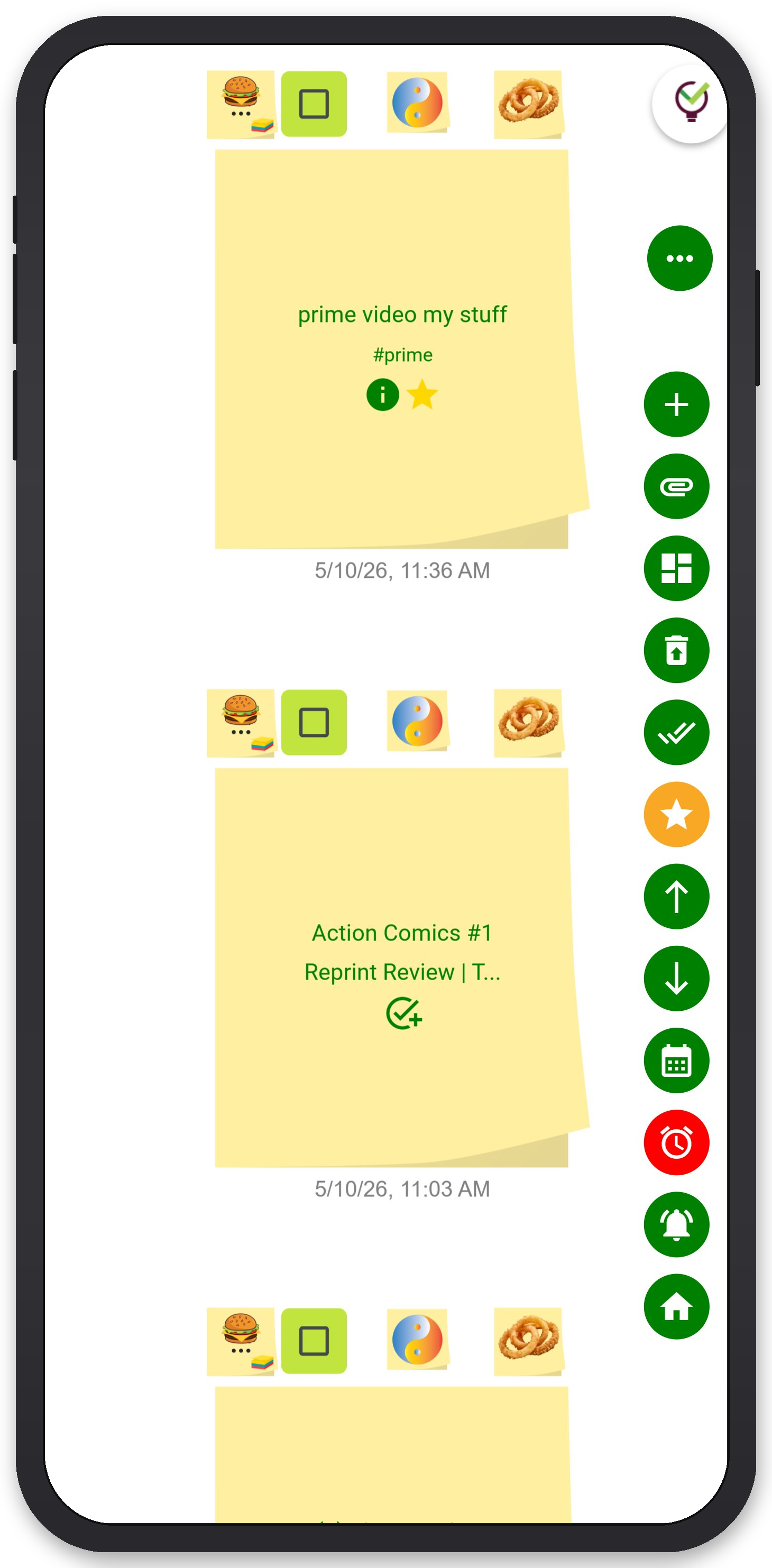
TaskLoco Premium is regularly $9.99/month per person. Right now, charter members can lock in 50% off the regular price — forever. That means $4.99/month per person today. And if our price ever goes up, you still pay half. Always.
Code CHARTER50 auto-applies at checkout. First 500 spots only — once they're gone, this offer is gone permanently. Act fast while spots last.
Every Premium subscription includes unlimited notes, 10GB file storage, reminders, calendar, and team sharing. Each team member requires a separate subscription. 7-day free trial — no charge until day 8. Cancel anytime.
Free Options: TaskLoco
TaskLoco Lite
- Native iPhone & Android app
- Completely anonymous — no sign-in
- Data stays on your device
- Up to 20 notes
- Free forever
TaskLoco Lite Plus+
- Web app + Chrome extension
- Sign in with Google
- Wall syncs across all devices
- Up to 30 notes
- Free forever
Lock In 50% Off — Forever
7-day free trial. No charge until day 8. CHARTER50 auto-applies at checkout.
🔒 Lock In My Charter SpotSee TaskLoco in Action
Frequently Asked Questions
Why can't I focus for more than a few minutes?
Your brain has been conditioned by constant interruptions to expect a novelty signal every few minutes. Notifications, tab-switching, and fragmented task lists all train your attention toward shallow scanning rather than deep work. This isn't a character flaw — it's a learned pattern, which means it can be unlearned. Start with one structural change: protect a single 90-minute block per day with notifications off and one clearly defined task. Most people notice a difference within a week.
Is short attention span permanent?
No. Attention is a trainable skill, not a fixed trait. Research on neuroplasticity shows that focused practice — deliberately sustaining attention on one thing and returning to it when you drift — physically strengthens the neural pathways involved in sustained focus. The process takes weeks, not days, but it's well-documented. The most important thing is reducing environmental interruptions first; trying to focus harder inside a notification-saturated environment is like trying to sleep with the lights on.
What is the best technique for improving focus?
Time-blocking with a specific, concrete task written down before the session starts is the technique with the most consistent evidence behind it. Pair it with a fast capture system — somewhere to immediately offload stray thoughts without acting on them — and scheduled distraction windows so your brain knows relief is coming. The combination removes the two biggest focus killers: ambiguity about what to work on, and anxiety about what you might be forgetting.
How do I stop getting distracted by my phone?
The most effective method is physical distance, not willpower. Put your phone in a different room during focus blocks. Studies by Adrian Ward at UT Austin found that even a phone sitting face-down on a desk reduces available cognitive capacity — just knowing it's there is distracting. If you need your phone nearby, use Do Not Disturb with exceptions only for genuine emergencies, and schedule two or three specific times per day to check it. The goal isn't to never look at your phone — it's to make checking intentional rather than reflexive.
Why does multitasking feel productive but isn't?
Multitasking creates a sense of momentum because you're always doing something. But what you're actually doing is switching rapidly between tasks, each switch carrying a cognitive cost. Research consistently shows that people who multitask take longer to complete individual tasks and make more errors than people who single-task. The feeling of productivity is real — the productivity itself isn't. The most dangerous version is background music or podcasts while doing deep cognitive work; your brain is processing both streams, and the creative/analytical work suffers.
Can a to-do app help with focus, or does it make things worse?
It depends entirely on the design of the app and how you use it. A to-do app with 80 items visible at once, constant syncing, and a complex hierarchy of projects creates cognitive load every time you open it — which makes focus worse, not better. An app that surfaces only your active tasks, makes capture instant, and gets out of your way can genuinely support focus by giving your brain permission to stop holding everything in working memory. The rule of thumb: if maintaining your task system feels like a second job, it's hurting your focus.
How does TaskLoco help with focus?
TaskLoco is built around sticky notes — a mental model that naturally limits scope and keeps things visible without overwhelming you. The free Lite app captures notes instantly with no account required. Premium adds reminders delivered as push notifications that deep-link directly back to the original note, so you never lose context. The calendar view and team sharing are included without layers of permission settings to manage. It's designed to have low maintenance overhead so your system doesn't compete with your actual work for attention. $9.99/month per person (currently $4.99/month per person for first 500 charter members with code CHARTER50)
Born in Brooklyn. Powered by AWS. Your data stays yours.
TaskLoco is available on iPhone, Android, Chrome, and every web browser.