Every year, humans buy 55 billion sticky notes. That's roughly 7 notes for every person on Earth. In an age of sophisticated project management software, AI assistants, and enterprise collaboration platforms, we're still reaching for little squares of paper with weak adhesive.
There's something profound about that number. It suggests that when it comes to organizing our thoughts and tasks, simple beats sophisticated every single time. The question isn't why sticky notes work — it's why digital productivity tools keep missing the point.
What makes sticky notes unstoppable
Walk into any office, home, or coffee shop and you'll see them everywhere. Yellow squares on monitors, pink ones on fridges, blue ones in notebooks. Despite having smartphones that can do everything, we still grab physical sticky notes when we need to remember something important.
The reason is embarrassingly simple: sticky notes have zero learning curve. You write on them. You stick them where you'll see them. Done. No accounts to create, no tutorials to watch, no feature discovery sessions with your team.
They're also beautifully limited. A sticky note can't hold your entire life's worth of tasks, so you write only what matters right now. This constraint forces clarity. Compare that to digital tools where it's easy to dump everything into lists that grow until they're meaningless.
But physical notes have obvious problems. They fall off walls. You can't search them. They don't remind you of deadlines. You can't share them with teammates across the country. They're perfect for capture, terrible for follow-through.
Why digital productivity tools keep failing
The productivity software industry has a feature obsession problem. Every new release adds more views, more automation, more integrations, more complexity. Teams spend weeks learning how to use tools that were supposed to make them more efficient.
Consider the typical enterprise project management platform. Before you can create your first task, you need to understand workspaces, projects, sections, custom fields, permissions, workflows, and reporting dashboards. The software that's meant to organize your work becomes work itself.
These tools also suffer from the 'everything problem.' They try to be task managers, calendars, file storage, communication platforms, reporting dashboards, and time trackers all at once. The result is software that does many things poorly instead of one thing brilliantly.
Users respond predictably. They start with enthusiasm, spend hours setting up the perfect system, then gradually drift back to simpler tools. Email becomes the task manager. Text files become the knowledge base. And yes, physical sticky notes make a comeback for anything truly important.
How TaskLoco bridges physical and digital
TaskLoco starts with a radical premise: what if we made digital sticky notes that actually worked like sticky notes? No elaborate project hierarchies. No workflow automation. No feature bloat. Just notes that stick where you put them and do what you expect.
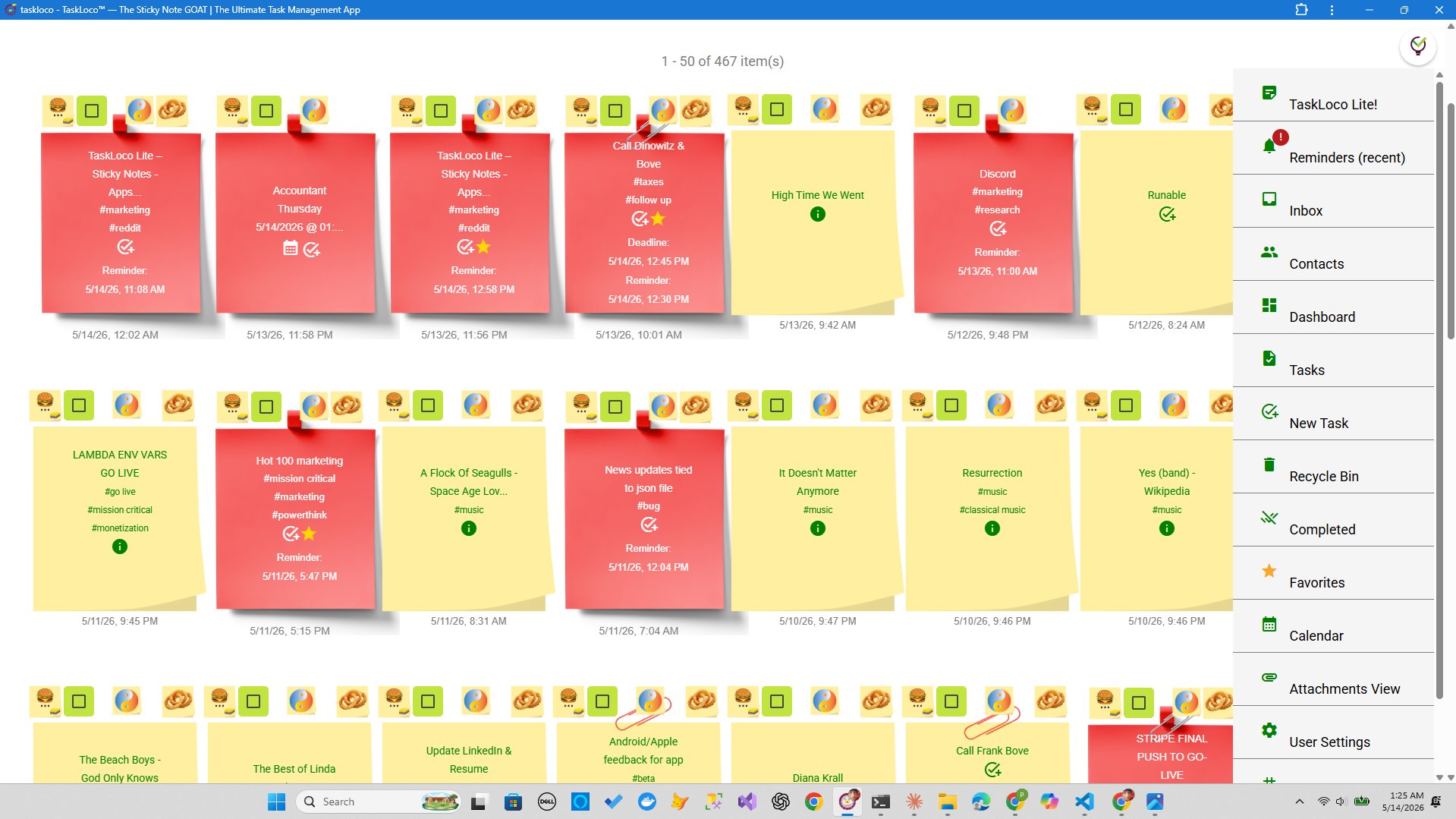
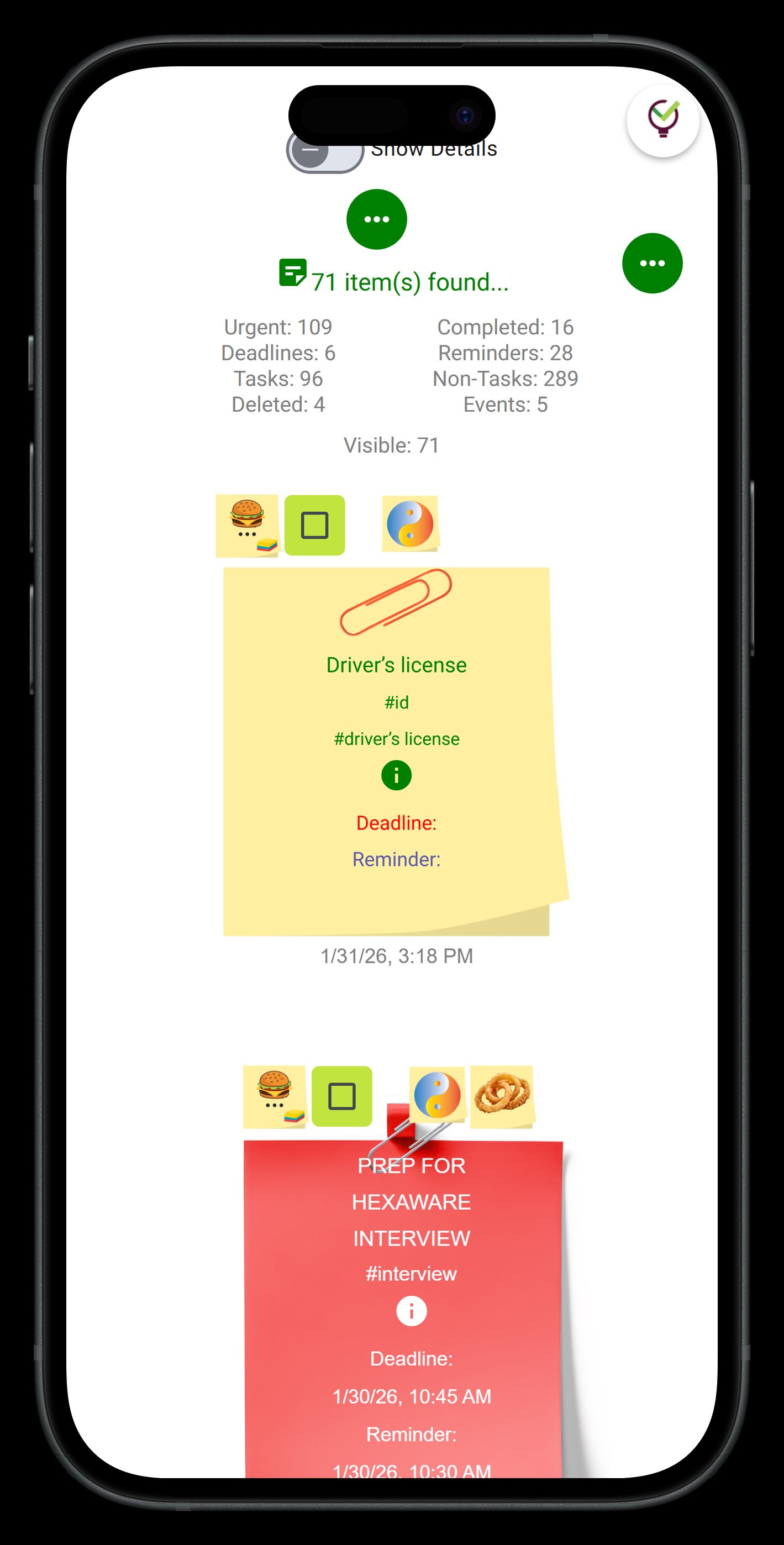
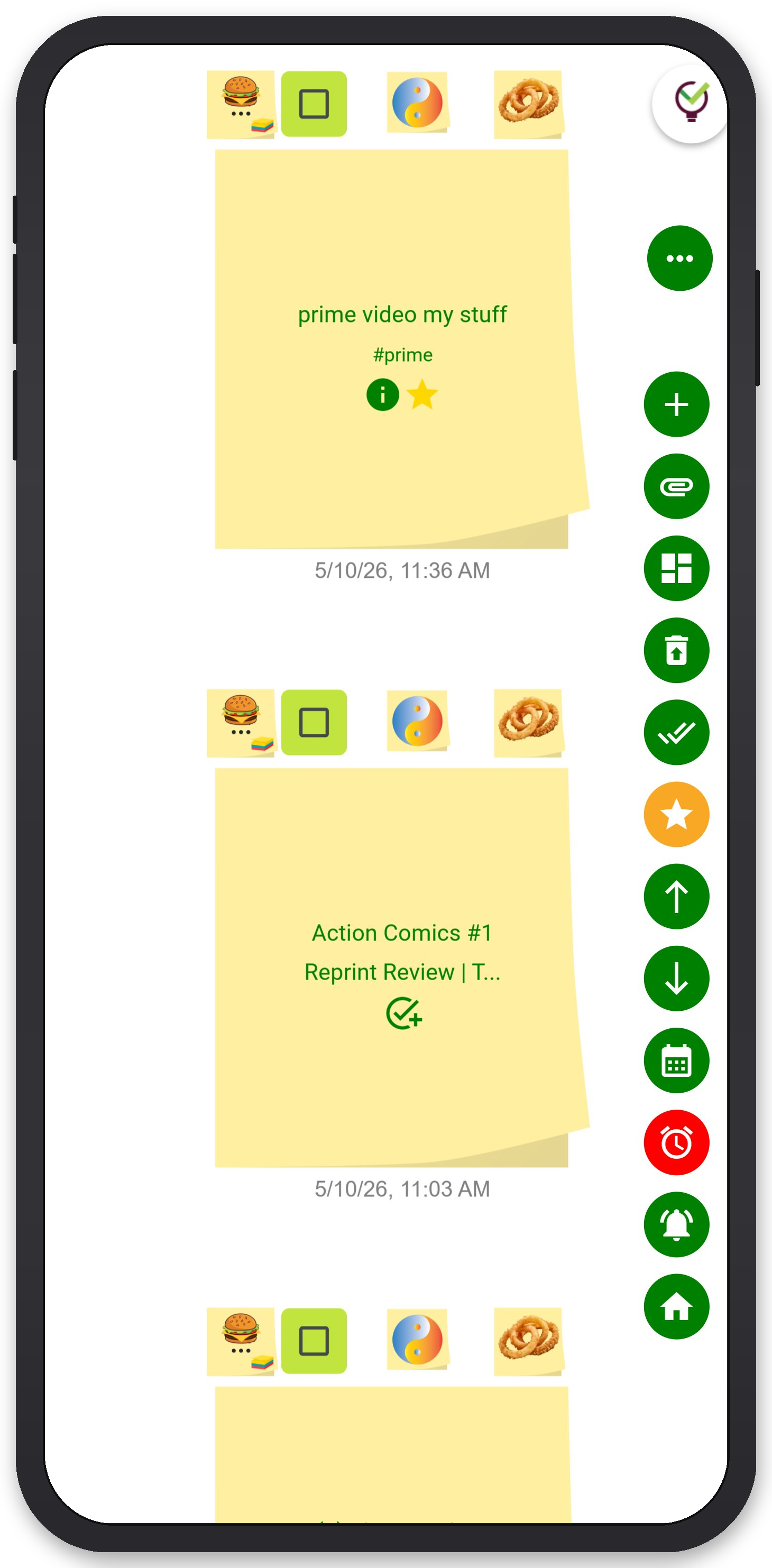
The interface mirrors the physical experience. Notes appear as actual squares on your screen. You can arrange them spatially — important stuff goes top-left, later tasks drift to the right, ideas cluster in the corner. Your brain processes spatial information faster than text lists, which is why looking at your TaskLoco wall feels immediately familiar.
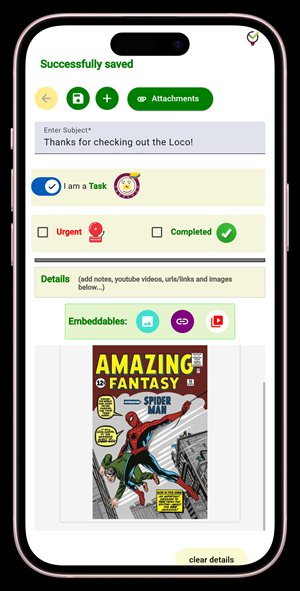
But unlike paper, these notes have digital superpowers. They sync across all your devices. They can hold file attachments. They send push notification reminders to your phone. You can share them with teammates who can clone and edit their own copies. They're searchable across everything you've ever written.
The constraints are intentional too. Each note holds one thought, one task, one file. You can't build elaborate nested hierarchies or create dependencies between tasks. This limitation forces the same clarity that makes physical sticky notes effective — if it can't fit on one note, it's probably too complex for a note.
Why simple scales better than complex
Here's the counterintuitive truth about productivity tools: simple systems scale better than complex ones. A well-designed constraint creates more freedom than infinite options. Physical sticky notes prove this every day in millions of workplaces.
Complex tools require training, maintenance, and constant decisions about how to use them correctly. Simple tools let you focus on the work instead of the workflow. When your teammate shares a TaskLoco note, you don't need to understand project structures or permission levels — it's just a note you can read and act on.
This simplicity advantage compounds over time. Complex tools accumulate cruft — old projects, unused features, outdated configurations that slow everything down. Simple tools stay fast because there's less to break, less to maintain, less to confuse new team members.
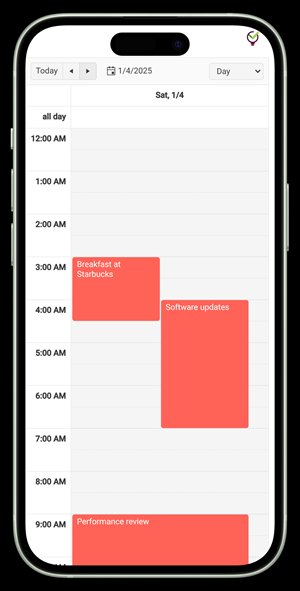
TaskLoco Premium includes unlimited notes, 10GB file storage, calendar view, reminders delivered as push notifications, and team sharing. That's it. No enterprise tiers with features locked behind sales calls. No per-seat pricing that punishes growth. Just one subscription that does what sticky notes do, but better.
TaskLoco Premium is regularly $9.99/month per person. Right now, charter members can lock in 50% off the regular price — forever. That means $4.99/month per person today. And if our price ever goes up, you still pay half. Always.
Code CHARTER50 auto-applies at checkout. First 500 spots only — once they're gone, this offer is gone permanently. Act fast while spots last.
Every Premium subscription includes unlimited notes, 10GB file storage, reminders, calendar, and team sharing. Each team member requires a separate subscription. 7-day free trial — no charge until day 8. Cancel anytime.
Free Options: TaskLoco
TaskLoco Lite
- Native iPhone & Android app
- Completely anonymous — no sign-in
- Data stays on your device
- Up to 20 notes
- Free forever
TaskLoco Lite Plus+
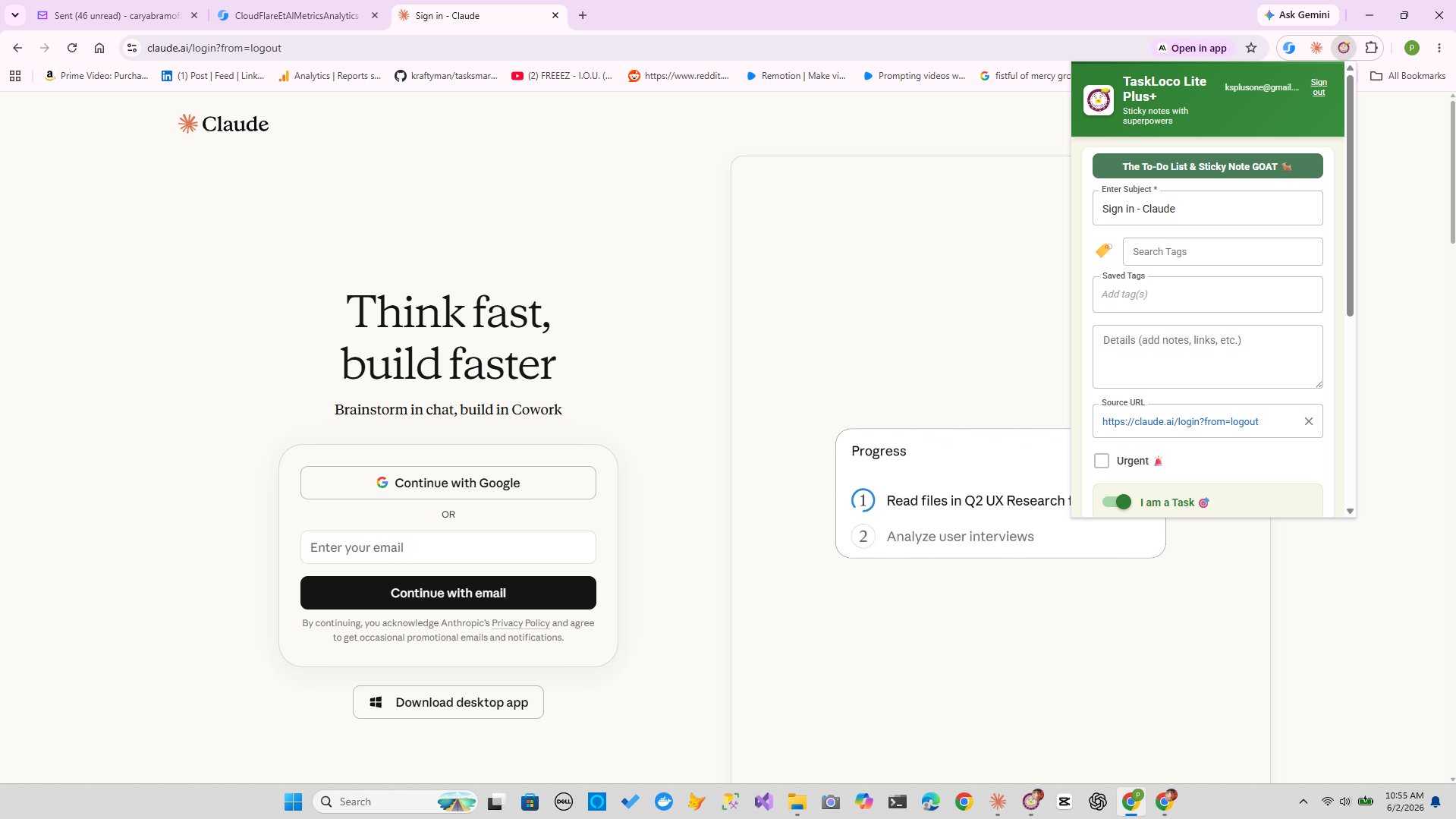
- Web app + Chrome extension
- Sign in with Google
- Wall syncs across all devices
- Up to 30 notes
- Free forever
Lock In 50% Off — Forever
7-day free trial. No charge until day 8. CHARTER50 auto-applies at checkout.
🔒 Lock In My Charter SpotSee TaskLoco in Action
Frequently Asked Questions
Why are sticky notes so popular if digital tools exist?
Sticky notes have zero learning curve and perfect visual clarity. You write, you stick, you see. Most digital tools sacrifice this immediacy for features that few people actually need.
How does TaskLoco keep the simplicity of physical sticky notes?
TaskLoco displays notes as actual squares you can arrange spatially on your screen. Each note holds one thought or task, just like paper. No complex hierarchies or workflows to learn.
What digital advantages does TaskLoco add to the sticky note concept?
TaskLoco notes sync across devices, accept file attachments, send push notification reminders, and can be shared with teammates. All while maintaining the visual simplicity of physical notes.
Is TaskLoco too simple for serious work?
Simple doesn't mean limited. TaskLoco handles unlimited notes, file storage, calendar integration, and team collaboration. The simplicity is in the interface, not the capabilities.
How much does TaskLoco cost?
$9.99/month per person (currently $4.99/month per person for first 500 charter members with code CHARTER50)
Can TaskLoco replace more complex project management tools?
For many teams, yes. If your work involves tasks, deadlines, and collaboration without needing Gantt charts or enterprise compliance, TaskLoco's simplicity often proves more effective than complex alternatives.
Does TaskLoco work on mobile devices?
Yes, TaskLoco syncs across all devices through the web app. There's also TaskLoco Lite — a native iPhone and Android app that stores 20 notes locally without requiring an account.
Born in Brooklyn. Powered by AWS. Your data stays yours.
TaskLoco is available on iPhone, Android, Chrome, and every web browser.