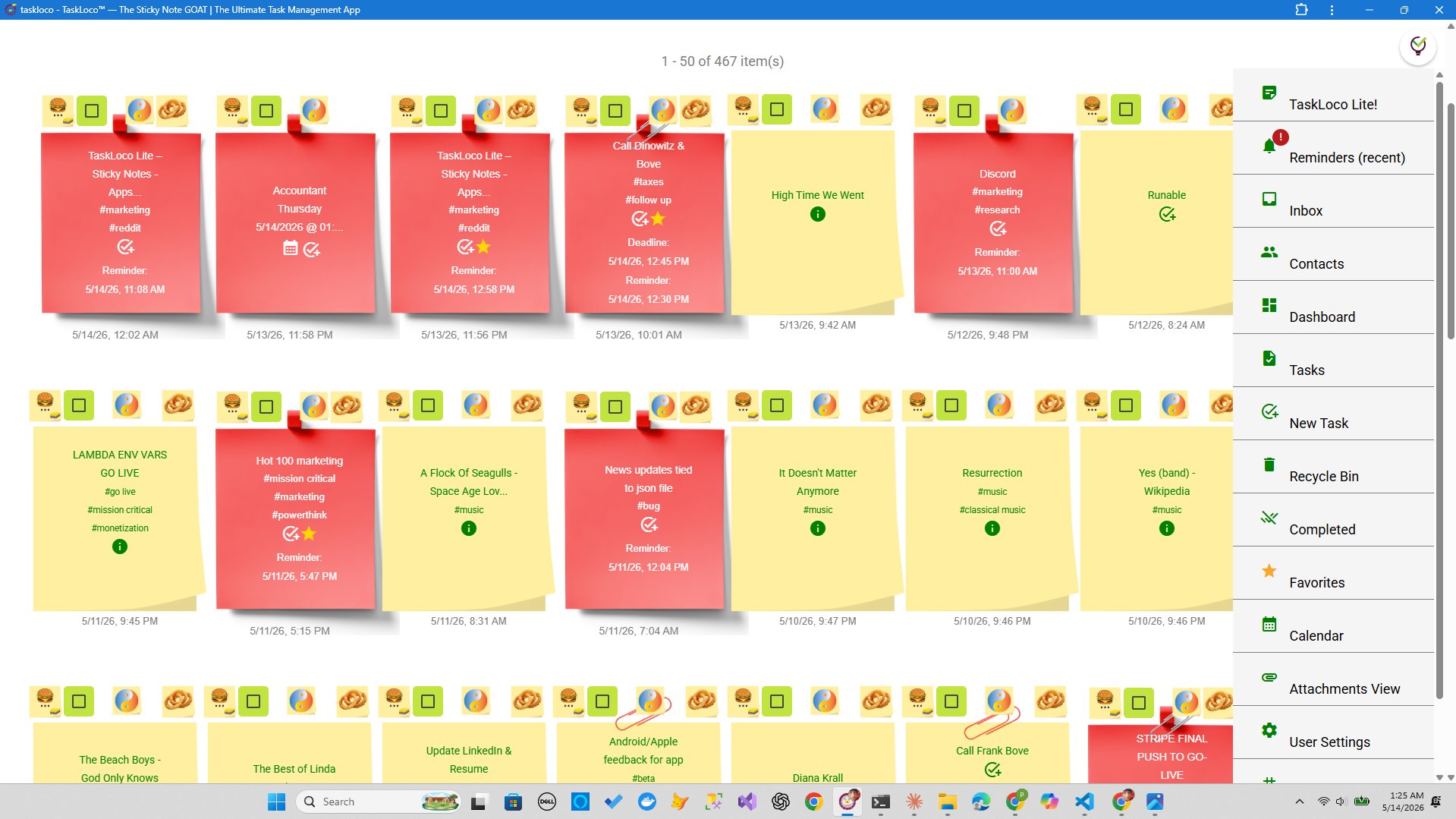
If you've ever stared at a beautifully color-coded Todoist list and felt absolutely nothing click — you're not doing it wrong. You're wired differently. Visual thinkers don't process tasks as a sequence of items to check off. They process them as a landscape: things near each other, things that feel urgent, clusters of related ideas, the shape of a day. A list erases all of that context the moment you type the first bullet.
This isn't a productivity philosophy debate. It's neuroscience. Spatial reasoning and working memory operate in parallel channels — and when a tool forces everything into a single column, it's actively fighting against how a visual mind organizes information. This article explains what visual thinking actually is, why list-based apps fall short for it, and what kind of tool structure works instead.
What Visual Thinking Actually Means (and Why It Matters for Productivity Tools)
Visual thinking — sometimes called spatial cognition — is the tendency to process, store, and retrieve information in the form of images, positions, and relationships rather than words or sequences. If you sketch diagrams to explain a concept, rearrange Post-it notes on a wall to plan a project, or find yourself remembering where on a page something was written rather than what the words said, you're a visual thinker.
It's more common than most people assume. Research in cognitive science consistently shows that a significant portion of the population relies on visual-spatial working memory as their primary processing channel. The challenge is that nearly every mainstream productivity app — Todoist, TickTick, Things, Google Tasks, even Asana's list view — was designed around verbal-sequential thinking. They assume you want to add a task, name it, give it a due date, and move on. Spatial context isn't part of the model at all.
The result: visual thinkers spend enormous energy translating their natural thought patterns into a format the tool understands, then translating back when they need to actually work. That translation tax is real. It's why so many visual thinkers cycle through app after app, assuming the problem is them, when the problem is the paradigm.
Why Trello, Todoist, and Similar Apps Frustrate Visual Thinkers
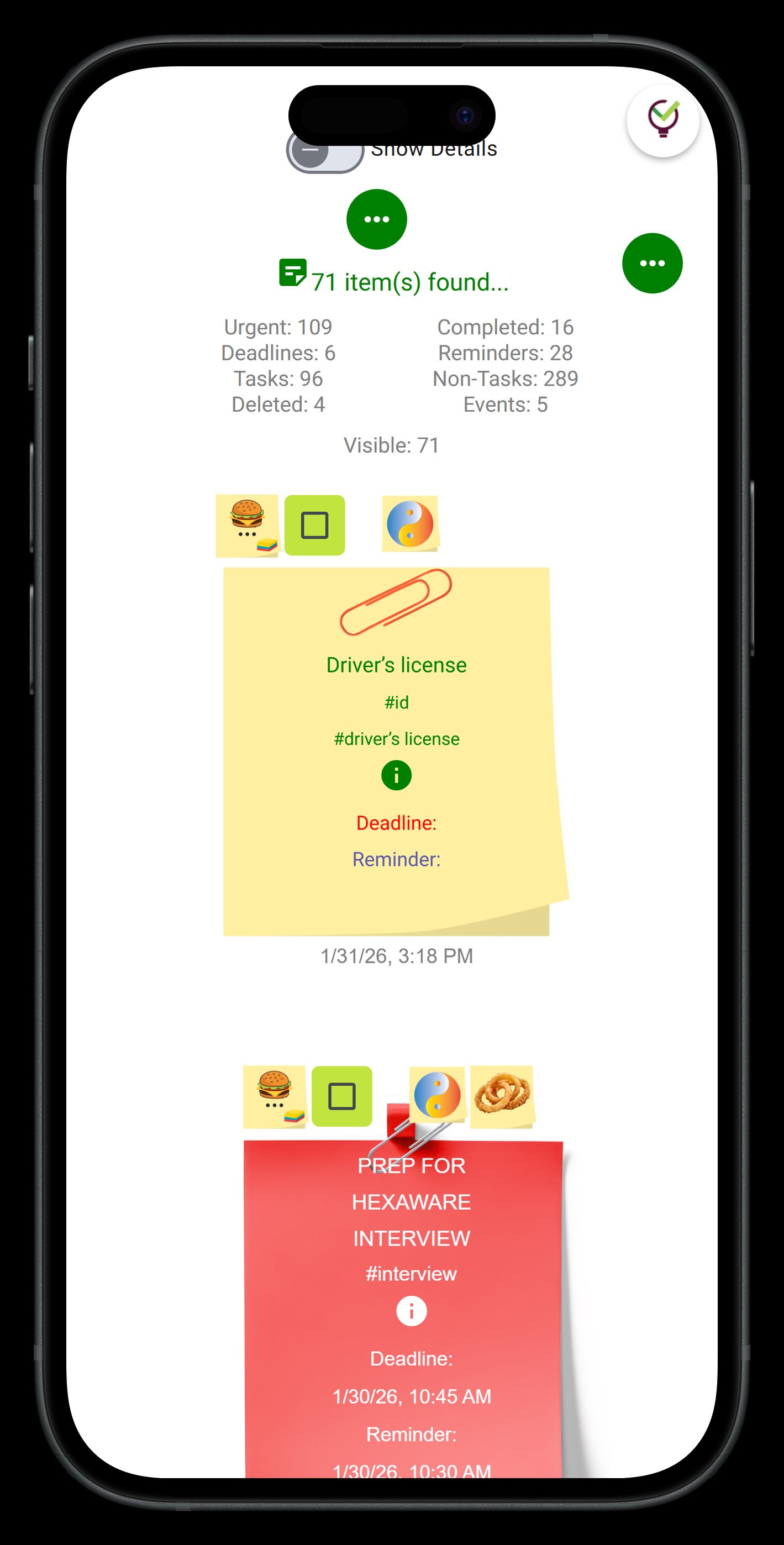
Trello gets credit for being more visual than a plain list — and that's fair. Columns of cards are a step up from a flat checklist. But Trello is still fundamentally a grid. Cards live in columns, columns flow left to right, and there's no meaningful spatial relationship between items beyond their vertical order within a lane. You can't place two cards near each other because they're emotionally connected, or move a task to the corner of your canvas because it's been nagging at you all week but isn't urgent. The grid determines meaning, not you.
Todoist and its descendants go further in the wrong direction. They're optimized for people who want inbox-zero task hygiene: capture, categorize, prioritize, complete. That workflow is genuinely excellent — for people whose brains work that way. For visual thinkers, a priority level is a pale substitute for the felt sense of where something belongs in your mental map of the day.
The deeper problem is that list-based apps treat tasks as atomic, isolated units. They don't carry context. A sticky note on a physical wall carries context by its position: it's near the notes about the client pitch, it's far from the admin pile, it's in the red zone because something is due. Move a Todoist task from p1 to p2 and it just sits there, re-sorted. That's not how visual memory works.
- No spatial canvas — you can't arrange notes by relationship, energy, or urgency the way you'd arrange physical Post-its
- Forced hierarchy — projects, sub-tasks, tags, and labels impose a taxonomy on what should be a fluid landscape
- Context collapse — all tasks look identical; visual cues like color and position carry no real meaning in a sorted list
- Poor peripheral vision — lists paginate or truncate; a good wall lets you see everything at once and notice patterns
None of this makes these apps bad. It makes them wrong for a specific kind of mind. And recognizing that distinction is the first step to finding something that actually works.
What a Visual Thinker's Productivity Tool Actually Needs
Before recommending any specific app, it helps to define what a spatial tool needs to do. These aren't preferences — they're functional requirements for visual cognition to work without the translation tax.
A free-form canvas. Notes need to be placeable, not just sortable. Position should carry meaning. You should be able to group things by proximity, isolate things that are blocked, and create visual clusters without needing to name the category first. Physical sticky-note walls work because you decide what goes where — the tool doesn't force a structure on you before you're ready to name it.
Color as a first-class signal. In list apps, color is decoration. On a real visual board, color carries information — urgency, type, project, energy level. It should be instant to apply, easy to read at a glance, and meaningful across the whole canvas.
Low friction capture. Visual thinkers often think in bursts. A note needs to go from thought to canvas in two seconds, not a form-filling exercise with due date, assignee, project, and priority fields. The note is the thinking. The structure can come later.
Whole-canvas peripheral vision. You need to see everything — or at least everything relevant — at once. This is how you notice the connection between two things you hadn't consciously linked. Lists paginate. Boards truncate. A spatial canvas lets you zoom out and scan.
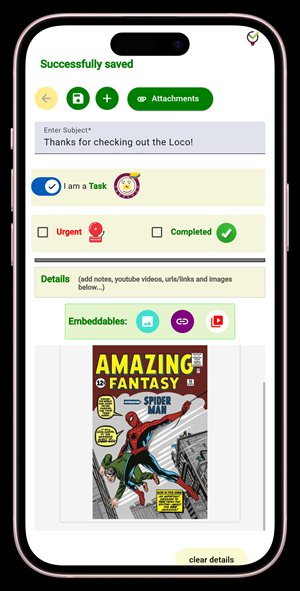
Files and images living on the note. Visual thinkers work with images, sketches, screenshots, and documents. Those should live on the note itself, not in a linked folder somewhere else. The visual artifact should be part of the note, not a reference to something external.
How TaskLoco Applies This in Practice
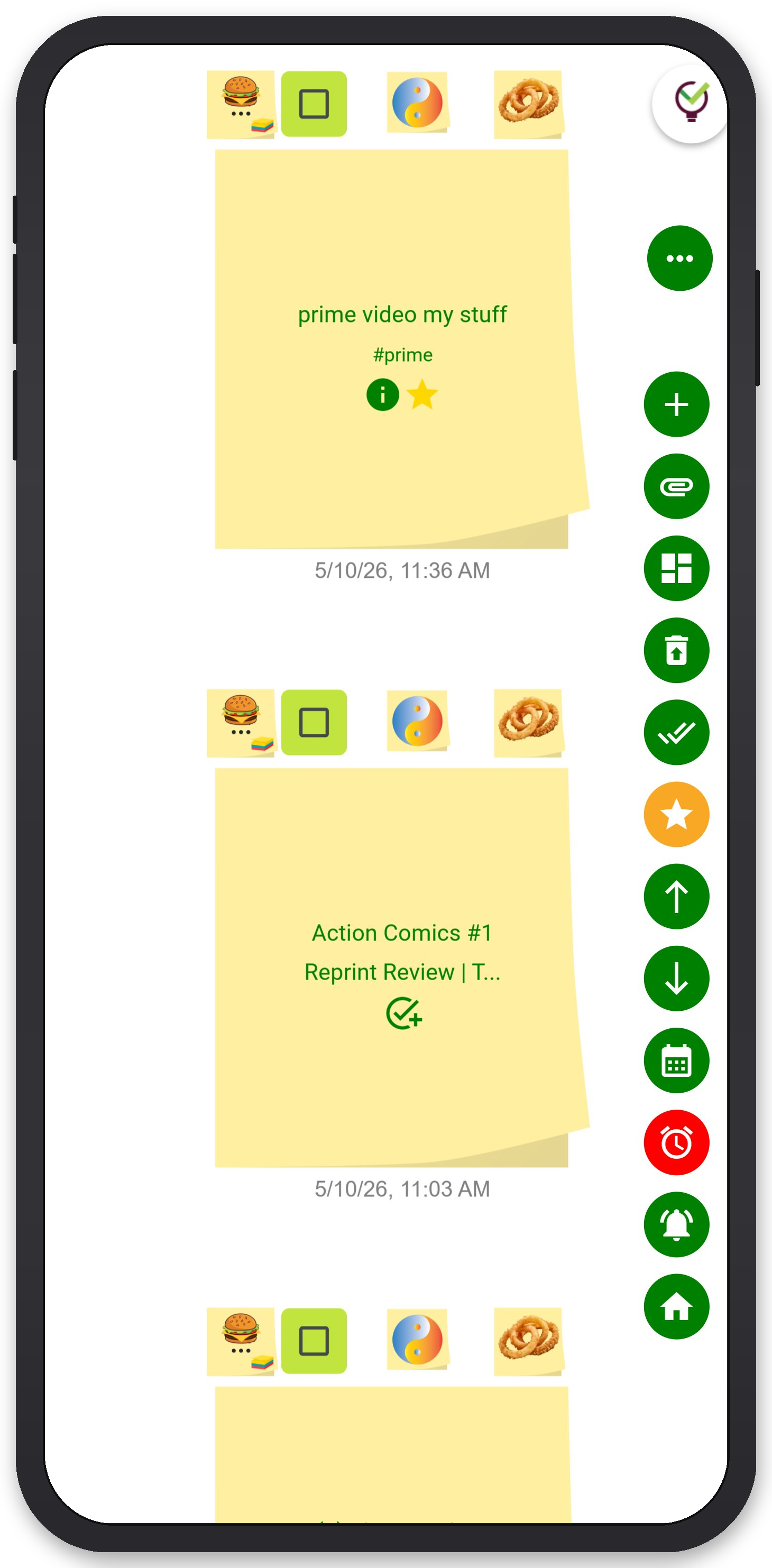
TaskLoco was built around the sticky note as the primary unit of information — not the task, not the row, not the card. That distinction matters more than it sounds. A sticky note is inherently spatial. It has a position. It has a color. It can sit alone or cluster with others. It can be moved without being reclassified. This is the right primitive for visual thinking.
The wall view in TaskLoco lets you arrange notes freely across a canvas. You're not dragging cards between columns — you're placing thoughts where they make sense to you. A note can be near other notes because they're related, or isolated because it needs attention, or tucked into a corner because it's waiting on someone else. None of that requires you to name the relationship or create a tag for it. The position is the relationship.
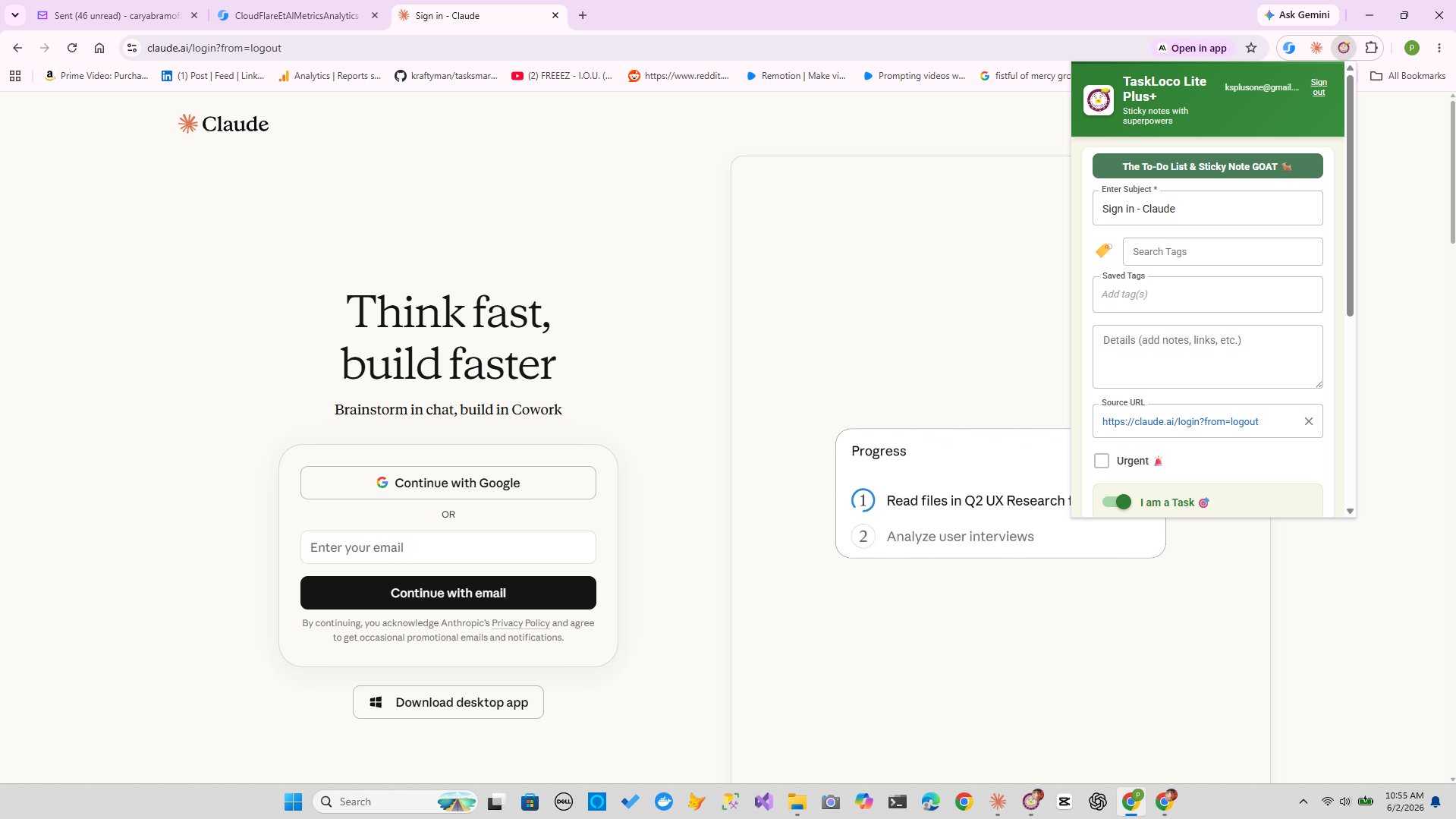
Capture is fast. From the browser, the Chrome extension lets you grab any webpage — an article, a reference, a job listing, a recipe — and turn it into a note in one click. That note lands on your wall with its source intact, ready to position wherever it belongs in your current project landscape. For a visual thinker juggling multiple threads, that kind of instant, contextual capture is genuinely different from typing into a task field.
Premium subscribers get file attachments directly on notes — up to 10GB of storage included, with larger tiers available. Images, PDFs, sketches, screenshots: they live on the note, visible when you open it, not buried in a file tree. Reminders are delivered as push notifications directly to your phone and computer, and each one deep-links back to the exact note it came from — so when you tap the reminder, you're immediately back in context, not hunting through a list to find what you were supposed to do. Optional email and SMS channels are available too.
Team sharing works the way sticky notes actually work: you share a note, the recipient can clone it and make it their own. No permissions architecture to configure, no access levels to set. It's the digital equivalent of handing someone a Post-it.
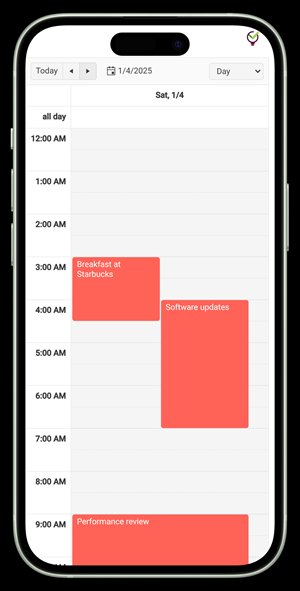
TaskLoco Lite is the free native app for iPhone and Android — anonymous, no sign-in required, stores up to 20 notes on your device. It's a genuine no-commitment way to feel the difference between a spatial note canvas and a list. Lite Plus+ extends that to 30 synced notes across all your devices via the web app and Chrome extension, still free. Premium unlocks unlimited notes, reminders, file attachments, calendar view, and team sharing.
TaskLoco Premium is regularly $9.99/month per person. Right now, charter members can lock in 50% off the regular price — forever. That means $4.99/month per person today. And if our price ever goes up, you still pay half. Always.
Code CHARTER50 auto-applies at checkout. First 500 spots only — once they're gone, this offer is gone permanently. Act fast while spots last.
Every Premium subscription includes unlimited notes, 10GB file storage, reminders, calendar, and team sharing. Each team member requires a separate subscription. 7-day free trial — no charge until day 8. Cancel anytime.
Free Options: TaskLoco
TaskLoco Lite
- Native iPhone & Android app
- Completely anonymous — no sign-in
- Data stays on your device
- Up to 20 notes
- Free forever
TaskLoco Lite Plus+
- Web app + Chrome extension
- Sign in with Google
- Wall syncs across all devices
- Up to 30 notes
- Free forever
Lock In 50% Off — Forever
7-day free trial. No charge until day 8. CHARTER50 auto-applies at checkout.
🔒 Lock In My Charter SpotSee TaskLoco in Action
Frequently Asked Questions
Are visual thinkers actually less productive with list-based apps?
Not less productive in every context — but consistently less productive when the tool fights their natural processing style. Visual thinkers use spatial working memory as a primary channel. List-based apps require them to convert spatial thinking into sequential text, work in that format, and convert back. That translation adds cognitive load. It's not a character flaw — it's a tool mismatch. Switching to a spatial tool doesn't require changing how you think; it requires finding a tool that already thinks the same way.
What's the difference between Trello and a true spatial canvas?
Trello uses columns and cards — a grid structure where position is constrained by the column a card lives in. A true spatial canvas lets you place notes anywhere on a free-form surface, with no column structure forcing relationships. In Trello, moving a card changes its status (which column it's in). In a spatial canvas, moving a note changes its relationship to other notes — which is closer to how visual memory actually encodes meaning. The grid is a compromise between visual and sequential; a free canvas is fully spatial.
Why do visual thinkers like sticky notes so much?
Physical sticky notes have almost no structure imposed on them. You write on them, you put them somewhere, and where you put them means something. You can cluster related notes, isolate blocked tasks, create zones for different projects, and rearrange everything when your thinking changes — all without renaming categories or restructuring a taxonomy. The note is the information and the position is the context. That's a remarkably good match for how spatial memory works, which is why sticky-note-based walls have been a default thinking tool in design, product, and creative work for decades.
Does TaskLoco work as a digital sticky-note wall?
Yes. The wall view in TaskLoco lets you arrange notes freely across a canvas — place them, cluster them, move them — without forcing a column or list structure. Notes carry color, position, and content simultaneously, which is the right model for visual thinking. Premium adds unlimited notes, reminders that deep-link back to the original note via push notification, file attachments, calendar view, and team sharing. Lite (native iPhone and Android) and Lite Plus+ (web and Chrome extension) are free starting points with no commitment required. $9.99/month per person (currently $4.99/month per person for first 500 charter members with code CHARTER50)
What should visual thinkers look for in a productivity app?
Five things matter most: a free-form canvas (not just columns or lists), color as a meaningful signal rather than decoration, fast low-friction capture so thoughts land before they disappear, the ability to see a wide view of all current work at once, and file or image attachments that live on the note rather than in a separate folder. If an app checks all five, it's worth trying seriously. If it checks two or three, you'll probably hit the wall eventually.
Can visual thinkers use Todoist or Things if they customize it enough?
Some can, to a degree. Tags, filters, and color labels in apps like Todoist add a layer of visual signaling that helps. But the fundamental shape of the tool — a sorted, sequential list — doesn't change no matter how much you customize it. You can make a list more colorful, but you can't make it spatial. If the list format itself is what's creating friction, more customization won't resolve it. The better move is to try a canvas-based tool for a week and see if the friction disappears.
Is there a free way to try a spatial sticky-note tool before committing?
Yes. TaskLoco Lite is a completely free native app for iPhone and Android — no sign-in, no account, completely anonymous. It stores up to 20 notes on your device and gives you a genuine feel for working with a spatial sticky-note canvas. TaskLoco Lite Plus+ is also free: sign in with Google, get up to 30 notes synced across all your devices via the web app and Chrome extension. Premium starts with a 7-day free trial. $9.99/month per person (currently $4.99/month per person for first 500 charter members with code CHARTER50)
Born in Brooklyn. Powered by AWS. Your data stays yours.
TaskLoco is available on iPhone, Android, Chrome, and every web browser.