There's a painful irony at the center of every Monday, Notion, and ClickUp workspace: you spend the first hour of your day inside the productivity app instead of doing the actual work. You're building views, tweaking automations, reorganizing databases, and wondering whether this task belongs in the sprint board or the project tracker. The tool has become the job.
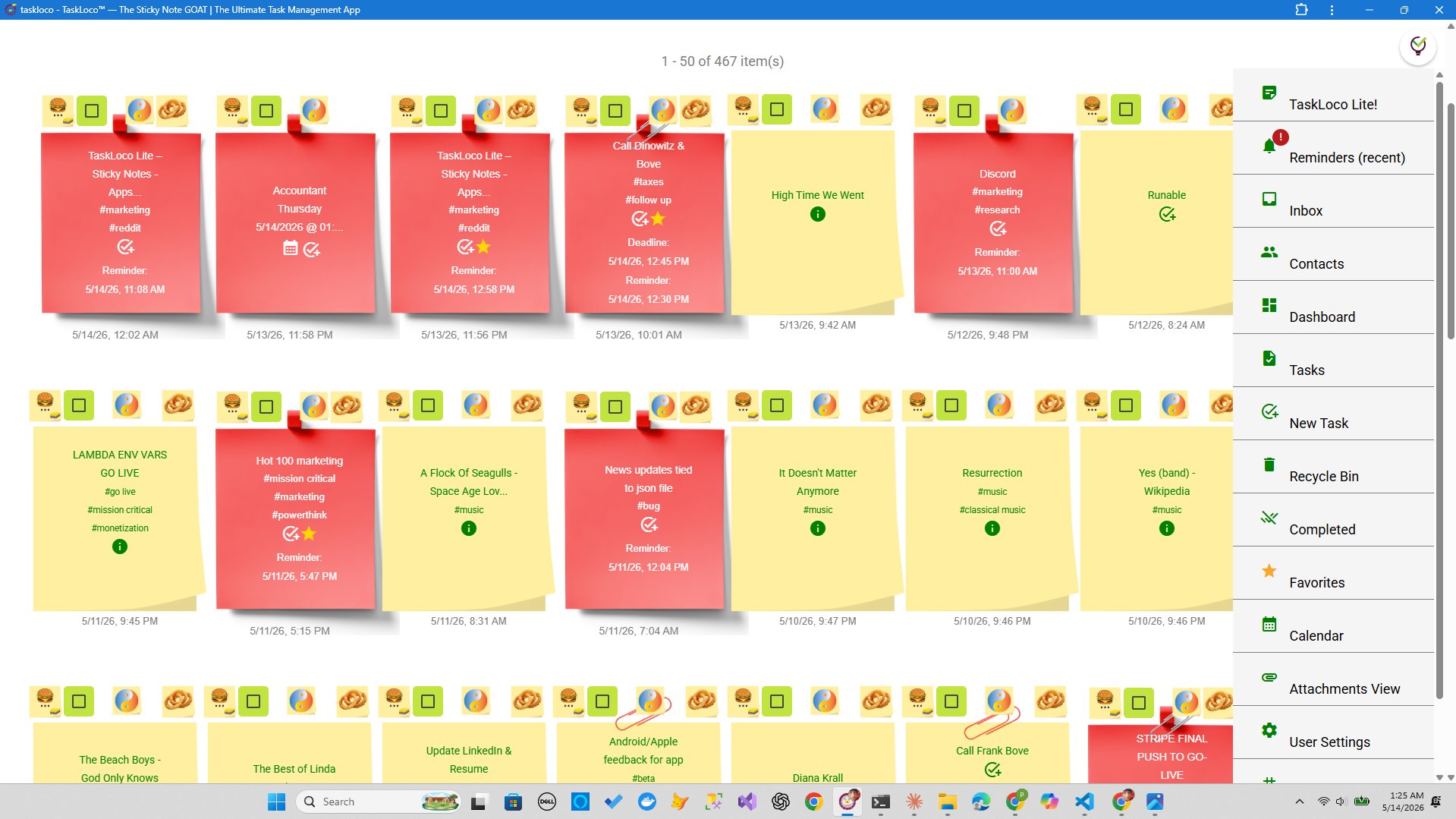
TaskLoco starts from a different premise. Sticky notes are the oldest and most intuitive capture system ever invented — you see everything, you grab what you need, you move on. TaskLoco takes that physical-world clarity and builds a full productivity layer on top of it: unlimited notes, push-notification reminders that deep-link back to the original note, 10GB file storage, a calendar view, and full team sharing. No configuration sprint. No onboarding consultant. Just a wall of notes that actually reflects how your brain works.
The Real Reason Complex Tools Kill Productivity
Monday, Notion, and ClickUp are genuinely powerful. That's precisely the problem. Power without constraint creates what productivity researchers sometimes call tool overhead — the cognitive cost of managing the system you built to manage your work. Every new view, custom field, or automation rule is a decision you have to make, maintain, and explain to the next person on your team.
Studies on cognitive load consistently show that humans make better decisions and sustain focus longer when the number of active choices in front of them is small. A sticky-note wall forces that constraint. You see what you wrote. You act on it or you don't. There's no six-tab configuration panel between the thought and the action.
This isn't a knock on complexity for its own sake — Notion's database features are genuinely useful for teams that live in structured data, and ClickUp's Gantt views are real if you're managing multi-dependency project timelines. But for the overwhelming majority of daily work — capture a thought, set a reminder, attach a file, tell a colleague — that complexity is friction, not value.
What a Sticky-Note Workspace Actually Does That List Tools Can't
The sticky-note metaphor isn't just aesthetic. It changes how you interact with information. In a list-based tool, everything is a row. Rows imply sequence, hierarchy, and completion states. That's great for a checklist. It's terrible for capturing a half-formed idea, a reference link, a phone number you need in three days, or a block of text you want your teammate to see immediately.
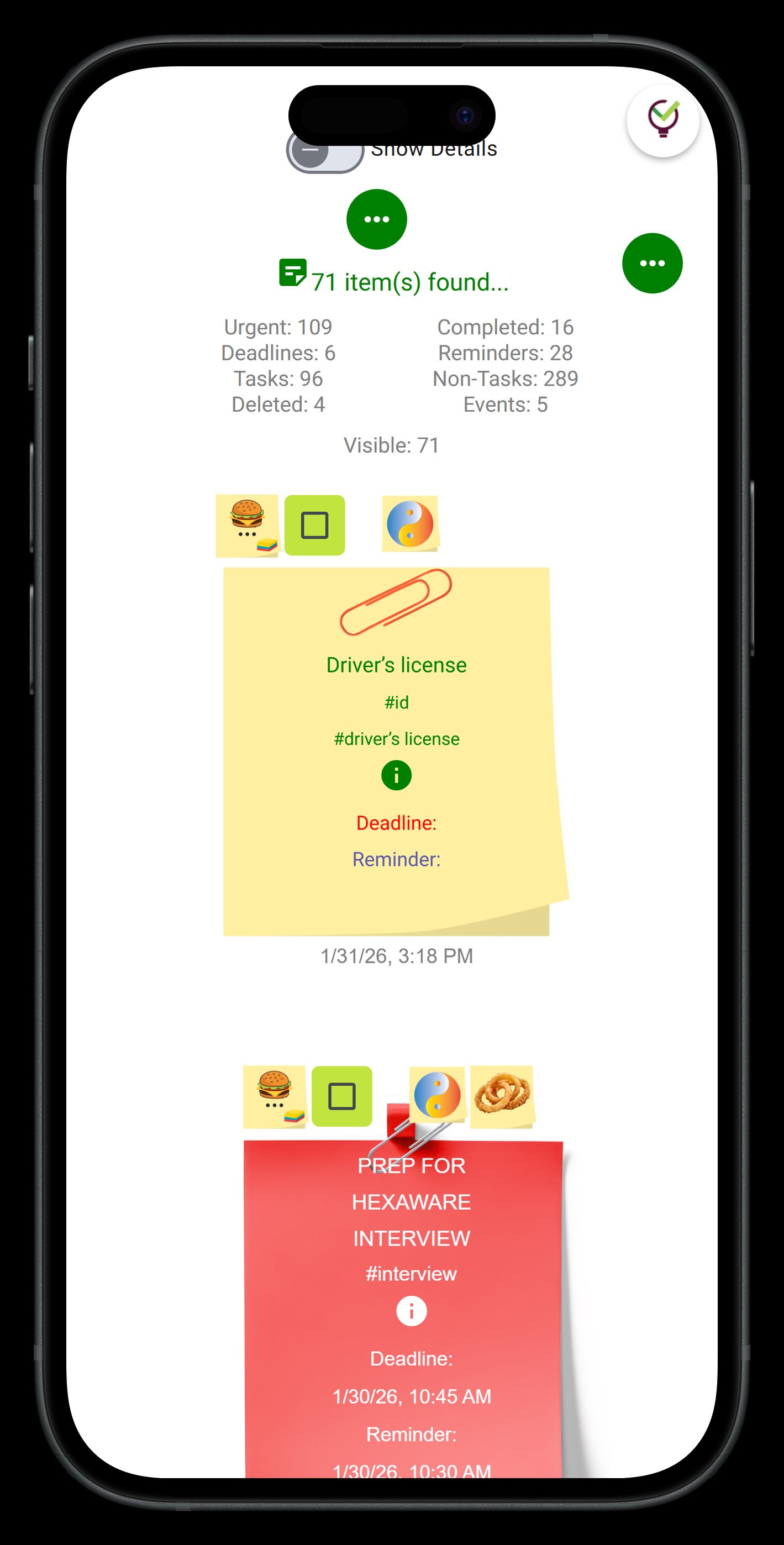
TaskLoco treats every note as a first-class object. It can hold text, a checklist, an embedded file, a reminder, or all four at once. Notes live on a spatial wall you can arrange the way your projects actually relate to each other — not the way a default sort order arranges them. You can zoom out and see the whole picture, or zoom in on a single note without losing context.
Team sharing works the way email always should have: you share a note, the recipient gets a push notification, they can clone the note and make it their own. No permissions hierarchy. No access level negotiation. No wondering whether your colleague can see the file you attached. They can. It's in the note.
- Reminders fire as push notifications directly to your phone and computer, and tap straight back into the original note — not a generic alert that makes you hunt for context.
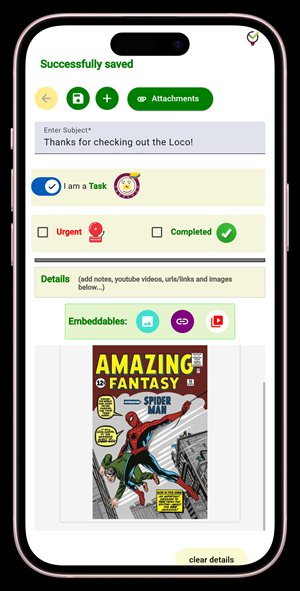
- File attachments live inside the note they belong to, not in a separate documents section you navigate to separately.
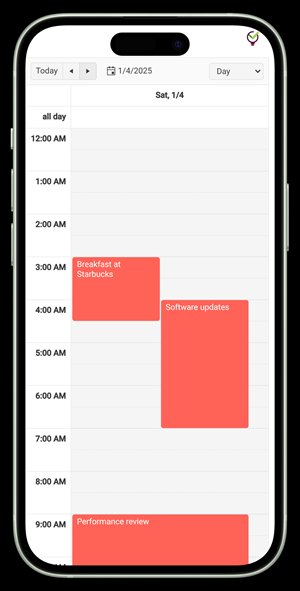
- Calendar view surfaces every note that has a date without requiring you to rebuild your system as a calendar-first tool.
- The Chrome extension captures any webpage into a new note in one click — no copy-paste, no tab switching.
Where Monday, Notion, and ClickUp Win — And When That Actually Matters
Honest comparison requires saying this plainly: if your team lives and dies by Gantt charts, project dependency mapping, or multi-level timeline views, TaskLoco is not the right tool. ClickUp and Monday were built for that workflow and they do it well. If your organization requires enterprise SSO, SOC 2 compliance documentation, or deep API integrations with a stack of internal tools, Notion's enterprise tier and Monday's integration ecosystem are genuinely better fits.
Natural language task input — typing "remind me about the vendor call next Tuesday at 2pm" and having the app parse it automatically — is another capability TaskLoco doesn't have today. If that's a dealbreaker for your workflow, ClickUp and some versions of Notion handle it.
But here's the honest counter: most people using those tools don't use those features. They use them to write notes, track tasks, set reminders, attach files, and share things with their team. For that use case — which describes the majority of daily knowledge work — TaskLoco's sticky-note model is faster, clearer, and significantly less likely to become a second job.
How TaskLoco Fits Into a Real Workday
TaskLoco offers three tiers built around different commitment levels. TaskLoco Lite is a native iPhone and Android app — completely anonymous, no sign-in, no account, no syncing. It stores up to 20 notes in a file on your device. It's a pure capture tool for people who want zero friction and zero data footprint. TaskLoco Lite Plus+ is a free web app and Chrome extension — sign in with Google, sync across all your devices, capture any webpage in one click, up to 30 notes. No reminders, no file attachments, no team sharing, but a genuinely capable free tier for solo users.
TaskLoco Premium is where the full picture comes together: unlimited notes, 10GB file storage, push-notification reminders that deep-link back to your notes, optional email and SMS reminder channels, calendar view, and full team sharing. Each team member gets their own subscription — there are no seat bundles or minimum team sizes. You add the people who need it; everyone else stays on Lite Plus+ for free.
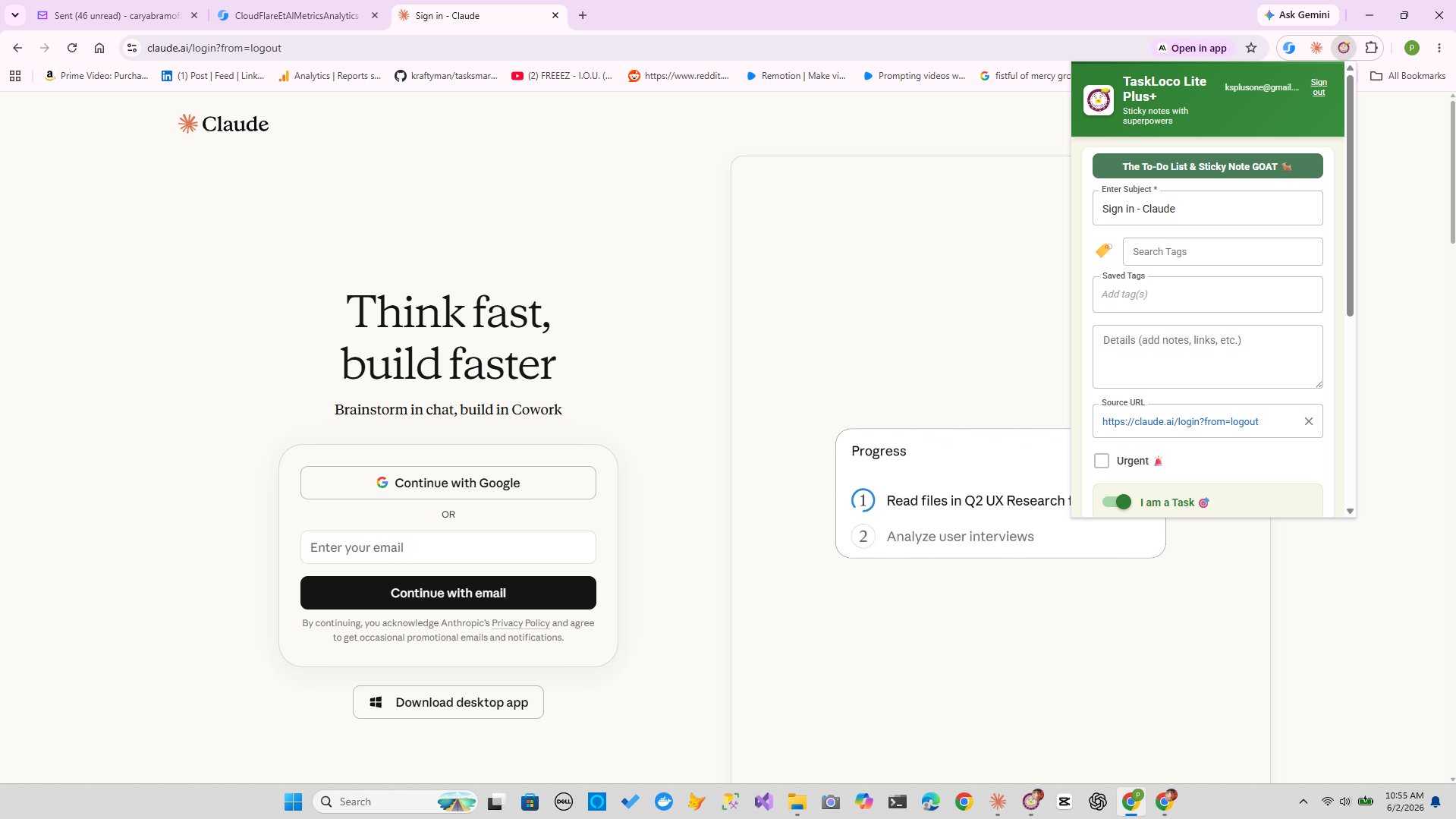
The Chrome extension deserves a specific mention for anyone who does research-heavy work. One click on any webpage creates a note with the page title, URL, and any text you've highlighted. If you've ever had a browser tab open for three weeks because you were afraid to close it, you know exactly what problem that solves.
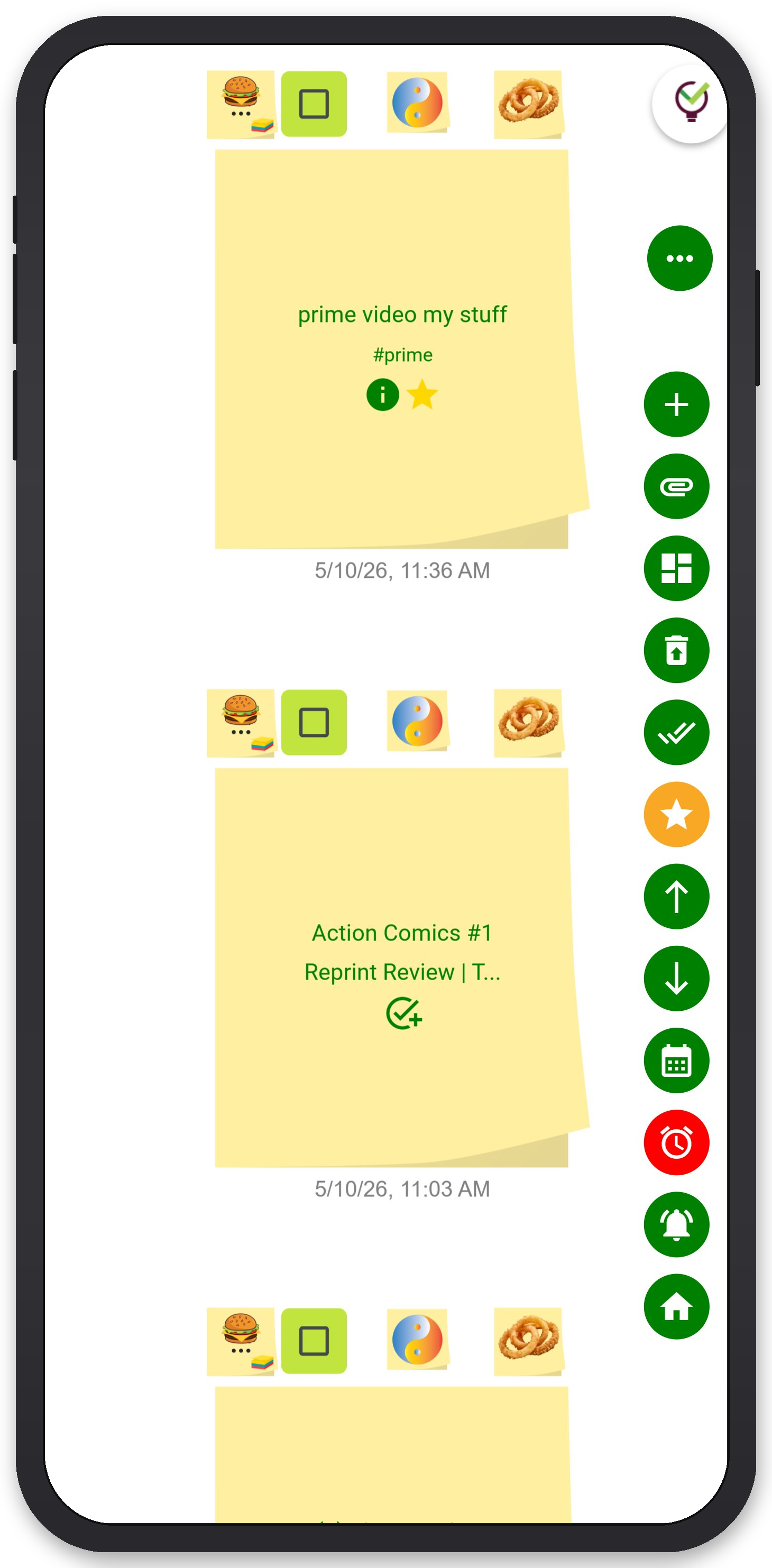
How TaskLoco Compares
| Feature | TaskLoco | Monday / Notion / ClickUp |
|---|---|---|
| Core interaction model | Spatial sticky-note wall — see everything at once, no views to configure | List, board, table, and timeline views — powerful but require configuration |
| Free tier | Two free tiers: Lite (20 notes, native app, no sign-in) and Lite Plus+ (30 notes, synced web app + Chrome extension) FREE | Free tiers available on all three, with varying feature restrictions |
| Setup time to first useful note | Under 60 seconds — open the app, write a note | Notion and ClickUp often require workspace, project, and view setup before first real use |
| Reminders | Push notifications to phone and computer, deep-linking back to the original note; optional email and SMS channels | Reminders available across all three platforms |
| File attachments | 10GB included with Premium — files live inside the note they belong to | File attachments available; storage limits and location vary by plan |
| Team sharing | Yes — included with Premium. Each team member requires a separate subscription — currently $9.99/month per person, but TaskLoco is offering a Charter Member special: 50% off for life, currently $4.99/month per person for the first 500 subscribers with code CHARTER50. | Full team collaboration with permissions, roles, and access levels |
| Chrome extension | One-click webpage capture into a new note — free with Lite Plus+ FREE | Notion has a web clipper; Monday and ClickUp have extensions with varying capture depth |
| Calendar view | Built into Premium — surfaces every dated note automatically | Calendar views available across all three |
| Cognitive overhead | Low — notes are the only unit; no views, databases, or automation to maintain | High — powerful systems require ongoing maintenance and decision-making |
| Native mobile app | TaskLoco Lite — anonymous, no sign-in, 20 notes stored on device (App Store + Play Store) | Monday, Notion, and ClickUp all have full-featured native mobile apps with sync |
| Gantt charts / project timelines | Not available | ClickUp and Monday have full Gantt and timeline views; Notion has limited timeline blocks |
| Project dependency mapping | Not available | ClickUp and Monday support task dependencies and critical path logic |
| Natural language task input | Not available | ClickUp and some Notion workflows support natural language date/task parsing |
| Database / custom fields / relations | Not available — TaskLoco is note-first, not database-first | Notion is built around relational databases; ClickUp and Monday support custom fields extensively |
| Enterprise SSO / compliance | Not available | All three offer enterprise SSO and compliance tiers |
| Extra storage add-ons | Stackable add-on tiers: 10GB / 50GB / 200GB / 1TB, stackable up to 100x | Storage upgrade paths vary by platform and plan |
| Anonymous use (no account required) | Yes — TaskLoco Lite requires zero sign-in, zero account, zero data FREE | All three require account creation |
Who Should Use Each
Use the TaskLoco if…
- You want to capture and act on information fast — without configuring a system first
- Your daily work is notes, tasks, reminders, and files — not Gantt charts or relational databases
- You want reminders that fire as push notifications and take you directly back to the note
- You need to share notes with teammates without setting up permissions or access levels
- You want to capture any webpage in one click and have it waiting on your wall
- You value a tool that stays simple no matter how much you put into it
Use Monday / Notion / ClickUp if…
- Your team relies on Gantt charts, project timelines, or multi-level task dependencies
- You need enterprise SSO, SOC 2 compliance, or deep API integrations with internal systems
- Natural language task input is a non-negotiable part of your workflow
- Your work lives in relational databases with custom fields and linked records
- You need a full-featured native mobile app with sync for Premium features
TaskLoco Premium is regularly $9.99/month per person. Right now, charter members can lock in 50% off the regular price — forever. That means $4.99/month per person today. And if our price ever goes up, you still pay half. Always.
Code CHARTER50 auto-applies at checkout. First 500 spots only — once they're gone, this offer is gone permanently. Act fast while spots last.
Every Premium subscription includes unlimited notes, 10GB file storage, reminders, calendar, and team sharing. Each team member requires a separate subscription. 7-day free trial — no charge until day 8. Cancel anytime.
Free Options: TaskLoco
TaskLoco Lite
- Native iPhone & Android app
- Completely anonymous — no sign-in
- Data stays on your device
- Up to 20 notes
- Free forever
TaskLoco Lite Plus+
- Web app + Chrome extension
- Sign in with Google
- Wall syncs across all devices
- Up to 30 notes
- Free forever
Lock In 50% Off — Forever
7-day free trial. No charge until day 8. CHARTER50 auto-applies at checkout.
🔒 Lock In My Charter SpotSee TaskLoco in Action
Frequently Asked Questions
Is TaskLoco really simpler than Notion or ClickUp, or does it just have fewer features?
Both, intentionally. TaskLoco doesn't have Gantt charts, relational databases, or natural language parsing — and it doesn't pretend to. What it has is a complete system for the work most people do every day: capture a note, set a reminder, attach a file, share it with a teammate. The absence of everything else isn't a gap — it's what keeps the tool from becoming a second job.
Can I use TaskLoco for free before committing to Premium?
Yes, two ways. TaskLoco Lite is a free native iPhone and Android app — completely anonymous, no sign-in, up to 20 notes stored on your device. TaskLoco Lite Plus+ is a free web app and Chrome extension — sign in with Google, sync across all your devices, up to 30 notes. Premium adds a 7-day free trial on top of that, with no charge until day 8.
How does TaskLoco's team sharing compare to Monday or ClickUp?
TaskLoco sharing works like sending an email: you share a note, the recipient gets a push notification, they can clone it and make it their own. There are no permissions matrices, no access levels, and no admin panel to configure. For most teams, that's faster and less error-prone than the role-based systems in Monday and ClickUp — though those systems have real advantages if you need granular access control.
How do reminders work in TaskLoco?
Reminders in TaskLoco deliver a push notification to your phone and computer. The notification deep-links directly back to the original note so you're never hunting for context. Optional email notification is also available. SMS is an optional add-on with a free monthly quota.
What's the difference between the TaskLoco free tiers and Premium?
TaskLoco Lite (native app): free, anonymous, no sign-in, 20 notes max, stored on your device only — no sync, no reminders, no attachments, no sharing. TaskLoco Lite Plus+ (web app + Chrome extension): free, sign in with Google, 30 notes, syncs across all devices, one-click webpage capture — no reminders, no attachments, no team sharing. TaskLoco Premium (web app + Chrome extension): unlimited notes, 10GB file storage, push-notification reminders, calendar view, full team sharing, optional email and SMS channels. $9.99/month per person (currently $4.99/month per person for first 500 charter members with code CHARTER50)
Does TaskLoco work as a native mobile app?
TaskLoco Lite is available as a native iPhone and Android app — it's free, anonymous, requires no sign-in, and stores up to 20 notes on your device. TaskLoco Lite Plus+ and Premium are web apps used on mobile through your phone's browser. They are not native apps, but they run well in mobile browsers and sync across all your devices.
When should I stick with Notion, Monday, or ClickUp instead of switching to TaskLoco?
Keep Notion if your team's work lives in relational databases with linked records and custom fields. Keep Monday or ClickUp if Gantt charts, task dependencies, and timeline views are central to how your team manages projects. Keep any of the three if you need enterprise SSO or compliance certifications. TaskLoco is the better fit when speed, simplicity, and daily capture are what you actually need.
Born in Brooklyn. Powered by AWS. Your data stays yours.
TaskLoco is available on iPhone, Android, Chrome, and every web browser.