Most productivity tools treat a simple task the same way they treat a six-month product launch. You open Notion and face a blank database. You open ClickUp and get asked which of fifteen views you'd like. You just wanted to remember to call someone back. This is the productivity paradox: tools built to save time first demand hours of your time before they're useful.
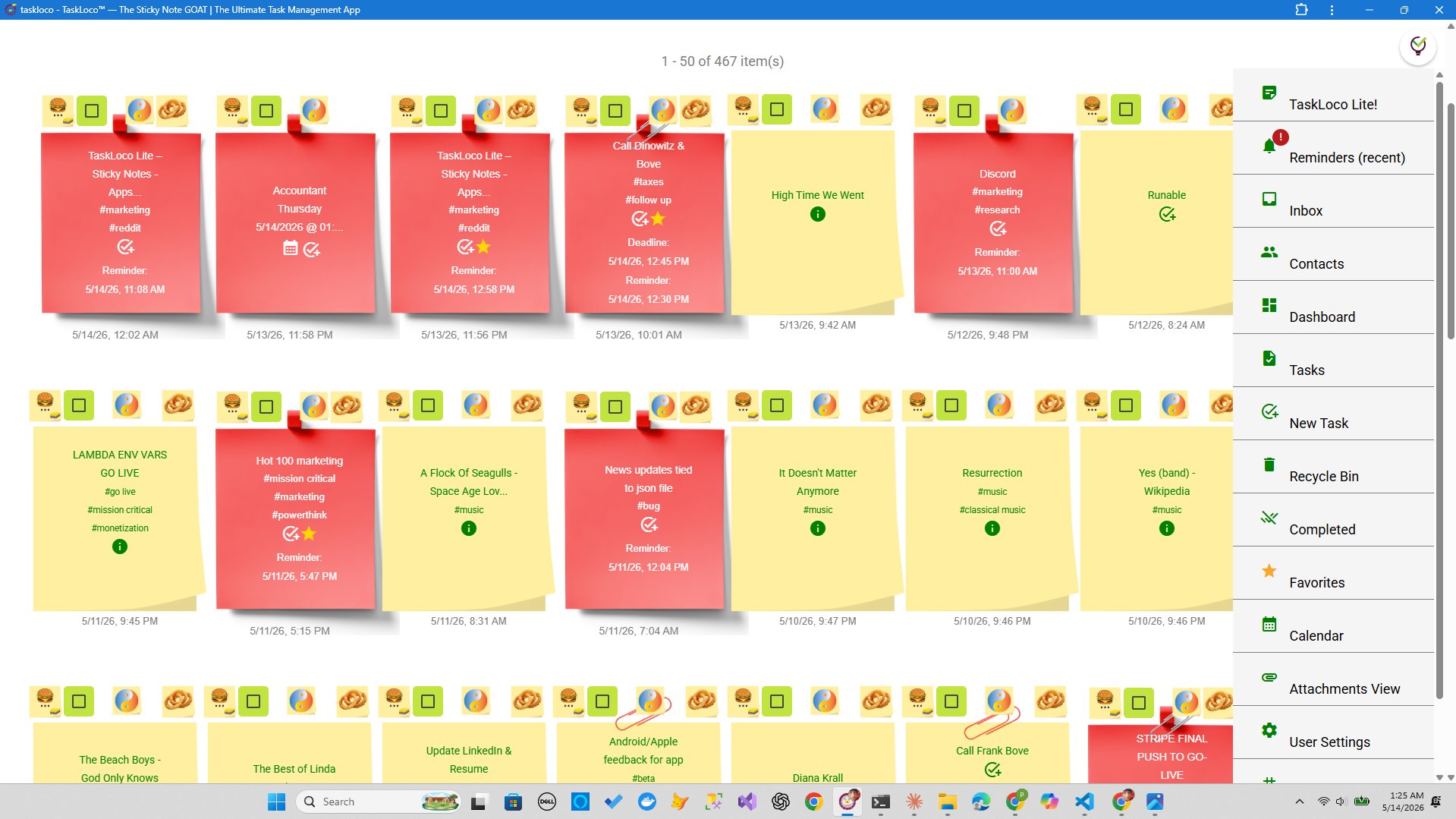
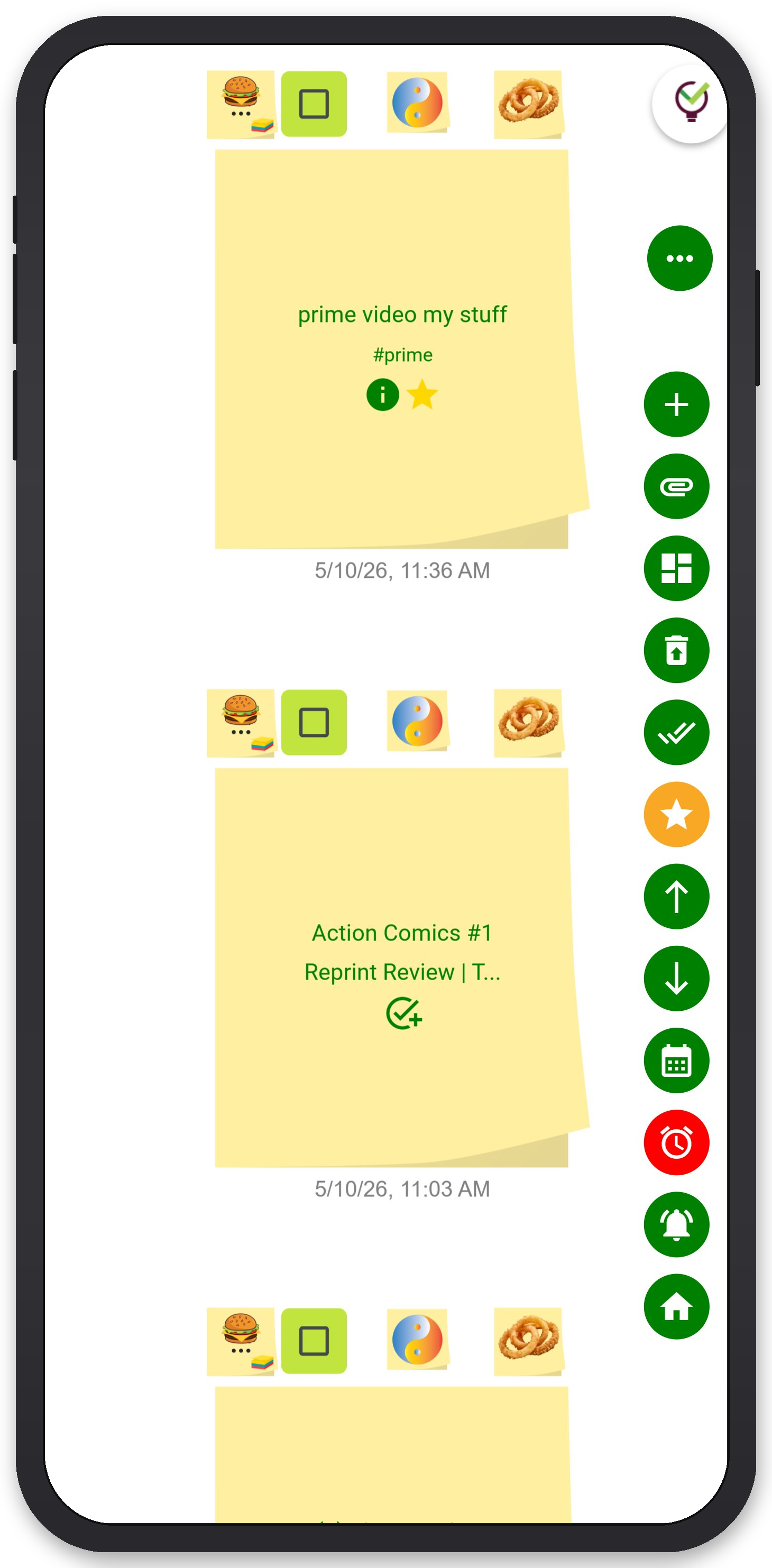
TaskLoco takes a different bet. Its interface is a wall of sticky notes — the same mental model humans have used to organize ideas for decades, now digital, synced, and genuinely powerful. It sounds too simple. It isn't. This article breaks down exactly what the sticky-note interface does, why it outperforms the complexity-first approach favored by Notion and ClickUp, and when each tool is genuinely the better choice.
What Makes a Sticky-Note Productivity Interface — And Why It Matters
A sticky-note interface is a spatial, card-based workspace where each piece of information — a task, a thought, a reminder, a file — lives on its own discrete unit that you can place, rearrange, and scan at a glance. The design philosophy is radically different from list-based or document-based tools. Lists demand you read sequentially. Documents demand context. Cards demand nothing — you glance, you act, you move on.
The cognitive science behind this is real. Chunked, bounded information reduces working memory load. When a task is a card with a clear boundary, your brain processes it as a complete unit rather than parsing it out of a paragraph or a row in a table. That's why physical sticky notes survived decades of digital alternatives: the form factor matches how people actually think about discrete action items.
When choosing a sticky-note productivity tool — or evaluating whether one is right for you — three criteria actually matter:
- Speed to capture: How fast can you get a thought out of your head and into the system? Every extra tap, click, or field is friction that kills adoption.
- Spatial clarity at scale: A wall of five notes is obvious. A wall of fifty needs color, grouping, and filtering to remain readable. The tool has to scale without collapsing into a list.
- Feature depth without interface bloat: Free tools often cap notes or strip reminders. Complex tools add features but bury them. The sweet spot is a tool that stays fast to use while offering reminders, file attachments, and sharing when you actually need them.
TaskLoco's Sticky-Note Wall vs. Notion's Document Blocks and ClickUp's View Overload
Notion is a document tool masquerading as a task manager. Its fundamental unit is a page — a nested, block-based document that can contain tables, galleries, and databases. That flexibility is genuinely powerful for wikis, SOPs, and long-form content. But for daily tasks? You're building furniture when you wanted a place to sit. Every database requires a schema. Every task requires you to decide which property to fill in. The cognitive overhead compounds fast.
ClickUp goes the opposite direction: it gives you every view imaginable — list, board, calendar, Gantt, timeline, workload, mind map — and then asks you to pick. The result is a tool that can theoretically do anything but practically requires a dedicated admin to set it up correctly for a team. ClickUp is a project management command center. That's valuable for the right team. It's overkill for most individual contributors and knowledge workers trying to manage their day.
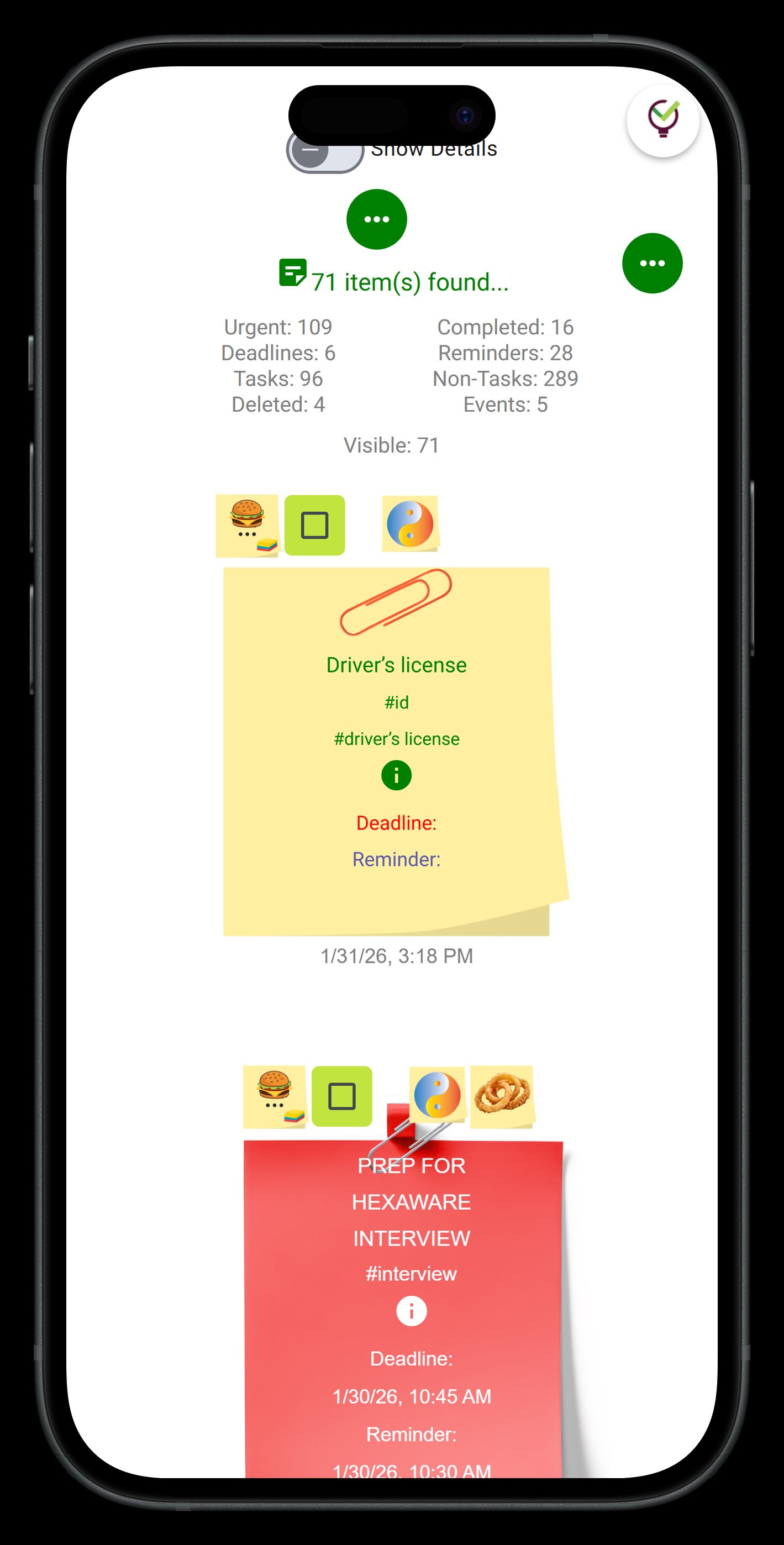
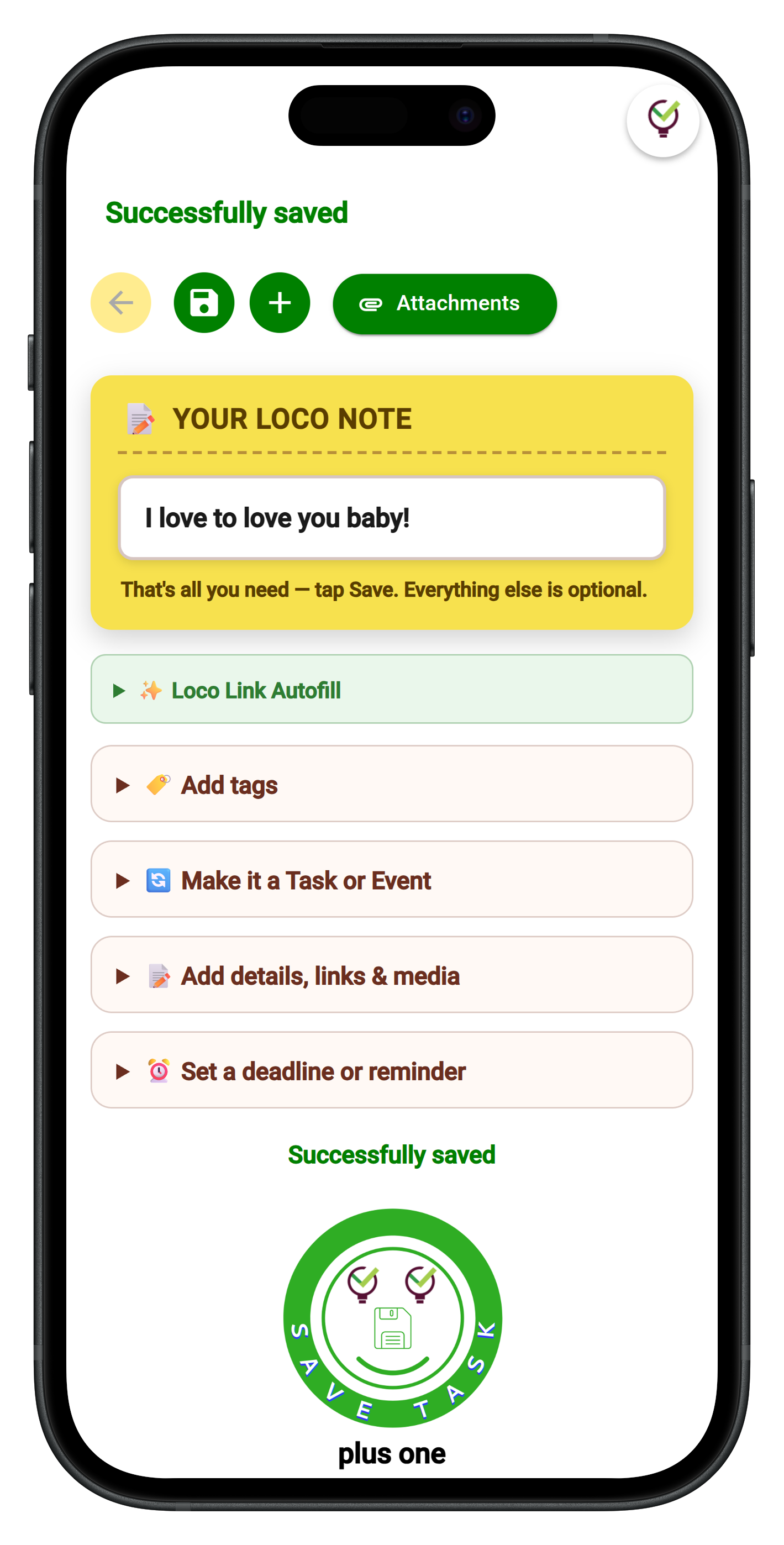
TaskLoco's sticky-note wall sidesteps both failure modes. Open the app and you see your notes. There's no schema to define, no view to configure, no template to choose. A new note takes two taps. Color-coding is instant. You can attach a file, set a reminder that fires as a push notification and deep-links straight back to the note, and share it with a teammate — all without leaving the card interface.
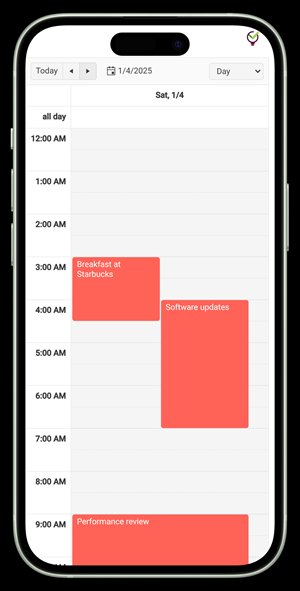
The Premium calendar view doesn't replace the wall — it sits alongside it, giving you a time-based lens on the same notes. That's the key architectural insight: TaskLoco adds views, it doesn't replace the wall with them. Notion and ClickUp ask you to choose your paradigm upfront. TaskLoco starts with the wall and lets you layer on structure as needed.
Where TaskLoco's Depth Surprises You: Files, Reminders, Sharing, and the Chrome Extension
The sticky-note aesthetic can fool people into underestimating what TaskLoco Premium actually does. Let's be direct about the feature set, because it's not minimal.
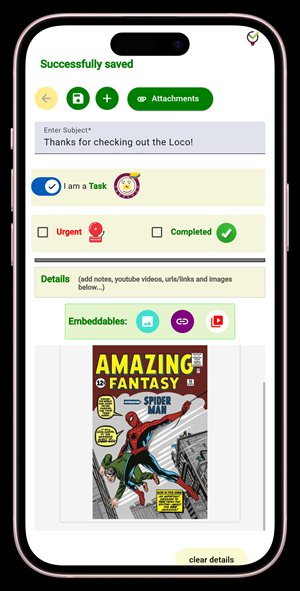
File attachments: Premium includes 10GB of file storage, with add-on tiers up to 1TB, stackable. You can attach images, documents, and any file directly to a note. The note stays a note — the attachment is accessible from it, not buried in a separate files tab.
Reminders: Set a reminder on any note and it fires as a push notification to your phone and computer. Tap the notification and it deep-links directly back to the original note — not to a generic inbox, not to a dashboard. The note. Optional email and SMS notifications are available as additional channels if you need them, but push is the primary mechanism and it works exactly as you'd expect.
Team sharing: Shared notes in TaskLoco work like emails — the recipient gets the note and can clone it as their own. No permissions matrix, no access levels to configure. It's frictionless in a way that Notion's sharing model (which requires workspace membership and page permissions) and ClickUp's guest access (which has its own complexity) simply aren't.
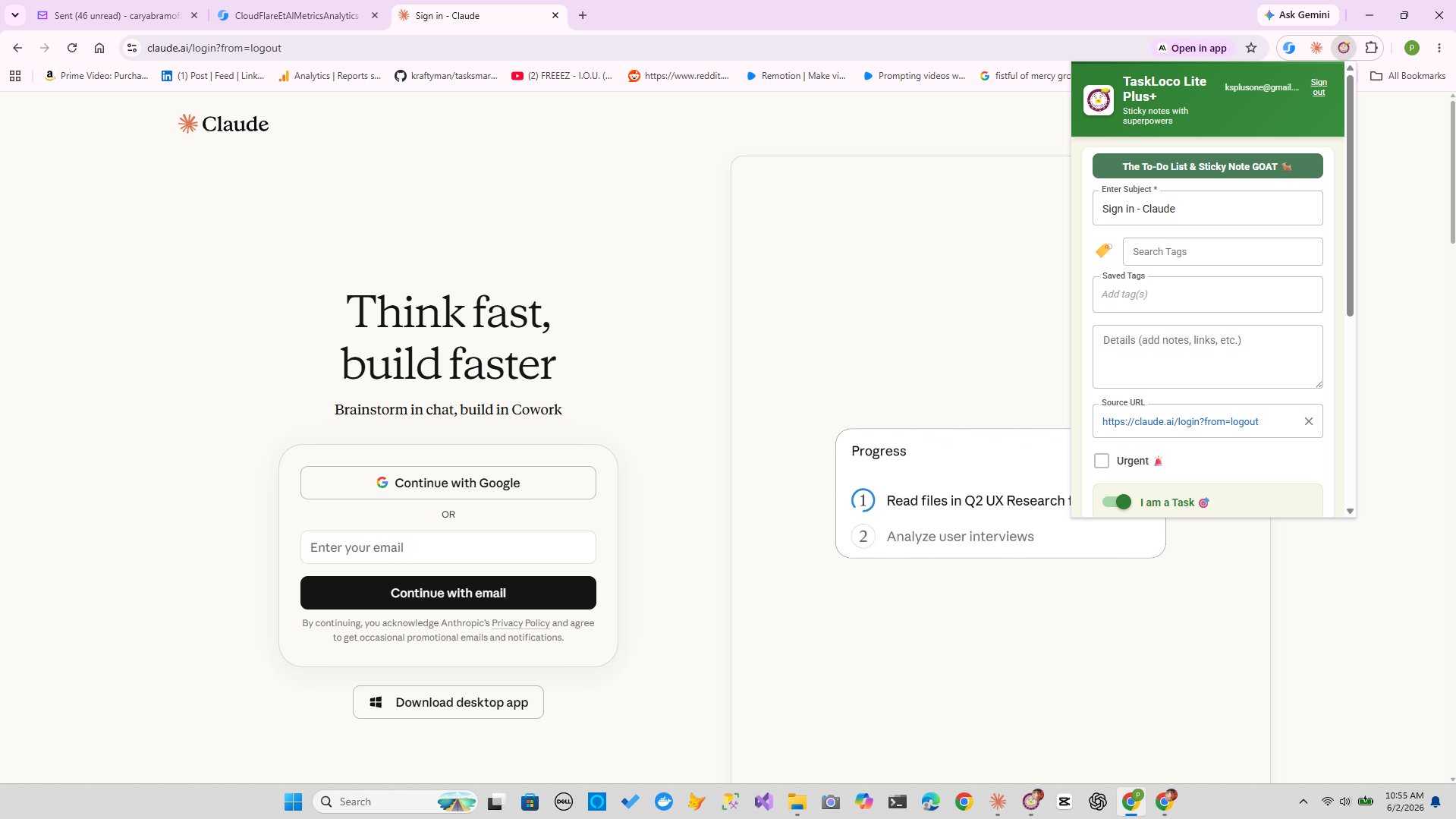
The Chrome extension: One click captures any webpage into a TaskLoco note. For research, competitive tracking, or saving anything you find while browsing, this is a genuine daily-driver feature. Notion has a web clipper too — but it clips into a database, which requires you to have already decided where things go. TaskLoco clips to a note on your wall, which you can file later or leave visible until you've dealt with it.
None of these features complicate the interface. That's the point. They're available when you need them and invisible when you don't.
When Notion or ClickUp Is Actually the Better Choice
Honest comparison requires honesty about limitations. There are real scenarios where Notion or ClickUp wins, and no amount of sticky-note elegance changes that.
When Notion wins: If your team's primary output is documentation — product specs, runbooks, company wikis, meeting notes with embedded databases — Notion's block-based structure is genuinely excellent. TaskLoco is not a wiki. It doesn't have relational databases, linked properties, or the kind of nested page hierarchy that makes Notion a living knowledge base. If structured documentation is your core use case, Notion is built for it.
When ClickUp wins: If you're managing complex multi-phase projects with dependencies, critical path tracking, Gantt charts, or resource workload balancing, ClickUp's depth is warranted. TaskLoco doesn't have Gantt charts or project dependency trees. For teams running construction timelines, software sprints with dependency management, or portfolio-level reporting, ClickUp's complexity earns its keep.
The honest middle ground: Most people — and most teams — aren't primarily managing complex project dependencies or building company wikis. They're managing their own work: tasks to do, notes to keep, files to reference, deadlines to hit, and teammates to loop in. For that reality, TaskLoco's wall is faster, clearer, and more sustainable day-to-day than either Notion or ClickUp.
How TaskLoco Compares
| Feature | TaskLoco | Notion / ClickUp |
|---|---|---|
| Core interface paradigm | Sticky-note wall — spatial, card-based, instant scan | Notion: block documents; ClickUp: multi-view dashboards |
| Time to first useful note | Under 10 seconds — open and type | Notion: requires page/database setup; ClickUp: requires space/list setup |
| Free tier availability | Lite (20 notes, no sign-in) and Lite Plus+ (30 notes, synced across devices) FREE | Both offer free tiers with feature restrictions |
| Reminders with push notifications | Push notifications to phone and computer; deep-links back to the original note; optional email and SMS add-ons | Notion: reminders exist but limited; ClickUp: reminders available on paid plans |
| File attachments | 10GB included with Premium; add-on tiers up to 1TB; attached directly to the note | Both support file attachments — Notion ties them to page blocks; ClickUp attaches to tasks |
| Team sharing model | Yes — included with Premium. Each team member requires a separate subscription — currently $9.99/month per person, but TaskLoco is offering a Charter Member special: 50% off for life, currently $4.99/month per person for the first 500 subscribers with code CHARTER50. | Notion: workspace-level permissions and page sharing; ClickUp: guest access with permission tiers |
| Chrome extension | One-click webpage capture directly to a note on your wall FREE | Notion has a web clipper; ClickUp has a Chrome extension — both require more setup |
| Calendar view | Built into Premium — sits alongside the wall, same notes in time view | Both offer calendar views |
| Full-text search | Full-text search across all notes and attachments | Both offer search — Notion's search is powerful across pages; ClickUp searches across tasks |
| Cross-device sync | Lite Plus+ and Premium sync across all devices; Lite is device-only | Both sync across devices on paid plans |
| Native mobile app | TaskLoco Lite: native iPhone and Android app (20 notes, no sign-in required); Lite Plus+ and Premium run in mobile browser | Notion and ClickUp both have full-featured native iOS and Android apps |
| Relational databases / custom fields | Not available — notes are cards, not database rows | Notion: best-in-class relational databases; ClickUp: custom fields and relations |
| Gantt charts / project timelines | Not available | ClickUp has Gantt and timeline views; Notion has limited timeline support |
| Setup and onboarding time | None — open it and it works | Both have learning curves and recommended onboarding flows |
| Extra storage add-ons | 10GB / 50GB / 200GB / 1TB tiers, stackable | Storage limits tied to plan tier — less flexible |
| API and third-party integrations | Limited integrations | Both offer extensive APIs and large integration ecosystems |
| Anonymous use — no account required | TaskLoco Lite: completely anonymous, no sign-in, no account ever FREE | Both require account creation to use |
Who Should Use Each
Use the TaskLoco if…
- You want to capture and act on tasks immediately — zero setup, zero onboarding
- You think spatially and want to see your work laid out on a wall, not buried in nested docs
- You need reminders that fire as push notifications and link directly back to your note
- You want file attachments, team sharing, and a calendar without switching to a different tool
- You're tired of configuring your productivity app more than actually using it
- You want the Chrome extension to capture web pages in one click without deciding where they go first
- You value a subscription that's simple: one price per person, all features included
Use Notion / ClickUp if…
- Your team's primary output is structured documentation — wikis, SOPs, and relational knowledge bases (Notion)
- You're managing complex multi-phase projects with Gantt charts, dependencies, and critical path tracking (ClickUp)
- You need a full-featured native mobile app with the same capabilities as the desktop experience
- You rely on an extensive API and deep third-party integrations for your workflow
- Your organization requires enterprise SSO, compliance certifications, or advanced audit logs
TaskLoco Premium is regularly $9.99/month per person. Right now, charter members can lock in 50% off the regular price — forever. That means $4.99/month per person today. And if our price ever goes up, you still pay half. Always.
Code CHARTER50 auto-applies at checkout. First 500 spots only — once they're gone, this offer is gone permanently. Act fast while spots last.
Every Premium subscription includes unlimited notes, 10GB file storage, reminders, calendar, and team sharing. Each team member requires a separate subscription. 7-day free trial — no charge until day 8. Cancel anytime.
Free Options: TaskLoco
TaskLoco Lite
- Native iPhone & Android app
- Completely anonymous — no sign-in
- Data stays on your device
- Up to 20 notes
- Free forever
TaskLoco Lite Plus+
- Web app + Chrome extension
- Sign in with Google
- Wall syncs across all devices
- Up to 30 notes
- Free forever
Lock In 50% Off — Forever
7-day free trial. No charge until day 8. CHARTER50 auto-applies at checkout.
🔒 Lock In My Charter SpotSee TaskLoco in Action
Frequently Asked Questions
How does TaskLoco's sticky-note interface compare to Notion's pages and databases?
They're built around fundamentally different mental models. Notion's unit is a page — a document that can contain blocks, databases, and nested sub-pages. That's powerful for structured knowledge management but introduces setup overhead for everyday tasks. TaskLoco's unit is a card on a wall — you see it, you act on it, you're done. For daily task management, the card model wins on speed and clarity. For building a company wiki or relational database, Notion wins. Most people need the former far more often than the latter.
Is TaskLoco actually less powerful than ClickUp, or just simpler-looking?
Simpler-looking, not less powerful — for the things most people actually do. TaskLoco Premium includes unlimited notes, reminders with push notifications that deep-link back to the original note, 10GB file attachments, a calendar view, team sharing, and full-text search. What it doesn't have is Gantt charts, project dependency tracking, and the 15-plus view types ClickUp offers. If you need those, ClickUp is genuinely the better tool. If you don't, ClickUp's complexity is overhead you're paying in time and cognitive load every day.
Can I try TaskLoco before committing to Premium?
Yes, three ways. TaskLoco Lite is a free native iPhone and Android app — completely anonymous, no sign-in, stores up to 20 notes on your device. TaskLoco Lite Plus+ is free, sign in with Google, syncs up to 30 notes across all your devices, and includes the Chrome extension. And TaskLoco Premium starts with a 7-day free trial — no charge until day 8, cancel anytime. $9.99/month per person (currently $4.99/month per person for first 500 charter members with code CHARTER50)
Does TaskLoco work for teams, or is it mainly a personal productivity tool?
Both. TaskLoco Premium includes team sharing — you share a note like sending an email, and the recipient can clone it as their own. There's no permissions matrix to configure, no workspace membership to manage, and no access levels to set. It's frictionless in a way that feels deliberately designed for people who just want to share information, not manage an org chart. Each team member requires their own individual Premium subscription.
What happens to my notes if I stop paying for Premium?
Your notes don't disappear. You drop to the free tier limits, and Premium-only features like reminders, file attachments, and team sharing become inaccessible until you resubscribe. Your data stays intact. If you're on the charter plan and cancel, you lose the locked-in 50% rate — it only applies to active subscribers. That's worth keeping in mind before canceling if you plan to come back.
Does the Chrome extension work with Notion or ClickUp too?
The TaskLoco Chrome extension captures any webpage into a TaskLoco note in one click. It's a free feature available with Lite Plus+ and Premium. Notion has its own web clipper, and ClickUp has a Chrome extension as well — but both route captured content into their respective systems (pages, tasks) which can require you to decide where it goes upfront. TaskLoco clips to your wall and lets you decide later, which is a small but meaningful difference for fast capture.
What is the TaskLoco charter offer and how does it work?
$9.99/month per person (currently $4.99/month per person for first 500 charter members with code CHARTER50)
Born in Brooklyn. Powered by AWS. Your data stays yours.
TaskLoco is available on iPhone, Android, Chrome, and every web browser.