Most productivity advice fails because it asks you to think about work while you're trying to do work. You're mid-paragraph on a report, and somewhere in the background you're half-wondering whether you've captured everything on your list, whether that meeting is at 2 or 3, whether you forgot to reply to something important. That cognitive leakage is the real enemy of deep work — not distraction, not laziness, not the wrong app.
The Pomodoro Technique solves a specific slice of this problem: it separates the planning phase from the execution phase with a hard boundary. Before the timer starts, you decide what you're working on. While the timer runs, that decision is final. The result is a protected window of attention that most knowledge workers never otherwise experience. Understanding why it works — and where it breaks — makes it far easier to build a setup that actually sticks.
What the Pomodoro Technique Actually Is — and Where It Comes From
Francesco Cirillo developed the technique as a graduate student in Rome in 1987, naming it after the tomato-shaped kitchen timer (pomodoro is Italian for tomato) he used to track his work intervals. The method is disarmingly simple: choose one task, set a timer for 25 minutes, work on nothing else until the timer rings, record a checkmark, take a 5-minute break. After four pomodoros, take a longer break of 15–30 minutes.
The published structure matters less than the underlying principle, which is time-boxing: assigning a fixed, finite window to a unit of work rather than working until the task is done. Time-boxing has appeared independently in software engineering (sprints), behavioral economics (implementation intentions), and sports science (interval training). The Pomodoro Technique is simply the most accessible consumer form of the same idea.
Cirillo's original system also includes a planning ritual — writing down what you intend to accomplish before starting — and an interruption-tracking ritual during each interval. These rituals are often stripped out by people who adopt only the timer, which is one reason results vary so widely. The planning step is not optional decoration; it is mechanically why the technique reduces procrastination. When you have named and written down the task, the activation energy required to start it drops significantly.
Why Sticky-Note Task Lists and Pomodoro Work Together
The Pomodoro planning ritual has a specific requirement: you need a list of tasks that are already broken into pomodoro-sized pieces before the session begins. That pre-breakdown is where most systems fall apart. A project management tool built around projects, milestones, and sub-tasks encourages you to think in hierarchies — which is useful for planning a quarter, actively harmful for planning the next 25 minutes.
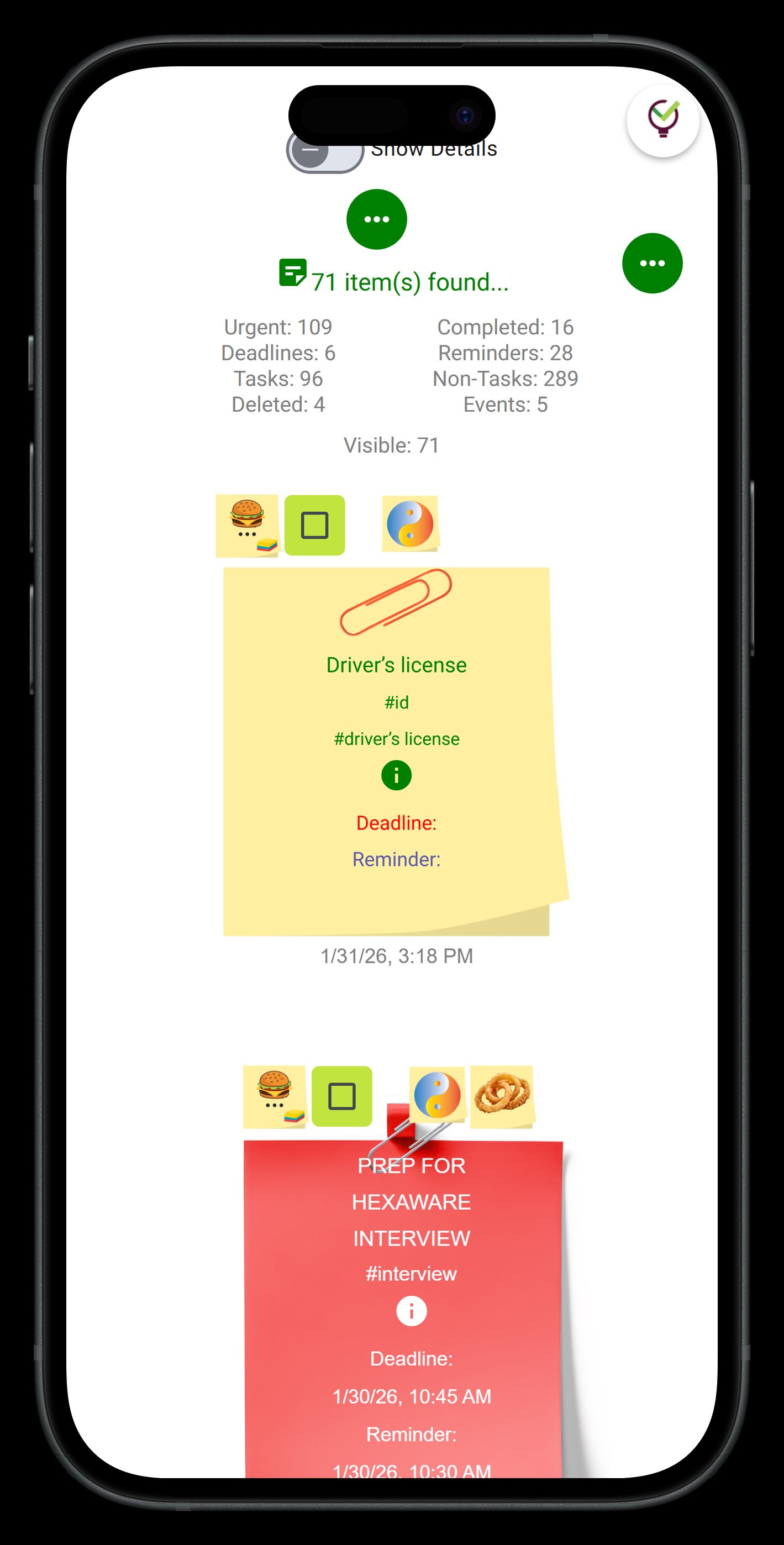
Sticky notes — physical or digital — naturally enforce a constraint that matches the Pomodoro rhythm: a note has limited space, which means you cannot dump a vague mega-task onto it. 'Finish the marketing strategy' does not fit well on a sticky note. 'Write the competitive positioning section' does. That forced compression is a feature, not a limitation. It pushes you toward the kind of atomic task definition that makes time-boxing possible.
The physical metaphor also matters psychologically. Moving a note from 'to do' to 'done' — or checking it off — provides a tangible closure signal that mirrors the Pomodoro checkmark. Research on the Zeigarnik effect shows that incomplete tasks occupy working memory until they are either completed or explicitly recorded somewhere trusted. A sticky-note board externalizes that cognitive load: your brain stops holding the list because it can see the list. That is the precondition for genuine deep work — not willpower, but a trusted external capture system.
Hierarchical project tools are designed for overview and coordination. They are optimized for the question 'where does everything stand?' Sticky-note systems are optimized for the question 'what am I doing right now?' Both questions matter. Trying to use the same tool for both at the same moment is where the friction enters.
Where the Technique Breaks Down — and How to Work Around It
The Pomodoro Technique has real failure modes that honest advocates rarely discuss. Understanding them saves you from blaming yourself when the system stalls.
Task granularity mismatch. The technique assumes tasks can be broken into roughly pomodoro-sized units. Many knowledge-work tasks cannot be cleanly decomposed — a creative problem might require three hours of uninterrupted immersion, or might be solved in four minutes. Forcing everything into 25-minute boxes can actually fragment thinking on tasks that benefit from longer sustained attention. Cal Newport's deep work framework, which Pomodoro practitioners often invoke, actually recommends longer uninterrupted blocks, not shorter ones. The two approaches are complementary but not identical — Pomodoro is better for execution of defined tasks; deep work blocks are better for generative, exploratory thinking.
Interruption rigidity. Purists treat a mid-pomodoro interruption as invalidating the entire interval, requiring a restart. In real workplaces with real colleagues, this becomes a source of anxiety rather than focus. A pragmatic adaptation: track interruptions rather than restarting. If you are interrupted more than twice in a session, that is data about your environment, not a moral failure requiring punishment via reset.
The planning tax compounds. The technique front-loads cognitive work into the planning ritual. On days when your energy is already depleted, the planning step can feel like the hardest part, leading to avoidance of the whole system. The fix is to do light planning the evening before, so morning execution can begin immediately without a cold-start planning session.
Tool switching costs. Many people run a separate Pomodoro timer app, a separate task list, and a separate notes system. The context-switching between tools — however brief — accumulates into real friction. A task system that lives close to where your notes and reference material already live reduces this switching cost substantially.
How TaskLoco Fits a Pomodoro Workflow
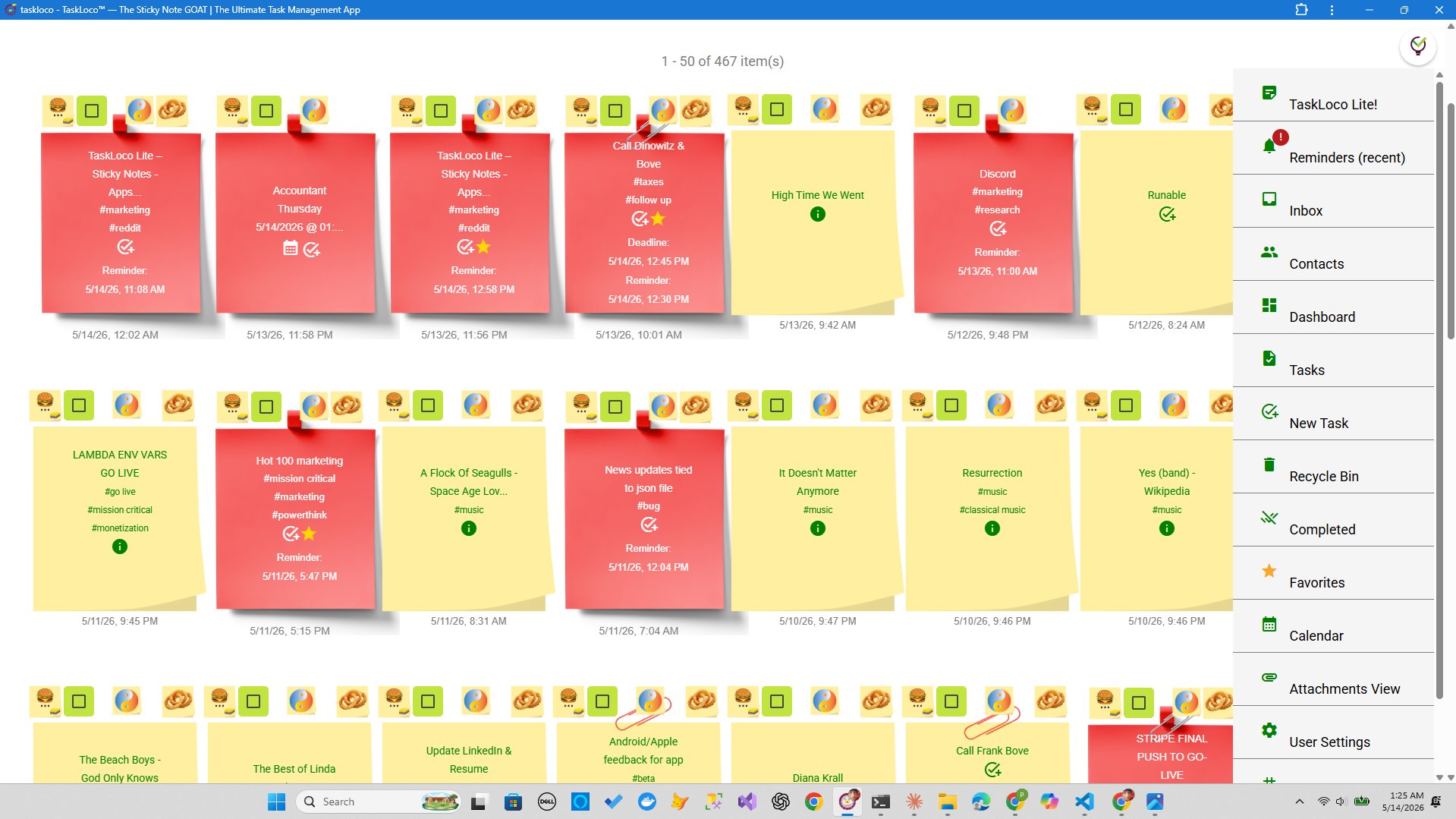
TaskLoco is not a Pomodoro timer — it does not pretend to be. What it is, is a note-and-task system whose core metaphor (the sticky note) aligns naturally with the atomic task definition that Pomodoro requires. Each note is a discrete unit of work. The wall view lets you arrange notes into columns — 'This Pomodoro', 'Today', 'Backlog' — so your planning ritual has a physical home before the timer starts.
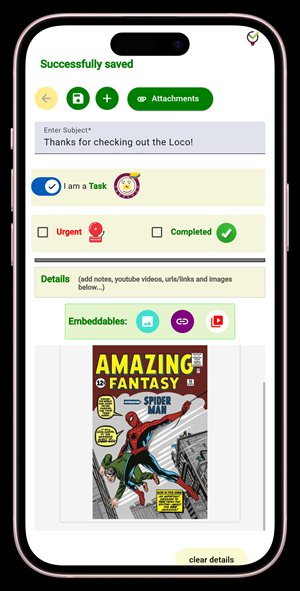
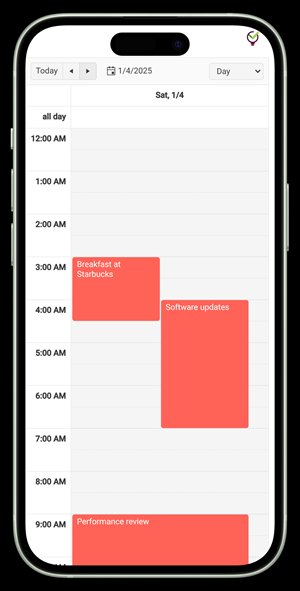
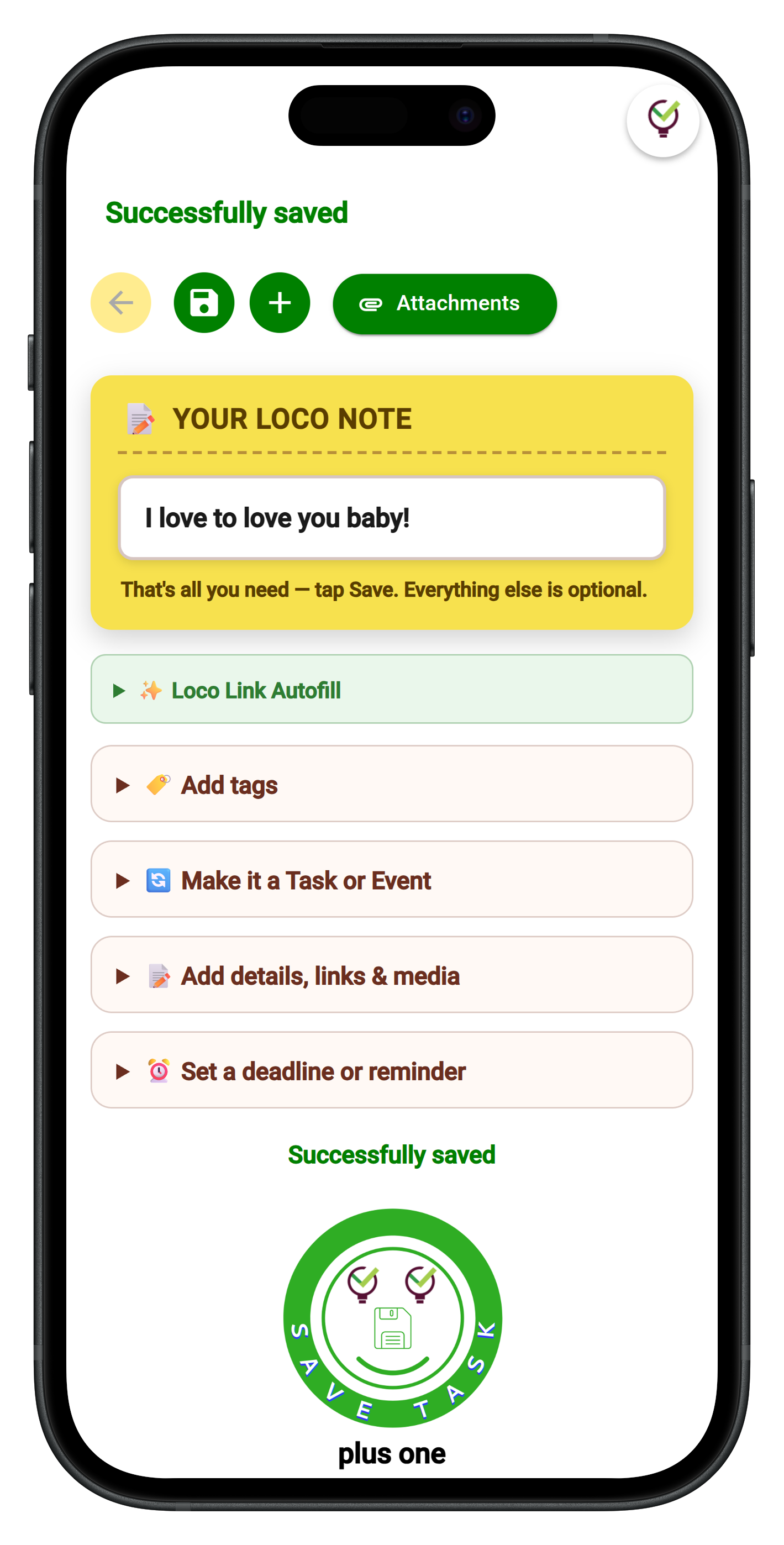
The features that matter most for a Pomodoro workflow in TaskLoco Premium are practical ones: reminders delivered as push notifications that deep-link back to the exact note you were working on, so returning after a break takes one tap rather than a search. File attachments mean your reference material lives inside the task rather than in a separate folder you have to go hunting for. Unlimited notes means you never have to decide whether a thought is 'worth capturing' — you just capture it and sort later.
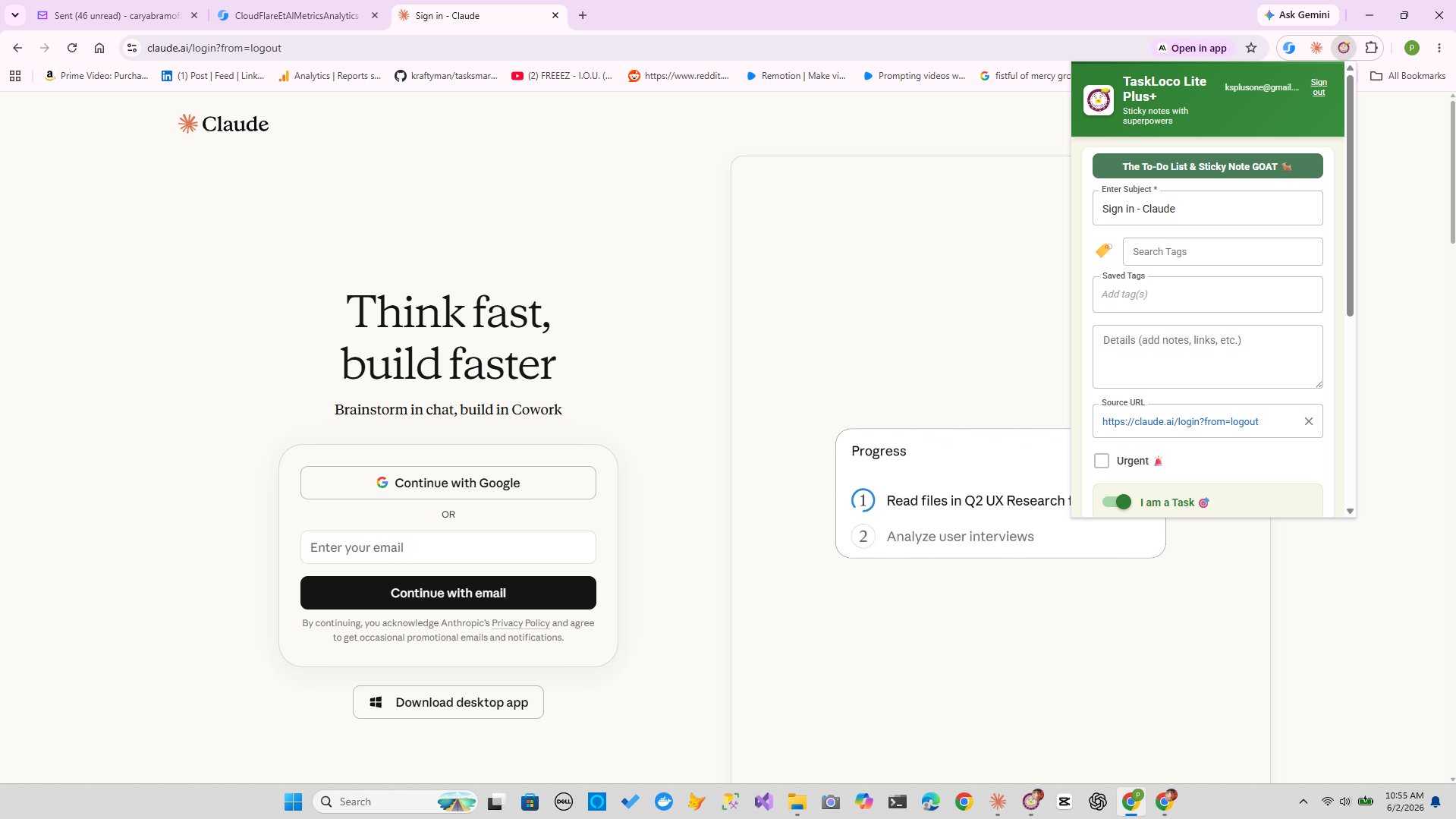
The Chrome extension deserves a mention here: one click saves any webpage as a note, which matters when you are doing research-heavy work and want to capture a source without breaking your interval to open a new app and type a URL from memory.
For teams, the shared-note system works like email: you share a note, the recipient clones it and makes it their own. There are no permission levels to configure, no access requests to approve. During a Pomodoro session, that simplicity is worth more than it sounds — the last thing you want mid-interval is an admin task interrupting a focus window.
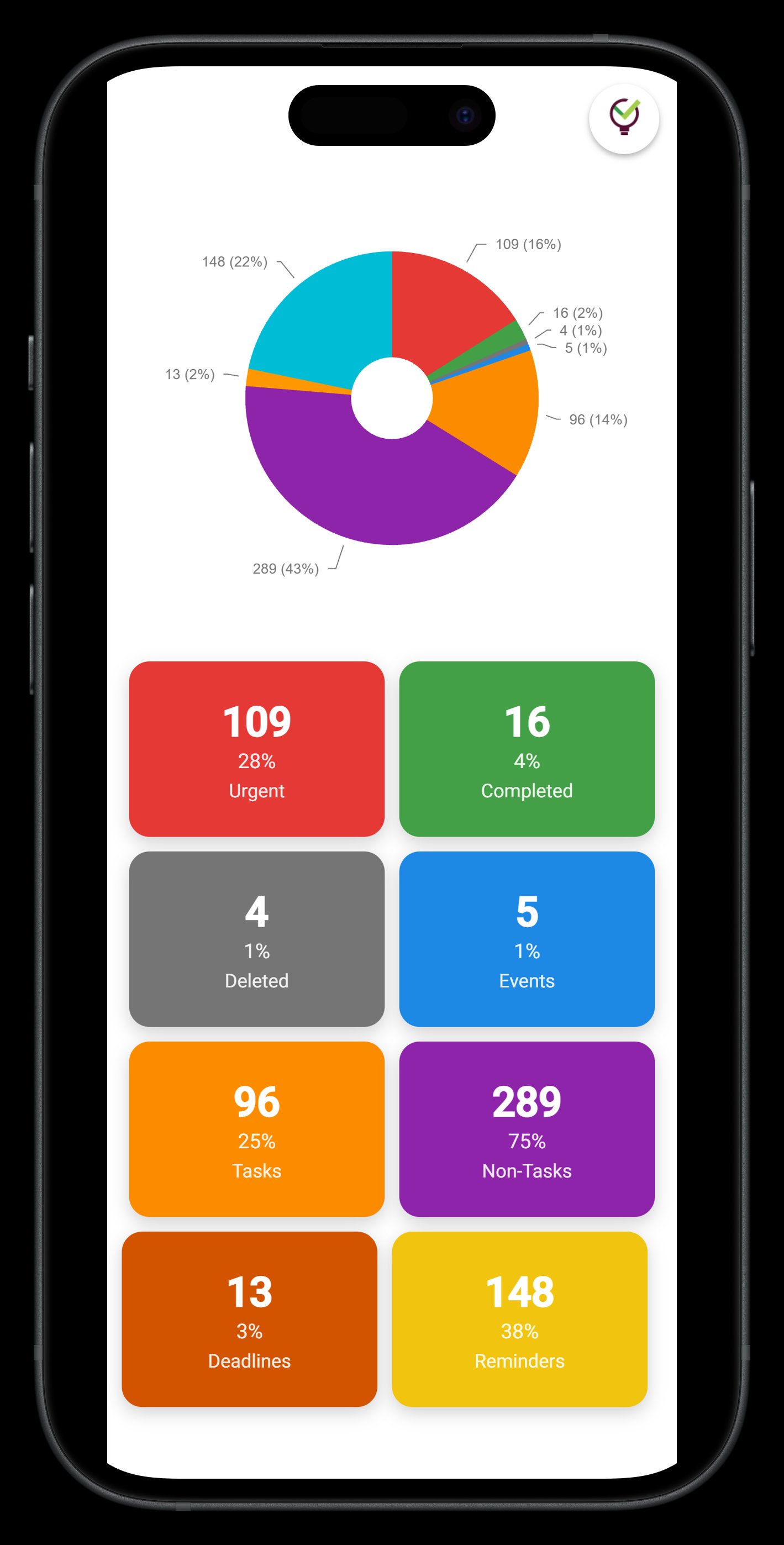
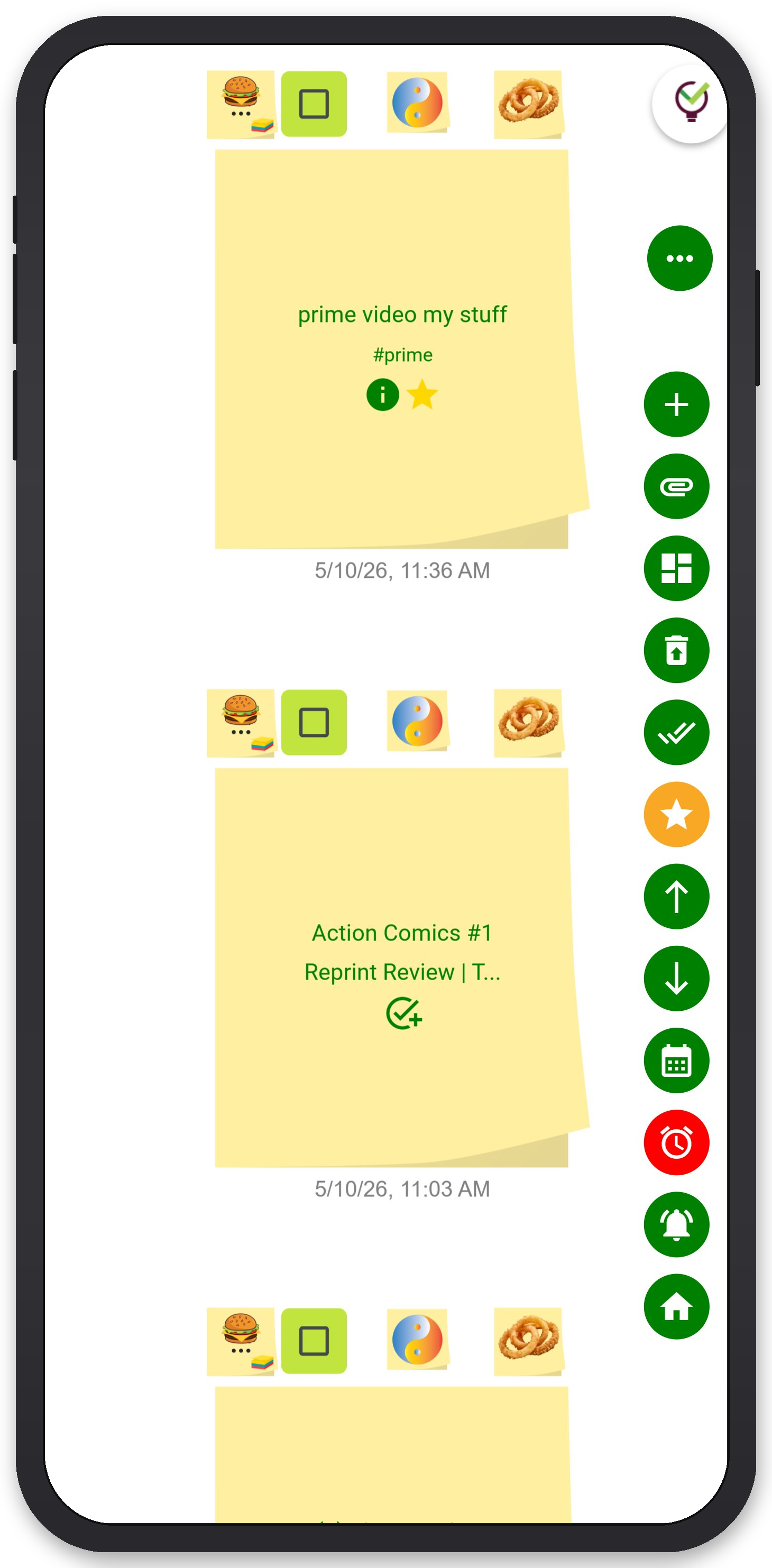
TaskLoco Premium is regularly $9.99/month per person. Right now, charter members can lock in 50% off the regular price — forever. That means $4.99/month per person today. And if our price ever goes up, you still pay half. Always.
Code CHARTER50 auto-applies at checkout. First 500 spots only — once they're gone, this offer is gone permanently. Act fast while spots last.
Every Premium subscription includes unlimited notes, 10GB file storage, reminders, calendar, and team sharing. Each team member requires a separate subscription. 7-day free trial — no charge until day 8. Cancel anytime.
Free Options: TaskLoco
TaskLoco Lite
- Native iPhone & Android app
- Completely anonymous — no sign-in
- Data stays on your device
- Up to 20 notes
- Free forever
TaskLoco Lite Plus+
- Web app + Chrome extension
- Sign in with Google
- Wall syncs across all devices
- Up to 30 notes
- Free forever
Lock In 50% Off — Forever
7-day free trial. No charge until day 8. CHARTER50 auto-applies at checkout.
🔒 Lock In My Charter SpotSee TaskLoco in Action
Frequently Asked Questions
What is the Pomodoro Technique and who invented it?
The Pomodoro Technique is a time-boxing method developed by Francesco Cirillo in 1987. The core cycle: choose one task, work on it for 25 minutes without interruption, take a 5-minute break, repeat. After four cycles, take a longer 15–30 minute break. Cirillo named it after a tomato-shaped kitchen timer he used as a student. The 25-minute interval is not scientifically fixed — it was empirical for Cirillo's own attention span. Many practitioners adjust the interval based on their task type and personal focus rhythm.
Does the Pomodoro Technique actually work for deep work?
It depends on how you define deep work. The Pomodoro Technique is best suited for executing well-defined, atomic tasks — writing a specific section, coding a specific function, answering a specific set of emails. For generative, exploratory thinking — the kind Cal Newport describes as deep work — shorter 25-minute intervals can actually fragment attention rather than protect it. The two frameworks are complementary: use Pomodoro for execution-heavy tasks, longer uninterrupted blocks for exploratory or creative work. Many practitioners blend both.
Why do sticky notes work well with the Pomodoro method?
The Pomodoro planning ritual requires tasks to be pre-broken into roughly one-interval units before the timer starts. Sticky notes — physical or digital — naturally enforce this because their limited space discourages vague, overloaded task descriptions. A sticky note that says 'write the competitive analysis section' is Pomodoro-ready. One that says 'finish strategy document' is not. The constraint of the format does the decomposition work for you. The Zeigarnik effect also plays a role: writing tasks onto a visible external board offloads them from working memory, which is the cognitive prerequisite for sustained focus.
What app works best with the Pomodoro Technique?
The best Pomodoro setup is one where your task list, reference material, and capture system live as close together as possible — so you spend zero attention on tool-switching during an interval. Note-based apps whose core unit is a discrete, card-like note align well with Pomodoro's atomic task model. TaskLoco Premium organizes work as individual notes you can arrange on a wall, attach files to, and get reminded about via push notification — all without leaving the context of the note itself. The free Lite Plus+ tier (synced web app, up to 30 notes) is enough to run a personal Pomodoro board at no cost.
How long should a Pomodoro interval actually be?
The canonical interval is 25 minutes, but Cirillo chose that empirically for his own attention span — it is not a neuroscientifically derived universal. Research on ultradian rhythms suggests natural focus cycles range from roughly 20 to 90 minutes depending on the individual and task type. Many practitioners use 45- or 50-minute intervals for cognitively demanding writing or coding, and shorter 15-minute intervals for administrative tasks. The principle — commit to a fixed window, work on one thing, then stop — matters more than the specific duration. Experiment over two weeks before concluding the technique does not work for you.
What is the Zeigarnik effect and why does it matter for productivity?
The Zeigarnik effect, documented by Soviet psychologist Bluma Zeigarnik in the 1920s, is the tendency of incomplete tasks to occupy working memory more persistently than completed ones. In practical terms: tasks you have started but not finished continue to generate intrusive thoughts until they are either completed or explicitly recorded somewhere you trust. This is why a well-maintained external task list — a physical board, a digital note wall — is not just organizational preference but a cognitive tool. Offloading incomplete tasks to a trusted external system is what frees working memory for focused attention on the current task.
What is TaskLoco and which version supports a Pomodoro workflow?
TaskLoco is a sticky-note-based productivity app available in three tiers. TaskLoco Lite is a free native iPhone and Android app — fully anonymous, no sign-in, up to 20 notes stored only on the device. TaskLoco Lite Plus+ is a free web app (plus Chrome extension) that syncs up to 30 notes across all your devices after signing in with Google — enough for a personal Pomodoro board. TaskLoco Premium (web app) adds unlimited notes, reminders delivered as push notifications that deep-link back to the specific note, 10GB file attachments, calendar view, and team sharing — the full toolkit for a serious Pomodoro-based deep-work setup. $9.99/month per person (currently $4.99/month per person for first 500 charter members with code CHARTER50)
Born in Brooklyn. Powered by AWS. Your data stays yours.
TaskLoco is available on iPhone, Android, Chrome, and every web browser.