Your brain is not a hard drive. Working memory holds about four pieces of information at once, and every time you try to track a task mentally — rather than writing it down somewhere visible — you're spending real cognitive resources just remembering to remember it. That's the tax. Visual systems are how you stop paying it.
This isn't productivity advice invented by a productivity influencer. It's grounded in decades of cognitive science, starting with George Miller's 1956 research on the limits of short-term memory and extended by later work on cognitive load theory — the idea that learning, decision-making, and execution all degrade when your working memory is overloaded. Visual systems directly counteract that overload by externalizing the information your brain would otherwise have to hold.
What Cognitive Load Actually Means (and Why It Matters for Productivity)
Cognitive load theory, developed by educational psychologist John Sweller in the 1980s, breaks mental effort into three types: intrinsic load (the inherent complexity of a task), extraneous load (friction caused by poor presentation or organization), and germane load (the effort spent building understanding and skill). You can't reduce intrinsic load — hard problems are hard. But you can dramatically reduce extraneous load, and that's exactly what visual systems do.
When your to-do list lives in your head, you're not just tracking tasks. You're also tracking the effort of tracking them. Every few minutes, some part of your brain does a background sweep — Did I forget anything? What's due today? What comes next? — and that sweep consumes resources that could go toward the actual work. Psychologists call this the Zeigarnik effect: unfinished tasks stay mentally active, interrupting focus until they're either completed or offloaded somewhere you trust.
The act of writing something down — and seeing it in a consistent, visible place — tells your brain it can let go. That's not a metaphor. Studies on externalization show measurable reductions in intrusive thoughts about uncompleted tasks once they're written down in a trusted system. David Allen's Getting Things Done methodology is essentially a 300-page book built around this single cognitive insight.
How to Build a Visual System That Actually Works
A visual system doesn't have to be complicated — in fact, complexity defeats the purpose. The design goal is instant legibility: you should be able to glance at your system and immediately understand what's happening without any interpretation overhead. Here's how to build one that holds up in practice.
Start with spatial zones, not lists. Linear lists force your brain to read sequentially. Spatial layouts let you scan. Divide your workspace — physical or digital — into named zones that reflect the states your work actually moves through. For most people, three zones are enough: To Do, In Progress, Done. For project-heavy work, add Waiting / Blocked. Resist the temptation to add more zones than you can see at once.
Use color as signal, not decoration. Color is processed pre-attentively — meaning your brain registers it before conscious attention kicks in. That makes it one of the most powerful tools in a visual system. Assign colors to categories (by project, by person, by urgency) and stick to the scheme. If yellow always means client work and blue always means internal, you'll parse the board in milliseconds instead of seconds.
Keep each note atomic. One idea, one task, one question per card or note. When notes carry multiple items, you have to read them fully every time. Single-item notes can be scanned, moved, and completed cleanly. This is why physical sticky notes became a productivity staple — the small surface area enforces atomicity by constraint.
Limit work in progress deliberately. Kanban practitioners use WIP limits for a reason: seeing too many items in the In Progress column is itself a cognitive load signal. If your board shows twelve things active simultaneously, the board is telling you something your instincts might not — that you're overcommitted. A good visual system doesn't just track work; it makes overcommitment visible.
Review on a rhythm, not on demand. A visual board only reduces cognitive load if you trust it. Trust comes from regular, brief reviews — morning check-ins to set the day, end-of-day sweeps to capture anything that surfaced. Without a rhythm, you'll start maintaining a shadow system in your head as a backup, and the whole point collapses.
Why Sticky Notes Are the Canonical Visual Tool (And What Digital Boards Get Right)
Physical sticky notes have survived decades of digital disruption for a reason: they're spatially flexible, instantly movable, and require zero friction to create. You don't open an app, name a project, assign a priority level, or pick a due date. You write the thing and put it where it belongs. That low friction is a feature, not a limitation — because a tool you actually use beats a tool that's theoretically better but requires activation energy every time.
But physical boards have real costs. They don't travel. They don't survive a meeting where someone takes a photo and never shares it. You can't search them. You can't attach the PDF that provides the context for the note. And when someone else needs to see your board, the best you can do is show them the wall.
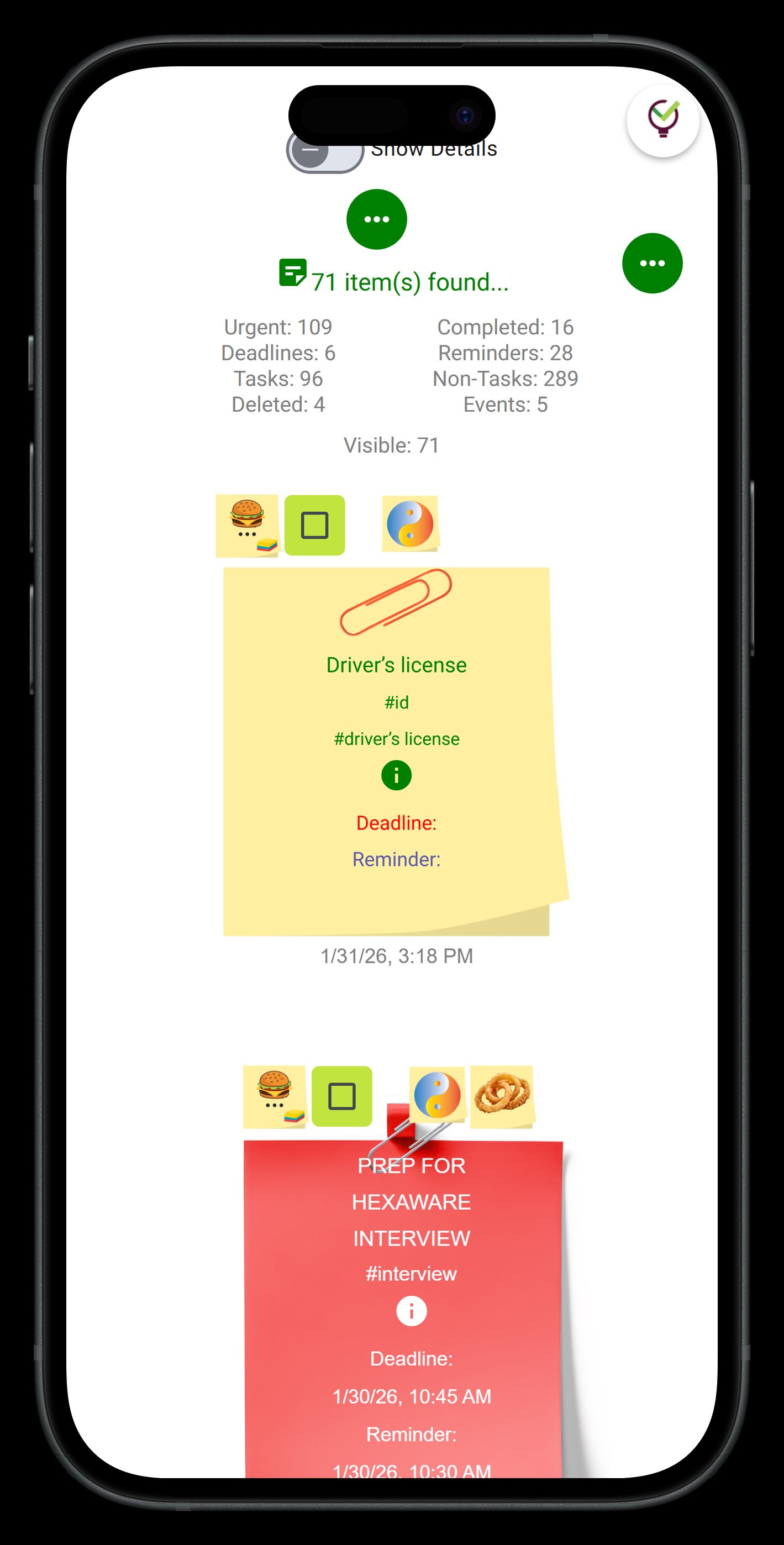
Good digital sticky note systems preserve what makes physical boards work — spatial layout, visual scanning, the feel of moving a card from one column to another — while adding the things physical boards genuinely can't do: search, file attachments, reminders that deep-link back to the original note, and sharing that lets a collaborator pick up a note and make it their own.
The failure mode of most productivity apps is that they solve the digital limitations by abandoning the visual metaphor entirely. You end up with a list manager that calls itself a board. The spatial, glanceable quality disappears, and with it, the cognitive load benefit. The tool starts demanding attention instead of reducing the need for it.
Putting It Into Practice with TaskLoco
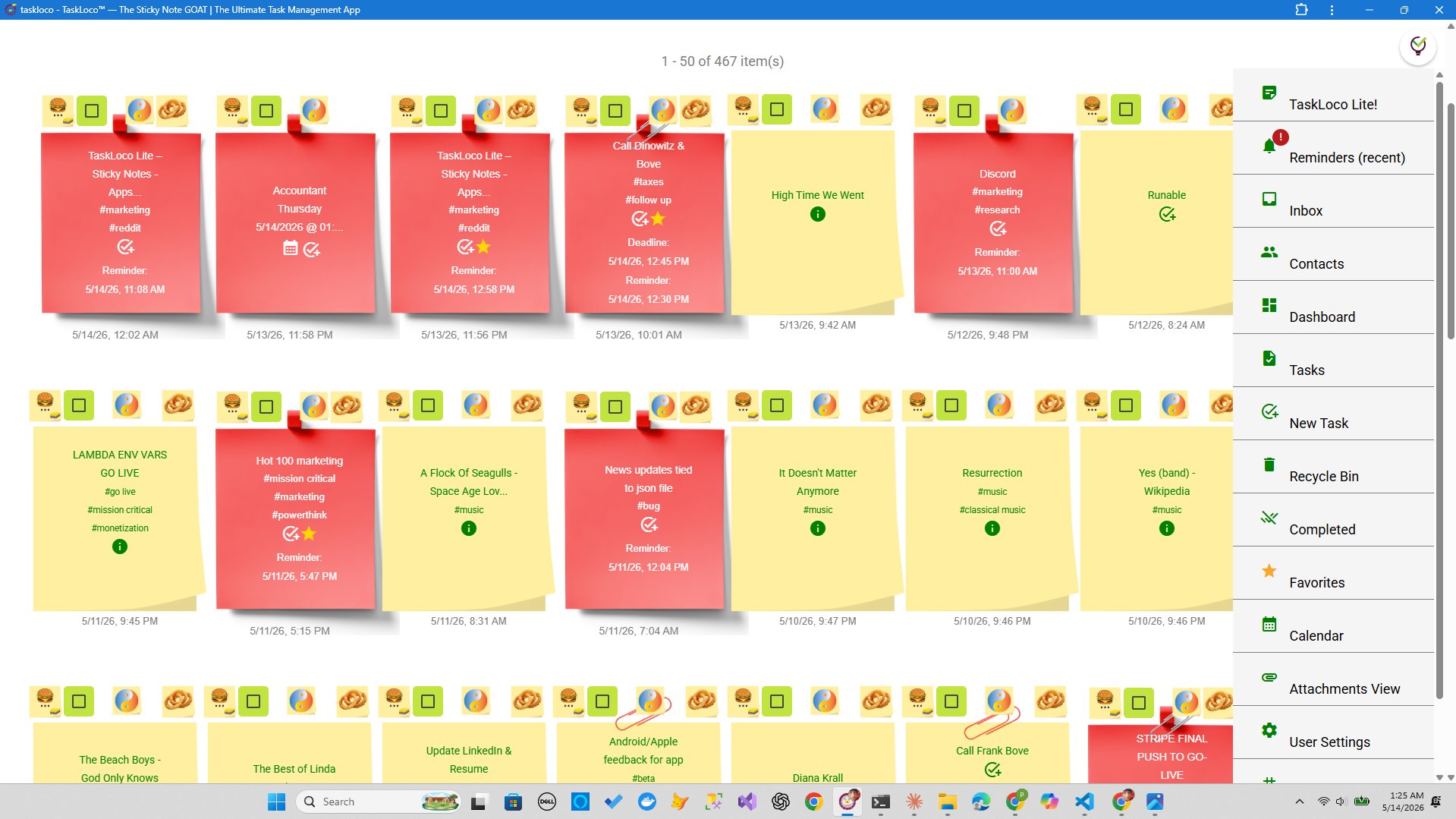
If you want a digital tool built around the visual sticky-note metaphor — not bolted onto a list manager as an afterthought — TaskLoco is worth a look. The core experience is a wall of notes you can arrange spatially, color-code by whatever scheme makes sense for you, and scan at a glance without opening any individual item.
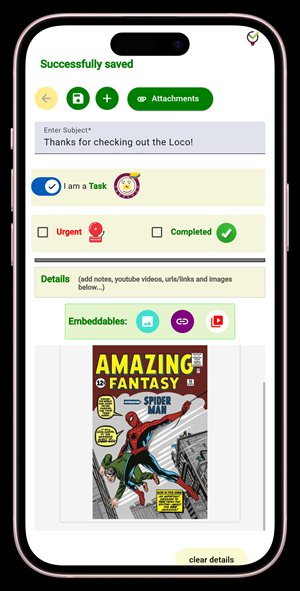
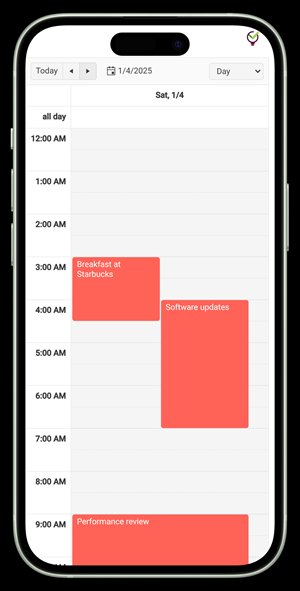
TaskLoco Premium adds the things that make a digital board genuinely more useful than a physical one: reminders delivered as push notifications that deep-link straight back to the note that triggered them, file attachments (10GB included) so the context lives next to the task, a calendar view when you need to think in time rather than space, and team sharing that works like email — a recipient gets the note, can clone it, and makes it their own without any permissions overhead.
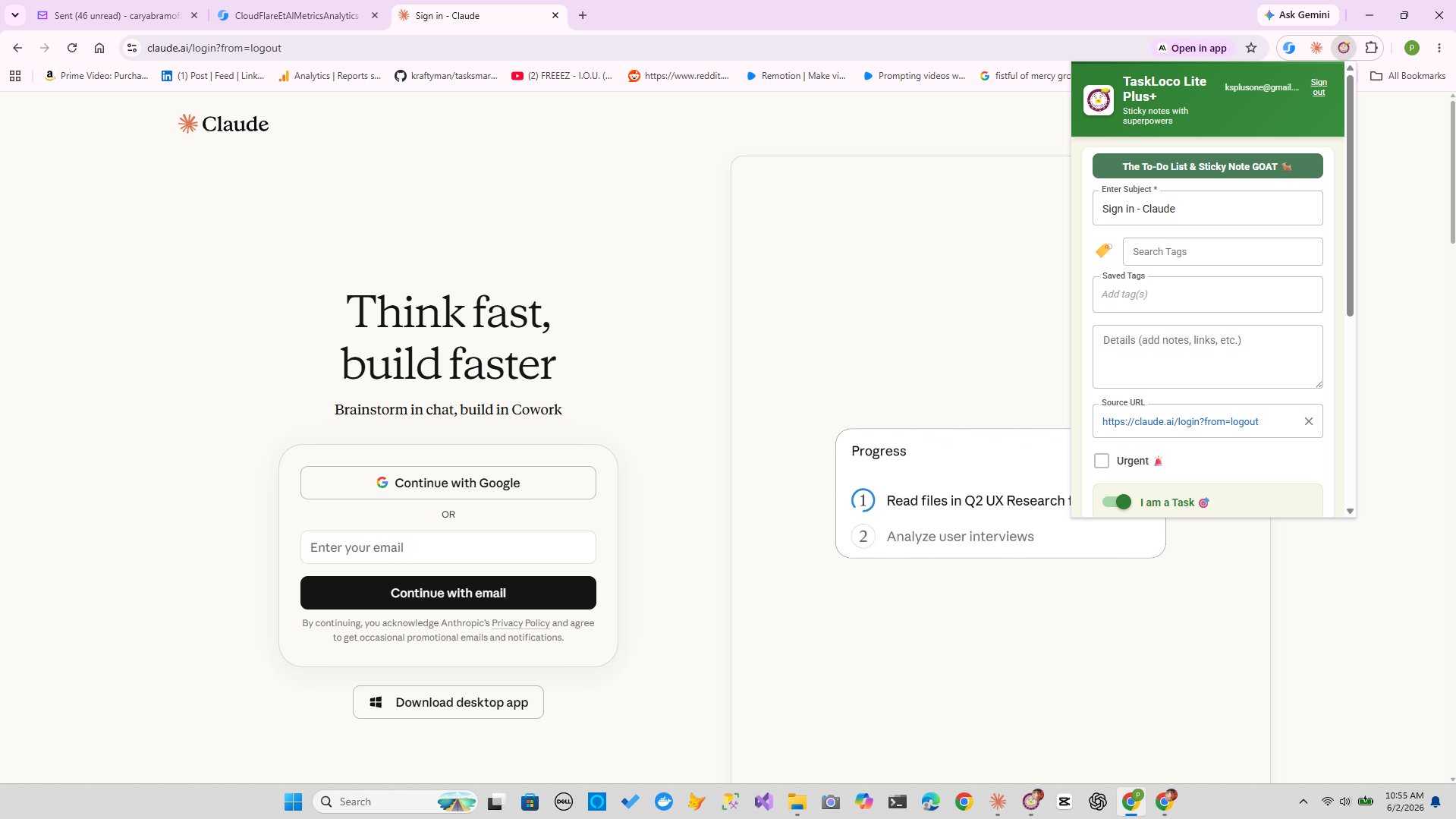
There's also a Chrome extension that captures any webpage as a note in one click — useful for the kind of reference material that usually ends up in a browser tab graveyard. Full-text search across all notes and attachments means nothing falls through the cracks even as the board grows.
For teams, each person maintains their own board and subscription — the sharing model is designed so collaboration happens through the notes themselves, not through shared access to someone else's workspace. It keeps the personal visual system intact while making handoffs and collaboration genuinely easy.
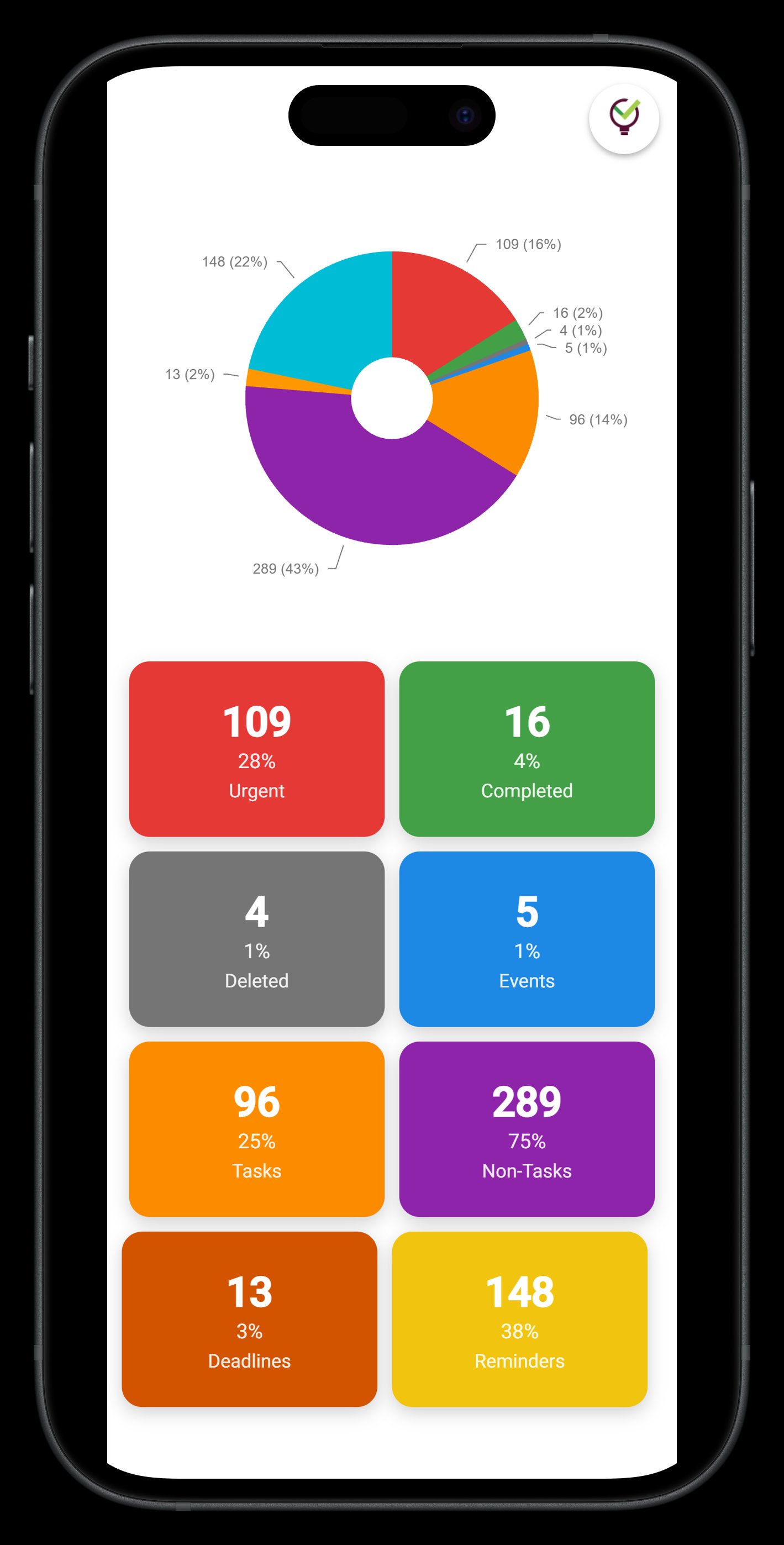
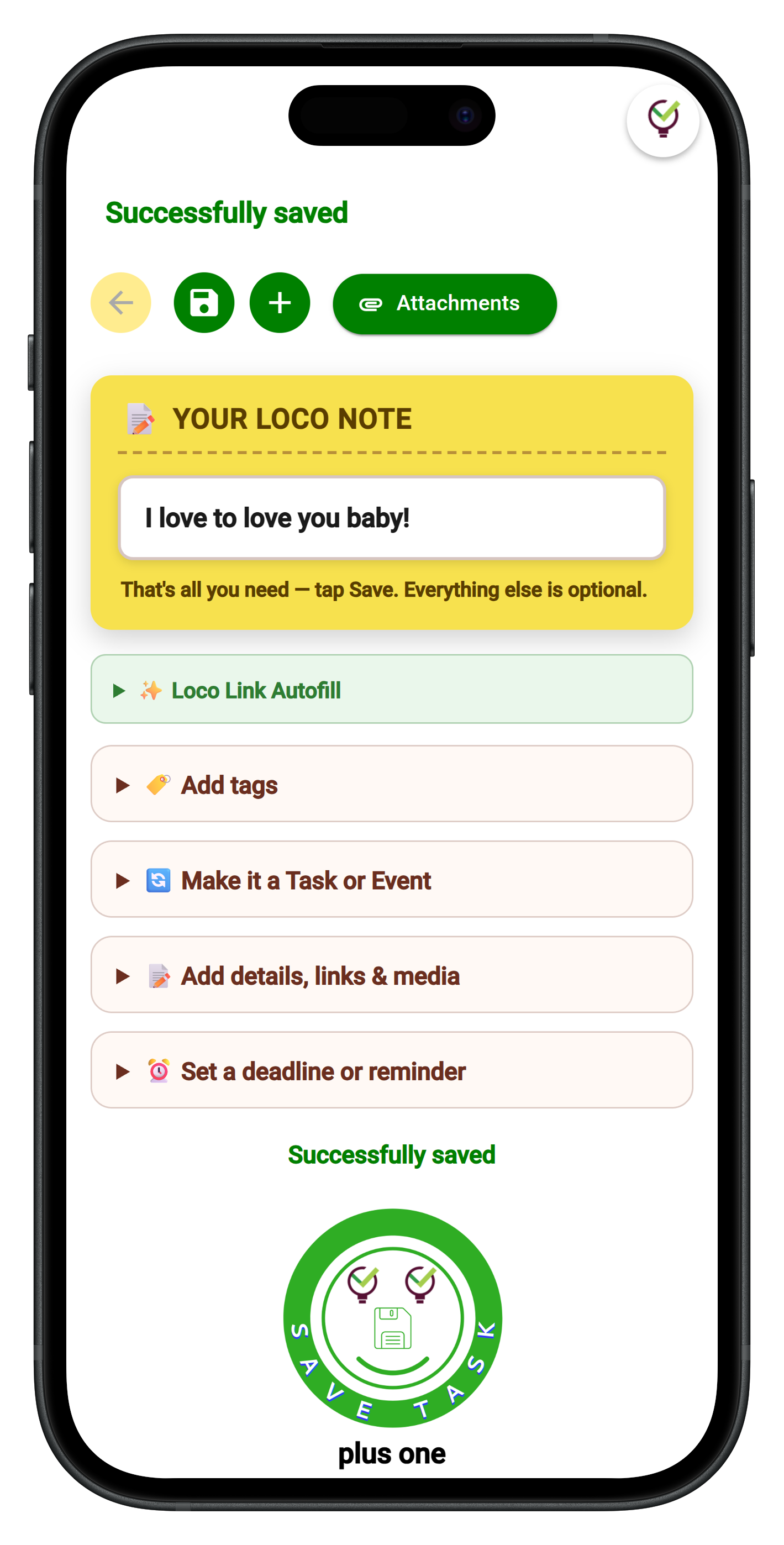
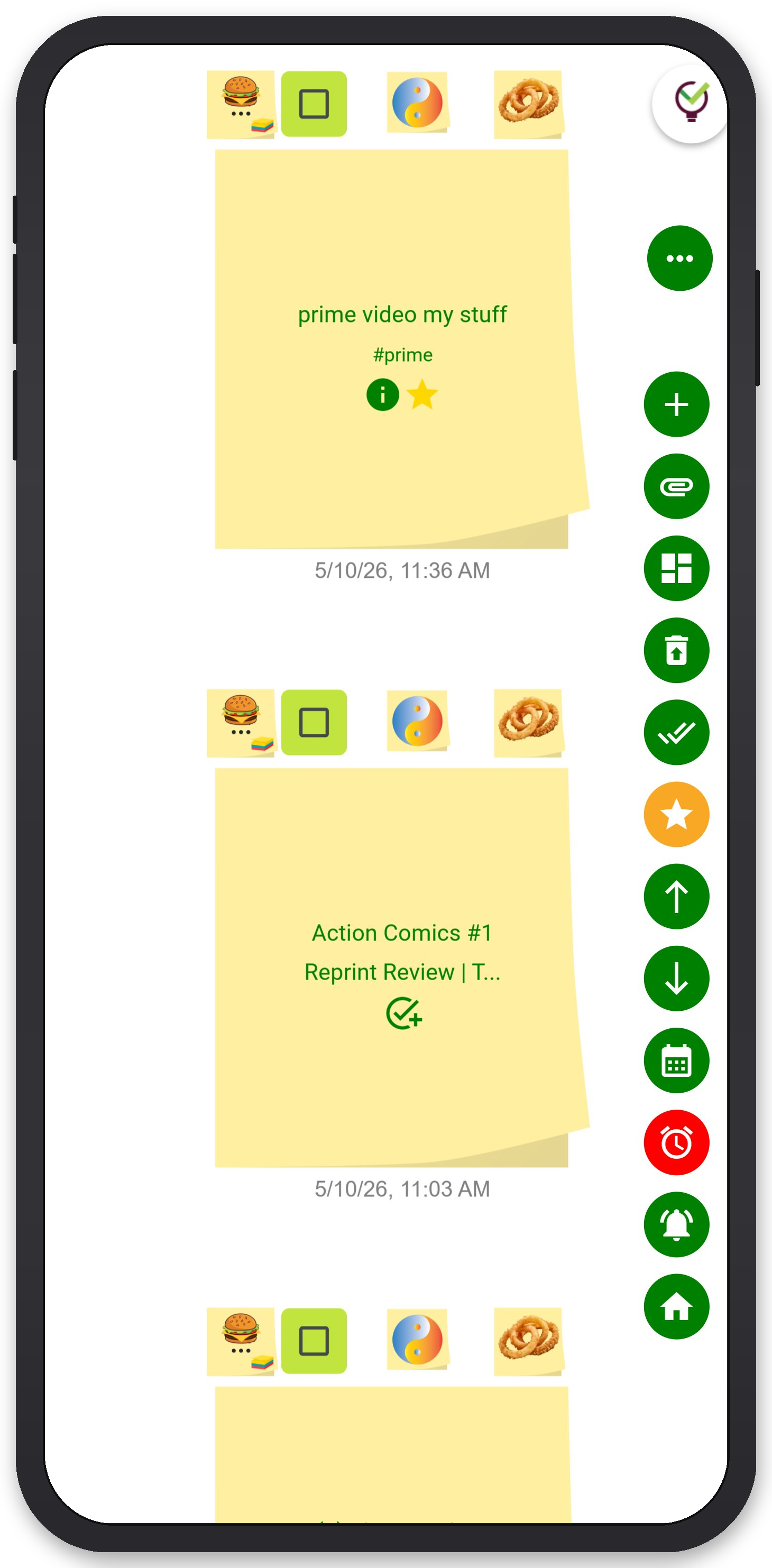
TaskLoco Premium is regularly $9.99/month per person. Right now, charter members can lock in 50% off the regular price — forever. That means $4.99/month per person today. And if our price ever goes up, you still pay half. Always.
Code CHARTER50 auto-applies at checkout. First 500 spots only — once they're gone, this offer is gone permanently. Act fast while spots last.
Every Premium subscription includes unlimited notes, 10GB file storage, reminders, calendar, and team sharing. Each team member requires a separate subscription. 7-day free trial — no charge until day 8. Cancel anytime.
Free Options: TaskLoco
TaskLoco Lite
- Native iPhone & Android app
- Completely anonymous — no sign-in
- Data stays on your device
- Up to 20 notes
- Free forever
TaskLoco Lite Plus+
- Web app + Chrome extension
- Sign in with Google
- Wall syncs across all devices
- Up to 30 notes
- Free forever
Lock In 50% Off — Forever
7-day free trial. No charge until day 8. CHARTER50 auto-applies at checkout.
🔒 Lock In My Charter SpotSee TaskLoco in Action
Frequently Asked Questions
What is cognitive load and why does it affect productivity?
Cognitive load is the total amount of mental effort your working memory is using at any given moment. Working memory is limited — most research puts the cap at around four distinct chunks of information at once. When you're tracking tasks, priorities, context, and next steps mentally, you're burning working memory on overhead rather than on actual thinking. High cognitive load degrades decision quality, increases errors, and creates the feeling of being busy without making progress. Reducing it — through externalization, visual organization, and trusted systems — frees that capacity for the work itself.
How do visual systems reduce cognitive load?
Visual systems reduce cognitive load through externalization: moving information from inside your head into a visible, trusted, structured format outside it. Once your brain believes the system holds the information reliably, it stops doing background sweeps to make sure you haven't forgotten anything. Spatially organized layouts also let your eyes scan rather than your brain read sequentially — which is faster and requires less conscious effort. Color coding, consistent zones, and atomic single-item notes all reduce the interpretation work required each time you look at the board.
Are physical sticky notes better than digital for reducing cognitive load?
Physical sticky notes have real advantages: zero app friction to create one, genuine spatial flexibility, and a tactile quality that some people find helps with focus. But they can't travel reliably, can't be searched, can't hold file attachments or context, and can't notify you at the right moment. Digital sticky-note systems that preserve the visual, spatially arranged metaphor — rather than replacing it with a list — capture most of the cognitive benefits of physical notes while adding search, reminders, attachments, and sharing. The key is choosing a digital tool that actually looks and feels like a board, not one that just has a board view as a checkbox feature.
What is the Zeigarnik effect and how does it relate to task management?
The Zeigarnik effect is the psychological phenomenon where unfinished tasks stay mentally active and intrude on unrelated thinking until they're completed or reliably offloaded. Named after Soviet psychologist Bluma Zeigarnik, the effect explains why you think about the email you forgot to send while you're trying to focus on something else. Research shows that writing an unfinished task down in a trusted system — one you genuinely check and act on — significantly reduces these intrusive thoughts, even without completing the task. This is one of the core cognitive mechanisms that makes both GTD methodology and visual task systems work.
How many zones should a visual board have?
For most people, three zones are the right starting point: To Do, In Progress, and Done. Adding a Waiting / Blocked column is useful if dependencies and handoffs are common in your work. Beyond four zones, the overhead of deciding where something belongs starts to exceed the benefit of the organization. The goal is a board you can read at a glance — if you have to think about which column a task belongs in, you have too many columns. Start minimal and add structure only when a specific, recurring problem demands it.
Can TaskLoco work as a visual sticky-note system?
Yes. TaskLoco is built around the sticky-note metaphor — a wall of notes you can arrange spatially, color-code, and scan without opening individual items. The free tiers (Lite for native mobile, Lite Plus+ for web) let you get started without a credit card. Premium adds reminders that deep-link back to the original note, 10GB file attachments, calendar view, team sharing, and unlimited notes — the capabilities that make a digital board more powerful than a physical one. $9.99/month per person (currently $4.99/month per person for first 500 charter members with code CHARTER50)
What is the difference between TaskLoco Lite and TaskLoco Premium?
TaskLoco Lite is a native iPhone and Android app — completely anonymous, no sign-in required, stores up to 20 notes in a file on your device only, with no syncing, no reminders, no attachments, and no sharing. TaskLoco Lite Plus+ is a web app with a Chrome extension — sign in with Google, sync up to 30 notes across all your devices, with one-click webpage capture via the extension. Neither free tier includes reminders, file attachments, or team sharing. TaskLoco Premium is the full experience: unlimited notes, 10GB file storage, push notification reminders that deep-link to the original note, calendar view, and team sharing. $9.99/month per person (currently $4.99/month per person for first 500 charter members with code CHARTER50)
Born in Brooklyn. Powered by AWS. Your data stays yours.
TaskLoco is available on iPhone, Android, Chrome, and every web browser.