It's 9 PM on Sunday. You've had a decent weekend. And then something shifts. A low hum of dread starts in your chest. You replay the week ahead. You think about the email you didn't send, the project that's stalled, the conversation you've been avoiding. You were fine an hour ago. Now sleep feels impossible.
This isn't a personality flaw or a sign that something is wrong with you. Sunday night anxiety — sometimes called the "Sunday Scaries" — is one of the most consistently reported experiences across working adults. It has a clear psychological explanation, and more importantly, it has real, practical fixes. No meditation app required.
What's Actually Happening in Your Brain on Sunday Night
Your nervous system doesn't have a calendar. It can't tell the difference between "I'm about to get on a stage" and "I'm about to go to work on Monday." What it can detect is uncertainty — and Sunday nights are full of it.
During the weekend, your brain gradually downregulates its threat-monitoring systems. You relax. Cortisol drops. Then Sunday afternoon arrives and your brain starts running a background process: What's coming? Am I ready? What did I forget? If you don't have clear answers, the brain treats that ambiguity as a threat. It ramps back up. That ramp-up is what you feel as dread.
There's also a phenomenon psychologists call anticipatory anxiety — anxiety not about what's happening now, but about what might happen. The brain is running worst-case simulations. It's not irrational; it's the brain doing its job. The problem is that it's doing it at 9 PM when you have no ability to act on any of it.
Research in occupational psychology consistently shows that workers who report psychological detachment from work over the weekend — genuinely unplugging rather than half-checking email — experience significantly less Sunday anxiety. But paradoxically, the people who detach best are often those who have the clearest plans for Monday. They can let go because they know what's waiting for them.
The Real Triggers — It's Not Just Work
Sunday anxiety isn't always about your job. Even people who love their work report it. Even people between jobs report it. That tells you something important: the trigger is often structural, not situational.
1. Open loops. David Allen, who developed the Getting Things Done methodology, identified "open loops" — unresolved commitments, decisions, and tasks that live in your head rather than on paper. The brain treats every open loop as a file it has to keep open. On Sunday night, with nothing to distract you, all those open files surface at once.
2. The transition itself. Moving from unstructured time (weekend) back to structured time (workweek) is genuinely cognitively demanding. Your brain has to shift modes. That mode-shift creates friction, and friction feels like dread.
3. Accumulated avoidance. If you spent the week dodging a difficult conversation, a hard project, or a decision you don't want to make, Sunday night is when the bill comes due. The anxiety isn't about next week — it's about the thing you've been carrying all week and haven't dealt with.
4. A disconnected weekend. Ironically, a weekend where you never fully rested — where you half-worked, half-relaxed, and did neither well — produces more Sunday anxiety than one where you genuinely switched off. Half-presence gives you guilt without recovery.
How to Actually Fix It: The Sunday Reset
There's no hack that eliminates Sunday anxiety permanently. But a consistent end-of-week practice — what some call a "weekly shutdown" — can reduce it from a full dread spiral to a passing awareness. Here's what works.
Do a brain dump on Friday, not Sunday. Before you close your laptop on Friday, spend 10 minutes writing down every open loop: everything you didn't finish, every commitment you made, every task that's waiting. Get it out of your head and onto paper or a notes app. This is the single highest-leverage habit you can build. When Sunday night comes, your brain has less to surface because less is still floating.
Name your Monday morning first action. Not your whole week plan. Just the first concrete thing you'll do on Monday morning. "Email Sarah about the deadline" is enough. When your brain runs its Sunday night simulation and hits a clear starting point, it settles. Ambiguity is what the brain fears — a specific action gives it something to resolve against.
Write down what's worrying you — specifically. Open a notebook or a notes app and write: What am I actually anxious about right now? Then answer it honestly. Most people find that named fears are far smaller than unnamed ones. "I'm worried the presentation isn't good enough" is solvable. Formless dread is not.
Build a hard stop into your Sunday. Choose a time — 8 PM is common — after which you don't think about work. Read. Watch something. Cook. The brain learns patterns quickly; a consistent shutdown time trains it to stop generating work-related threat assessments after that hour.
Stop treating Sunday evening as prep time. Working on Sunday night doesn't reduce anxiety — it feeds it. You're signaling to your brain that work is always present, always urgent. The weekend that ends with work feels shorter, not more productive.
How TaskLoco Fits Into This
You can do everything above with a paper notebook. That's not a knock — pen and paper works well for the Friday brain dump. But if you're already living in digital notes, TaskLoco handles the whole cycle cleanly without adding more apps or more friction.
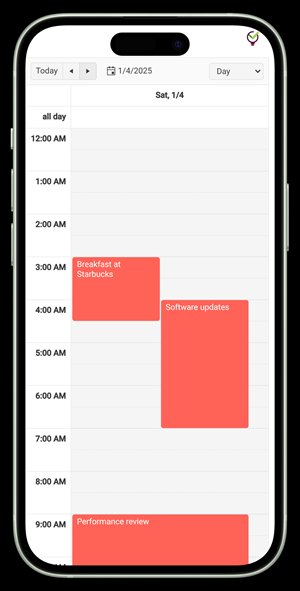
The way it works in practice: on Friday afternoon, open your TaskLoco wall and do a sweep. Every open task, unresolved note, or floating commitment gets written down as a note. Attach any relevant files — briefs, references, screenshots — so Monday morning you're not hunting. Set a push notification reminder on any note that has a hard Monday deadline, and it'll deep-link you straight back to that note when it fires. Nothing gets lost between Friday and Monday.
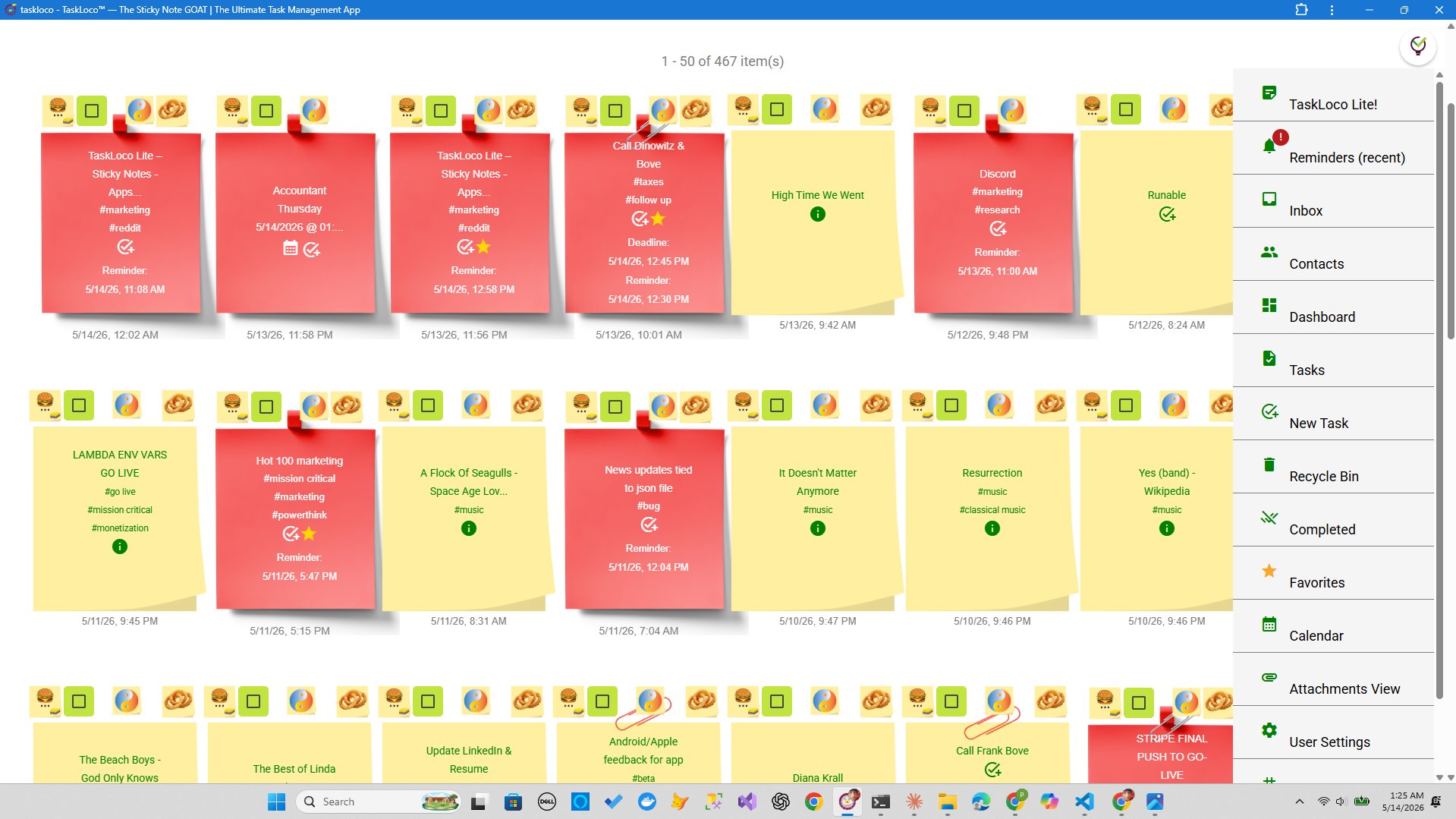
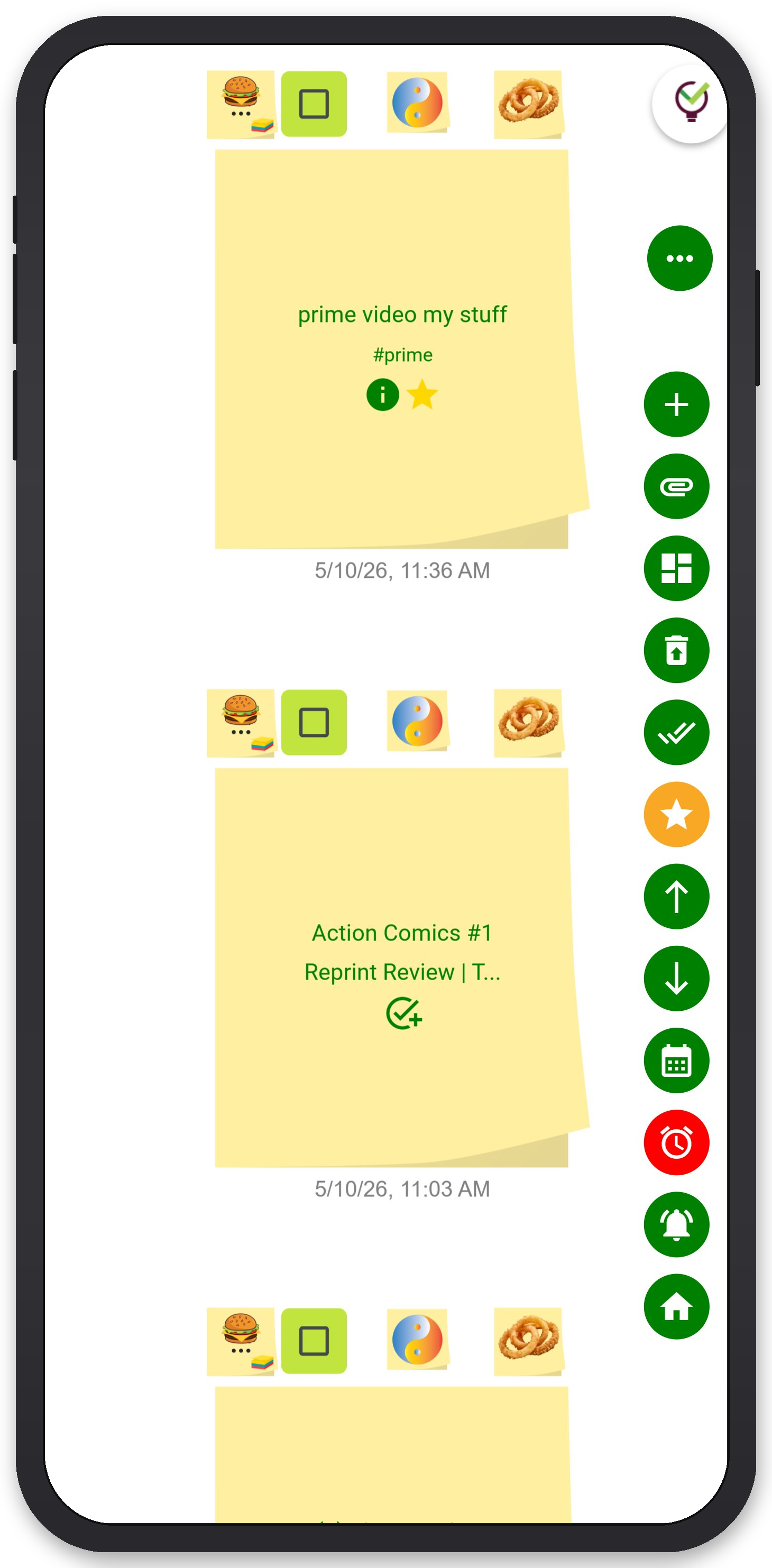
The wall view — notes arranged visually across your screen — makes it easy to see at a glance what's unfinished versus what's done. That visual closure matters psychologically. When you can see your week laid out and know it's captured, your brain stops running the background threat-monitoring loop. That's the mechanism. TaskLoco just makes it faster to close the loops.
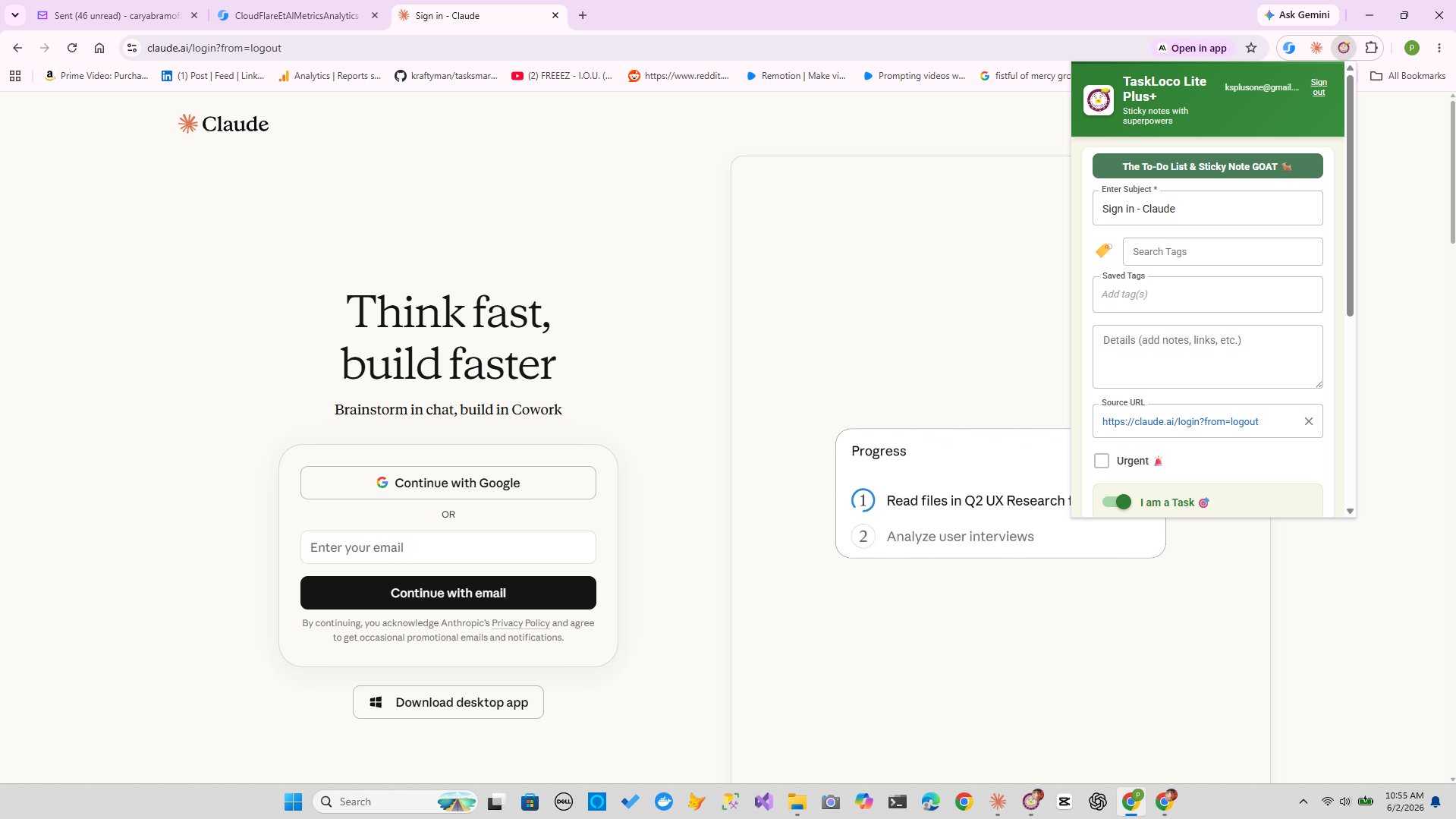
The Chrome extension is useful here too: if you spend Friday afternoon in browser tabs — articles to read, pages to reference, research half-done — one click saves any webpage directly as a note. Nothing slips through the Friday sweep because you forgot to write it down.
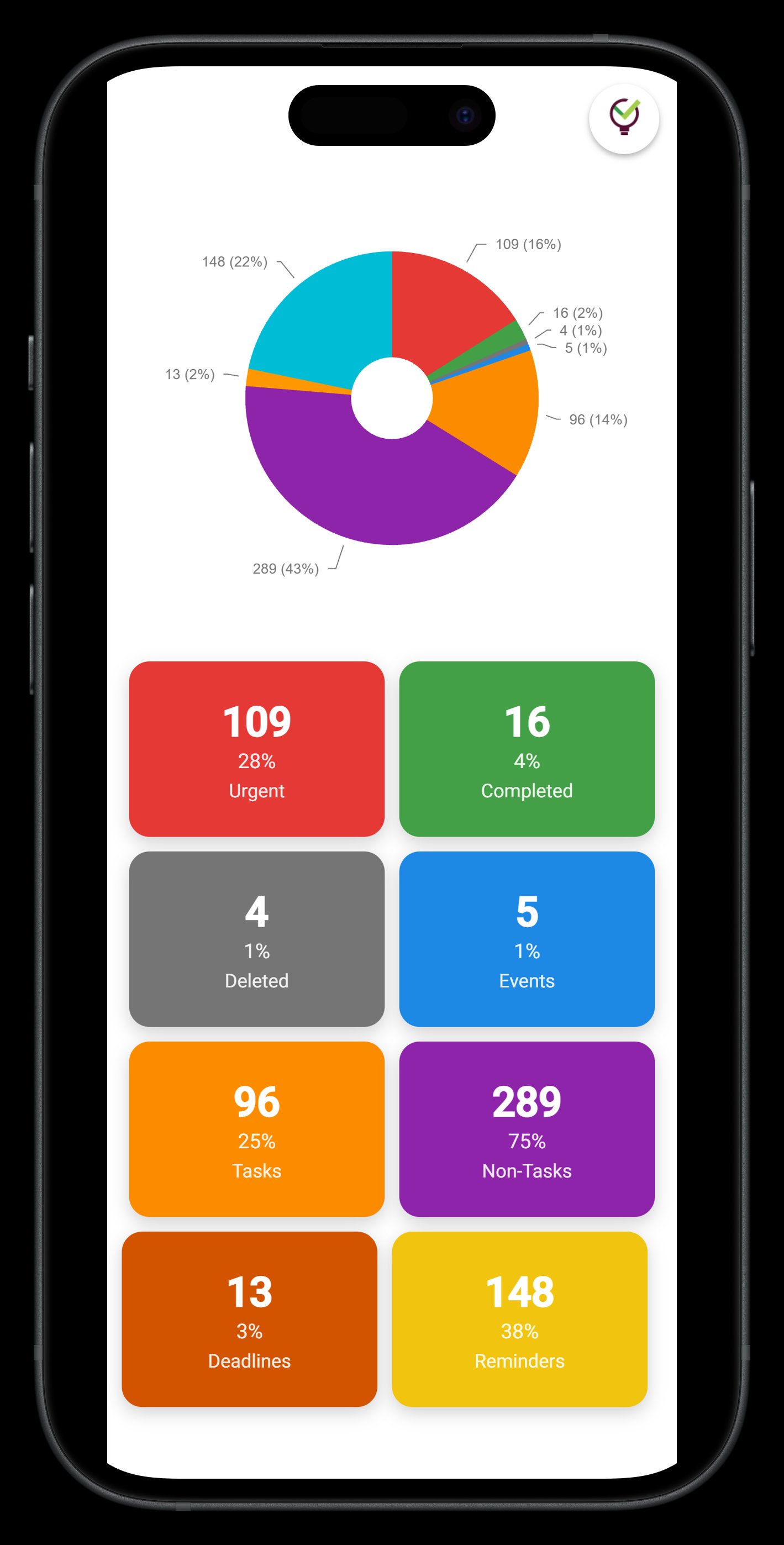
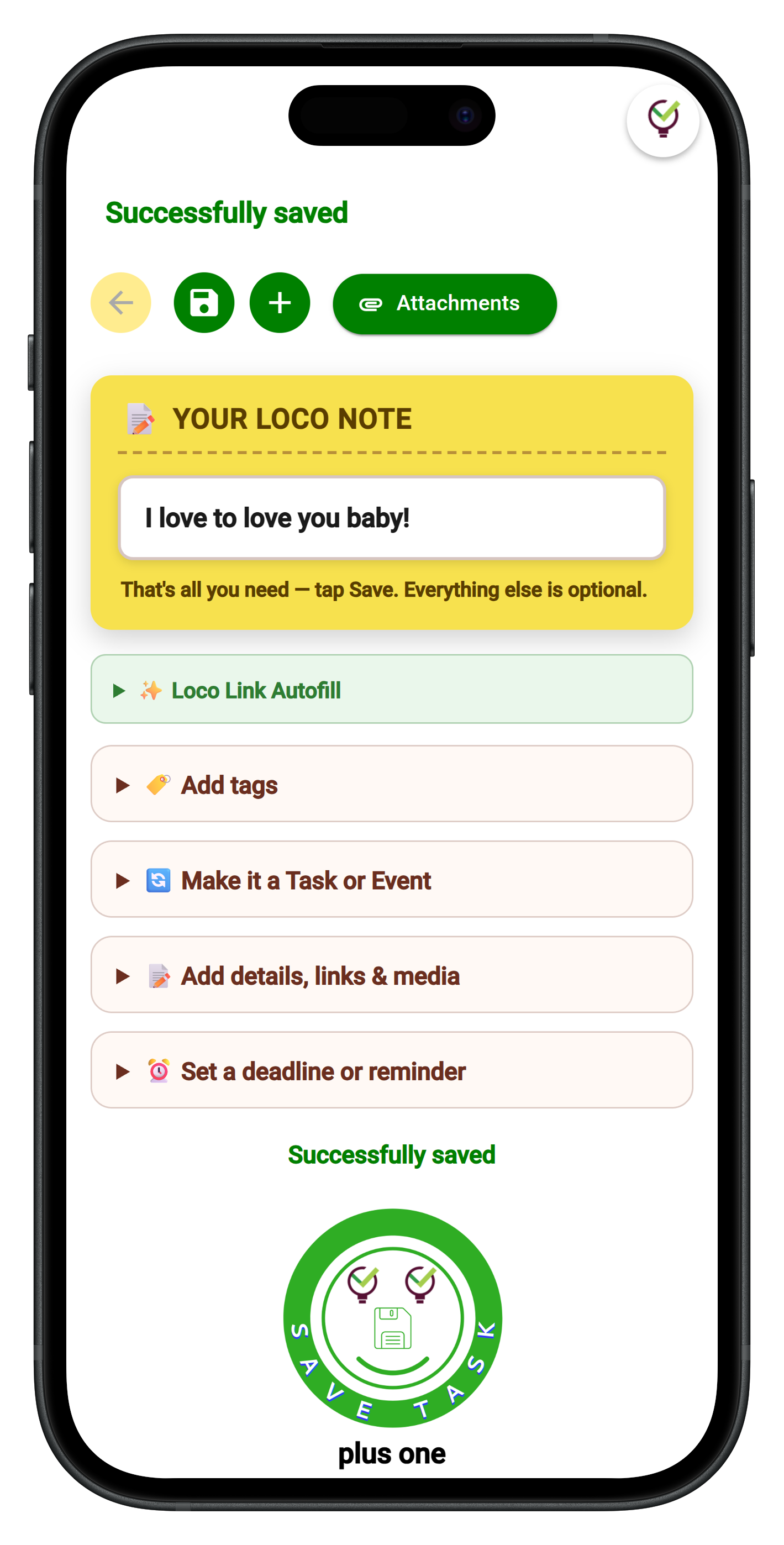
TaskLoco Lite (the native iPhone and Android app) stores up to 20 notes on your device anonymously with no sign-in required — a good fit if you just want a quick Friday list that stays private and local. If you want reminders, file attachments, a calendar view, and notes that sync across your phone and laptop, that's TaskLoco Premium on the web app. Lite Plus+ (free, web) syncs up to 30 notes across devices if you sign in with Google — no reminders or attachments, but enough for a basic weekly capture.
TaskLoco Premium is regularly $9.99/month per person. Right now, charter members can lock in 50% off the regular price — forever. That means $4.99/month per person today. And if our price ever goes up, you still pay half. Always.
Code CHARTER50 auto-applies at checkout. First 500 spots only — once they're gone, this offer is gone permanently. Act fast while spots last.
Every Premium subscription includes unlimited notes, 10GB file storage, reminders, calendar, and team sharing. Each team member requires a separate subscription. 7-day free trial — no charge until day 8. Cancel anytime.
Free Options: TaskLoco
TaskLoco Lite
- Native iPhone & Android app
- Completely anonymous — no sign-in
- Data stays on your device
- Up to 20 notes
- Free forever
TaskLoco Lite Plus+
- Web app + Chrome extension
- Sign in with Google
- Wall syncs across all devices
- Up to 30 notes
- Free forever
Lock In 50% Off — Forever
7-day free trial. No charge until day 8. CHARTER50 auto-applies at checkout.
🔒 Lock In My Charter SpotSee TaskLoco in Action
Frequently Asked Questions
Is Sunday night anxiety normal?
Yes — it's one of the most widely reported experiences among working adults. Studies and surveys consistently show a significant spike in anxiety and low mood on Sunday evenings. It's sometimes called the "Sunday Scaries." The fact that it's common doesn't make it inevitable, but it does mean you're not broken — you're having a predictable response to a structural weekly transition.
Why do I feel dread on Sunday even when I have nothing especially bad coming up?
Because the dread isn't always about a specific event — it's about unresolved uncertainty. Even a manageable week feels threatening when your brain hasn't processed the open loops yet. If you haven't mentally accounted for what's coming, your nervous system treats the ambiguity as a potential threat and starts generating anxiety to motivate preparation. Writing out your week — even briefly — often dissolves the feeling almost immediately.
What is the fastest way to stop Sunday night anxiety?
Name it. Open a note or grab a piece of paper and write down exactly what you're anxious about. Formless dread is much harder to manage than a named concern. Once it's written down, write one specific action you can take on Monday morning to address it. That sequence — name the fear, identify the first action — is the quickest circuit-breaker for the Sunday spiral.
Does working on Sunday help or make it worse?
Almost always worse. Working Sunday evening signals to your brain that work has no boundary — it's always present, always demanding. This makes genuine recovery impossible, which means Monday starts with a depleted nervous system rather than a rested one. The people who manage Sunday anxiety best tend to have a hard stop on Sunday (often around 7–8 PM) and a clear plan already in place from Friday.
What's a Sunday reset ritual and does it work?
A Sunday reset is a short, intentional end-of-week practice — typically 10–20 minutes — where you review what's open, capture anything unfinished, and identify your first Monday action. It works because it closes the open loops your brain is trying to keep track of. The brain causes Sunday anxiety partly because it's running a background sweep of everything unresolved. The reset does that sweep consciously, so the brain can stop doing it involuntarily at 10 PM.
Can TaskLoco help with Sunday night anxiety?
It can support the habits that actually fix Sunday anxiety — specifically the Friday brain dump and Monday planning. TaskLoco lets you capture every open task, attach relevant files, and set push notification reminders that deep-link back to the right note when they fire. The visual wall view helps you see at a glance what's captured versus what's still floating. That visual closure — knowing everything is written down — is what quiets the Sunday night mental sweep. $9.99/month per person (currently $4.99/month per person for first 500 charter members with code CHARTER50)
Why does Sunday anxiety hit worse after a relaxing weekend?
Partly because contrast amplifies the feeling — going from full relaxation to threat-anticipation is a bigger cognitive shift than going from half-stressed to half-stressed. But also because a genuinely relaxing weekend often means you haven't thought about work at all, which means Monday arrives with maximum ambiguity. The fix isn't to work on weekends — it's to do the Friday shutdown properly so you can relax fully, knowing everything is captured and you have a clear Monday start.
Born in Brooklyn. Powered by AWS. Your data stays yours.
TaskLoco is available on iPhone, Android, Chrome, and every web browser.