Most people don't fail at planning because they lack discipline. They fail because their planning system takes longer than the week deserves. A thirty-minute Sunday review sounds reasonable until it's 8 PM and you're on the couch. Ten minutes, though? Ten minutes you'll actually do.
This ritual is built around a single constraint: nothing that takes longer than ten minutes survives contact with real life. That means no complicated templates, no color-coded project boards, no weekly retrospectives. Just a fast brain dump, a short prioritization pass, and one sticky note per day. By the time your coffee is ready, your week is mapped.
What makes a planning ritual actually work
Before any app or method enters the picture, it helps to understand what separates a planning habit that lasts from one that dies by Tuesday. Three things, consistently, are what make or break it.
Speed. If the ritual takes more time than a short commute, you'll skip it whenever life gets heavy — which is exactly when you need it most. Every minute of friction is a reason to defer. The system has to be faster than your resistance to using it.
Capture completeness. A plan that covers only work tasks while personal obligations live in your head isn't a plan — it's a partial list with invisible landmines. The best Sunday rituals pull everything into one view: work deadlines, appointments, errands, things you're waiting on, things you've been avoiding. One surface, all of it.
Forward momentum, not retrospective guilt. Weekly reviews that ask you to evaluate everything you didn't finish last week feel like a performance review. The rituals that stick are forward-looking: what matters this week, what are the two or three things that would make this week feel like a win, what can wait. The past is context, not the agenda.
The ten-minute ritual, step by step
Set a timer for ten minutes. Not as a challenge — as a commitment. When the timer ends, you stop. The constraint is the point.
Minutes 1–3: Brain dump. Open a blank note and write down everything in your head that needs to happen this week. No ordering, no prioritizing, no estimating. Just get it out. Work calls, the dentist appointment, the email you've been avoiding, the deadline on Thursday, the thing you promised your friend. Everything. If it takes longer than three minutes, your system has probably been neglected for more than a week — that's fine, but notice it.
Minutes 4–6: Identify your three anchors. Look at your dump and pick three things — not ten, not five, three — that would make this week feel like a success if they got done. These become your anchors. Everything else is secondary. Write them somewhere you'll see them every morning. In TaskLoco Premium, this is a pinned note on your wall that stays at the top of every session.
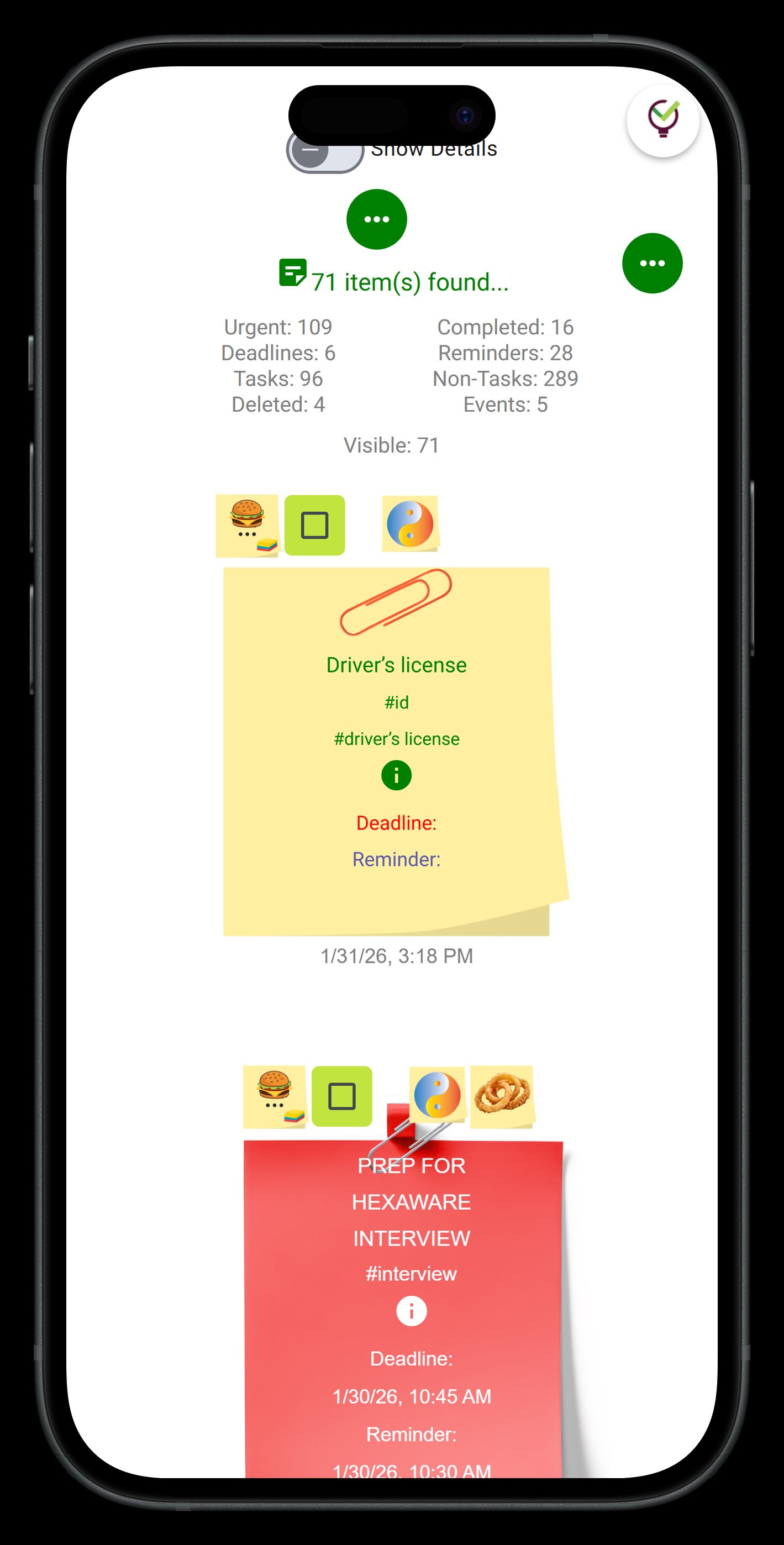
Minutes 7–9: One note per day. Create five quick notes, one for each weekday. Distribute the remaining items from your brain dump into whichever day makes sense. Don't overthink it. Monday gets the urgent stuff, Friday gets the deferred stuff. The point isn't a perfect schedule — it's a starting point that keeps you from losing things.
Minute 10: Set one reminder. Just one. The single thing that, if you forget it, causes actual damage. In TaskLoco Premium, that reminder fires as a push notification directly to your phone and computer, and taps you straight back into the note it's attached to — no hunting around for context.
Why sticky notes work better than full project systems for this ritual
There's a real temptation, especially among productivity enthusiasts, to run a Sunday planning ritual through a full project management tool. Set up a project, add subtasks, assign due dates, link dependencies. By the time you're done, it's Monday morning.
Sticky notes work for this ritual because they match how planning actually happens. A brain dump is messy. The items aren't tasks yet — they're obligations, intentions, anxieties, and half-formed ideas. A sticky note accepts all of that without demanding that you classify it first. You write it down, it exists, you move on.
The other thing sticky notes do naturally is enforce scope. A sticky note has a physical limit. You can't write a twenty-item task list on one note without it becoming unreadable — so you don't. You write what actually matters for that day and stop. That constraint is doing real cognitive work for you.
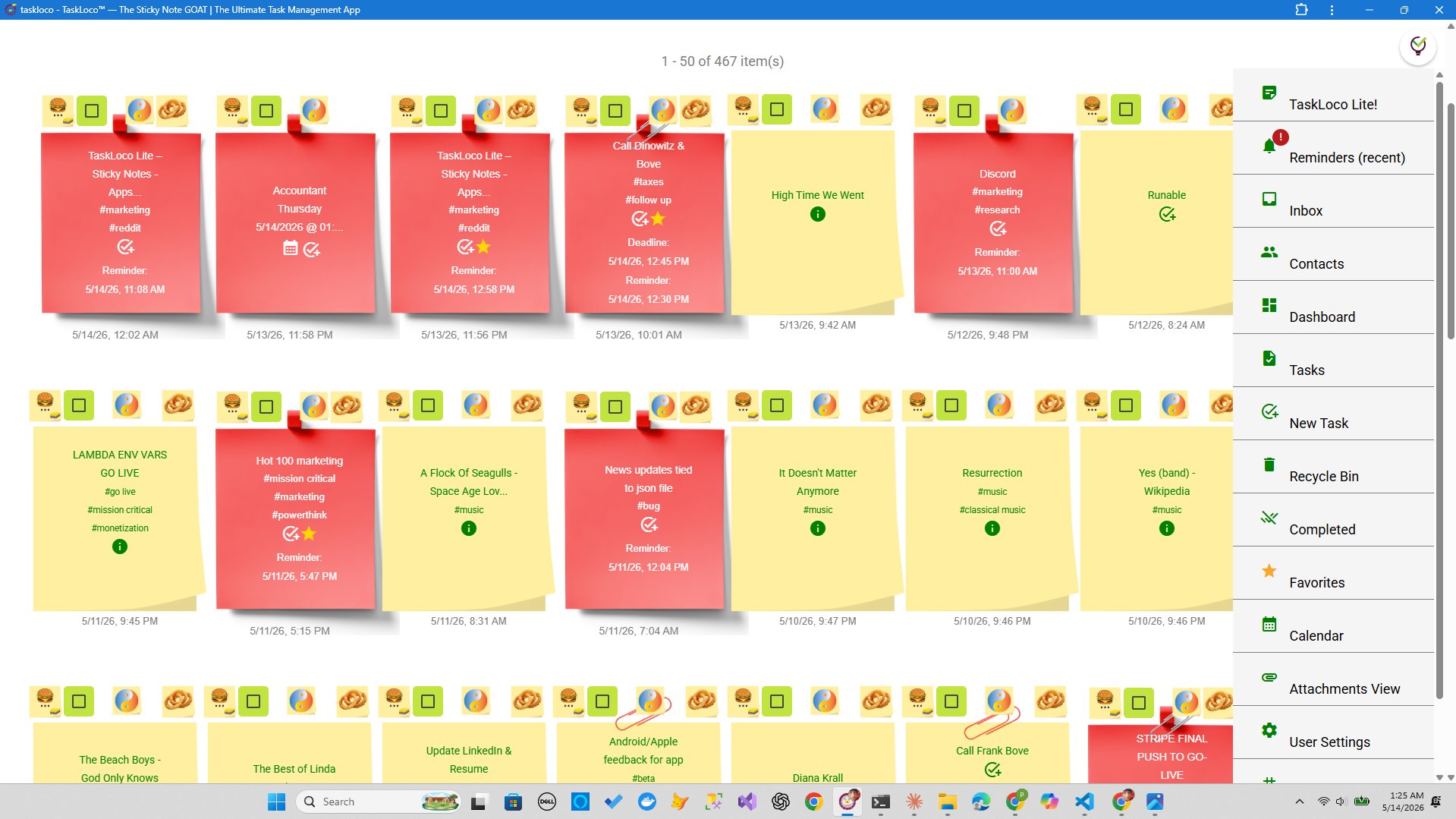
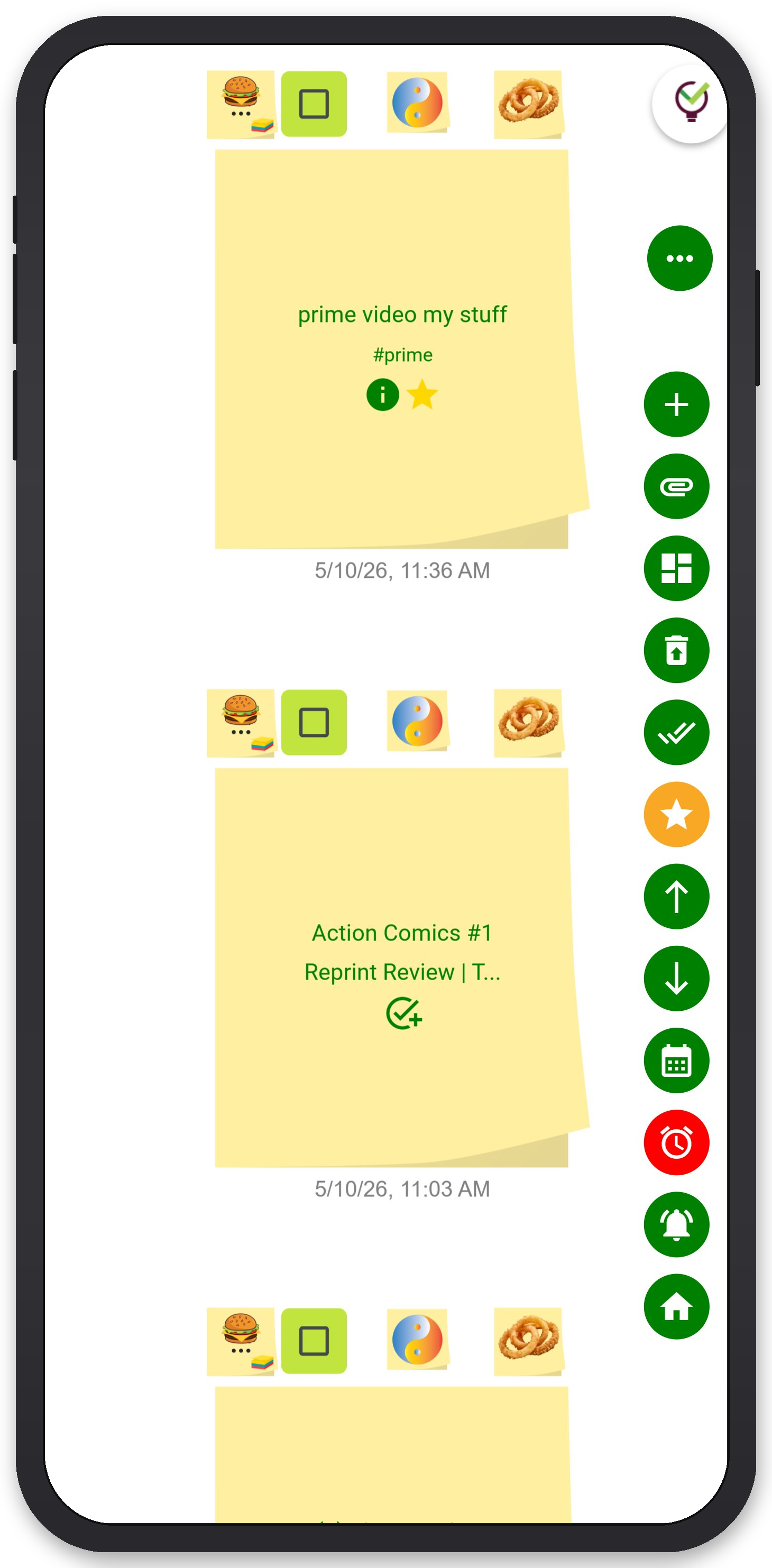
TaskLoco was built on this principle. The interface is a wall of notes — you see everything at once, you can drag and rearrange, and each note stays lightweight by design. There's no onboarding wizard, no template library to scroll through on a Sunday evening. You open it, you write, you're done. TaskLoco Lite Plus+ (free, syncs across all your devices through the browser) is enough for the basic ritual. If you want reminders and file attachments — say, attaching an agenda PDF to your Monday note — that's TaskLoco Premium.
Making it stick: the habits that keep the ritual alive
The ritual only works if you do it every week. Here's what separates people who do it consistently from people who do it twice and abandon it.
Anchor it to something you already do. Sunday planning works best when it's attached to an existing habit — right after your first coffee, right before you start a Sunday podcast, right when your kids go to bed. The habit doesn't build itself; it borrows from something already there.
Keep last week's notes visible. One of the underrated benefits of a digital sticky note wall is that you can see what you wrote last Sunday while you're writing this Sunday's plan. You instantly see what carried over, what you actually did, what you forgot about. No formal retrospective required — it's just context, visible at a glance. In TaskLoco, your wall persists between sessions, so last week's notes are right there when you open it.
Don't grade yourself on completion rate. The ritual's job is to give you a plan, not to guarantee you finish everything. Some weeks you'll hit all three anchors. Some weeks the anchors shift by Wednesday because life changes. The ritual still worked — it gave you a map even if the territory turned out to be different. Treat it as a navigation tool, not a report card.
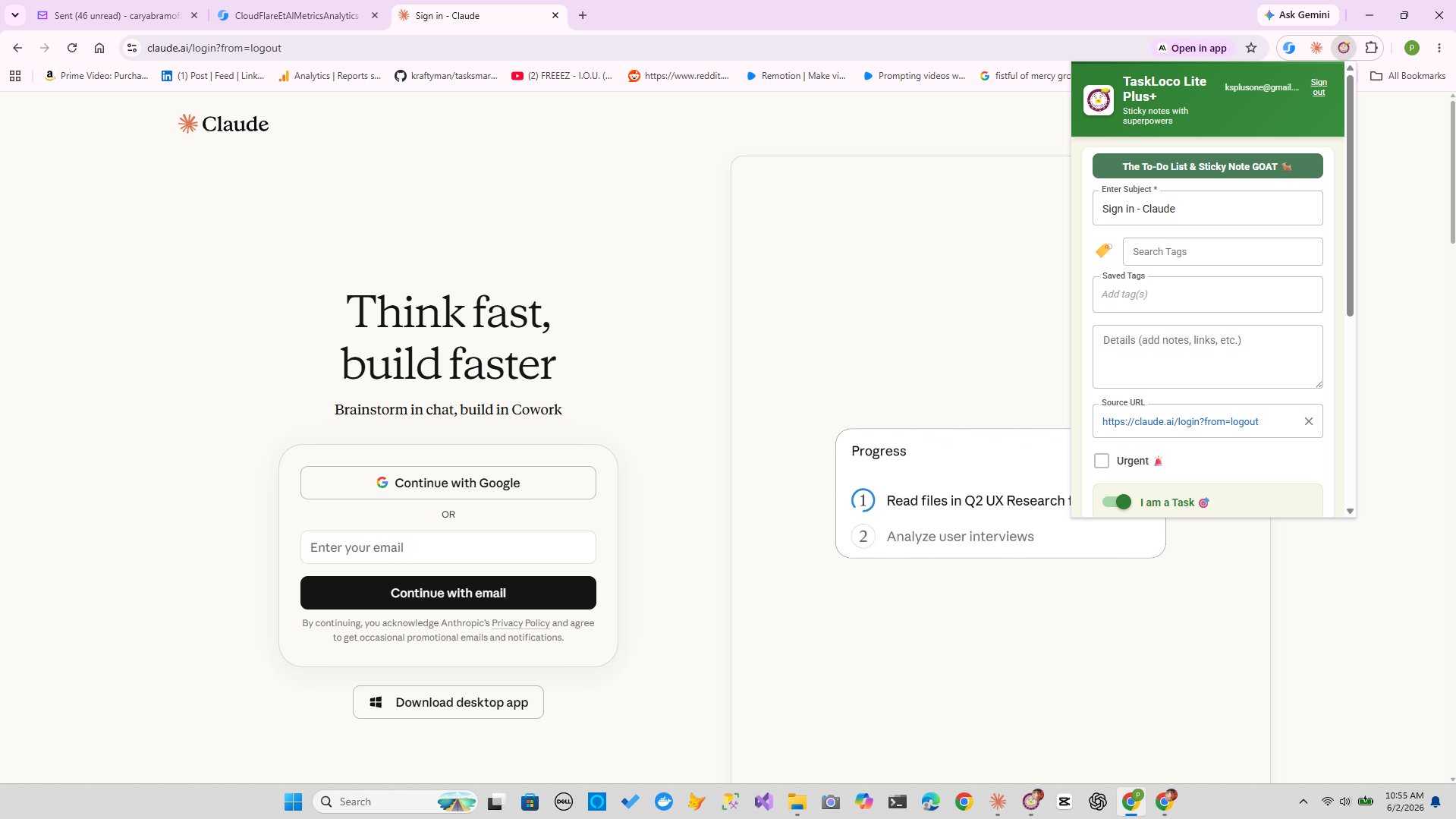
Use the Chrome extension for mid-week captures. The ritual sets the week, but things come up. TaskLoco's Chrome extension lets you clip any webpage — a reference article, a link someone sent you, a meeting invite — directly into a note with one click. Nothing gets lost between Sundays because capture is always one click away.
TaskLoco Premium is regularly $9.99/month per person. Right now, charter members can lock in 50% off the regular price — forever. That means $4.99/month per person today. And if our price ever goes up, you still pay half. Always.
Code CHARTER50 auto-applies at checkout. First 500 spots only — once they're gone, this offer is gone permanently. Act fast while spots last.
Every Premium subscription includes unlimited notes, 10GB file storage, reminders, calendar, and team sharing. Each team member requires a separate subscription. 7-day free trial — no charge until day 8. Cancel anytime.
Free Options: TaskLoco
TaskLoco Lite
- Native iPhone & Android app
- Completely anonymous — no sign-in
- Data stays on your device
- Up to 20 notes
- Free forever
TaskLoco Lite Plus+
- Web app + Chrome extension
- Sign in with Google
- Wall syncs across all devices
- Up to 30 notes
- Free forever
Lock In 50% Off — Forever
7-day free trial. No charge until day 8. CHARTER50 auto-applies at checkout.
🔒 Lock In My Charter SpotSee TaskLoco in Action
Frequently Asked Questions
How long should a Sunday planning session actually take?
Ten minutes is the target. It's short enough that you'll do it even on a busy Sunday, and long enough to cover a complete brain dump plus basic organization. If it consistently takes longer, the session is probably turning into a retrospective or a deep scheduling exercise — both of which are useful occasionally, but not as a weekly habit. Keep it fast, keep it forward-looking.
What should I include in a Sunday brain dump?
Everything you're holding in your head: work deadlines, meetings, calls to make, errands, things people are waiting on from you, things you're waiting on from others, and anything you've been vaguely anxious about getting done. The goal is to empty your mental RAM into one place. If you're uncertain whether something belongs, write it down anyway — editing is faster than trying to remember it later.
Do I need a special app for this ritual?
No — the ritual works on paper, in any notes app, or on a physical sticky note wall. The reason to use a digital tool like TaskLoco is persistence (your notes survive and are visible next Sunday), sync (your plan is on every device), and reminders that fire as push notifications directly to your phone or computer, tapping you straight back into the relevant note. TaskLoco Lite Plus+ is free and syncs across all your devices. TaskLoco Premium adds reminders, file attachments, and unlimited notes for weeks with a lot going on.
What's the difference between a Sunday planning ritual and a full weekly review?
A weekly review (popularized by GTD) is thorough — it involves processing every inbox, reviewing all active projects, and doing a complete capture of open loops. That's valuable, but it can take 60–90 minutes and is hard to sustain weekly. A Sunday planning ritual is narrower: it's a ten-minute forward-looking pass designed to give you a clear starting point for Monday. It doesn't try to close all open loops — it just makes sure you know what the week looks like before it starts.
How do I keep the ritual from ballooning into an hour-long project?
Set a timer. Seriously. When ten minutes ends, stop. The constraint forces you to prioritize instinctively rather than agonize over placement. The ritual's value comes from doing it consistently, not from doing it perfectly. If you have more to process, schedule a longer session separately — don't let it eat the ritual.
What if my week changes completely by Wednesday?
That's normal, and it doesn't mean the ritual failed. The plan you made Sunday gave you a starting orientation — a map. When the territory changed, you updated the map. The value was in the clarity you had Monday morning, not in the plan surviving intact to Friday. The ritual also makes mid-week pivots faster because you already have your priorities in writing and can see what to drop versus what to protect.
Is TaskLoco free to try for this kind of planning?
$9.99/month per person (currently $4.99/month per person for first 500 charter members with code CHARTER50)
Born in Brooklyn. Powered by AWS. Your data stays yours.
TaskLoco is available on iPhone, Android, Chrome, and every web browser.