Frederick Winslow Taylor invented time-and-motion studies in the 1880s to figure out why factory workers were moving inefficiently. He had analysts with stopwatches. You have a phone and a to-do list that's gotten out of hand. The core idea is the same: watch what actually happens, measure it honestly, and cut the waste. The difference is that Taylor was optimizing other people's work. You're optimizing your own — which means you control the data, the conclusions, and what changes.
Most people treat their to-do list as a wish list. Tasks pile on, get rolled over to tomorrow, get starred and forgotten. A time-and-motion study forces a different relationship with that list. It asks: how long did this actually take versus how long you thought it would? Which tasks cluster into real productive sessions and which ones scatter across the day in unusable five-minute fragments? Which categories of work are draining you relative to their output? The answers are almost always uncomfortable — and almost always immediately actionable.
What a Personal Time-And-Motion Study Actually Is
Strip away the industrial-engineering jargon and a time-and-motion study is just a structured observation of how work actually gets done — not how you imagine it does. In a factory, an analyst watches a worker assemble a part and records every micro-movement, every reach, every pause. For your to-do list, the equivalent is recording the real start time, real end time, and real outcome of every task you attempt over a meaningful observation window — usually five to ten working days.
There are three things that actually matter when you design a personal version:
- Granularity. You need to capture tasks at the level where real decisions get made. "Work on project" is useless. "Draft the intro section of the Q3 brief" is useful. If your to-do list is full of vague blobs, the study will just confirm that vague blobs take vague amounts of time.
- Honest categorization. Every task belongs to a category — deep work, communication, admin, reactive/interrupt-driven. You can't fix what you haven't labeled. Most people discover, to their horror, that 40–60% of their tracked time falls in the reactive bucket.
- Time estimation vs. reality tracking. The gap between "I thought this would take 20 minutes" and "it took 90" is where the study pays off. That gap, measured across dozens of tasks, tells you whether you're a chronic optimist, whether certain task types have hidden complexity, or whether interruptions are eating the margin you didn't budget for.
A good system for running this study is flexible enough to capture tasks as they come in, tag them quickly, and surface patterns without requiring you to build a spreadsheet from scratch every morning. That's where your tool choice matters more than people expect.
How to Run the Study: Five Days, Four Questions
You don't need a consultant or a stopwatch app. You need a note for each task and the discipline to answer four questions every time you touch one. Here's the exact method:
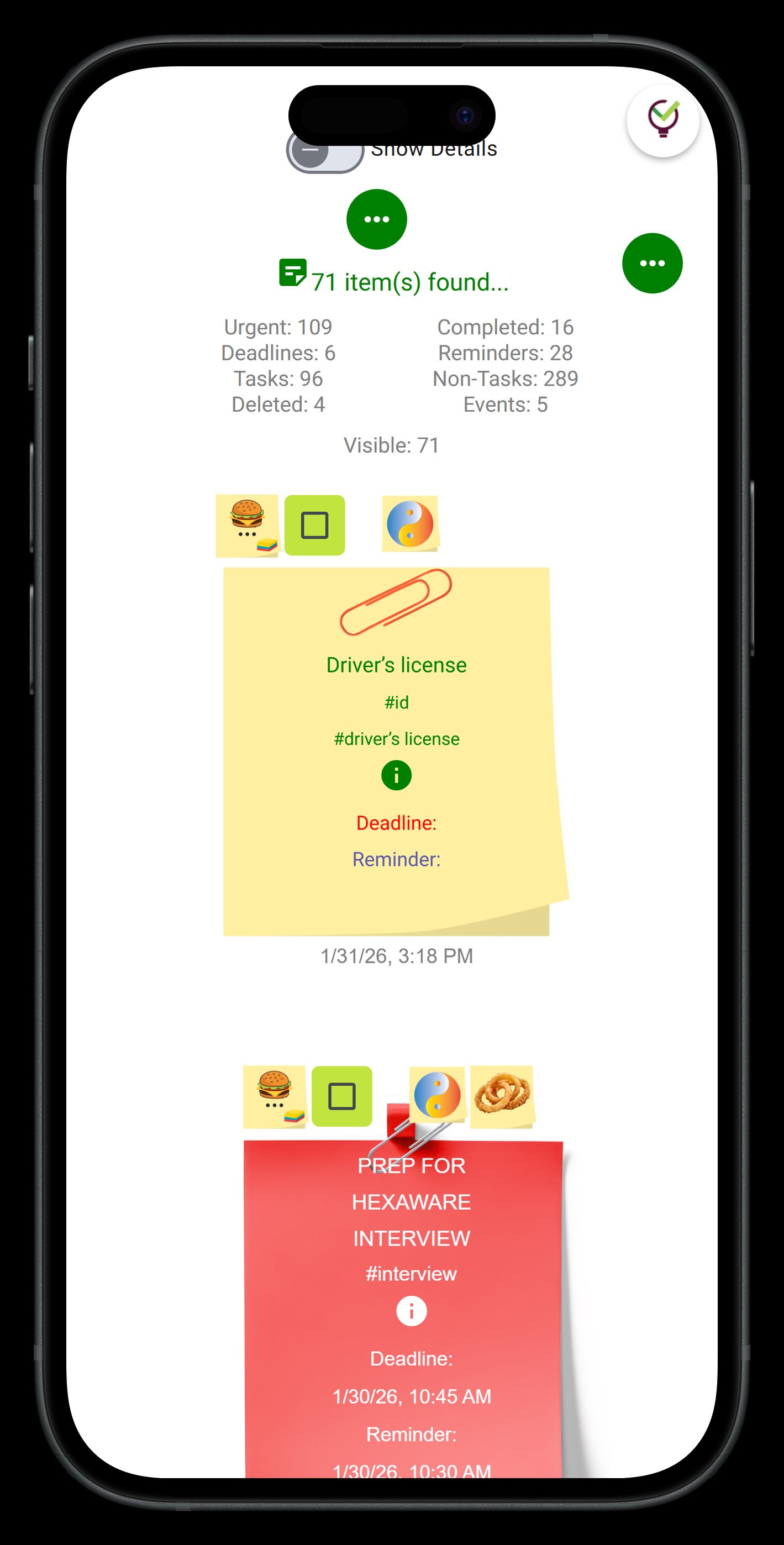
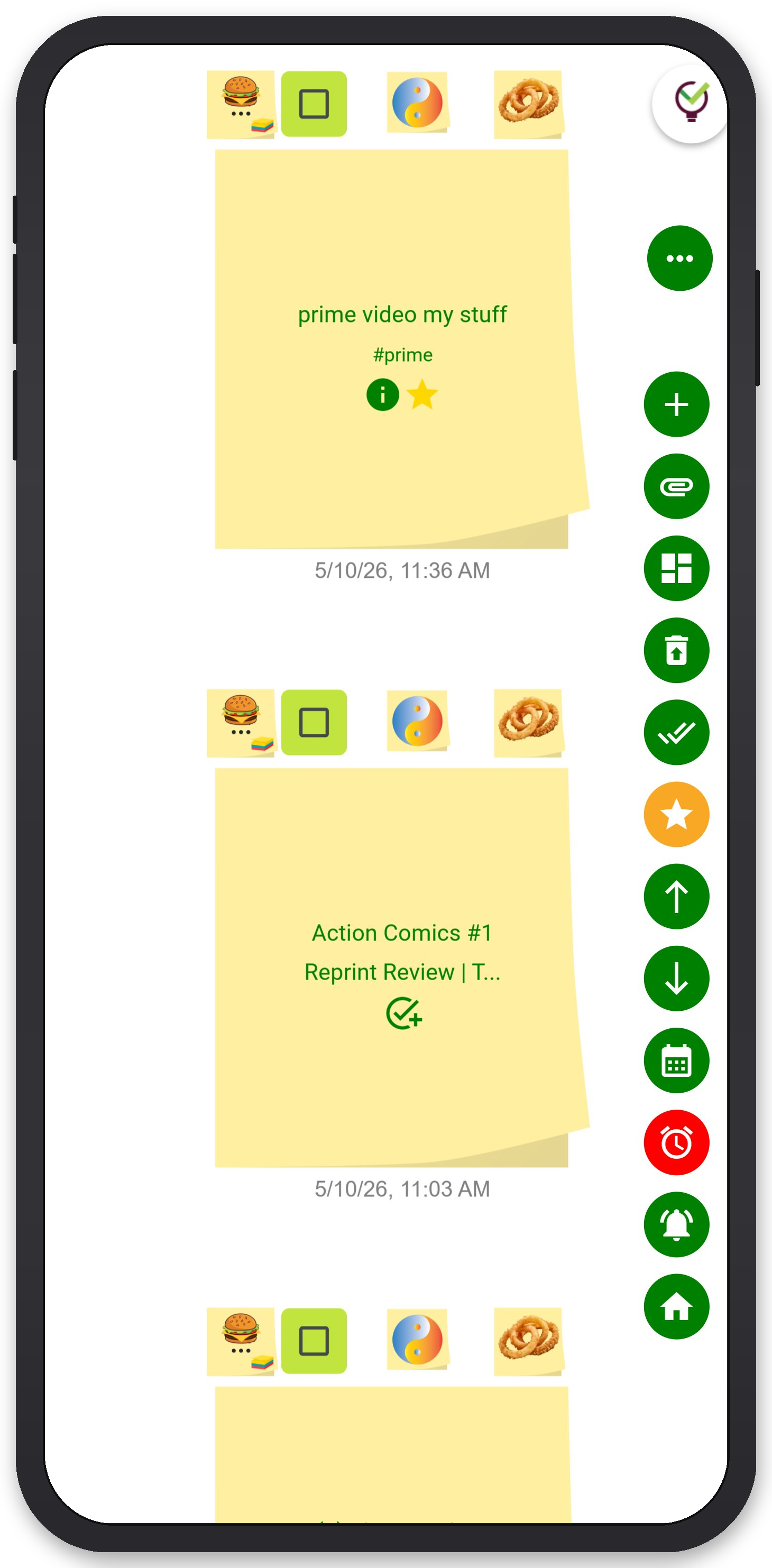
Day 0 — Set up your observation system. Create one note per major task you expect to work on this week. Don't pre-populate the whole week — just today's real list. Each note gets a category tag (Deep Work, Communication, Admin, Reactive). If you're in TaskLoco, your sticky notes live on a wall you can see all at once, which matters: you can't observe what you can't see.
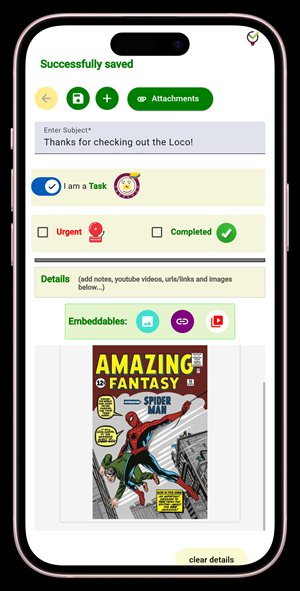
During each work session — answer four questions per task. When did you start? When did you finish or abandon it? Did the outcome match the goal on the note? What interrupted you, if anything? Write this directly on the note. Thirty seconds, maximum. The friction has to be near zero or you won't do it consistently enough to get useful data.
End of each day — a two-minute review. Scan the wall. How many tasks are in each category? How many were completed versus rolled over? How many were interrupted at least once? Don't draw conclusions yet — just note patterns. TaskLoco's push-notification reminders can fire at a time you pick to trigger this review so it doesn't slip.
Day 5 — the audit. Lay out all your notes. Sort them by category. For each category, calculate: average actual time per task, completion rate, and interruption rate. Then ask: which category has the worst ratio of time-to-output? Which tasks could be deleted, delegated, or batched? Which time slots produced your best deep work? The answers become your new working rules.
The output isn't a report. It's a decision. You should end day 5 with at least three concrete changes: a time block you're protecting, a category of task you're batching or eliminating, and an honest estimate calibration for the task types you consistently underestimated.
What to Do After the Study Is Over
The study itself is useless if you treat it as a one-time event. The point is to change how you maintain your to-do list going forward. Here are the most common outcomes people find — and the rule changes that actually stick:
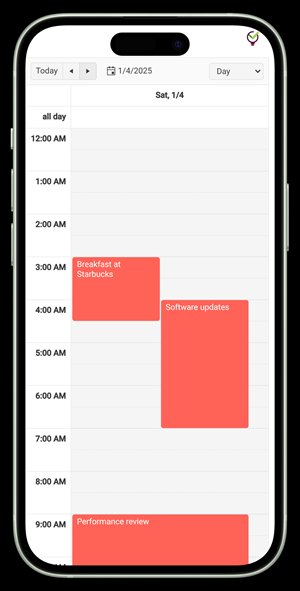
Finding 1: Your deep work is fragmented into unusable slices. The fix is time blocking — reserving two to three consecutive hours for high-complexity tasks and making those hours non-negotiable. In TaskLoco, set a reminder as a push notification for the start of that block. It fires on your phone and your computer and links you straight to the note for the task you should be starting. No friction, no forgetting.
Finding 2: Your admin and reactive tasks are spread evenly across the day, which means they're constantly interrupting everything else. The fix is batching — two fixed windows per day where you handle email, Slack, quick approvals, and nothing else. Everything reactive goes into a note during the day; you process the pile during batch windows only. The wall view makes this visible — reactive notes pile up in their column and wait.
Finding 3: You consistently underestimate certain task types by a factor of two or three. The fix is a personal estimation multiplier. If "writing" tasks always take 2.5× your estimate, build that into every writing task note going forward. Write the estimate, write the multiplied number, use the multiplied number for scheduling. Over two or three months, your calendar stops lying to you.
Finding 4: A significant portion of your task list shouldn't be on your task list. These are tasks that belong to someone else, tasks that are too vague to ever be actionable, and tasks that made sense three weeks ago and are now irrelevant. Delete them. TaskLoco's unlimited notes in Premium means you're never worried about running out of space — but that also means you have to actively prune. The study gives you the data to prune without guilt.
Run the study again in 60 days. The second study is always more revealing than the first because you'll see whether the rules you set after the first one actually changed anything — or whether you quietly abandoned them by week two. Most people abandon them by week two. That's not a character flaw; it's a system design problem. Fix the system, not your willpower.

TaskLoco Premium is regularly $9.99/month per person. Right now, charter members can lock in 50% off the regular price — forever. That means $4.99/month per person today. And if our price ever goes up, you still pay half. Always.
Code CHARTER50 auto-applies at checkout. First 500 spots only — once they're gone, this offer is gone permanently. Act fast while spots last.
Every Premium subscription includes unlimited notes, 10GB file storage, reminders, calendar, and team sharing. Each team member requires a separate subscription. 7-day free trial — no charge until day 8. Cancel anytime.
Free Options: TaskLoco
TaskLoco Lite
- Native iPhone & Android app
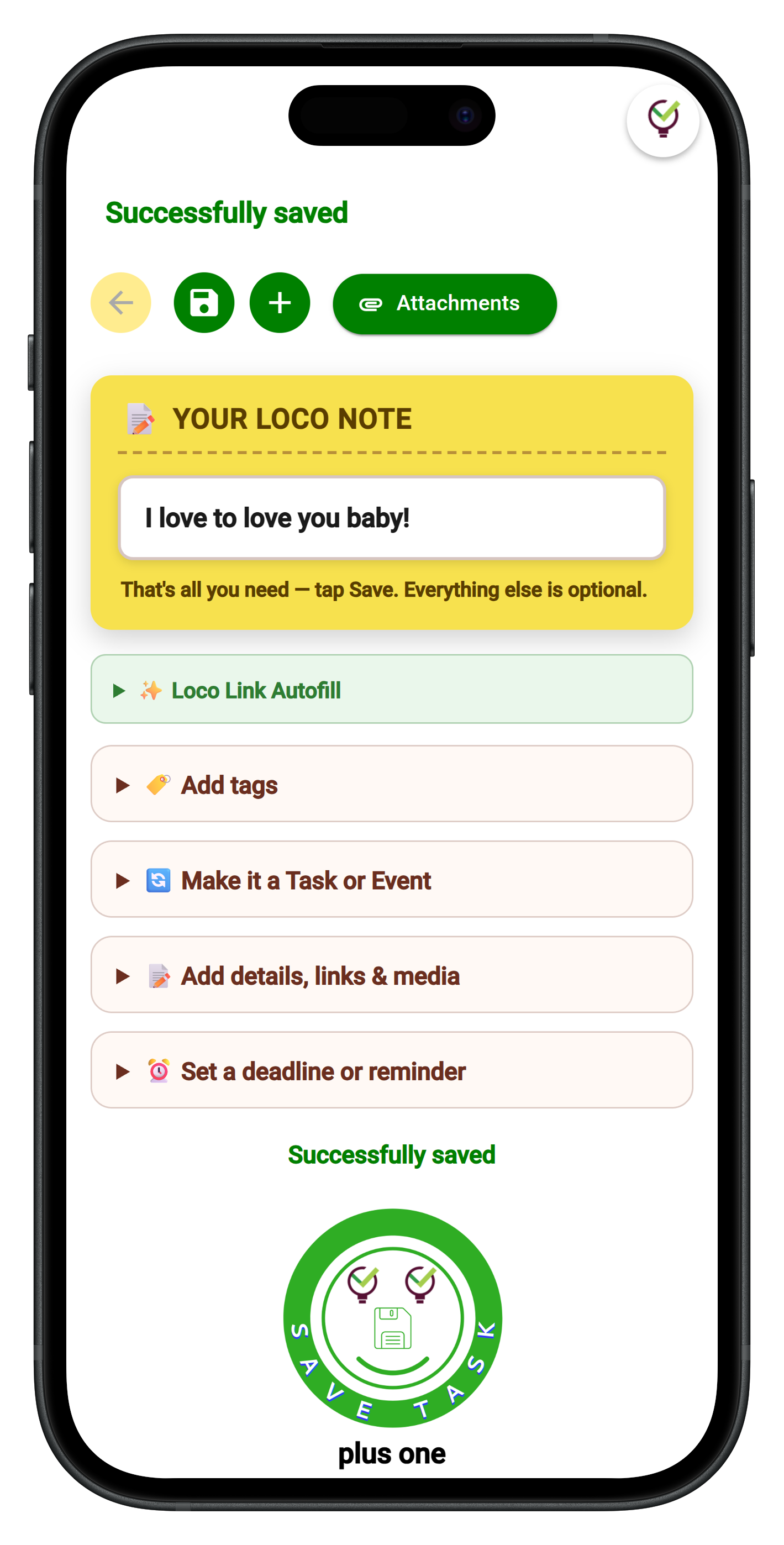
- Completely anonymous — no sign-in
- Data stays on your device
- Up to 20 notes
- Free forever
TaskLoco Lite Plus+
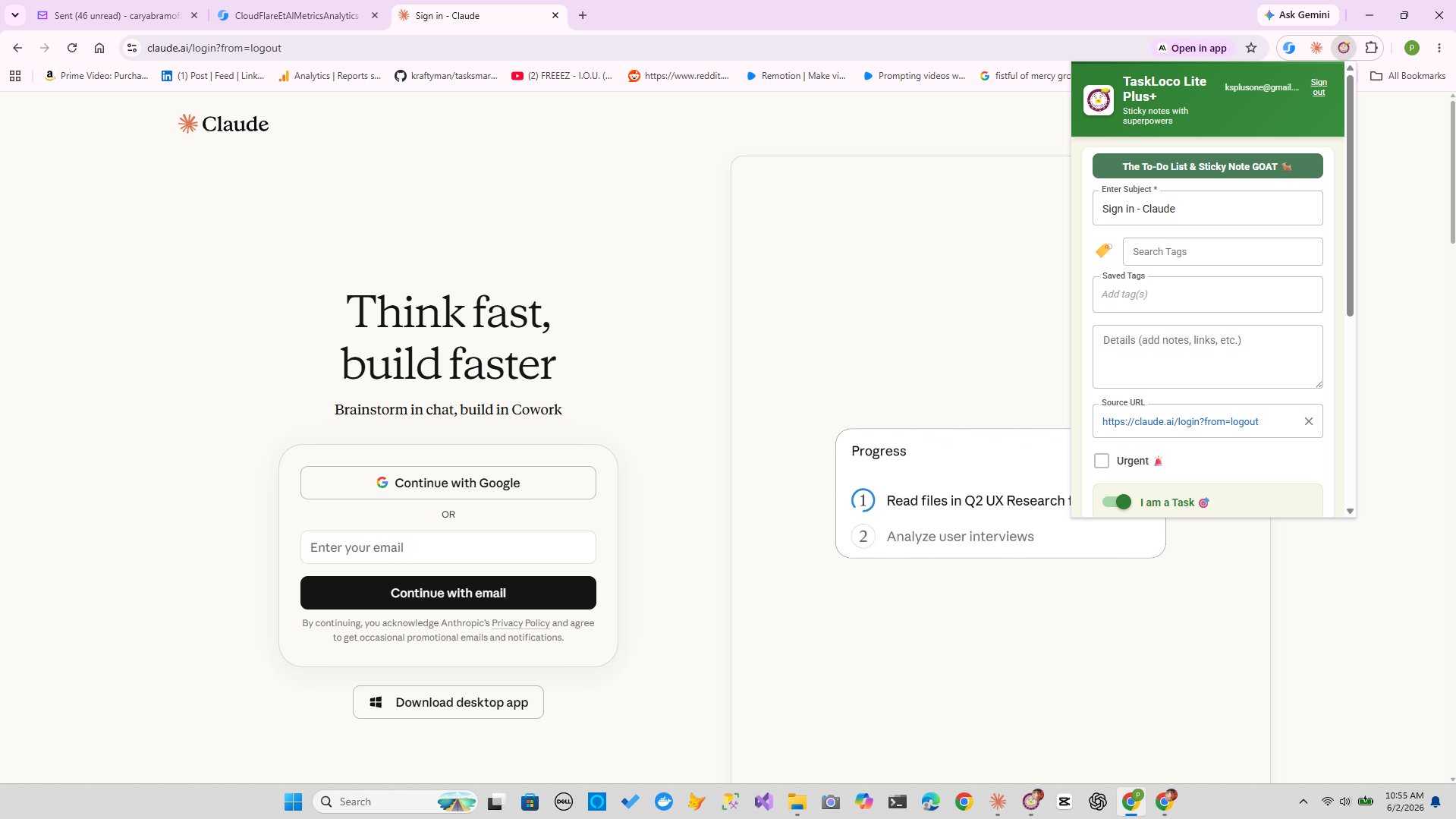
- Web app + Chrome extension
- Sign in with Google
- Wall syncs across all devices
- Up to 30 notes
- Free forever
Lock In 50% Off — Forever
7-day free trial. No charge until day 8. CHARTER50 auto-applies at checkout.
🔒 Lock In My Charter SpotSee TaskLoco in Action
Frequently Asked Questions
What is a time-and-motion study in a personal productivity context?
A personal time-and-motion study is a structured, observation-based audit of how you actually spend time on tasks — not how you plan to. You record real start and end times, categorize tasks honestly, and compare your estimates against reality. The output is a set of concrete changes to how you plan, batch, and protect your working time. It's the same methodology Frederick Winslow Taylor used in factories, applied to individual knowledge work.
How long does a personal time-and-motion study take to run?
Five working days is the minimum for useful data. Fewer than five days and you don't have enough variation to separate patterns from noise. Ten days gives you more reliable data, especially if your work varies week to week. The daily time investment is small — about two to four minutes per task to record the relevant details, plus a two-minute end-of-day review. The study itself isn't what takes time. What takes time is being honest about what the data shows.
Do I need special software to run a time-and-motion study on my to-do list?
No. A notebook works. A spreadsheet works. The reason dedicated tools like TaskLoco help is friction reduction — the easier it is to annotate a task in real time, the more likely you are to do it consistently, and consistency is what makes the data valid. TaskLoco's sticky-note structure, wall view, and push-notification reminders that deep-link back to the original note make the recording habit nearly effortless. But the method works with any system you'll actually use.
What are the most common findings when people audit their to-do lists this way?
Three findings come up almost universally. First, reactive and administrative tasks consume far more calendar time than people believe — typically 40 to 60 percent once accurately measured. Second, deep work sessions are shorter and more fragmented than planned, often because tasks aren't isolated from interruptions. Third, time estimates for complex or creative tasks are optimistic by a factor of two or more. These findings are uncomfortable and immediately actionable.
How does TaskLoco's wall view help with task observation and pattern recognition?
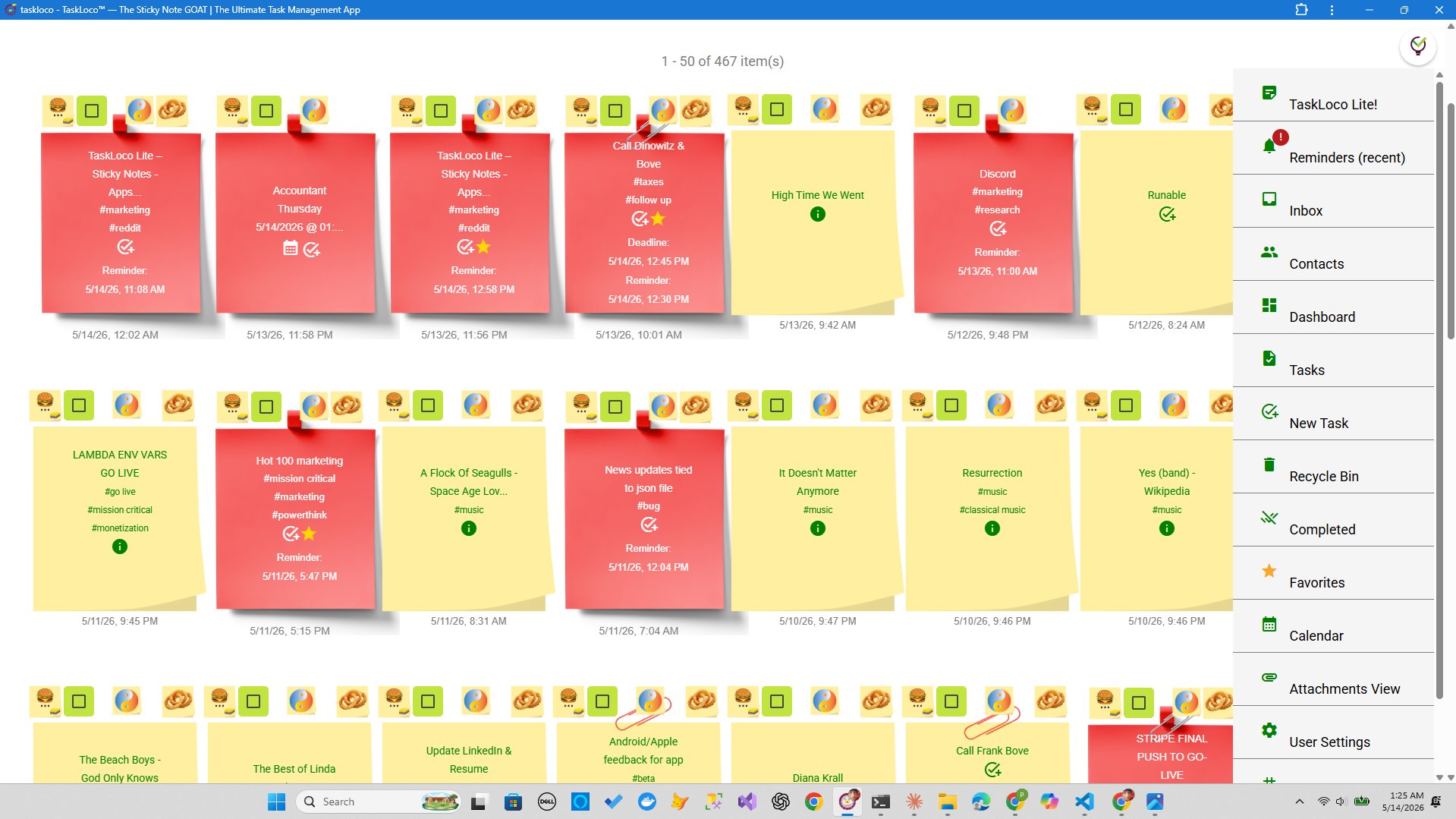
The wall view lets you see every note — every task — spread out spatially at once. That spatial overview is how pattern recognition actually works. You see which categories are overloaded, which tasks have been sitting untouched for days, and how your workload is distributed across the week. A list view forces you to scroll and remember. A wall view lets you see. For a time-and-motion study, the difference between those two experiences is the difference between noticing patterns and missing them.
Can I run this kind of study across a team, not just individually?
Yes, and it's often more valuable at the team level because it surfaces coordination overhead — the hidden time cost of handoffs, status updates, and waiting for approvals. Each person runs their own individual study. TaskLoco's team sharing lets each person share notes with teammates in the same way you'd share an email — the recipient can clone the note and make it their own. You share findings by sharing notes, not by giving everyone access to a single shared workspace that creates its own overhead. Each team member requires their own separate TaskLoco Premium subscription.
What does TaskLoco Premium cost and what's included?
$9.99/month per person (currently $4.99/month per person for first 500 charter members with code CHARTER50)
Born in Brooklyn. Powered by AWS. Your data stays yours.
TaskLoco is available on iPhone, Android, Chrome, and every web browser.