Everyone has a theory about procrastination. The most common one — that it is laziness, or poor discipline, or a character flaw — is also the least useful. It does not explain why a surgeon who operates flawlessly under pressure cannot bring themselves to file an insurance form. It does not explain why a novelist who writes ten pages a day stares at a blank screen when the topic matters most to them. Laziness is not the variable that changes in those situations. Something else is.
Research over the past three decades has converged on a different explanation: procrastination is a coping mechanism. Specifically, it is the brain's way of escaping an emotional state it finds aversive — and the escape works, at least in the short term. That short-term relief is precisely what makes the pattern so hard to break. To understand procrastination properly, you have to understand why immediate emotional comfort consistently defeats long-term intention in the human brain.
Where the Research Actually Points
The modern psychological framework for procrastination was significantly advanced by Dr. Piers Steel, whose 2007 meta-analysis synthesized hundreds of studies into what he called the Temporal Motivation Theory. The core insight: the motivational value of completing a task collapses as the deadline moves further away, and rises sharply as it approaches. This is not a personality quirk — it reflects how the brain's reward circuitry is wired. Distant rewards are processed by the prefrontal cortex, which handles abstract reasoning. Immediate discomfort is processed by the limbic system, which handles survival and emotion. When those two systems compete, the limbic system wins most of the time, and it wins fast.
Fuschia Sirois and Timothy Pychyl extended this framework with what they call the emotion-regulation model of procrastination. In their view, the task itself is rarely the problem — the negative emotion associated with the task is. The task triggers anxiety about failure, boredom at the prospect of effort, resentment at being told what to do, or self-doubt about capability. The brain experiences that emotional forecast as a threat and redirects attention to something that restores mood — checking a phone, reorganizing a desk, doing a different, easier task. The short-term mood repair reinforces the behavior, making it more likely next time.
This explains several phenomena that the laziness model cannot. It explains why procrastination intensifies when stakes are highest — more important tasks carry more emotional weight. It explains why people procrastinate on things they genuinely want to do, like creative projects or long-delayed phone calls to friends. And it explains why guilt, self-criticism, and motivational lectures make the problem worse: they add another layer of negative emotion onto an already aversive task, increasing the emotional cost of approach and deepening avoidance.
The Mechanisms That Keep It Going
Procrastination persists not because people are unaware of it, but because the feedback loops that sustain it are genuinely powerful. Three mechanisms deserve particular attention.
Present bias. Behavioral economists call this hyperbolic discounting: the subjective value of a future reward drops steeply as delay increases, far more steeply than a rational calculation would predict. A task completed in three weeks delivers its reward in three weeks. The relief of not starting it right now is immediate. The brain treats immediacy as disproportionately valuable, which means the math almost always favors avoidance — until the deadline is so close that future cost becomes present cost.
The planning fallacy and its emotional consequences. People consistently underestimate how long tasks will take, how much effort they will require, and how many obstacles will emerge. When a task turns out harder than expected, the emotional cost rises above the forecast — which makes the original avoidance strategy feel retrospectively justified and makes future approach even less appealing. Research by Roger Buehler and colleagues has shown this bias is remarkably stable even in people who know about it.
Self-compassion as the counterintuitive lever. Multiple studies, including work by Kristin Neff and research by Sirois and Pychyl, have found that self-compassion after a procrastination episode reduces future procrastination — while self-criticism increases it. The mechanism is straightforward: self-criticism is itself an aversive emotional state, which increases the emotional cost of returning to the avoided task. Self-compassion — treating a failure the way you would treat a friend who failed — lowers the emotional cost of re-engagement. This is one of the most counter-intuitive and well-replicated findings in the field.
Task ambiguity and decision paralysis. When the next step on a task is unclear, the brain cannot form a concrete intention around it. Without a concrete intention, the task sits as an unresolved abstract — which generates low-level anxiety without any clear action to discharge that anxiety. This is why breaking large projects into explicit, specific next actions (a principle popularized by David Allen's Getting Things Done framework) has genuine psychological support: it converts abstract dread into concrete, executable steps, which are far less emotionally costly to approach.
Where the Standard Advice Breaks Down
Most productivity advice for procrastination targets the symptom rather than the cause. "Just start" is sound advice — the Zeigarnik effect means that beginning a task creates psychological tension that actually pulls you toward completing it — but it does not address why starting is hard in the first place. "Break it into small steps" is also good advice, but the steps still need to be taken, and if the core emotion driving avoidance is fear of judgment or deep self-doubt, smaller steps do not remove the emotional obstacle.
Time-blocking and rigid scheduling work well for people whose procrastination is driven primarily by distraction and poor prioritization. They work poorly for people whose procrastination is driven by perfectionism or fear of failure — because a blocked hour facing a task you are terrified of is not a productive hour. It is an anxious one that often produces more avoidance and more guilt, not less.
The implementation intention strategy, developed by psychologist Peter Gollwitzer, has stronger evidence behind it than most. An implementation intention is a specific if-then plan: "If it is 9am on Tuesday and I am at my desk, then I will open the document and write one paragraph." Research shows these drastically increase follow-through compared to simple goal-setting, because they automate the decision to start — the prefrontal cortex does the deliberation once, then the behavior runs on a cue rather than requiring fresh motivation each time.
What does not work, reliably, is relying on motivation to arrive before starting. Motivation is a consequence of engagement with a task, not a prerequisite for it. Waiting to feel motivated is itself a form of procrastination — one that feels reasonable but produces nothing. The arrow of causation runs from action to motivation more reliably than from motivation to action, particularly for people with chronic procrastination patterns.
How TaskLoco Fits Into This
TaskLoco is not a psychological intervention. It will not rewire your emotional responses or resolve deep perfectionism. But one specific structural problem — task ambiguity and the "I'll remember it later" trap — is something a good note-taking and task system genuinely helps with.
The procrastination research is clear that unresolved open loops in working memory generate low-level anxiety and drain cognitive resources. Writing something down — getting it out of your head and into a system you trust — closes the loop. The brain stops holding it in active memory and stops worrying about forgetting it. That is not productivity-app marketing; it is a cognitive offloading mechanism that David Allen identified and researchers like Roy Baumeister (in work on the Zeigarnik effect and goal-related cognition) have since studied directly.
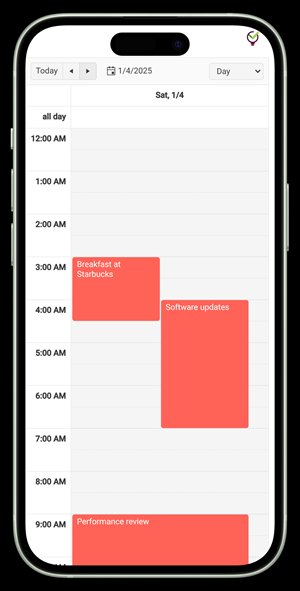
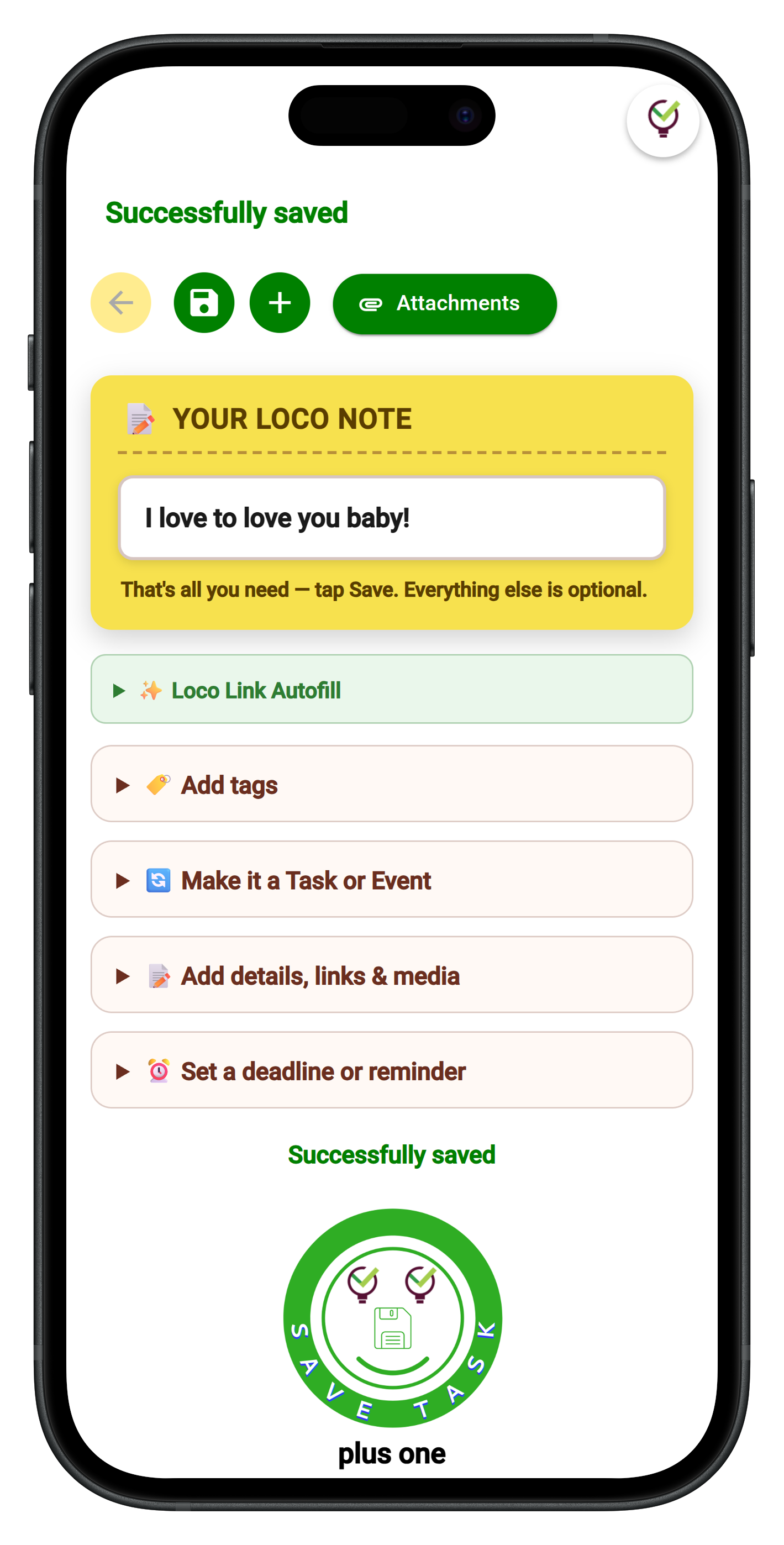
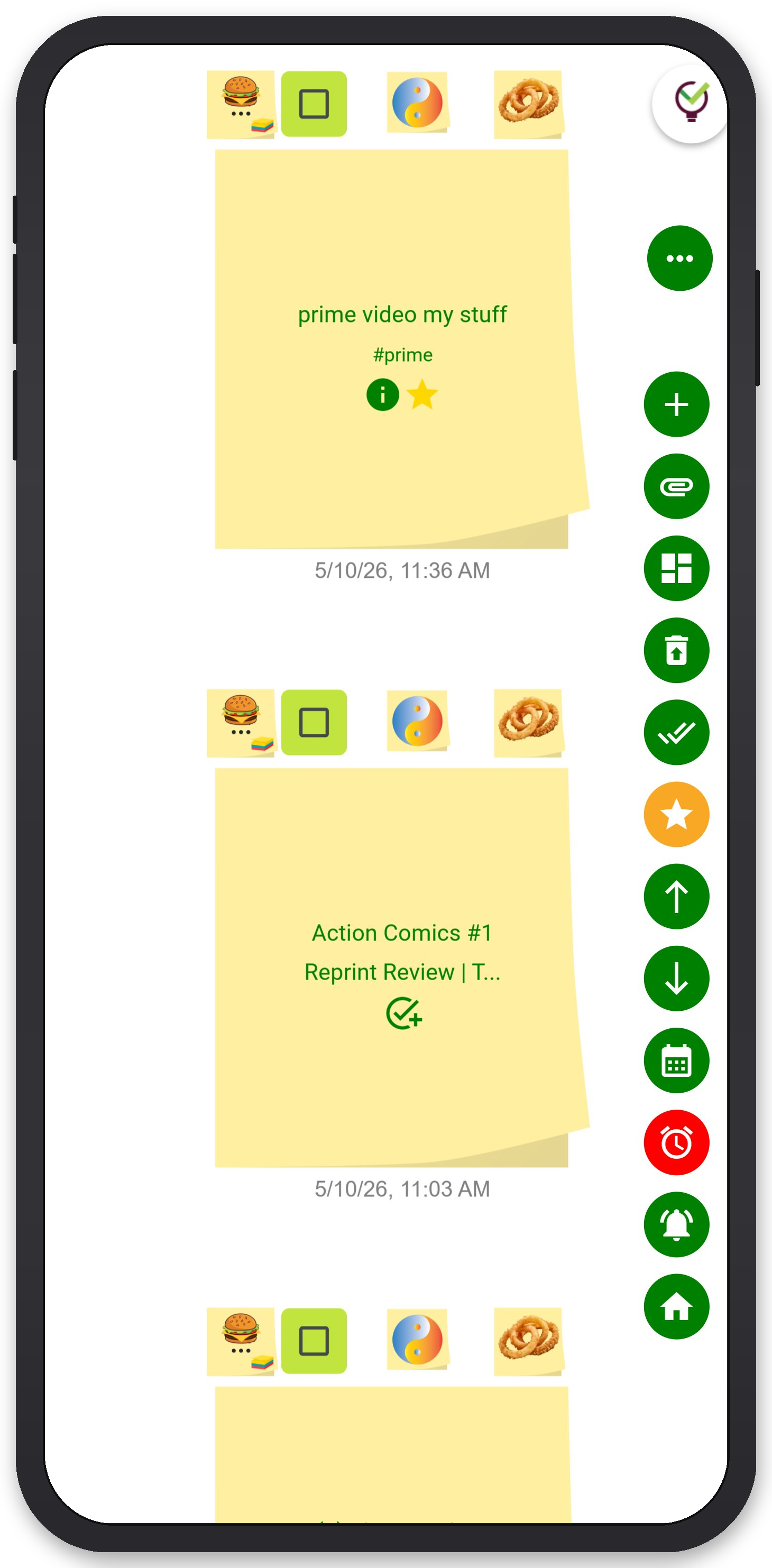
TaskLoco's approach to this is built around sticky notes — individual, discrete cards for individual, discrete tasks or ideas. The act of writing one next action per note (not a project, not a vague goal — one concrete next step) maps directly onto what the implementation intention research says reduces procrastination. When a reminder fires as a push notification that deep-links you straight back to the original note, you do not have to reconstruct context from scratch. The note is right there. The decision cost of re-engagement drops.
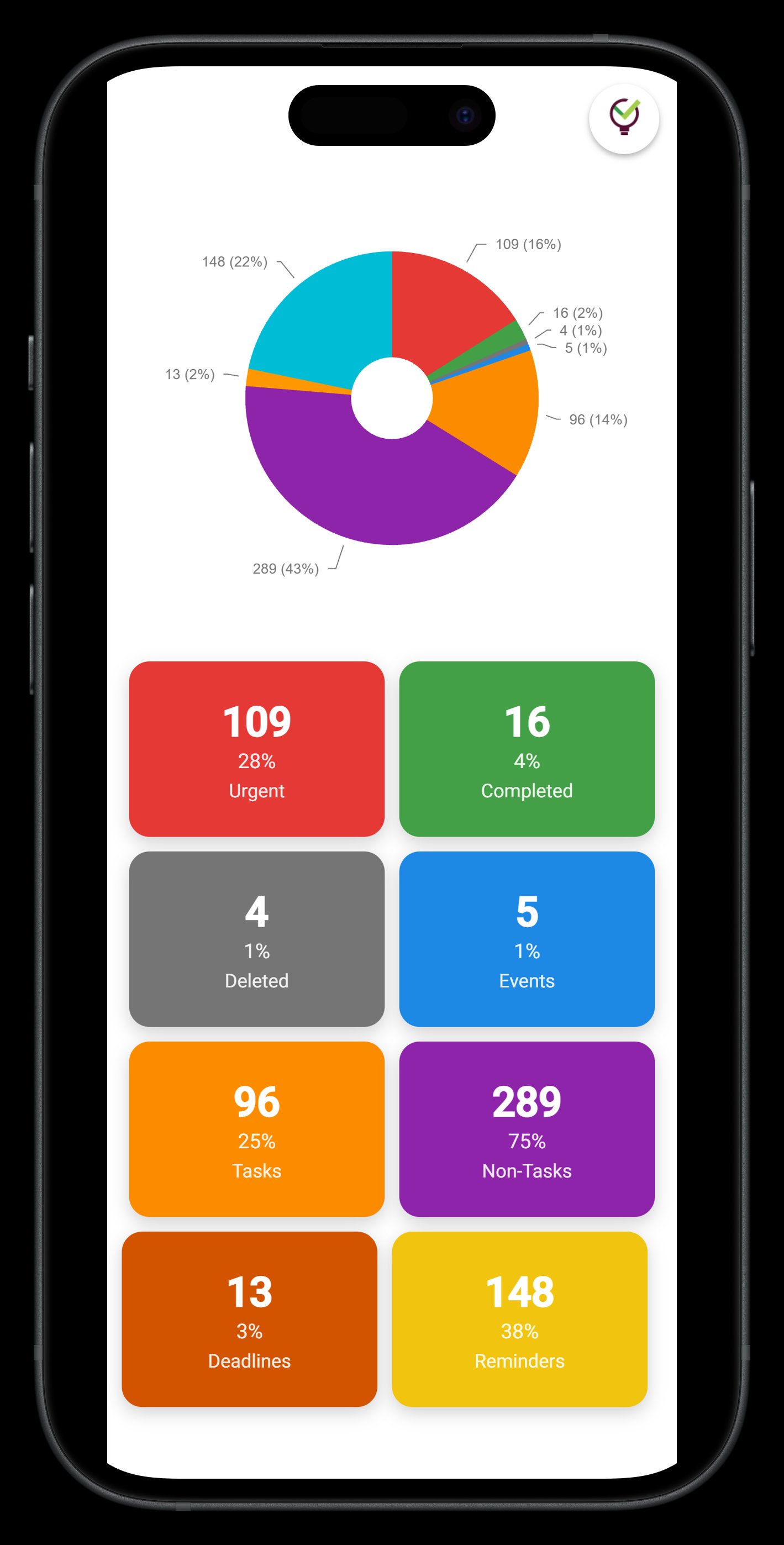
Premium users get reminders delivered as push notifications to their phone and computer, with optional email and SMS channels as well. Notes, tasks, files, and calendar all live in one place. There is no overhead — no project hierarchy to maintain, no status fields to update. It is designed for people who want to capture, organize, and act, without the system becoming another thing to procrastinate about.
TaskLoco Premium is regularly $9.99/month per person. Right now, charter members can lock in 50% off the regular price — forever. That means $4.99/month per person today. And if our price ever goes up, you still pay half. Always.
Code CHARTER50 auto-applies at checkout. First 500 spots only — once they're gone, this offer is gone permanently. Act fast while spots last.
Every Premium subscription includes unlimited notes, 10GB file storage, reminders, calendar, and team sharing. Each team member requires a separate subscription. 7-day free trial — no charge until day 8. Cancel anytime.
Free Options: TaskLoco
TaskLoco Lite
- Native iPhone & Android app
- Completely anonymous — no sign-in
- Data stays on your device
- Up to 20 notes
- Free forever
TaskLoco Lite Plus+
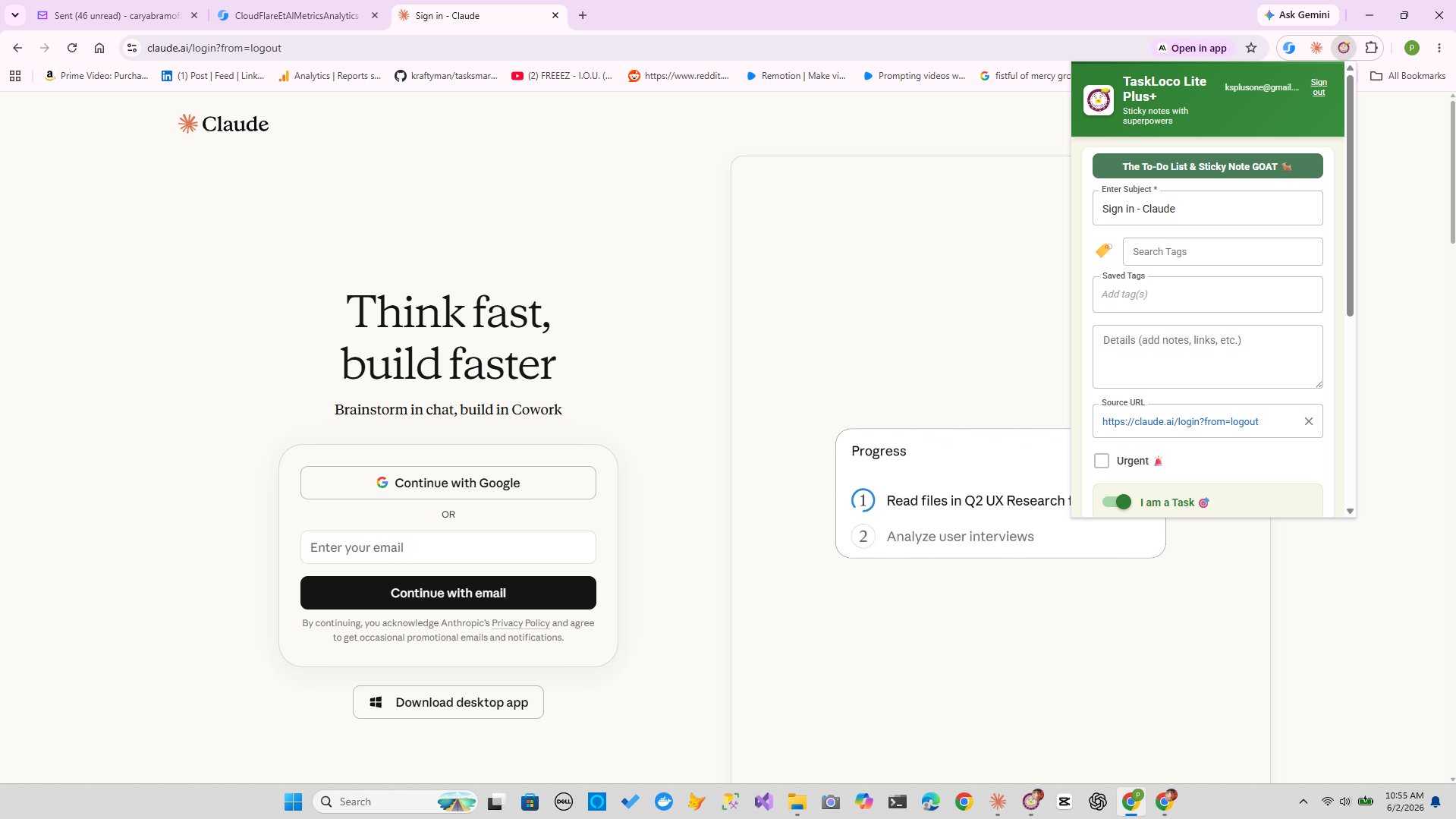
- Web app + Chrome extension
- Sign in with Google
- Wall syncs across all devices
- Up to 30 notes
- Free forever
Lock In 50% Off — Forever
7-day free trial. No charge until day 8. CHARTER50 auto-applies at checkout.
🔒 Lock In My Charter SpotSee TaskLoco in Action
Frequently Asked Questions
Is procrastination a mental health issue?
Chronic procrastination is not a diagnosis in itself, but it is strongly associated with conditions like ADHD, depression, anxiety disorders, and perfectionism. For most people it exists on a spectrum — a learned emotional coping pattern rather than a clinical disorder. When procrastination is severe enough to significantly impair daily functioning, relationships, or work, it is worth discussing with a mental health professional. Cognitive-behavioral therapy (CBT) has the strongest evidence base for treatment.
What is the difference between procrastination and laziness?
Laziness implies a general unwillingness to exert effort. Procrastination is task-specific and emotion-specific — the same person who cannot start a report may have no trouble spending six hours on a different project. Lazy people do not feel guilty about not working. Chronic procrastinators usually feel significant guilt and stress, which distinguishes the behavior clearly. Procrastination is an active avoidance of a specific aversive emotional state, not a passive absence of motivation.
Why do I procrastinate on things I actually want to do?
Because importance and emotional investment raise the stakes, and higher stakes mean higher emotional cost if you fail. A creative project you care about deeply carries more risk of self-judgment than a routine task you do not care about. The brain's threat-detection system responds to that risk by generating avoidance. This is why writers, artists, and entrepreneurs often procrastinate more on their most meaningful work — not less. The emotion driving the avoidance is often fear of discovering the finished result is not as good as the idea.
Does setting deadlines actually help with procrastination?
External deadlines help significantly because they shift the calculus of present bias — as a deadline approaches, the future cost becomes a present cost, and the limbic system finally registers it as urgent. Self-imposed deadlines are less effective because the brain knows they are not real consequences. Research by Dan Ariely and Klaus Wertenbroch found that externally imposed, evenly spaced deadlines produced better outcomes than letting people set their own. If you are setting your own deadlines, committing to them publicly or building real consequences into them improves their effectiveness considerably.
What is the best evidence-based strategy for overcoming procrastination?
No single strategy works for everyone, because the emotional drivers vary. The most consistently supported interventions across research are: implementation intentions (specific if-then plans tied to a cue, time, or place); self-compassion after failures rather than self-criticism; reducing task ambiguity by identifying a single concrete next action; and cognitive-behavioral approaches that address the underlying fear of failure or perfectionism. The "just start" heuristic has real support too — the Zeigarnik effect means that beginning a task generates psychological pull toward completing it, which makes the first two minutes the highest-leverage moment.
Why does procrastination get worse when stakes are highest?
Because the emotional cost of approaching the task scales with how much the outcome matters. High-stakes tasks carry more potential for failure, judgment, and disappointment — all aversive emotional states the brain works to avoid. The avoidance impulse is proportional to the emotional threat, not to the objective difficulty of the work. This is why people often describe procrastinating most on career-defining projects, important relationships, and health decisions — exactly the things where action would matter most.
Can a productivity app help with procrastination?
Partially — and only for specific types of procrastination. Apps help most when the driver is task ambiguity (unclear next steps), forgetting or poor organization, or cognitive overload from too many open loops in working memory. Writing tasks down in a trusted system provides the cognitive offloading that reduces anxiety-driven avoidance. Apps help least when the driver is deep perfectionism, fear of judgment, or clinical anxiety — those require psychological intervention, not organizational tools. The honest answer is that a good system removes structural barriers to action; it does not resolve the emotional ones.
Born in Brooklyn. Powered by AWS. Your data stays yours.
TaskLoco is available on iPhone, Android, Chrome, and every web browser.