The project coordinator title sounds straightforward until you're three weeks into the role and realizing it's actually five jobs stitched together with email and optimism. You're tracking tasks you don't own, updating people who don't read your updates, chasing files that live in four different places, and somehow still expected to know where everything stands at any given moment.
This guide breaks down what the job actually involves — the daily, weekly, and ongoing responsibilities — and explains what tools and habits make the difference between a coordinator who's always scrambling and one who always looks two steps ahead.
What Project Coordinators Actually Do: The Real Job Description
The official job description usually lists things like "support project managers" and "coordinate cross-functional teams." That's not wrong — it's just incomplete. In practice, the project coordinator is the connective tissue of any project: the person who makes sure information moves, deadlines are tracked, and nothing falls through a gap between teams.
The core responsibilities break into a few distinct categories:
- Task tracking and follow-up: Coordinators don't usually assign work, but they absolutely track whether it gets done. That means maintaining a living list of open tasks, owners, and due dates — and following up when things go quiet.
- Scheduling and meeting coordination: Setting up kickoffs, status calls, and review sessions; sending agendas; capturing and distributing notes afterward. If no one else is doing it, the coordinator is.
- Documentation: Project plans, decision logs, meeting notes, status reports. The coordinator is often the person who writes things down so the team doesn't have to remember them.
- Stakeholder communication: Translating project status into plain language for people who aren't in the weeds. Weekly updates, escalation alerts, milestone announcements.
- Risk and issue flagging: Spotting when a dependency is at risk, a deadline is slipping, or a resource conflict is brewing — and surfacing it before it becomes a problem the project manager has to fix at 11pm.
- File and resource management: Making sure the right people have access to the right documents, contracts, specs, and deliverables — and that those files are actually findable.
What makes the role genuinely hard isn't the complexity of any single task. It's the volume and the context-switching. A coordinator might touch twenty different threads in a single morning, and the cost of losing track of any one of them is visible to the whole team.
What to Look for in a Tool for Project Coordination
Before recommending anything, it's worth being honest about what actually matters for this role — because most productivity tools are built for either individual use or full project management teams, and coordinators live in between.
Here are the three criteria that genuinely separate useful tools from ones that just add overhead:
1. Speed of capture. A coordinator's day is full of incoming information — a Slack message about a deadline change, a client email with a new requirement, a verbal note from a standup. If your tool takes more than a few seconds to open and add something, you'll stop using it when it matters most. Look for tools where capturing a new task or note is nearly instant.
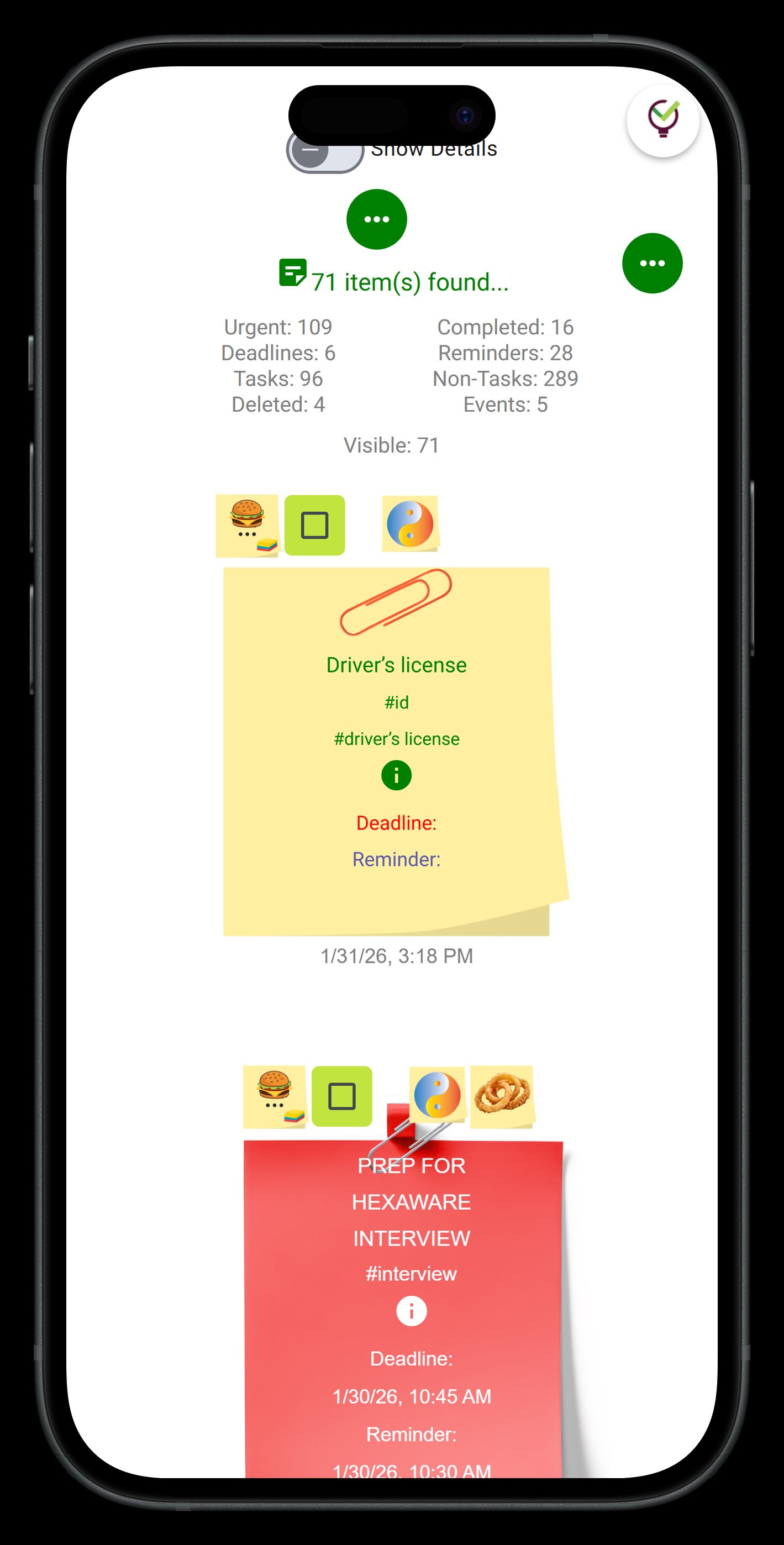
2. Visibility across multiple streams. Unlike a developer who owns a single backlog, a coordinator is managing threads across multiple teams, projects, or stakeholders simultaneously. A tool that shows everything at once — without requiring you to drill into separate project folders — is far more valuable than one with elaborate hierarchy.
3. Reliable reminders that actually reach you. Coordinators are often the person who remembers things for other people. That's only sustainable if your own reminders are genuinely reliable — meaning they find you wherever you are, not just in an app you have to remember to open. Push notifications are non-negotiable for this role.
Secondary considerations — file attachments, calendar views, team sharing, cross-device sync — matter too, but they're only useful if the three fundamentals above are solid. A tool that has Gantt charts but makes it hard to capture a quick thought is the wrong tool for a coordinator.
How TaskLoco Fits the Project Coordinator Workflow
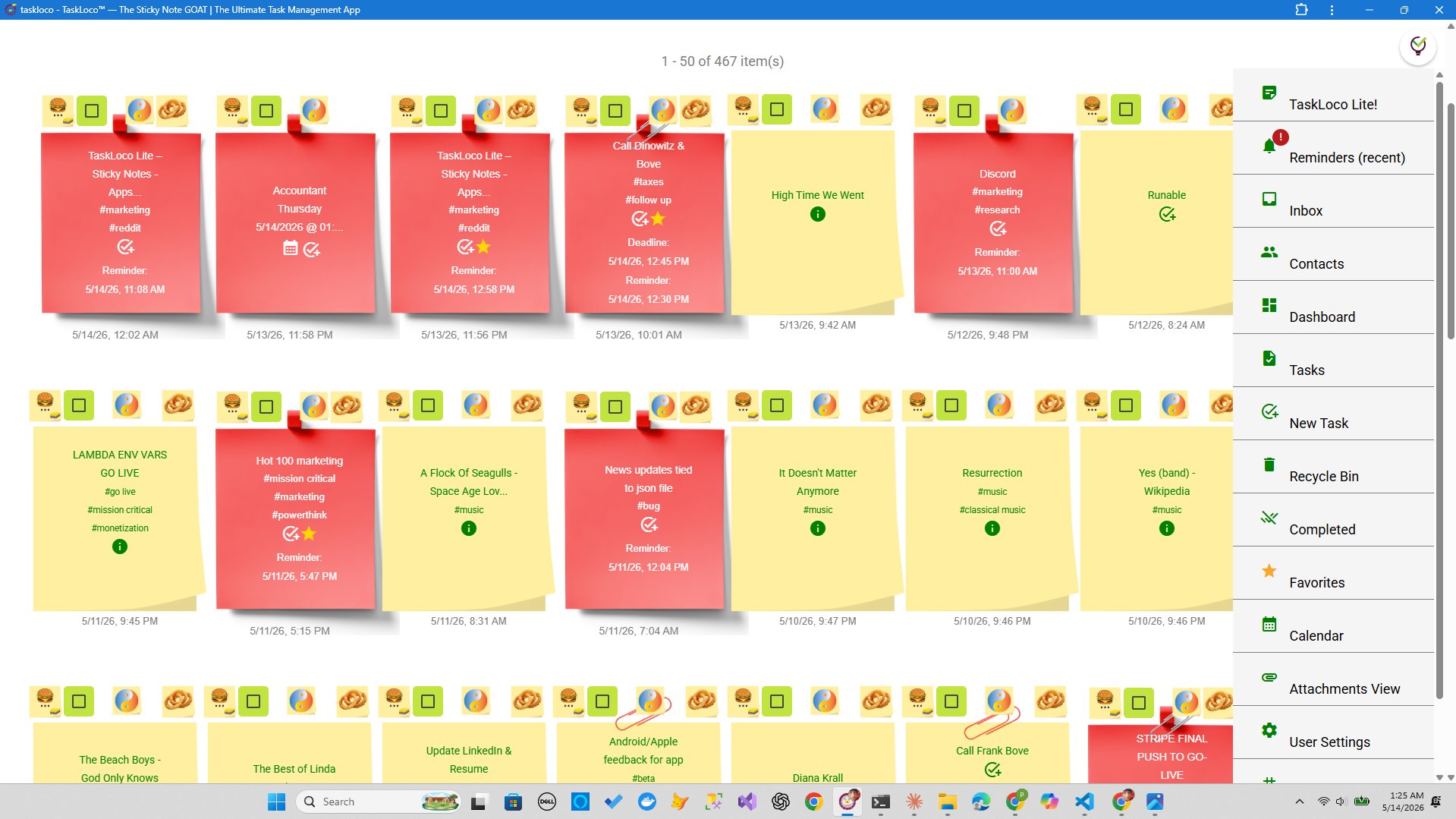
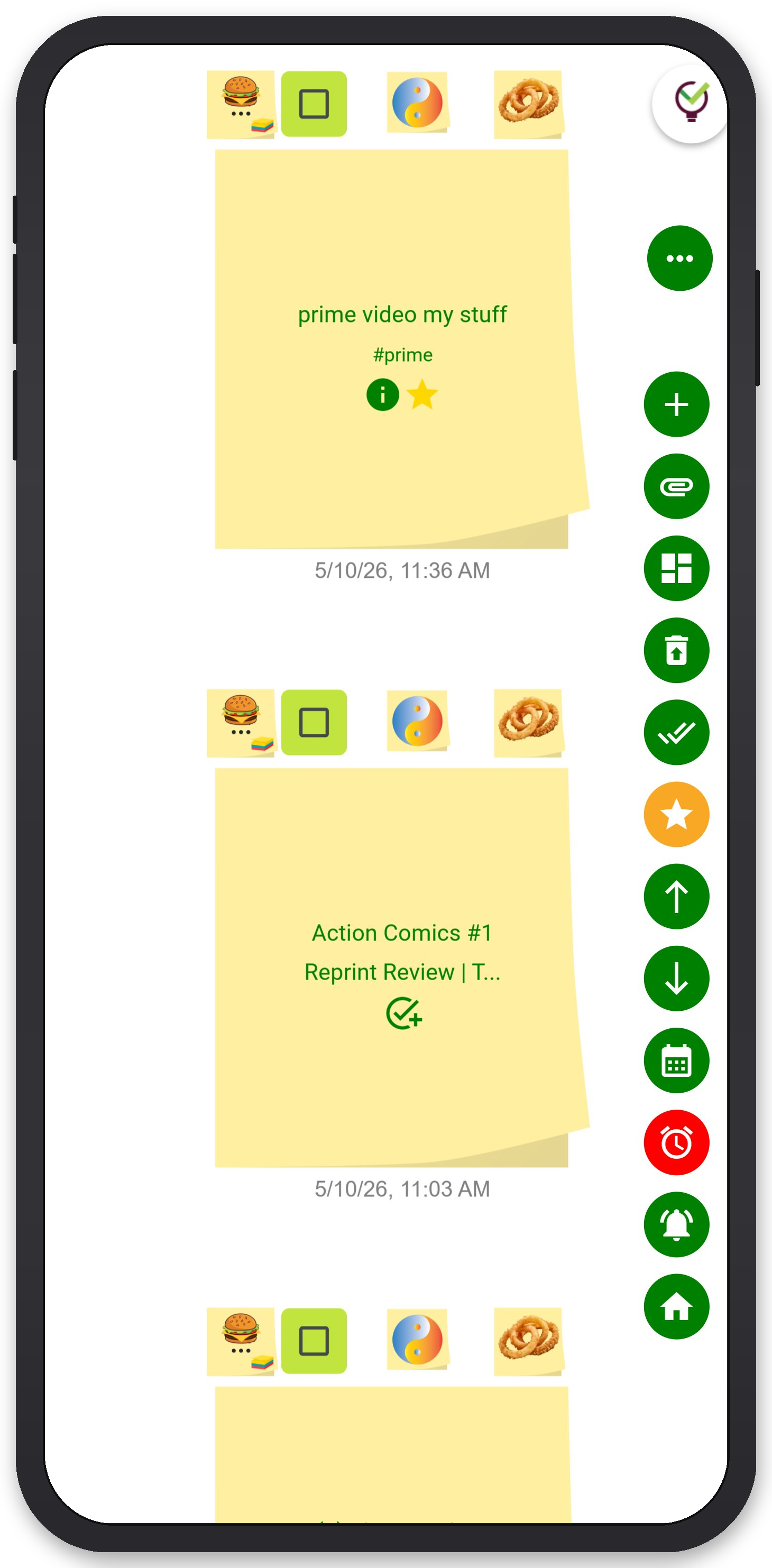
TaskLoco was built around sticky notes — which sounds simple until you realize that a wall of organized sticky notes is exactly the mental model most coordinators already use. Every project thread gets its own note. Every open task, follow-up, and pending decision lives somewhere visible. Nothing is buried three folders deep.
For coordinators specifically, a few features matter a lot:
Reminders delivered as push notifications. This is the one that makes the biggest difference day-to-day. When you set a reminder on a TaskLoco note, it arrives as a push notification on your phone and computer — and it deep-links directly back to the note it's attached to. So when you're reminded to follow up on a vendor contract, one tap takes you straight to the note with all the context. No hunting. Email and SMS reminders are available as optional additional channels if you want them.
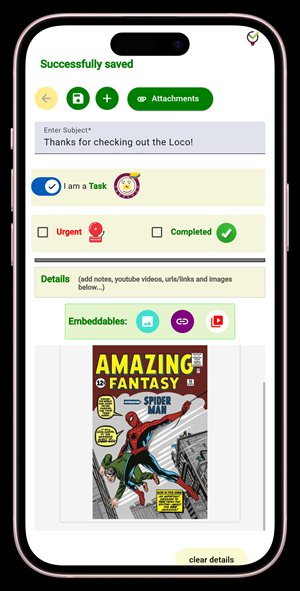
File attachments right on the note. Every Premium account includes 10GB of file storage. Instead of linking out to a Google Drive folder and hoping the right people have access, you attach the brief, the spec, or the contract directly to the task note. It's there when you need it, and shareable through team sharing without any permissions maze.
Team sharing that works like forwarding an email. When you share a note with a teammate in TaskLoco, they receive it and can clone it as their own — adding their own tasks, edits, and context without affecting your original. There are no permission tiers to configure, no access levels to set. It works the way sharing information actually works between people.
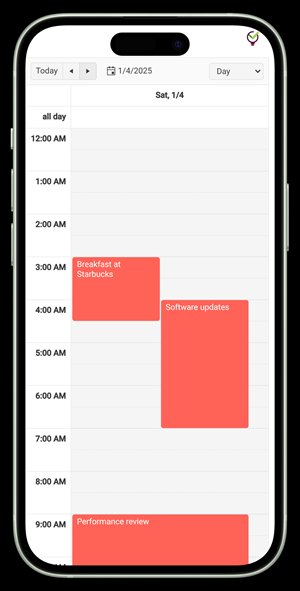
Calendar view for deadline visibility. All your notes and tasks with due dates roll up into a calendar view, so you can see at a glance what's due this week, what's coming next week, and where the pressure points are.
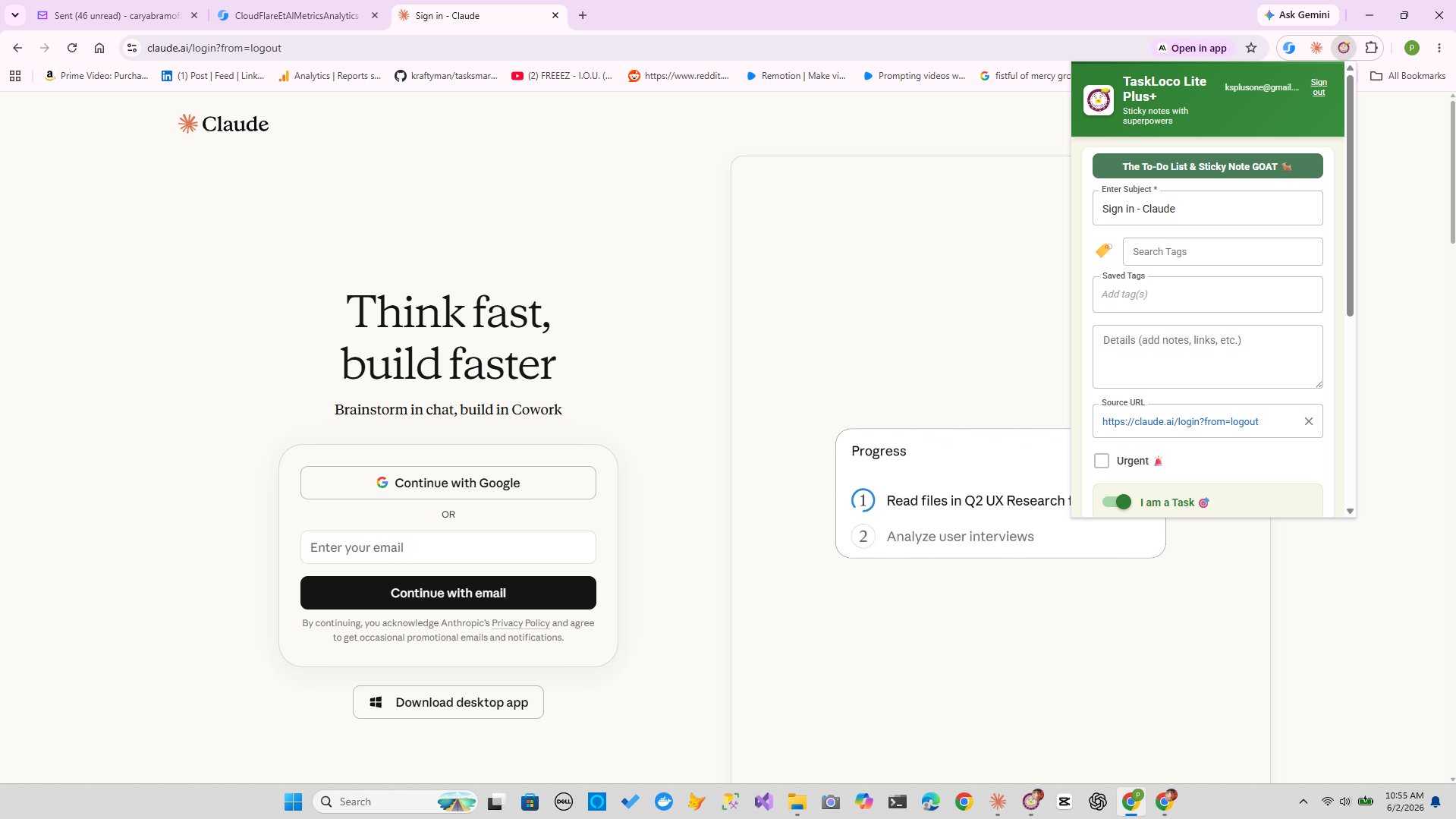
Chrome extension for one-click capture. When a project detail comes through in a webpage — a client brief, a reference document, a vendor page — the Chrome extension captures it in one click and turns it into a TaskLoco note. No copy-paste, no tab switching.
Daily Habits That Make a Project Coordinator Effective
Tools only get you so far. The coordinators who stay consistently ahead of their projects share a few habits that are worth naming explicitly.
Start each day with a wall review. Before jumping into email, spend five minutes scanning your active notes. What's due today? What follow-ups did you set for this morning? What's been sitting idle for too long? This sets your priorities before the day sets them for you.
Capture everything immediately. The instinct to "remember that for later" is the source of most coordination failures. When something comes in — a question, a decision, a risk — capture it in your system right then. TaskLoco's Chrome extension and fast note creation make this low-friction enough to actually stick.
Use reminders for your own follow-ups, not just deadlines. If you asked someone for something and they haven't responded, set a reminder to follow up — not a mental note. A push notification that brings you back to the exact task is far more reliable than memory.
Send a weekly status note to yourself. Every Friday, write a short summary of what moved forward, what's blocked, and what the top priorities are for next week. This takes ten minutes and makes Monday morning dramatically clearer. It also gives you a quick reference if a stakeholder asks for a status update mid-week.
Keep one note per active thread, not one note per meeting. Meeting notes are useful for about 24 hours. What lasts longer is a running note for each project or stakeholder that accumulates decisions, open items, and context over time. When something changes, you update the thread note — you don't create a new one.
None of these habits require a sophisticated tool. They require a tool that's fast enough to keep up with how coordinators actually work — which is in bursts, across multiple contexts, with constant interruption. That's exactly the scenario TaskLoco was designed for.
TaskLoco Premium is regularly $9.99/month per person. Right now, charter members can lock in 50% off the regular price — forever. That means $4.99/month per person today. And if our price ever goes up, you still pay half. Always.
Code CHARTER50 auto-applies at checkout. First 500 spots only — once they're gone, this offer is gone permanently. Act fast while spots last.
Every Premium subscription includes unlimited notes, 10GB file storage, reminders, calendar, and team sharing. Each team member requires a separate subscription. 7-day free trial — no charge until day 8. Cancel anytime.
Free Options: TaskLoco
TaskLoco Lite
- Native iPhone & Android app
- Completely anonymous — no sign-in
- Data stays on your device
- Up to 20 notes
- Free forever
TaskLoco Lite Plus+
- Web app + Chrome extension
- Sign in with Google
- Wall syncs across all devices
- Up to 30 notes
- Free forever
Lock In 50% Off — Forever
7-day free trial. No charge until day 8. CHARTER50 auto-applies at checkout.
🔒 Lock In My Charter SpotSee TaskLoco in Action
Frequently Asked Questions
What are the main tasks of a project coordinator?
Project coordinators are responsible for task tracking, scheduling and meeting coordination, documentation, stakeholder communication, risk and issue flagging, and file management. The role is fundamentally about making sure information moves reliably between teams and that nothing falls through the cracks between the people who own the work.
What is the difference between a project coordinator and a project manager?
A project manager owns the overall outcome — they set strategy, manage budget, make decisions, and are accountable for delivery. A project coordinator supports execution by tracking tasks, coordinating communication, and keeping the logistics organized. Coordinators rarely make high-level project decisions, but their work is what keeps those decisions from falling apart during implementation.
What tools do project coordinators use?
Coordinators typically use a combination of task tracking, note-taking, calendar, and communication tools. What matters most is speed of capture, visibility across multiple threads at once, and reminders that reliably reach you as push notifications. TaskLoco combines notes, tasks, reminders, file attachments, calendar view, and team sharing in one place — purpose-built for exactly this kind of multi-stream coordination work.
How do project coordinators track tasks effectively?
The most effective coordinators maintain a living system — not a static spreadsheet updated once a week. Each active project or stakeholder thread gets its own note, updated as things change. Reminders are set for every pending follow-up, not just formal deadlines. And a daily review of open items happens before the inbox does. TaskLoco's push notification reminders deep-link back to the original note, so following up on any task takes one tap.
What skills does a project coordinator need?
The most important skills are attention to detail, proactive communication, and the ability to track multiple threads simultaneously without losing context. Written communication matters because coordinators translate project status for audiences with varying levels of involvement. Comfort with ambiguity is essential — the coordinator is often the person who figures out what needs to happen when no one has explicitly said so.
How can a project coordinator stay organized when managing multiple projects?
The key is a single system where every active thread is visible without navigating into folders or sub-projects. One note per project or stakeholder, updated continuously, beats a fresh document for every meeting. Push notification reminders for follow-ups replace mental load. And a weekly self-summary on Fridays means Monday always starts with clarity instead of confusion. TaskLoco's sticky-note wall gives coordinators exactly this kind of at-a-glance visibility across everything active.
How much does TaskLoco cost for project coordinators?
$9.99/month per person (currently $4.99/month per person for first 500 charter members with code CHARTER50)
Born in Brooklyn. Powered by AWS. Your data stays yours.
TaskLoco is available on iPhone, Android, Chrome, and every web browser.