Your brain is terrible at remembering to pick up groceries while you're trying to focus on an important presentation. Every unfinished task, pending decision, or incomplete project creates what psychologists call an 'open loop' — a nagging mental process that consumes cognitive resources even when you're not actively thinking about it.
This phenomenon, first studied systematically in the 1920s and later formalized by productivity experts, explains why successful people obsess over capture systems. It's not about being organized for its own sake — it's about freeing up mental bandwidth for the work that actually matters.
The Zeigarnik Effect: Why Unfinished Tasks Hijack Your Brain
In 1927, Russian psychologist Bluma Zeigarnik observed that waiters could remember complex orders perfectly while taking them, but forgot them completely once the food was served. This discovery led to the Zeigarnik Effect: our brains are wired to keep incomplete tasks active in working memory until they're either completed or properly externalized.
Modern neuroscience confirms what Zeigarnik suspected. Unfinished tasks create a low-level stress response that persists even during unrelated activities. Your brain literally cannot let go of that dentist appointment you need to schedule or the email you meant to send. These open loops operate like background processes on a computer, consuming CPU cycles whether you're aware of them or not.
The implications are profound. Every time you think 'I need to remember to...' without immediately capturing that thought, you're creating cognitive overhead that will tax your mental resources for hours or days. The solution isn't willpower — it's systematic capture.
David Allen's GTD: The Productivity System Built on Open Loop Science
David Allen didn't invent the concept of open loops, but his Getting Things Done (GTD) methodology was the first productivity system explicitly designed around closing them. GTD's core insight is deceptively simple: your mind is for having ideas, not storing them.
The GTD workflow addresses open loops through what Allen calls 'ubiquitous capture' — the practice of immediately recording every task, idea, or commitment in a trusted external system. This isn't just about remembering things; it's about convincing your subconscious that you can safely forget them.
Allen identified five stages where open loops typically get stuck: unclear outcomes, no next action defined, no trusted place to track progress, no regular review process, and no clear contexts for execution. Each stage represents a place where your brain refuses to let go because the loop feels genuinely incomplete.
The system's power comes from its recognition that productivity isn't about time management or motivation — it's about cognitive load management. When your external system is truly trustworthy, your brain can finally stop its exhausting background processing.
Where Open Loop Theory Breaks Down
Despite its psychological foundation, open loop productivity has real limitations. First, the theory assumes you can create a perfectly trusted external system — but most people struggle with tools that are either too complex to maintain or too simple to handle their actual needs. A system that requires constant maintenance creates its own open loops.
Second, not all open loops are created equal. Some incomplete tasks naturally fade from consciousness because they're genuinely low-priority. Forcing yourself to capture and track every fleeting thought can create more cognitive overhead than the original loops. The key is developing judgment about which loops matter and which don't.
Third, open loop theory often underestimates the role of context and emotion. A task you're dreading will create a stronger open loop than one you're excited about, regardless of how well it's captured. Sometimes the loop persists not because of poor capture, but because of unresolved feelings about the work itself.
Finally, immediate capture can become compulsive, interrupting flow states and deep work. The goal is strategic cognitive load management, not reflexive note-taking. Sometimes the best way to handle a loop is to complete the task immediately rather than adding it to an external system.
TaskLoco and the Sticky Note Approach to Open Loops
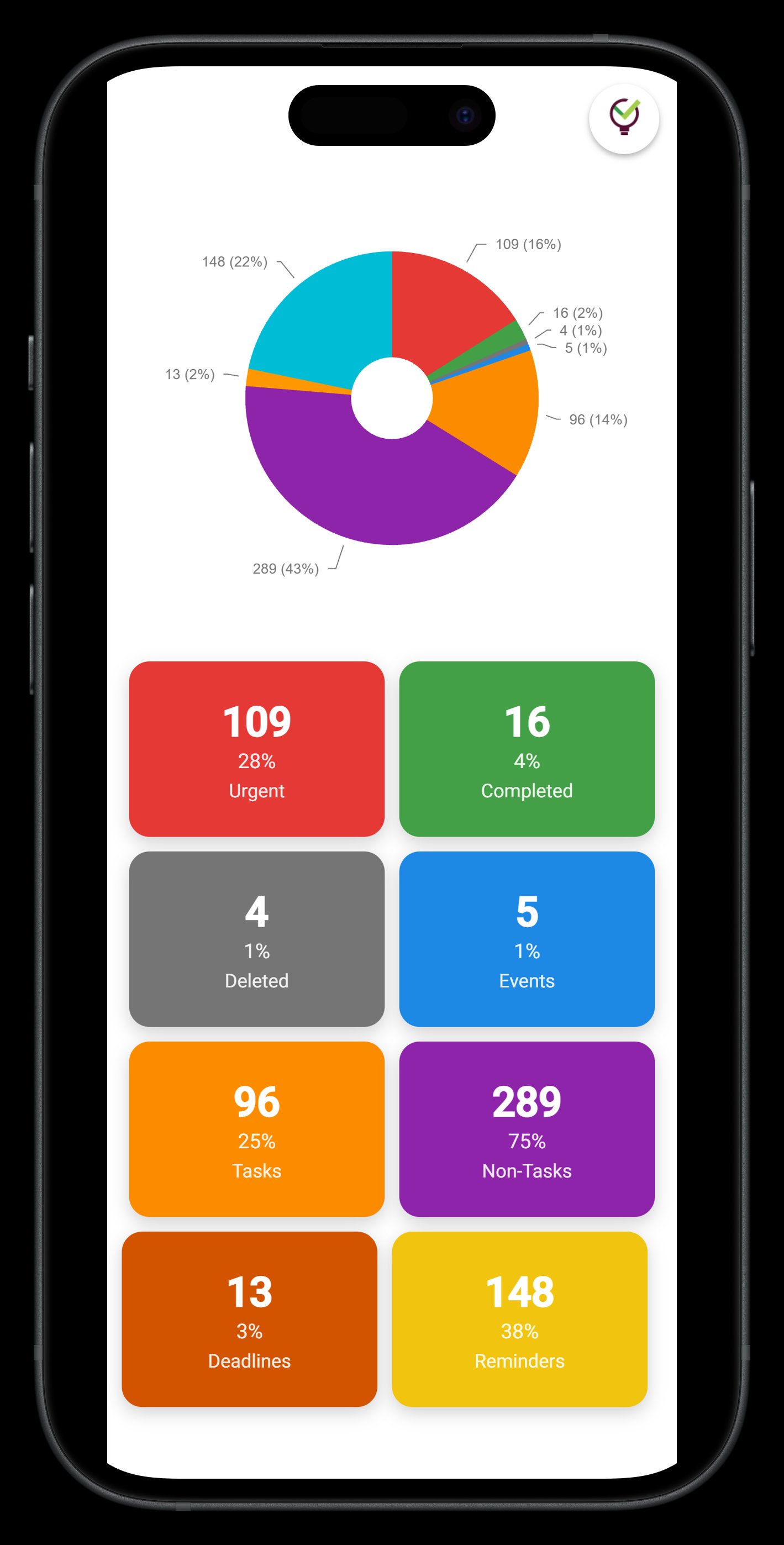
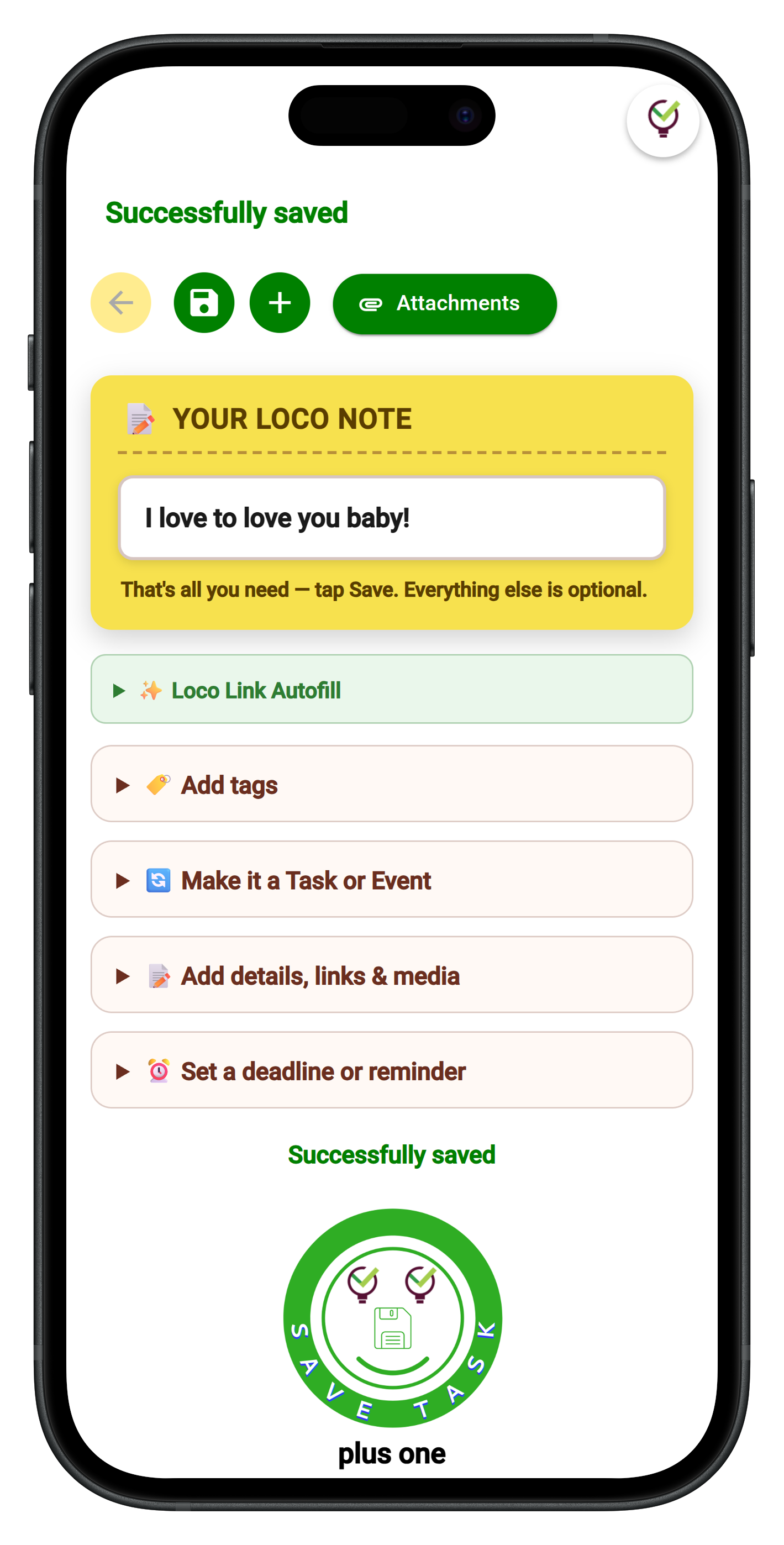
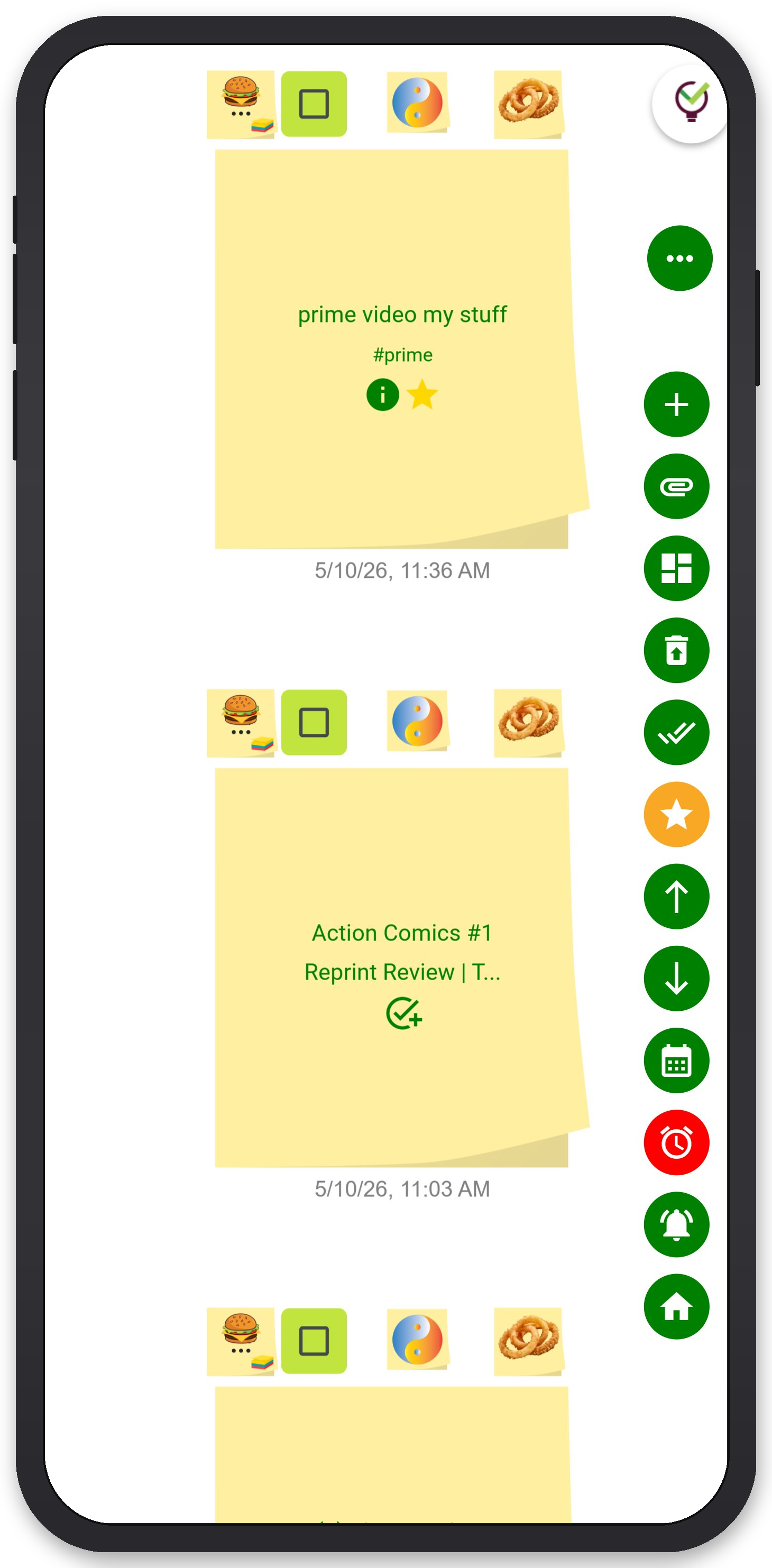
TaskLoco takes a deliberately simple approach to open loop management, built around the familiar metaphor of sticky notes. Instead of complex project hierarchies or elaborate capture workflows, you write down what's on your mind exactly as you'd think about it — then let the app handle the organization.
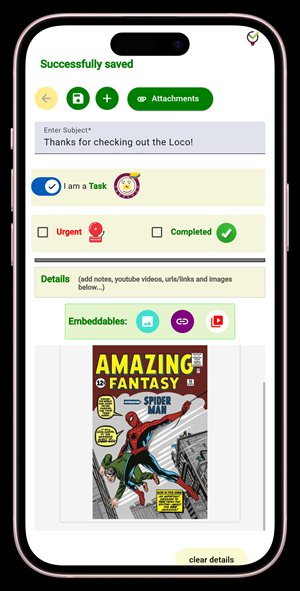
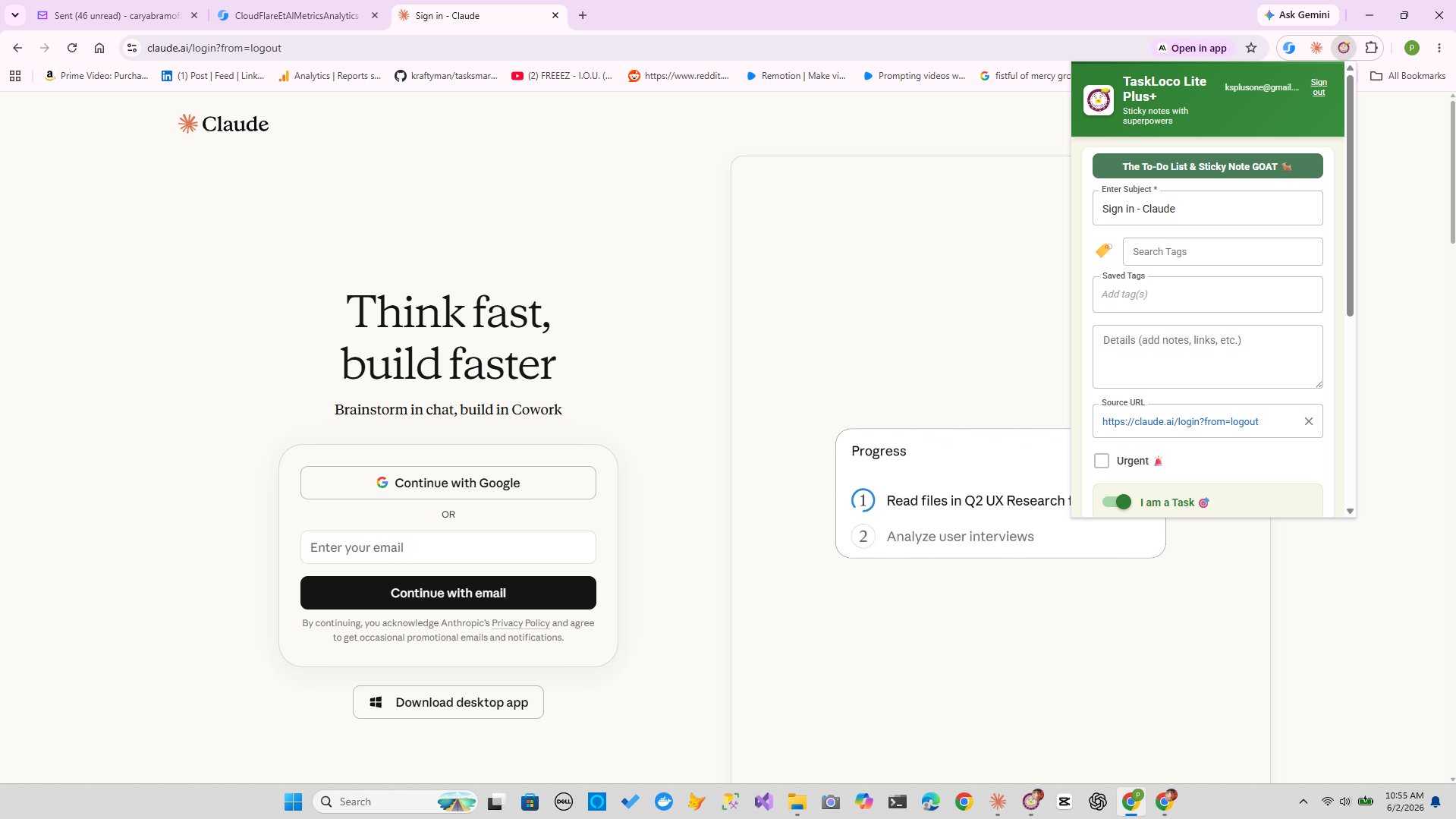
This matters because the friction of capture directly impacts whether open loops get closed. If adding a task requires choosing projects, tags, due dates, and priority levels, you'll often choose to 'just remember it' instead. TaskLoco's one-click capture through the Chrome extension and instant note creation on mobile eliminates that friction completely.
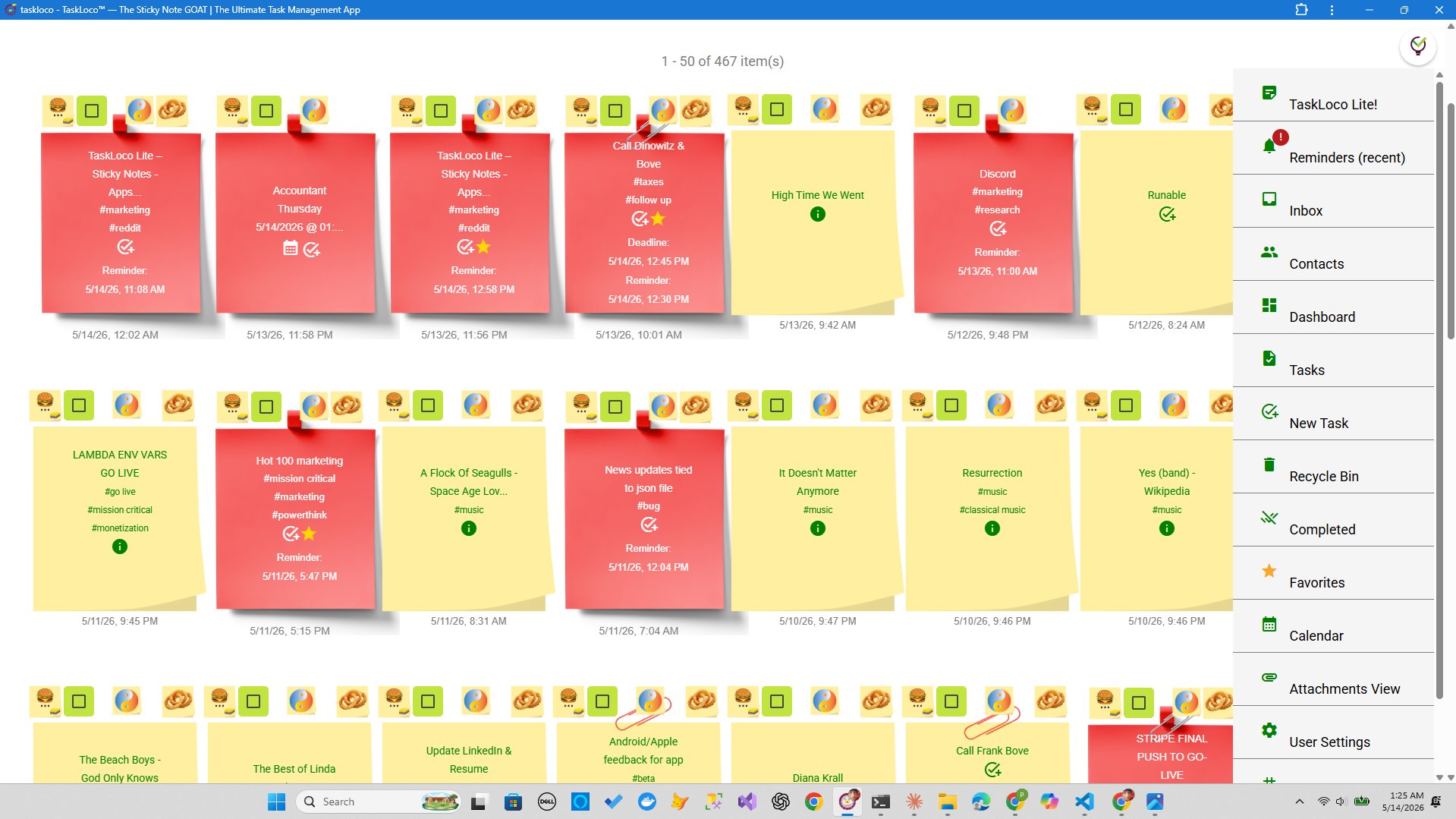
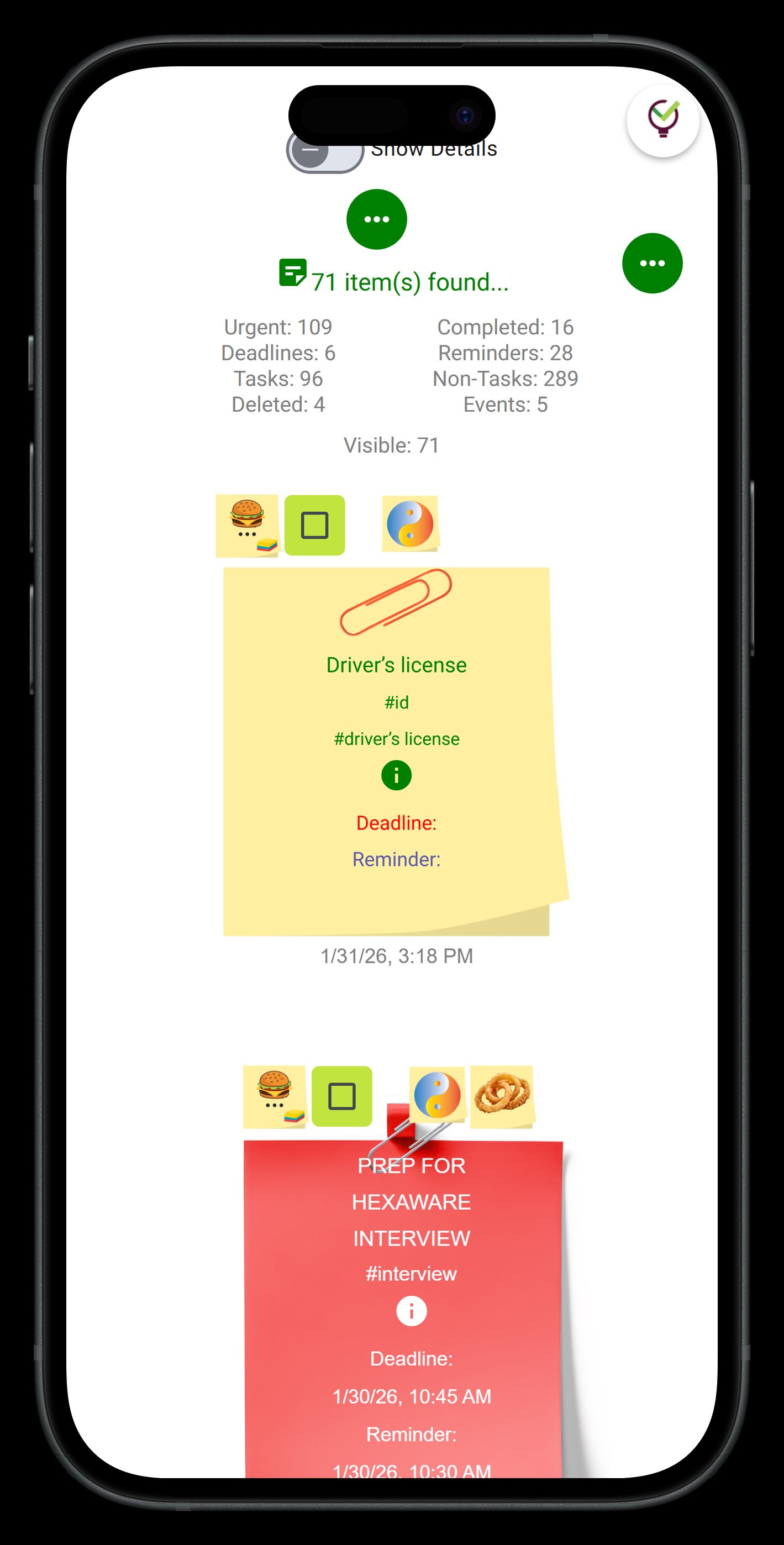
The sticky note metaphor also solves the trust problem that plagues many productivity systems. You can see all your open loops at once, just like notes scattered on a desk. The visual persistence creates the psychological safety that lets your brain truly let go. $9.99/month per person (currently $4.99/month per person for first 500 charter members with code CHARTER50)
TaskLoco Premium is regularly $9.99/month per person. Right now, charter members can lock in 50% off the regular price — forever. That means $4.99/month per person today. And if our price ever goes up, you still pay half. Always.
Code CHARTER50 auto-applies at checkout. First 500 spots only — once they're gone, this offer is gone permanently. Act fast while spots last.
Every Premium subscription includes unlimited notes, 10GB file storage, reminders, calendar, and team sharing. Each team member requires a separate subscription. 7-day free trial — no charge until day 8. Cancel anytime.
Free Options: TaskLoco
TaskLoco Lite
- Native iPhone & Android app
- Completely anonymous — no sign-in
- Data stays on your device
- Up to 20 notes
- Free forever
TaskLoco Lite Plus+
- Web app + Chrome extension
- Sign in with Google
- Wall syncs across all devices
- Up to 30 notes
- Free forever
Lock In 50% Off — Forever
7-day free trial. No charge until day 8. CHARTER50 auto-applies at checkout.
🔒 Lock In My Charter SpotSee TaskLoco in Action
Frequently Asked Questions
What exactly is an open loop in productivity?
An open loop is any incomplete task, decision, or commitment that your brain keeps active in working memory. These create cognitive overhead that reduces focus and mental clarity until they're either completed or captured in a trusted external system.
How do open loops affect productivity?
Open loops consume cognitive resources even when you're not consciously thinking about them. Research shows they reduce performance on attention-demanding tasks and create low-level stress that persists throughout your day.
What's the difference between open loops and regular to-do items?
Open loops are active in working memory — your brain is literally holding onto them. Regular to-do items that are properly captured and trusted don't create this cognitive load because your subconscious knows they're safely stored externally.
Can you have too few open loops?
Yes. Some level of active task awareness helps with natural prioritization and opportunistic completion. The goal isn't zero open loops, but strategic management of which ones stay active versus which get externalized.
Why do some productivity systems fail to close open loops?
Most failures happen because the system isn't truly trusted — either it's too complex to maintain, too slow for quick capture, or lacks visual confirmation that items are safely stored. If you don't believe the system will work, your brain won't let go.
How does TaskLoco help manage open loops?
TaskLoco uses immediate capture and visual persistence to close open loops quickly. The sticky note approach eliminates capture friction while providing the visual confirmation your brain needs to safely forget stored items. $9.99/month per person (currently $4.99/month per person for first 500 charter members with code CHARTER50)
Should you capture every thought that comes to mind?
No. Over-capture can create its own cognitive overhead. Develop judgment about which thoughts create persistent loops versus which naturally fade. Focus on capturing items that would otherwise nag at you throughout the day.
Born in Brooklyn. Powered by AWS. Your data stays yours.
TaskLoco is available on iPhone, Android, Chrome, and every web browser.