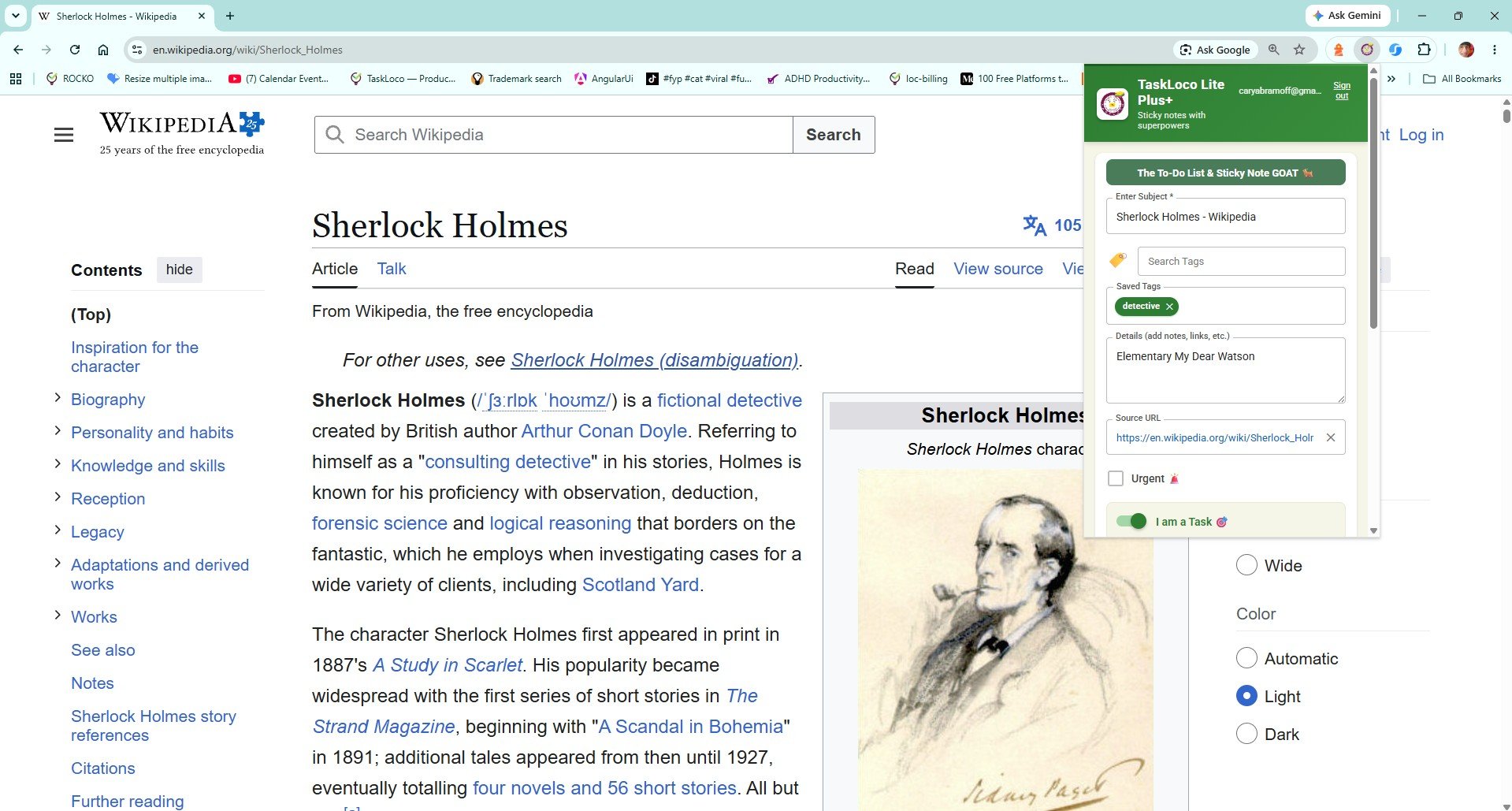
Research breaks down the moment you lose track of a source. You find the perfect article, a critical study, or a YouTube explainer — and twenty minutes later you're staring at forty open tabs, a bookmarks folder you'll never sort, and no memory of which page said what. The problem isn't finding good sources. It's keeping them organized with enough context to be useful later.
Saving a URL is not the same as saving a source. A bare bookmark tells you nothing about why you saved it, what part mattered, or how it connects to your other material. Real research workflow means capturing the page and the thought — the note that says "check the methodology section" or "contradicts source 3" — right at the moment you're reading. That's the gap most people fall into, and it's fixable with the right habit and the right tool.
The Right Way to Save Research Sources While You're Browsing
The most important rule of research capture: do it immediately and do it with context. The longer you wait between reading a page and saving it, the more context you lose. Annotations made in the moment — even a single sentence — are worth more than perfect organization done later.
Here's a practical method that works regardless of what tool you use:
- Save the page the moment it becomes relevant. Don't finish the article first. The second you know it matters, capture it.
- Write one sentence about why you saved it. Not a summary of the whole page — just your reason. "Best breakdown of methodology" or "counter-argument to section 2" is enough.
- Add at least one tag immediately. A single tag like climate-policy or background or to-read makes retrieval dramatically faster later. Don't overthink the taxonomy; just be consistent.
- Keep your sources in one place. Splitting research across browser bookmarks, a notes app, and a document creates three places to search instead of one.
If you're working with academic sources, also note the section or claim you found useful — not just the title. Page titles are often too generic to jog your memory later. "WHO 2023 report on air quality" tells you nothing about which paragraph was the one you needed.
How to Add Notes and Tags to Saved Pages — Step by Step
The mechanics depend on your setup, but the principle is the same: your save action and your annotation action should happen in the same moment, in the same place. Here's how to build that habit:
If you're using browser bookmarks: Right-click any link and choose Bookmark. You can edit the name field to add a short note, but tags aren't native in Chrome bookmarks — you'd have to build a folder system manually. Searching across bookmarks for a concept rather than a title is painful.
If you're using a read-later app: Apps like Pocket let you save articles and add tags, but you're saving to a separate silo from your notes. If you want to connect a source to a specific project or idea, you're back to manual cross-referencing.
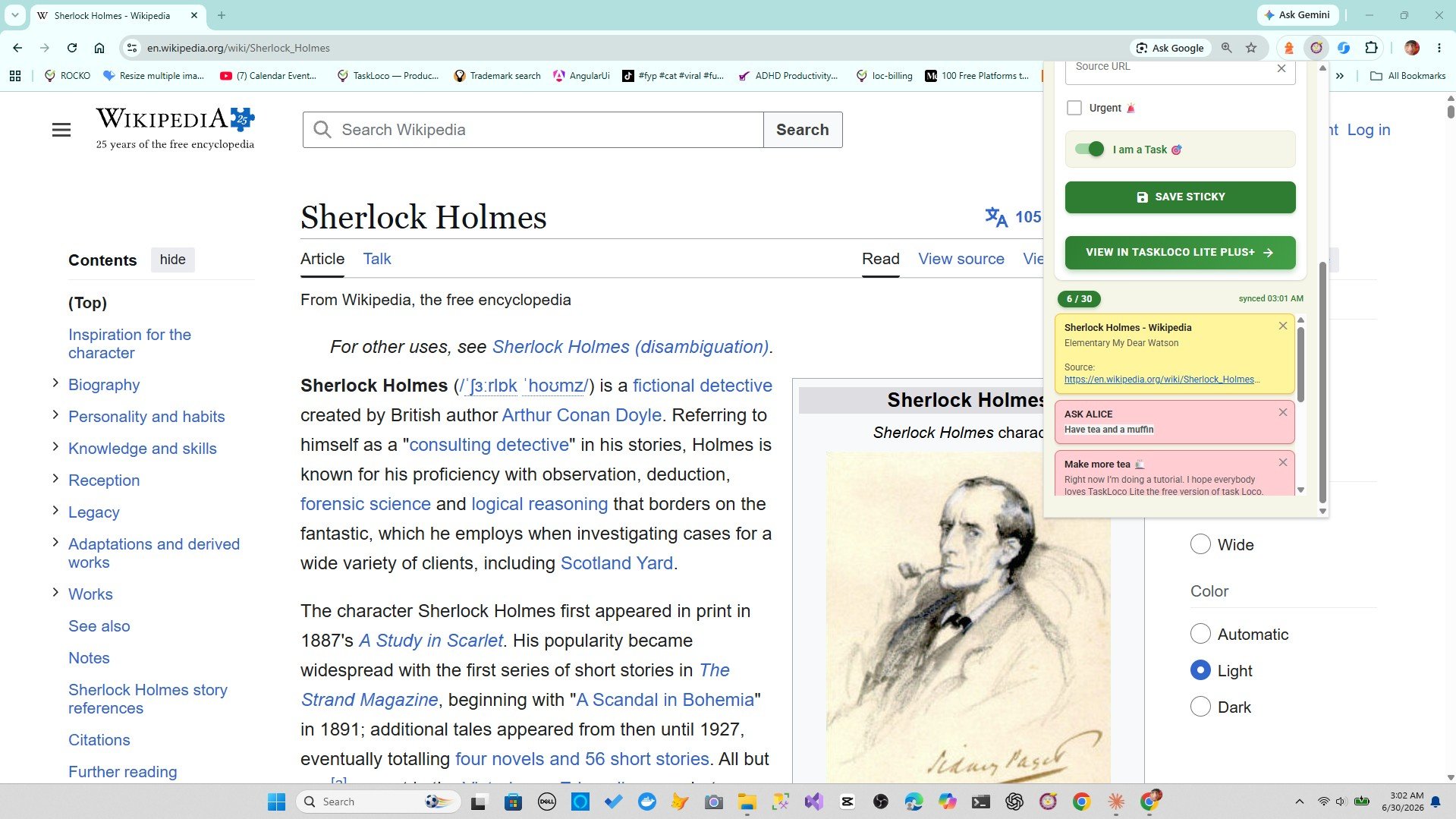
If you're using a web clipper with sticky notes: This is where the workflow closes the loop. A clipper like the Sticky Note Web Clipper saves the page title and URL automatically, gives you a note field to type your one-sentence context, and lets you add tags before you move to the next tab. Everything lives in one place, searchable by tag or keyword.
- Open the page you want to save.
- Click the toolbar icon — title and URL are auto-filled into a new sticky note.
- Type your annotation in the note body: why this page matters, what to look at, how it connects.
- Add tags: topic, project name, status (e.g. to-read, cited, background).
- Save. Move on. The source is there when you need it.
Why Most Saving Methods Fail Research Workflows
Browser bookmarks were designed for navigation, not research. They assume you'll remember why you saved something, that titles are descriptive enough, and that a folder hierarchy is a substitute for search. None of those assumptions hold once you're more than two weeks into a project.
Open tabs are even worse. They feel like a temporary solution — "I'll deal with these later" — but later never comes. A browser with sixty tabs is a research library that crashes and loses everything when your session ends.
Read-later apps solve the clutter problem but create a context problem. Stripping an article to text-only and filing it in a queue assumes you'll re-read everything. Researchers don't re-read everything. You need to look at a saved item and immediately know why it's there and what you were thinking.
The missing ingredient in almost every common method is the note at the moment of capture. Not a highlight added in a separate step. Not a comment you add after re-reading. A quick, friction-free field you can type into right when the insight is fresh, before you click to the next tab.
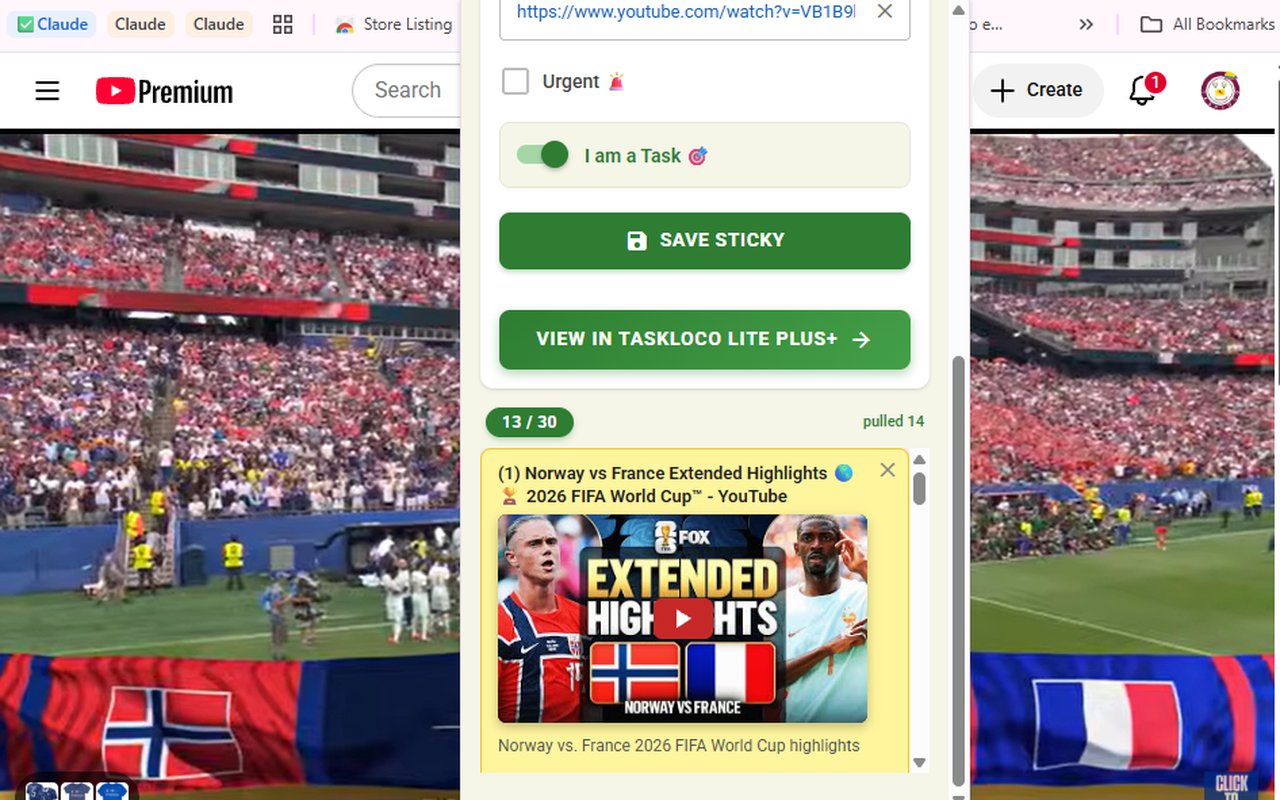
YouTube videos are another gap. If your research includes video sources — interviews, lectures, documentary clips — most clippers save a link at best. A clipper that embeds the video directly in the note, so you can play it alongside your annotation without leaving your research board, is a meaningfully different experience.
How the Sticky Note Web Clipper Fits Into a Research Workflow
The Sticky Note Web Clipper is a free Chrome extension by TaskLoco that converts any open tab into a visual sticky note in one click. The title and URL fill in automatically — you don't type those. What you do type is your context: the note, the tags, the reason this source matters. That's the only input that needs to come from you.
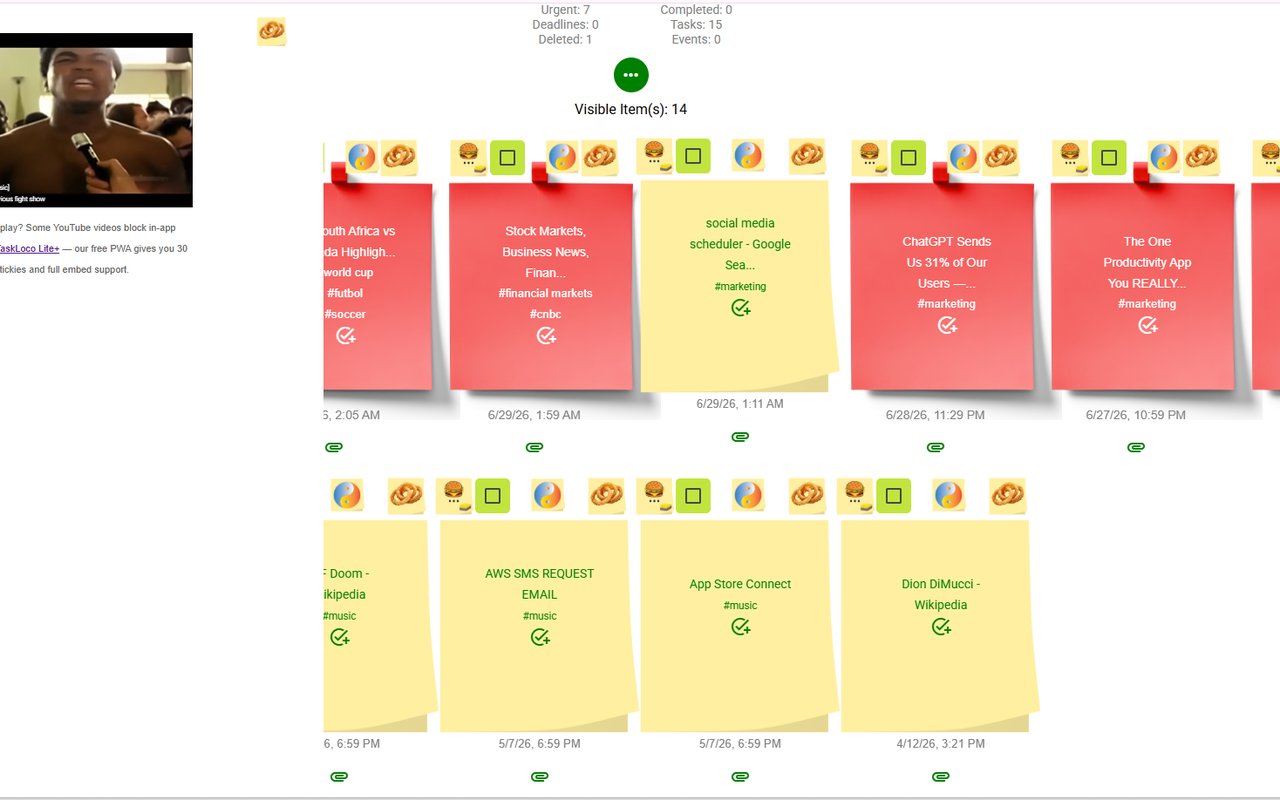
Because notes are visual and live on a board, you can see your research at a glance rather than reading through a list. A cluster of yellow notes tagged background looks different from a cluster tagged cited or disputed. Spatial layout adds a layer of organization that a flat list can't replicate.
YouTube videos saved with the clipper embed directly inside the note and play there — no separate tab, no losing your place on the board. For research that mixes articles and video sources, this keeps everything in one view.
Everything syncs to TaskLoco, which is free to start and available on Chrome, desktop, iPhone, and Android. If you're reading on your phone and find a source, you can save it there. If you're writing on your laptop, your full research board is waiting.
If you've been losing research sources to tab chaos or blank bookmarks, this is the specific gap it fills: one-click capture, immediate annotation, tags that actually surface what you need later.
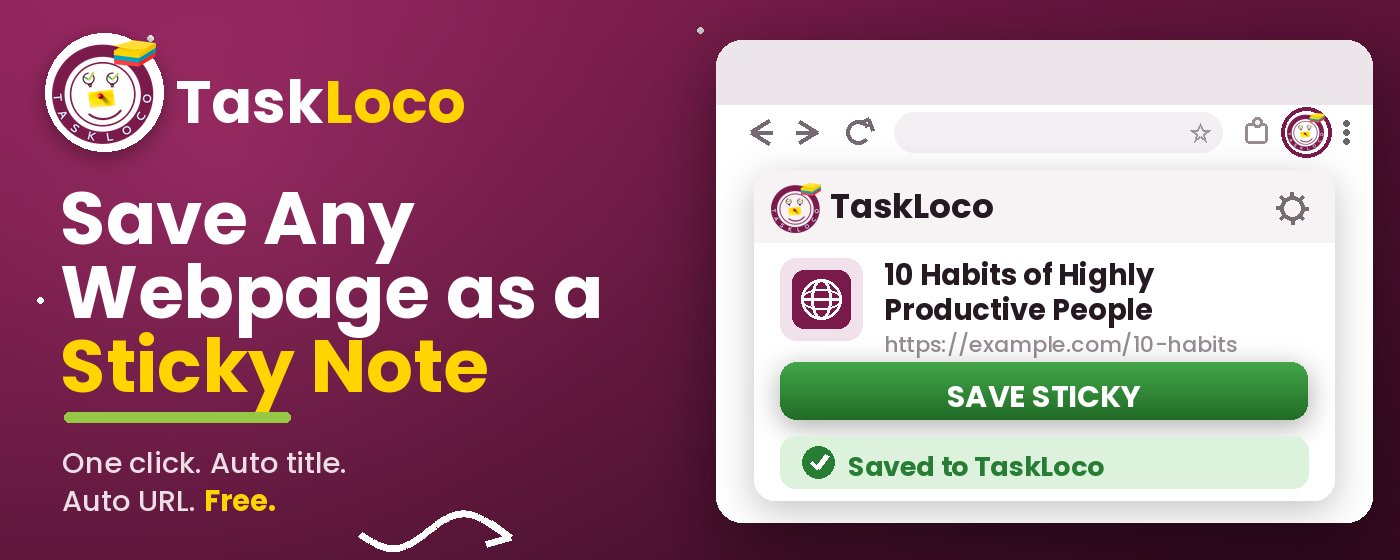
The Sticky Note Web Clipper is free. Install it from the Chrome Web Store, sign in with Google, and every page you clip becomes a sticky note you can find later.
Your clipped notes sync to TaskLoco across Chrome, desktop, iPhone, and Android — also free to start. No credit card to begin.
Get the Free Clipper
Sticky Note Web Clipper
- Free Chrome extension
- One-click save — any page, article, or video
- Title & URL auto-filled
- Tags & search
- Free forever
Synced to TaskLoco
- Sign in free with Google
- Your wall on Chrome, desktop, iPhone, Android
- YouTube videos embed & play in notes
- Visual sticky-note wall
- Free to start
Add It to Chrome — Free
One click saves any page, article, or YouTube video as a sticky note. Title and URL auto-filled.
Add to Chrome — FreeSee TaskLoco in Action
Frequently Asked Questions
What's the fastest way to save a web page for research without losing context?
Click a toolbar extension like the Sticky Note Web Clipper the moment the page becomes relevant. The title and URL fill in automatically — all you add is a one-sentence note about why it matters and one or two tags. That combination of capture plus context in a single step is what keeps research organized.
How do I add notes to bookmarks in Chrome?
Chrome's native bookmarks let you rename a bookmark, but there's no dedicated notes field and no tag system. You can put a brief note in the name field, but it's awkward and not searchable by concept. A web clipper like the Sticky Note Web Clipper gives you a proper note body and tagging built into the save action.
How do I tag saved web pages so I can find them later?
The most effective approach is to decide on a small set of tag conventions before your project starts — topic tags, status tags (to-read, cited, background), and project tags. Apply at least one tag every time you save. The Sticky Note Web Clipper has a tag field right in the note, so you tag at the moment of capture rather than going back later.
Can I save YouTube videos with notes for research?
Yes — the Sticky Note Web Clipper saves YouTube videos as sticky notes that embed and play directly inside the note. You can add your annotation and tags the same way you would for any article. The video doesn't require a separate tab.
How do I organize research sources across multiple topics or projects?
Tags are the most flexible system. Use one tag for the topic, one for the project, and one for the status. A source tagged 'climate-policy / thesis-ch2 / cited' is instantly findable three different ways. On a visual board like TaskLoco, you can also see your notes spatially and group related sources by proximity.
Is the Sticky Note Web Clipper free?
Yes — the extension is completely free. Install it from the Chrome Web Store, sign in with Google, and start saving pages as sticky notes immediately. TaskLoco, where your notes sync, also has a free tier.
Will my saved research pages be available on my phone?
Yes. Notes saved with the Sticky Note Web Clipper sync to TaskLoco, which is available on Chrome, desktop, iPhone, and Android. If you clip something on your laptop while browsing, it's on your phone when you need to reference it later.
Born in Brooklyn. Powered by AWS. Your data stays yours.
TaskLoco is available on iPhone, Android, Chrome, and every web browser.