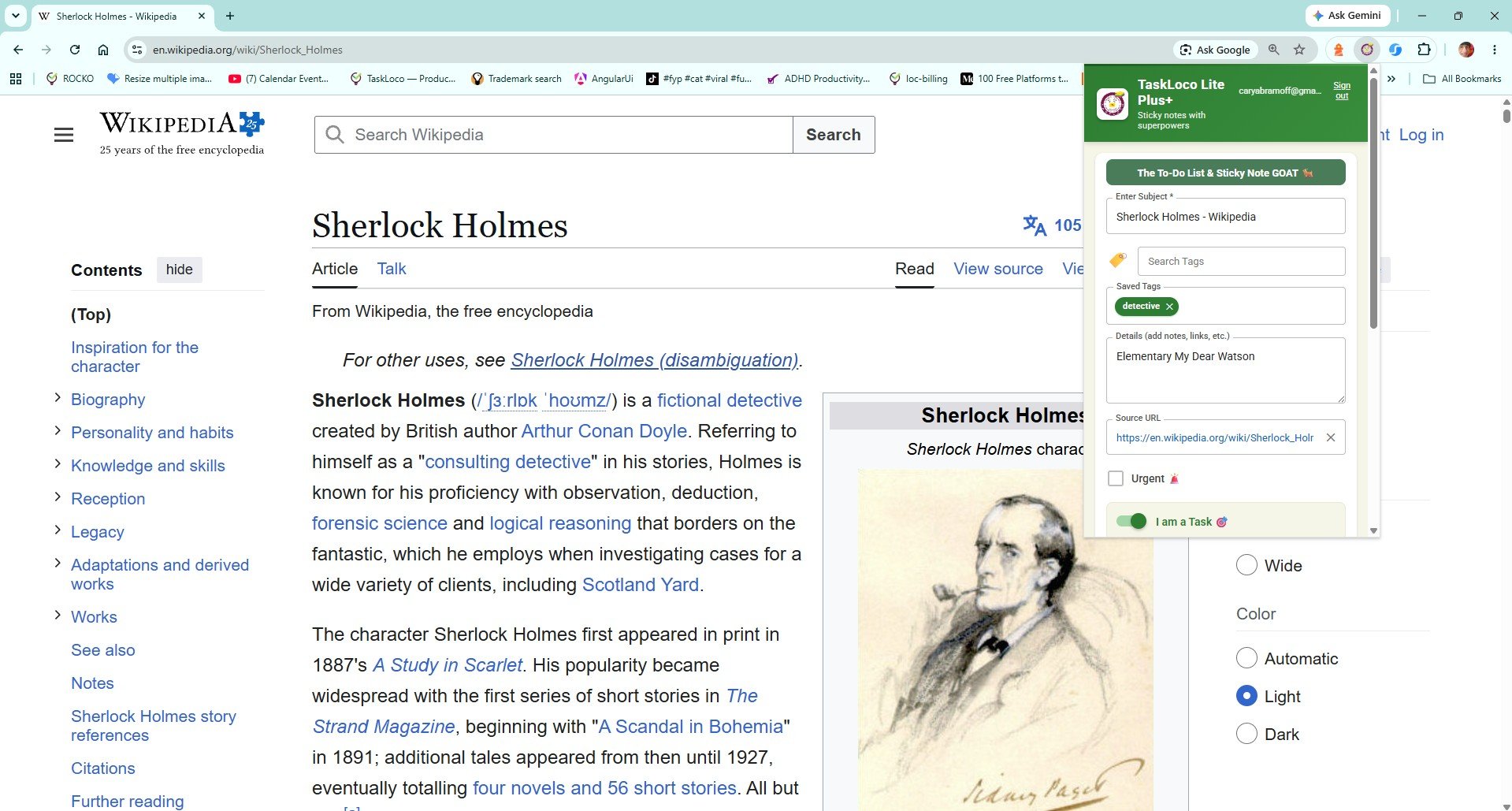
Side projects live and die by the quality of your research pile. You find a tutorial at 11pm, a competitor's pricing page on your lunch break, a YouTube deep-dive on a Sunday afternoon — and if you don't capture those pages right then, they're gone. Not deleted, just buried. You'll never scroll back to them, and you know it.
The problem isn't motivation. It's friction. Bookmarks look like a solution until you have 200 of them with no context and no memory of why you saved any of them. Open tabs feel temporary but somehow become permanent — a slow tax on every browser session. This guide walks through how to actually save and organize pages for a side project in a way that makes them useful later, not just technically archived.
Why Most People's Research System Breaks Down
The default behavior for saving something interesting is to either bookmark it or leave the tab open. Both work fine for one or two items. At ten items, you're already in trouble. At fifty — which is where most side projects end up — you have a graveyard of context-free links that require you to re-read everything just to remember why it mattered.
Bookmarks have no visual layer. They're a list of titles and URLs, which tells you almost nothing about what you were thinking when you saved them. Was that article a reference, a competitor, an inspiration? You have no idea unless you wrote a note alongside it — and almost nobody does that consistently in a bookmark manager.
Open tabs are even worse. They feel like a working memory aid, but the tab strip is not a filing system. Tabs don't have tags, they don't have notes, and they vanish the moment your browser crashes or you close the window by accident. If your side project research lives in tabs, it lives on borrowed time.
What actually works is a capture habit that adds almost no friction — where saving a page takes one second and the organizational structure exists before you even start. That means having a place ready and a method that doesn't ask you to stop what you're doing to categorize, format, or type a title.
A Practical System for Saving Side Project Research
Before you open a single tab of research, decide where things go. This sounds obvious, but most people skip it and then spend weeks accumulating links with no destination. Pick one home for your saved pages — whether that's a dedicated bookmark folder, a notes app, a clipping tool, or a dedicated wall of saved items. The specific tool matters less than the consistency.
Here's a method that works regardless of what you use:
- Clip when you find it. Don't leave tabs open as a reminder to come back. Save the page immediately when you land on something useful. The longer you wait, the less likely you are to do it, and the more likely you are to lose the mental context of why it mattered.
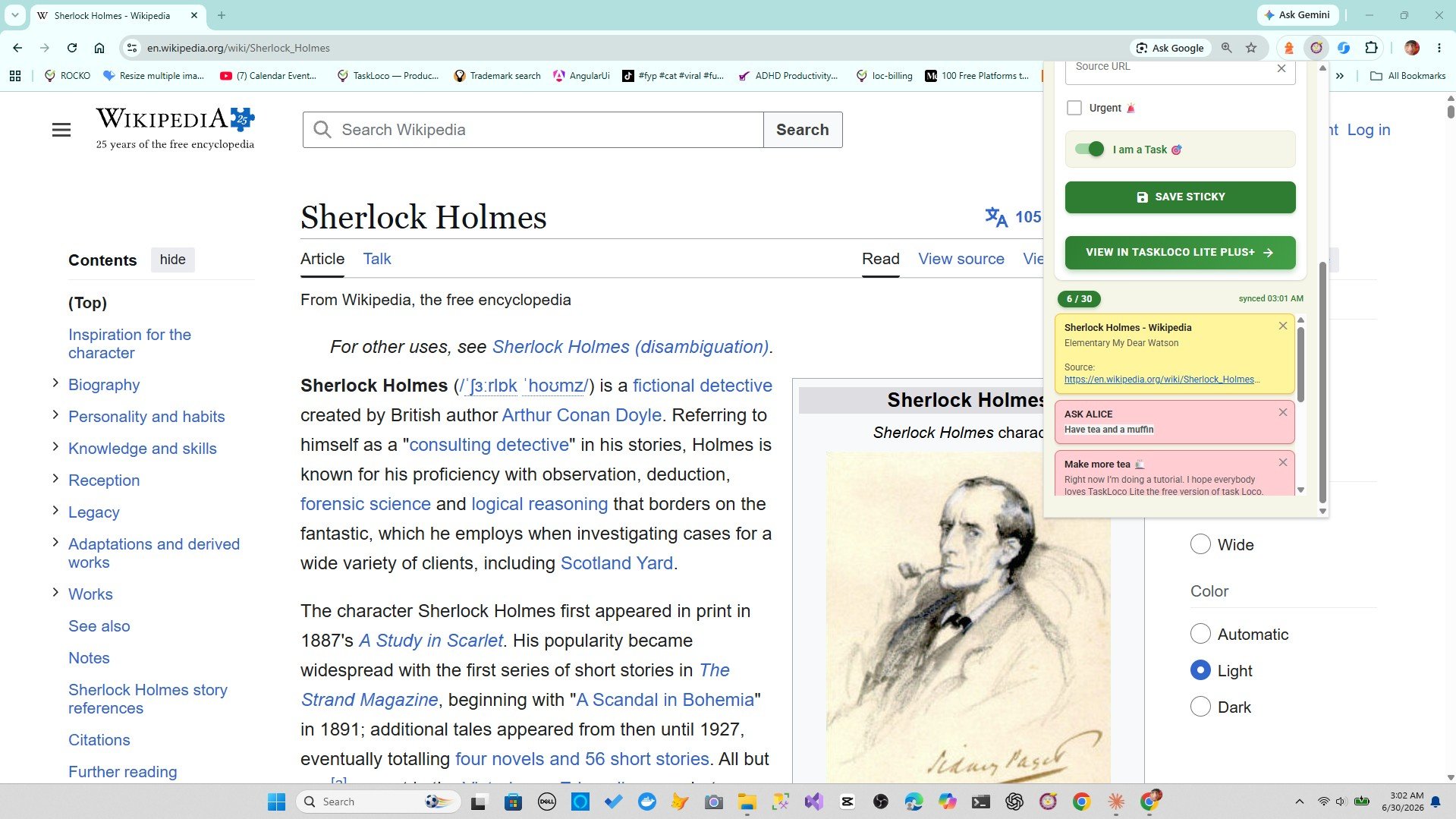
- Add one line of context. The title alone is rarely enough. Add a single note — even two or three words — about why you're saving it. "competitor pricing page", "auth tutorial", "design inspiration". That note will save you enormous time later.
- Use tags or folders per project phase. Side projects typically have phases: research, building, marketing, launch. If you tag or folder your saves by phase, you can quickly pull up everything relevant to where you are right now without scrolling through the whole collection.
- Review your saved items before each work session. Spend two minutes at the start of a session skimming what you've collected. This is where the research actually enters your working memory instead of sitting unused in a list somewhere.
The system above works with any tool. The constraint is always friction at save time — the more steps it takes to capture something, the less often you'll do it, and the more you'll fall back on open tabs.
Saving YouTube Videos Alongside Your Articles and Pages
Side project research rarely stays in article form. You'll find conference talks, tutorial walkthroughs, product demos, and commentary videos on YouTube that are just as useful as any written resource — sometimes more so. The problem is that YouTube links are terrible to save in a bookmark manager. The title tells you the video name but nothing about why you saved it, and you can't quickly peek at what the video is about without clicking through and waiting for it to load.
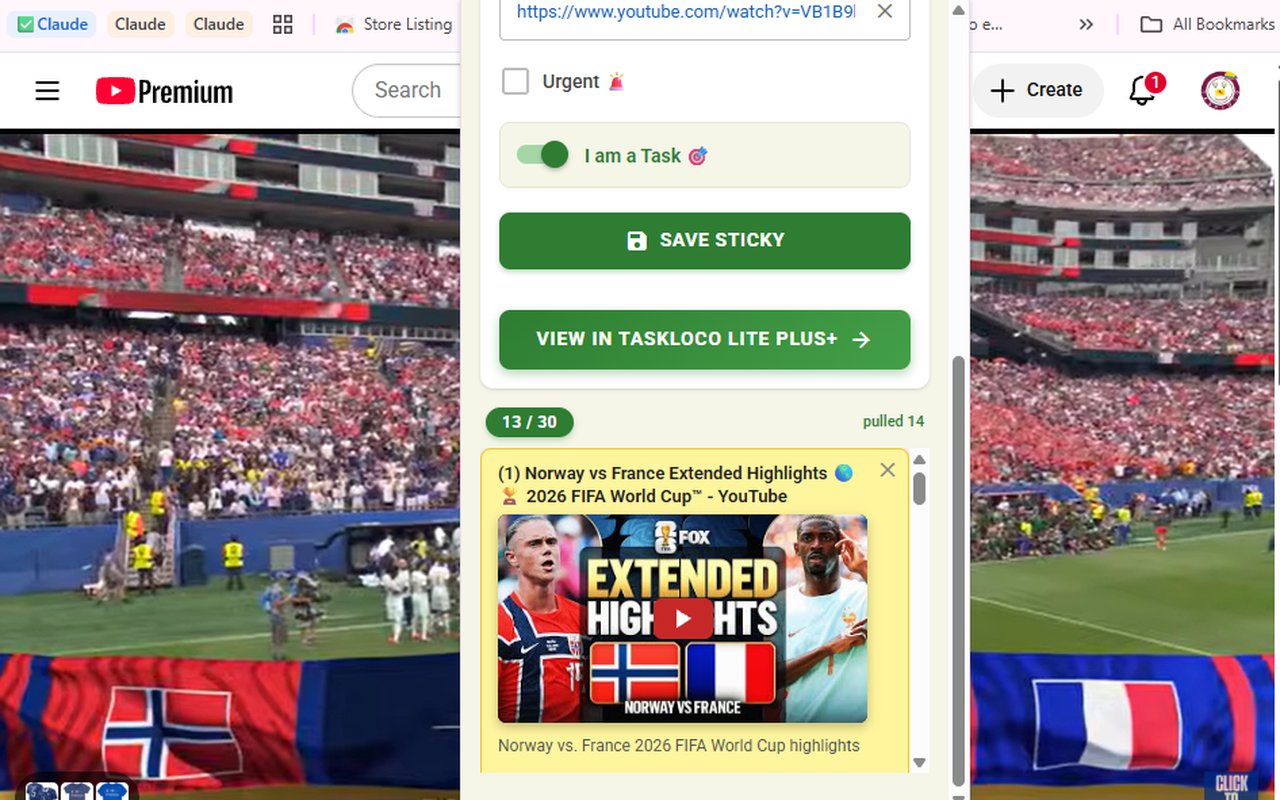
If your saving tool can embed and play a YouTube video directly inside the saved note, that changes how useful those saves are. You can pause a video mid-tutorial, clip it, come back to it the next day, and keep watching without losing your place in your research flow. That's meaningfully different from a bookmark that just opens a new YouTube tab.
When building a system for side project research, treat video as a first-class resource alongside articles and documentation pages. Save them the same way, tag them the same way, and give them the same one-line context note. A video saved with a note like "authentication flow walkthrough — watch before starting OAuth" is infinitely more useful than a bare YouTube URL in a bookmark folder.
How the Sticky Note Web Clipper Fits Into This
Once you have the habit and the system, the tool should get out of the way. The Sticky Note Web Clipper — a free Chrome extension from TaskLoco — is built for exactly this kind of capture workflow. You click the toolbar icon once while you're on any page, and it saves that page as a visual sticky note with the title and URL already filled in. No copying, no pasting, no navigating to another app to create a new item manually.
What makes it work well for side projects specifically:
- YouTube videos embed inside the note. Save a tutorial video and it plays directly inside the sticky note — you're not just saving a link, you're saving a playable embed.
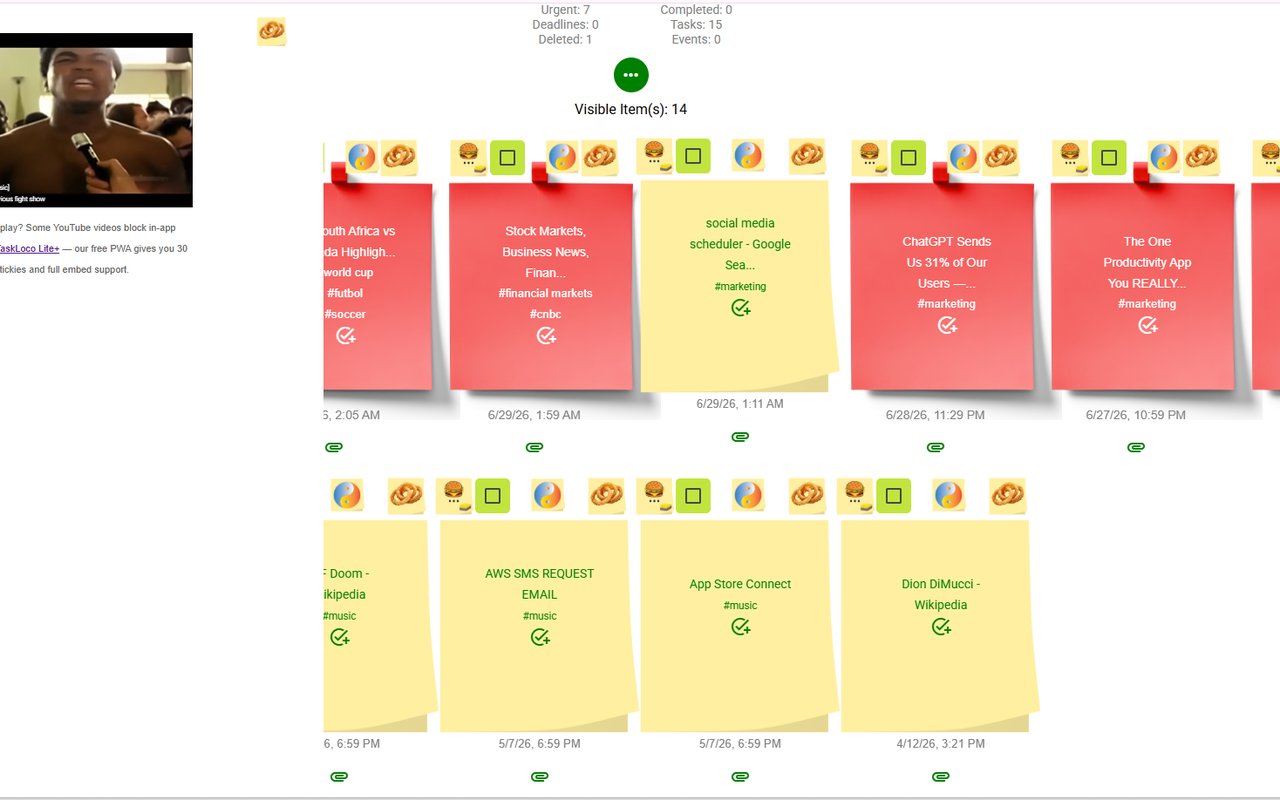
- One wall, everything visible. Your saved notes live in TaskLoco as a visual wall. You can see what you've collected at a glance rather than scanning a flat list of titles.
- Tags and search. Add tags per phase or topic, then search across everything you've saved. When you're ready to work on your landing page, search "landing" and pull up every article and video you saved about it.
- Syncs to your phone and desktop. Clip something on your laptop during the day, reference it from your phone that evening. Your saved notes are available across Chrome, the TaskLoco desktop experience, iPhone, and Android — all free with a Google sign-in.
If you already have a note-taking system you love, this still fits — the clipper is just the capture layer, the fastest path from "I found something useful" to "it's saved and I can find it later."
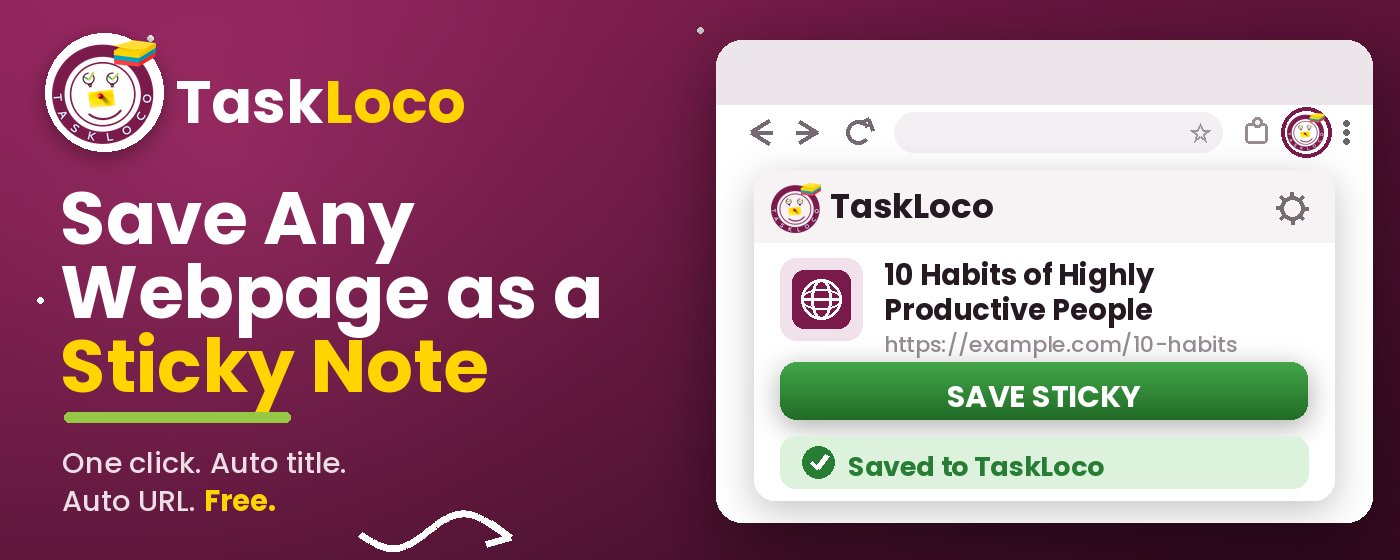
The Sticky Note Web Clipper is free. Install it from the Chrome Web Store, sign in with Google, and every page you clip becomes a sticky note you can find later.
Your clipped notes sync to TaskLoco across Chrome, desktop, iPhone, and Android — also free to start. No credit card to begin.
Get the Free Clipper
Sticky Note Web Clipper
- Free Chrome extension
- One-click save — any page, article, or video
- Title & URL auto-filled
- Tags & search
- Free forever
Synced to TaskLoco
- Sign in free with Google
- Your wall on Chrome, desktop, iPhone, Android
- YouTube videos embed & play in notes
- Visual sticky-note wall
- Free to start
Add It to Chrome — Free
One click saves any page, article, or YouTube video as a sticky note. Title and URL auto-filled.
Add to Chrome — FreeSee TaskLoco in Action
Frequently Asked Questions
What's the fastest way to save a web page for a side project?
Install the free Sticky Note Web Clipper in Chrome. When you find something useful, click the toolbar icon once — the page is saved as a sticky note with the title and URL auto-filled. It takes about one second and requires no copy-pasting or manual entry.
How do I keep my side project research organized instead of just piling up links?
Use tags or folders to separate research by project phase — things like 'research', 'build', 'marketing', or 'launch'. Add a one-line note to each saved item describing why you saved it. Review your saved items briefly before each work session so they actually inform your decisions instead of sitting unread.
Should I use bookmarks or a clipping tool for side project research?
Bookmarks work for a handful of links but break down quickly when you're saving dozens of pages across different topics. They have no visual layer, no context notes, and no tags. A clipping tool that saves pages as visual notes — with context you can add and tags you can search — scales much better for an active side project.
Can I save YouTube videos as part of my research, not just articles?
Yes — the Sticky Note Web Clipper saves YouTube pages as embedded notes, meaning the video plays directly inside the saved note rather than just storing a URL. This makes it much easier to return to a tutorial or talk exactly where your research left off.
Will my saved pages be available on my phone, not just my laptop?
Yes. Notes saved with the Sticky Note Web Clipper sync to TaskLoco, which is available on iPhone, Android, and desktop. Clip something on your laptop during the day and access it from your phone that evening — no manual export or transfer needed.
Is the Sticky Note Web Clipper free?
Yes — the extension is completely free. TaskLoco also has a free tier. Install it from the Chrome Web Store, sign in with Google, and start saving pages immediately.
How is this different from just leaving tabs open?
Open tabs feel like saved items but they aren't. They disappear when your browser crashes, they have no tags or notes, and a wide-open tab strip gives you no way to distinguish a critical research page from something you meant to close two days ago. Saved sticky notes are permanent, searchable, tagged, and available on every device — they're actual storage, not temporary memory.
Born in Brooklyn. Powered by AWS. Your data stays yours.
TaskLoco is available on iPhone, Android, Chrome, and every web browser.