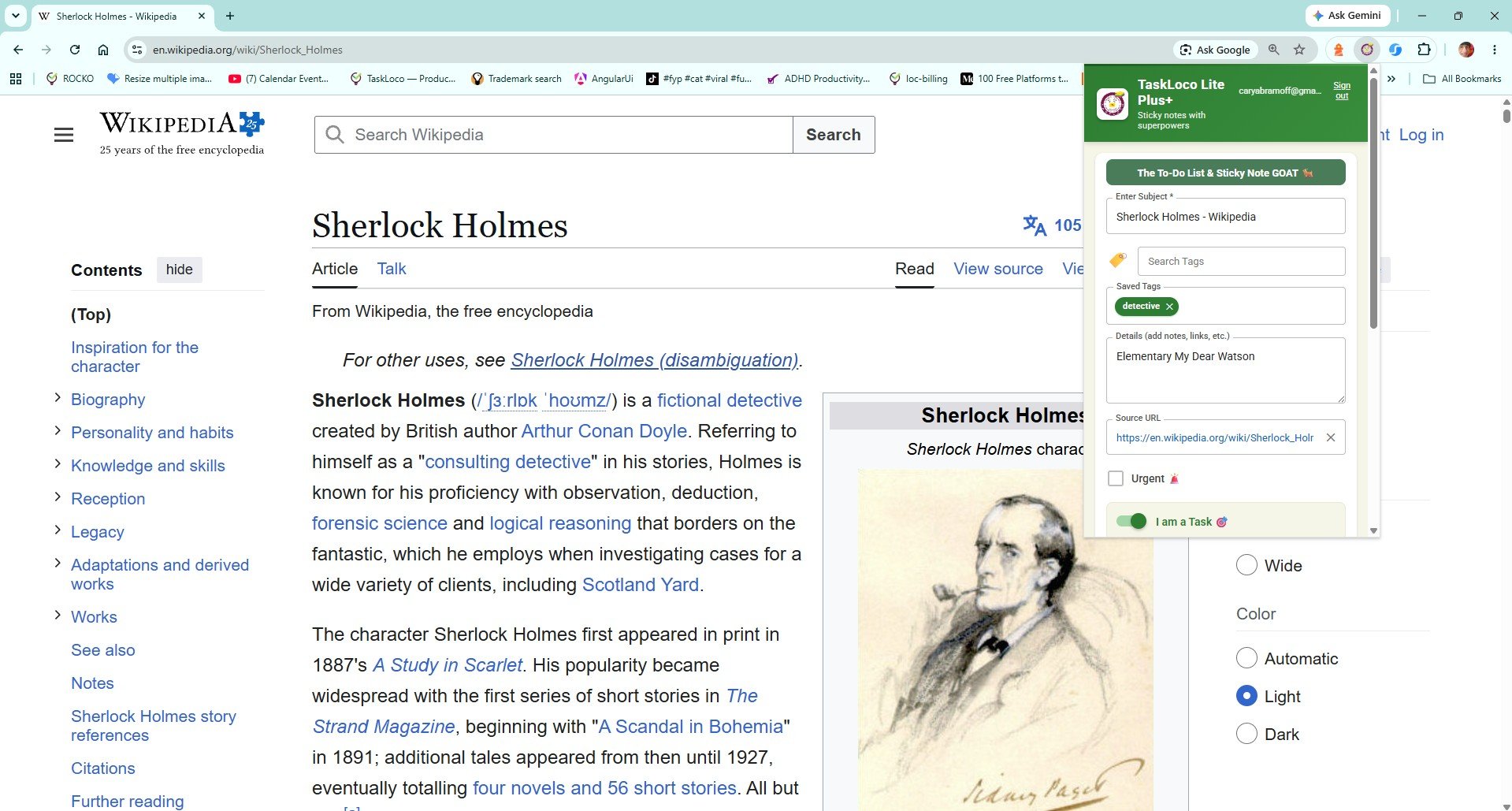
Most people save web pages the same lazy way: leave the tab open and hope they remember it. Tabs pile up, browsers crash, and that article you were going to read later vanishes. There are real methods for saving pages that cost nothing and take seconds — and knowing which one fits your situation matters more than any app recommendation.
This guide covers the actual options: browser bookmarks, PDF saves, reading lists, and browser extensions. The goal is that you leave with a working method, whether you install anything or not. For most people who browse regularly and actually revisit what they save, one approach stands out — and it's free.
The Simplest Free Methods — No Account Needed
If you genuinely don't want to sign in to anything, you have three solid options built into every major browser:
- Bookmarks (Ctrl+D / Cmd+D): The fastest zero-account save. The page title and URL are stored in your browser. The problem is retrieval — bookmark folders get messy fast, there's no visual preview, and they don't sync unless you're signed into Chrome or Safari already.
- Reading List: Chrome and Safari both have a built-in reading list (in Chrome, click the star icon and choose 'Add to Reading List'). It's slightly more organized than bookmarks but still text-only and lives only in that browser on that device.
- Save as PDF (Ctrl+P / Cmd+P → Save as PDF): This saves a full snapshot of the page exactly as it looks, including images. No account required. The downside: PDFs stack up in your Downloads folder with no searchable tags, and you can't play embedded video.
None of these options require an account. All of them have real limitations around organization and cross-device access. That's the honest trade-off.
When Free Methods Fall Short — What Actually Breaks
The limitation isn't saving — it's finding. Browser bookmarks are essentially a flat list that most people give up organizing within a week. Studies on personal information management consistently show that people bookmark far more than they ever revisit, partly because retrieval is so clunky. There's no thumbnail, no context, and no way to search by topic unless you obsessively named and tagged every bookmark at the time.
PDFs have the opposite problem: too much fidelity. A saved PDF of a long article is unwieldy. You can't skim a wall of saved PDFs the way you can scan a visual board of notes.
Reading lists are genuinely underused as a concept but over-limited in execution. They're designed for later today, not next month when I need that research source. There's no tagging, no visual layout, and no way to add a YouTube video to a reading list and have it play inside.
This is where clippers — tools that save pages as visual, searchable notes — solve a real problem rather than a fake one.
How to Save Pages with a Free Clipper — No Signup Wall
Most web clippers require an account with a paid tier lurking behind the free limit. A few common ones:
- Evernote Web Clipper: Requires an Evernote account. The free tier has note limits and syncs to a limited number of devices.
- Notion Web Clipper: Requires a Notion account and saves into Notion's database format — useful if you're already in Notion, overkill if you're not.
- Pocket: Requires account creation. Saves articles in a clean reading view, but there's no visual wall and YouTube videos don't embed.
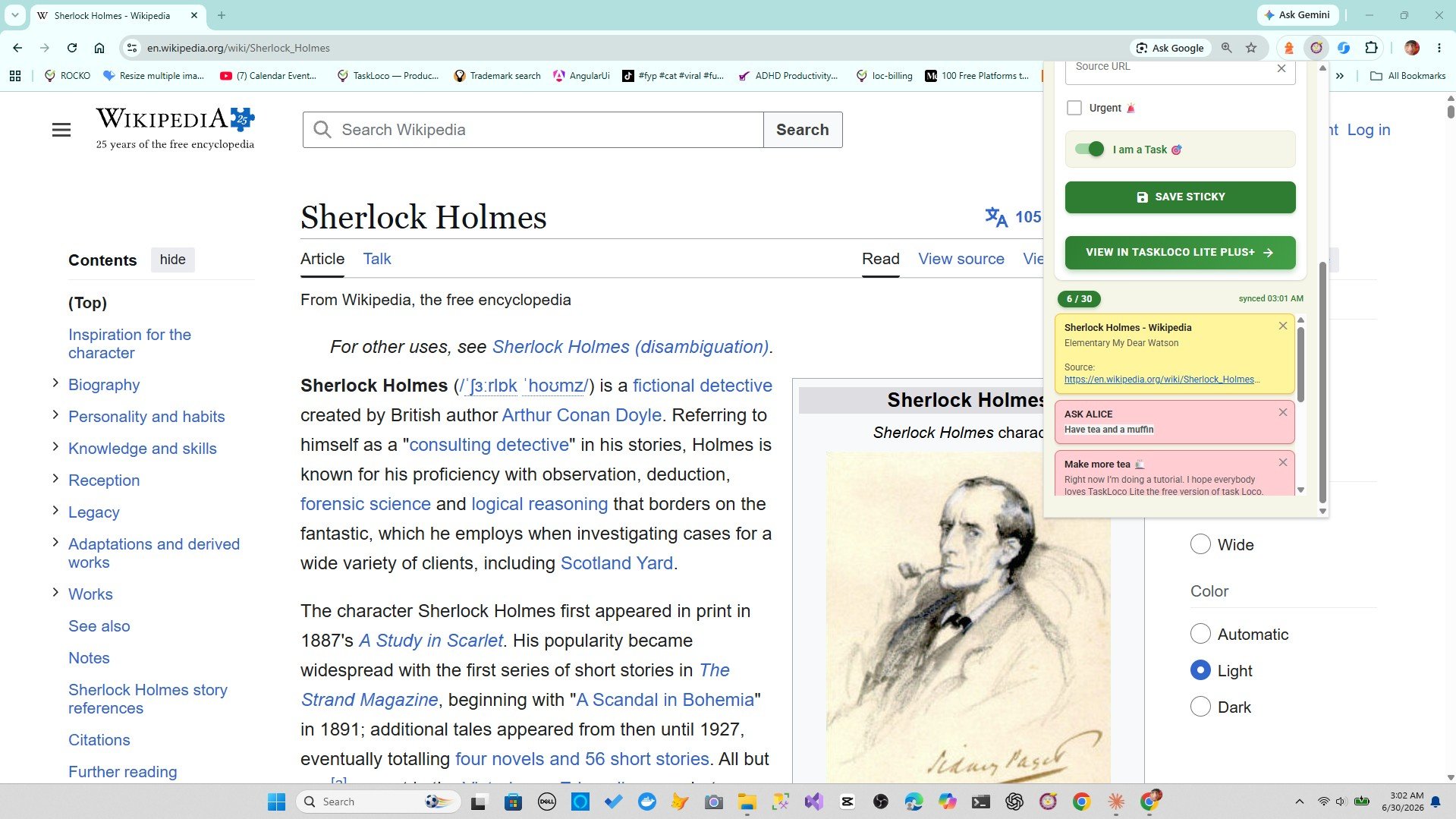
The Sticky Note Web Clipper by TaskLoco takes a different approach: install it free from the Chrome Web Store, sign in once with Google (no new password, no email confirmation loop), and every page you clip becomes a visual sticky note with the title and URL already filled in. That's the whole signup process.
To save any page:
- Navigate to the page you want to save.
- Click the Sticky Note Web Clipper icon in your Chrome toolbar.
- The note appears with the page title and URL auto-filled. Add a tag or note if you want, or just close it — it's already saved.
- Your saved notes sync to TaskLoco and are available on your phone and desktop.
Which Method Should You Actually Use
Here's a plain answer without the usual comparison table hedging:
- Use bookmarks if you save one or two things a month and never need to find them by topic or context.
- Use Save as PDF if you need a permanent archive of a specific document — a legal page, a receipt, something you need to screenshot-proof.
- Use a reading list if you want to read something in the next hour and then forget about it.
- Use the Sticky Note Web Clipper if you save pages regularly, want them organized visually, need to find them later by searching or scanning, and want YouTube videos to actually be watchable inside the note.
The clipper doesn't replace bookmarks for every use case. If you're saving a page you plan to visit daily (a dashboard, a tool), bookmark it. If you're saving something to remember, revisit, or research from, the sticky note format with auto-filled context is materially better.
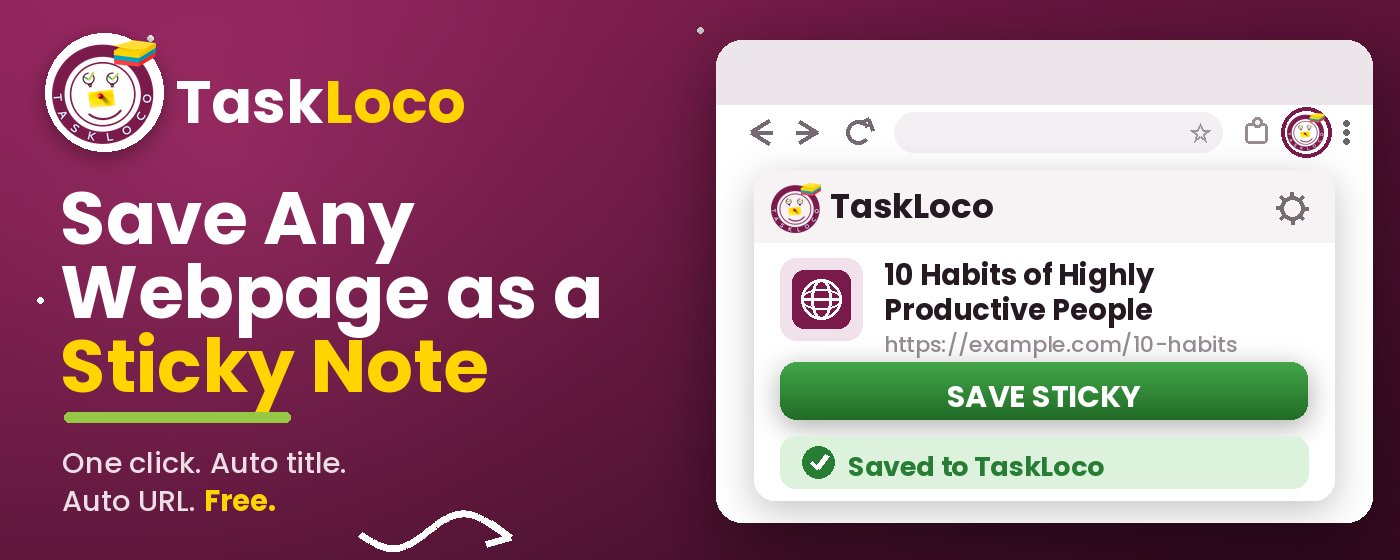
The Sticky Note Web Clipper is free. Install it from the Chrome Web Store, sign in with Google, and every page you clip becomes a sticky note you can find later.
Your clipped notes sync to TaskLoco across Chrome, desktop, iPhone, and Android — also free to start. No credit card to begin.
Get the Free Clipper
Sticky Note Web Clipper
- Free Chrome extension
- One-click save — any page, article, or video
- Title & URL auto-filled
- Tags & search
- Free forever
Synced to TaskLoco
- Sign in free with Google
- Your wall on Chrome, desktop, iPhone, Android
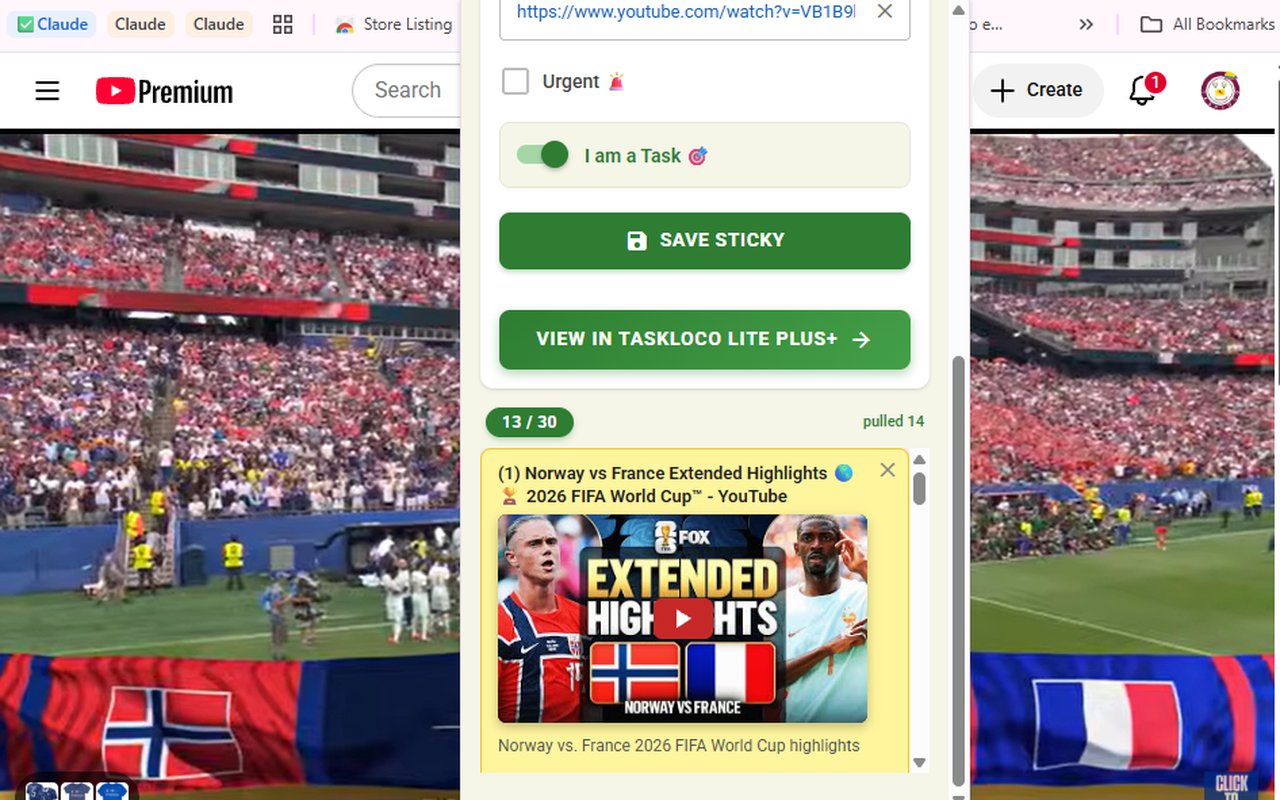
- YouTube videos embed & play in notes
- Visual sticky-note wall
- Free to start
Add It to Chrome — Free
One click saves any page, article, or YouTube video as a sticky note. Title and URL auto-filled.
Add to Chrome — FreeSee TaskLoco in Action
Frequently Asked Questions
Can I save web pages for free without creating an account?
Yes. Browser bookmarks (Ctrl+D or Cmd+D) and Save as PDF (through the print dialog) both work with no account at all. If you want visual, searchable, synced notes, the Sticky Note Web Clipper uses a one-time free Google sign-in — no new password or email confirmation required.
Does the Sticky Note Web Clipper cost anything?
The extension is completely free. TaskLoco, where your notes sync, also has a free tier. You install the extension from the Chrome Web Store, sign in with Google, and start clipping — no payment required.
What is the easiest way to save a web page to read later?
The easiest method with zero friction is clicking the Sticky Note Web Clipper in your Chrome toolbar — the page title and URL auto-fill into a sticky note in one click. For a no-install option, Chrome's built-in Reading List (click the star icon when bookmarking) also works, though it doesn't sync across devices without a Chrome account.
Can I save YouTube videos as well as web pages?
Yes, with the Sticky Note Web Clipper. When you clip a YouTube video, it saves as a sticky note with the video embedded — you can play it directly inside the note without going back to YouTube. Standard bookmarks just save the URL, so you'd still need to navigate back to watch.
How do I find saved pages again after clipping them?
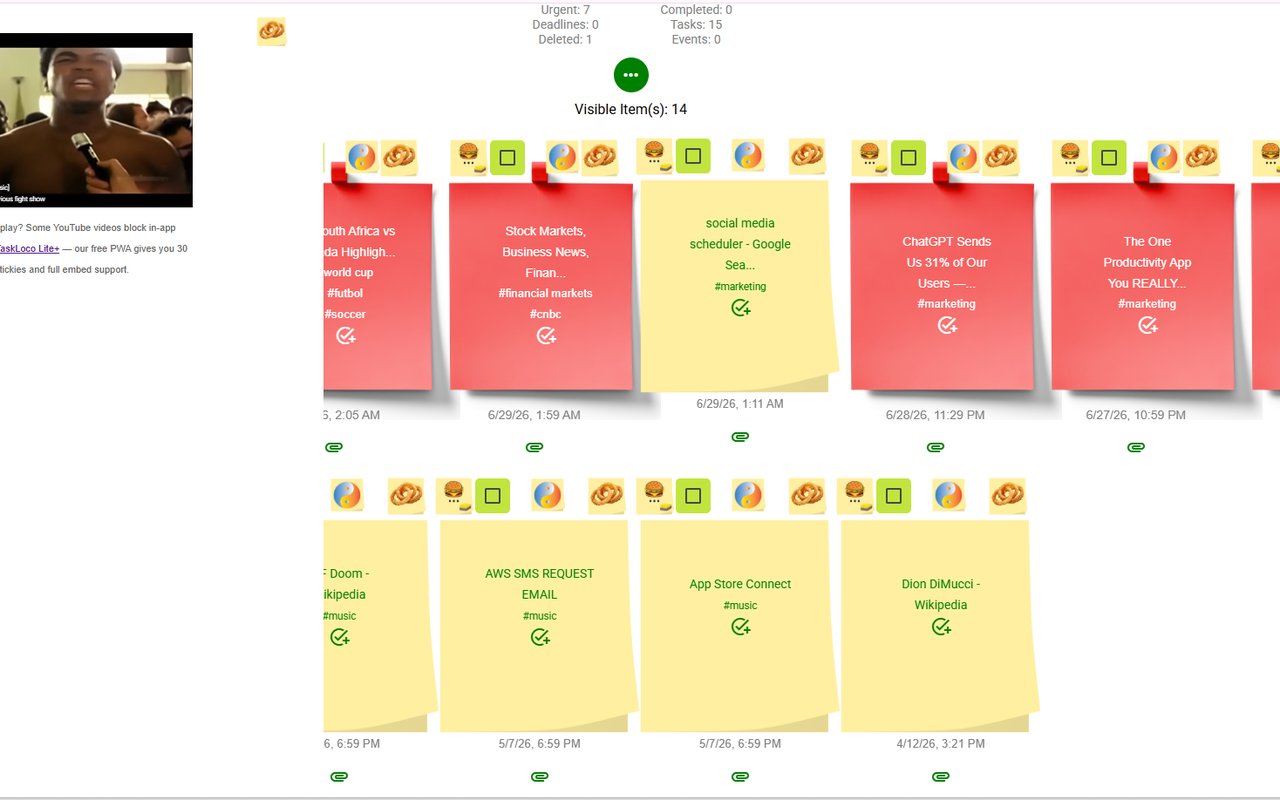
In TaskLoco, saved notes are displayed visually on a wall you can scan, and you can search by title or tag to find a specific page. This is one of the biggest differences from browser bookmarks, which have no visual preview and require you to remember the exact folder you filed it in.
Do saved pages sync across my phone and desktop?
With the Sticky Note Web Clipper, yes. Notes you save in Chrome sync to TaskLoco, which is available on iPhone, Android, and desktop. Browser bookmarks sync only if you're already signed into Chrome sync, and they don't appear on non-Chrome browsers or apps.
Is there a Chrome extension that saves pages as visual notes rather than plain links?
That's exactly what the Sticky Note Web Clipper does. Each saved page becomes a sticky note with the title, URL, and any tags you add — displayed visually on a wall rather than as a text list. You can install it free from the Chrome Web Store and have your first page clipped in under a minute.
Born in Brooklyn. Powered by AWS. Your data stays yours.
TaskLoco is available on iPhone, Android, Chrome, and every web browser.