Pocket built its reputation on a simple idea: read it later. But for a lot of people that promise breaks down somewhere between saving and actually going back to find things. Maybe the extension stopped syncing, maybe the interface feels cluttered, maybe you want your saved content to live somewhere you actually look at every day. Whatever the reason, you're here because Pocket isn't working for you anymore — and that's a completely reasonable place to be.
The good news is that saving web pages is not a problem that requires any one tool. There are several approaches that work well, each with real trade-offs. This page walks through all of them — including a free one-click option that might be exactly what you were hoping Pocket could be.
Why Pocket Frustrates People (And What You Actually Need)
Pocket's core problem isn't the concept — it's the gap between saving and using. Most people who leave Pocket describe one of a few specific frustrations:
- The list becomes a graveyard. Saved articles pile up in a single reverse-chronological feed. There's no spatial or visual way to group things by topic, project, or urgency. Everything looks the same, so nothing stands out.
- Sync and extension issues. Pocket's Chrome extension has had recurring problems — tags not syncing, saves failing silently, the sidebar not loading. If you're saving something important and have no idea whether it actually saved, that defeats the whole purpose.
- It's optimized for reading, not referencing. Pocket strips pages down to text. That's great for articles but useless if you're saving a YouTube video, a product page, a research source, or anything visual. You get a title and maybe a thumbnail — not the page itself.
- No obvious home for your saves. Pocket is a separate app you have to go open. If it's not part of your daily workflow already, your saves stay invisible.
Once you name what's missing, it's much easier to pick the right replacement.
Your Real Options for Saving Web Pages (No App Required)
Before reaching for another extension, it helps to know what each approach actually gives you. Here are the main methods, with honest trade-offs:
Browser bookmarks are the zero-install option. Right-click any tab, save to a folder, done. The downside is that bookmark folders get unwieldy fast, there's no preview of what you saved, and search only matches the page title — not anything you wrote about it. Still, if you save fewer than a dozen things a month and always remember which folder you used, bookmarks are perfectly fine.
Copy-pasting links into a notes app (Apple Notes, Google Keep, Notion, etc.) is more flexible but takes more steps: copy URL, switch app, paste, maybe add a title. It works, but it adds enough friction that most people stop doing it consistently. The bigger issue is that your saved links live inside a notes app that wasn't built to display web content — so you're looking at a wall of blue underlines with no context.
Leaving tabs open is the most common accidental strategy. It works right up until you close the browser, restart your computer, or lose track of which tab was the important one. Tab session managers help, but they don't solve the underlying problem of needing to actually organize what you've found.
Dedicated web clippers — extensions built specifically for capturing web content — are the most structured option. They vary a lot in how visual and searchable the result is. Evernote's Web Clipper, for example, saves into Evernote's note format; Notion's clipper sends pages to a Notion database. Both are powerful but expect you to already be using those apps daily.
How to Build a Web-Saving Habit That Actually Sticks
Switching tools fixes nothing if the new tool becomes another graveyard. Here's what makes the difference between a saving system that works and one that quietly dies:
Save at the moment of discovery. If you think "I'll come back and save this later," you probably won't. The act of saving needs to happen in the same second you decide something is worth keeping. That means your saving method needs to be accessible from the browser without switching apps or copying anything manually.
Attach context when you save. A bare URL tells you nothing in three weeks. Even a single word of context — a tag, a note, a project name — dramatically increases the chance you'll find and use what you saved. The best clippers make this fast; the worst make it a multi-step form that you skip.
Save to somewhere you actually look. This is the part Pocket gets wrong for a lot of users. If your saved items live in a separate app you only open when you're specifically looking for something, most saves will never surface again. The closer your saves are to your daily workspace, the more useful they become.
Use visual cues, not just lists. When saved items have a visual identity — a thumbnail, a color, a layout — your brain recognizes them faster. A wall of blue links all looks the same. A visual note with the page title and a recognizable image is something you can scan and act on.
Keep it searchable. Tags are useful. Full-text search is better. You don't need both, but you need at least one way to find something by what it's about, not just what it's called.
One Practical Way to Apply This: The Sticky Note Web Clipper
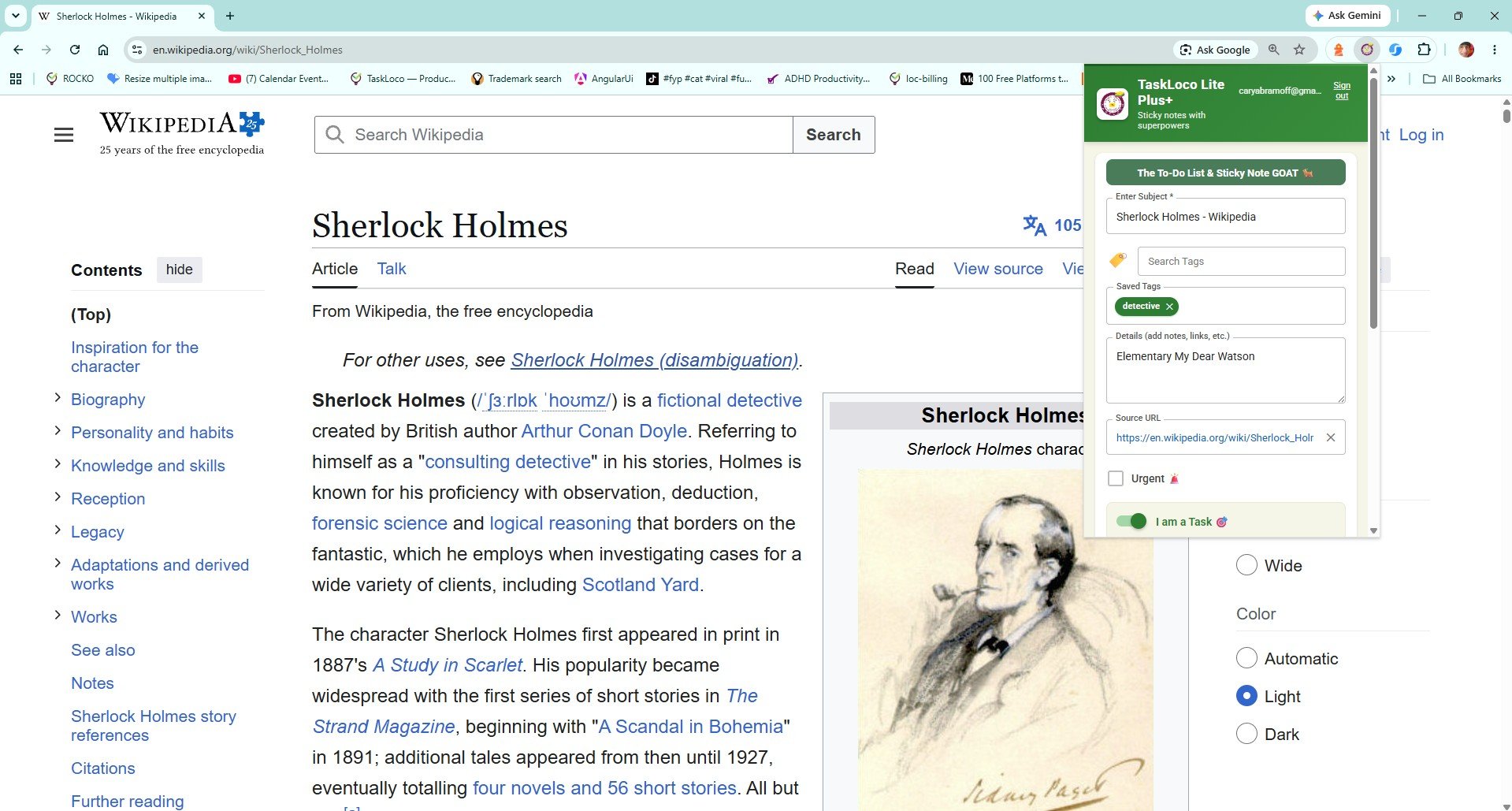
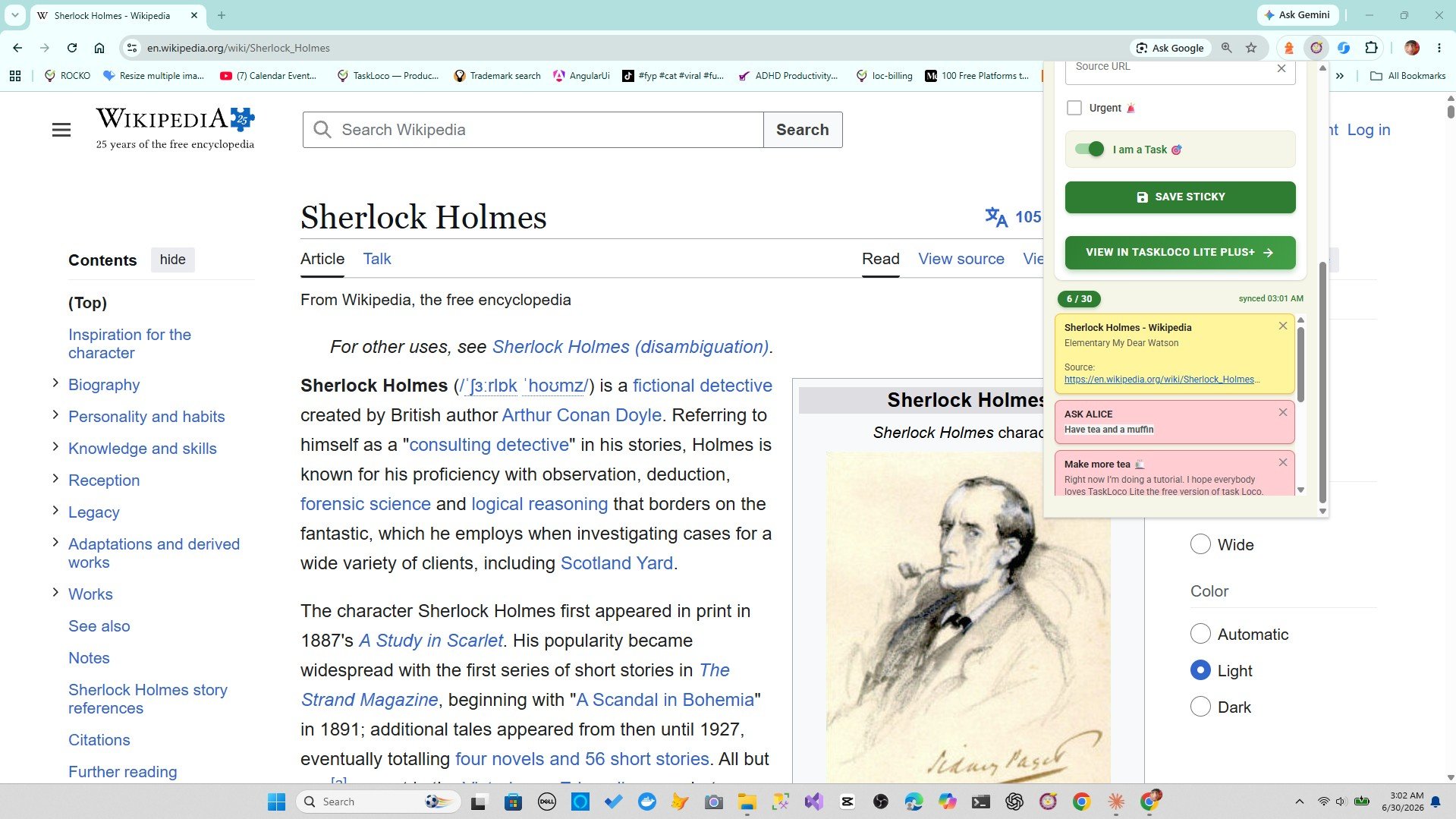
If you want a one-click replacement for Pocket that saves pages as visual sticky notes — and syncs them to your phone and desktop for free — the Sticky Note Web Clipper for Chrome is worth a look. It's a free Chrome extension by TaskLoco, and the workflow is about as minimal as it gets: install it, sign in with Google, and click the toolbar icon on any page you want to save. The title and URL fill in automatically. The note lands on your TaskLoco wall, where you can tag it, search it, and open it on any device.
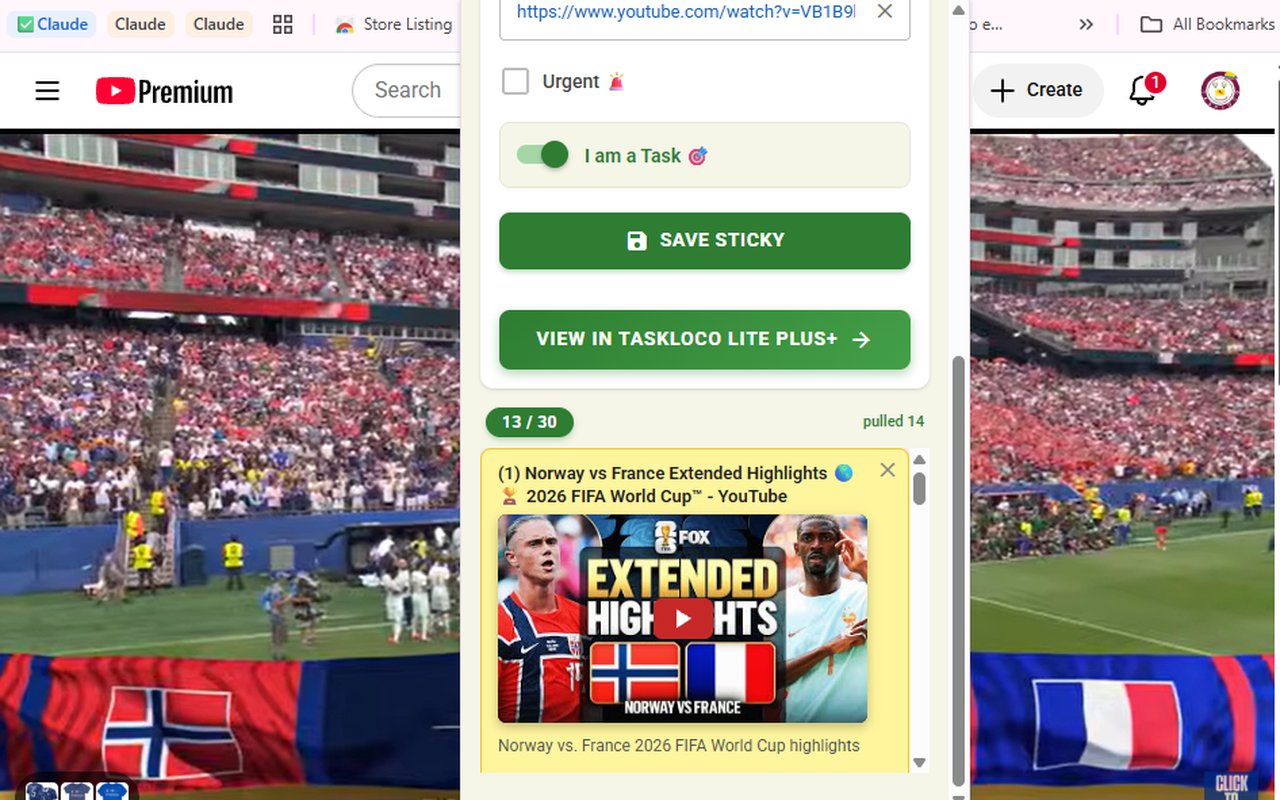
YouTube videos are a specific win here — when you clip a YouTube page, the video embeds directly inside the note and plays without leaving TaskLoco. For research, playlists, or anything video-based that Pocket handles poorly, that's a meaningful difference.
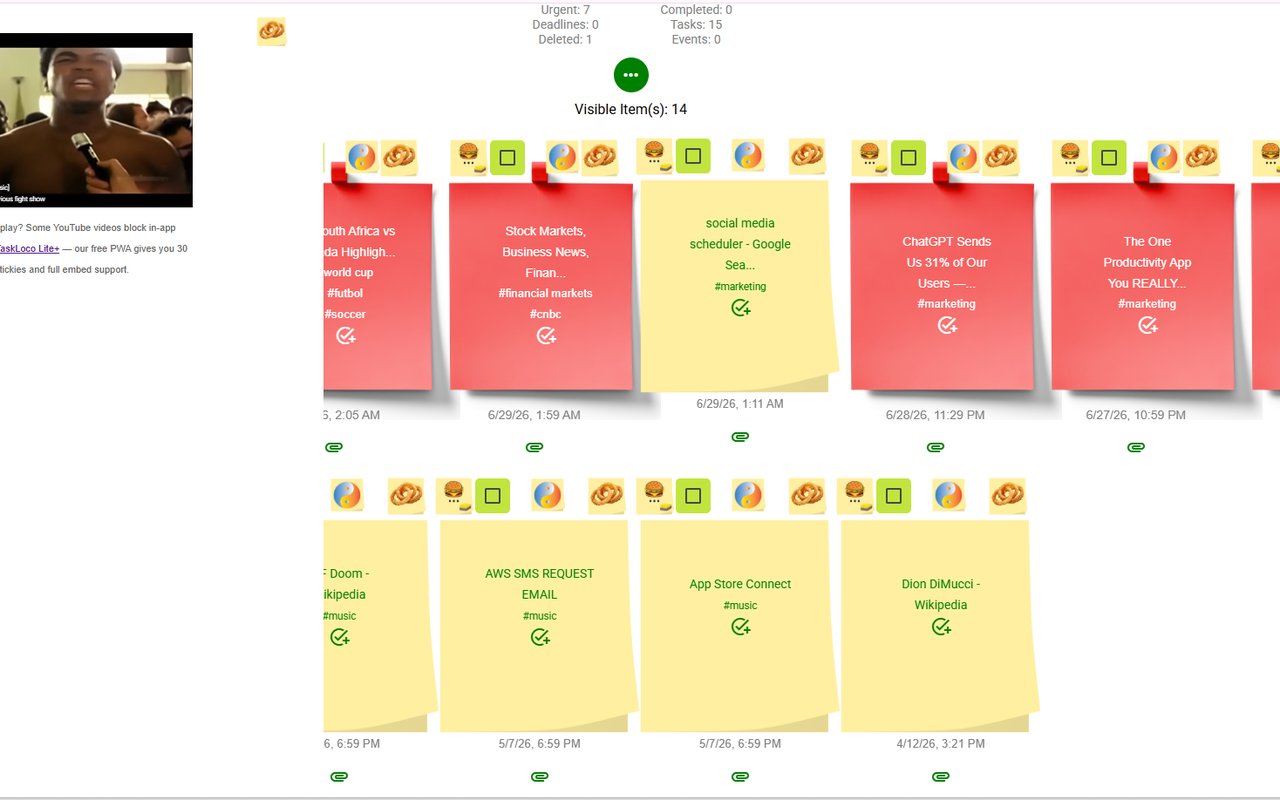
The notes live on a visual wall you can actually browse, not a reverse-chronological list you scroll and forget. And because they sync across Chrome, desktop, iPhone, and Android through the free TaskLoco experience, what you save on your laptop is available on your phone without doing anything extra.
It doesn't replace a full read-later app if that's specifically what you need. But if what you wanted from Pocket was fast, frictionless capture that you can actually find and use later, the Sticky Note Web Clipper handles that well — and it's free to start from the Chrome Web Store.
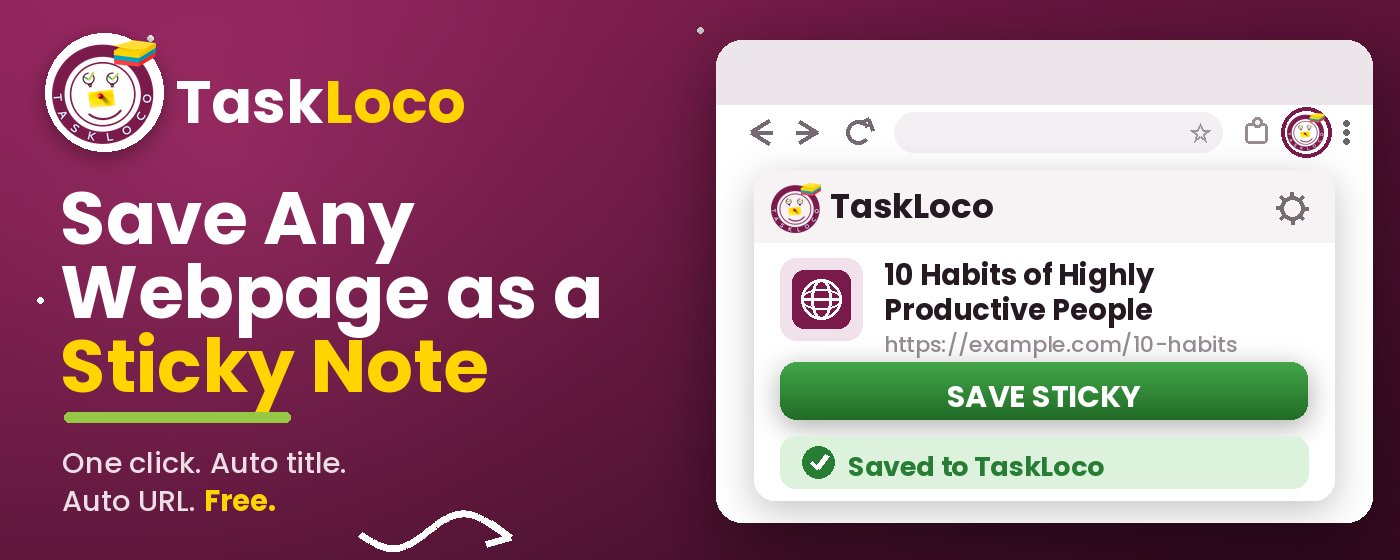
The Sticky Note Web Clipper is free. Install it from the Chrome Web Store, sign in with Google, and every page you clip becomes a sticky note you can find later.
Your clipped notes sync to TaskLoco across Chrome, desktop, iPhone, and Android — also free to start. No credit card to begin.
Get the Free Clipper
Sticky Note Web Clipper
- Free Chrome extension
- One-click save — any page, article, or video
- Title & URL auto-filled
- Tags & search
- Free forever
Synced to TaskLoco
- Sign in free with Google
- Your wall on Chrome, desktop, iPhone, Android
- YouTube videos embed & play in notes
- Visual sticky-note wall
- Free to start
Add It to Chrome — Free
One click saves any page, article, or YouTube video as a sticky note. Title and URL auto-filled.
Add to Chrome — FreeSee TaskLoco in Action
Frequently Asked Questions
Why is Pocket not working in Chrome?
Pocket's Chrome extension has had various issues over time — failed saves, sync problems, and the extension not loading properly after browser updates. If the extension icon isn't responding or your saves aren't appearing in Pocket, try removing and reinstalling the extension, clearing your browser cache, or checking Pocket's own status page. If the issues keep recurring, it may be worth switching to a more reliable web clipper entirely.
What is the best free alternative to Pocket for saving web pages?
It depends on what specifically wasn't working. If you want visual, one-click saving with sync across devices, the Sticky Note Web Clipper for Chrome is a strong free option — it saves any page as a sticky note with the title and URL auto-filled, and notes sync to your phone and desktop. If you want plain lists, browser bookmarks or Google Keep work fine with no new installs.
Can I save YouTube videos the way Pocket saves articles?
Pocket's handling of YouTube is limited — it saves the page link but doesn't embed the video in a useful way. The Sticky Note Web Clipper does something different: when you clip a YouTube page, the video embeds inside the note and plays directly. That makes it much more useful for saving videos you actually want to watch rather than just bookmark.
Is the Sticky Note Web Clipper free?
Yes — the extension is completely free. Install it from the Chrome Web Store, sign in with Google, and start saving pages immediately. TaskLoco, where your notes sync, also has a free tier. There's nothing to pay to get started.
How do I save a web page so I can find it again easily?
The key is attaching some context when you save — a tag, a note, or at minimum saving to a named collection rather than a generic list. One-click clippers that auto-fill the title and URL help remove friction so you actually save things in the moment. The Sticky Note Web Clipper does this and also keeps notes in a visual wall format, which makes browsing saved items much faster than scrolling a text list.
What happens to my Pocket saves if I stop using Pocket?
Pocket lets you export your saves as a CSV or HTML file from your account settings. You can keep that file as a backup. From there, you can manually re-save important links into whichever tool you switch to, or just start fresh and only save things you're actively working with — most people find that a clean start is more useful than migrating a long backlog they were never going to read anyway.
Does the Sticky Note Web Clipper work on iPhone and Android?
The extension itself is a Chrome desktop tool — you click the toolbar icon while browsing on your computer. But the notes you save sync to TaskLoco, which is available on iPhone and Android. So what you clip on your laptop shows up on your phone automatically, without any extra steps.
Born in Brooklyn. Powered by AWS. Your data stays yours.
TaskLoco is available on iPhone, Android, Chrome, and every web browser.