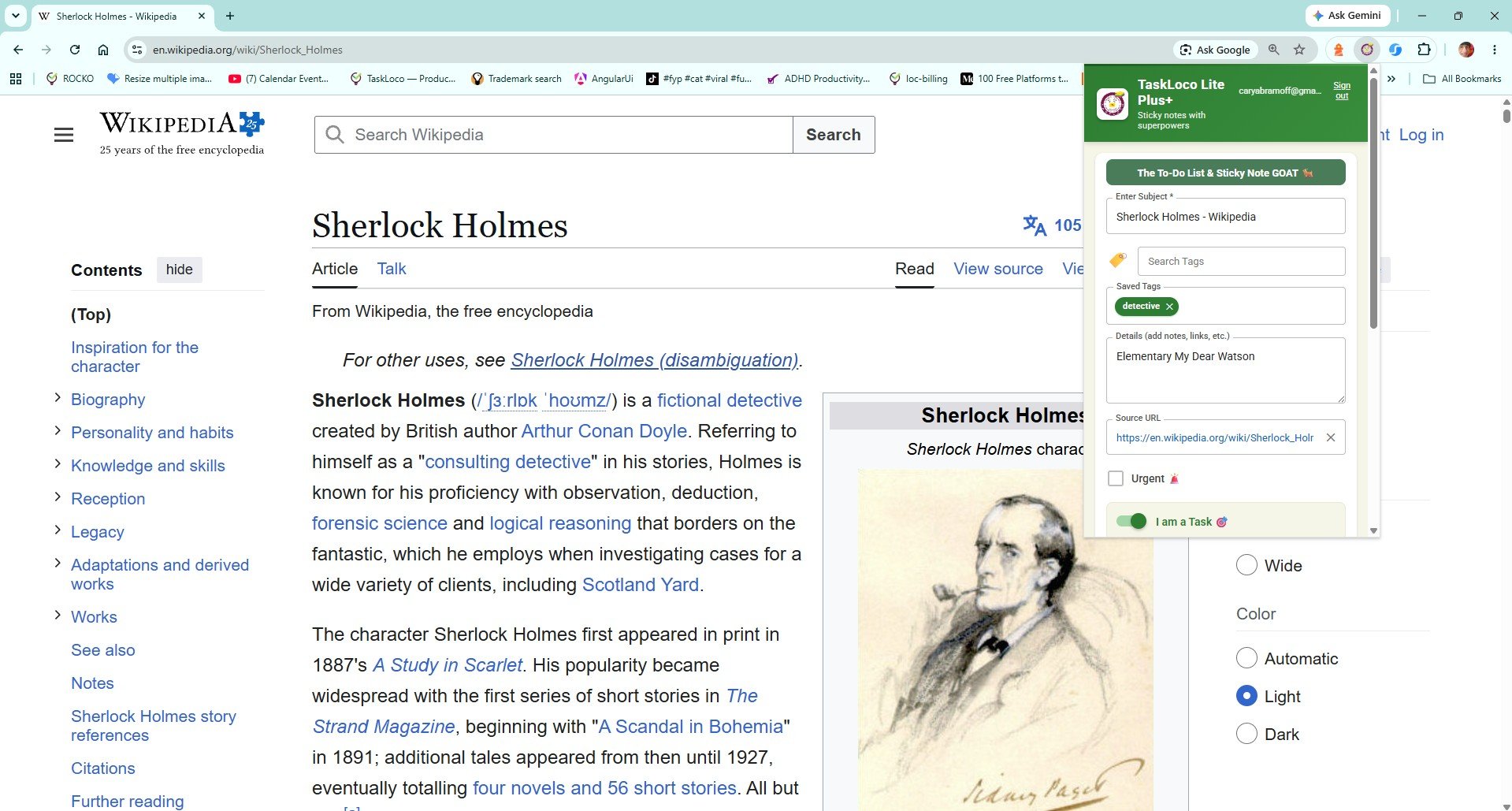
You found a perfect source. You're mid-paragraph, on a deadline, and you do not have time to paste it into a document, format a citation, or remember which tab it was in. So you bookmark it. This guide walks through how to do that well, with or without any tool, and then shows the fastest method if you are working in Chrome.
The Core Problem: Links Without Context Are Useless
A raw URL tells you almost nothing. https://www.ncbi.nlm.nih.gov/pmc/articles/PMC4938315/ could be anything. When you are assembling a bibliography or going back to check a quote, you need the link plus enough surrounding information to know why you saved it in the first place.
The minimum useful unit for an essay source is three things: the page title (so you recognize it), the full URL (so you can return to it or cite it), and a short note about what the source supports in your argument. Everything beyond that — author, date, which section of your essay it belongs to — is a bonus.
This is why copy-pasting links into a Google Doc works better than bookmarks — at least a Doc lets you write a line of context next to each link. But it still requires manual steps every single time, and it creates a separate document you have to manage alongside your essay draft.
How to Save Sources Properly — No App Required
If you want a reliable, low-tech system that works right now, here is a method that costs nothing and requires only tools you already have.
- Create a dedicated section in your essay draft. At the bottom of your working document, add a heading called Sources or Research. Every time you find a page worth keeping, paste the URL there and write one sentence about what it proves or supports.
- Use descriptive anchor text. Instead of a bare URL, hyperlink a short description: "CDC data on adolescent screen time" linked to the actual page. This makes scanning your list fast.
- Group by essay section. If your essay has three arguments, keep three separate source lists. When you are writing a section, you only look at the sources relevant to it.
- Copy the full URL, not a shortened or redirected version. Some sites give you a share link that expires or redirects. Always copy from the address bar.
- Check the URL is stable. Academic databases and news sites sometimes require login or have session-based URLs. If the link requires a login, note that too so you are not confused later.
This system works. The only friction is that you have to switch windows, paste, write context, and repeat for every source. When you are in a research flow, that context-switching adds up.
Organizing Sources by Argument or Topic
Saving links is only half the job. If all your sources pile into one list, you will spend as much time re-reading them as you spent finding them. Organizing by topic or by essay section is what separates a research list you can actually use from a pile of links you will eventually ignore.
A few approaches that work well:
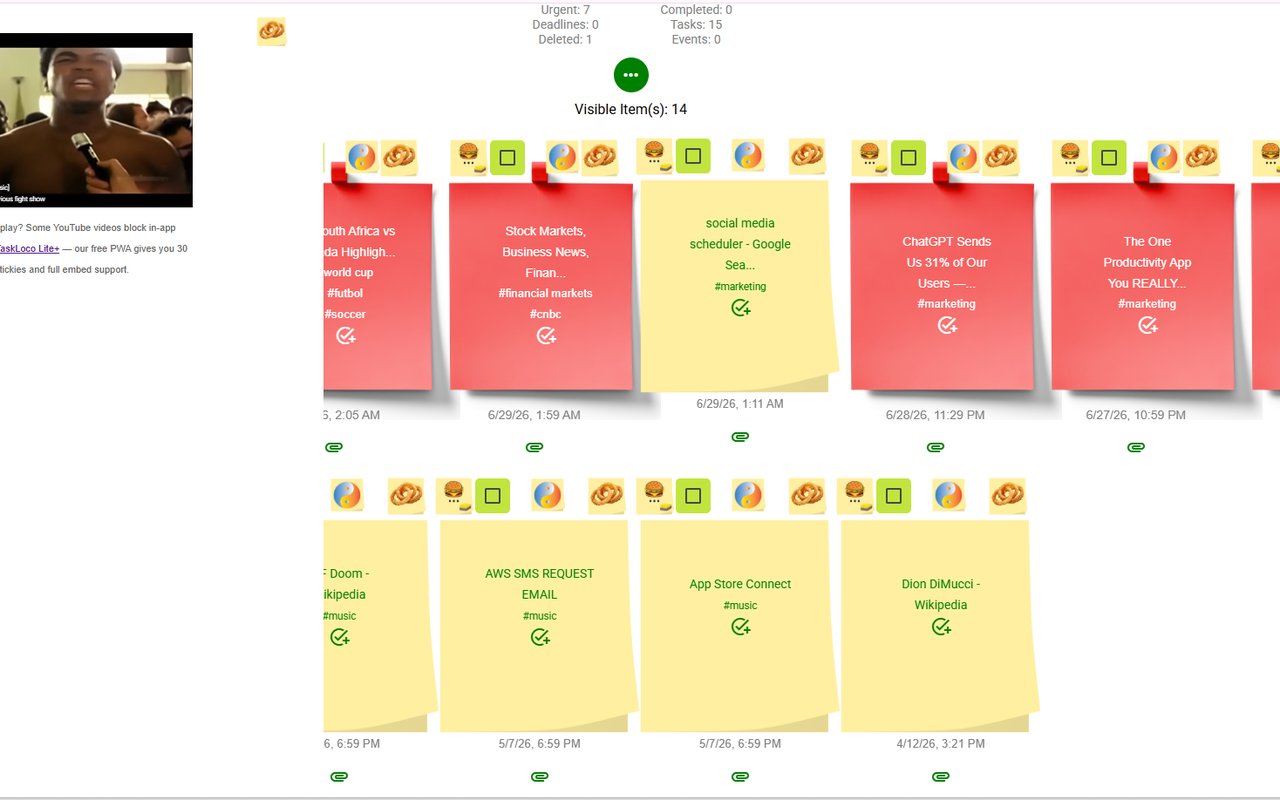
- Tags or labels. Whether you are using a Doc, a notes app, or a web clipper, assign each source one or two tags — the essay section it belongs to, or the claim it supports. Searching for a tag is faster than scrolling.
- Color coding. If your tool supports it, assign a color per argument. Sources for your first claim are one color, sources for your counterargument are another. You can scan visually instead of reading every title.
- Separate notes per source. Rather than one long list, give each major source its own note or card with the link, a summary, and any direct quotes you might use. This mirrors how citation managers like Zotero work, but you can do it in any notes app.
- Archive sources you rejected. Do not delete sources you decided not to use. Move them to a separate section. You may need them for a different section, or a professor may ask why you did not cite something.
The goal is that when you sit down to write a specific paragraph, you can pull up exactly the sources for that paragraph without digging through everything you have ever found.
The Fastest Way to Do This While Browsing: The Sticky Note Web Clipper
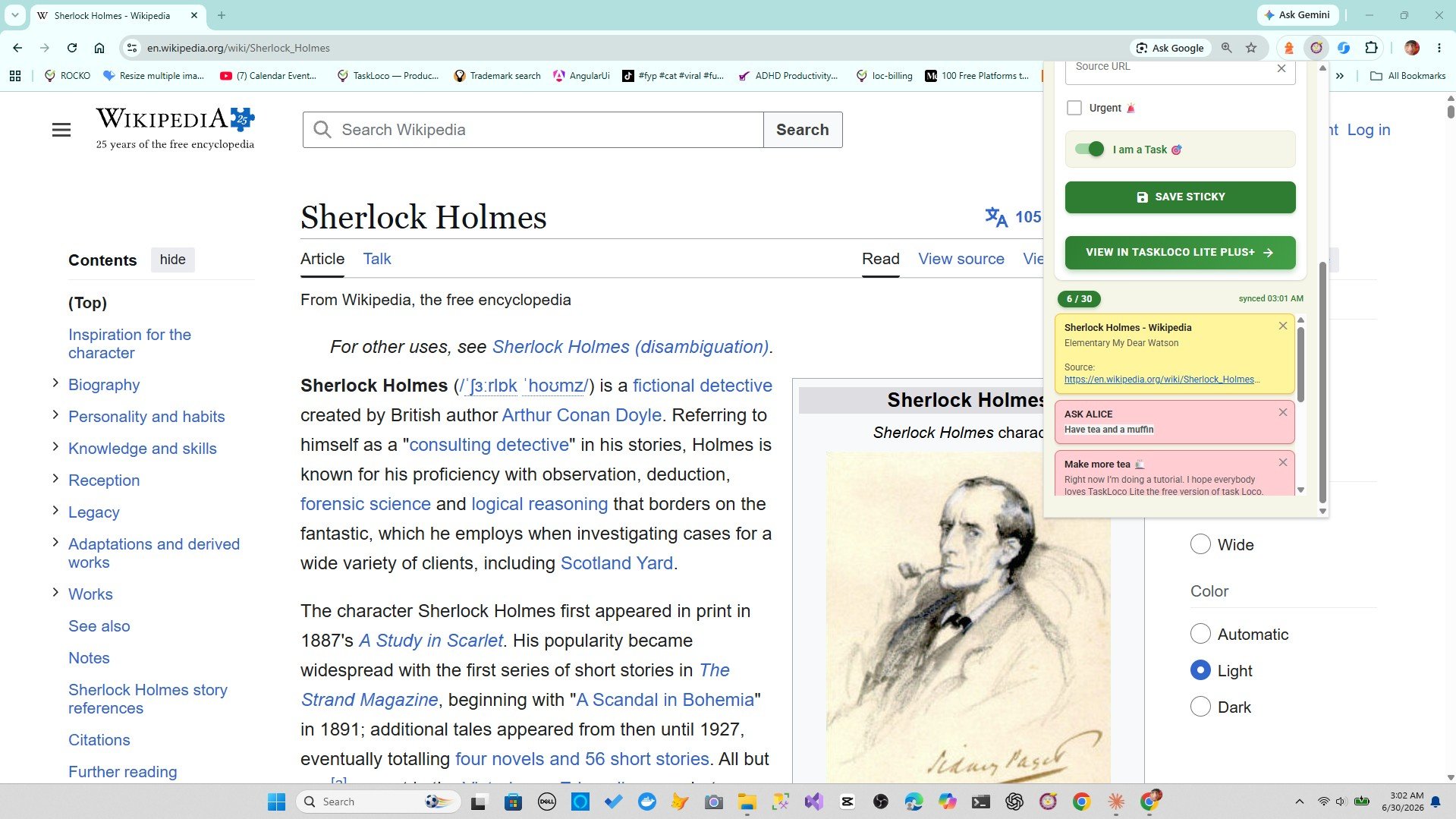
If you are working in Chrome, the Sticky Note Web Clipper (free, by TaskLoco) turns the save-with-context step into a single click. You hit the toolbar icon on any source page and it instantly creates a sticky note with the page title and URL already filled in. No copy-paste, no switching windows, no forgetting.
What makes this useful for essay research specifically:
- The link is always attached — it is built into the note, not something you have to remember to include.
- You can add a quick note about why the source matters right there in the card before you move on.
- Tags let you group sources by essay section or by argument, so finding everything for one paragraph takes seconds.
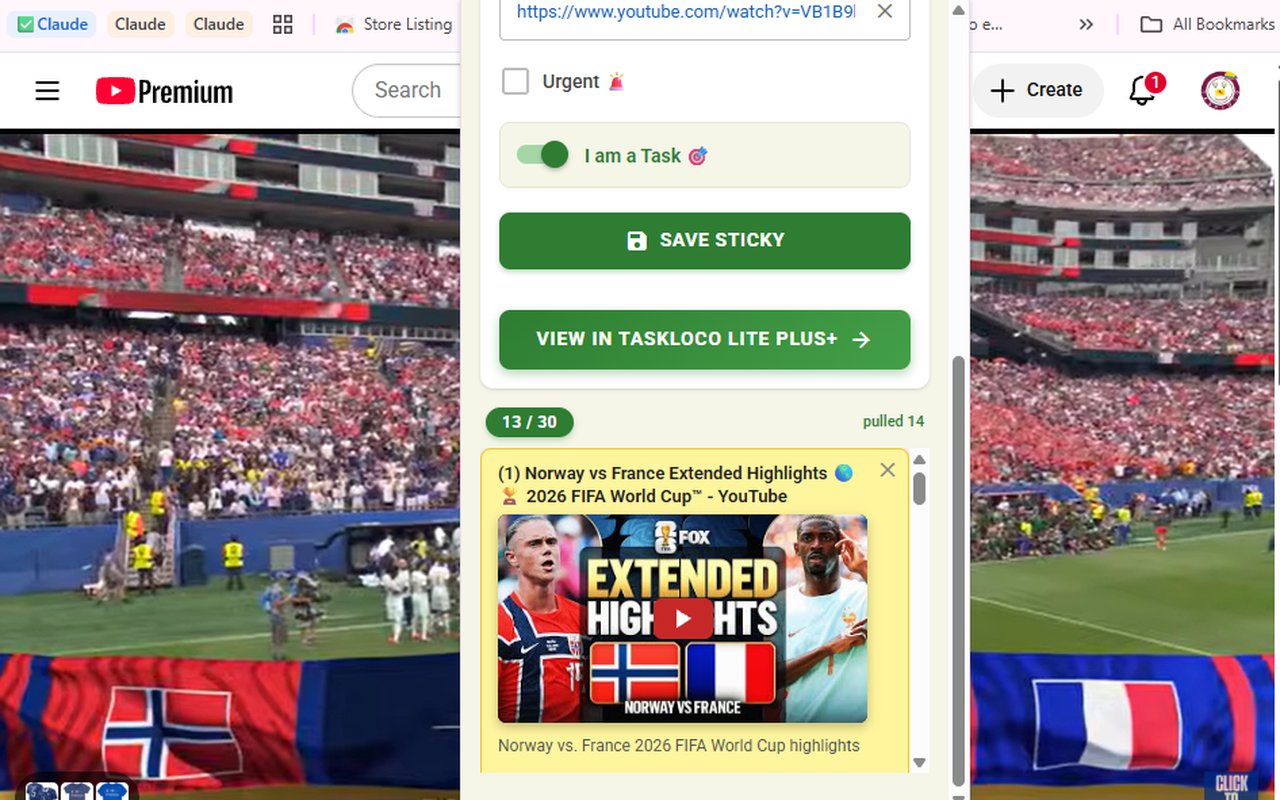
- YouTube videos embed and play inside the note, which matters if you are citing documentary footage, lectures, or interview clips.
- Everything syncs to your phone and desktop through TaskLoco, so your source list is with you whether you are at the library or at home.
The extension is free to install from the Chrome Web Store and takes about thirty seconds to set up with a Google sign-in. If you are in the middle of a research session right now, you can install it and clip your next source before you finish reading this page.
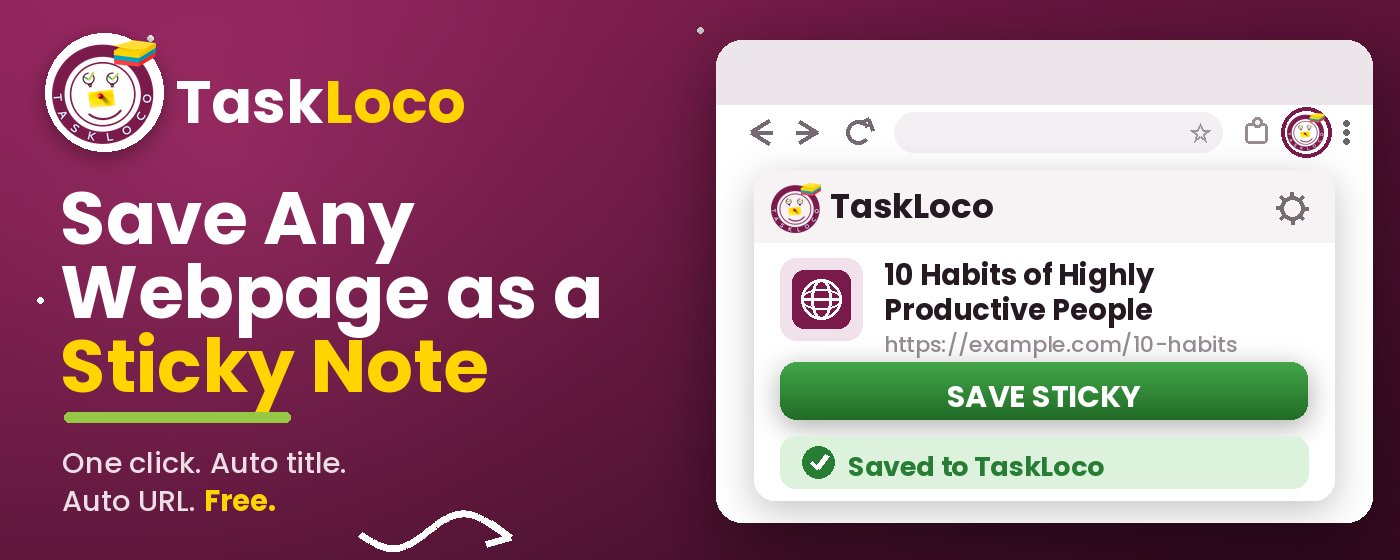
The Sticky Note Web Clipper is free. Install it from the Chrome Web Store, sign in with Google, and every page you clip becomes a sticky note you can find later.
Your clipped notes sync to TaskLoco across Chrome, desktop, iPhone, and Android — also free to start. No credit card to begin.
Get the Free Clipper
Sticky Note Web Clipper
- Free Chrome extension
- One-click save — any page, article, or video
- Title & URL auto-filled
- Tags & search
- Free forever
Synced to TaskLoco
- Sign in free with Google
- Your wall on Chrome, desktop, iPhone, Android
- YouTube videos embed & play in notes
- Visual sticky-note wall
- Free to start
Add It to Chrome — Free
One click saves any page, article, or YouTube video as a sticky note. Title and URL auto-filled.
Add to Chrome — FreeSee TaskLoco in Action
Frequently Asked Questions
What is the best way to save sources for an essay so I do not lose the links?
The most reliable method is to save each source with both the title and the full URL attached, plus a short note about what it supports. The free Sticky Note Web Clipper does this in one click — the title and URL are auto-filled so nothing gets lost or forgotten.
Can I just use browser bookmarks to save my essay sources?
You can, but bookmarks strip almost all context. You end up with a folder of bare page titles and no record of why each source mattered, which section it belongs to, or what it proves. A clipper that lets you add a note and a tag on the spot is much more useful when it is time to write.
How do I keep track of which sources go with which part of my essay?
Tags are the simplest method. As you save each source, tag it with the essay section or argument it supports — for example, 'intro', 'counterargument', or 'climate-data'. The Sticky Note Web Clipper supports tags, and search finds everything with a given tag instantly.
Can I save YouTube videos as sources with the link attached?
Yes. The Sticky Note Web Clipper saves YouTube videos as notes with the video URL auto-filled, and the video embeds directly inside the note so you can play it without leaving your source wall. This is useful for lectures, documentaries, and interview footage you plan to cite.
Is the Sticky Note Web Clipper free?
Yes — the extension is free to install from the Chrome Web Store. TaskLoco, where your notes sync and live, also has a free tier. Sign in with Google and you are ready to start clipping sources immediately.
Will my saved sources be available on my phone when I am not at my computer?
Yes. Notes saved with the Sticky Note Web Clipper sync to TaskLoco, which is accessible on iPhone, Android, and desktop. If you save sources during a library session on your laptop, they will be waiting for you on your phone on the way home.
How is clipping sources different from copying links into a Google Doc?
A Google Doc works but requires you to switch windows, paste the URL, and manually write context every time. The Sticky Note Web Clipper captures the title and link automatically with one click while you stay on the source page, so the friction is low enough that you actually do it for every source instead of just the ones you remember to save.
Born in Brooklyn. Powered by AWS. Your data stays yours.
TaskLoco is available on iPhone, Android, Chrome, and every web browser.