You're three browser tabs deep into research for chapter four when you find the perfect primary source. You think you'll remember it. You won't. By the time you actually need it, the tab is gone, the bookmark is buried in a folder you named "misc," and you're spending twenty minutes hunting for something you already found once.
Long writing projects — books, theses, longform essays, investigative pieces — are research marathons, not sprints. The links you save in week one need to be findable and meaningful in month six. That requires a system, not just a habit. This guide covers exactly how to build that system, from the moment you find a source to the moment you cite it.
Why Raw Bookmarks Fail Long Writing Projects
Browser bookmarks are built for short-term recall — "I want to go back to this site." They are not built for research memory — "I saved this because it contradicts the argument in chapter two, and I need the exact quote on page three." That distinction kills most writers' link organization.
The core problems with bookmarks as a research system:
- No context. A bookmark saves a title and URL. It doesn't save why you cared. Six weeks later, "BBC News — Economy Article" tells you nothing about which angle you were tracking.
- Folder overload. Writers often create nested folder structures that make sense on day one and collapse into chaos by week three. You end up with "Research," "Research 2," and "Research FINAL" doing the same job badly.
- No visual layer. A list of blue links has no spatial logic. Your brain can't scan it the way it can scan a wall of color-coded notes. Research is associative; flat lists are not.
- No cross-device access. If your bookmarks live in Chrome on your laptop, they're not with you when an idea strikes on your phone at 11pm.
None of this means bookmarks are useless. For casual browsing they're fine. But for a project that spans months and hundreds of sources, you need something that captures the why alongside the where.
A Practical System for Saving Research Links
Whatever tool you use, the system matters more than the tool. Here's a method that works for books, theses, longform essays, and any project where sources accumulate over time.
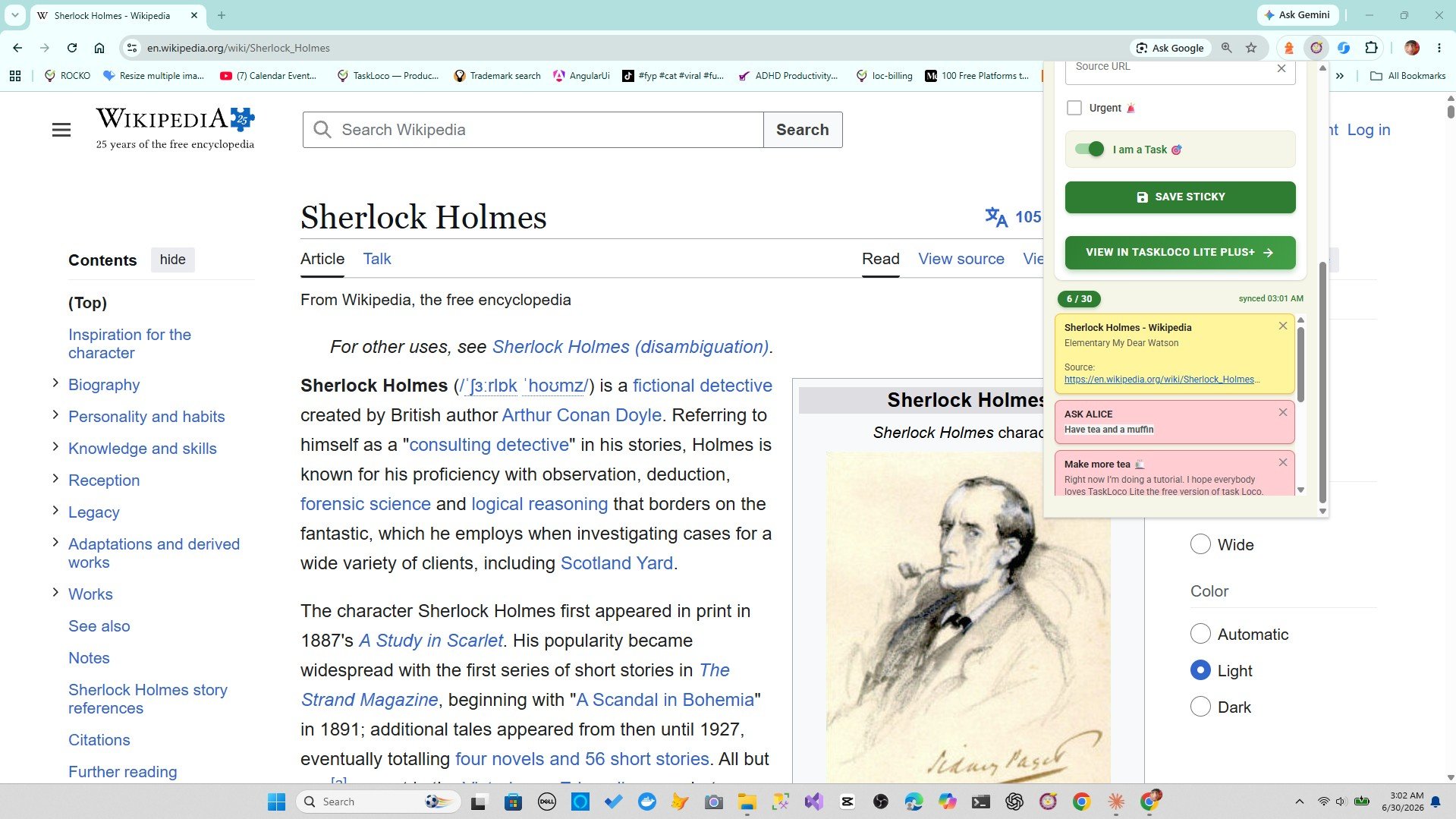
1. Capture immediately, annotate briefly. When you find a useful source, save it the moment you find it — don't rely on tab hoarding. Add a one-line note: what the source is, why it's relevant, and which section or chapter it belongs to. "Background on 1970s inflation — good for intro" is enough. You don't need a full annotation, just enough to jog your memory in three months.
2. Use tags, not folders. Folders force a single hierarchy. Tags let one source belong to multiple contexts. A source about "Cold War diplomacy" might be tagged chapter-3, primary-source, and counterargument simultaneously. That flexibility matters when your thinking evolves and chapters get reorganized.
3. Keep sources close to where you write. The further your research system is from your writing environment, the less you'll use it. If checking your saved links requires opening a separate app, switching windows, or logging into something, you'll start keeping everything in open tabs instead — and that's where sources go to die.
4. Review your saved links at the start of each writing session. Five minutes of scanning what you've collected often surfaces a connection you didn't see when you saved it. Research links are most useful when you encounter them twice: once when you save them, and once when you're ready to use them.
5. Separate source types. Not all saved links are the same. A YouTube interview with a key figure is different from a PDF of a government report, which is different from a blog post with a useful framing. Keeping visual distinctions between source types makes scanning your collection much faster.
How to Handle YouTube, Articles, and Mixed Media Sources
Books and longform projects increasingly draw on mixed media. A documentary clip on YouTube, a podcast transcript on a news site, an academic paper in a PDF viewer, a Reddit thread with firsthand accounts — these are all legitimate research sources, and they each behave differently when you try to save them.
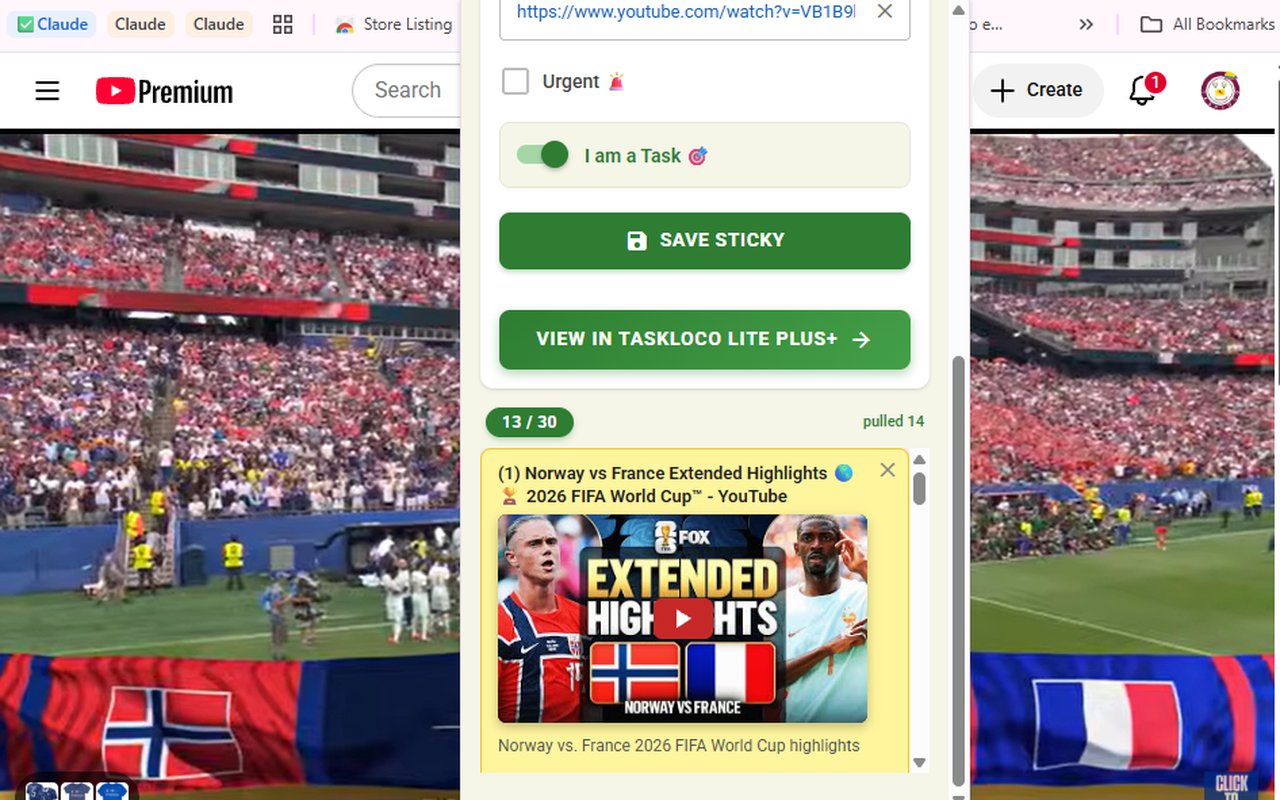
YouTube videos are particularly tricky. A bookmark to a YouTube video gives you a title that often contains no useful information ("Re: Your question about the 1984 election") and a URL that tells you nothing about which moment in a two-hour video was actually relevant. When you save a YouTube video as a sticky note with the Sticky Note Web Clipper, the video embeds directly inside the note and plays there — so you can go back, watch the relevant section, and actually use the source rather than trying to remember what was in it.
News articles and long-form pieces often disappear behind paywalls or get updated after you save them. Capturing the title, URL, and a note about the key argument at the moment you find it means you have a record even if the article changes. If you're in a hurry, one click saves the title and URL automatically — you can add the annotation later.
Research papers and academic sources benefit from tagging by chapter and methodology. When you're in the final stages of writing, being able to search your saved sources by tag is the difference between citing confidently and scrolling through a hundred links hoping something looks familiar.
Using the Sticky Note Web Clipper to Keep Your Project's Sources in Order
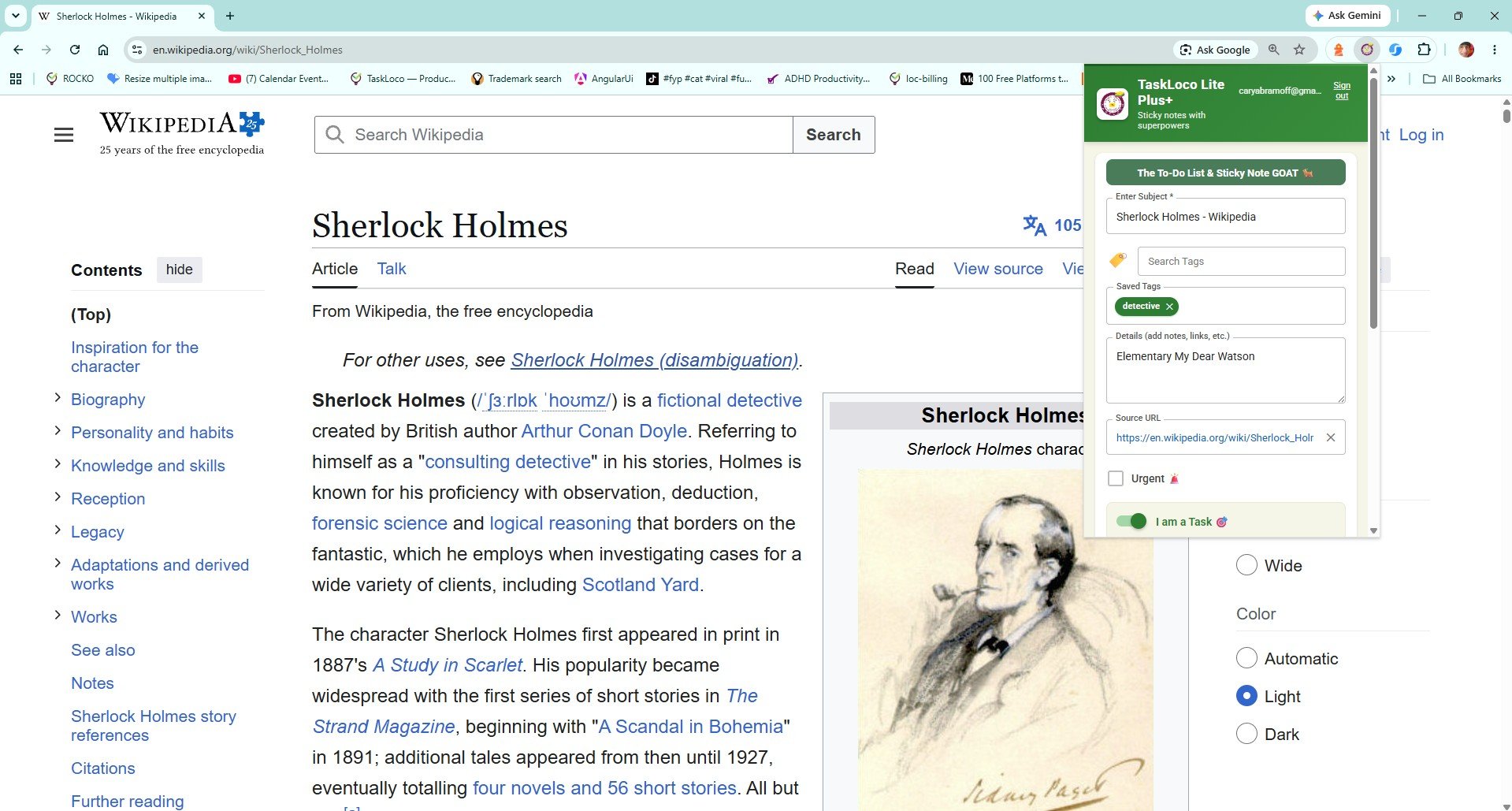
The Sticky Note Web Clipper by TaskLoco is a free Chrome extension built for exactly this kind of workflow. When you're on any webpage — an article, a news source, a YouTube video, a research paper — you click the toolbar icon and the current page is saved as a sticky note with the title and URL already filled in. You add a quick note about why it matters, apply a tag for the relevant chapter, and move on. The whole thing takes about ten seconds.
What makes it useful for long writing projects specifically:
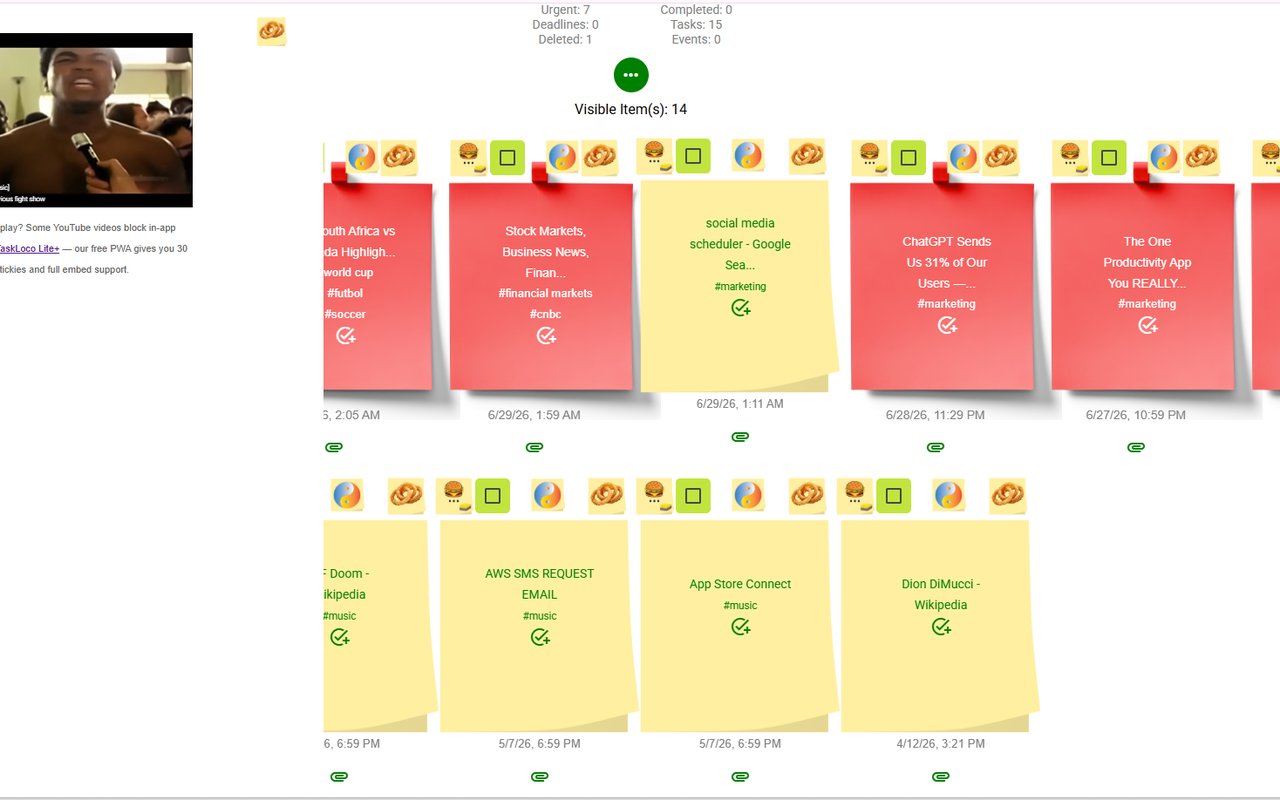
- Visual layout. Your saved notes live on a wall you can scan at a glance, not a flat list of blue links. Color-coded notes by chapter or source type make your research feel navigable rather than overwhelming.
- Tags and search. Tag notes by chapter, theme, or source type. When you need everything you've saved about a particular topic, one search surfaces it instantly.
- YouTube embeds. Videos saved as notes embed and play inside the note. You don't lose your place in a long interview just because you closed the tab.
- Syncs across devices. Notes sync to the free TaskLoco web experience, so what you save on your laptop is on your phone and desktop. Research doesn't stop when you step away from your writing setup.
It's free to install from the Chrome Web Store. Sign in with Google and your first saved note is thirty seconds away. For a writing project that will span months, getting the system right at the start pays off every time you sit down to write a new chapter.
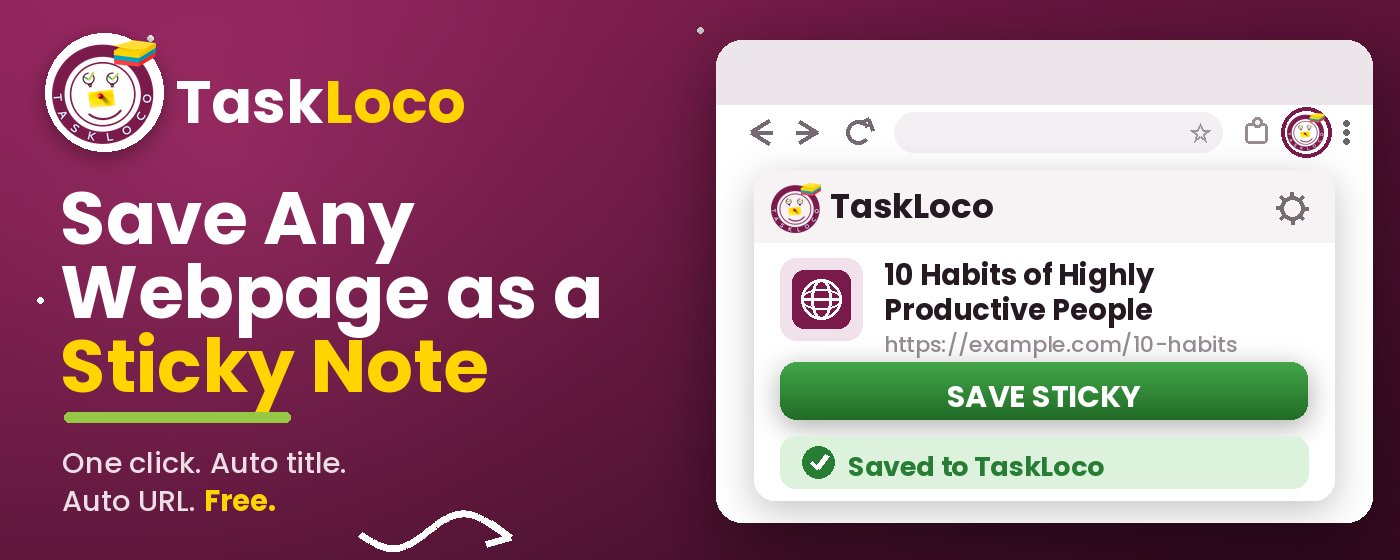
The Sticky Note Web Clipper is free. Install it from the Chrome Web Store, sign in with Google, and every page you clip becomes a sticky note you can find later.
Your clipped notes sync to TaskLoco across Chrome, desktop, iPhone, and Android — also free to start. No credit card to begin.
Get the Free Clipper
Sticky Note Web Clipper
- Free Chrome extension
- One-click save — any page, article, or video
- Title & URL auto-filled
- Tags & search
- Free forever
Synced to TaskLoco
- Sign in free with Google
- Your wall on Chrome, desktop, iPhone, Android
- YouTube videos embed & play in notes
- Visual sticky-note wall
- Free to start
Add It to Chrome — Free
One click saves any page, article, or YouTube video as a sticky note. Title and URL auto-filled.
Add to Chrome — FreeSee TaskLoco in Action
Frequently Asked Questions
What's the best way to organize research links for a book?
Save each source immediately with a brief note about why it's relevant and a tag for the chapter or section it belongs to. Don't rely on memory or tab hoarding — links saved with context in a searchable system are recoverable months later; links saved as raw bookmarks usually aren't.
How do I save YouTube videos as research sources?
The Sticky Note Web Clipper saves any YouTube video as a sticky note with the title and URL auto-filled. The video embeds inside the note and plays there, so you can go back to the exact clip without hunting through a two-hour video again. It's free and installs in seconds from the Chrome Web Store.
Should I use folders or tags for research links?
Tags are almost always better for long writing projects. Folders force a single hierarchy — a source can only live in one place. Tags let the same source belong to multiple chapters, themes, or source types simultaneously. As your project evolves and chapters get reorganized, tagged sources stay findable; folder structures don't.
How do I keep research links accessible on my phone as well as my laptop?
Save your links with the Sticky Note Web Clipper in Chrome. Notes sync to the free TaskLoco web experience, which is available on your phone, desktop, and any browser. What you clip on your laptop is there when you pick up your phone later.
Is the Sticky Note Web Clipper free?
Yes — the extension is completely free. TaskLoco also has a free tier. Install the extension from the Chrome Web Store, sign in with Google, and start saving research links as sticky notes immediately. No payment required.
What should I write in my research notes when I save a link?
Keep it short: what the source is, why it's relevant, and which part of your project it belongs to. "Interview with primary source — supports the counterargument in chapter 4" is enough. You don't need a full annotation at the point of saving — just enough to make the source useful when you come back to it months later.
How is saving links with a web clipper different from bookmarking?
A bookmark saves a title and a URL. A web clipper like the Sticky Note Web Clipper saves a title, URL, your own note, and tags — all in a visual layout you can search. For casual browsing, bookmarks are fine. For a project spanning months and hundreds of sources, the added context and searchability make a real difference.
Born in Brooklyn. Powered by AWS. Your data stays yours.
TaskLoco is available on iPhone, Android, Chrome, and every web browser.