You know the feeling: seventeen tabs open, three of them blinking, and you genuinely cannot remember why you opened half of them. You're not disorganized — you're just using tabs for a job they were never designed to do. A tab is a temporary placeholder, not a saved reference. The moment Chrome crashes or your laptop restarts, it's gone.
The real fix is not a better tab manager. It's a faster way to get pages out of your tab bar and into something you can actually search, browse, and revisit later. This article walks through the practical methods — what works, what doesn't, and why the one-click sticky note approach beats everything else for speed and recall.
Why Tabs Pile Up — and Why Bookmarks Don't Fix It
Tabs accumulate because bookmarking feels like too much work in the moment. You'd have to choose a folder, name the bookmark, remember to go back to that folder later. So instead you leave the tab open as a mental reminder. Then another. Then ten more.
The problem with the classic bookmark solution is that bookmarks are essentially invisible once saved. They sit in a flat list or a nested folder structure that most people never browse. Studies on personal information management consistently find that people bookmark far more than they revisit — because the act of bookmarking doesn't create any meaningful visual cue that pulls you back.
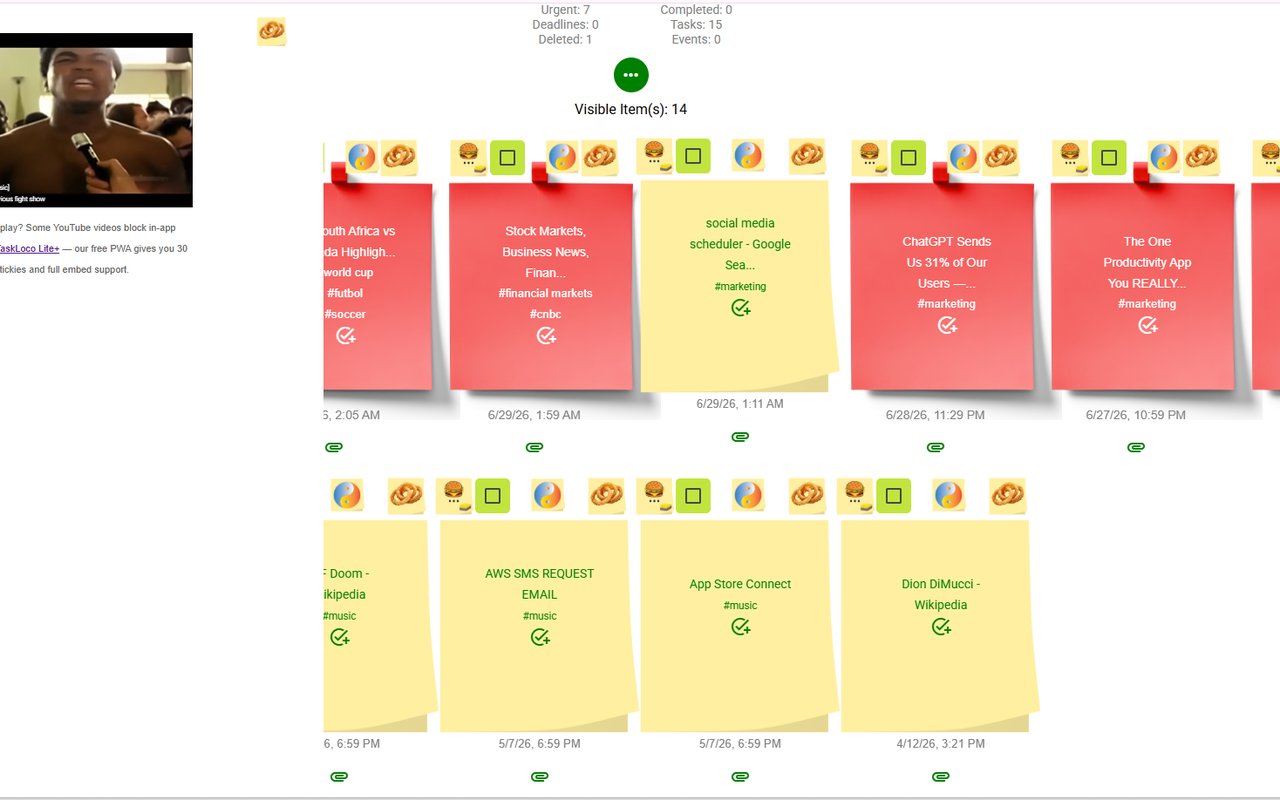
What actually helps is saving pages in a way that keeps context visible: a thumbnail, a title, maybe a tag. Something that makes your saved items look like a wall of references rather than a database row you'll never query.
Practical Methods to Clear Tabs Without Losing Anything
Here are the real options, with honest trade-offs for each:
- Browser bookmarks: Built in, zero setup. Fast enough if you remember to use folders. Terrible for rediscovery — no visuals, no search that surfaces context, no sync to your phone unless you're logged into your browser account and have sync enabled. Works if you're very disciplined; fails most people.
- Read-later apps (Pocket, Instapaper): Great specifically for long-form articles you plan to read once. Less useful for research sources, product pages, YouTube videos, or anything you want to reference repeatedly. They're reading queues, not reference libraries.
- Copy-paste into a notes app: Slow. You have to open the app, create a note, paste the URL, add a title manually. This friction is exactly why people leave tabs open instead.
- Send tab to device (Chrome's built-in): Useful for one-off handoffs but not a filing system. There's no organization, no search, and no persistent wall of saved items.
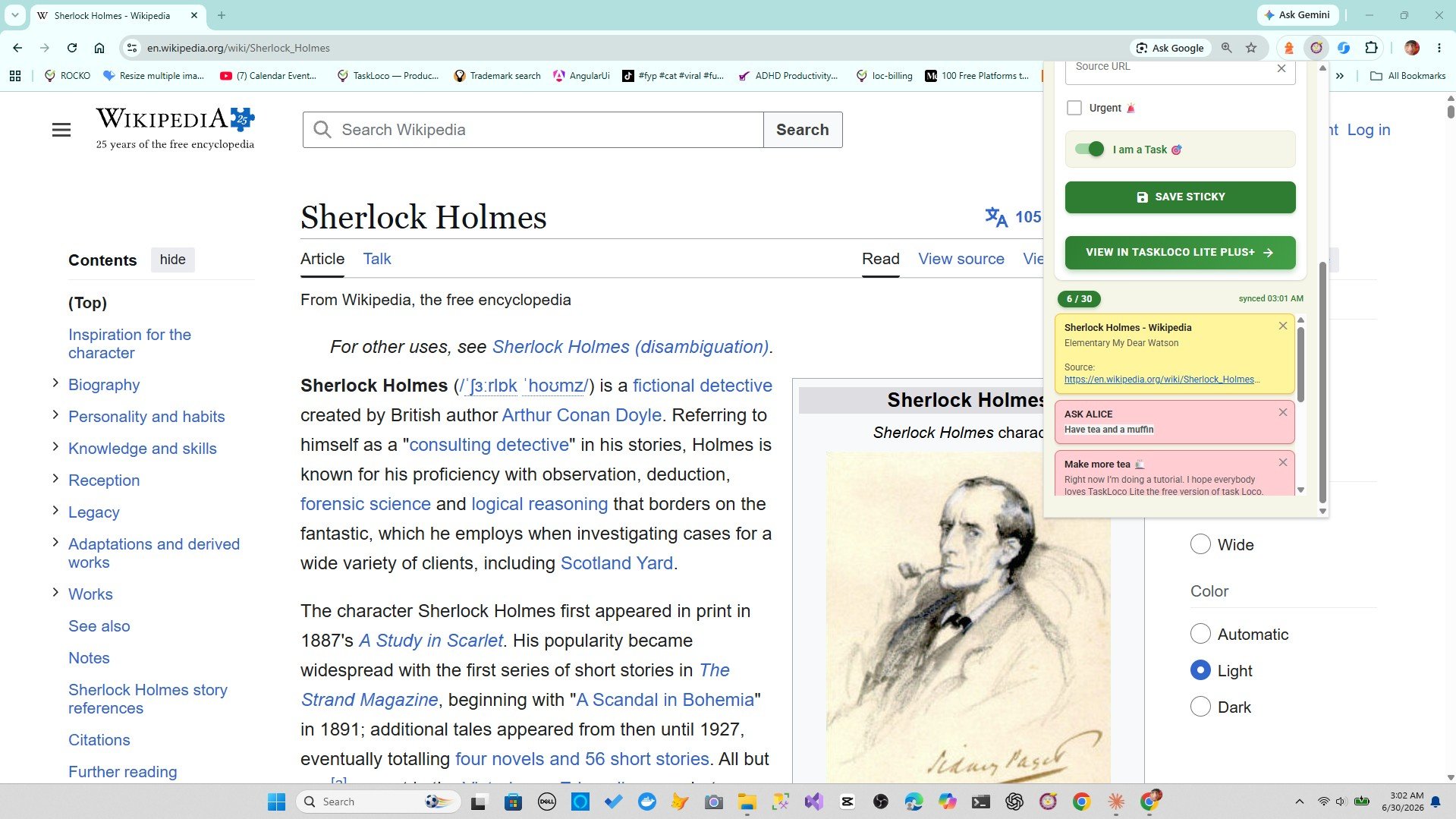
- One-click web clippers: The fastest method. Click a toolbar button, and the current page is saved with its title and URL pre-filled. No friction means you actually do it, which means tabs actually get closed.
The pattern is clear: the more steps involved, the less likely you are to save the page, and the more tabs stay open. Any system that adds friction to saving will be abandoned within a week.
How to Actually Use a One-Click Clipper to Tame Your Tabs
The workflow is simple once it's set up, and it takes about two minutes to get going:
- Install the Sticky Note Web Clipper from the Chrome Web Store — it's free. Pin it to your toolbar so the icon is always one click away.
- Sign in with Google. No new account required.
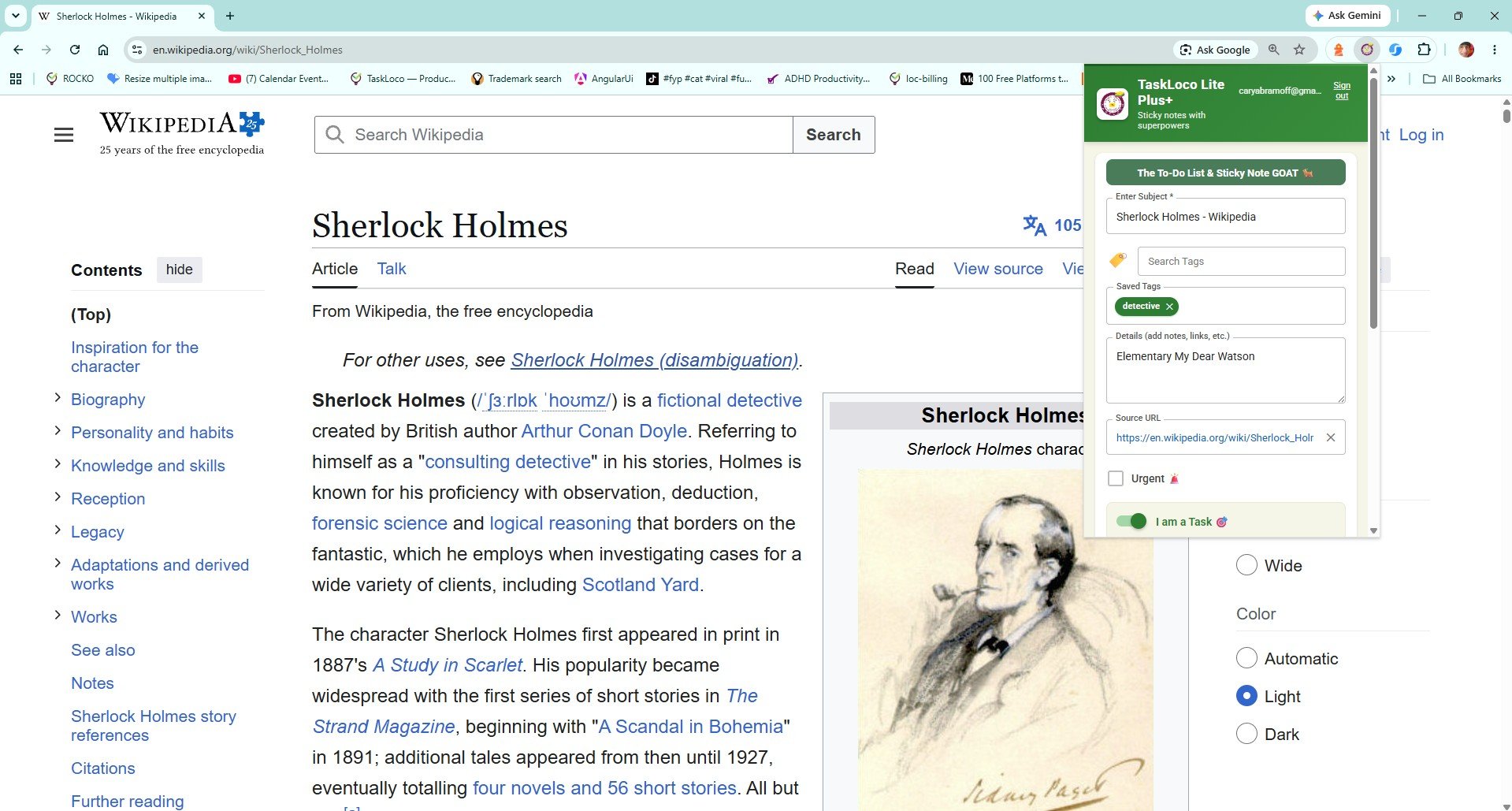
- Open any tab you want to save — an article, a research page, a product listing, a YouTube video — and click the clipper icon. The title and URL fill in automatically. You can add a tag or a quick note before saving, or just hit save and move on.
- Close the tab. This is the part people forget: you have to actually close it. The whole point is getting pages off your screen and into a searchable, visual board where you'll find them again.
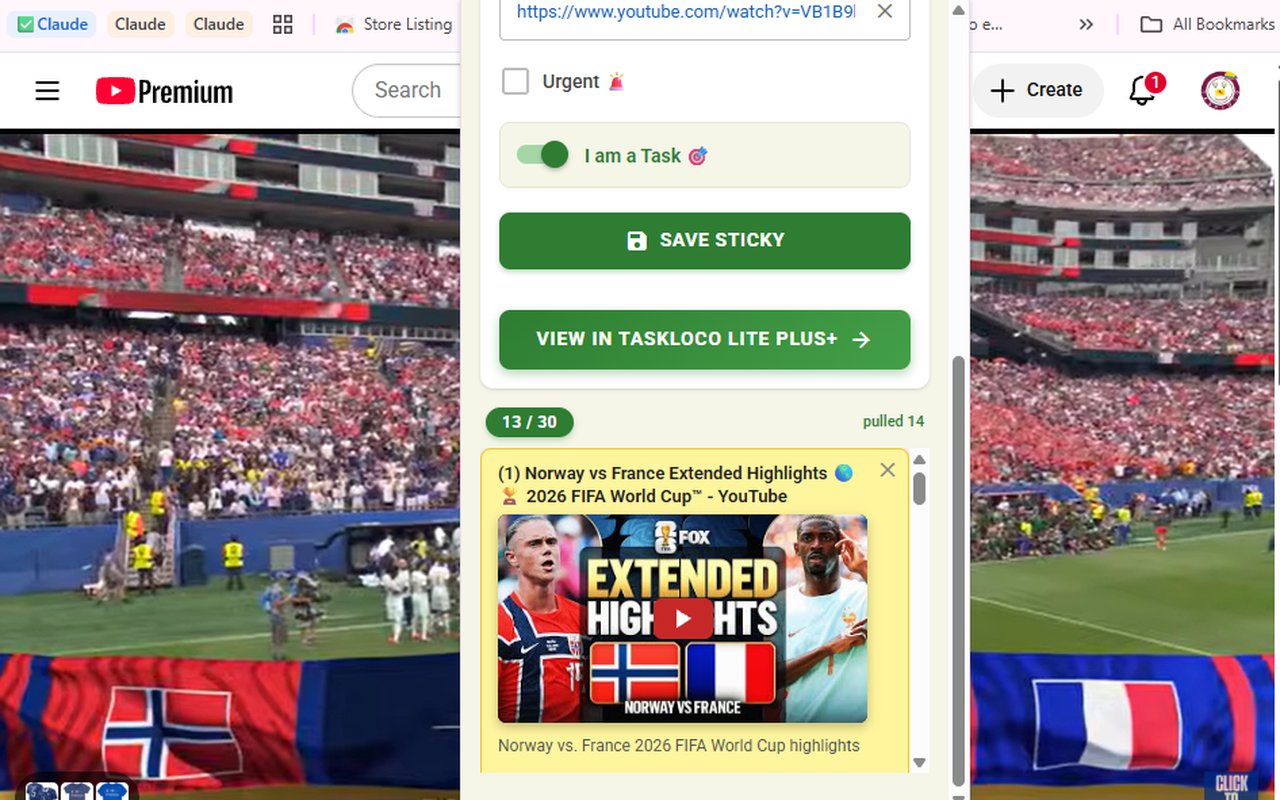
YouTube videos are worth calling out specifically: when you clip a YouTube page, the video embeds inside the note and plays there. You don't need to go back to YouTube to watch it — it's right on your board, thumbnail and all.
Once saved, your notes sync across Chrome, desktop, iPhone, and Android through the free TaskLoco experience. So the article you clipped on your laptop is waiting for you on your phone when you have time to read it later.
Building a Habit That Keeps Tabs Under Control
The tool only works if you use it consistently. A few habits that make a real difference:
- Set a tab limit for yourself — something like five or ten open tabs maximum. When you hit the limit, you're forced to either close something or clip it. This makes the decision active rather than passive.
- Do a tab sweep at the end of each session. Go through every open tab and ask: is this worth clipping, or am I done with it? Clip the keepers, close everything else. Takes two minutes and leaves you with a clean browser.
- Use tags when you clip. Even simple tags like read-later, research, or recipe make it dramatically easier to find things on your board later. The Sticky Note Web Clipper supports tags so you can search by topic across everything you've saved.
- Don't use tabs as a to-do list. If a tab is open because you need to do something with that page, put it in your task manager instead. Tabs are for active browsing; saved notes are for reference.
None of this requires a complicated system. The simpler your saving habit, the more likely it is to stick. A single toolbar click to save, a tag to categorize, and a close button on the tab — that's the entire workflow.
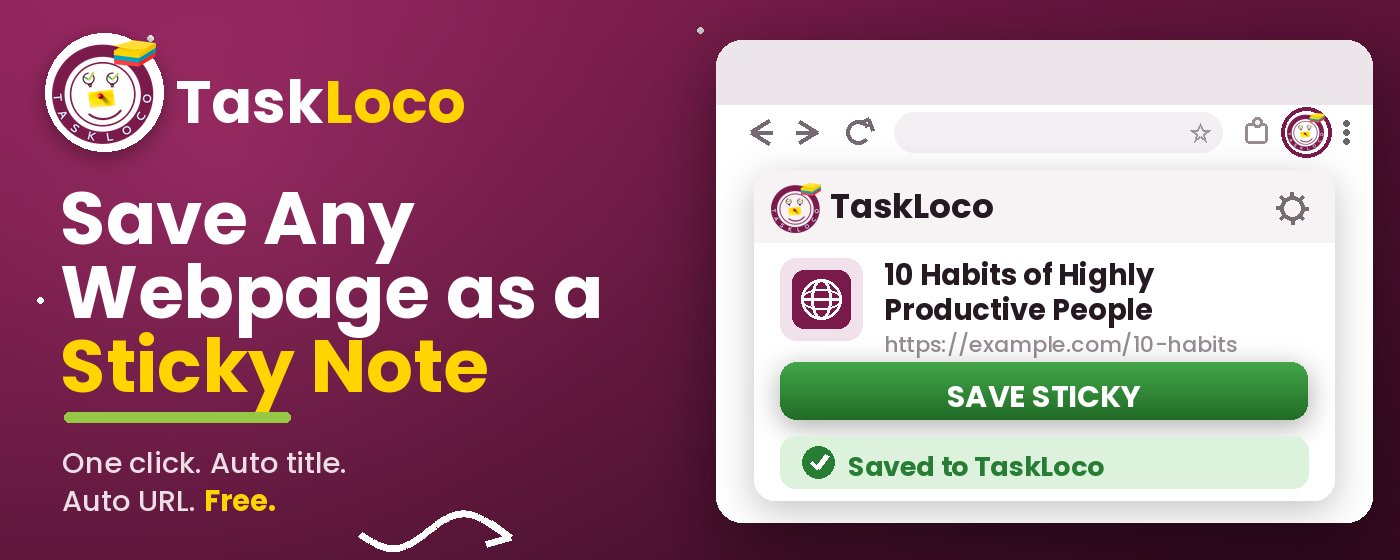
The Sticky Note Web Clipper is free. Install it from the Chrome Web Store, sign in with Google, and every page you clip becomes a sticky note you can find later.
Your clipped notes sync to TaskLoco across Chrome, desktop, iPhone, and Android — also free to start. No credit card to begin.
Get the Free Clipper
Sticky Note Web Clipper
- Free Chrome extension
- One-click save — any page, article, or video
- Title & URL auto-filled
- Tags & search
- Free forever
Synced to TaskLoco
- Sign in free with Google
- Your wall on Chrome, desktop, iPhone, Android
- YouTube videos embed & play in notes
- Visual sticky-note wall
- Free to start
Add It to Chrome — Free
One click saves any page, article, or YouTube video as a sticky note. Title and URL auto-filled.
Add to Chrome — FreeSee TaskLoco in Action
Frequently Asked Questions
What's the fastest way to save a web page without losing your place?
Click the Sticky Note Web Clipper icon in your Chrome toolbar. The page title and URL fill in automatically, you can optionally add a tag, and then you hit save and close the tab. The whole thing takes about three seconds. Your saved note syncs to your phone and desktop so you can pick it back up anywhere.
Will my saved pages still be there if Chrome crashes or I restart my laptop?
Only if you saved them before the crash. Open tabs are not saved anywhere — they're just browser memory. Anything you clip with the Sticky Note Web Clipper is saved to your TaskLoco board, which persists across sessions, devices, and restarts. The only safe page is one you've actually clipped.
Can I save YouTube videos, not just articles?
Yes. Clip any YouTube page and the video embeds directly inside the sticky note. You can play it right there on your board without going back to YouTube. This is especially useful for tutorials or talks you want to watch later — they stay organized alongside your other saved pages.
How is this different from just bookmarking a page?
Bookmarks are stored in a flat list with no visuals and limited search context. Sticky notes give each saved page a visual card with its title and URL, plus any tags you add. Your board looks like a wall of references rather than a hidden database. Most people revisit sticky notes far more often than they revisit bookmarks.
Is the Sticky Note Web Clipper free?
Yes — the extension is completely free. Install it from the Chrome Web Store, sign in with Google, and start clipping. TaskLoco, where your notes are saved, also has a free tier.
Can I access my saved pages on my phone?
Yes. Notes you clip on Chrome sync to your TaskLoco board, which is available on iPhone and Android as well as desktop. So you can clip something at your desk and read it on your phone later without any extra steps.
How do I stop accumulating so many tabs in the first place?
Set a personal tab limit — say, five to ten tabs — and clip anything that goes over it. Do a quick sweep at the end of each browsing session: clip what's worth keeping, close everything else. The Sticky Note Web Clipper makes the clip step fast enough that you'll actually do it rather than leaving tabs open as reminders.
Born in Brooklyn. Powered by AWS. Your data stays yours.
TaskLoco is available on iPhone, Android, Chrome, and every web browser.