You're reading something good — a long article, a research thread, a YouTube explainer — and you have to stop. Maybe your laptop battery dies, maybe you need to leave the house, maybe you just get interrupted. You think you'll find it again. You won't. Or you will, twenty minutes later, after digging through browser history and half-remembered search queries.
Picking up reading across devices is a solved problem, but most people are still solving it the wrong way — leaving tabs open forever, relying on browser sync that only works if you close nothing, or emailing links to themselves. There are better methods, and this page walks through all of them honestly, from built-in browser tools to one-click clippers that turn any page into something you can actually find and read later.
The Built-In Browser Methods (and Where They Break Down)
Every major browser offers some version of cross-device reading. Here's what each actually does, so you can decide what fits your habit:
- Chrome's tab sync: If you're signed into Chrome on both devices, you can go to History → Tabs from other devices and see open tabs from your other machines. It works — but only while those tabs stay open. Close the tab on your laptop and it vanishes from the list. It's also buried enough that most people forget it exists.
- Safari's Handoff and iCloud tabs: On Apple devices, Safari syncs open tabs across iPhone, iPad, and Mac via iCloud. You can swipe up on an iPhone lock screen to grab a page open on your Mac, or find it in the Safari tab overview. This is genuinely good for Apple-only users, but it disappears the moment you close the tab.
- Firefox Sync: Firefox has had tab-to-device sharing for years. Right-click any tab and choose Send Tab to Device — it pushes a notification to your other signed-in Firefox browsers. Clean, quick, and underrated. Still requires Firefox on both ends.
- Edge's Set Aside / Collections: Edge lets you collect tabs into named groups that persist. It's more durable than raw tab sync, though it stays siloed inside Edge and doesn't give you a visual layout or notes.
If you are fully inside one browser and one device family, native sync is genuinely worth using. Set it up, sign in, and it costs you nothing. But if you switch between Chrome on a laptop and Safari on an iPhone, or if you want something that survives a closed tab, you need a different approach.
Methods That Actually Work Across Any Device
These approaches work regardless of which browser you use where, and they don't evaporate when you close a tab.
1. Email the link to yourselfEmbarrassingly effective. Open your email app, paste the URL, send. It's searchable, it lives in every email client on every device, and there's no setup. The downside is that it scales terribly — after a month your inbox contains dozens of bare URLs with no context, and you have no idea which ones you actually read.
2. A notes app (Apple Notes, Google Keep, Notion, etc.)Copy the URL, open your notes app, paste into a note. This works and syncs well. The friction is real though — every save is four or five steps, which means you often don't bother. Notes apps are also designed for text you write, not pages you want to revisit, so links tend to get lost in longer notes.
3. Read-later apps (Pocket, Instapaper)These were built exactly for this problem. Install a browser extension, click it to save, and the article is queued in a clean reading list on any device. Pocket in particular strips out ads and reformats text for mobile reading. If your goal is purely reading articles later, these are excellent. They're less suited to saving research sources, YouTube videos, or pages that aren't articles — a product page or a Google Maps location doesn't reformat into a nice reading view.
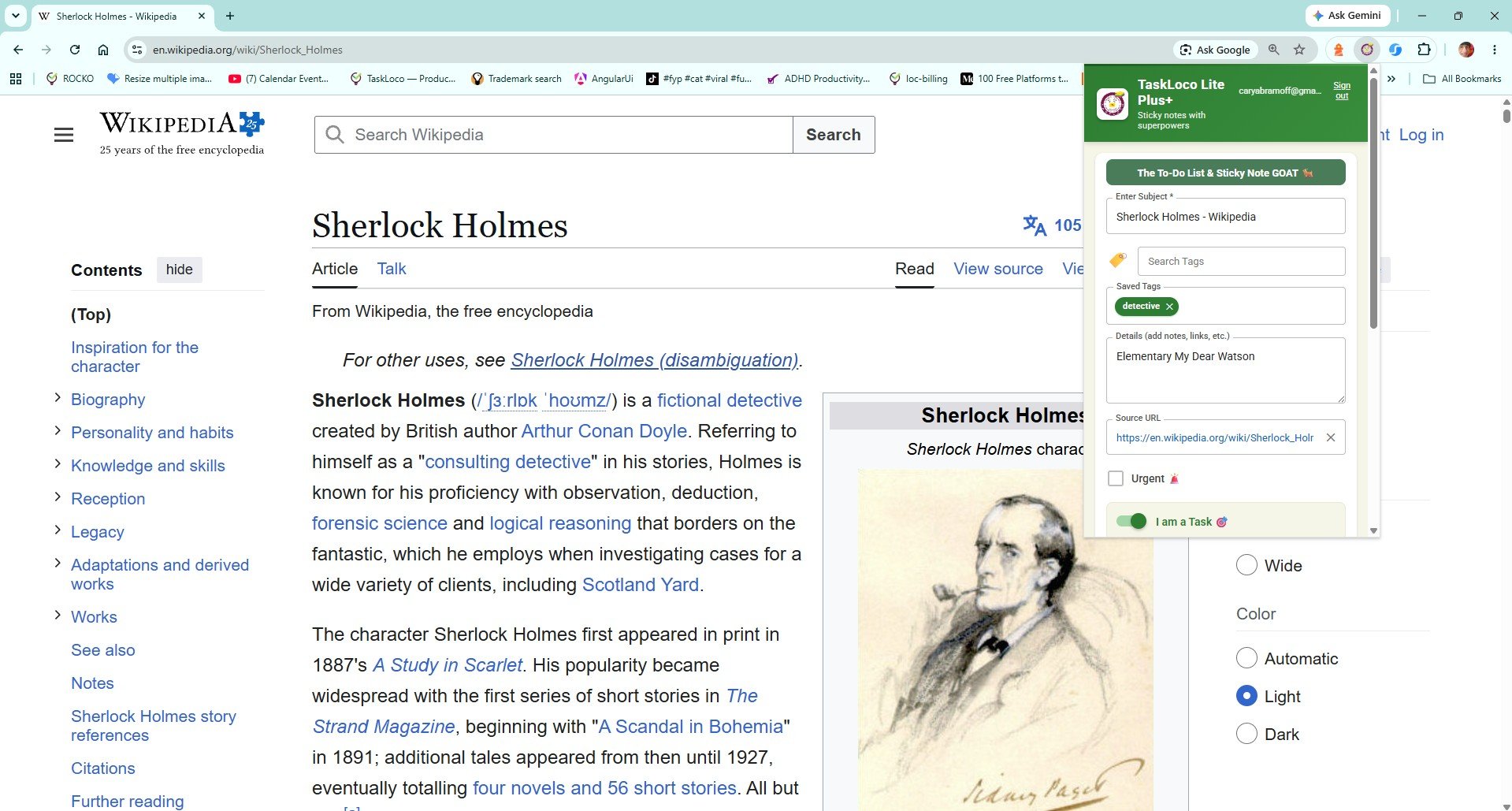
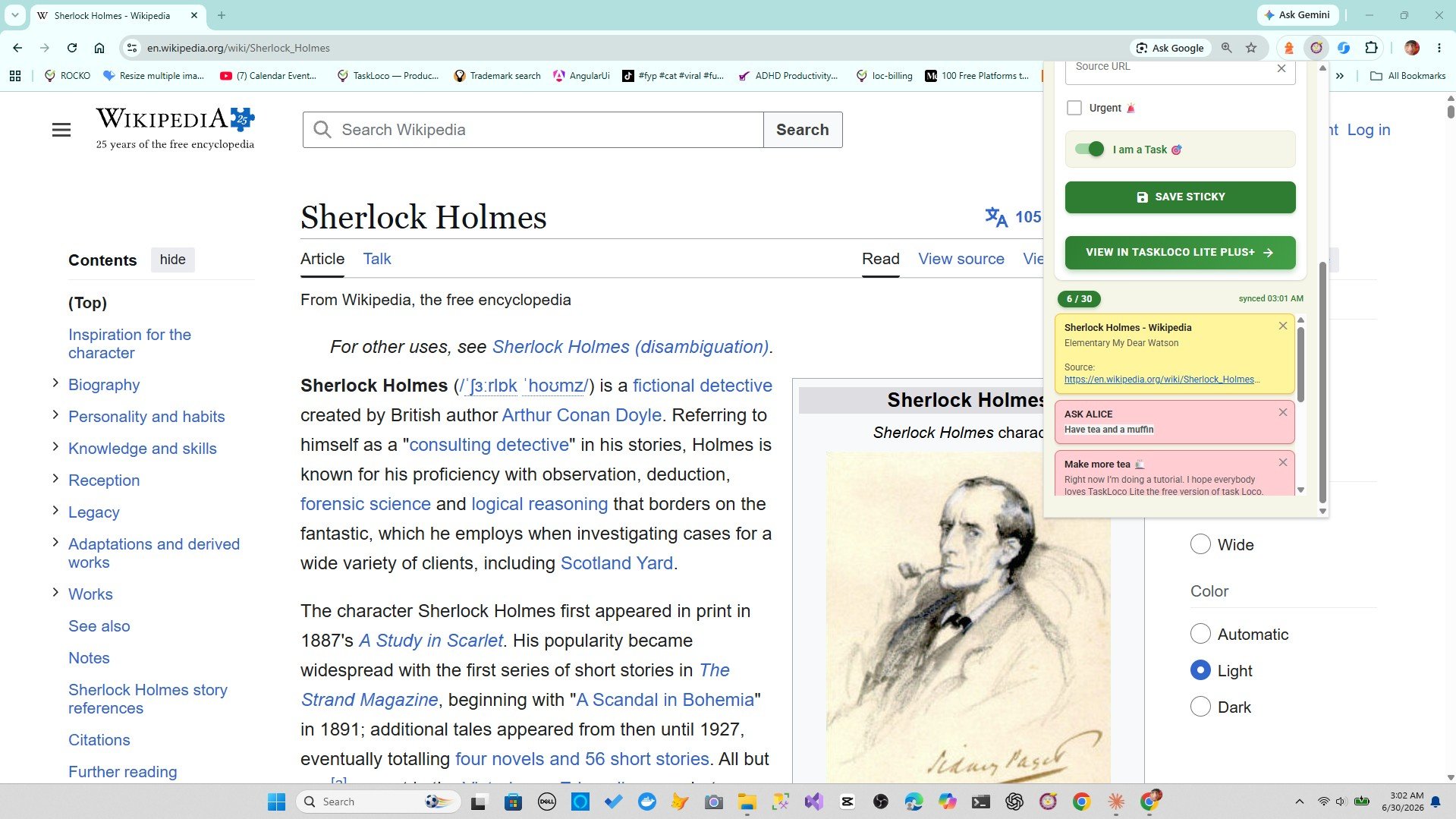
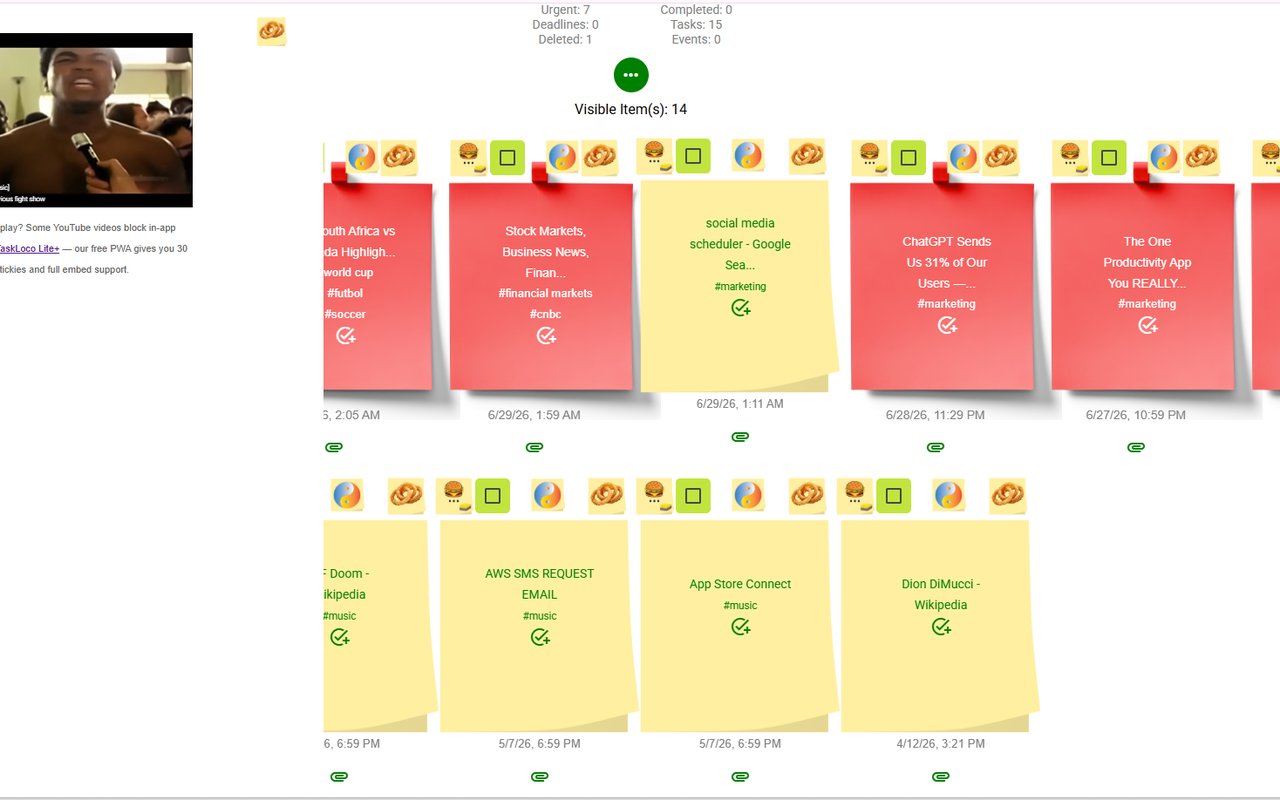
4. A visual web clipperThis is the method that gives you the most flexibility. A clipper saves the page itself — title, URL, and optionally a visual card — rather than reformatting or stripping content. You can save anything: articles, YouTube videos, research pages, product listings. The saved item stays exactly what it was. The Sticky Note Web Clipper takes one click in Chrome and saves the current page as a sticky note with the title and URL already filled in, then syncs it to a visual wall you can open on your phone or desktop.
How to Set Up a Reliable Save-and-Resume Habit
The method doesn't matter much if the habit breaks down at the moment you need it. Here's how to make cross-device reading actually work in practice:
- Make saving take one step, not five. The reason people leave tabs open is that closing a tab feels like losing the thing, and saving it feels like work. A browser extension that saves with one click removes that friction entirely. When the save takes less effort than leaving a tab open, you'll actually do it.
- Save with enough context to remember why you saved it. A bare URL tells you nothing in two weeks. A sticky note that shows the article title and the page it came from is enough to jog your memory. If your save method strips all context, you'll end up with a list of links you don't recognize.
- Keep saved items somewhere with search. Browser bookmark folders sound organized until you have 200 of them and can't remember which folder you put anything in. A search bar that scans titles and tags across everything you've saved is worth more than any folder structure.
- Sync should be automatic, not a button you press. If resuming reading on your phone requires you to manually export or copy anything, it won't happen consistently. Choose a method where the sync is background and automatic.
The physical habit: when you're about to close your laptop or leave your desk, take three seconds to clip or save the page you were reading. Don't leave tabs open as a reminder system — they accumulate, slow your browser down, and don't tell you anything useful when you have forty of them. Save it, close it, and trust the system.
One-Click Saving with the Sticky Note Web Clipper
If you're looking for the fastest way to implement the save-and-resume habit described above, the Sticky Note Web Clipper is worth a try — it's a free Chrome extension by TaskLoco that turns any open tab into a visual sticky note in one click.
Here's exactly what happens when you use it: you're on a page you want to come back to, you click the extension icon in your Chrome toolbar, and a sticky note is created with the page title and URL already filled in. You don't type anything. You don't open a separate app. The note appears on your TaskLoco wall, which you can open on your phone or another computer — it syncs automatically through the free TaskLoco web experience.
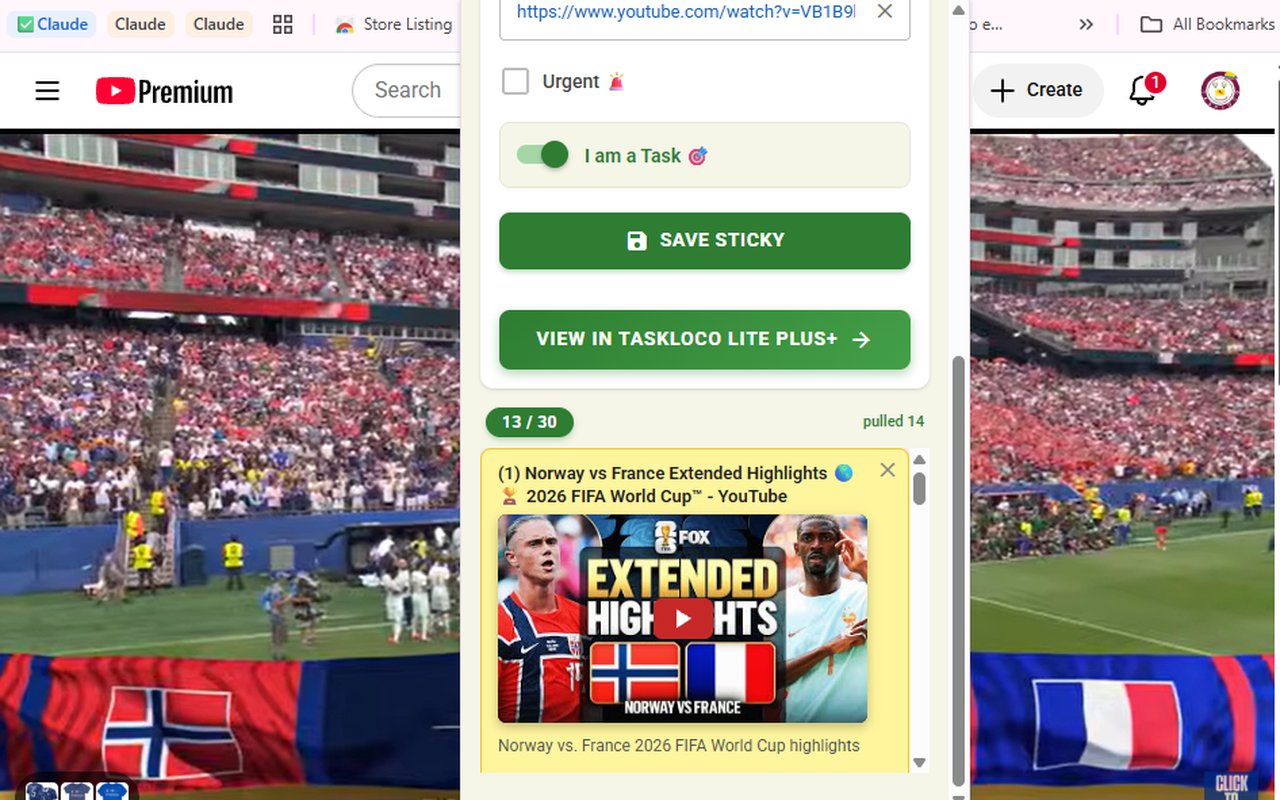
YouTube videos are worth mentioning specifically: when you save a YouTube page, the video embeds directly inside the sticky note and plays there. You don't have to click through to YouTube to pick up where you left off.
- Works for articles, news pages, research sources, YouTube videos, product pages, or any URL
- Title and URL auto-fill — no typing required
- Saved notes are searchable and can be tagged
- Syncs to phone (iPhone and Android) and desktop through TaskLoco
- Free to install and use — sign in with Google
If you already use Pocket or a read-later app and it's working for you, you don't need to switch. But if you find yourself constantly losing tabs, emailing links to yourself, or bookmarking things you never find again — a one-click visual clipper is a faster solution and takes about thirty seconds to set up.
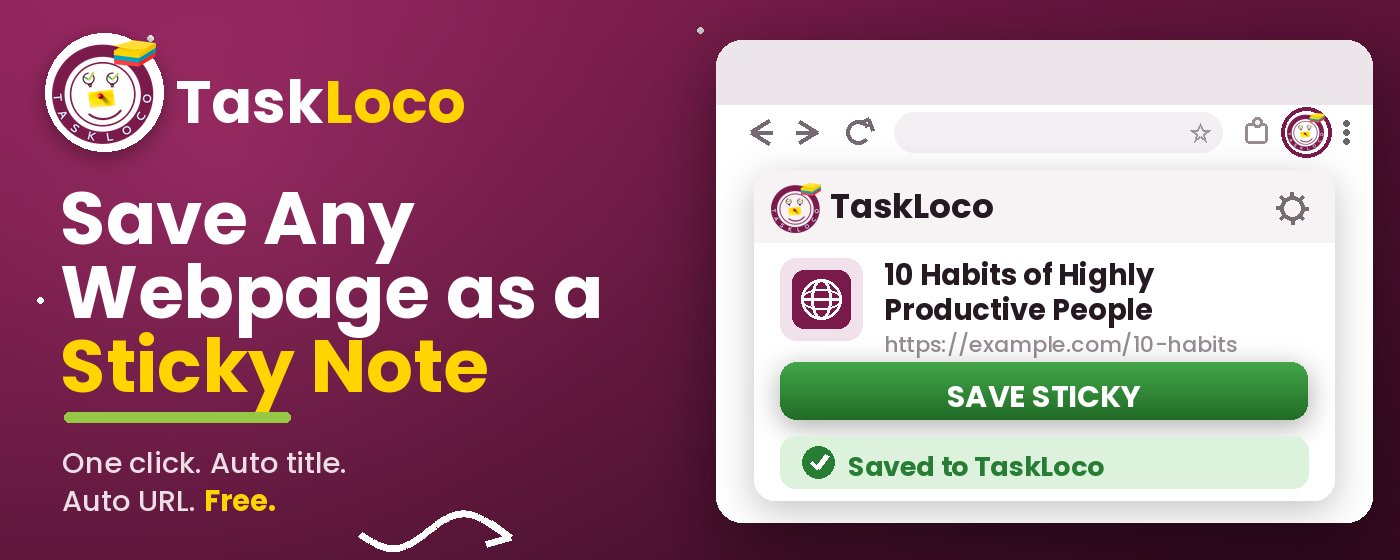
The Sticky Note Web Clipper is free. Install it from the Chrome Web Store, sign in with Google, and every page you clip becomes a sticky note you can find later.
Your clipped notes sync to TaskLoco across Chrome, desktop, iPhone, and Android — also free to start. No credit card to begin.
Get the Free Clipper
Sticky Note Web Clipper
- Free Chrome extension
- One-click save — any page, article, or video
- Title & URL auto-filled
- Tags & search
- Free forever
Synced to TaskLoco
- Sign in free with Google
- Your wall on Chrome, desktop, iPhone, Android
- YouTube videos embed & play in notes
- Visual sticky-note wall
- Free to start
Add It to Chrome — Free
One click saves any page, article, or YouTube video as a sticky note. Title and URL auto-filled.
Add to Chrome — FreeSee TaskLoco in Action
Frequently Asked Questions
How do I continue reading an article on my phone that I started on my laptop?
The most reliable way is to save the article before you leave your laptop rather than leaving the tab open. A one-click web clipper like the free Sticky Note Web Clipper saves the page instantly and syncs it to your phone through TaskLoco. Open TaskLoco on your iPhone or Android, find the note, and tap the link to pick up exactly where you left off.
Does Chrome sync open tabs to my phone?
Yes — if you're signed into Chrome on both your laptop and phone, you can find open tabs from other devices under History in Chrome mobile. The catch is that those tabs only appear while they remain open on the original device. Close the tab on your laptop and it disappears from the list. For anything you want to reliably come back to, saving it explicitly is more durable than relying on open-tab sync.
What is the best read-later app for saving articles across devices?
Pocket and Instapaper are well-established read-later apps that reformat articles into clean reading views and sync across devices. They work best for text articles. If you also want to save YouTube videos, research sources, product pages, or any URL — not just reformattable articles — a visual web clipper like the free Sticky Note Web Clipper is more flexible. It saves anything in one click as a sticky note with the title and URL preserved.
Can I save a YouTube video to watch later on a different device?
Yes. With the Sticky Note Web Clipper, clicking the toolbar icon while on a YouTube page saves it as a sticky note with the video embedded directly inside the note. You can open TaskLoco on your phone or another computer and play the video from there — no need to search for it again on YouTube.
Why shouldn't I just leave tabs open to come back to them?
Leaving tabs open works until it doesn't — browser crashes, restarts, or updates can wipe them without warning. More practically, having dozens of tabs open provides no useful context about what each one is or why you saved it. Saving a page as a titled, searchable note takes one click and gives you something you can actually find and remember two weeks later.
Is the Sticky Note Web Clipper free?
Yes — the extension is free, and TaskLoco has a free tier. Install it from the Chrome Web Store, sign in with Google, and start clipping any page in one click.
Does the Sticky Note Web Clipper work on iPhone?
The clipper itself is a Chrome extension, so you install it on Chrome on your laptop or desktop. Pages you save sync automatically to TaskLoco, which you can access on your iPhone and Android. So you clip on Chrome, then open and read on your phone — the two sides of the cross-device workflow.
Born in Brooklyn. Powered by AWS. Your data stays yours.
TaskLoco is available on iPhone, Android, Chrome, and every web browser.