Most reading lists die the same death. You bookmark something on your laptop, open your phone on the commute, and the link is nowhere. Or you paste URLs into a notes app, and six weeks later you're staring at a wall of raw text with no memory of why any of it mattered. The list exists — it just doesn't work.
A reading list that survives real life needs to be frictionless to add to, easy to scan visually, and genuinely available wherever you are. This guide covers how to build exactly that — starting with habits and tools you can use right now, with or without any particular app.
Why Most Reading Lists Fail (and What a Working One Looks Like)
The problem almost never starts with forgetting to read — it starts with a broken capture habit. If saving a link takes more than a few seconds, you skip it when you're in the middle of something. And if your saved items don't have enough context when you come back, you ignore them. Both problems snowball fast.
A reading list that holds up has three non-negotiable properties:
- Zero-friction capture. You should be able to save a page mid-flow without losing your train of thought. A keyboard shortcut, one tap, or one click — that's the ceiling.
- Visual scannability. A plain list of URLs tells you nothing. Titles, thumbnails, or tags let you quickly find the piece you actually wanted to revisit without scrolling through fifty raw links.
- Device sync that just works. If you save something at your desk and can't see it on your phone — or vice versa — the list is already broken.
None of this requires a particular app. You can get surprisingly far with native browser tools — as long as you use them intentionally.
How to Build a Cross-Device Reading List Without Any New Tools
Before introducing any extension or third-party service, here's what works with the tools most people already have:
Use a browser that syncs natively. Chrome, Firefox, and Safari all sync bookmarks across devices when you're signed in. This is genuinely good enough for people who only need a simple list. The catch: bookmarks are invisible by default on mobile and easy to lose in nested folders. Use a single dedicated folder called Reading and keep everything flat inside it — no sub-folders.
Keep a shared note instead of a bookmark folder. Apple Notes, Google Keep, and Notion all sync in real time. Open one note, call it your reading list, and paste links as you go. Add a one-line comment after each link explaining why you saved it — this single habit makes lists ten times more revisitable.
Use your email inbox as a read-later inbox. Email yourself the link with a subject line that describes why it matters. This sounds low-tech because it is — but your inbox is something you actually open on every device. Search finds things instantly. The real downside is that read-later links compete for attention with everything else in your inbox.
- For heavy readers: combine a browser-synced bookmark folder for quick saves with a shared note for longer articles you annotate.
- For occasional readers: a single shared note is enough. Don't over-engineer it.
- For video-heavy research: bookmarks fall flat because a URL gives you no preview. This is where a visual tool pays off.
When You're Ready for One-Click Saving Across Every Device
Once your reading list grows — or once you're saving from multiple types of sources like YouTube videos, long-form articles, and research pages — the copy-paste approach starts costing you real time. A browser extension that captures in one click removes the biggest point of friction in any save-to-read-later workflow.
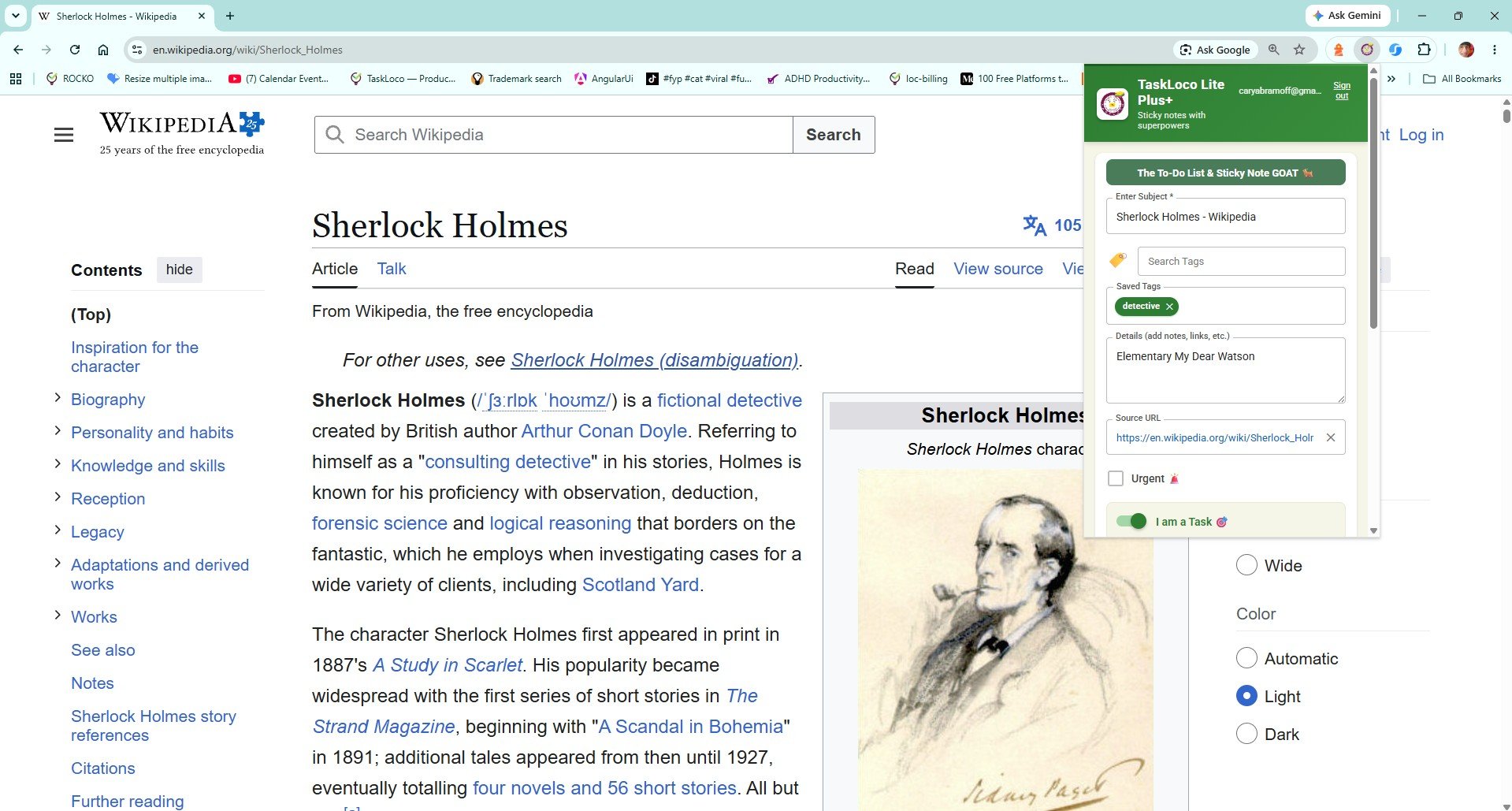
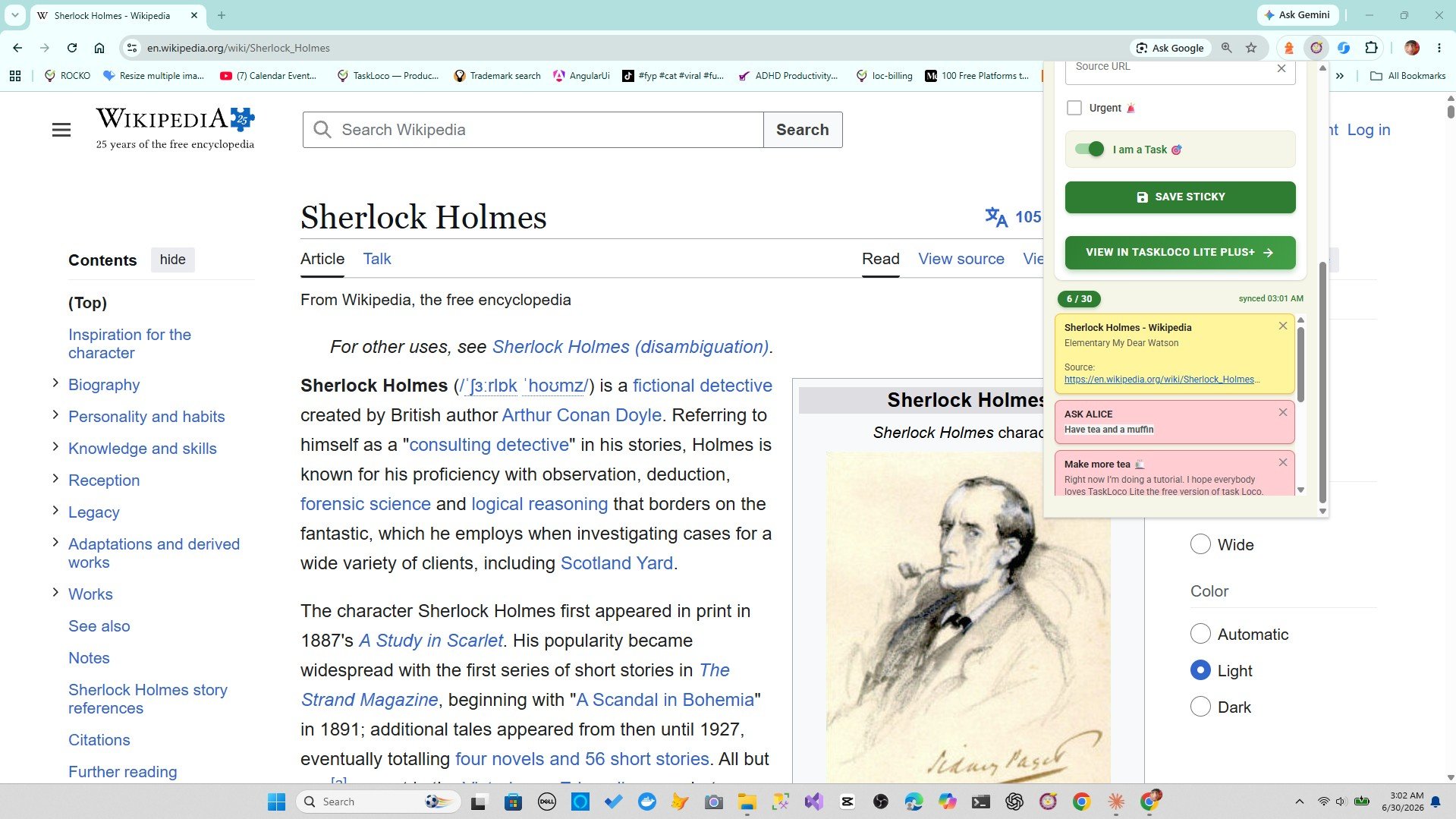
The Sticky Note Web Clipper is a free Chrome extension that saves the current tab as a visual sticky note the moment you click the toolbar icon. The page title and URL fill in automatically — you don't type anything. That note lands on your TaskLoco wall, which syncs across Chrome, desktop, iPhone, and Android.
A few things make it different from a plain bookmark or a generic clipper:
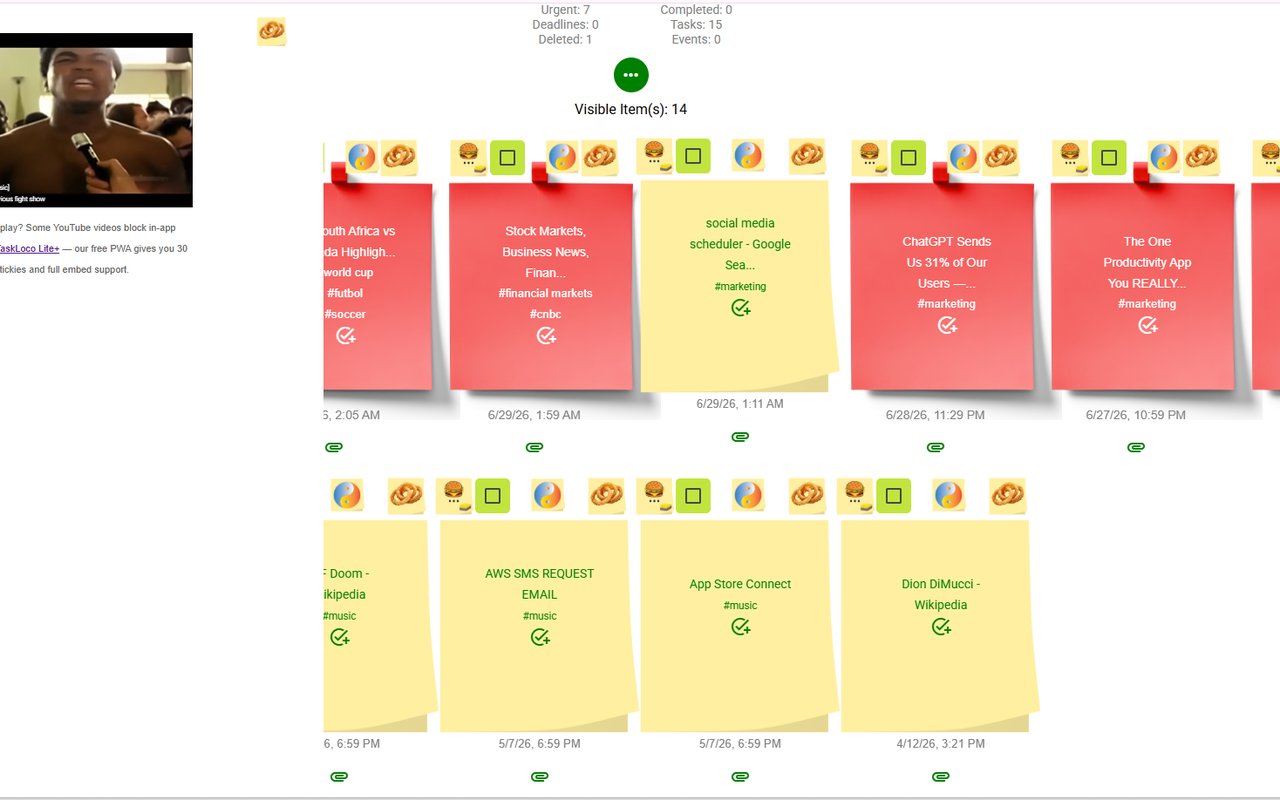
- Visual layout. Notes appear as sticky cards on a wall, not as rows in a list. You can see your reading queue at a glance instead of hunting through folder hierarchies.
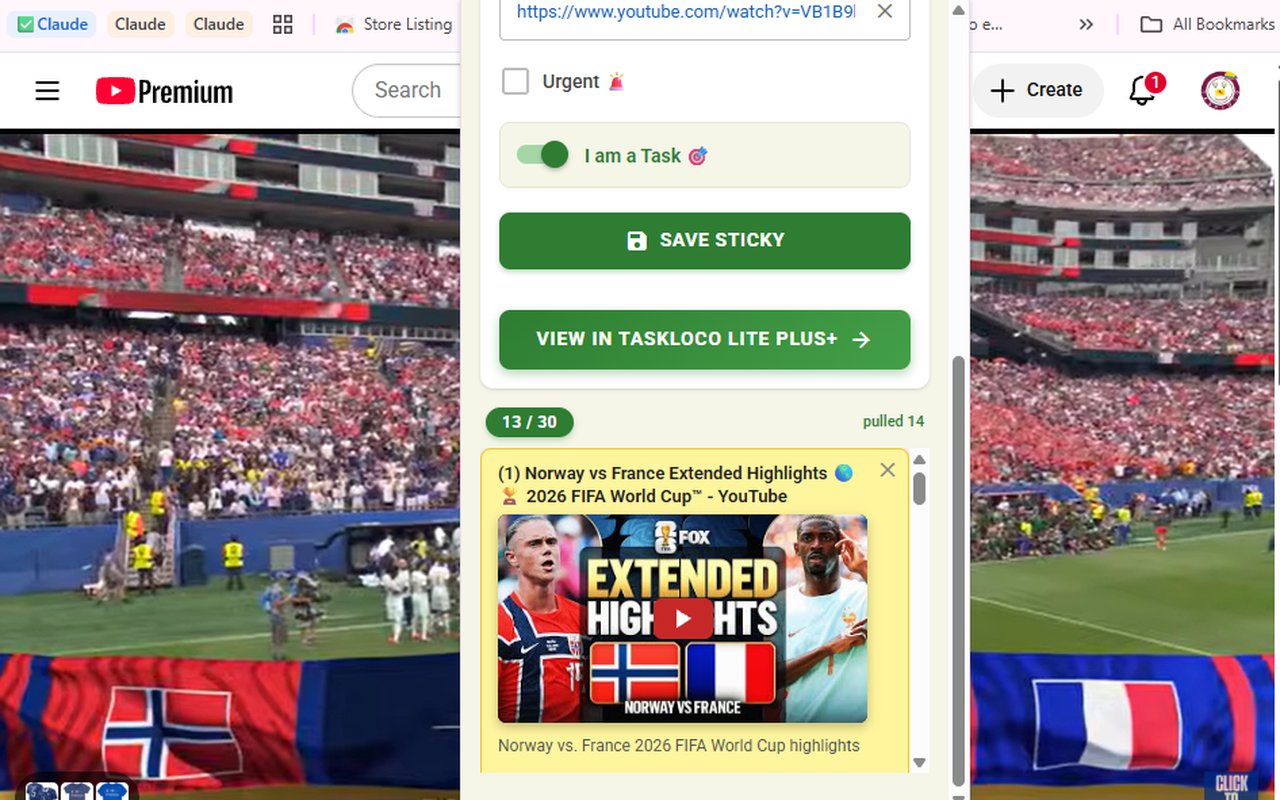
- YouTube videos embed and play inside the note. Save a video you want to watch later and it plays directly inside the note — you don't need to chase the URL.
- Tags and search. Add tags when you save so you can filter by topic later. Search finds anything by title, URL, or tag instantly.
- Syncs everywhere for free. Sign in with Google and your saved notes are on your phone and desktop without any manual export.
This isn't about replacing a note-taking app. It's about removing the gap between finding something worth reading and actually having it available when you want to read it.
Habits That Keep Any Reading List Alive Long-Term
The right tool helps, but it doesn't replace a basic maintenance habit. The reading lists that stay useful over time share a few common practices:
Schedule a short weekly review. Set aside ten minutes once a week to scan what you saved. Read what you meant to read, delete what no longer seems relevant, and move anything genuinely important into a deeper note or project. Without this, even the best-organized list becomes a graveyard.
Keep the queue short on purpose. Treat your reading list like a physical inbox — it should be a temporary holding area, not permanent storage. If your list has more than thirty items, you probably need to delete more aggressively. Longer lists create decision paralysis and you end up reading nothing.
Capture context, not just links. Whether you're using a plain note or the Sticky Note Web Clipper, add a quick tag or one-line reason when you save. "Research for Q3 project" or "Good explainer on async comms" takes five seconds and makes the item ten times easier to act on later.
Save specifically, not reflexively. The biggest mistake with read-later tools is using them as a catch-all for everything mildly interesting. If you wouldn't spend ten minutes reading it in the next two weeks, don't save it. Curate as you capture.
- One list per context is fine — "Work Research" and "Personal Reading" can live separately without any system overhead.
- If you're saving YouTube videos, make sure your tool actually handles them. A plain bookmark to a video gives you no preview and no way to play it in context.
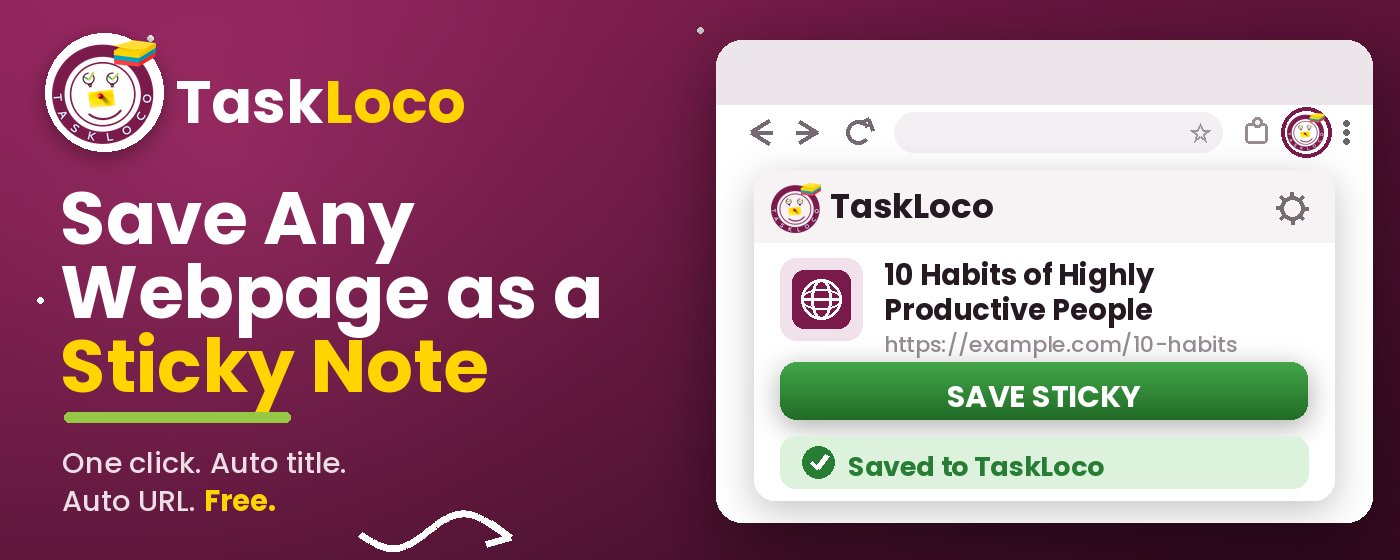
The Sticky Note Web Clipper is free. Install it from the Chrome Web Store, sign in with Google, and every page you clip becomes a sticky note you can find later.
Your clipped notes sync to TaskLoco across Chrome, desktop, iPhone, and Android — also free to start. No credit card to begin.
Get the Free Clipper
Sticky Note Web Clipper
- Free Chrome extension
- One-click save — any page, article, or video
- Title & URL auto-filled
- Tags & search
- Free forever
Synced to TaskLoco
- Sign in free with Google
- Your wall on Chrome, desktop, iPhone, Android
- YouTube videos embed & play in notes
- Visual sticky-note wall
- Free to start
Add It to Chrome — Free
One click saves any page, article, or YouTube video as a sticky note. Title and URL auto-filled.
Add to Chrome — FreeSee TaskLoco in Action
Frequently Asked Questions
What's the easiest way to keep a reading list that syncs to my phone?
The lowest-friction option is a browser extension that saves in one click and syncs automatically. The free Sticky Note Web Clipper saves any page as a sticky note from Chrome, and those notes sync to your phone and desktop via TaskLoco without any manual steps. If you prefer no extensions, a shared note in Google Keep or Apple Notes with copy-pasted links and a one-line context note works well for lighter readers.
Why do reading lists stop working after a few weeks?
Usually because saving became too slow (so you stopped adding things), the list grew too long to scan, or there was no regular review habit. Fix the capture step first — one click or one tap is the ceiling for a sustainable save habit. Then schedule a ten-minute weekly review and delete aggressively. A shorter, curated list beats a long one you never look at.
Can I save YouTube videos to a reading list?
Yes, but most methods just save a raw URL with no preview. The Sticky Note Web Clipper handles this differently — when you save a YouTube video, it embeds directly inside the sticky note and plays there. You don't have to hunt down the link again. For bookmarks or plain note apps, you'll just get a URL with no context.
Is the Sticky Note Web Clipper free?
Yes — the extension is completely free. Install it from the Chrome Web Store, sign in with Google, and start saving pages as sticky notes immediately. TaskLoco, where your notes sync, also has a free tier.
How is the Sticky Note Web Clipper different from saving bookmarks in Chrome?
Chrome bookmarks are invisible by default on mobile, buried in folders, and give you no visual preview of what you saved. The Sticky Note Web Clipper saves pages as visual sticky note cards with the title auto-filled, displays them on a wall you can scan at a glance, lets you add tags, and syncs across your phone and desktop. It's the same one-click speed as bookmarking, but the result is actually usable.
Do I need to type anything when I save a page?
No. Click the Sticky Note Web Clipper icon in your Chrome toolbar and the current page's title and URL fill in automatically. You can optionally add a tag or a quick note, but nothing is required. The whole save takes about two seconds.
How do I find something I saved weeks ago?
In TaskLoco, search finds notes by title, URL, or tag instantly. If you add a tag when you save — even something simple like "research" or "watch later" — you can filter your wall to just that category. The visual sticky note layout also makes scanning faster than scrolling through a plain list of links.
Born in Brooklyn. Powered by AWS. Your data stays yours.
TaskLoco is available on iPhone, Android, Chrome, and every web browser.