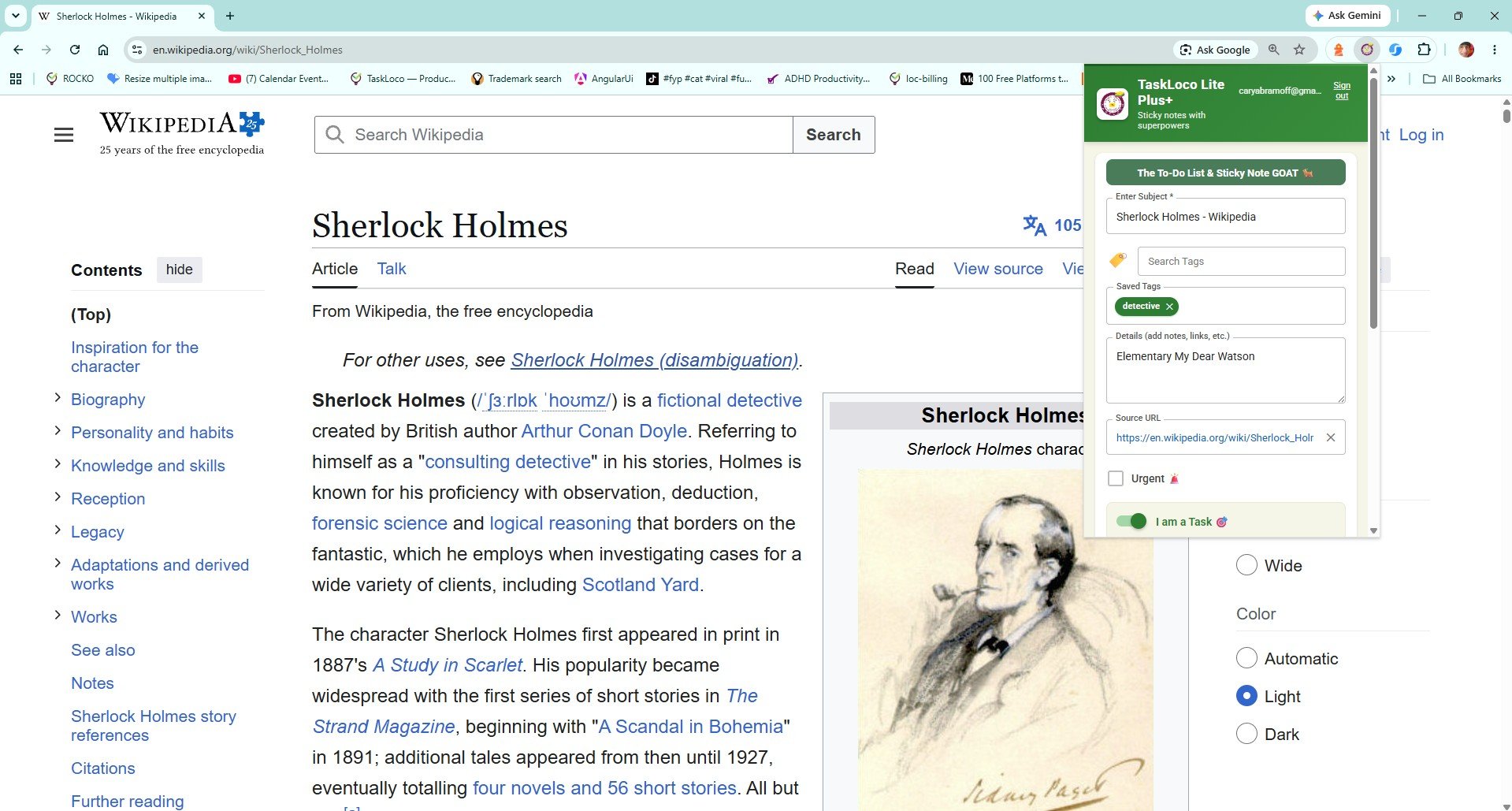
You're mid-browse and you hit something you need to act on today — an article to read and summarize, a product to order, a tutorial to follow, a YouTube video to watch before a meeting. The knee-jerk move is to bookmark it or leave the tab open. Both of those habits share the same fatal flaw: the page disappears from your attention the moment you leave it, and it never makes it into the list of things you're actually doing today.
The real fix isn't a better bookmark system. It's treating web pages the same way you treat tasks — capturing them the instant they matter, in the place where your to-dos live. This guide walks through exactly how to do that, from manual methods to the fastest one-click approach available for Chrome.
The Core Problem: Web Pages and Task Lists Don't Talk to Each Other
Most people manage tasks in one place — a notebook, a sticky note wall, a to-do app — and browse the web in another. When something worth doing shows up in the browser, the workflow breaks. You either try to remember it, paste a URL into a note manually, or just leave the tab open hoping you'll come back.
Open tabs are not a task list. A browser with thirty tabs is a anxiety machine, not a productivity system. Bookmarks are slightly better, but they're stored by the browser, separated from your tasks, and almost impossible to scan visually. Neither method answers the actual question: what do I need to do with this page today?
Effective capture means the page, its title, and its URL land somewhere you will actually look during your workday — not a folder you open once a month. That's the whole problem to solve.
How to Add a Web Page to Your Task List Manually
If you're not ready to install anything, here's the most reliable manual method:
- Keep a daily task document or note open — a plain text file, a Google Doc, or even a physical notebook reserved for today's tasks.
- When you find a page worth acting on, copy the URL and paste it into that document with a one-line note about what you need to do: "Read and pull key stats — [URL]" or "Order this before Friday — [URL]".
- Give it a context label — even just adding "TODAY" or a specific time helps you prioritize when you come back to it later.
- Review your list at the start and end of each day — any URL that has sat there for three days without action should either get a deadline or get deleted.
This works. The friction is real — it takes five to ten seconds per page, and if you're in a flow state of research, those interruptions add up. But it is honest about where the page is going: into your actual work queue, not a bookmarks graveyard.
For occasional saves, this is totally fine. For anyone regularly saving five or more pages a day as tasks, you need something faster.
Why Browser Bookmarks and Open Tabs Fall Short as Task Systems
It's worth being specific about why the two default browser behaviors — bookmarking and leaving tabs open — fail as task-capture tools, because a lot of people reach for the Sticky Note Web Clipper only after those methods have already let them down.
Bookmarks are designed for recall, not action. They store a URL under a folder name with the assumption you'll seek it out later. There's no visual context, to your task list, and no natural review process. Most bookmark folders become archives no one visits. The average person has hundreds of bookmarks and can't tell you what's in them.
Open tabs create the illusion of intent. Leaving a tab open feels like keeping a task alive, but it only works if you're going to come back to that tab today. Once you close the browser, or once the tab count hits twenty, the system collapses. Tabs also slow your browser down and create cognitive load every time you see them.
Neither method connects to where your tasks live. A bookmark in Chrome doesn't appear on your to-do wall. An open tab doesn't have a due date or a note attached. They're browser-native features trying to do a job they weren't built for.
One-Click Capture with the Sticky Note Web Clipper
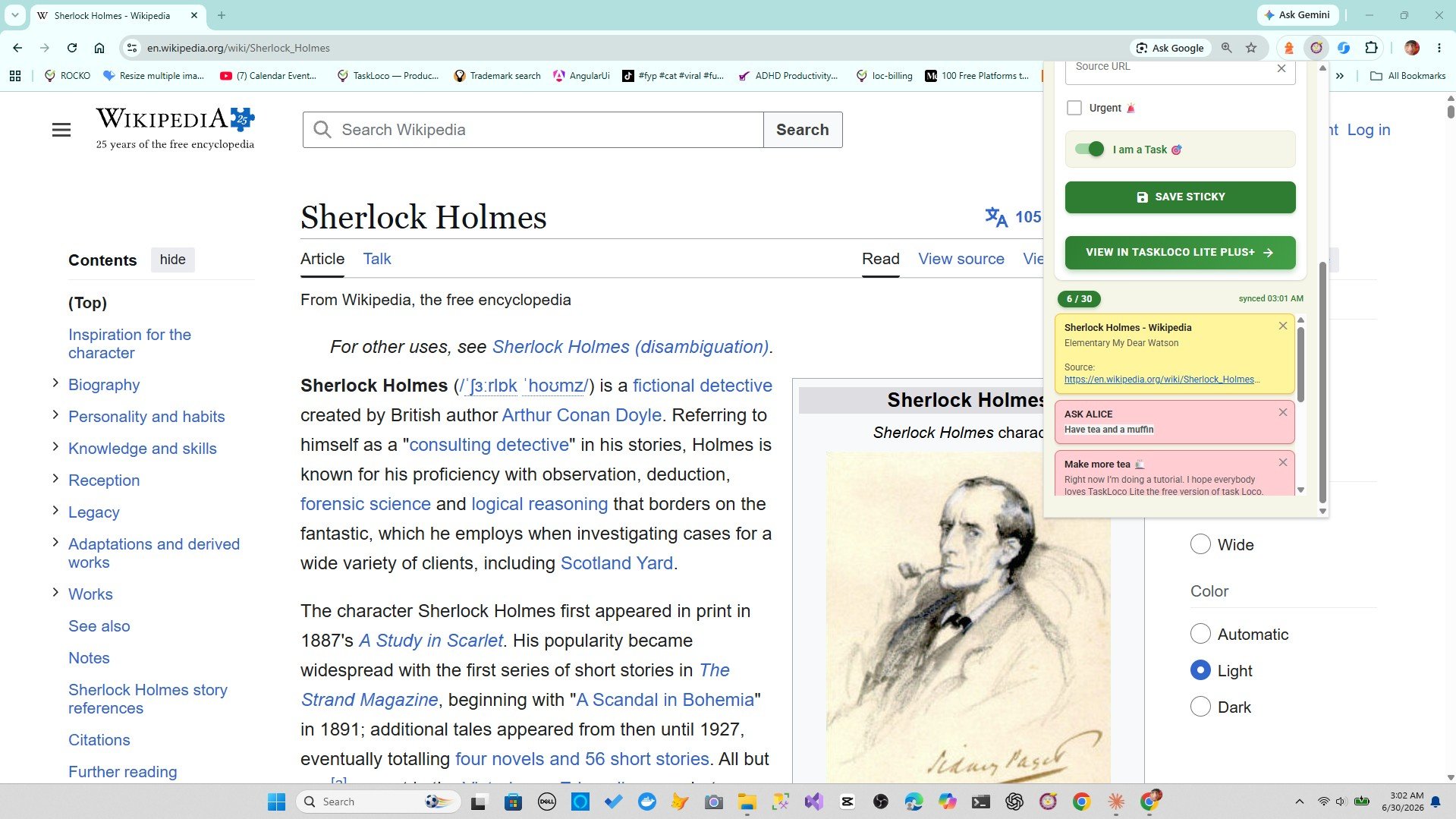
The Sticky Note Web Clipper is a free Chrome extension that closes the gap between finding a page and adding it to your task list. When you're on any page — an article, a news story, a research source, a YouTube video — you click the toolbar icon once. The page title and URL are auto-filled into a sticky note, and that note lands on your TaskLoco wall, which is where your tasks and ideas already live.
No copying URLs. No switching windows. No pasting. One click, and the page is in your task system with enough context to act on it.
- Articles and research pages save as notes you can tag and search later.
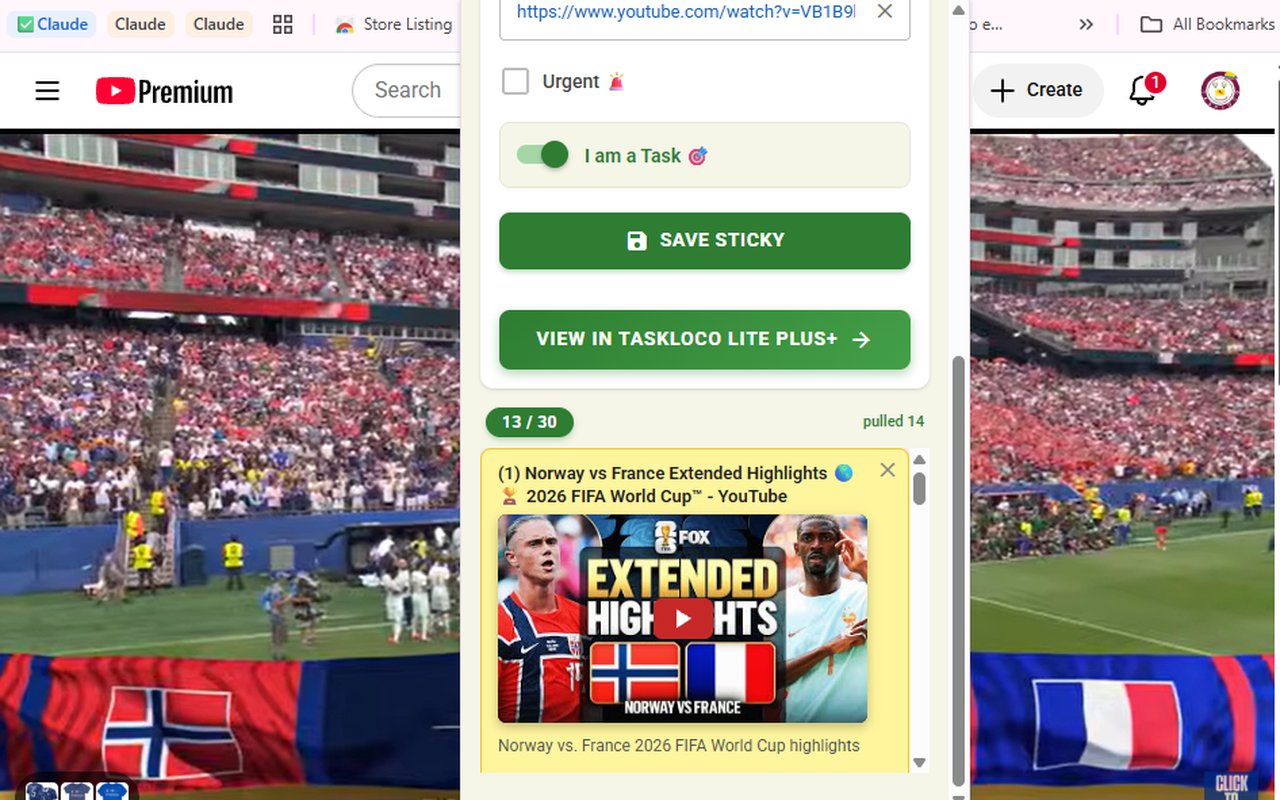
- YouTube videos embed inside the note and play directly — you don't even need to go back to YouTube.
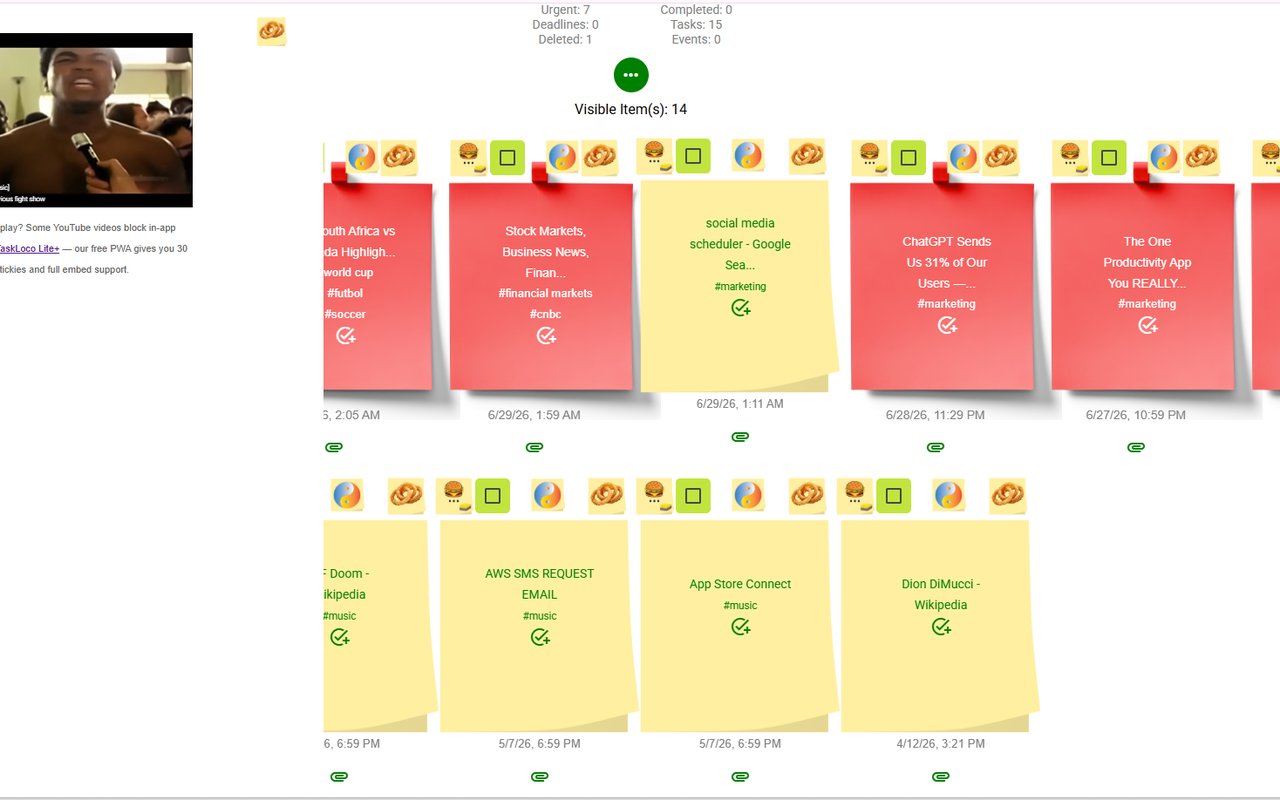
- Any link becomes a visual sticky note with its title visible at a glance, not a buried URL string.
Because TaskLoco syncs across Chrome, desktop, iPhone, and Android for free, the page you saved during your lunch-break browsing session is waiting on your phone when you're ready to act on it. You sign in free with Google and it just works.
If you've ever lost a useful page to a closed tab or a forgotten bookmark folder, the Sticky Note Web Clipper is the obvious one-click fix. It's free, it takes about thirty seconds to install, and the first time you use it you'll wonder why you didn't do it sooner.
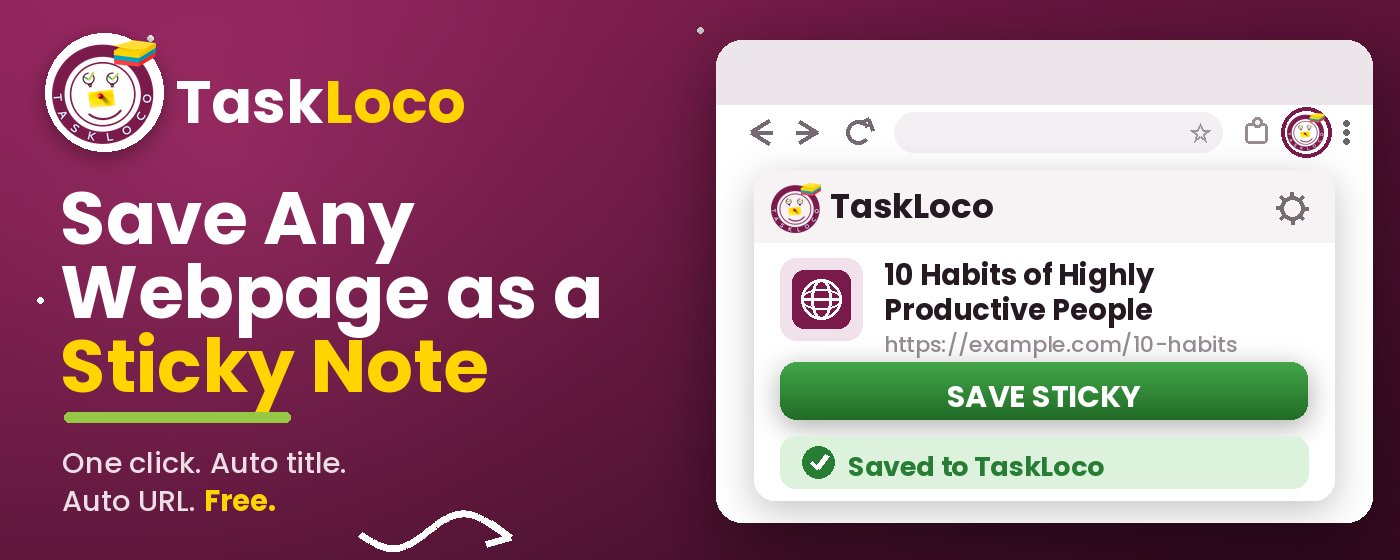
The Sticky Note Web Clipper is free. Install it from the Chrome Web Store, sign in with Google, and every page you clip becomes a sticky note you can find later.
Your clipped notes sync to TaskLoco across Chrome, desktop, iPhone, and Android — also free to start. No credit card to begin.
Get the Free Clipper
Sticky Note Web Clipper
- Free Chrome extension
- One-click save — any page, article, or video
- Title & URL auto-filled
- Tags & search
- Free forever
Synced to TaskLoco
- Sign in free with Google
- Your wall on Chrome, desktop, iPhone, Android
- YouTube videos embed & play in notes
- Visual sticky-note wall
- Free to start
Add It to Chrome — Free
One click saves any page, article, or YouTube video as a sticky note. Title and URL auto-filled.
Add to Chrome — FreeSee TaskLoco in Action
Frequently Asked Questions
How do I turn a web page into a task instead of just a bookmark?
Save it somewhere you actually review your work — not a browser folder. The simplest method is copying the URL into a daily task document with a short action note. The fastest method is using the free Sticky Note Web Clipper: one click saves the page as a sticky note on your TaskLoco task wall, title and URL auto-filled, synced to your phone.
Can I save a YouTube video to my task list the same way as a web page?
Yes. The Sticky Note Web Clipper works on YouTube just like any other page. Click the toolbar icon on any YouTube video and it saves as a sticky note — and the video embeds inside the note so you can play it directly without going back to YouTube.
What's wrong with just leaving a tab open as a reminder?
Open tabs feel like active tasks but they're not. Once your tab count grows, or once you close the browser, those 'tasks' disappear. Tabs don't connect to your to-do list, don't have any context or notes attached, and slow your browser down. Saving to a proper task system — even manually — is more reliable.
Is the Sticky Note Web Clipper free?
Yes — the extension is completely free. TaskLoco, where your saved notes sync, also has a free tier. Install it from the Chrome Web Store, sign in with Google, and start clipping immediately.
Will my saved pages sync to my phone?
Yes. Notes saved with the Sticky Note Web Clipper sync to TaskLoco, which is available on iPhone, Android, and desktop. Sign in with Google on any device and your clipped pages are there.
How is the Sticky Note Web Clipper different from regular browser bookmarks?
Bookmarks store a URL in a folder you probably won't revisit. The Sticky Note Web Clipper saves pages as visual sticky notes — with title and URL visible at a glance — on a task wall you actually look at, synced across your devices. It's built for action, not archiving.
Do I need to manually type the page title and URL when I save something?
No. The Sticky Note Web Clipper auto-fills the title and URL of whatever page you're on. You click once and both are already in the note. You can add your own text, tags, or context, but the basic capture requires zero typing.
Born in Brooklyn. Powered by AWS. Your data stays yours.
TaskLoco is available on iPhone, Android, Chrome, and every web browser.