David Allen published Getting Things Done in 2001 and the core argument has not aged a day: your brain is terrible at storing commitments but excellent at executing them. The moment you ask your brain to remember something and do something about it, you've given it two jobs and it will quietly fail at both. The fix is deceptively simple — get everything out of your head and into a system you trust completely.
Sticky notes were doing this for knowledge workers decades before any app existed. A physical Post-it on the edge of a monitor is, in GTD terms, a perfect single-action item: visible, tangible, and satisfying to throw away when done. The question is whether a digital sticky-note tool can preserve that simplicity while adding the things physical notes can't do — reminders, file attachments, shared access, and a search box that actually works. This page explains the GTD method on its own terms first, then looks honestly at where the sticky-note model fits and where it doesn't.
The Five Steps of GTD — What They Actually Mean
GTD is not a to-do list. It is a closed-loop system built around five verbs: Capture, Clarify, Organize, Reflect, Engage. Most productivity systems fail because they collapse these steps into one — you write something down and somehow expect it to get done. Allen's insight is that each step requires different mental energy and should happen at a different time.
Capture means collecting everything — every open loop, every half-formed idea, every "I should really..." thought — into as few trusted inboxes as possible. The number of inboxes matters: the more places a thought might live, the less you trust any of them.
Clarify is where most systems break. For every captured item you must answer: is this actionable? If not, it is either trash, reference material, or "someday/maybe." If it is actionable and takes less than two minutes, do it immediately. If it takes more, either delegate it or defer it with a specific next physical action defined.
Organize means putting the clarified items in the right buckets — project lists, a calendar for hard-deadline items, a waiting-for list for delegated tasks, and context lists (calls to make, errands, things requiring a computer) for everything else.
Reflect is the weekly review: you sweep every inbox, update every list, and make sure the system still reflects reality. Without this step the system rots. With it, you can trust what the system tells you completely.
Engage is simply doing the work — but because the system is trustworthy and current, you can choose tasks based on context, energy, and available time without second-guessing whether you're missing something important.
Why Sticky Notes Map So Naturally onto GTD
The sticky note is a physical instantiation of a single captured thought. That is exactly what GTD's capture step demands. Each note forces a constraint: it is small, it holds one idea, and it has no hierarchical relationship to other notes unless you deliberately create one by placing it near them. That constraint turns out to be a feature, not a limitation.
Physical sticky-note practitioners have been running informal GTD boards for years. The inbox is a stack of blank notes and a pen. Clarify happens when you move a note from the stack to a column on the wall. Organize is the wall itself — color by project, column by status, position by priority. Reflect is the moment every Monday when you sweep the wall and throw away anything that no longer matters. Engage is glancing at the wall and picking the top note in the "Today" column.
The breakdown with physical notes is well-documented:
- You cannot search them. A note from three weeks ago about a client call might as well not exist.
- They do not travel. Your wall is in one room; your phone is with you always.
- They cannot remind you of anything. A note about "call the accountant before April" is silent.
- They cannot hold a file. A note that says "review attached contract" requires a separate filing system.
- They cannot be shared reliably. Photographing a Post-it and texting it is not a workflow.
These are not small gaps. They represent the entire difference between a physical capture habit and a complete trusted system. A digital sticky-note tool that solves all five of those gaps — search, sync, reminders, attachments, sharing — gives you the cognitive simplicity of the Post-it model with the functional completeness that GTD actually requires.
Where the Sticky-Note Model Breaks Down — and Where It Doesn't
It is worth being honest about the limits of the sticky-note mental model before calling it a complete GTD solution.
Where it breaks: GTD's project list — Allen defines a project as any outcome requiring more than one action step — can get unwieldy on a note-based board if you have dozens of active projects. Notes are designed for single actions, not for representing dependencies between actions. If you need to track "Task B cannot start until Task A is done," a sticky-note system will not enforce that relationship. You will need to enforce it mentally, which reintroduces the cognitive load GTD is trying to eliminate. For complex multi-phase projects with formal dependencies, a Gantt-style tool is genuinely the right instrument.
Where it doesn't break: For the vast majority of individual and team work — a mix of recurring tasks, client deliverables, reference notes, and one-off to-dos — the sticky-note model holds up extremely well. Allen himself has said that most people's projects are simple enough that a next-action list and a tickler file are all they need. The sticky-note wall, physical or digital, is a direct implementation of that observation.
The context-list problem: GTD recommends organizing next actions by context (@phone, @computer, @errands). On a physical board this requires color coding or dedicated columns. On a digital note system, tags, colors, or board columns serve the same purpose and are easier to maintain. The key is committing to a consistent scheme and keeping it simple — one or two context markers per note at most.
The someday/maybe list: This is one area where digital sticky notes genuinely outperform physical ones. A someday/maybe note can sit dormant for months, surfaced only during the weekly review. Digitally, you search for it or scroll to a dedicated zone. Physically, it gets buried under current work and disappears from your review entirely.
TaskLoco and GTD: An Honest Fit
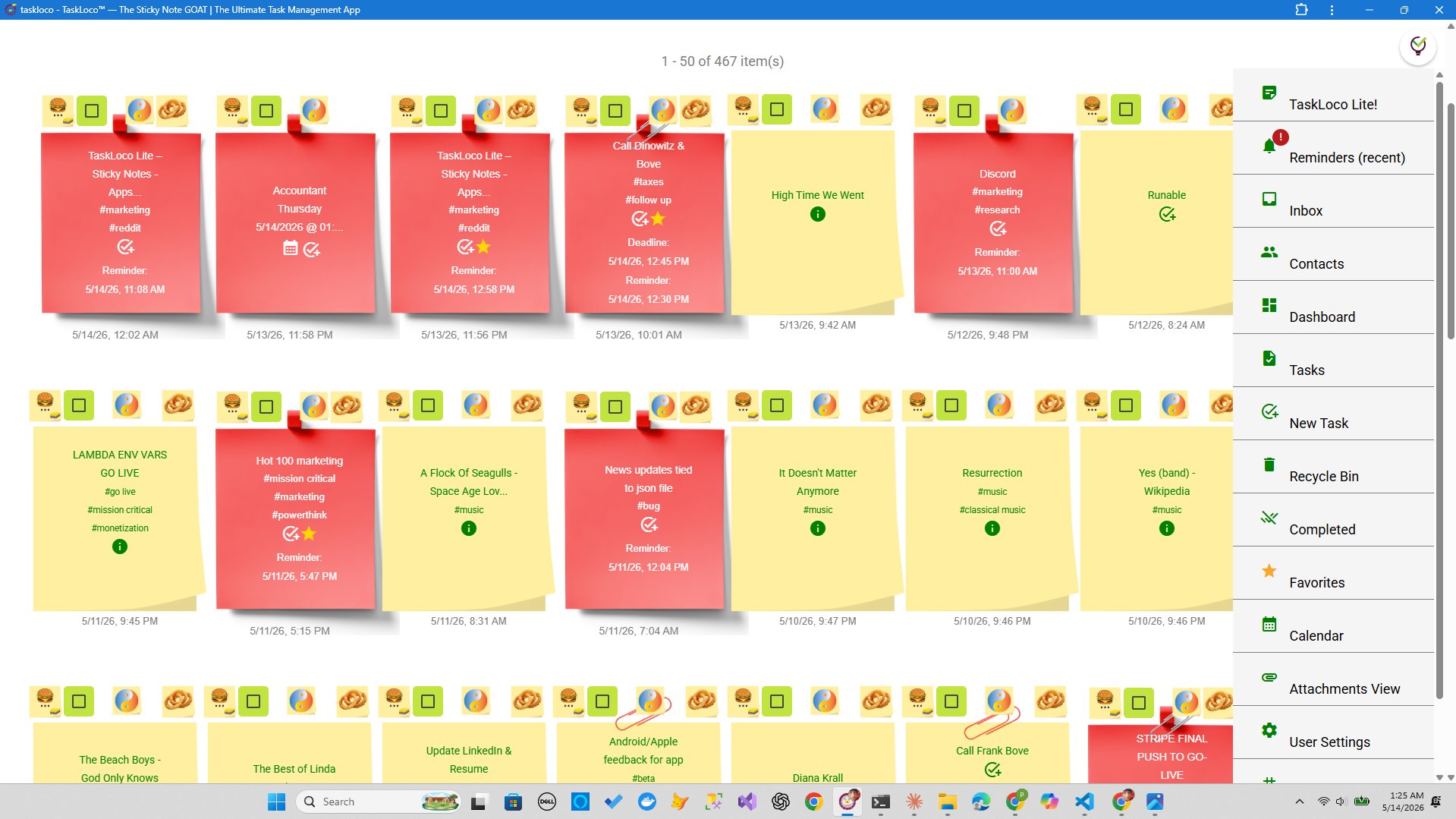
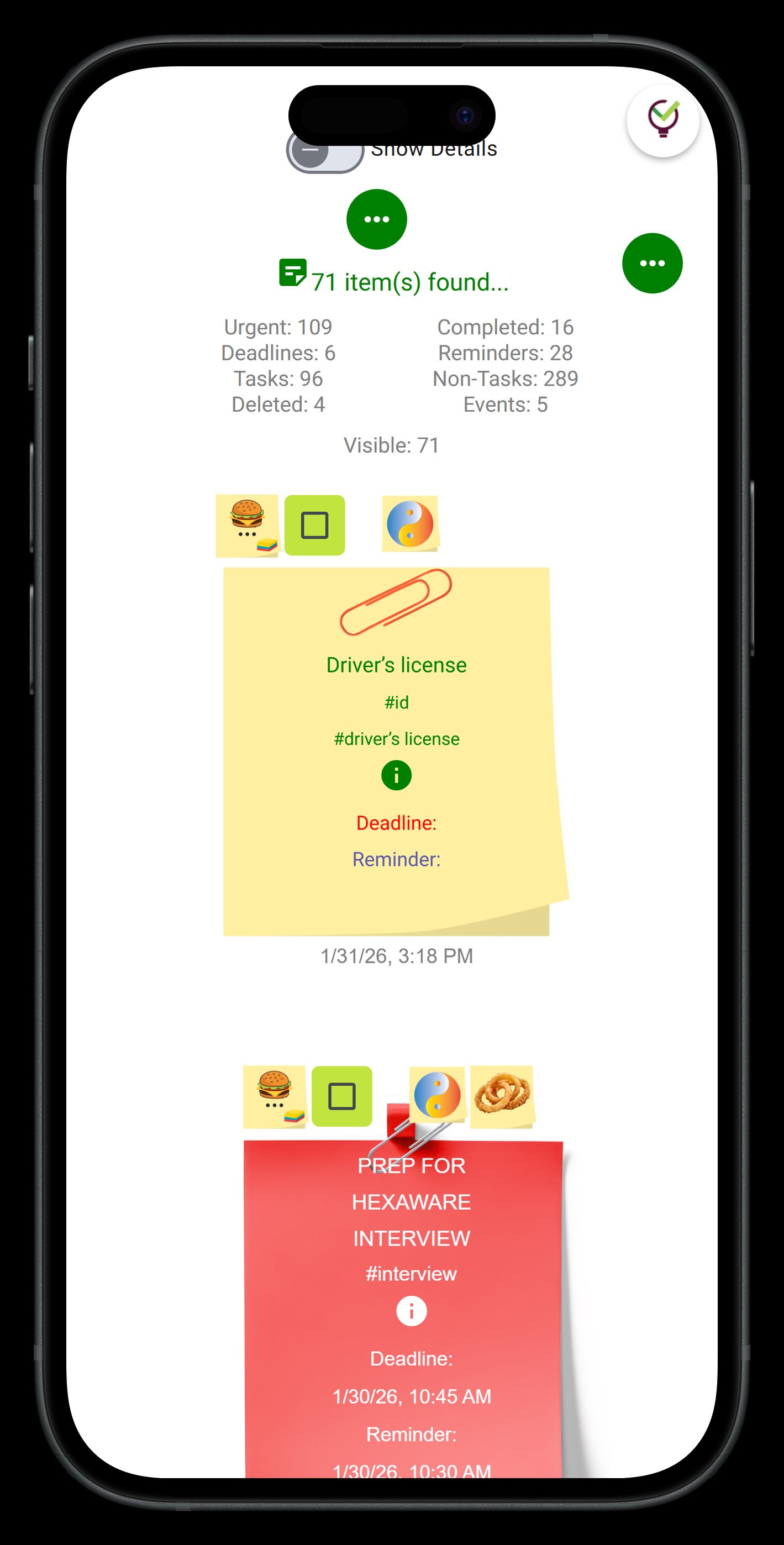
TaskLoco was built around the sticky-note as the atomic unit of thought — which means it fits the GTD capture and organize steps naturally. Your wall is the board. Each note is one item. Colors, columns, and arrangement are your organizational system. The inbox is wherever uncategorized notes land before your next review.
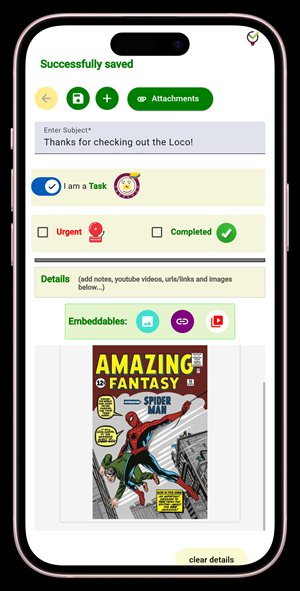
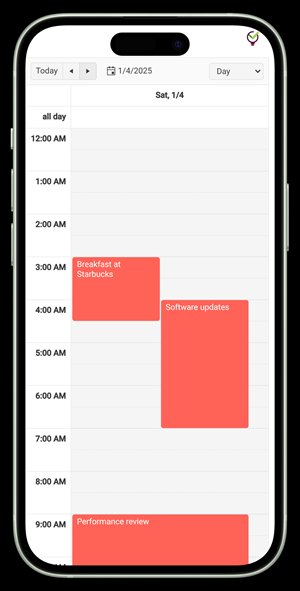
The Premium features close the gaps that make physical notes incomplete as a GTD system. Reminders are delivered as push notifications to your phone and computer and deep-link directly back to the original note — so when the reminder fires, you land immediately in context, not in a generic app screen. Optional email and SMS channels are available if you want them. File attachments (10GB included) mean reference material lives inside the note rather than in a separate folder. Full-text search means nothing is ever truly buried. Team sharing works the way email does — recipients clone the shared note and make it their own, with no permissions architecture to configure.
Where TaskLoco is not the right tool: if your work requires Gantt charts, formal project dependencies, enterprise SSO, or deep API integrations, those capabilities are outside what TaskLoco offers. The tool is honest about being a note-first, task-centric system rather than a project-management platform.
For individuals and teams running a GTD-style workflow — capture everything, clarify daily, review weekly, engage with a clear head — a sticky-note system with reminders, attachments, and sharing covers the vast majority of what the method actually requires in practice.
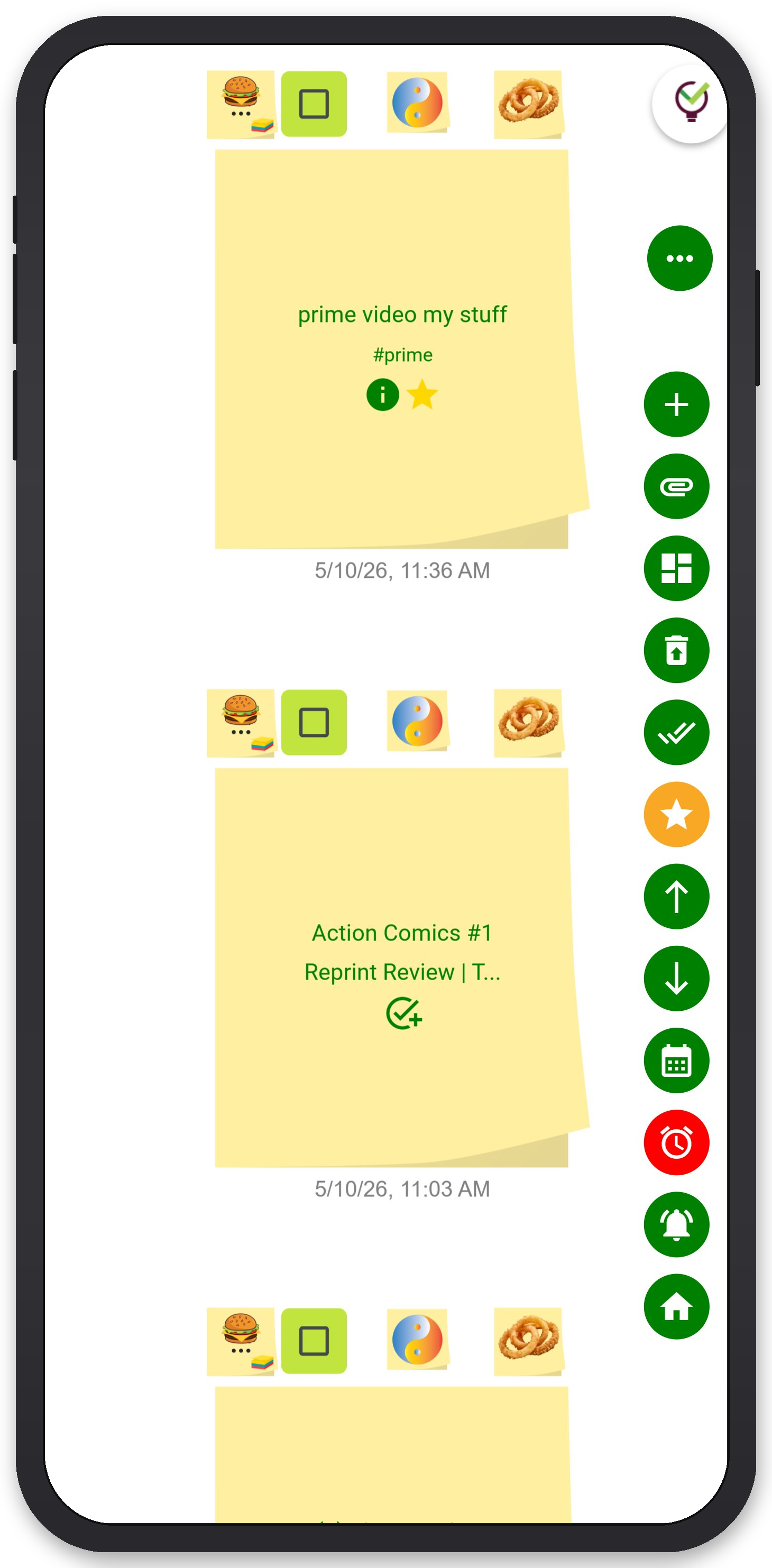
TaskLoco Premium is regularly $9.99/month per person. Right now, charter members can lock in 50% off the regular price — forever. That means $4.99/month per person today. And if our price ever goes up, you still pay half. Always.
Code CHARTER50 auto-applies at checkout. First 500 spots only — once they're gone, this offer is gone permanently. Act fast while spots last.
Every Premium subscription includes unlimited notes, 10GB file storage, reminders, calendar, and team sharing. Each team member requires a separate subscription. 7-day free trial — no charge until day 8. Cancel anytime.
Free Options: TaskLoco
TaskLoco Lite
- Native iPhone & Android app
- Completely anonymous — no sign-in
- Data stays on your device
- Up to 20 notes
- Free forever
TaskLoco Lite Plus+
- Web app + Chrome extension
- Sign in with Google
- Wall syncs across all devices
- Up to 30 notes
- Free forever
Lock In 50% Off — Forever
7-day free trial. No charge until day 8. CHARTER50 auto-applies at checkout.
🔒 Lock In My Charter SpotSee TaskLoco in Action
Frequently Asked Questions
What is GTD (Getting Things Done) in simple terms?
GTD is a five-step personal productivity method by David Allen: Capture every open commitment out of your head, Clarify what each item means and what the next action is, Organize the results into the right lists, Reflect on those lists in a regular weekly review, and Engage by choosing work based on context and energy. The central premise is that your brain is for having ideas, not for storing them.
Can sticky notes actually work as a GTD system?
Yes — with caveats. Sticky notes map directly onto GTD's capture and organize steps: one note per thought, arranged spatially by project or context. Physical notes break down on search, portability, reminders, file attachments, and sharing. A digital sticky-note tool that adds those capabilities is a genuinely complete GTD implementation for most individuals and teams. The one real gap is formal project dependencies — if you need Task B to be blocked by Task A in a Gantt sense, notes alone won't enforce that.
What is the difference between a task manager and a GTD system?
Most task managers are list tools: you add items, check them off. GTD is a system with a defined processing workflow — every item must be clarified (is it actionable? what's the next physical action?), placed in the right bucket (calendar, project list, context list, someday/maybe, reference), and reviewed on a set schedule. A task manager can support a GTD workflow if it is flexible enough, but the tool does not impose the discipline — you do. The simpler the tool, the fewer excuses to avoid the weekly review.
What is a GTD weekly review and why does it matter?
The weekly review is the maintenance step that keeps a GTD system trustworthy. You sweep every inbox to zero, update every project list to reflect current reality, check your calendar for upcoming commitments, and scan your someday/maybe list for anything that should be promoted to active. Without it, lists go stale and you stop trusting them — which means you stop using them, and the system collapses back into mental storage. Allen recommends blocking one to two hours every week, same time, same place.
What is the two-minute rule in GTD?
During the Clarify step, if a captured item requires a single action that takes less than two minutes to complete, do it immediately rather than organizing it into a list. The overhead of tracking, reviewing, and re-engaging with a tiny task costs more time than just doing it. The two-minute threshold is a rough guideline, not a strict rule — the principle is that some actions cost more to manage than to execute.
How does TaskLoco support a GTD workflow?
TaskLoco's note-per-thought model maps directly onto GTD's capture step. The wall view handles organize — arrange notes spatially by project, color-code by context, or use columns by status. Premium reminders fire as push notifications and deep-link back to the original note, so the engage step starts with full context rather than a bare alert. File attachments keep reference material inside the note. Team sharing lets you delegate with a single action and no permissions setup. The one honest gap: TaskLoco does not have Gantt-style project dependencies or timeline views, so complex multi-phase projects with formal sequencing may need a dedicated project-management tool alongside it. $9.99/month per person (currently $4.99/month per person for first 500 charter members with code CHARTER50)
Is TaskLoco free to use?
TaskLoco has two free tiers. TaskLoco Lite is the native iPhone and Android app — completely anonymous, no sign-in required, stores up to 20 notes in a JSON file on your device only, no sync, no reminders, no attachments. TaskLoco Lite Plus+ is the web app and Chrome extension — sign in with Google, up to 30 notes synced across all your devices, one-click webpage capture via the Chrome extension, no reminders or file attachments. TaskLoco Premium adds unlimited notes, reminders (push notifications, with optional email and SMS), 10GB file storage, calendar view, and full team sharing. $9.99/month per person (currently $4.99/month per person for first 500 charter members with code CHARTER50)
Born in Brooklyn. Powered by AWS. Your data stays yours.
TaskLoco is available on iPhone, Android, Chrome, and every web browser.