You know exactly what you need to do. You've known for days. And yet here you are — checking email, reorganizing your desk, doing anything except the thing. That's resistance. It's not laziness. It's not a character flaw. It's a predictable, almost mechanical reaction that hits hardest right before meaningful work.
Steven Pressfield named it. Psychologists study it as ego depletion and motivational interference. But whatever you call it, the pattern is the same: the more important the work, the stronger the push not to do it. This guide breaks down what resistance actually is, why it spikes when it does, and — more practically — what you can do the moment it shows up.
What Resistance Actually Is — and Why It Targets Meaningful Work
Resistance isn't random. It's proportional. The bigger the project, the deeper the creative risk, the stronger the internal pullback. Pressfield's framework from The War of Art describes it as a universal, impersonal force — not a personal failing. That framing matters because it removes shame from the equation and lets you treat resistance as a problem to solve rather than an identity to carry.
Psychologically, resistance has a few distinct roots. One is ego depletion — willpower is a limited resource, and if you've burned through it making decisions or managing emotions earlier in the day, starting something hard feels genuinely impossible, not just unpleasant. Another root is ambiguity. When you don't know exactly what the first step is, your brain categorizes the task as threatening and activates avoidance. The bigger and more important the project, the fuzzier the start — and the stronger the avoidance.
There's also perfectionism-driven resistance, which is the cruelest kind. You care about the work so much that starting it means risking a version that disappoints you. Not starting protects the ideal version living in your head. The problem, of course, is that the ideal version only lives there — it never gets made.
The Patterns Resistance Uses to Win
Resistance is clever because it almost never shows up as resistance. It shows up as something that looks productive or reasonable. Recognizing the disguises is half the battle.
- Productive procrastination. Cleaning your workspace, organizing files, reading about the topic instead of writing about it. All of it feels useful. None of it moves the actual project forward.
- Premature research loops. You keep gathering information because you don't feel ready yet. The real work — writing the proposal, making the call, shipping the thing — keeps getting delayed in the name of thoroughness.
- Planning instead of doing. Rewriting your to-do list, setting up a new system, color-coding your calendar. Planning mimics action closely enough to fool the brain into feeling productive while keeping you safely away from real risk.
- Perfectionist stalling. You won't start the draft until you have the right environment, the right block of time, the right energy level. The conditions are never quite right.
- Distraction by urgency. Low-stakes urgent tasks (clearing your inbox, answering a Slack message) crowd out high-stakes important work. Urgent feels non-optional; important rarely does.
What all of these patterns share is that they protect you from starting. And because starting is the moment of maximum resistance — the gap between intention and action is where resistance does its best work — the strategy has to be aimed at collapsing that gap as fast as possible.
Practical Strategies That Actually Work
Most productivity advice tells you to get motivated, build discipline, or find your why. That advice isn't wrong — but it doesn't help you at 9 a.m. when you're staring at a blank document. These strategies are designed for that exact moment.
Name the smallest possible start. Not 'write the report' — 'open the document and type one sentence.' The specificity matters. Resistance thrives on vague tasks because vague tasks feel large. A microscopically small, concrete action feels nearly impossible to justify avoiding. Do that one thing. Momentum usually follows.
Use commitment devices. Tell someone what you're working on today. Set a timer for 20 minutes and do nothing else. Remove the option to drift — close the other tabs, put your phone in another room. Resistance is an expert at exploiting optionality. Commitment devices remove the exit.
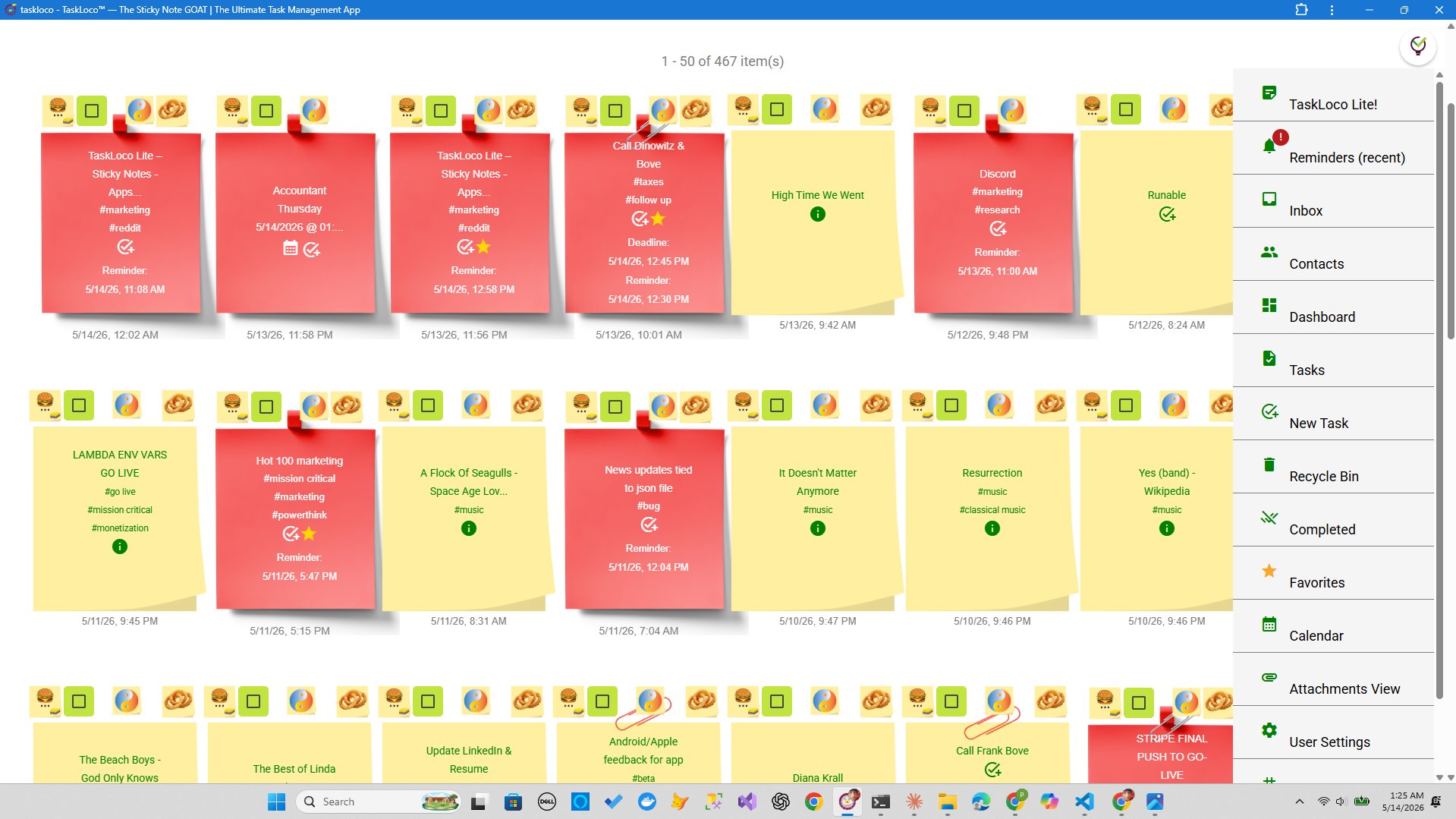
Externalize your intentions. Keeping your goals in your head is a gift to resistance. When something lives only in your mind, resistance can fog it, defer it, and quietly bury it. When it's written down and visible — on a wall, a sticky note, a shared board — it becomes real, and the gap between intention and action becomes visible too. That visibility is uncomfortable in a productive way.
Work at the edge of your window. Most people have a 2-to-4-hour window of peak cognitive capacity. Resistance is weakest during that window. Guard it fiercely. Don't let email, meetings, or administrative tasks colonize it. Do the thing that matters most first.
Separate creation from judgment. Resistance feeds on self-critique. If you're writing and editing simultaneously, or building and evaluating simultaneously, the inner critic gets to shut down the creator in real time. Draft badly. Build rough. Ship the imperfect version. Judgment has its place — just not during creation.
How TaskLoco Helps You Stay in Motion
Resistance doesn't care how sophisticated your productivity system is. It will find the friction in it and exploit it. The best tool for working through resistance is one that gets out of your way — fast capture, visible work, and frictionless action.
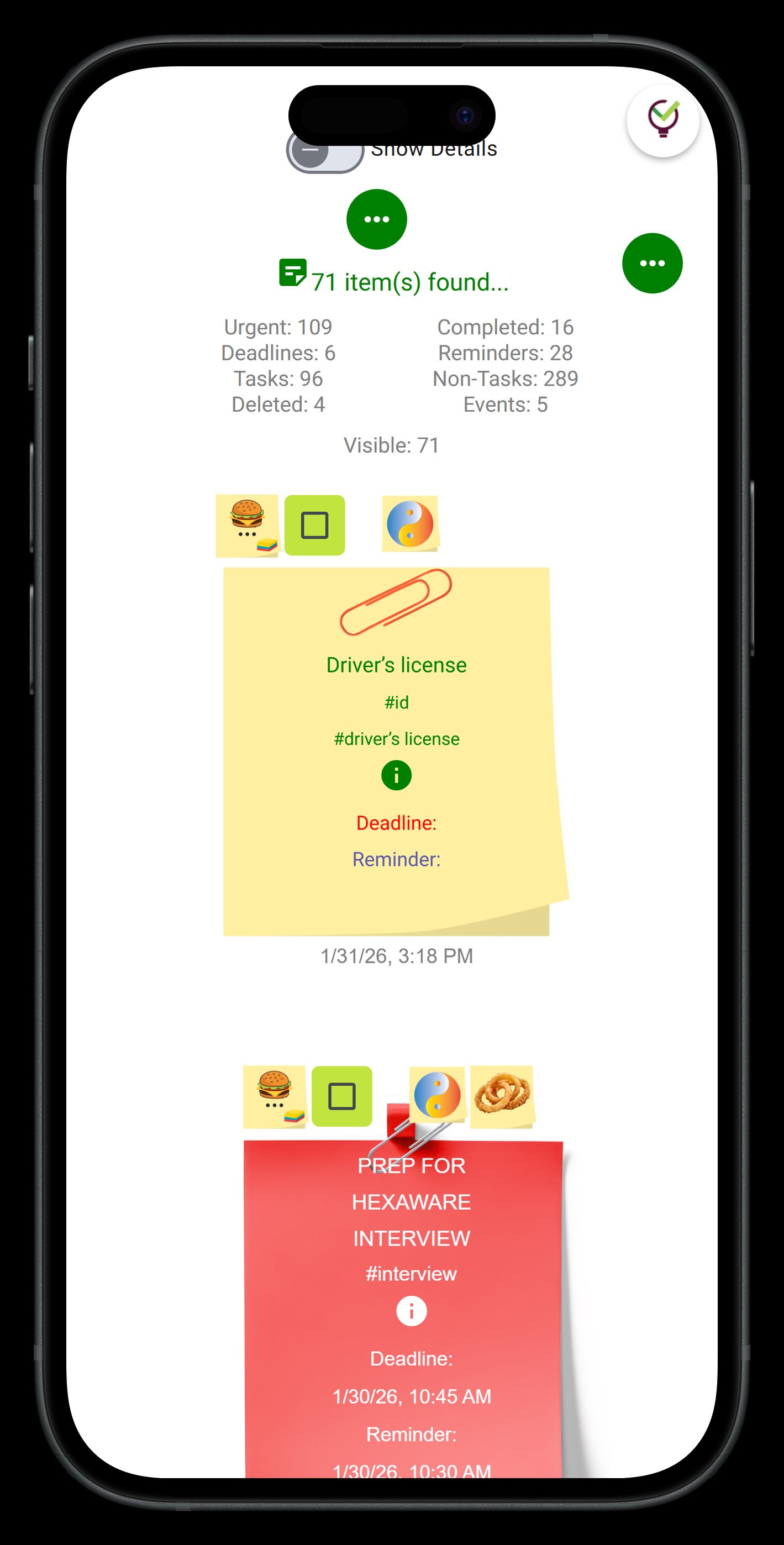
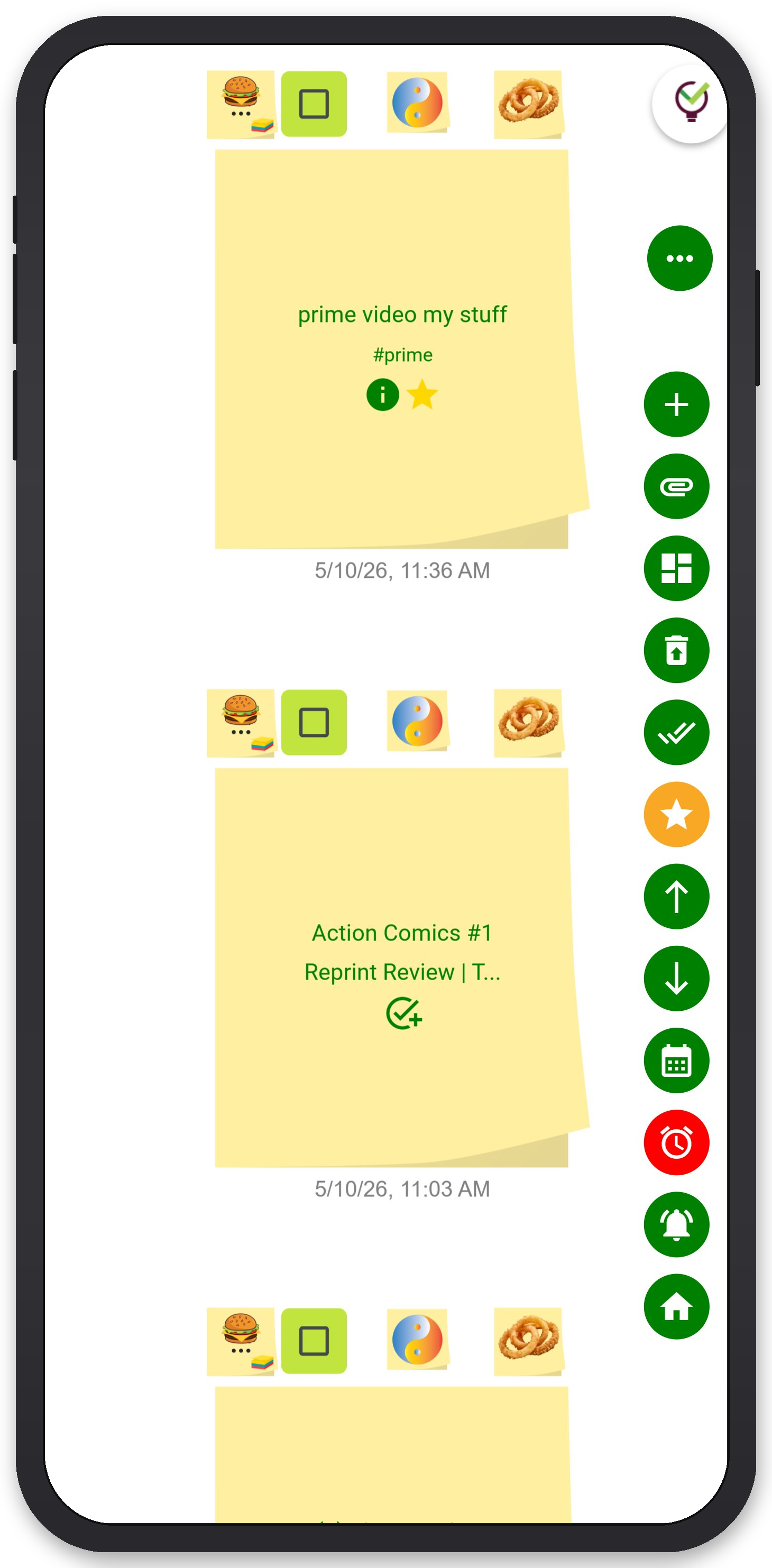
TaskLoco is built around sticky notes because sticky notes match how the brain actually works under resistance: short, concrete, visible. When you capture a next action the moment you think of it, you're removing one of resistance's core weapons — the vague, unmade decision about where to start. A note that says 'email draft: opening line only' is nearly impossible to procrastinate on. A note that says 'work on email campaign' is easy to defer forever.
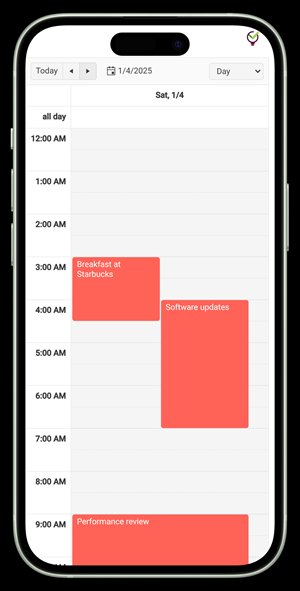
With TaskLoco Premium, every note can carry a reminder that fires as a push notification directly to your phone or computer — and tapping that notification takes you straight back to the note, with zero navigation required. That deep-link is important: it collapses the gap between 'I should do this' and 'I am doing this' to a single tap. Optional email notifications are also available, and an SMS add-on is there if you want it — but the push notification is the core, because it meets you where you already are.
Team sharing works the way email does — you send a note, the recipient gets their own copy to own and act on. No permission systems, no access levels to configure, no back-and-forth about who can see what. Just the note, shared, done.
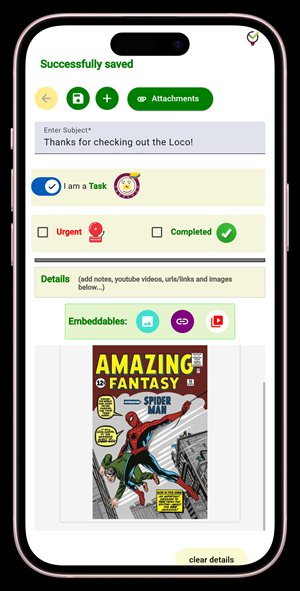
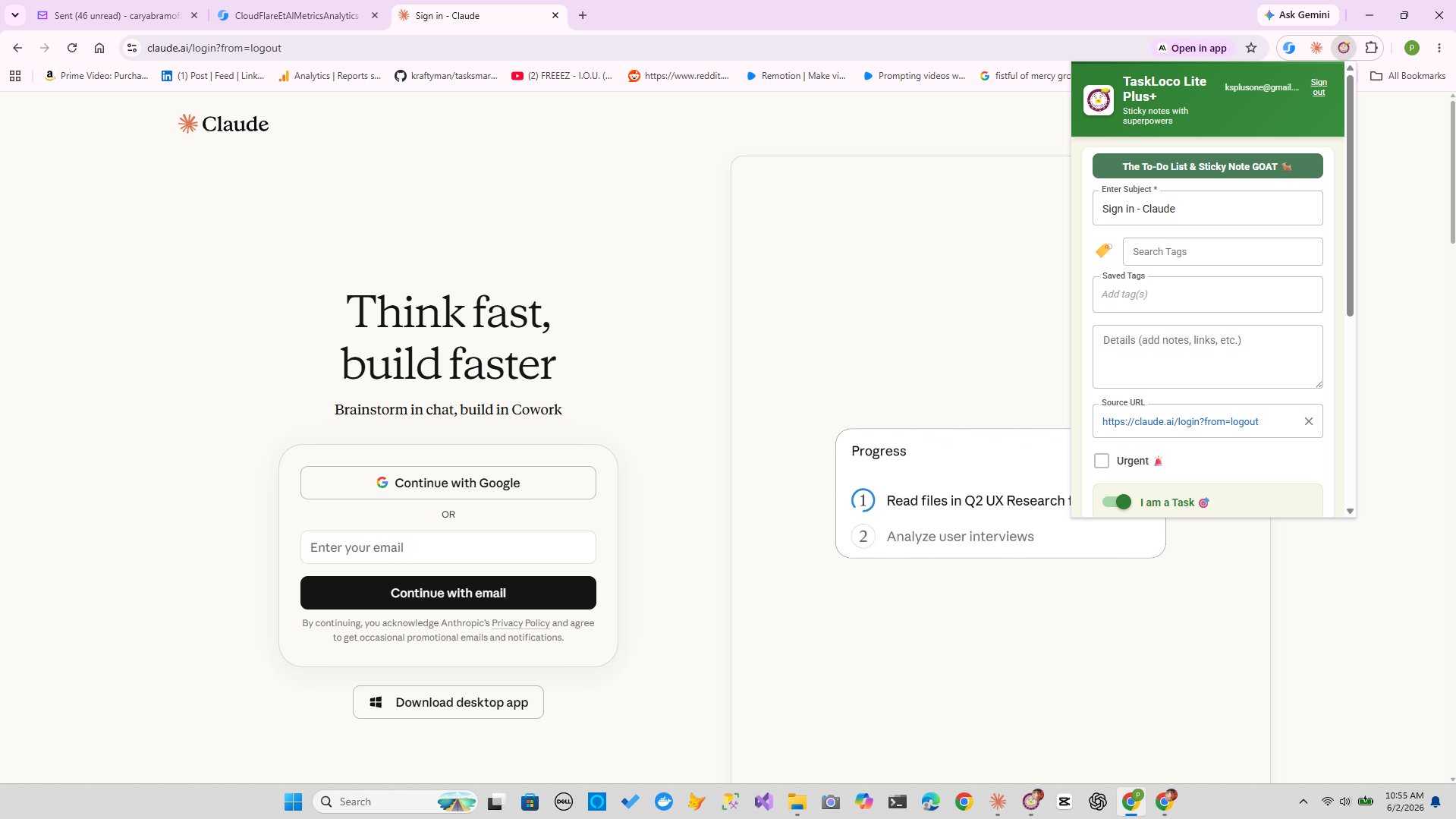
For capturing ideas the moment they arrive — before resistance has time to talk you out of acting on them — the Chrome extension lets you clip any webpage into a note with one click. The free Lite tier gets you 20 notes on your device with no sign-in required. Lite Plus+ syncs up to 30 notes across your devices for free. When you're ready for unlimited notes, file attachments, reminders, and calendar view, that's Premium.
TaskLoco Premium is regularly $9.99/month per person. Right now, charter members can lock in 50% off the regular price — forever. That means $4.99/month per person today. And if our price ever goes up, you still pay half. Always.
Code CHARTER50 auto-applies at checkout. First 500 spots only — once they're gone, this offer is gone permanently. Act fast while spots last.
Every Premium subscription includes unlimited notes, 10GB file storage, reminders, calendar, and team sharing. Each team member requires a separate subscription. 7-day free trial — no charge until day 8. Cancel anytime.
Free Options: TaskLoco
TaskLoco Lite
- Native iPhone & Android app
- Completely anonymous — no sign-in
- Data stays on your device
- Up to 20 notes
- Free forever
TaskLoco Lite Plus+
- Web app + Chrome extension
- Sign in with Google
- Wall syncs across all devices
- Up to 30 notes
- Free forever
Lock In 50% Off — Forever
7-day free trial. No charge until day 8. CHARTER50 auto-applies at checkout.
🔒 Lock In My Charter SpotSee TaskLoco in Action
Frequently Asked Questions
What is resistance in productivity?
Resistance is the internal force that pushes you away from meaningful, creative, or high-stakes work. It's not the same as laziness — it's a predictable psychological response that intensifies the more important the work is. It shows up as procrastination, perfectionism, distraction, and planning-instead-of-doing.
Why does resistance get stronger the more important the work is?
Because important work carries real risk — of failure, judgment, and falling short of your own expectations. Your brain treats that risk the same way it treats physical danger: by activating avoidance. The more meaningful the project, the higher the stakes feel, and the harder resistance pushes back.
How do you break through resistance when you can't get started?
Shrink the task until it's nearly impossible to justify avoiding. Instead of 'write the report,' the task is 'type one sentence.' Then do that one thing. The goal is to collapse the gap between intention and action — once you're in motion, resistance loses most of its power. Externalizing your intentions (writing them down visibly) and removing optionality (timers, commitment devices) both help significantly.
Is resistance the same as procrastination?
Procrastination is a behavior — delaying action. Resistance is the underlying force that drives it. You can procrastinate for many reasons (poor time management, unclear priorities), but resistance-driven procrastination specifically targets the work you care most about. The tell is the pattern: if you're most avoidant about your most meaningful work, that's resistance.
How can a note-taking or task app help with resistance?
The right tool reduces friction at the moment resistance is strongest — which is the moment of starting. When your next action is specific, visible, and immediately accessible, resistance has less to work with. TaskLoco's sticky-note model is built for exactly this: fast capture, visible work, and push notification reminders that deep-link straight back to the note so one tap puts you back in the work.
What does TaskLoco cost?
$9.99/month per person (currently $4.99/month per person for first 500 charter members with code CHARTER50)
Does TaskLoco have reminders that can help me stay accountable?
Yes. TaskLoco Premium includes reminders that fire as push notifications to your phone and computer. Each notification deep-links directly back to the original note — so you're not just reminded, you're returned to the work instantly. Optional email notifications are also available, and there's an SMS add-on if you want that channel too.
Born in Brooklyn. Powered by AWS. Your data stays yours.
TaskLoco is available on iPhone, Android, Chrome, and every web browser.