Most people don't fail at their goals because they lack ambition. They fail because the goal stays in their head as a vague intention instead of becoming a visible, structured plan. That gap — between deciding to do something and actually breaking it into steps you can see and touch — is where visual thinking lives.
Visual thinking is the practice of externalizing your thoughts into space. Instead of holding a goal in your mind, you put it on a surface, arrange it, connect it to actions, and let your eyes do the cognitive work of tracking progress. It sounds simple. But for goal achievement specifically, it's one of the most powerful shifts you can make — and the tools you use to do it matter enormously.
What Visual Thinking Actually Means for Goals
Visual thinking is not just drawing diagrams or making flowcharts. At its core, it means representing information spatially so that the structure of your goal becomes visible at a glance — without having to re-read or re-interpret text. Your brain processes spatial layouts faster than it processes sequential lists. When you can see a goal and all its sub-tasks arranged on a surface, you stop holding the plan in working memory and start interacting with it.
For goal achievement, the three criteria that actually matter when choosing a visual thinking approach are:
- Spatial freedom — Can you arrange your goal, its milestones, and its daily actions in a layout that makes sense to you? Not a rigid list, not a locked template — a surface you control.
- Actionability — Does the visual representation connect directly to things you can do today? A pretty mind map that doesn't link to actual tasks is a daydream, not a plan.
- Persistence and visibility — Can you see the full picture every time you sit down to work, without hunting for it? If your plan is buried two clicks deep, it might as well not exist.
Any tool, analog or digital, that satisfies those three criteria will genuinely help you achieve more. The sticky note — physical or digital — has survived decades precisely because it checks all three boxes instinctively.
Why Sticky Notes Are the Native Format for Goal Thinking
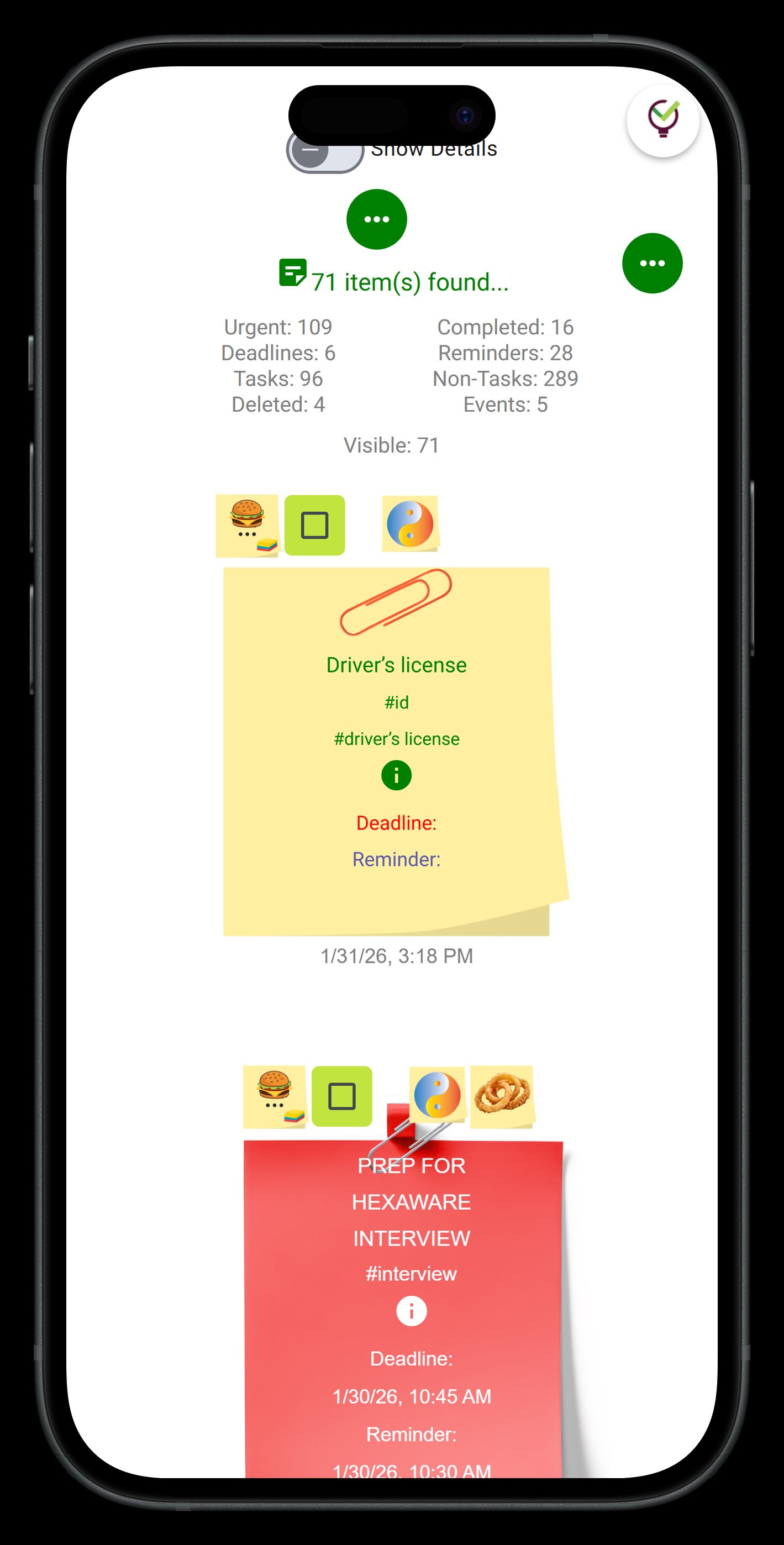
There's a reason every serious goal-setting workshop eventually ends up with sticky notes on a whiteboard. The format is perfectly matched to how goals actually work: you have one big outcome, a handful of milestones, and a bunch of individual actions. Each of those is a discrete idea — bounded, moveable, and meaningful on its own.
A sticky note is a bounded idea. It can't sprawl. It forces you to compress a thought down to its essential kernel, which is exactly what a goal milestone or a next action should be. And because notes are moveable, you can reorganize your plan as your understanding deepens — group related actions together, sequence things by dependency, or separate this week's work from next month's.
Digital sticky-note walls take this further because they don't have the physical constraint of wall space. You can have a board for each major goal area — career, health, creative projects, financial targets — and switch between them without tearing anything down. Your plan persists, evolves, and stays exactly where you left it.
This is why purely list-based tools, no matter how powerful, often fail people who are visual thinkers. When every goal and every task lives in the same linear column, the spatial signal disappears. Everything looks equally important and equally urgent. The wall view restores hierarchy and meaning through position.
How TaskLoco Puts Visual Thinking to Work for Your Goals
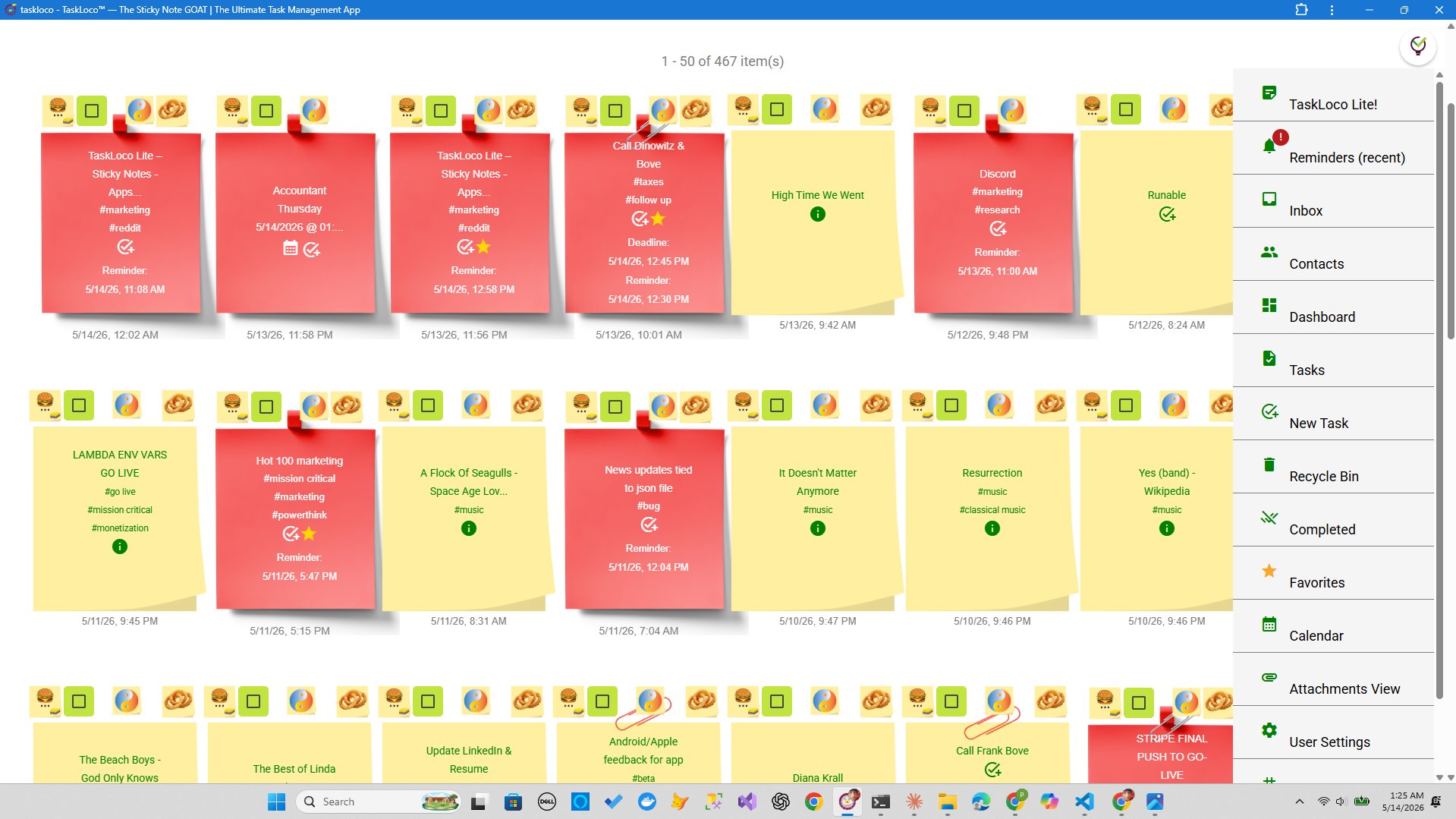
TaskLoco was built around the sticky note as the atomic unit of work — and that design decision pays off immediately when you're trying to translate a big goal into a visible, actionable plan. Open a wall, name it after your goal, and start placing notes: one for the outcome, a cluster for the major milestones, individual notes for the next actions under each milestone. You've just built a visual goal map in under five minutes.
The wall view gives you spatial freedom. Notes aren't locked to a list or a column — you arrange them the way your thinking works. If you're a person who thinks in phases, lay them out left to right. If you think in priority tiers, stack them vertically. The canvas is yours.
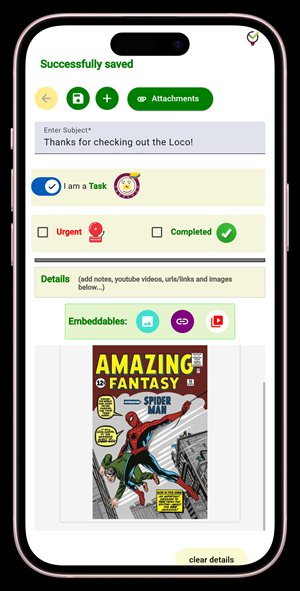
Where TaskLoco closes the gap between visual plan and real execution is in what lives inside each note. A note isn't just a label �� it can hold a full task list, a file attachment, a due date, and a reminder that fires as a push notification directly to your phone or computer, deep-linking straight back to the note so you never lose context. That's the move that turns a visual plan into a system that actually follows up with you.
For teams working toward shared goals, TaskLoco's sharing works like a well-designed email: you share a note and the recipient can clone it and make it their own. No permissions dance, no access levels to configure — just a clean handoff that keeps everyone aligned without the overhead of a project management platform.
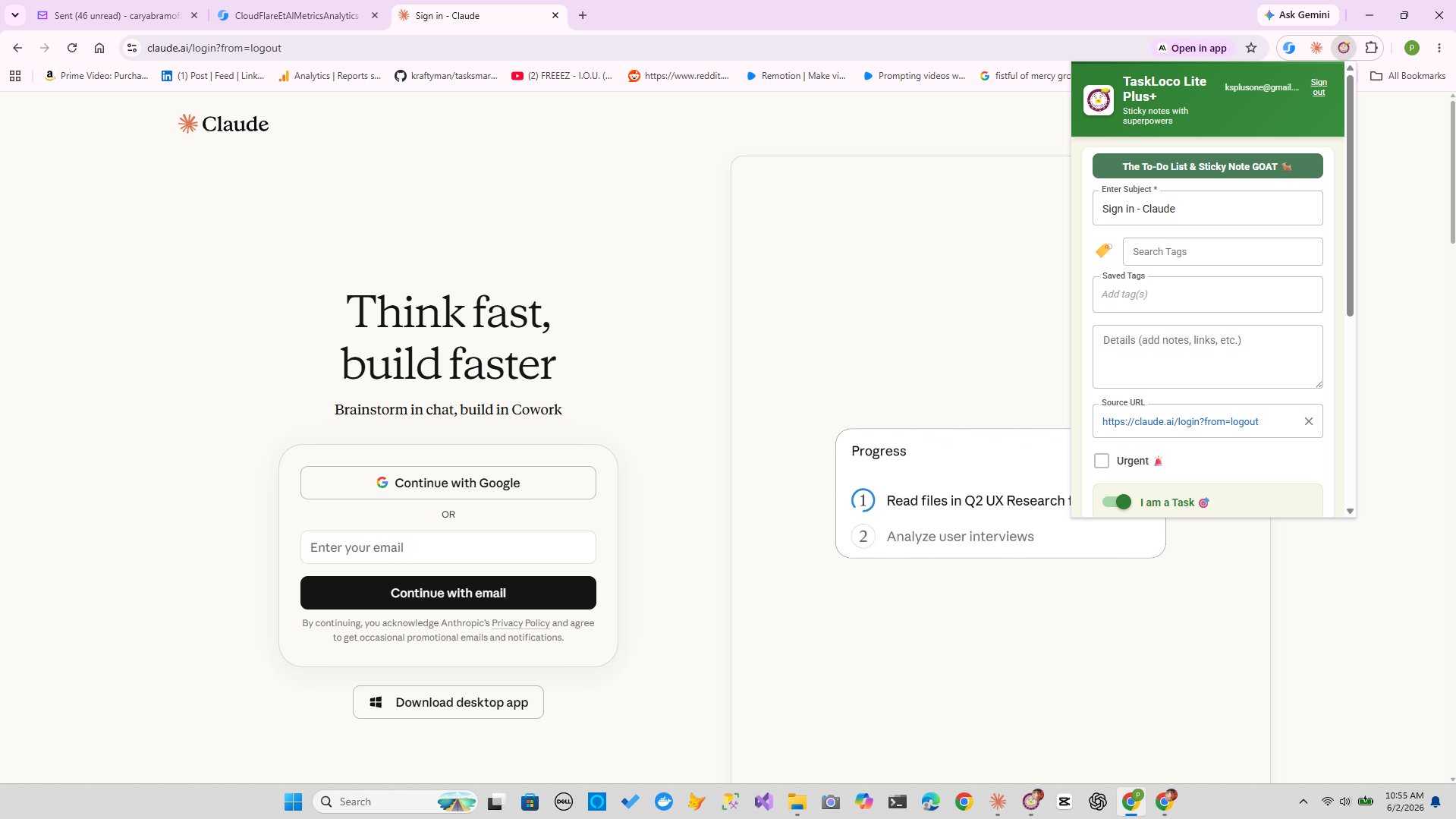
The Chrome extension adds another dimension for goal work: when you find an article, a resource, or a reference that feeds into a goal, you can capture the whole page into a note in one click. Research for a project, a job posting you're working toward, a training resource — it goes straight onto your goal wall, in context, where it belongs.
Building a Visual Goal System That Actually Sticks
The most common failure mode in goal achievement isn't laziness — it's system collapse. You build a beautiful plan on day one and then never look at it again because it's not visible in your daily workflow. Visual thinking only works if the visual is in front of you consistently.
A sustainable visual goal system has three layers: the big picture (your goal wall, reviewed weekly), the medium picture (milestones and active projects, reviewed daily), and the ground level (today's actions, which you're working through right now). TaskLoco supports all three layers on the same platform without forcing you into a rigid methodology.
- Goal wall: One board per major goal or life area. High-level milestones as notes. Review it on Sunday, adjust the plan, set notes for the week.
- Active project board: The notes currently in play — what's in progress, what's blocked, what's done this week. This is your daily visual dashboard.
- Today's note: A single note with today's committed actions. When the reminder fires, it brings you back to this note and nothing else. No distraction, pure focus.
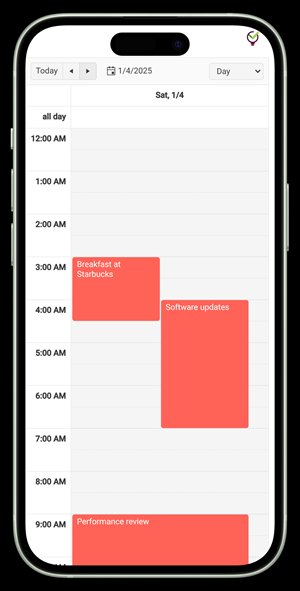
The calendar view in TaskLoco Premium ties this together across time — you can see how your milestones sit against actual dates, whether your goal timeline is realistic, and where you have empty weeks that need tasks assigned. Attach files to milestone notes — research documents, reference images, output drafts — so that when a reminder fires and you land on a note, everything you need is already there.
Visual thinking isn't a one-time activity. It's a habit of externalizing your thinking every day, keeping your goals visible, and trusting the system to surface the right work at the right time. The right digital tool makes that habit easy to maintain — and TaskLoco is built from the ground up to be exactly that kind of daily visual workspace.
TaskLoco Premium is regularly $9.99/month per person. Right now, charter members can lock in 50% off the regular price — forever. That means $4.99/month per person today. And if our price ever goes up, you still pay half. Always.
Code CHARTER50 auto-applies at checkout. First 500 spots only — once they're gone, this offer is gone permanently. Act fast while spots last.
Every Premium subscription includes unlimited notes, 10GB file storage, reminders, calendar, and team sharing. Each team member requires a separate subscription. 7-day free trial — no charge until day 8. Cancel anytime.
Free Options: TaskLoco
TaskLoco Lite
- Native iPhone & Android app
- Completely anonymous — no sign-in
- Data stays on your device
- Up to 20 notes
- Free forever
TaskLoco Lite Plus+
- Web app + Chrome extension
- Sign in with Google
- Wall syncs across all devices
- Up to 30 notes
- Free forever
Lock In 50% Off — Forever
7-day free trial. No charge until day 8. CHARTER50 auto-applies at checkout.
🔒 Lock In My Charter SpotSee TaskLoco in Action
Frequently Asked Questions
What is visual thinking and why does it help with goal achievement?
Visual thinking means representing your goals and plans spatially — on a canvas or wall — rather than in a linear list. When you can see your goal, its milestones, and its actions all at once, your brain processes the structure faster, tracks progress more intuitively, and spends less energy remembering the plan. That freed-up cognitive capacity goes toward actually executing.
How is a sticky note wall different from a regular to-do list for goals?
A to-do list is sequential — everything sits in one column and all items look equally important. A sticky note wall is spatial — you control the arrangement, which lets you encode meaning through position. Related tasks cluster together, milestones separate from daily actions, and the goal's overall structure is visible at a glance without re-reading. That spatial signal is what makes the wall a thinking tool rather than just a checklist.
Can I use TaskLoco on my phone for visual goal tracking?
Yes. TaskLoco Lite is a free native app available on iPhone and Android — no sign-in required, stores up to 20 notes directly on your device. For full visual goal tracking including reminders, file attachments, unlimited notes, calendar view, and sync across all devices, TaskLoco Premium runs through your phone's browser as a web app with all features intact. $9.99/month per person (currently $4.99/month per person for first 500 charter members with code CHARTER50)
How do TaskLoco reminders support goal tracking?
Every reminder in TaskLoco delivers a push notification directly to your phone or computer — and that notification deep-links straight back to the specific note it's attached to. You land in context: the goal, the milestone, the task, all right there. Optional email notifications are also available, and SMS is an optional add-on.
What's the best way to organize a goal wall in TaskLoco?
Start with one note per major milestone and arrange them spatially in a way that matches your mental model — left to right for phases, top to bottom for priority, or clustered by category. Under each milestone note, create action notes for the specific tasks that move it forward. Use the calendar view to assign realistic dates, and attach any reference files or research directly to the relevant notes so context is always one tap away.
Is TaskLoco good for team goals or just personal use?
Both. For personal goals, the wall view and reminder system create a visual accountability structure that works entirely on your own. For shared goals, TaskLoco's team sharing lets you send a note to a teammate — they receive it, clone it, and make it their own, with no permissions setup required. Every team member needs their own subscription, but the collaboration is designed to be frictionless.
How much does TaskLoco Premium cost?
$9.99/month per person (currently $4.99/month per person for first 500 charter members with code CHARTER50)
Born in Brooklyn. Powered by AWS. Your data stays yours.
TaskLoco is available on iPhone, Android, Chrome, and every web browser.