Here is an honest admission: some people look at a sticky-note wall and feel immediate clarity. Others look at the same wall and feel immediate anxiety. Both reactions are completely rational — they just reveal something real about how a person's brain processes information. Visual thinkers see relationships between ideas. List thinkers see sequence and priority. The trouble starts when someone hands a visual thinker a spreadsheet, or gives a list thinker a mind map and calls it a system.
This is not about which style is smarter or more productive. It is about fit. The research on cognitive load is pretty clear: when your tool's structure matches your mental model, you spend less energy on the tool and more energy on the work. When it fights your instincts, you spend half your day translating. This piece breaks down what visual and list thinking actually look like in practice, how to figure out which one you lean toward, and what that means for the productivity software you should be reaching for.
What Visual Thinking Actually Means
Visual thinking is not the same as being artistic or liking pretty interfaces. It is a cognitive orientation toward spatial relationships, patterns, and simultaneous overview. A visual thinker working through a complex project does not want to read a flat list of tasks — they want to see the whole landscape at once, arrange pieces next to each other, and understand how one thing connects to another by where it sits on a surface.
Classic signs you are a visual thinker:
- You think better when you can physically move things around — sticky notes on a wall, index cards on a table, dragging items on a screen.
- You understand a project better when you can see all of it simultaneously rather than scrolling through it page by page.
- You remember where information is by its location more than by its label — "it was in the upper left corner" rather than "it was in the third folder."
- When someone explains a concept verbally, you are quietly drawing a diagram in your head.
- Blank whiteboards energize you. Long meeting agendas in outline format drain you.
Visual thinkers built the storyboard, the mind map, the Kanban board, and the sticky-note wall. These are not gimmicks — they are tools engineered around a specific cognitive style that works best when information occupies space and can be repositioned as understanding evolves.
What List Thinking Actually Means
List thinkers get an unfair reputation for being boring or uncreative. That is backwards. List thinking is a genuine cognitive strength — it is the ability to impose sequence, priority, and hierarchy on complex situations with clarity that visual thinkers often struggle to achieve. A great list thinker looks at a chaotic project and immediately starts sorting: what comes first, what depends on what, what can wait.
Classic signs you are a list thinker:
- A clean, prioritized to-do list genuinely calms you down. Seeing all your tasks as a ranked sequence makes the work feel manageable.
- You prefer to process one thing completely before moving to the next, rather than holding many threads simultaneously.
- Checking items off a list gives you real satisfaction — not just as a habit, but as a signal that progress is real and measurable.
- Open-ended brainstorming sessions exhaust you unless someone is capturing everything in a structured format.
- You remember things by category and order, not by spatial position.
List thinkers built the outline, the numbered procedure, the prioritized backlog, and the GTD system. These are not limits — they are scaffolding that lets sequential processors move through work with speed and confidence because the structure is doing the cognitive heavy lifting.
The irony is that most mainstream productivity software is built primarily for list thinkers — ordered tasks, hierarchical folders, linear workflows. Visual thinkers have historically had to jury-rig tools not designed for them, or use separate whiteboard apps alongside their task managers. That gap is finally starting to close.
The Real Problem: Most Tools Force You to Pick One
The productivity app market has largely split into two camps that rarely overlap well. On one side: whiteboard and canvas tools that give you a giant blank space to arrange ideas but make it genuinely difficult to turn those ideas into actionable, tracked tasks with reminders and deadlines. On the other side: task managers and project tools that are excellent at structured lists but treat anything that does not fit into a hierarchy as a problem to be solved rather than a feature to support.
This matters because almost nobody is a pure type. A visual thinker planning a new product launch still needs a clear action list when it is time to execute. A list thinker mapping out a new strategy still benefits from seeing all the moving pieces spread out spatially before deciding what order to tackle them. The best workflow for most people involves both modes — expansive and spatial during discovery, tight and sequential during execution.
Tools that only do one force you into a workaround. You end up with your visual thinking in one app and your actual task tracking in another, and the cost of keeping them in sync quietly eats your day.
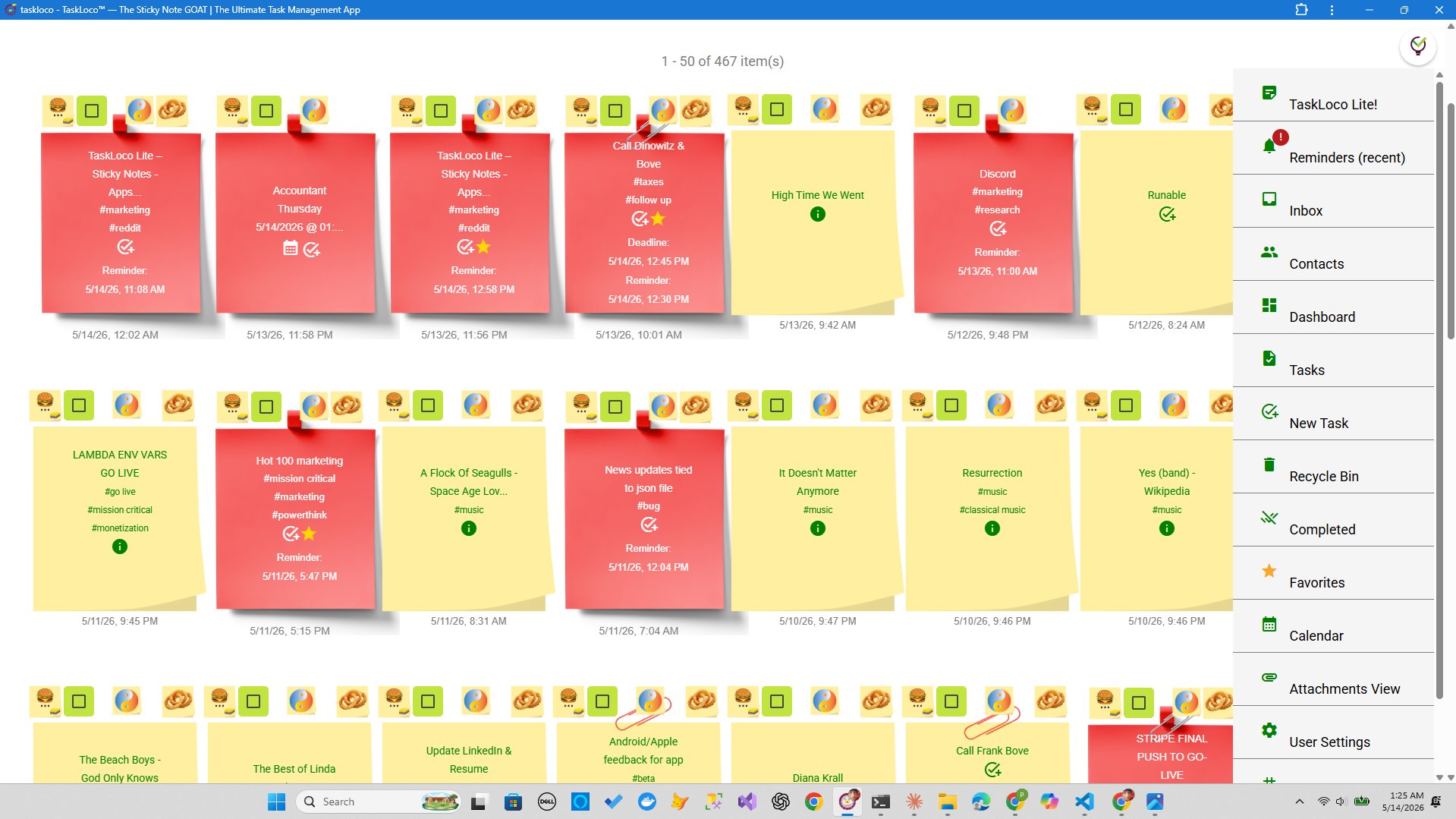
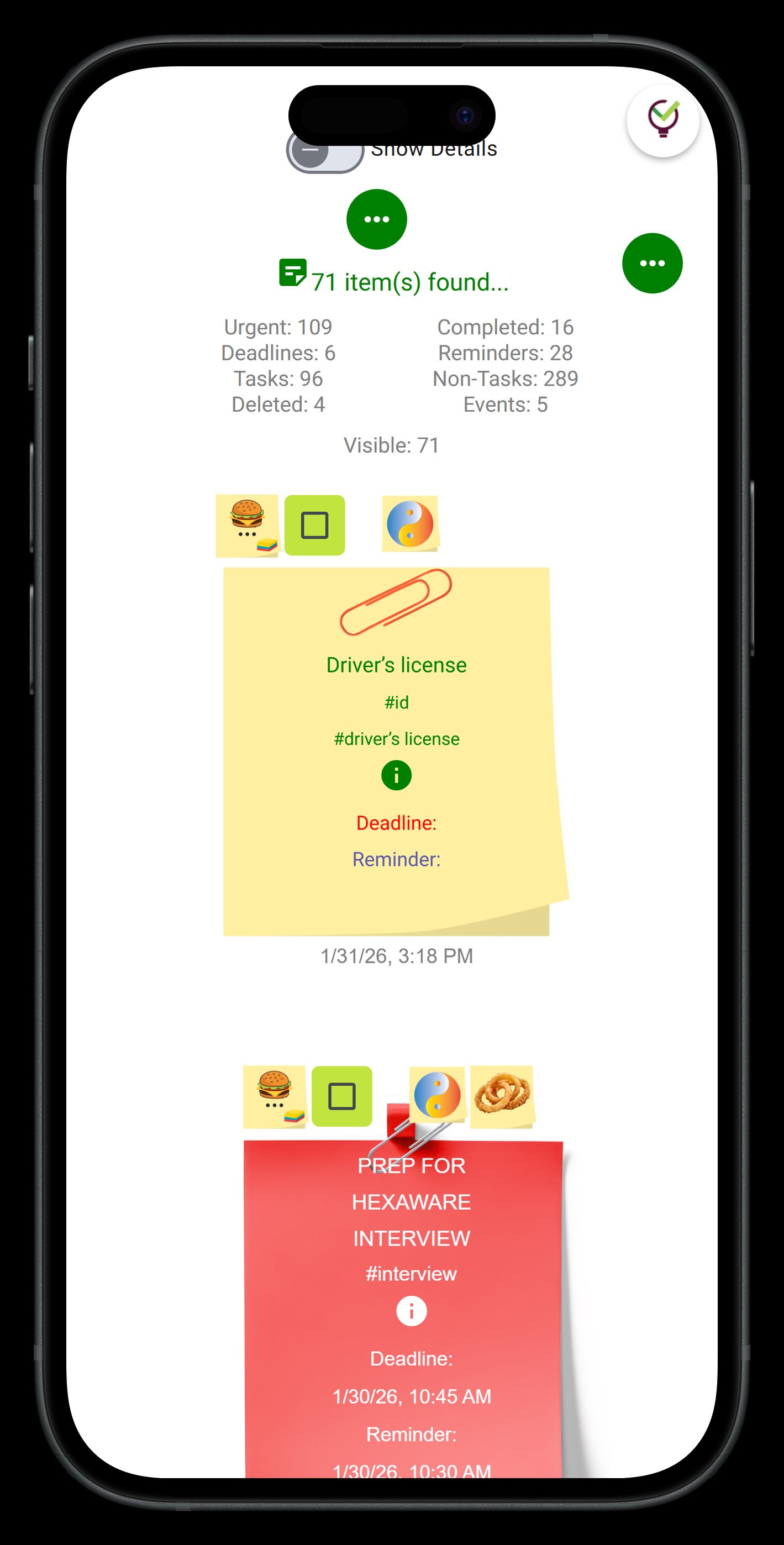
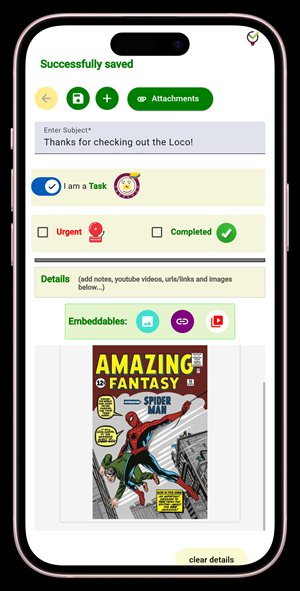
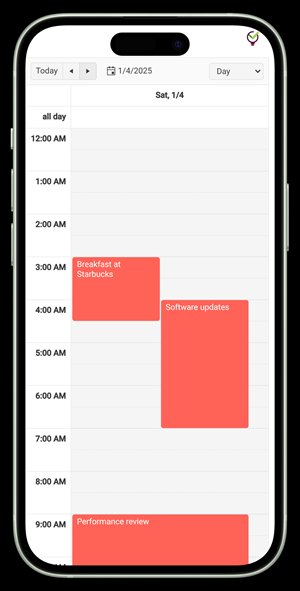
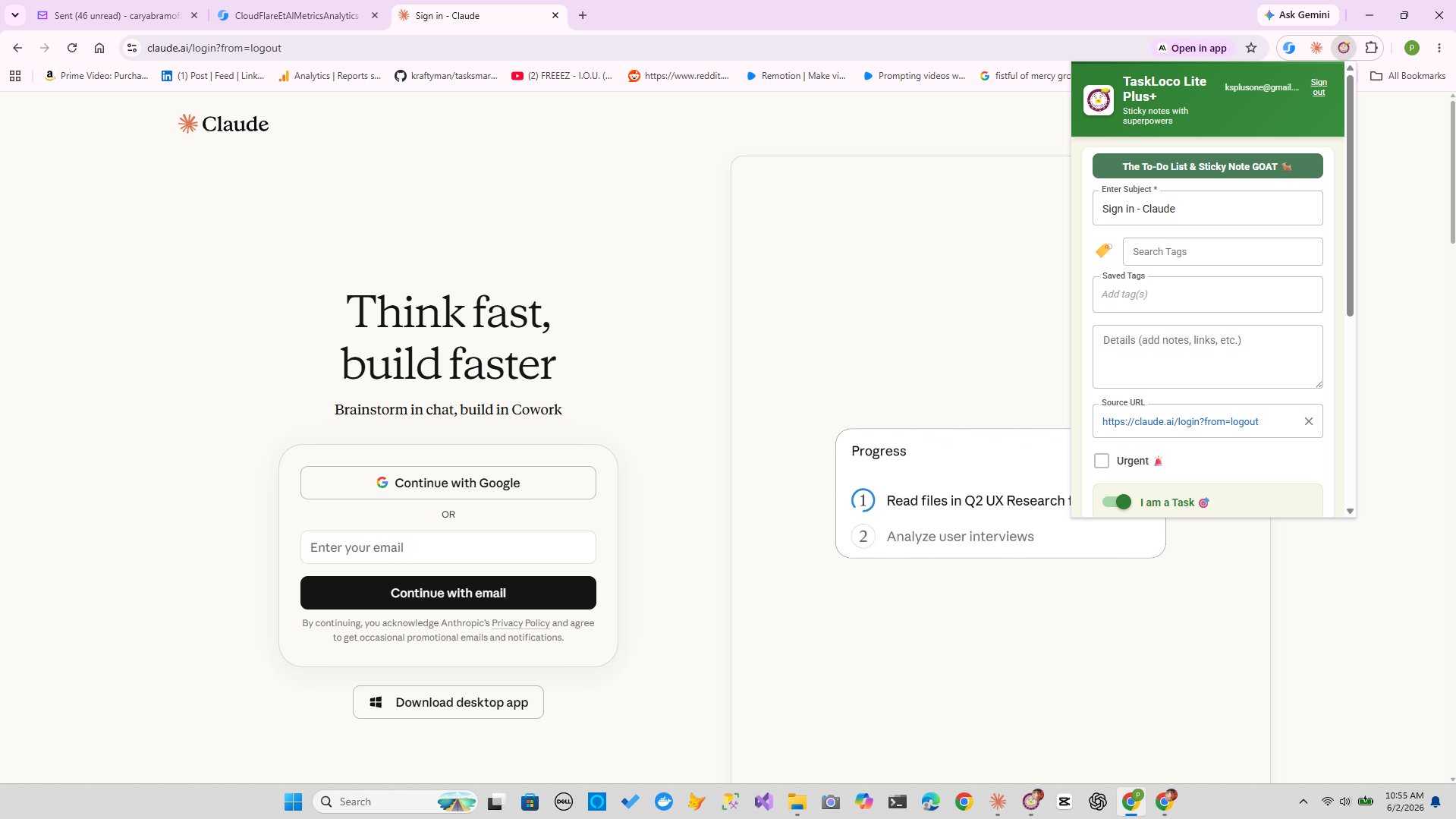
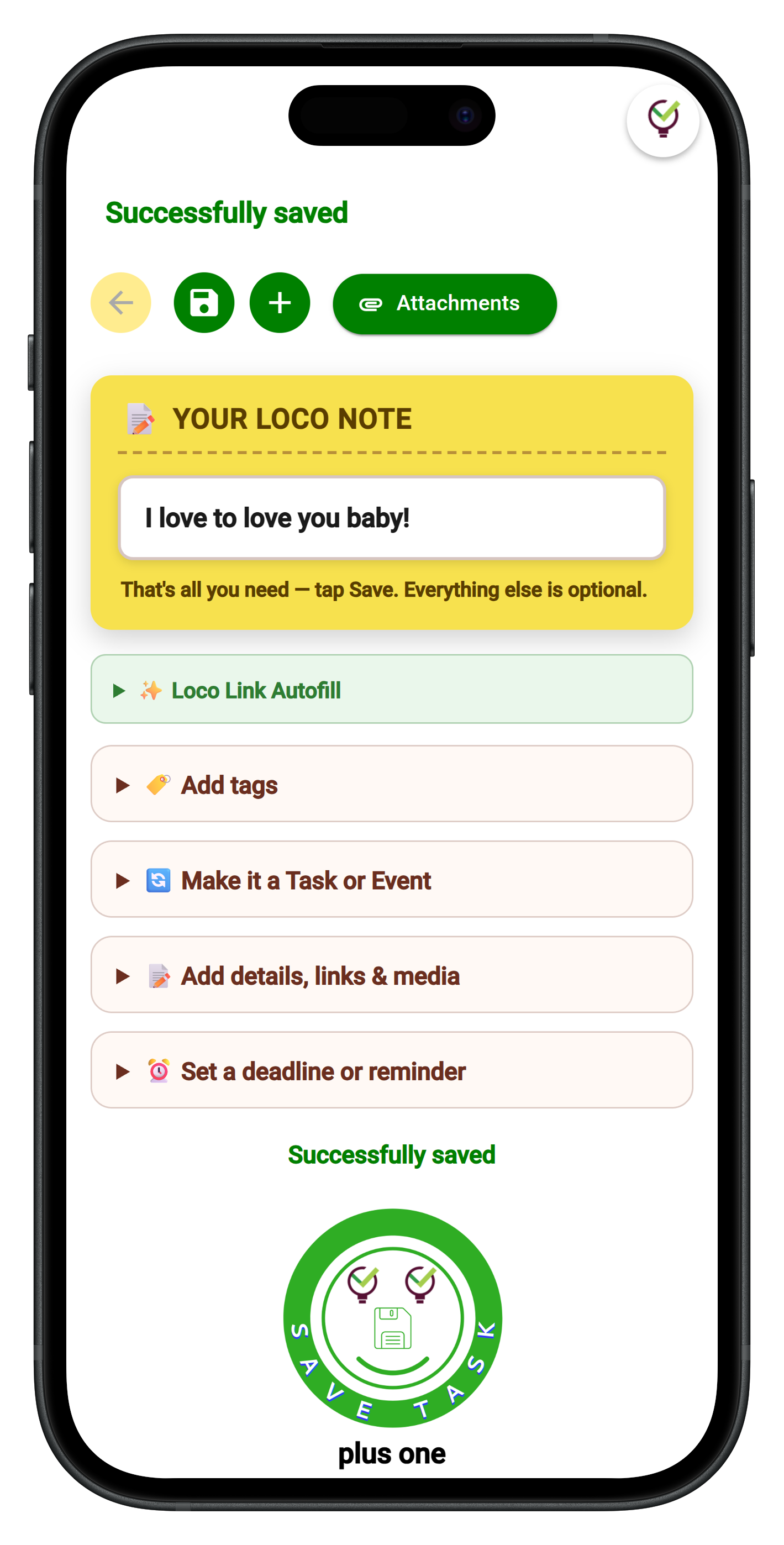
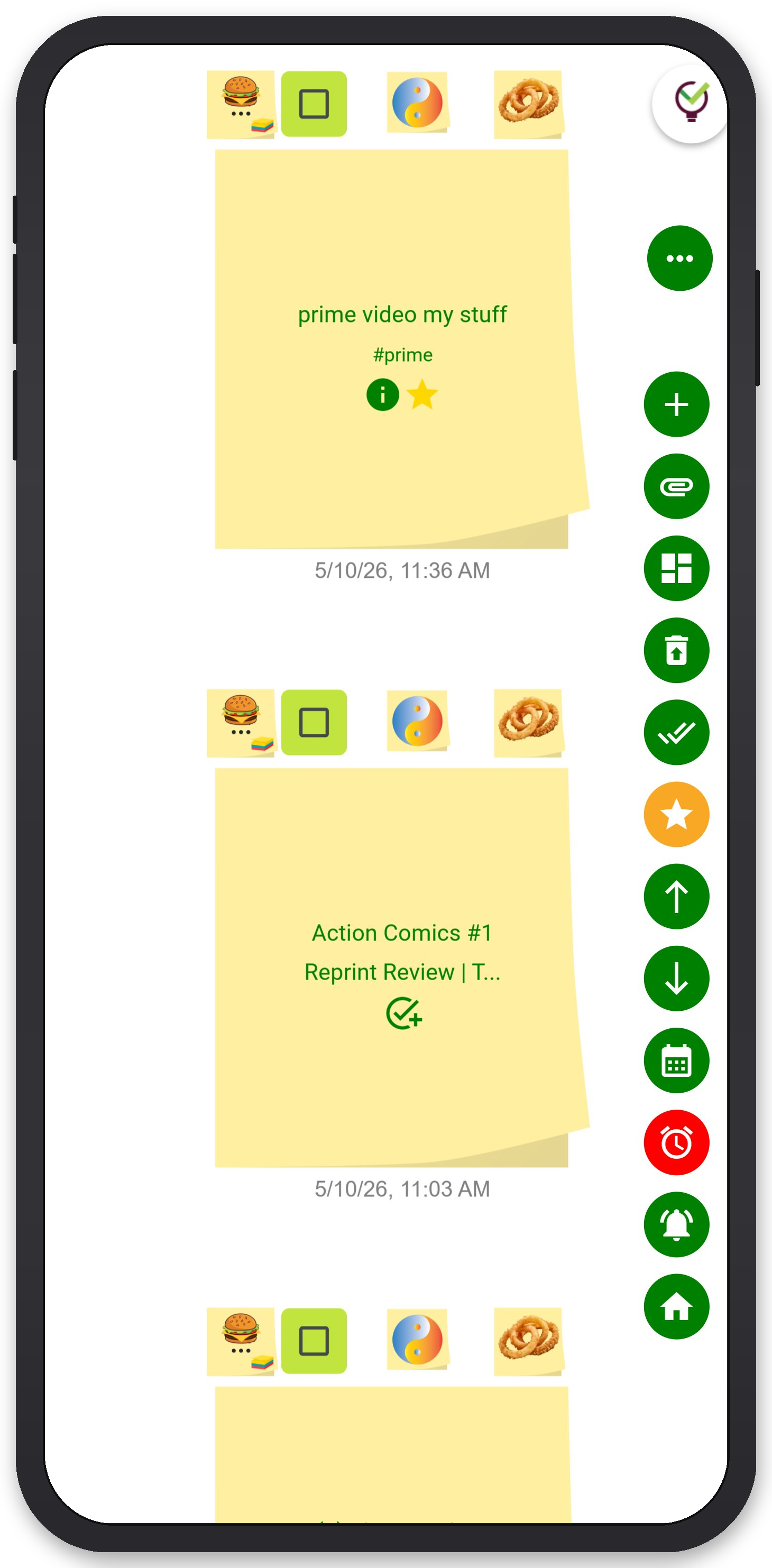
TaskLoco is built around the sticky note — which turns out to be one of the few formats that works genuinely well for both cognitive styles. In the wall view, notes are spatial objects you can arrange, cluster, and rearrange as your understanding grows. In list or dashboard view, those same notes become ordered, trackable tasks. No migration between apps, no copy-paste handoff — the same note serves both modes. Premium adds reminders delivered as push notifications directly to your phone and computer, with a deep-link back to the original note so you land exactly where you need to be. Optional email and SMS channels are available too. File attachments up to 10GB, calendar view, and full team sharing round out the picture for teams that need to share context without managing permissions.
TaskLoco Premium is regularly $9.99/month per person. Right now, charter members can lock in 50% off the regular price — forever. That means $4.99/month per person today. And if our price ever goes up, you still pay half. Always.
Code CHARTER50 auto-applies at checkout. First 500 spots only — once they're gone, this offer is gone permanently. Act fast while spots last.
Every Premium subscription includes unlimited notes, 10GB file storage, reminders, calendar, and team sharing. Each team member requires a separate subscription. 7-day free trial — no charge until day 8. Cancel anytime.
Free Options: TaskLoco
TaskLoco Lite
- Native iPhone & Android app
- Completely anonymous — no sign-in
- Data stays on your device
- Up to 20 notes
- Free forever
TaskLoco Lite Plus+
- Web app + Chrome extension
- Sign in with Google
- Wall syncs across all devices
- Up to 30 notes
- Free forever
Lock In 50% Off — Forever
7-day free trial. No charge until day 8. CHARTER50 auto-applies at checkout.
🔒 Lock In My Charter SpotSee TaskLoco in Action
Frequently Asked Questions
Am I a visual thinker or a list thinker?
The clearest test is to notice what you reach for when you are overwhelmed. If you grab a blank piece of paper and start drawing — mapping relationships, clustering ideas, making a diagram — you lean visual. If you grab a piece of paper and start writing a numbered list of what needs to happen, you lean toward sequential list thinking. Most people have a dominant style but use both depending on the type of work they are doing.
Can a single productivity app really work for both styles?
Most cannot, honestly. Tools that are built around a canvas or whiteboard metaphor tend to be weak at task tracking, reminders, and structured lists. Tools built around hierarchical task lists tend to be rigid and spatial-view-free. The rare exceptions are apps that treat their core object — the note, the card, the item — as something that can live in both a spatial view and a list view without any translation required. TaskLoco does this through its wall view and list view, where the same note appears in both.
Is visual thinking better for creative work and list thinking better for execution?
That is a common assumption but it oversimplifies things significantly. Plenty of highly visual thinkers are exceptional at execution — they just need to see their execution plan laid out spatially before they can move through it efficiently. And many great creative thinkers work in lists — they generate ideas sequentially and build on each one before moving to the next. The style is about cognitive architecture, not creative output. Both styles appear across every profession and every type of work.
What is the difference between TaskLoco Lite, Lite Plus+, and Premium?
TaskLoco Lite is the native iPhone and Android app — completely free, no sign-in required, completely anonymous, stores up to 20 notes directly on your device. It never syncs to any server. Lite Plus+ is the free web app and Chrome extension — sign in with Google, up to 30 notes, syncs across all your devices, and lets you capture any webpage in one click. Neither Lite nor Lite Plus+ includes reminders, file attachments, or team sharing. TaskLoco Premium adds unlimited notes, 10GB file storage, reminders delivered as push notifications (with optional email and SMS), calendar view, and full team sharing. Each team member requires their own separate subscription. $9.99/month per person (currently $4.99/month per person for first 500 charter members with code CHARTER50)
Do reminders in TaskLoco work differently for visual and list thinkers?
The mechanics are the same either way: a reminder fires as a push notification to your phone and computer, and it deep-links directly back to the original note so you land exactly where the context lives — not at a home screen where you have to go find it. Optional email and SMS channels are available too. What differs is how visual versus list thinkers set reminders up. Visual thinkers tend to attach reminders to notes they have placed in a specific spot on the wall view. List thinkers tend to set them on items near the top of a prioritized stack. Same feature, two workflows.
Why does the mismatch between your thinking style and your tools matter so much?
Cognitive load research consistently shows that when a tool's structure conflicts with your mental model, you spend working memory on the translation rather than on the actual problem. For a visual thinker using a purely list-based tool, that translation is constant — every time they want to understand how ideas relate, they have to mentally reconstruct the spatial map the tool is hiding. For a list thinker using a canvas-only tool, the reverse happens: every time they want to know what to do next, they have to impose sequence on a system that does not naturally surface it. The cumulative energy cost is real, even if it is invisible on any given day.
Are there work types where one style genuinely has an advantage?
Yes, in some narrow contexts. Work that is inherently sequential — manufacturing processes, legal procedures, step-by-step technical installations — tends to suit list thinkers because the work itself demands linear execution. Work that is inherently relational — strategic planning, research synthesis, creative direction, systems design — tends to suit visual thinkers because the core challenge is understanding how many things interact, not what order to do them. But most knowledge work contains both elements, which is why the most effective people usually learn to move between both modes even if they have a natural preference for one.
Born in Brooklyn. Powered by AWS. Your data stays yours.
TaskLoco is available on iPhone, Android, Chrome, and every web browser.