Most people don't fail at goals because they lack motivation. They fail because their goals are invisible. Buried in a notes app, jotted in a journal that gets closed, or typed into a spreadsheet nobody opens. Visual goal setting fixes this by putting your objectives somewhere your brain actually registers them — on a spatial canvas you interact with every day.
This isn't about making a pretty vision board and hoping for the best. Real visual goal setting means breaking goals into trackable steps, assigning deadlines, attaching relevant files, and building a system that keeps you accountable over weeks and months — not just the first excited Tuesday after you set them. The tools and methods you use matter enormously. Here's how to think about it.
What to Look for in a Visual Goal Setting Tool
Before recommending anything, it's worth being precise about what actually separates a useful visual goal-setting system from a pretty one that gets abandoned. There are three criteria that genuinely matter.
1. Spatial flexibility. Goals are not flat. A quarterly objective has sub-goals, dependencies, milestones, and daily actions underneath it. A good visual tool lets you arrange these spatially — grouping related items, spreading a timeline across a horizontal axis, or clustering everything for a single project in one zone. Rigid lists and tables fight this. A free-form canvas supports it.
2. Attachment and context. Goals don't exist in a vacuum. A fitness goal might be tied to a training plan PDF. A business goal might link to a financial model or a research article you saved. A visual goal tool needs to let you attach files, images, and links directly to the goal card — so when you revisit it, all the context is there. A tool that only stores a headline forces you to go hunting every time.
3. Reminders that bring you back. The biggest failure mode in goal tracking isn't forgetting the goal exists — it's failing to return to it on a schedule. Weekly reviews, milestone check-ins, deadline alerts. Without a built-in reminder system tied directly to your goal cards, even the most beautifully designed visual board quietly fades into the background.
How TaskLoco's Sticky-Note Wall Makes Goals Visible
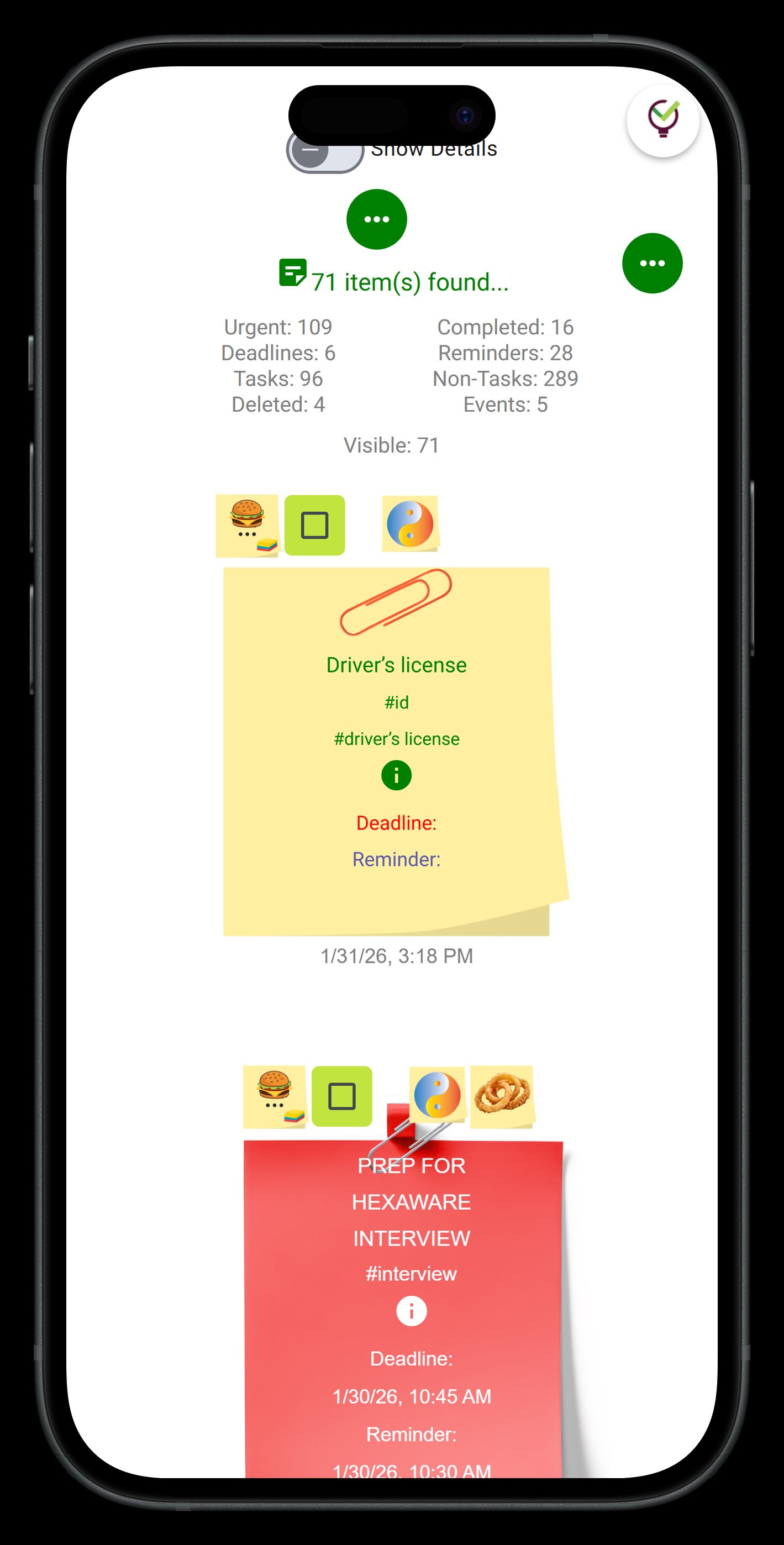
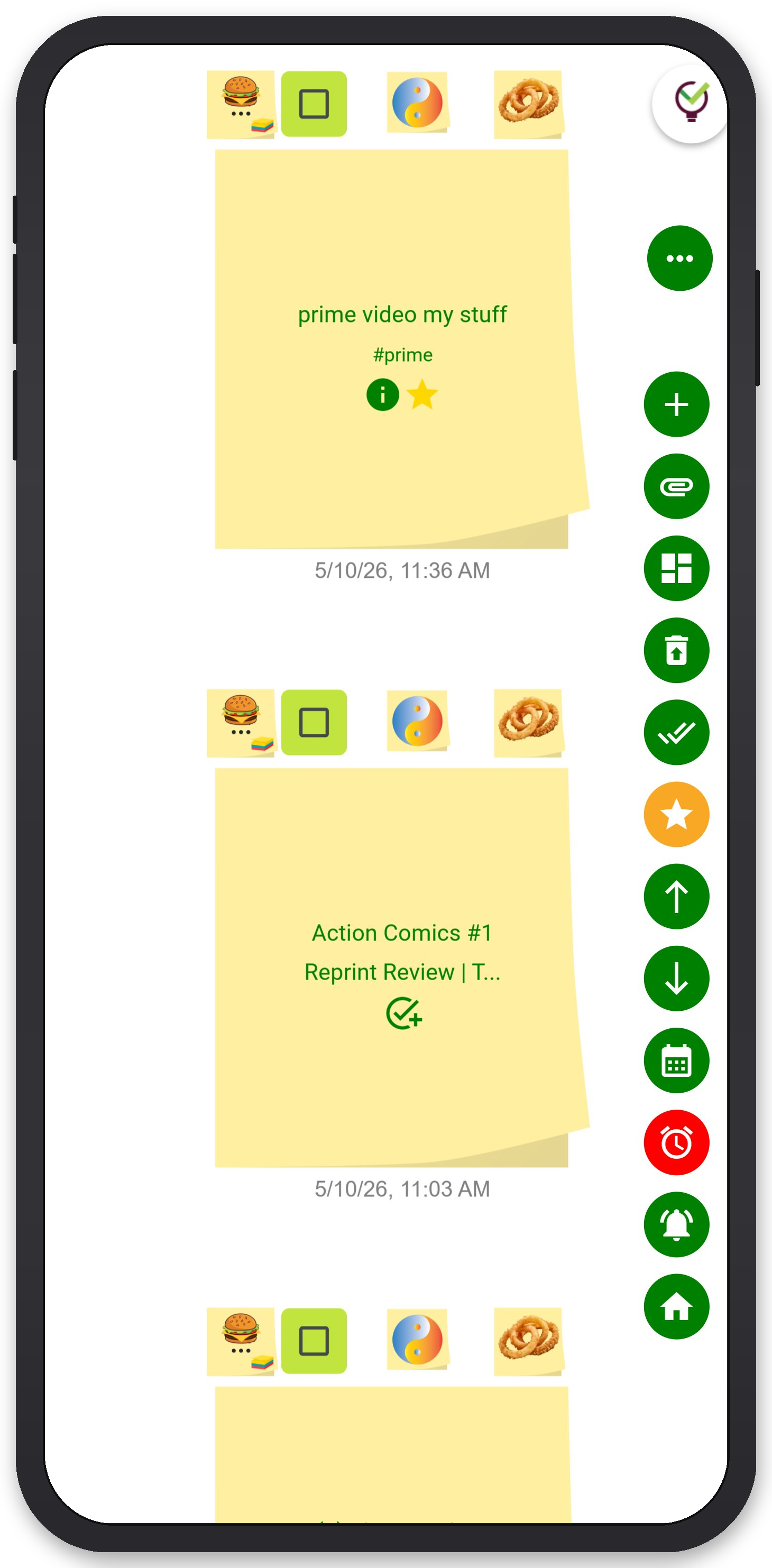
TaskLoco is built on a deceptively simple concept: sticky notes on a wall. But where physical sticky notes fall off and get lost, TaskLoco's wall is persistent, searchable, synced across devices, and loaded with the features that turn a note into a living goal card.
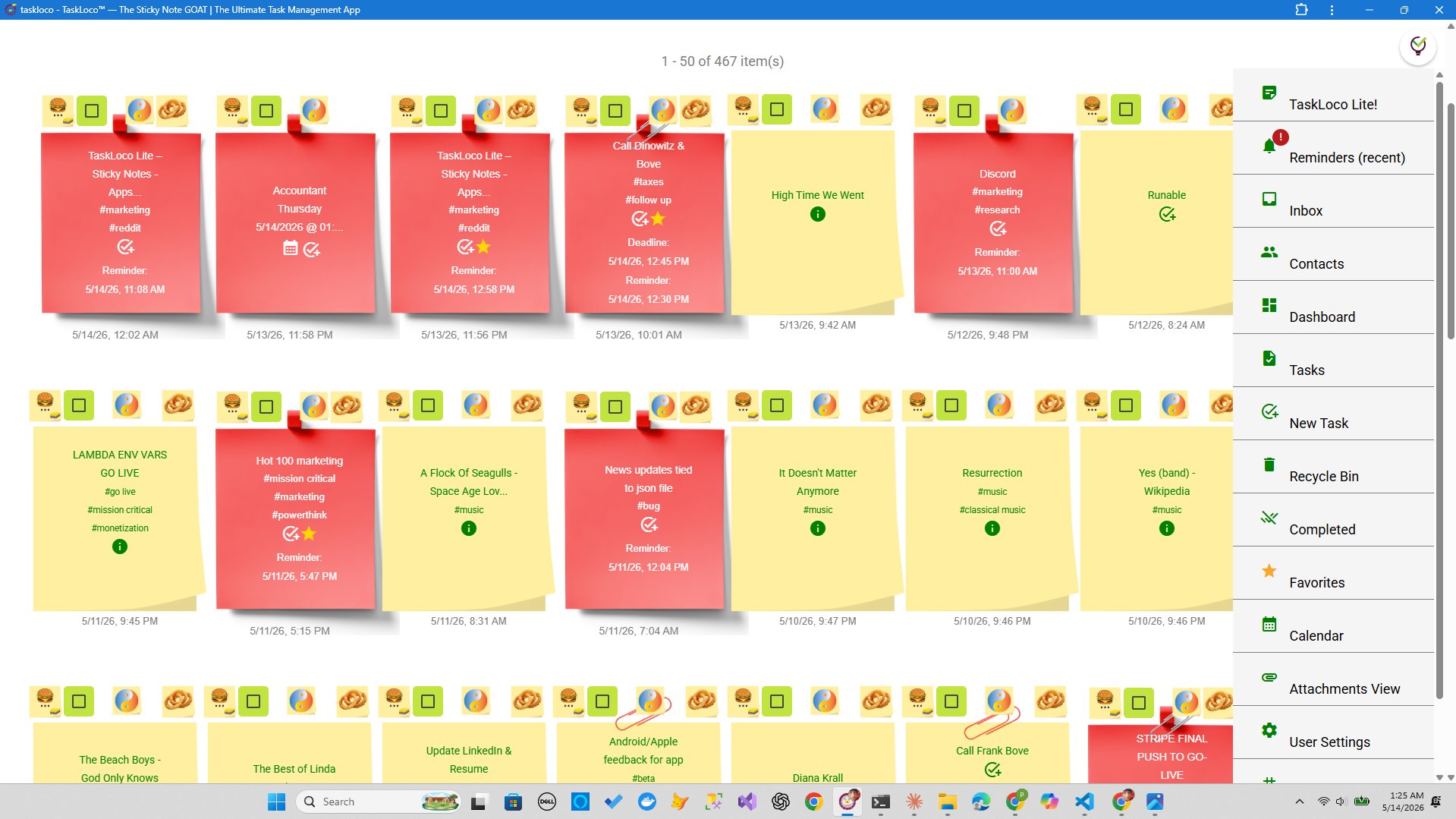
The wall view gives you a free-form canvas. You can cluster notes by project, spread a timeline left to right across quarters, or stack a goal at the top with its action steps pinned beneath it. There's no predetermined structure forcing you into someone else's idea of how goals should be organized. You build the layout that matches how your brain works.
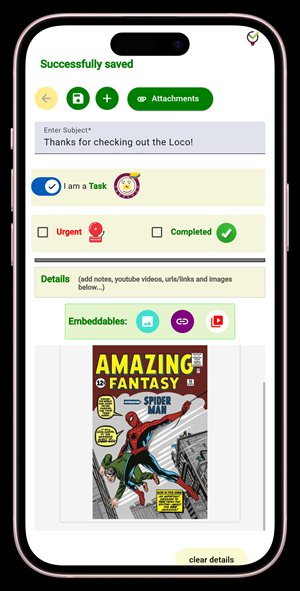
Each note on the wall can carry real weight. Attach a PDF training plan, a budget spreadsheet, a contract, or a screenshot — Premium includes 10GB of file storage per person, with additional tiers available if you need more. You can also embed photos directly into a note, so a visual reference is right there when you open the card, not one more click away in a separate folder.
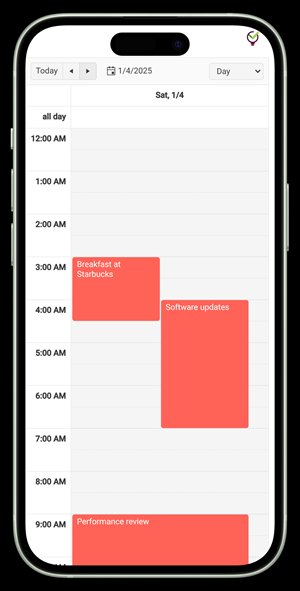
The calendar view in Premium shows all your goal deadlines and milestones in one timeline, which is where visual goal setting pays off most. Instead of a list of due dates, you see the shape of your quarter — which weeks are heavy, where you have breathing room, when milestones cluster. That spatial awareness changes how you plan and pace your effort.
A Practical System: From Vision to Daily Action
Visual goal setting only works if you have a structure that connects big ambitions to the work you do today. Here's a framework that works well inside TaskLoco — but the logic applies to any spatial tool that meets the three criteria above.
Layer 1 — Anchor goals. Create one note per major goal. Keep it short: the goal statement, the deadline, and the single metric that tells you whether you achieved it. Pin these to the top row of your wall. These are your anchors. Everything else flows from them.
Layer 2 — Milestone notes. Under each anchor goal, create notes for the 3-5 milestones that lead to it. These have their own deadlines and live in a middle row. Attach relevant reference files here — plans, research, templates.
Layer 3 — Weekly actions. The bottom row is your current sprint. These are the specific things you'll do this week. Each one links back to a milestone. When you finish one, archive it. When you complete a milestone, move the anchor goal note to a 'won' column on the right side of your wall.
Set a reminder on each milestone note — pushed to your phone on the day you scheduled your review. One tap on the notification takes you directly back to that milestone card. This is what turns a beautiful canvas into an actual accountability system rather than a one-time planning exercise.
TaskLoco Premium is regularly $9.99/month per person. Right now, charter members can lock in 50% off the regular price — forever. That means $4.99/month per person today. And if our price ever goes up, you still pay half. Always.
Code CHARTER50 auto-applies at checkout. First 500 spots only — once they're gone, this offer is gone permanently. Act fast while spots last.
Every Premium subscription includes unlimited notes, 10GB file storage, reminders, calendar, and team sharing. Each team member requires a separate subscription. 7-day free trial — no charge until day 8. Cancel anytime.
Free Options: TaskLoco
TaskLoco Lite
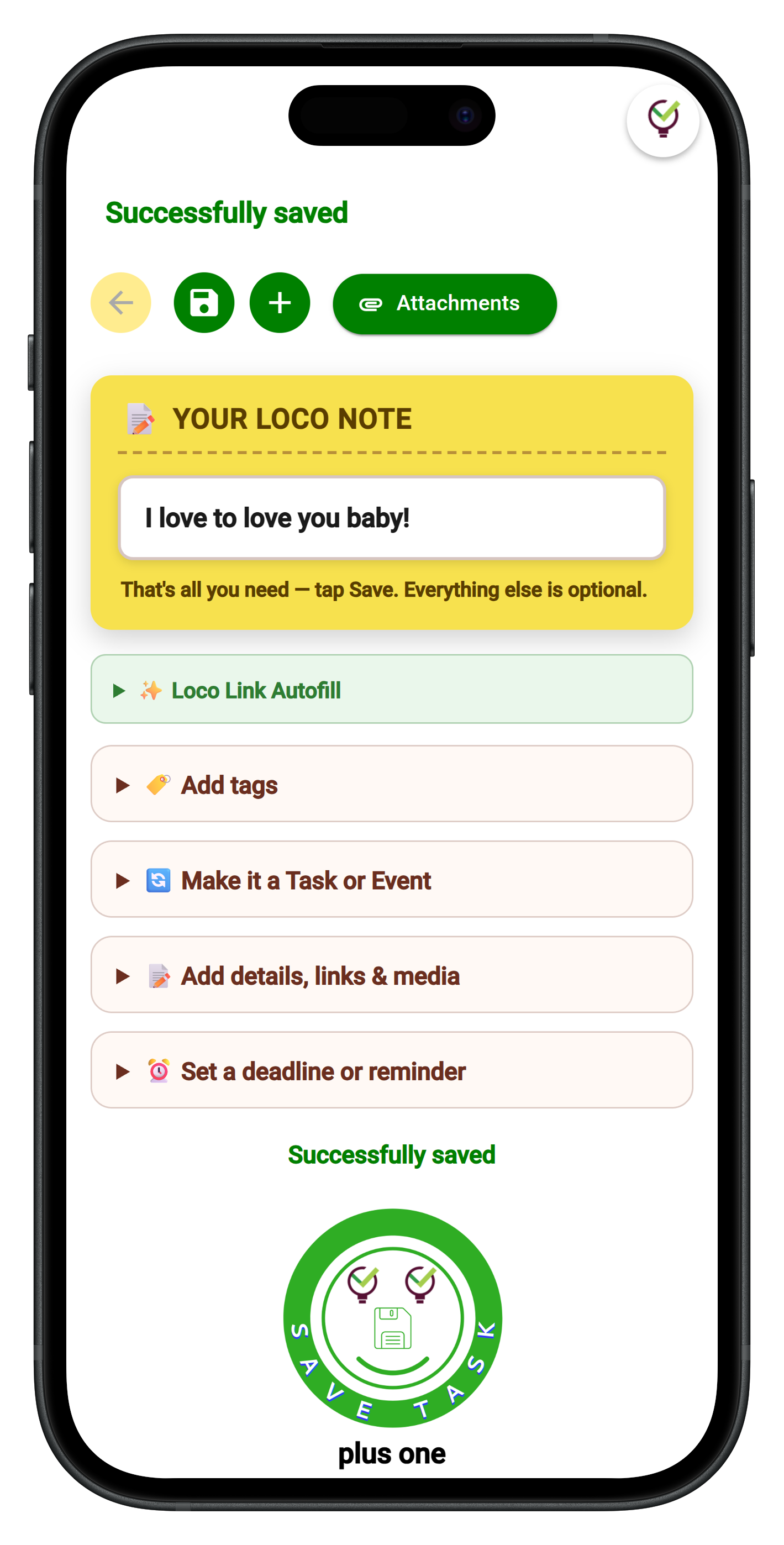
- Native iPhone & Android app
- Completely anonymous — no sign-in
- Data stays on your device
- Up to 20 notes
- Free forever
TaskLoco Lite Plus+
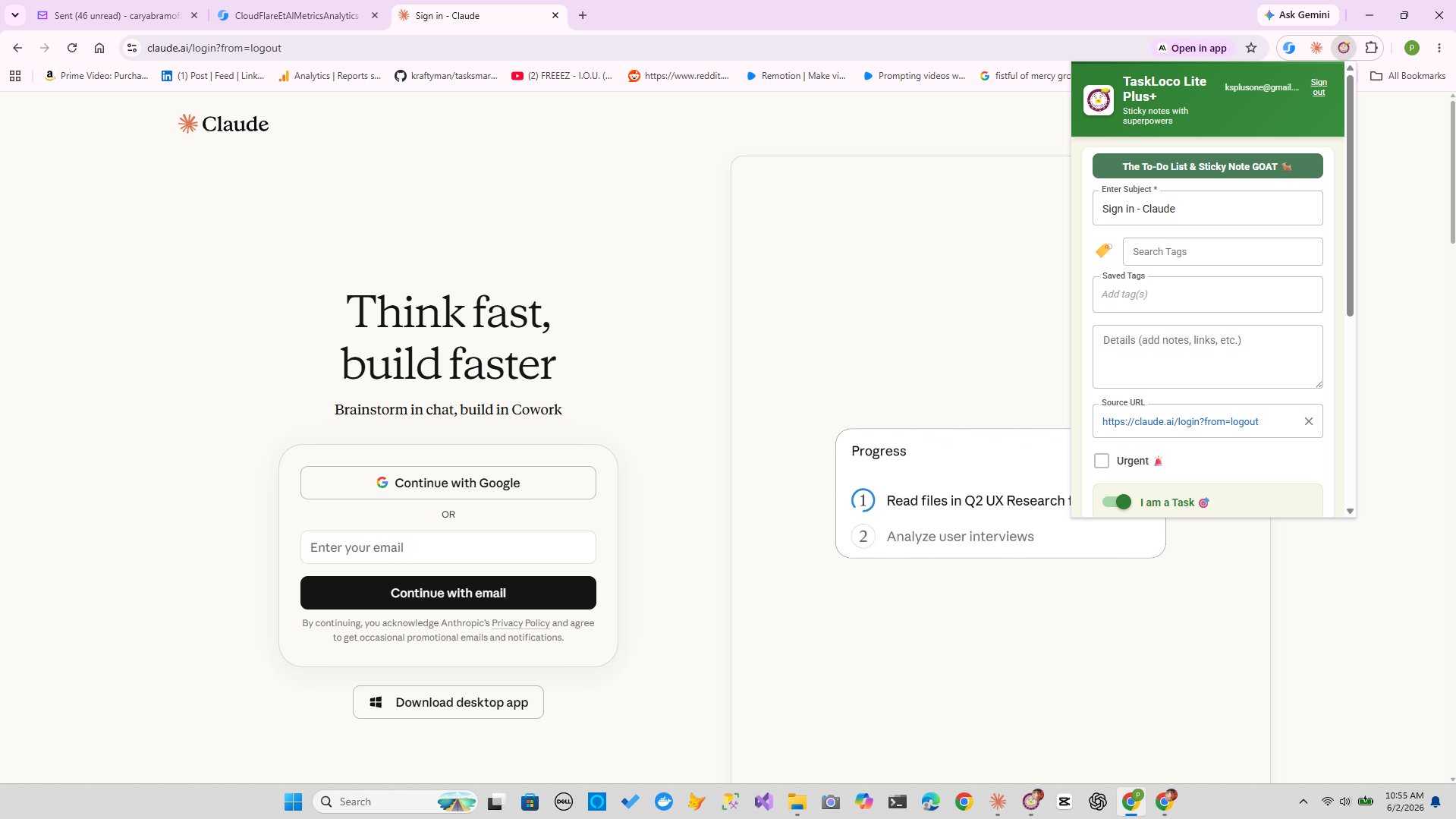
- Web app + Chrome extension
- Sign in with Google
- Wall syncs across all devices
- Up to 30 notes
- Free forever
Lock In 50% Off — Forever
7-day free trial. No charge until day 8. CHARTER50 auto-applies at checkout.
🔒 Lock In My Charter SpotSee TaskLoco in Action
Frequently Asked Questions
What is visual goal setting?
Visual goal setting is the practice of representing your goals spatially — on a canvas, board, or wall — rather than in a flat text list. The spatial layout lets you see relationships between goals and milestones, track progress at a glance, and keep objectives visible enough that your brain stays oriented toward them. Research on spatial cognition consistently shows that people recall and act on information more reliably when it's organized spatially rather than linearly.
Why is visual goal setting more effective than writing goals in a list?
Lists hide priority and relationship. A goal at position seven in a list gets about one-seventh of your attention compared to the first item, regardless of its actual importance. A spatial canvas lets you express priority through position, size, and grouping — so your most important goal literally occupies the most prominent spot. You also see the full picture in one scan, rather than reading sequentially and losing the forest for the trees.
How does TaskLoco support visual goal setting?
TaskLoco's wall view is a free-form sticky-note canvas where you arrange goals, milestones, and action steps spatially. Premium adds unlimited notes, a calendar view showing all deadlines in one timeline, file attachments (10GB storage per person), and reminders delivered as push notifications that deep-link back to the exact goal note. Team sharing lets you share goal cards with collaborators — they can clone and own the note themselves. $9.99/month per person (currently $4.99/month per person for first 500 charter members with code CHARTER50)
What's the difference between a vision board and visual goal setting?
A vision board is inspirational — images and words representing what you want your life to look like. Visual goal setting is operational — it breaks specific, measurable goals into milestones and tasks, assigns deadlines, and builds a review system. A vision board is the 'why.' Visual goal setting is the 'how and when.' The most effective systems use both: an anchor layer of aspiration and an action layer of trackable steps.
Can I use TaskLoco for goal setting on my phone?
Yes. TaskLoco Lite Plus+ and Premium run in your phone's browser, giving you full access to your wall, notes, and calendar on any mobile device. TaskLoco Lite — the native app in the App Store and Play Store — is a fast anonymous scratch pad for capturing ideas on the go (up to 20 notes, no sign-in). For full goal-setting features including reminders, file attachments, and unlimited notes, you use the Premium web app through your phone's browser.
How do I stay accountable to visual goals over time?
The single most important habit is a scheduled review — weekly at minimum, monthly for bigger goals. In TaskLoco Premium, set a reminder on each milestone note: it arrives as a push notification on your phone or computer, and tapping it deep-links directly back to that goal card. No hunting, no friction. The visual wall also helps because you see the full system every time you open it — which passively reinforces awareness even between formal review sessions.
Is TaskLoco free for visual goal setting?
TaskLoco has two free tiers. Lite (native iPhone and Android app) stores up to 20 notes on your device with no sign-in required — good for quick capture. Lite Plus+ (web app and Chrome extension) syncs up to 30 notes across all your devices and includes the Chrome extension for one-click webpage capture. For full visual goal setting — unlimited notes, reminders, file attachments, calendar view, and team sharing — you need Premium. $9.99/month per person (currently $4.99/month per person for first 500 charter members with code CHARTER50)
Born in Brooklyn. Powered by AWS. Your data stays yours.
TaskLoco is available on iPhone, Android, Chrome, and every web browser.