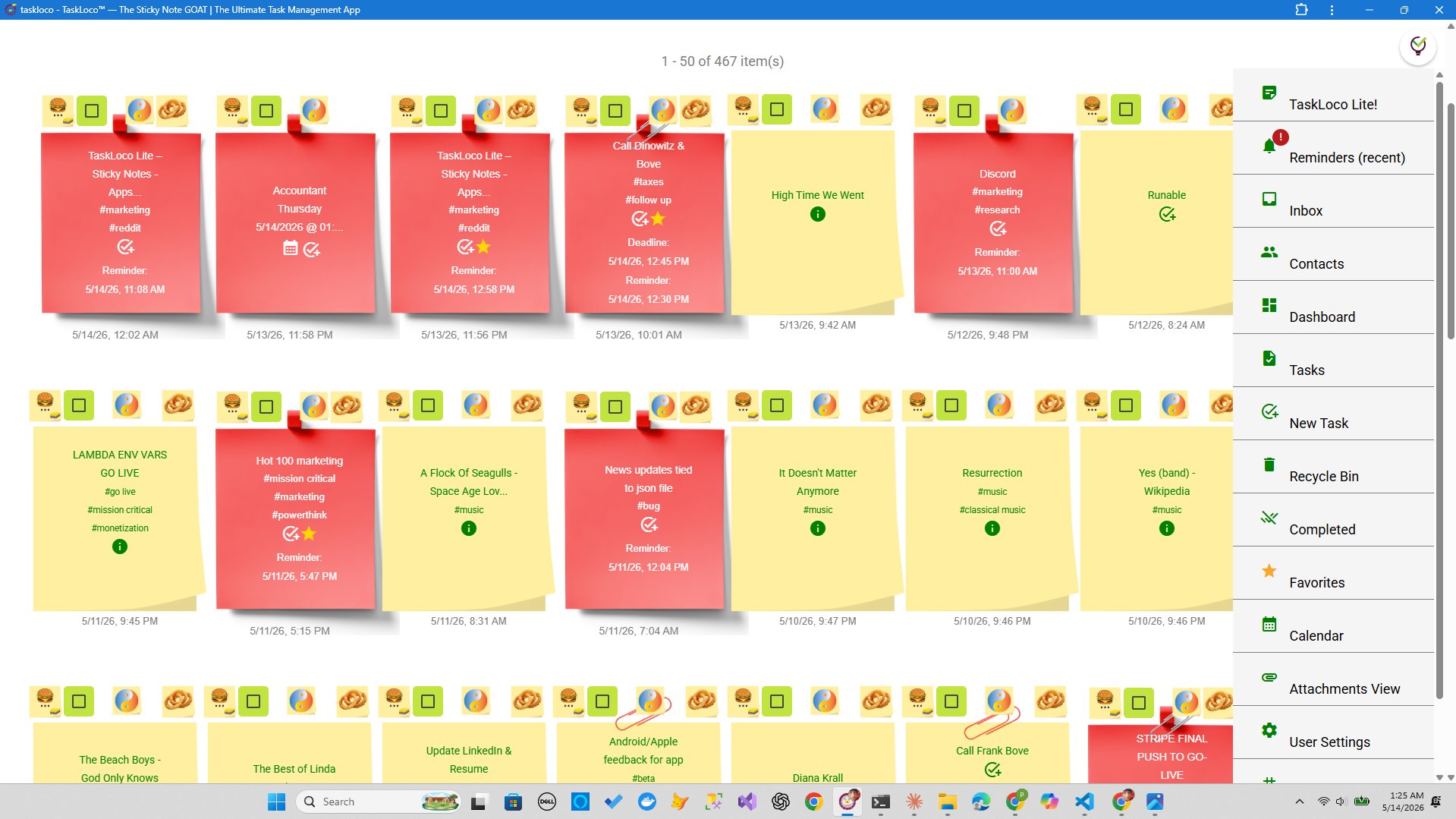
A plain text list has one fatal flaw: everything looks equally important. The urgent thing and the nice-to-have sit shoulder to shoulder, and your brain has to do the sorting work every single time you glance at it. That's not a productivity system — that's just a different place to feel overwhelmed.
Visual to-do apps solve this by treating your tasks the way your brain actually processes them: spatially. Cluster the work-in-progress stuff here, the waiting-on-someone-else stuff there, the someday pile over in the corner. You see the shape of your week at a glance instead of reading it line by line. This article breaks down what actually matters when you're choosing a visual task manager — and why TaskLoco's sticky-note approach hits the sweet spot for most people.
What to Look for in a Visual To-Do App
The visual task management space ranges from lightweight sticky-note boards to full-blown project suites with Gantt charts and dependency mapping. Before you pick one, nail down which of these three things matters most to you — because tools that optimize for all three at once usually do none of them well.
1. Capture speed. A visual app that takes eight clicks to add a task will get abandoned inside two weeks. The best tools let you add a note in one tap or keystroke, then worry about organizing it later. If the capture flow has friction, you'll revert to a notes app or a crumpled Post-it.
2. Spatial flexibility vs. enforced structure. Some visual tools lock you into columns (To Do / Doing / Done). Others give you a free canvas. Neither is wrong — but they serve different brains. Kanban columns work well for teams tracking work states. A free canvas works better for individuals who want to group tasks by project, energy level, or context rather than status. Know which you are before you commit.
3. The jump-back mechanism. Visual apps are great for planning sessions but can fail quietly in day-to-day execution. What pulls you back to the board when you're deep in email or a browser tab? The apps that stick are the ones that push reminders to your device — not just sit there waiting for you to remember to open them.
Why Sticky Notes Beat Columns for Most People
Kanban boards are everywhere. They work brilliantly for software teams tracking tickets through defined states. For everyone else — a freelancer juggling five clients, a marketing lead managing a campaign calendar, a founder wearing twelve hats — the rigid To Do / In Progress / Done structure is a lie. Most tasks don't have a clean status. They're waiting, half-done, blocked, or just 'I need to think about this more.'
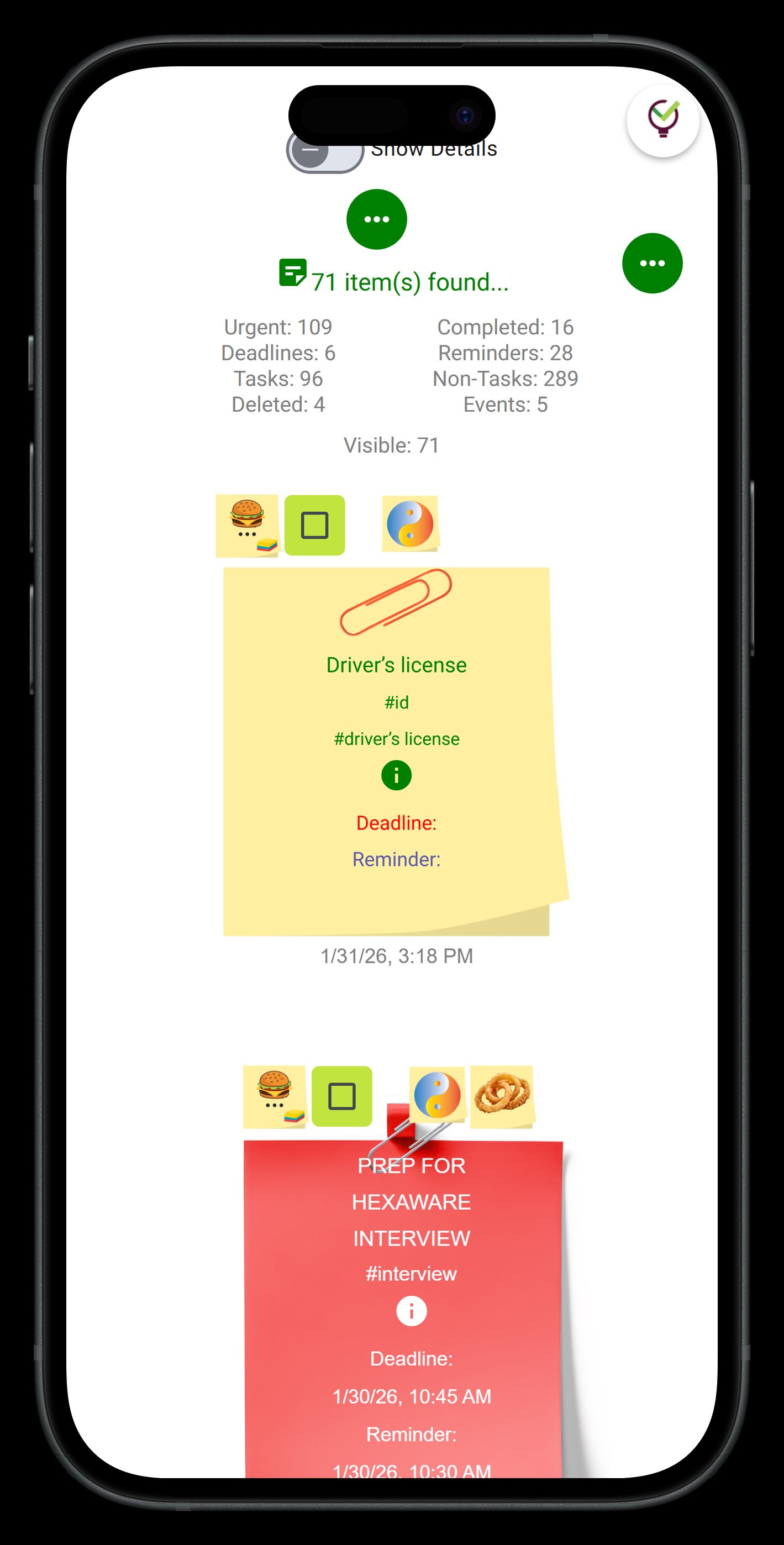
Sticky notes fix this by making organization something you invent rather than something you inherit. You group by whatever makes sense to you today. Client A's stuff in the top left. Stuff that needs a phone call in the bottom right. The big scary project that you're slowly chipping away at gets its own cluster in the middle. Tomorrow, if your priorities shift, you move things around in seconds.
The spatial metaphor also makes priority visible without color-coded labels or 1-2-3 rankings. Important things end up in the center. Someday things drift to the edges. Your eye goes where the weight is — no tagging system required.
TaskLoco: A Sticky-Note Board That Actually Follows You
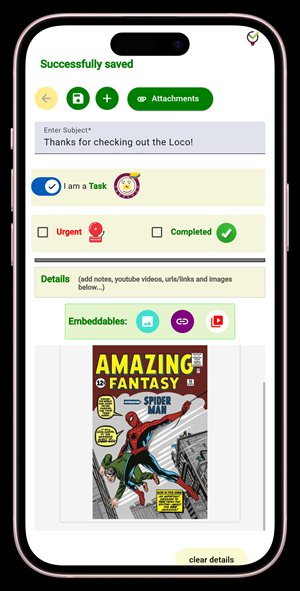
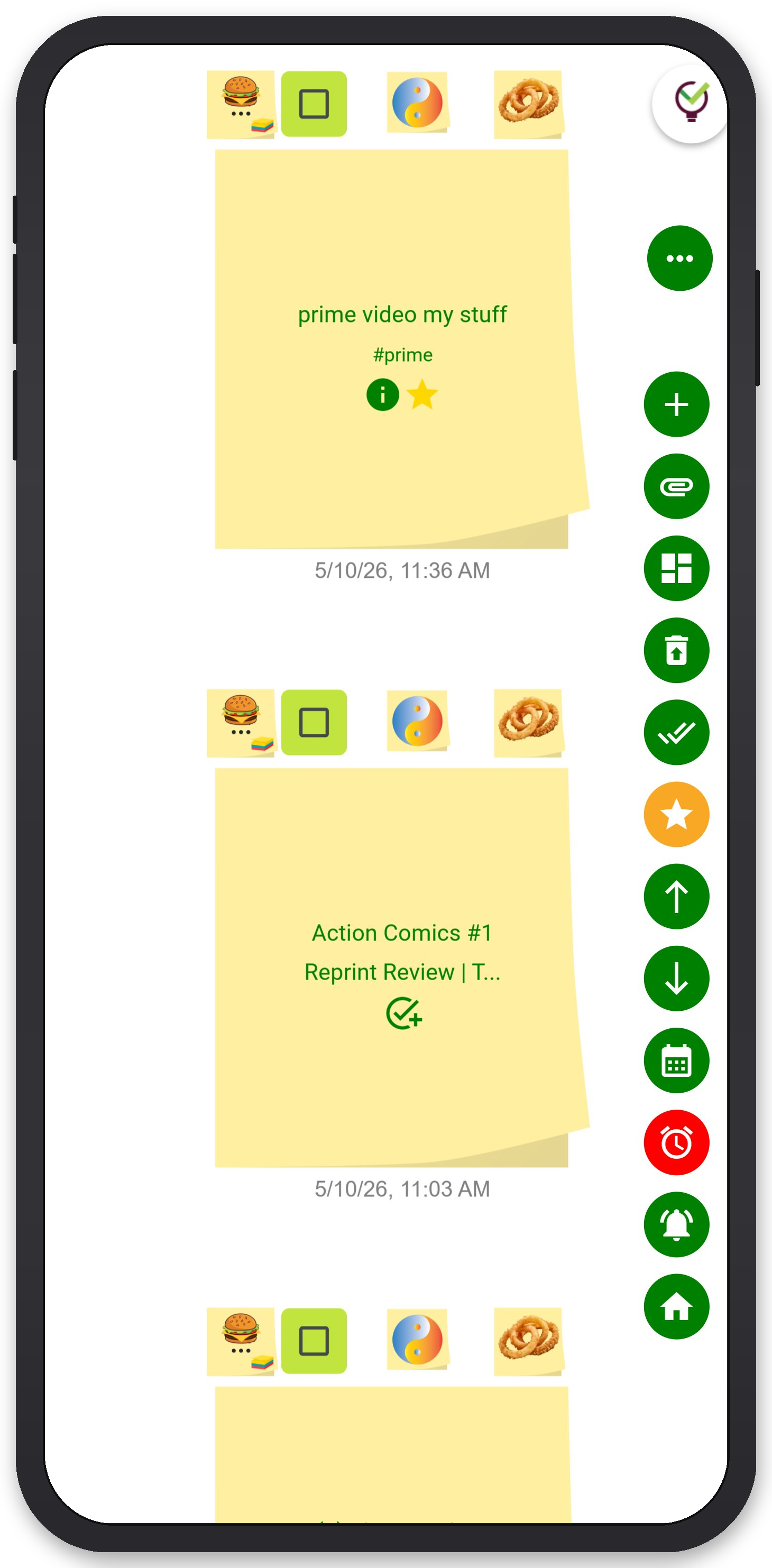
TaskLoco is built around a single organizing metaphor: the sticky note. Each note can hold a title, a checklist of tasks, photos, file attachments, and a reminder. Notes live on a visual wall where you arrange them however you want. That's the whole model — and the simplicity is the feature.
What separates TaskLoco from a basic drag-and-drop board is what happens when you're not looking at the board. Set a reminder on any note, and it fires as a push notification to your phone and computer, deep-linking directly back to the note so you're never hunting for context. You can also add optional email or SMS notifications on top of that. The board doesn't just sit there hoping you'll check it — it reaches out.
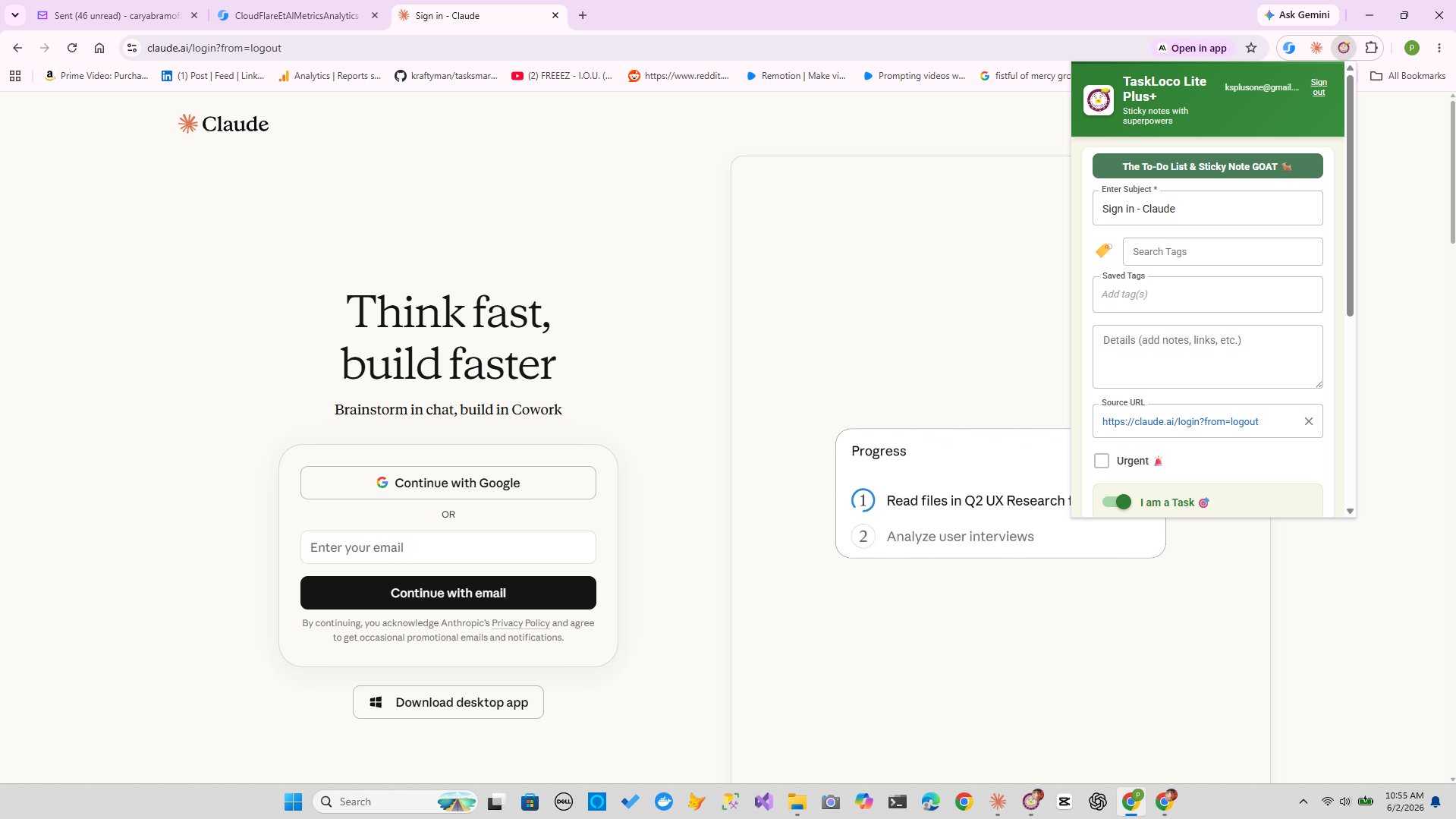
The Chrome extension is another capture-speed trick worth knowing about. When you're in a browser tab — a product page you need to follow up on, an article you want to reference later, a client's LinkedIn — one click saves it as a note on your board. No copy-paste, no tab hoarding, no 'I'll remember this later' self-deception.
File attachments are included with Premium (10GB of storage), which means your notes aren't just reminders — they're the actual place where relevant documents, screenshots, and contracts live. You stop hunting through email threads and Slack channels for the file that goes with the task.
Team sharing works the way email does: you share a note, the recipient gets it, they can clone it and make it their own. No permission tiers, no access levels to configure, no admin panel to navigate. It's the collaboration model that makes sense before your team has an IT department.
Free Tiers, Premium, and How to Pick the Right One
TaskLoco has three tiers, and the differences are real enough to matter for how you work.
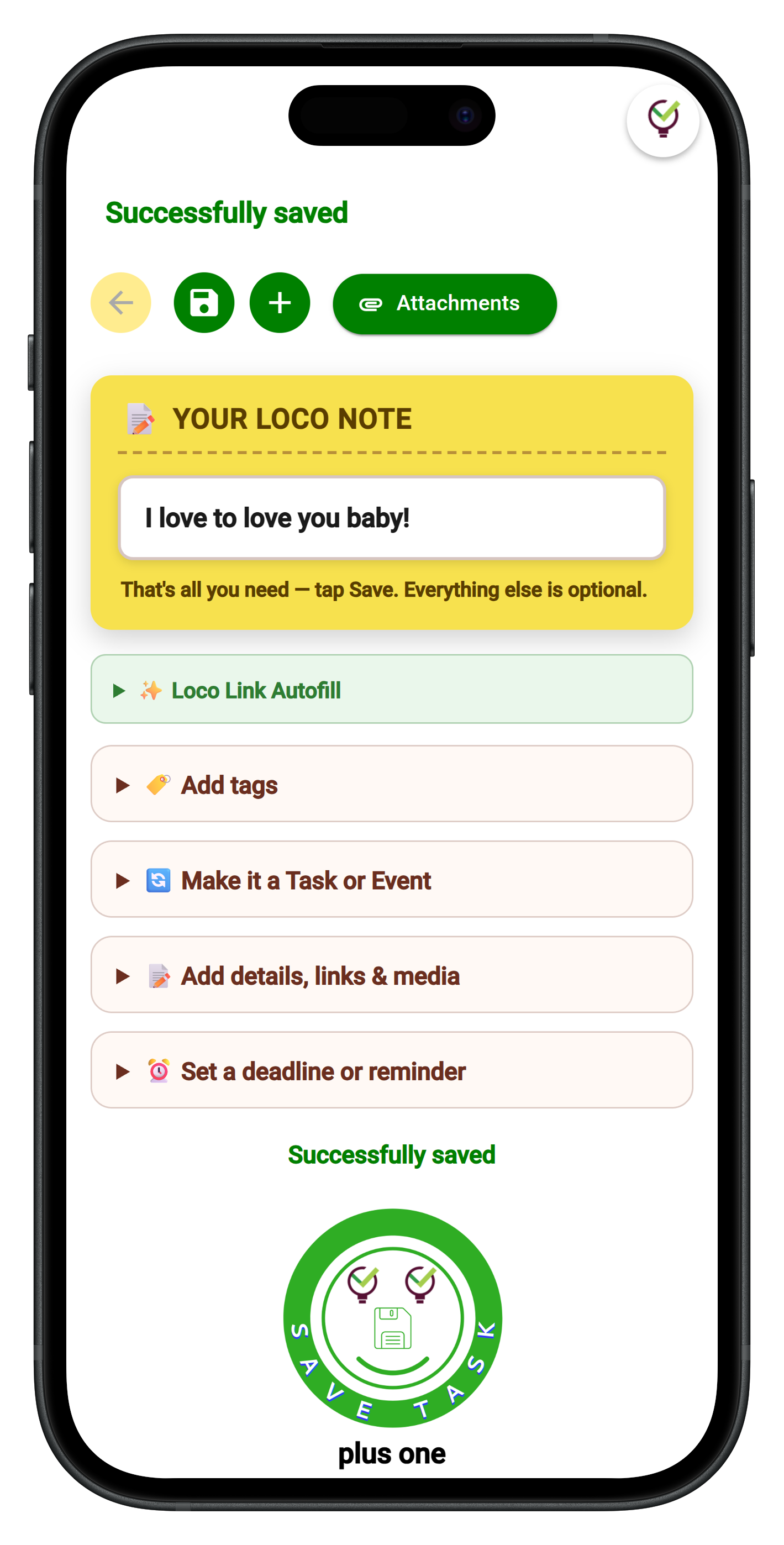
TaskLoco Lite is a native iPhone and Android app — the only version in the App Store and Google Play. It's completely anonymous: no sign-in, no account, no syncing, ever. It stores up to 20 notes in a JSON file on your device. It's a genuinely useful scratchpad for people who want zero digital footprint and don't need their tasks to follow them to another device. No reminders, no attachments, no sharing.
TaskLoco Lite Plus+ runs as a web app plus Chrome extension. Sign in with Google, get up to 30 notes that sync across all your devices. The Chrome extension lets you capture any webpage in one click. Still no reminders, no file attachments, no team sharing — but for a free tier, the cross-device sync and capture tool alone make it genuinely useful.
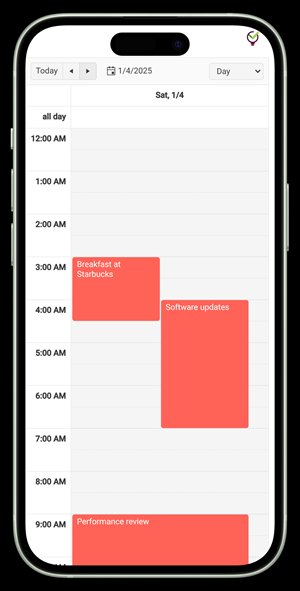
TaskLoco Premium is where the full visual system lives: unlimited notes, unlimited tasks, calendar view, 10GB file storage, push notification reminders, optional email and SMS notifications, and team sharing. If you're replacing a cluttered mix of a notes app, a reminder app, and a file storage folder, Premium is the consolidation play that actually works.
How TaskLoco Compares
| Feature | TaskLoco | Plain List Apps |
|---|---|---|
| Core organizing metaphor | Free-canvas sticky-note wall — arrange by any logic you choose | Linear lists or rigid columns (Kanban) |
| Free native mobile app | TaskLoco Lite — anonymous, no sign-in, 20 notes on-device FREE | Varies — many require account creation even for free tier |
| Free synced tier | Lite Plus+ — 30 notes, syncs across devices, free with Google sign-in FREE | Some offer free sync with heavy feature restrictions or ads |
| Reminders | Push notifications to phone and computer; optional email and SMS add-ons; deep-links back to the note | Varies — many list apps offer basic date reminders without deep-linking |
| File attachments | 10GB included with Premium; attach files directly inside the note | Most plain list apps have no file attachment capability |
| Chrome extension for web capture | One-click capture of any webpage directly into a note — free FREE | Rare in to-do apps; usually requires copy-paste or a separate clipper |
| Calendar view | Built into Premium — see tasks and events in a calendar layout | Uncommon in lightweight list apps; usually a separate paid add-on |
| Team sharing | Yes — included with Premium. Each team member requires a separate subscription — currently $9.99/month per person, but TaskLoco is offering a Charter Member special: 50% off for life, currently $4.99/month per person for the first 500 subscribers with code CHARTER50. | Plain list apps rarely have team sharing; project tools often lock it behind paid plans |
| Privacy / anonymity option | Lite requires zero sign-in, zero account — truly anonymous FREE | Most apps require account creation even for free access |
| Extra storage add-ons | 10GB / 50GB / 200GB / 1TB tiers, stackable up to 100x | Most list apps offer no file storage at all |
| Full-text search | Search across all notes and attachments | Basic list apps often search only titles, not content |
| Spatial layout / free canvas | Move notes anywhere on the wall — group by project, energy, context, or mood | Plain lists and most Kanban tools enforce fixed structure |
| Gantt charts / project timelines | Not available — TaskLoco is note and task focused | Some project management tools offer Gantt-style views |
| API / third-party integrations | Limited integrations currently | Established tools often have broader integration libraries |
| Natural language task input | Not available | Some apps parse 'call John tomorrow at 3pm' automatically |
| Learning curve | Minimal — if you've used a sticky note, you understand the model | Heavy project tools have steep onboarding; plain list apps are trivial but limiting |
| Per-person subscription model | One flat price per person, no seat minimums, no tier ladders | Many tools charge differently by plan tier or team size |
Who Should Use Each
Use TaskLoco if…
- You think spatially and want to see your tasks as a visual landscape, not a numbered list
- You need reminders that push to your phone and computer and link straight back to the relevant note
- You want tasks, files, calendar, and team sharing in one place without onboarding a complex project tool
- You capture ideas from the web constantly and want a one-click way to turn any page into a note
- You want a genuinely anonymous, no-sign-in option for private task tracking on your phone
- You need file attachments living right next to the tasks they belong to — not scattered across email and cloud folders
Use Plain List Apps if…
- You need Gantt charts, project dependencies, and timeline views for complex multi-team delivery
- Your organization requires enterprise SSO, compliance certifications, or advanced security auditing
- You rely heavily on third-party API integrations with tools like Salesforce, Jira, or custom internal systems
- Your workflow depends on natural language task input that parses dates and assignees automatically
- You need database-style custom fields, relations, or formulas inside your task records
TaskLoco Premium is regularly $9.99/month per person. Right now, charter members can lock in 50% off the regular price — forever. That means $4.99/month per person today. And if our price ever goes up, you still pay half. Always.
Code CHARTER50 auto-applies at checkout. First 500 spots only — once they're gone, this offer is gone permanently. Act fast while spots last.
Every Premium subscription includes unlimited notes, 10GB file storage, reminders, calendar, and team sharing. Each team member requires a separate subscription. 7-day free trial — no charge until day 8. Cancel anytime.
Free Options: TaskLoco
TaskLoco Lite
- Native iPhone & Android app
- Completely anonymous — no sign-in
- Data stays on your device
- Up to 20 notes
- Free forever
TaskLoco Lite Plus+
- Web app + Chrome extension
- Sign in with Google
- Wall syncs across all devices
- Up to 30 notes
- Free forever
Lock In 50% Off — Forever
7-day free trial. No charge until day 8. CHARTER50 auto-applies at checkout.
🔒 Lock In My Charter SpotSee TaskLoco in Action
Frequently Asked Questions
What makes a to-do app 'visual' and why does it matter?
A visual to-do app organizes tasks spatially rather than as a plain numbered or bulleted list. Instead of reading tasks line by line, you see them as clusters on a board — grouped by project, priority, or any logic that makes sense to you. This matters because spatial layout communicates relative importance at a glance. Your eye goes to the dense cluster in the center; the sparse corner tells you 'low priority.' No tagging or color-coding system required — position alone carries meaning.
Is TaskLoco only for individuals, or does it work for teams?
It works for both. Individuals use the visual wall to manage personal projects, client work, or daily planning. Teams use TaskLoco's sharing feature — you share a note the way you'd share an email, the recipient gets it and can clone it as their own. No permission levels, no admin configuration. Each team member needs their own separate subscription.
What's the difference between TaskLoco Lite and Lite Plus+?
TaskLoco Lite is a native iPhone and Android app — completely anonymous, no sign-in, no account, no syncing. It stores up to 20 notes on your device only. TaskLoco Lite Plus+ is a web app with a Chrome extension. You sign in with Google, get up to 30 notes that sync across all your devices, and can capture any webpage in one click. Neither Lite tier includes reminders, file attachments, or team sharing — those are Premium features.
How do TaskLoco reminders work?
Set a reminder on any note and it fires as a push notification to your phone and computer. The notification deep-links directly back to the note so you land in context immediately — no hunting through the board.
Can I attach files and images to my tasks in TaskLoco?
Yes — with TaskLoco Premium. Each note can hold file attachments, and your subscription includes 10GB of storage. If you need more, additional storage tiers (50GB, 200GB, 1TB) are available as stackable add-ons. Files live inside the note they belong to, so you stop hunting through email threads for the document that goes with a task.
What is the TaskLoco charter offer?
$9.99/month per person (currently $4.99/month per person for first 500 charter members with code CHARTER50)
What are the real limitations of TaskLoco — when should I use something else?
TaskLoco doesn't have Gantt charts, project dependency mapping, or timeline views — so if you're running complex multi-team delivery that needs those, a dedicated project management tool is a better fit. TaskLoco also has limited third-party integrations and no natural language task input. It doesn't have enterprise SSO or compliance certifications. For everyone else — individuals, freelancers, and teams who want visual clarity without enterprise complexity — TaskLoco handles it well.
Born in Brooklyn. Powered by AWS. Your data stays yours.
TaskLoco is available on iPhone, Android, Chrome, and every web browser.