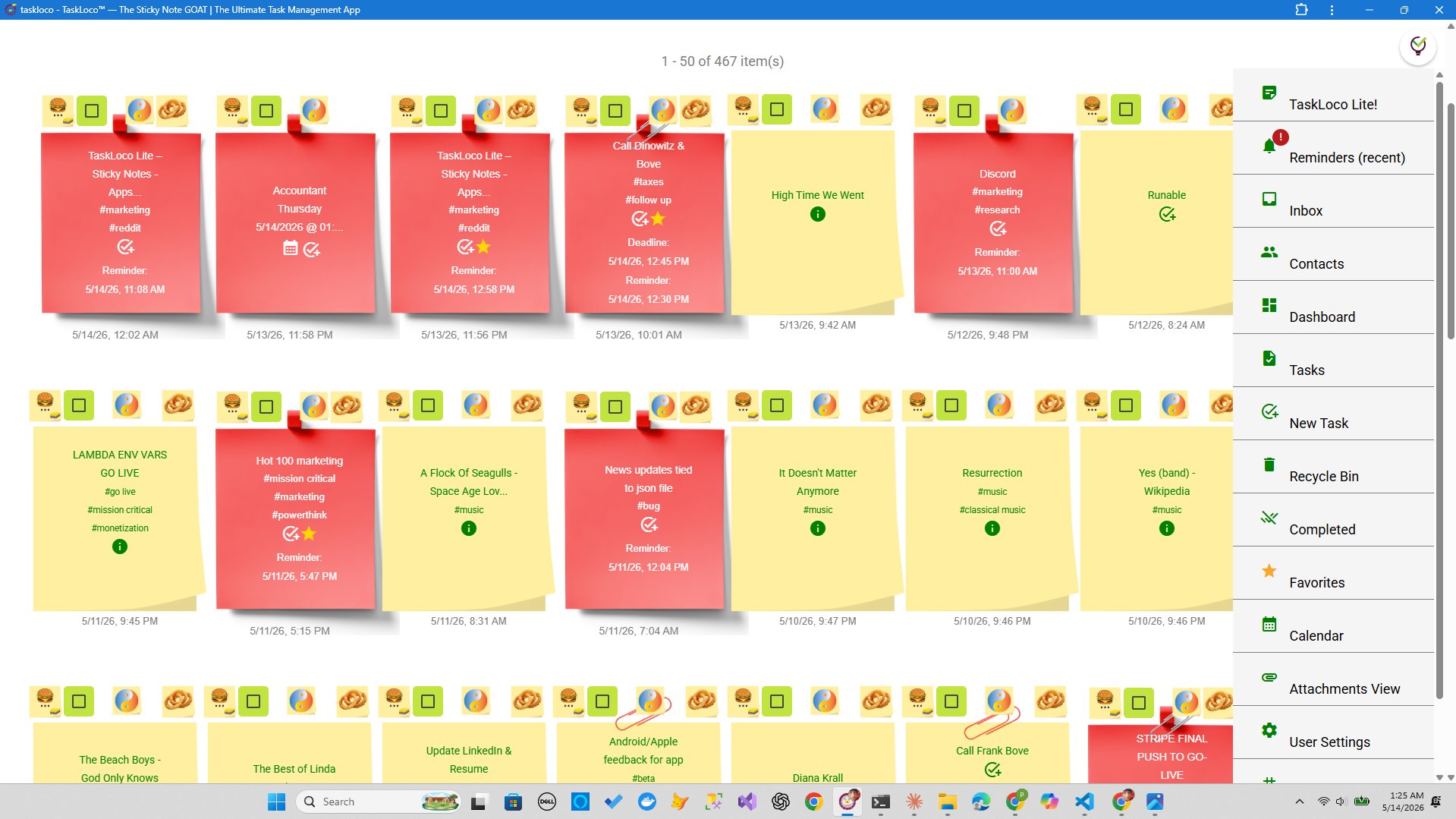
Sticky notes have survived every productivity trend — GTD, time-blocking, the inbox-zero era — because they match how the brain actually works. You see a problem, you write it down, you stick it somewhere visible. The system is frictionless by design. The trouble is that physical sticky notes don't remind you of anything, don't hold your files, and definitely don't sync to your phone. So people graduate to apps, and most of those apps make things worse by turning a simple note into a project with subtasks, assignees, and a dashboard nobody checks.
The sticky-note productivity system described in this guide keeps what works — the speed, the visibility, the tactile act of capturing a thought — and adds only what a physical note can't do: push-notification reminders that deep-link back to the note, file attachments, cross-device sync, and team sharing that works the way forwarding an email does. No permissions matrix. No onboarding ceremony. If you've been trying to make sticky notes work as a real system and keep ending up with a wall of forgotten paper, this is where that changes.
What to look for in a sticky-note productivity system
Before any specific app enters the picture, it helps to define what a sticky-note productivity system actually is — and what separates a good one from a pretty interface that doesn't change your behavior. A sticky-note system is any method of capturing discrete, self-contained pieces of information on individual cards or notes, then organizing and acting on those notes to move work forward. The keyword is discrete: each note should hold one idea, one task, or one reference chunk — not an entire project.
Three criteria genuinely matter when choosing the tool that powers this system:
- Capture speed. If it takes more than three seconds to open a new note, you'll stop using it for quick captures. The best systems get out of your way instantly — a widget tap, a browser extension click, or a keyboard shortcut. Friction at capture is where most systems die.
- Actionability. A note that just sits there is a reminder that failed before it started. A good system lets a note become an action: set a reminder, attach a file, link to a webpage, share with a teammate. The note should be the starting point, not the ending point.
- Visibility without complexity. The wall view — a grid or board of your notes — should tell you at a glance what's pending and what's done. The moment a system requires you to open nested menus to understand your own work, it has defeated the purpose of a sticky note.
How TaskLoco builds the system for you
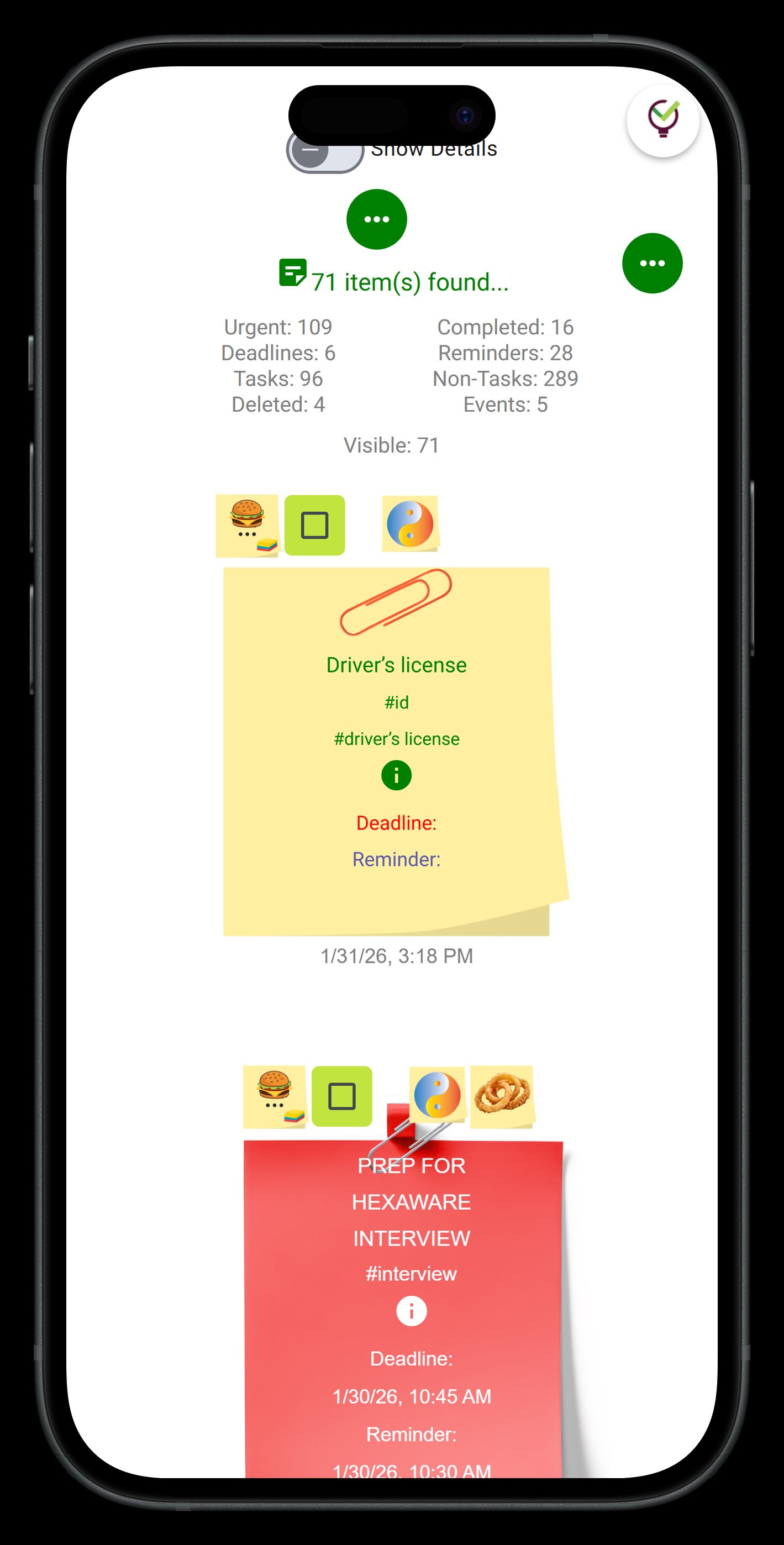
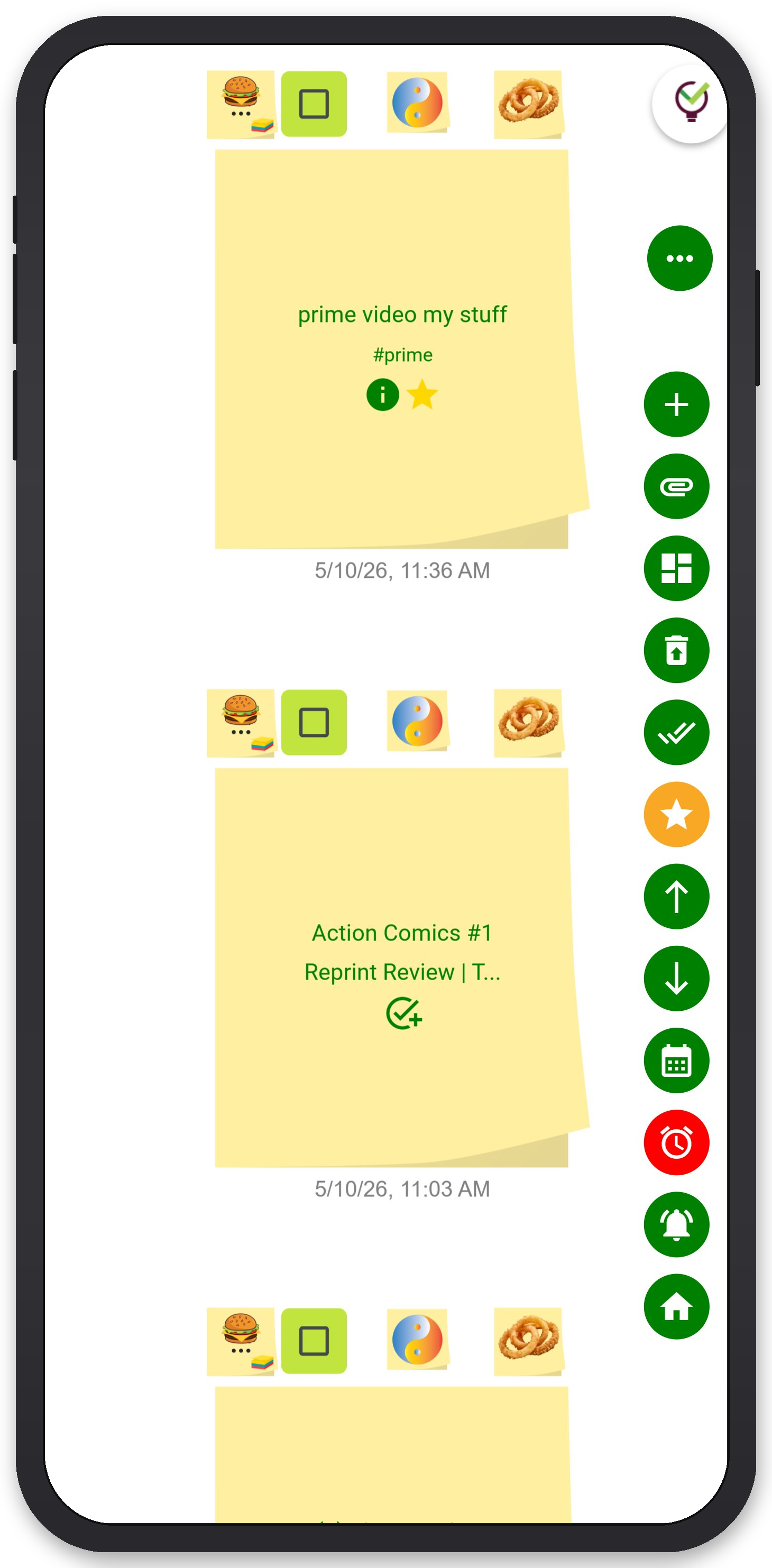
TaskLoco is designed around the wall: a visual board of notes that behaves like a real corkboard, but with capabilities a physical board can't touch. Every note on the wall is an independent object. You can color-code it, tag it, attach files to it, set a reminder on it, and share it with a teammate — all without leaving the note or navigating to a separate module. That's the design philosophy in one sentence: notes stay notes, but they grow into actions without ever feeling like tickets.
Reminders are the feature that closes the loop most people never close on physical sticky systems. In TaskLoco, a reminder fires as a push notification to your phone or computer — and that notification deep-links directly back to the original note. You don't get a generic 'you have a reminder' ping that you have to decode; you land inside the exact note with the context already in front of you. Optional email notifications are available if you want them, and SMS is an optional add-on. But the push notification is what makes a reminder feel like part of the system rather than an interruption from it.
Team sharing works the way forwarding an email does. When you share a note with a teammate, they receive it and can clone it as their own — they become the owner of their copy, set their own reminders on it, attach their own files. No access levels to configure, no view-only vs. edit toggles to manage. The shared note becomes their note. For anyone who has watched a collaboration feature turn into an IT project, this is a real relief.
Building your actual workflow: capture, act, review
A sticky-note productivity system collapses when it has no rhythm. Here's a three-stage workflow that works with TaskLoco's design rather than against it.
Stage 1 — Capture everything, judge nothing. The moment a task, idea, or reference hits your attention, create a note. On desktop, that's the Chrome extension: one click captures any webpage with context intact. On mobile, the web app opens in your phone's browser with a fast-add button. The rule here is zero friction: don't organize yet, don't color-code yet, don't set a reminder yet. Just get it on the wall.
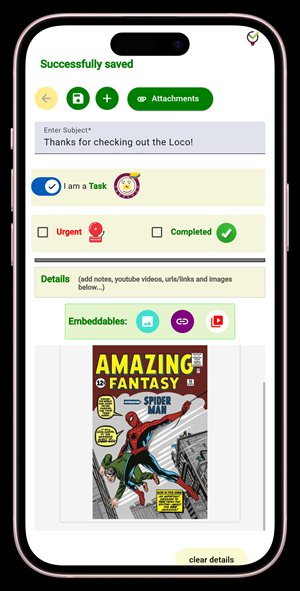
Stage 2 — Act on what you captured. Once a day — or whenever your capture pile reaches ten notes — run a quick triage. For each note: Is this a task with a deadline? Set a reminder. Does it need a file attached — a PDF, a screenshot, a voice memo? Attach it (Premium includes 10GB of file storage). Does a teammate need to see it? Share it directly from the note. Color-coding by project or urgency takes about three seconds per note and makes the wall scannable in under a minute.
Stage 3 — Review the wall. The wall view is your daily dashboard. Pending notes are visible. Completed notes can be archived or deleted. Because every note that needed a reminder has one — delivered as a push notification that brings you back to the exact note — nothing falls through the cracks between reviews. The wall shows you what's left. The reminders catch what the wall can't.
- Use color to signal urgency, not project — red for today, yellow for this week, blue for reference.
- Keep notes atomic: one idea or task per note, always. Split compound tasks into separate notes.
- Archive, don't delete, when work is done — your archive is searchable and full-text indexed.
Which TaskLoco tier fits your system
TaskLoco has three tiers, and it's worth understanding what each one actually does before you commit — because they serve genuinely different use cases.
TaskLoco Lite is a native iPhone and Android app, completely anonymous — no sign-in, no account, no sync. It stores up to 20 notes as a JSON file on your device and nothing else. It's the fastest possible way to start capturing notes on your phone, but it's a purely standalone experience. Notes never leave your device. If you delete the app, the notes go with it. No reminders, no attachments, no sharing. Think of it as a digital pocket notepad, nothing more.
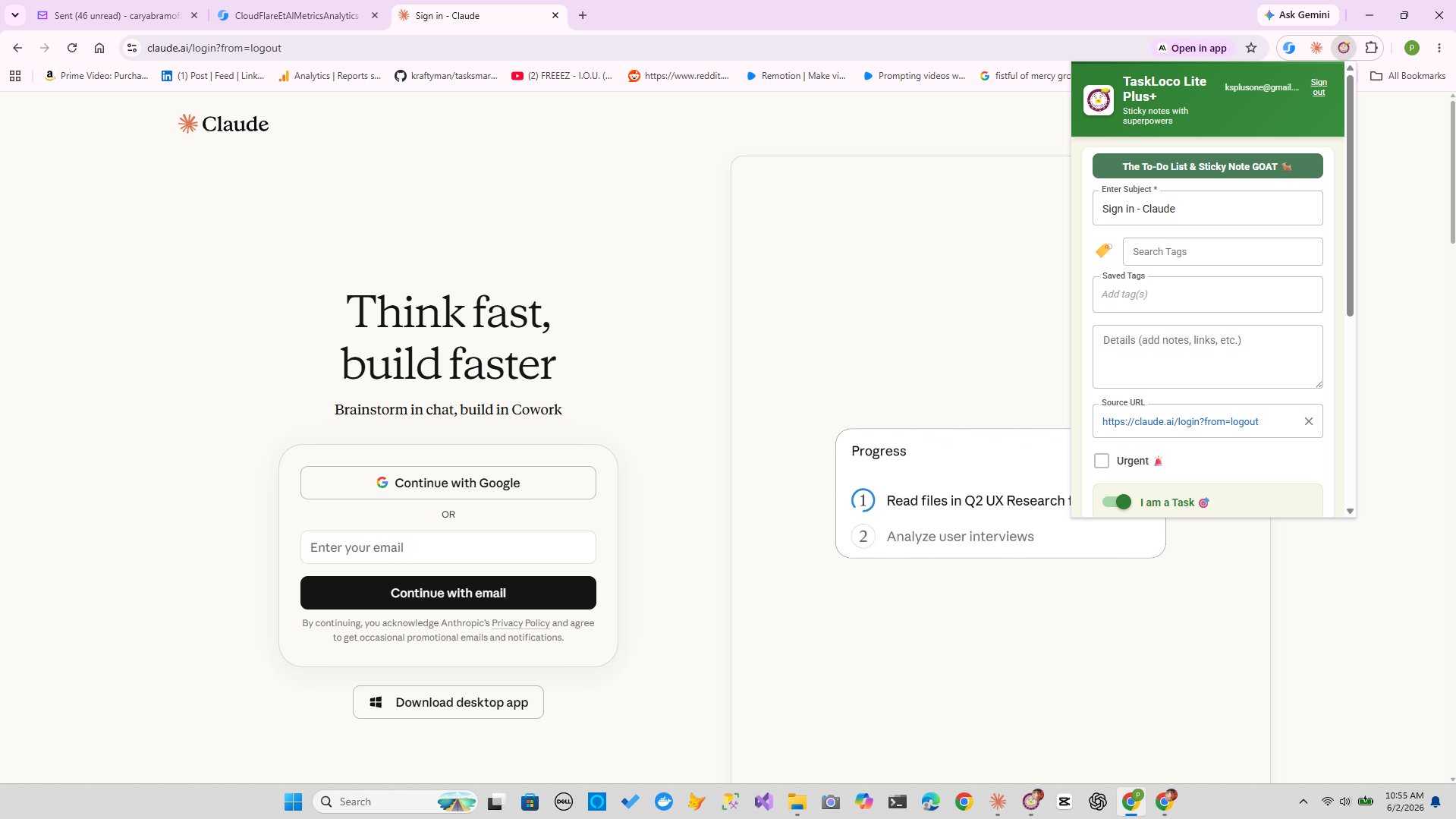
TaskLoco Lite Plus+ is the web app plus Chrome extension, free, with Google sign-in. It syncs up to 30 notes across all your devices, and the Chrome extension alone is worth signing up for — one click captures any webpage into a note. No reminders, no file attachments, no team sharing. If you're testing the system or your note volume stays under 30, this is a capable free option.
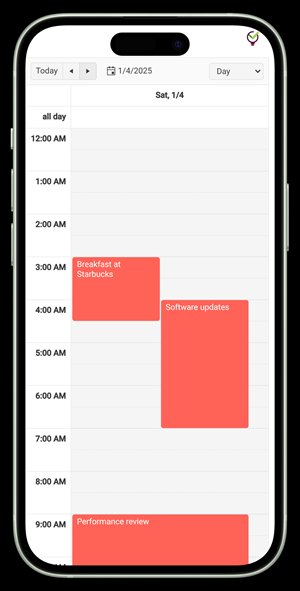
TaskLoco Premium is where the system becomes complete. Unlimited notes, 10GB of file storage, reminders with push notifications, calendar view, and full team sharing — all in one subscription per person. If any part of your workflow involves deadlines, files, or teammates, Premium is the tier that closes the loop. Extra storage tiers (50GB, 200GB, 1TB) are available as stackable add-ons if 10GB isn't enough.
TaskLoco Premium is regularly $9.99/month per person. Right now, charter members can lock in 50% off the regular price — forever. That means $4.99/month per person today. And if our price ever goes up, you still pay half. Always.
Code CHARTER50 auto-applies at checkout. First 500 spots only — once they're gone, this offer is gone permanently. Act fast while spots last.
Every Premium subscription includes unlimited notes, 10GB file storage, reminders, calendar, and team sharing. Each team member requires a separate subscription. 7-day free trial — no charge until day 8. Cancel anytime.
Free Options: TaskLoco
TaskLoco Lite
- Native iPhone & Android app
- Completely anonymous — no sign-in
- Data stays on your device
- Up to 20 notes
- Free forever
TaskLoco Lite Plus+
- Web app + Chrome extension
- Sign in with Google
- Wall syncs across all devices
- Up to 30 notes
- Free forever
Lock In 50% Off — Forever
7-day free trial. No charge until day 8. CHARTER50 auto-applies at checkout.
🔒 Lock In My Charter SpotSee TaskLoco in Action
Frequently Asked Questions
What is a sticky-note productivity system?
A sticky-note productivity system is a method of capturing individual tasks, ideas, or references on discrete notes — physical or digital — and organizing them visually to drive action. The core principle is that each note holds one thing, stays visible, and can be acted on directly. Digital systems like TaskLoco extend this by adding reminders, file attachments, sync across devices, and team sharing without losing the simplicity that makes sticky notes effective in the first place.
Why do most sticky-note systems fail?
They fail at one of three points: capture is too slow (so you stop using it for quick thoughts), notes have no action mechanism (so they just accumulate and become noise), or the wall becomes cluttered with no clear way to see what's actually pending. Physical sticky notes fail on points two and three. Most productivity apps fail on point one by adding too much friction at capture. The fix is a system that gets out of your way at capture, surfaces reminders automatically, and keeps the wall readable at a glance.
Does TaskLoco work on iPhone and Android?
Yes, in two different ways. TaskLoco Lite is a native app available in the App Store and Google Play — anonymous, no sign-in, up to 20 notes stored on your device only. TaskLoco Lite Plus+ and Premium are web apps that run in your phone's browser and sync across all your devices. The native app is ideal for frictionless capture; the web app tiers are where reminders, attachments, team sharing, and unlimited notes live.
How do TaskLoco reminders work?
TaskLoco reminders fire as push notifications to your phone and computer. The notification deep-links directly back to the original note, so you land in context immediately — not at a generic home screen. Optional email notifications are available if you prefer that channel. SMS notifications are an optional add-on. Reminders are a Premium feature.
What is the Chrome extension and do I need it?
The Chrome extension lets you capture any webpage as a sticky note in one click. The page title, URL, and any text you highlight are pulled directly into a new note on your wall — no copy-pasting or tab management required. It's free with Lite Plus+ and Premium. If you research anything on the web as part of your work, the extension is the fastest capture tool you'll add to your browser.
What's the difference between TaskLoco Lite, Lite Plus+, and Premium?
Lite is a native phone app — anonymous, no sign-in, 20 notes maximum, stored on the device only, no sync, no reminders, no attachments. Lite Plus+ is the free web app plus Chrome extension — Google sign-in required, up to 30 notes, syncs across devices, no reminders or file attachments. Premium is the full system — unlimited notes, 10GB file storage, push-notification reminders, calendar view, and team sharing. Each team member requires their own subscription.
How much does TaskLoco Premium cost?
$9.99/month per person (currently $4.99/month per person for first 500 charter members with code CHARTER50)
Born in Brooklyn. Powered by AWS. Your data stays yours.
TaskLoco is available on iPhone, Android, Chrome, and every web browser.