Motivation gets all the credit. It's the thing people chase with podcasts, vision boards, and highlight-reel Instagram accounts. And honestly? Motivation deserves some credit — it's the spark that starts things. When motivation hits, you feel unstoppable. You clear your inbox, you outline the project, you finally start the thing you've been avoiding for three weeks.
But motivation is unreliable. It shows up uninvited and leaves without warning. Self discipline, on the other hand, is the quieter force that moves the needle when motivation has gone home for the night. This article isn't going to trash motivation — it's genuinely useful. But it's going to make the case that discipline is the engine, and motivation is just the ignition key. One without the other is frustrating. Both working together, backed by a real system, is how things actually get done.
What Motivation Actually Is (And Why It's Not Enough)
Motivation is an emotional state. It's the feeling that makes you want to work, create, or push harder. Psychologists often break it into two types: intrinsic motivation (doing something because it's genuinely meaningful to you) and extrinsic motivation (doing something for a reward, recognition, or to avoid a consequence).
Intrinsic motivation is the more powerful of the two. When you're working on something you genuinely care about, you don't need someone to push you. The problem isn't that motivation is fake — it's that it's intermittent. Even the most passionate people have days where they'd rather do literally anything else. Research in behavioral psychology consistently shows that relying on motivation as your primary driver leads to inconsistent output. You get bursts of productivity followed by long stretches of avoidance.
Motivation also responds to conditions. It spikes when things are going well, when you feel rested, when the task feels fresh. It tanks when you're tired, overwhelmed, or facing a task you've been stuck on for too long. If your productivity is tied to how you feel on a given morning, your results will be as unpredictable as your mood.
Self Discipline: The Boring Thing That Actually Works
Self discipline is the ability to do what needs to be done regardless of how you feel about it in the moment. It doesn't require inspiration. It doesn't need conditions to be perfect. It just requires a prior commitment and enough structure to honor that commitment even when your brain is lobbying hard for Netflix instead.
This is where discipline has a clear, measurable edge over motivation: it's trainable. Motivation isn't something you can reliably manufacture. Discipline is a skill — it gets stronger with practice and weakens without it, just like a muscle. James Clear's work on habit formation, BJ Fogg's research on behavior design, and decades of self-regulation studies all converge on the same conclusion: people who achieve consistently aren't more motivated than everyone else. They've built systems that reduce the friction between intention and action.
The honest concession here is that discipline without any motivation is soul-crushing. Pure, joyless grind with to why you're doing something is its own kind of failure. Motivation gives discipline its direction. But direction without momentum is just a nice plan you never execute.
What discipline actually looks like in practice: showing up at the same time, working in defined blocks, capturing every task so nothing falls through the cracks, and reviewing your progress so you can course-correct before things go sideways. None of that requires feeling inspired. All of it requires a system.
How to Build a Discipline System That Doesn't Collapse
Most productivity systems fail for the same reason: they're designed for your best days, not your average ones. They require too much setup, too much maintenance, or too much decision-making every morning. The moment friction increases, the system gets abandoned — and you're back to waiting for motivation to show up.
A discipline system that holds up has three properties: it's fast to capture, easy to review, and forgiving when you miss a day. Here's what that looks like practically:
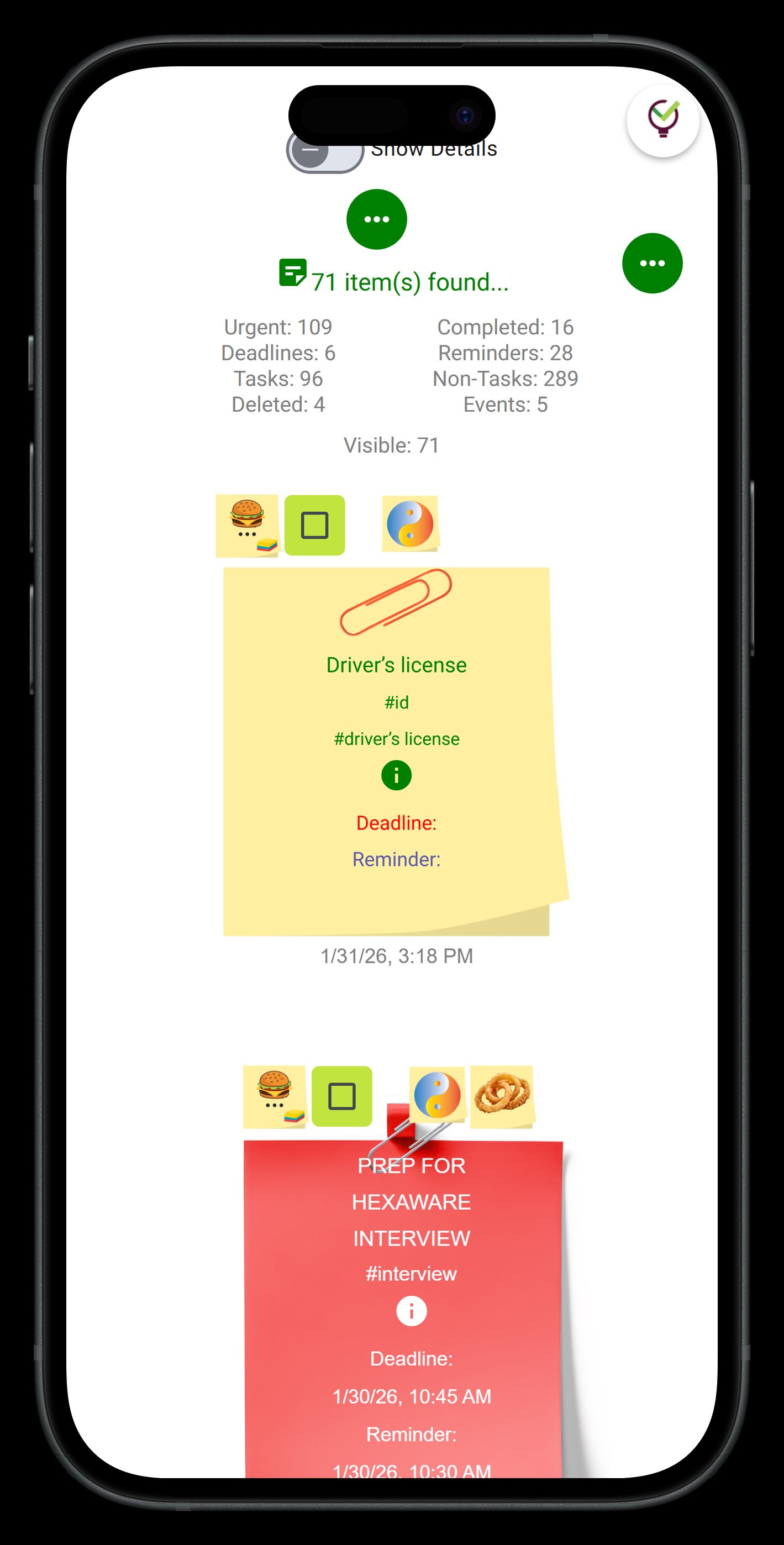
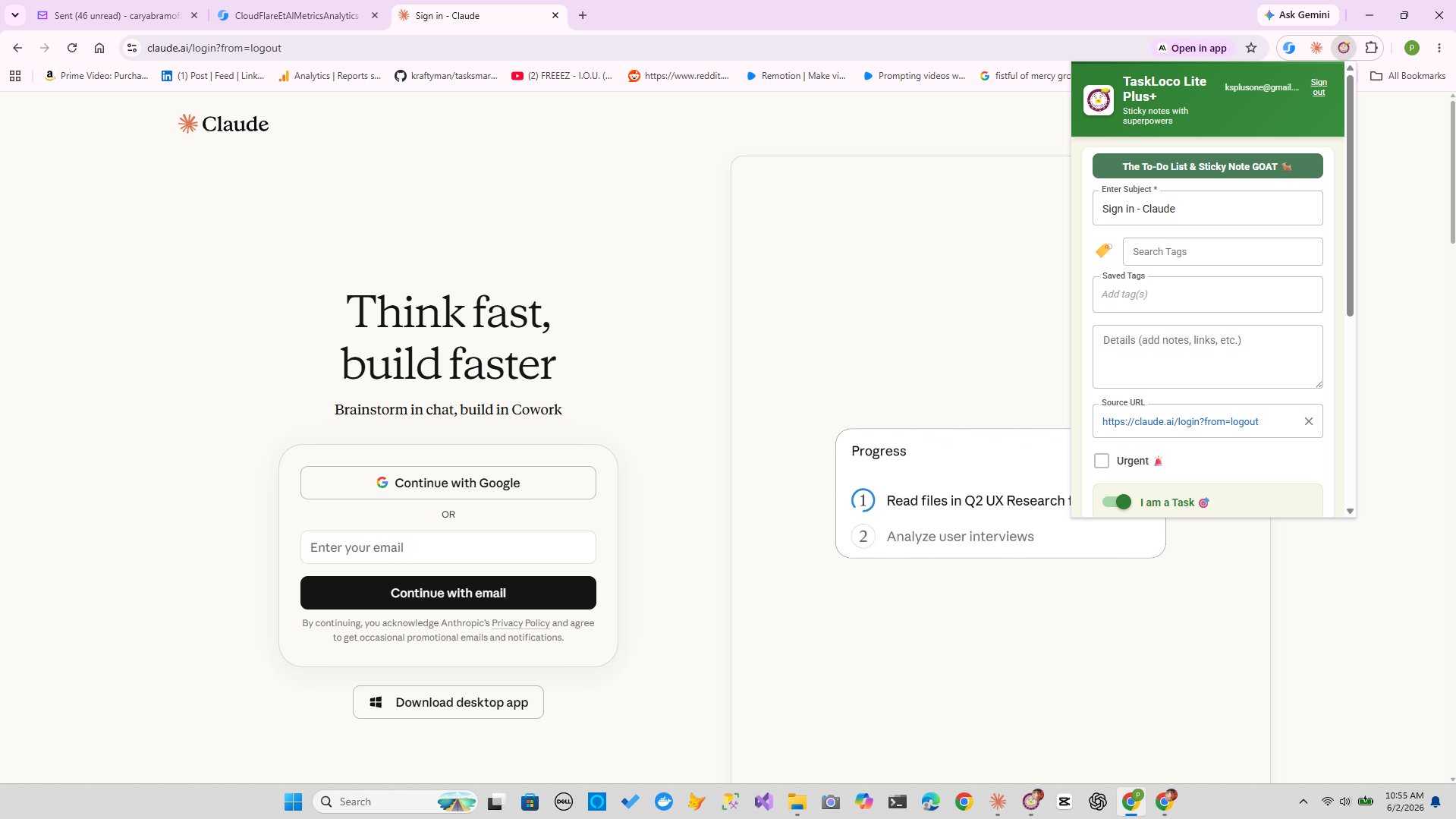
- Capture everything immediately. If it's not written down, it competes for mental bandwidth and creates the low-grade anxiety that kills focus. Use whatever gets the note out of your head fastest — a sticky note on your screen, a note in your phone's browser, a Chrome extension that clips a task from a webpage you're looking at.
- Use reminders that reach you. A to-do list you have to remember to check is not a system — it's a hope. Reminders that push a notification directly to your phone and desktop mean the system reaches out to you, not the other way around. And when that notification deep-links back to the original note, you're back in context in one tap.
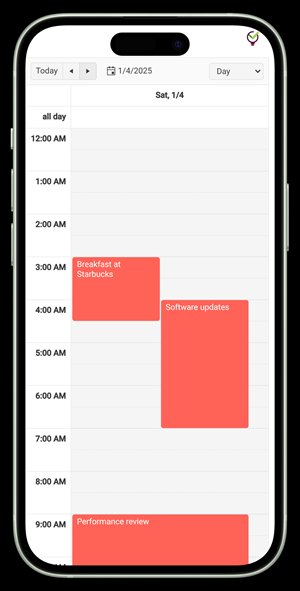
- Review visually. A calendar view of your tasks and commitments makes it physically obvious when you're overloaded or when a week is suspiciously empty. You can see the problem before it becomes a missed deadline.
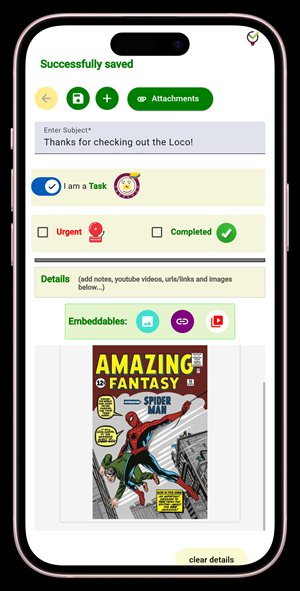
- Keep files with the work. Hunting for the attachment that belongs to a task is friction. When your notes carry their own file attachments, the context stays together.
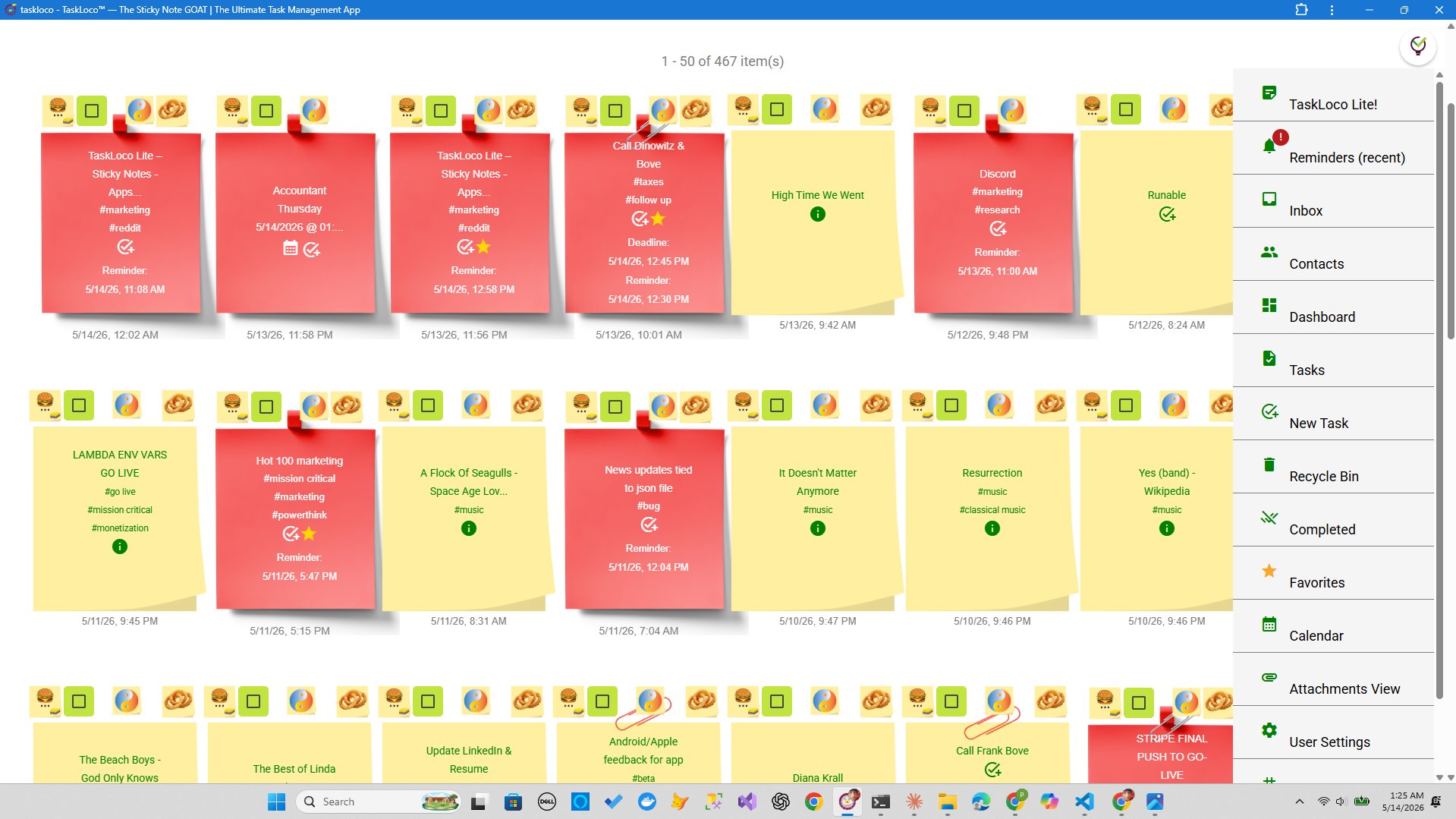
TaskLoco Premium is built around exactly this workflow. Unlimited notes mean you never have to decide what's worth capturing. Push notification reminders deep-link back to the original note. The calendar view makes your commitments visible at a glance. And 10GB of file storage means your reference material lives next to the task it belongs to — not in a separate app you have to go find.
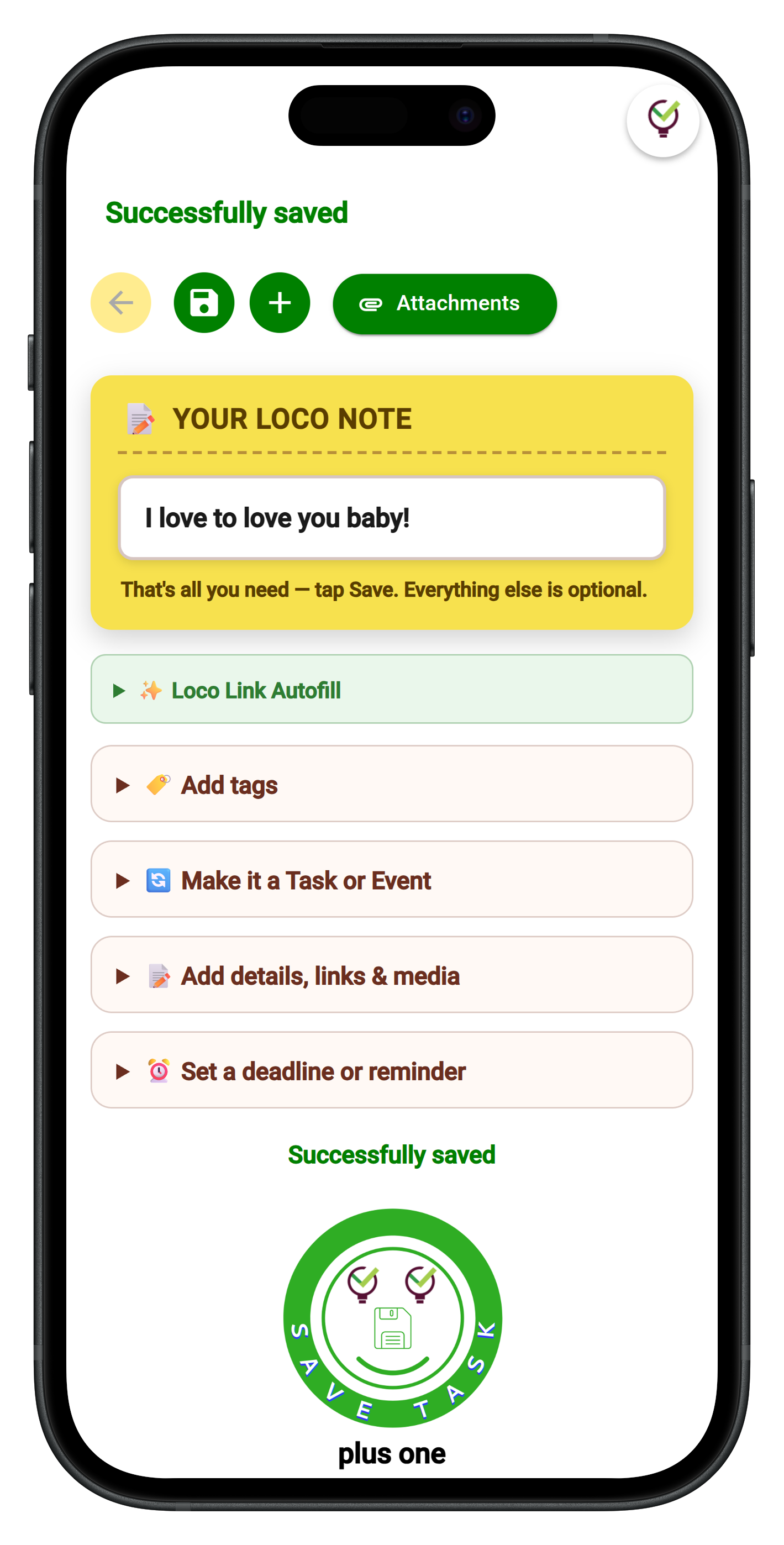
TaskLoco Lite is the native iPhone and Android app — completely anonymous, no sign-in required, stores up to 20 notes directly on your device. It's the fastest way to capture something before it evaporates. Lite Plus+ is the free web app — sign in with Google, sync across all your devices, up to 30 notes. Both free tiers are real tools, not crippled demos. But if you're building a serious discipline system, Premium is where the full workflow lives.
Putting Motivation and Discipline Together
The real answer to "self discipline vs motivation" isn't a winner-take-all verdict. It's a job description for each one. Motivation is your strategist — it tells you what's worth pursuing and reconnects you to the why when things get hard. Discipline is your operator — it shows up at the same time every day and does the work whether the strategist is feeling inspired or not.
Where people go wrong is expecting motivation to do discipline's job. They wait to feel ready, wait to feel excited, wait for the stars to align. And when the feeling doesn't come — or comes and then evaporates after two days — they conclude they're lazy or broken. They're not. They just don't have a system.
Build the system first. Capture your tasks the moment they occur to you. Set reminders that push to your phone so nothing slips. Use a calendar view to see your week honestly. Attach the files that belong to the work. Review and adjust. That's the whole loop. Motivation will still visit — and when it does, it'll find a system ready to channel it into something that actually ships.
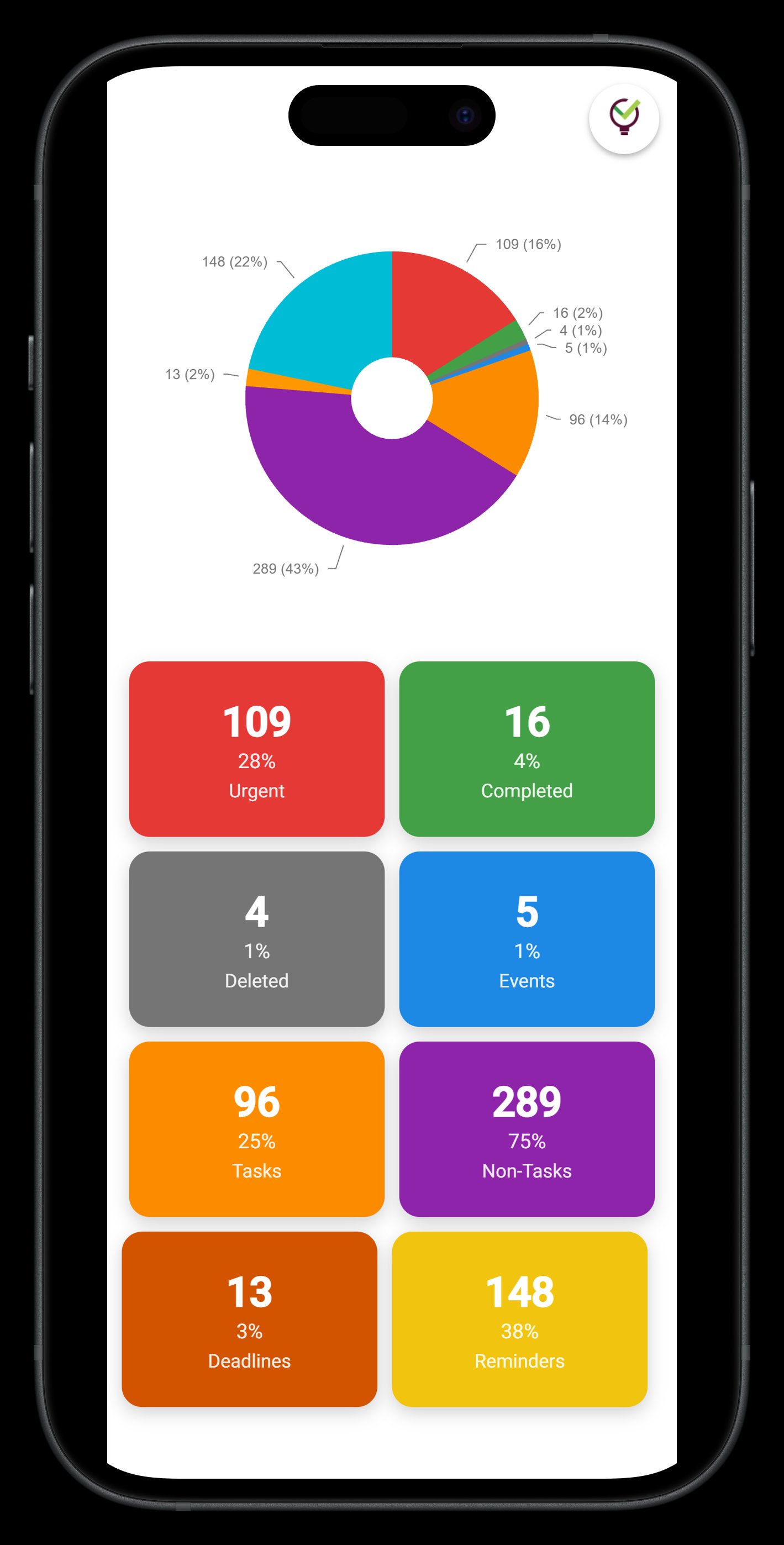
TaskLoco is designed for exactly this: fast capture, real reminders, visual organization, and file storage — all in one place, without the overhead of enterprise project management software. The Chrome extension captures any webpage as a note in one click. The web app syncs across every device. Premium unlocks the full system: unlimited notes, calendar, reminders with push notifications, team sharing, and 10GB of file storage.
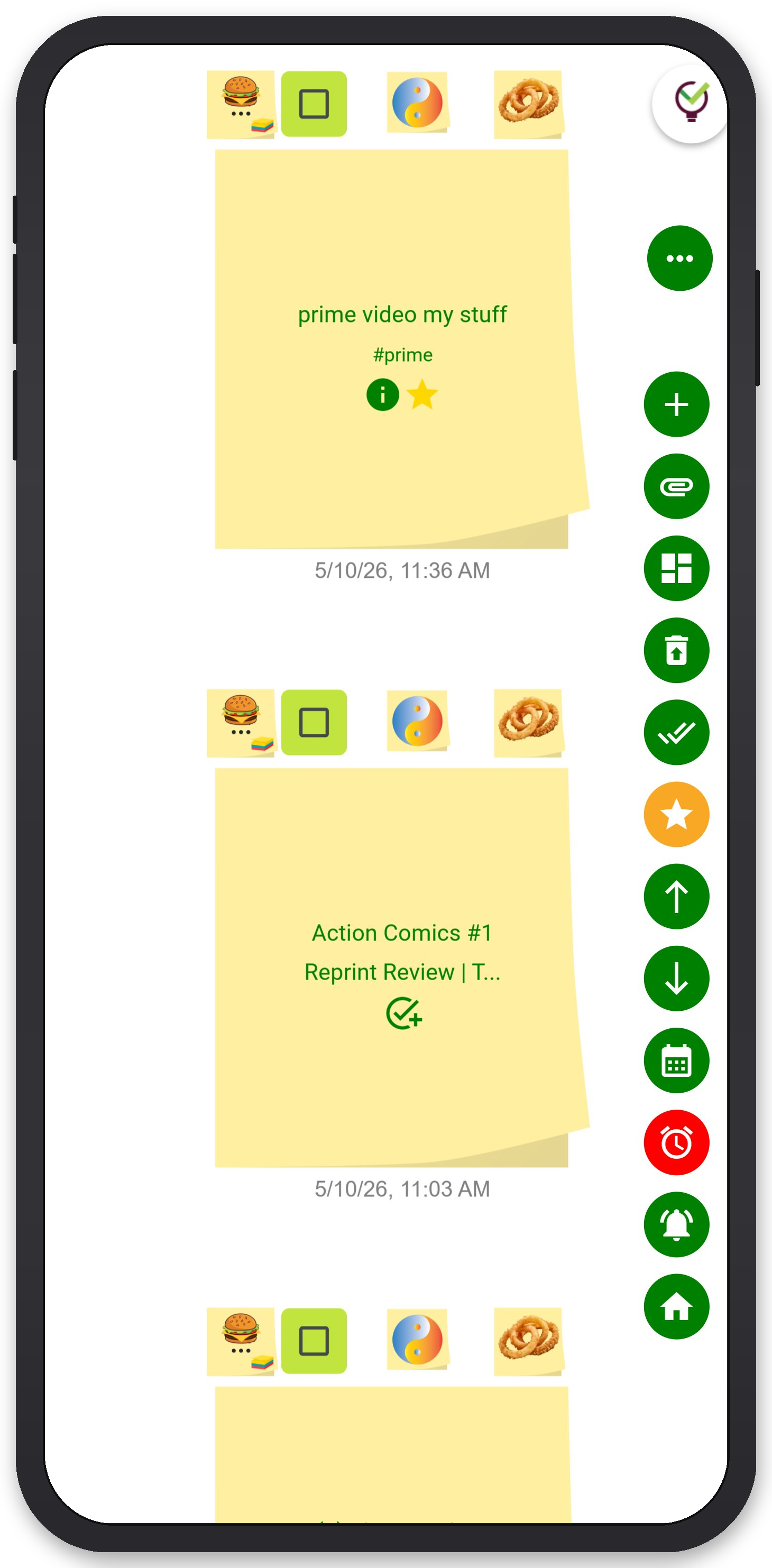
TaskLoco Premium is regularly $9.99/month per person. Right now, charter members can lock in 50% off the regular price — forever. That means $4.99/month per person today. And if our price ever goes up, you still pay half. Always.
Code CHARTER50 auto-applies at checkout. First 500 spots only — once they're gone, this offer is gone permanently. Act fast while spots last.
Every Premium subscription includes unlimited notes, 10GB file storage, reminders, calendar, and team sharing. Each team member requires a separate subscription. 7-day free trial — no charge until day 8. Cancel anytime.
Free Options: TaskLoco vs Motivation
TaskLoco Lite
- Native iPhone & Android app
- Completely anonymous — no sign-in
- Data stays on your device
- Up to 20 notes
- Free forever
TaskLoco Lite Plus+
- Web app + Chrome extension
- Sign in with Google
- Wall syncs across all devices
- Up to 30 notes
- Free forever
Lock In 50% Off — Forever
7-day free trial. No charge until day 8. CHARTER50 auto-applies at checkout.
🔒 Lock In My Charter SpotSee TaskLoco in Action
Frequently Asked Questions
Is self discipline more important than motivation?
For consistent, long-term output — yes. Motivation is powerful but intermittent. Self discipline is the habit of acting on your commitments even when the feeling isn't there. The most productive people aren't more motivated than everyone else; they have systems that reduce the friction between intention and action. Motivation gives you direction. Discipline gets you there.
Can you have self discipline without motivation?
Technically yes, but pure discipline without any connection to why you're doing something is unsustainable. The research on burnout is clear: relentless execution without meaning leads to exhaustion and eventual collapse. The better framing is that motivation provides purpose and discipline provides execution. You need both — but stop expecting motivation to show up every day. That's discipline's job.
Why does motivation disappear so quickly?
Because motivation is an emotional state, and emotional states are responsive to conditions — sleep, stress, novelty, feedback, and a dozen other variables. The initial excitement of a new goal triggers a dopamine response that fades as the task becomes familiar and the effort becomes real. This is completely normal. It's not a character flaw. It's the reason you need a system that doesn't depend on the emotional state being present.
How do you build self discipline when you have none?
Start smaller than you think you need to. The biggest mistake people make is designing a discipline system for their most motivated self. Start with one habit, one time of day, and make the bar low enough that skipping feels worse than doing it. Use external triggers — reminders pushed to your phone, visual systems you can't ignore — to reduce the cognitive load of deciding whether to start. Discipline is built through repetition, not willpower.
What's the best way to stay disciplined with tasks and goals?
Capture everything the moment it occurs to you — don't trust memory to hold your commitments. Use reminders that push notifications directly to your phone and computer so the system reaches out to you. Review your tasks and calendar regularly so you can see what's slipping before it becomes a problem. Keep reference material attached to the tasks it belongs to. TaskLoco Premium is built around exactly this workflow: unlimited notes, push notification reminders that deep-link back to the original note, calendar view, file attachments, and team sharing. $9.99/month per person (currently $4.99/month per person for first 500 charter members with code CHARTER50)
Does TaskLoco help with building self discipline?
Yes — TaskLoco is designed for the kind of fast-capture, reminder-driven workflow that discipline requires. You can capture a task the moment it surfaces (including clipping any webpage with the Chrome extension), set a reminder that delivers a push notification to your phone and desktop with a deep-link back to the note, attach relevant files directly to the task, and see everything on a calendar. That's the structural loop discipline needs. TaskLoco Lite (native iPhone/Android, 20 notes, no sign-in) is the fastest way to capture on the go. Lite Plus+ (free web app, 30 notes, syncs across devices) adds cross-device sync. Premium unlocks the full system. $9.99/month per person (currently $4.99/month per person for first 500 charter members with code CHARTER50)
Is motivation or discipline better for creative work?
Both, in sequence. Motivation is often what sparks a creative idea and makes exploration feel energizing. But creative projects — writing, designing, building — require sustained effort that extends far beyond the initial spark. Discipline is what keeps you working through the messy middle when the project no longer feels exciting but isn't finished yet. The most productive creatives don't wait to feel inspired; they show up at the same time every day and let the work generate its own momentum.
Born in Brooklyn. Powered by AWS. Your data stays yours.
TaskLoco is available on iPhone, Android, Chrome, and every web browser.