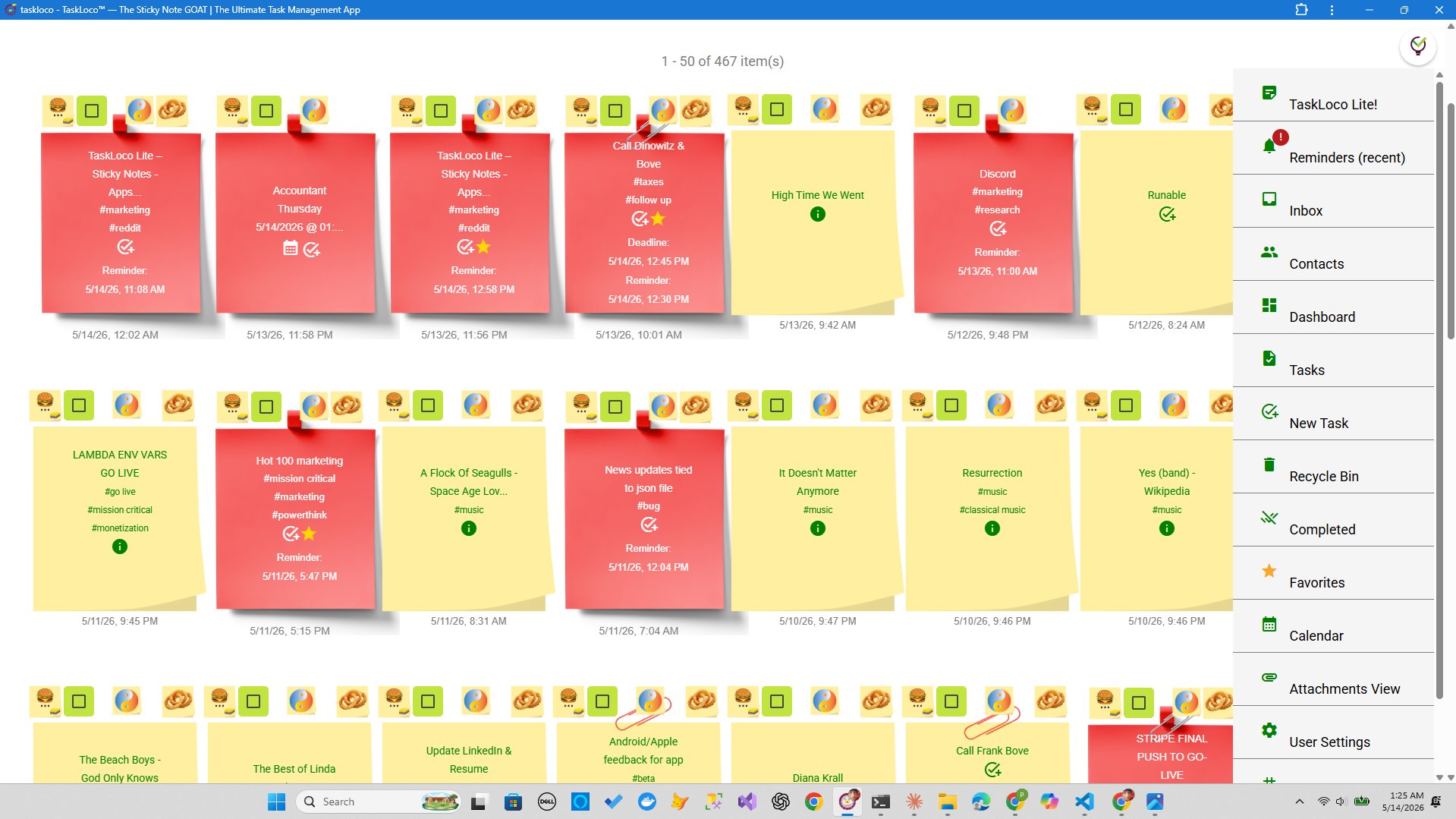
There is a reason sticky notes have covered office walls for fifty years. Your brain processes space better than sequence. When you pin a note to a wall, you remember roughly where it is. When the same information lives in row 47 of a task list, it might as well not exist. Yet most productivity apps keep shipping you lists — sortable, filterable, infinitely nested lists — and call it progress.
A visual weekly wall is not a gimmick. It is a deliberate interface choice that matches how people actually think about time: Monday is over there, Friday is over here, and everything in between has a place you can see at a glance. This article explains what to look for in any wall-based planner, why spatial planning beats sequential lists for most people, and why TaskLoco's sticky-note wall is the sharpest execution of this idea available today.
What to Look for in a Visual Weekly Wall Planner
Before recommending any specific tool, it is worth being honest about what separates a genuinely useful wall view from one that just looks pretty in screenshots. There are three criteria that actually matter.
1. Spatial permanence. A wall only works if items stay where you put them. If the app auto-sorts or collapses your notes every time you open it, you lose the spatial memory that makes a wall faster than a list. Look for tools that let you pin, reposition, and keep items in place across sessions.
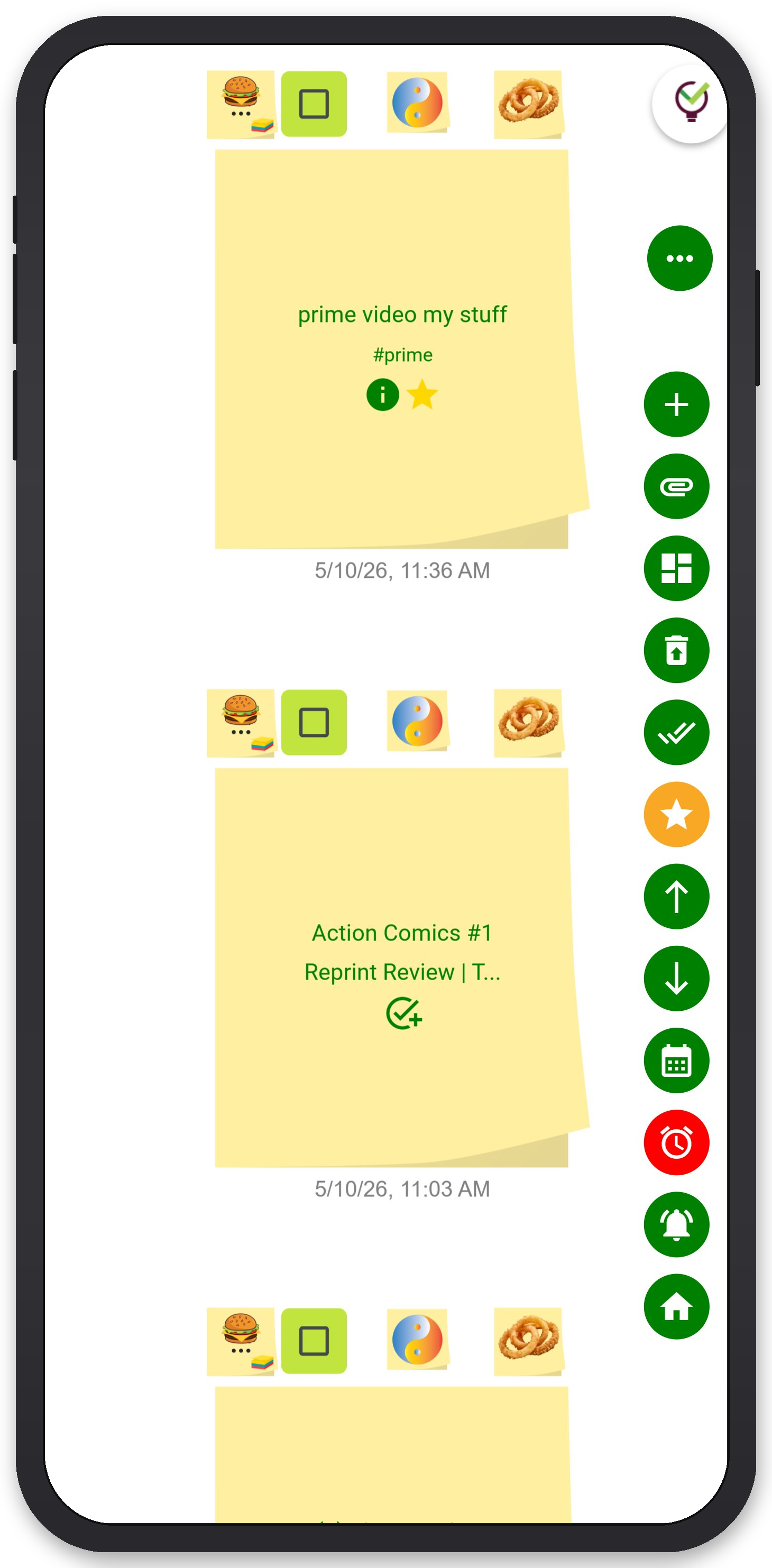
2. Enough context on the card itself. A sticky note that shows only a title forces you to click into everything. A good wall card surfaces the due date, an attachment indicator, and at minimum the first line of the note body — so you can triage without drilling down. If you have to open every card to understand it, you have a list with a wall skin on top.
3. A direct path from capture to calendar. The fatal flaw in most wall-style planners is that capture is slow. You think of something, you open the app, you navigate to the right week, you create a card. By the time you finish, the thought is gone. The best wall planners either have a browser extension that captures context in one click, or a dead-simple quick-add that lands on the right day without extra steps. Anything slower than that breaks the habit.
Why Lists Fail Your Brain (and What a Wall Actually Fixes)
Lists are not bad tools — they are the wrong tool for weekly planning. A list answers the question 'what exists?' A wall answers the question 'what is happening when, and how does it all fit together?' Those are different cognitive tasks, and conflating them is why so many people end up with a task manager full of overdue items they stopped looking at.
The research on this is not complicated: spatial layouts reduce the cognitive load of time-based planning because position carries information. Monday's column communicates urgency without a single label. A note that lives in the upper-left corner of Thursday feels different from one at the bottom of Friday — and that feeling is actually useful data about priority and timing that a list row cannot convey.
Lists also encourage procrastination in a specific way. When everything is a row in a sequence, every task competes with every other task on equal visual footing. The important thing and the trivial thing look identical. On a wall, you can literally put the critical note front and center and push the low-priority stuff to the edge. Priority becomes physical.
What a wall fixes specifically:
- The scroll problem: You stop hunting through rows and start scanning a surface — much faster for time-based planning.
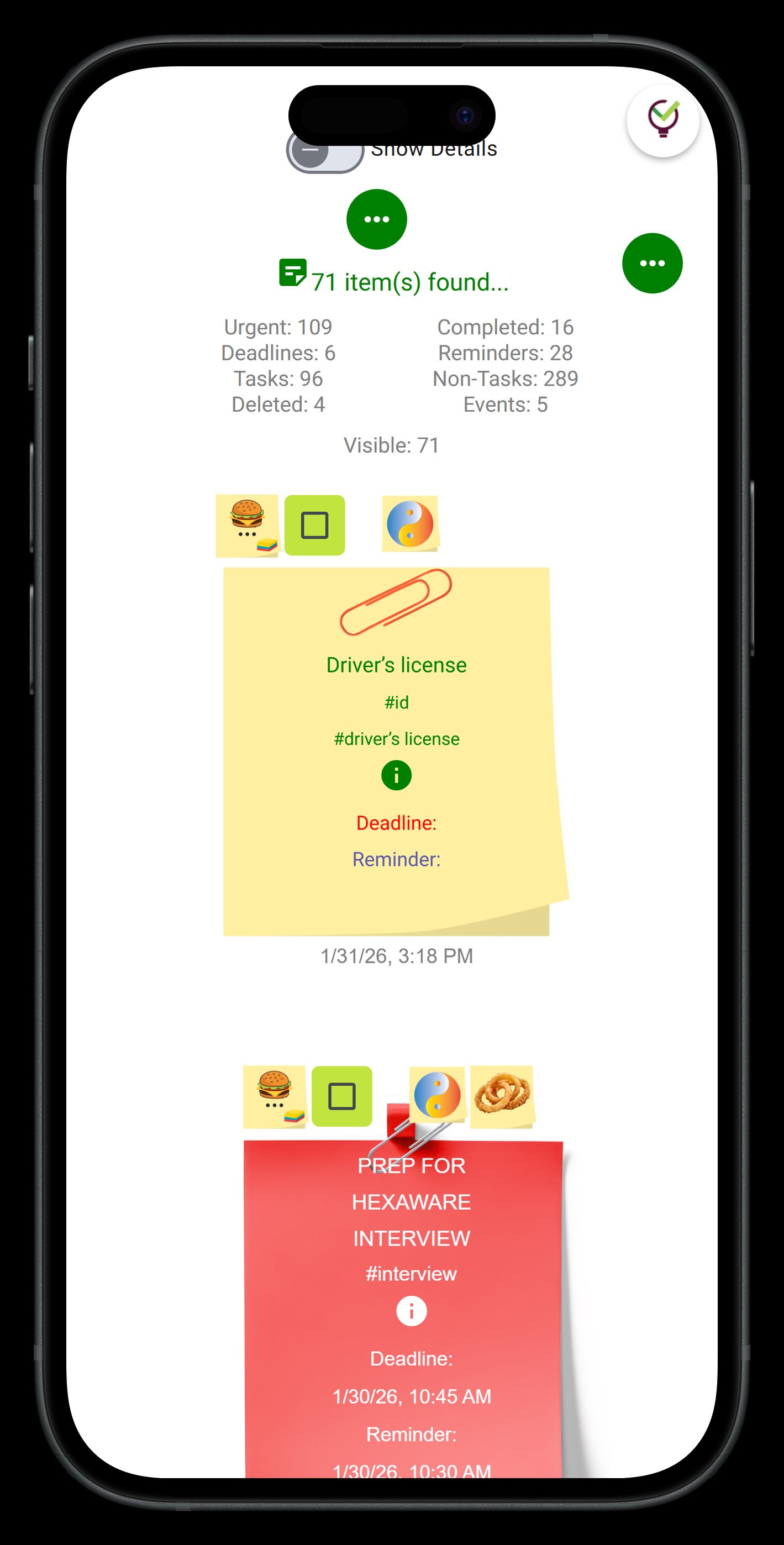
- The context problem: Cards show due dates, attachments, and note previews without clicking in.
- The priority problem: Position communicates importance without requiring tags, labels, or priority flags.
- The forgotten-task problem: Items stay visible on the wall until you deliberately remove them — they don't get buried by newer additions.
TaskLoco's Wall: What Makes It Different
TaskLoco was designed from the beginning around the sticky note as the fundamental unit of work — not the task row, not the project card, not the spreadsheet cell. Every design decision flows from that starting point, which is why the wall view feels native rather than bolted on.
Notes stay where you put them. TaskLoco's wall preserves spatial position across sessions. Open it tomorrow and your Thursday note is still on Thursday, exactly where you left it. This sounds obvious but most 'board' views in competing apps re-sort by creation date or due date every time you open them, silently destroying your spatial memory.
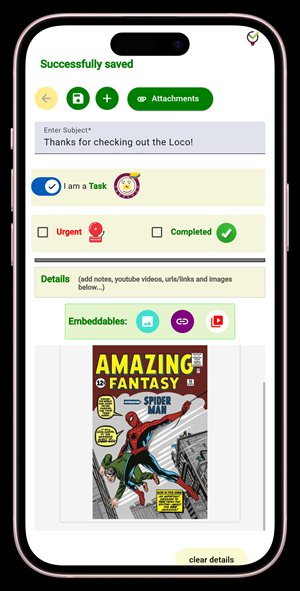
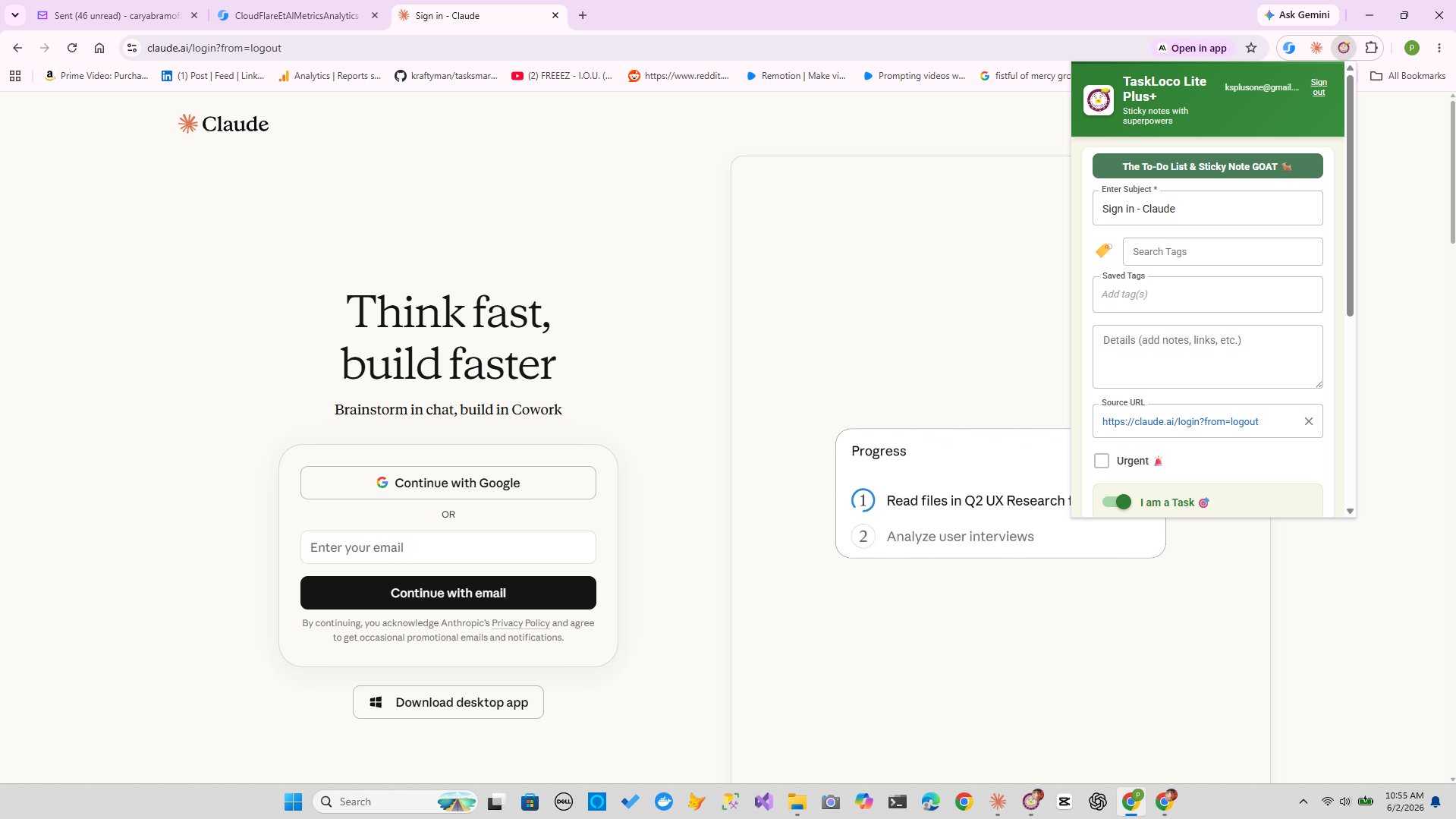
The Chrome extension is fast capture solved. The TaskLoco Chrome extension captures any webpage — article, email thread, job posting, product page — in one click and turns it into a sticky note that lands in your wall. No copy-paste, no tab-switching, no losing the context of what you were looking at. For anyone who does research-heavy work, this alone is worth the switch.
Reminders deep-link back to the note. When a TaskLoco reminder fires, it arrives as a push notification on your phone or computer and taps directly back to the original note — not to a generic app home screen. You get the context immediately. Optional email and SMS notifications are available as additional channels if you want them.
Files live on the note, not in a separate folder. Premium users get 10GB of file storage, and attachments live directly on the note they belong to. The research document for a client meeting is attached to the client meeting note — not in a shared drive somewhere that requires three clicks to find.
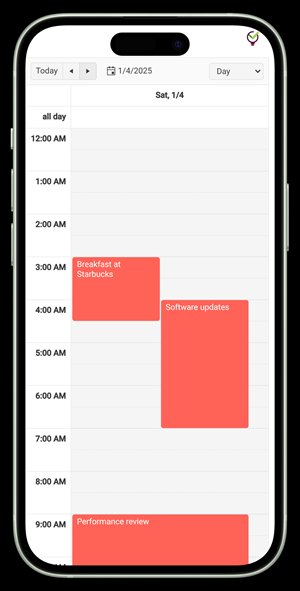
Calendar view, not just a wall. The wall is the primary view, but TaskLoco also has a calendar view for anyone who needs to see the same notes plotted on a traditional month or week grid. Switching between them is instant — same notes, different lens.
How Team Sharing Works on the Wall
Most wall planners treat sharing as an afterthought — you get a view-only link or a clunky permissions system that requires an admin to configure. TaskLoco's approach is different and deliberately simpler.
When you share a note in TaskLoco, the recipient gets it the same way you'd get an email — they can clone it and make it their own. There are no permission levels to set, no access tiers to manage, no 'request edit access' friction. You share, they receive, they own their copy. It works like passing a physical sticky note across a desk, except the note can carry file attachments and trigger a reminder on their device.
For teams, this means the weekly wall stays personal — each person's wall reflects their own priorities and workflow — while shared notes allow coordination without forcing everyone into a single shared board that nobody actually feels ownership over. It is a fundamentally different philosophy from 'everyone edits the same card,' and for most day-to-day work, it is the more honest model of how collaboration actually happens.
Real-time sync means any update to a shared note propagates immediately across all devices. Your teammate updates the brief, your note reflects it. No manual refresh, no version confusion.
TaskLoco Premium is regularly $9.99/month per person. Right now, charter members can lock in 50% off the regular price — forever. That means $4.99/month per person today. And if our price ever goes up, you still pay half. Always.
Code CHARTER50 auto-applies at checkout. First 500 spots only — once they're gone, this offer is gone permanently. Act fast while spots last.
Every Premium subscription includes unlimited notes, 10GB file storage, reminders, calendar, and team sharing. Each team member requires a separate subscription. 7-day free trial — no charge until day 8. Cancel anytime.
Free Options: TaskLoco
TaskLoco Lite
- Native iPhone & Android app
- Completely anonymous — no sign-in
- Data stays on your device
- Up to 20 notes
- Free forever
TaskLoco Lite Plus+
- Web app + Chrome extension
- Sign in with Google
- Wall syncs across all devices
- Up to 30 notes
- Free forever
Lock In 50% Off — Forever
7-day free trial. No charge until day 8. CHARTER50 auto-applies at checkout.
🔒 Lock In My Charter SpotSee TaskLoco in Action
Frequently Asked Questions
What is a visual weekly wall planner?
A visual weekly wall planner is a productivity tool that arranges your tasks and notes on a spatial surface organized by day or week — like a physical sticky-note wall — instead of a scrollable list. The key advantage is that position carries meaning: you can see at a glance what is happening when, what is overdue, and how your week is balanced, without scrolling through rows of text. TaskLoco is built around exactly this concept, with sticky notes as the core unit of work arranged on a wall view you can see and rearrange freely.
Is a wall view better than a list for task management?
For time-based, weekly planning, yes — a wall view is better for most people. Lists answer 'what exists?' but walls answer 'what is happening when and how does it fit together?' Spatial layouts reduce cognitive load because position communicates priority and timing without requiring tags or labels. Lists tend to cause the 'overdue filter problem' where important tasks get buried under newer ones. A wall keeps everything visible until you deliberately remove it. That said, lists are still useful for very long backlogs or sequential processes — the best tools, like TaskLoco, offer both views so you can switch based on the task.
Can I use TaskLoco on my phone?
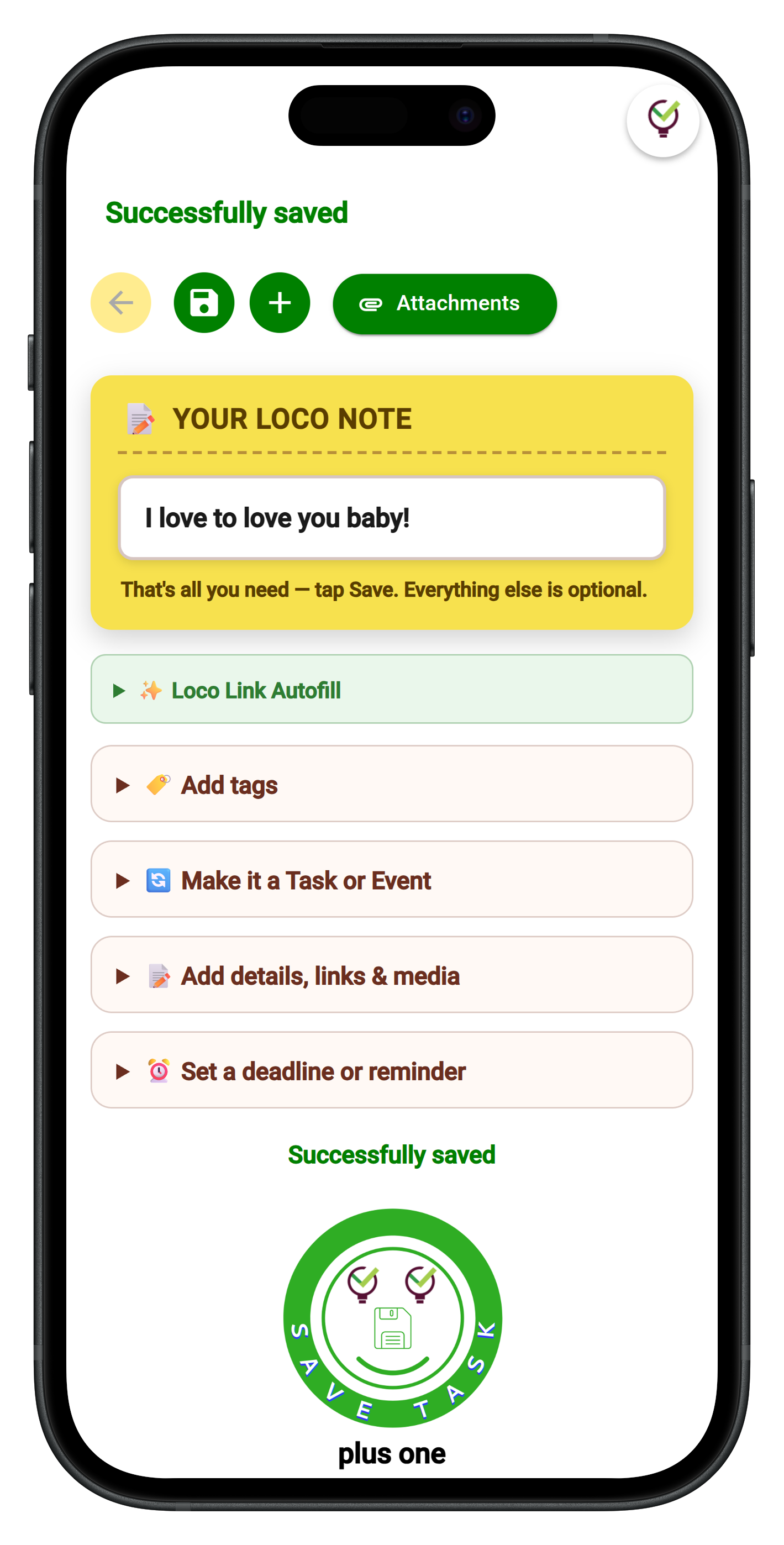
Yes. TaskLoco Lite is a native iPhone and Android app available in the App Store and Google Play — it is completely anonymous with no sign-in required and stores up to 20 notes directly on your device. TaskLoco Lite Plus+ and TaskLoco Premium run as a web app, which means you access them through your phone's browser. Premium's full feature set — reminders, file attachments, unlimited notes, calendar view, and team sharing — is available through the browser on any device.
How do TaskLoco reminders work?
TaskLoco reminders are delivered as push notifications to your phone and computer, and each notification deep-links directly back to the original note — so you land in the right context immediately, not on a generic home screen. Optional email notifications and SMS notifications are also available as additional channels if you prefer them. Reminders are a Premium feature.
Does TaskLoco have a free version?
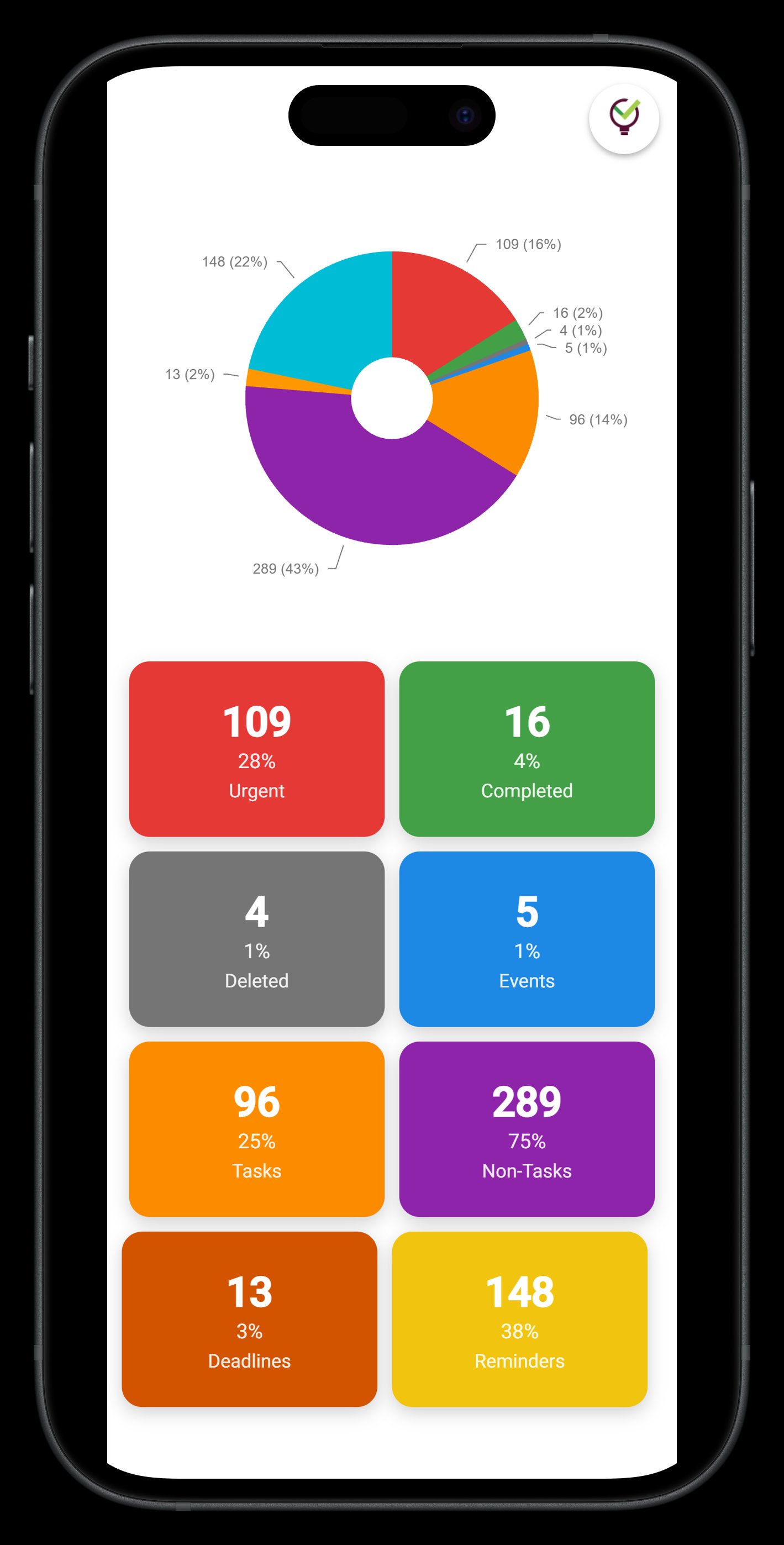
TaskLoco has two free tiers. TaskLoco Lite is a native iPhone and Android app — completely anonymous, no sign-in, no account required, stores up to 20 notes as a JSON file on your device only, no syncing. TaskLoco Lite Plus+ is a web app and Chrome extension — sign in with Google, up to 30 notes, syncs across all your devices, and the Chrome extension captures any webpage as a sticky note in one click. Neither free tier includes reminders, file attachments, or team sharing — those are Premium features. Premium comes with a 7-day free trial.
What does the TaskLoco Chrome extension do?
The TaskLoco Chrome extension lets you capture any webpage as a sticky note in a single click — no copy-paste, no tab-switching. The page context is preserved in the note so you don't lose track of what you were looking at. It is free and available with both Lite Plus+ and Premium accounts. For anyone doing research-heavy work, it is one of the fastest ways to get information off the web and into your planning wall.
How much does TaskLoco Premium cost?
$9.99/month per person (currently $4.99/month per person for first 500 charter members with code CHARTER50)
Born in Brooklyn. Powered by AWS. Your data stays yours.
TaskLoco is available on iPhone, Android, Chrome, and every web browser.