Most people who try Getting Things Done abandon it within three months. They capture diligently, they build lists, they maybe even set up contexts. Then life gets busy, the inbox overflows, and the whole thing starts lying to them. The culprit is almost always the same: they skipped the Weekly Review.
The Weekly Review is not optional scaffolding. It is the mechanism that makes every other part of GTD trustworthy. A capture system you don't regularly process is just a guilt pile with better formatting. This page explains what the review actually is, why Allen built it the way he did, where people go wrong, and how to design a version that survives contact with a real week.
What the GTD Weekly Review Actually Is
David Allen introduced the Weekly Review in Getting Things Done as a three-phase process: Get Clear, Get Current, and Get Creative. Most people who think they do a Weekly Review are only doing the first phase — and even then, incompletely.
Get Clear means you collect everything that has accumulated since your last review. Physical inboxes, digital inboxes, notebooks, wallet slips, voicemails, browser tabs you left open as reminders — all of it goes into your capture system to be processed. Nothing is left in a holding pattern.
Get Current is where most of the work lives. You review every active project and confirm that each one has a clearly defined next action. You review your calendar — three to four weeks back and several weeks forward. You review your Waiting For list. You review your Someday/Maybe list and decide what, if anything, gets activated. You empty your head with a final mind sweep using Allen's trigger list.
Get Creative is the most skipped phase. Once your system is clear and current, you have the mental space to think beyond the immediate. What new projects or ideas deserve attention? What are you excited about? What risks do you want to get ahead of? This is where the system pays its highest dividend — but you can only get here if the first two phases are done honestly.
Why It Works — and Where It Breaks Down
The Weekly Review works because of a simple psychological principle Allen calls the mind like water. Your brain is not a reliable storage device. It keeps re-surfacing things you haven't decided about, burning working memory on open loops that aren't being actively handled. The Weekly Review's job is to give your brain credible evidence that every loop is tracked and has a next action — so it can stop surfacing them constantly.
Research in cognitive load theory supports this framing. The brain doesn't distinguish between "important thing I need to remember" and "mildly annoying thing I haven't dealt with." Both consume mental bandwidth. A regular, trustworthy external system reduces that drain — but only if the system is actually trustworthy, which requires regular maintenance.
The breakdown points are predictable:
- It takes too long. A poorly organized system turns every review into a two-hour archaeology dig. The solution is not to skip the review — it's to tighten your capture and processing habits during the week so there's less to excavate.
- It's not protected time. A Weekly Review that starts "when I get a moment" never starts. It needs a recurring block, treated with the same commitment as a client call.
- The project list isn't maintained between reviews. If projects get added ad hoc and never pruned, the review becomes overwhelming. Allen's guidance is to keep the project list realistic — typically 10 to 100 active projects, with clear outcomes for each.
- The mind sweep is skipped. The trigger list exists because you will always miss things if you rely only on your inbox. It's a structured prompt for everything you might have forgotten to capture. Skipping it means the review can't fully close the loop.
- People confuse it with weekly planning. Planning is a separate activity. The review's goal is system integrity, not scheduling. Conflating the two makes both worse.
Building a Review You'll Actually Finish
The most common failure mode isn't laziness — it's a review process that's too fragile. Here's what makes one durable:
Anchor it to a fixed time and place. Friday afternoon before you close out works for most people — your week is fresh, you're motivated to clear your desk, and you have the weekend as a natural horizon. Some people prefer Sunday evening. The specific time matters less than it being the same time every week, with no other commitments booked over it.
Build your own checklist. Allen provides a reference checklist in Getting Things Done, but your version should reflect your actual system. If you use a digital task manager, your checklist should name your specific inbox views, project folders, and reference areas — not generic placeholders. A review checklist you actually follow is better than an ideal one you ignore.
Separate capture from processing. During the week, capture everything without judgment. During the review, process without getting distracted by doing. If you start working on a task mid-review, you'll never finish the review. Flag it, add a next action, and move on.
Keep your project list honest. A project is any desired outcome that requires more than one action step. If you have 200 "projects," most of them are probably either vague someday wishes or single tasks masquerading as projects. Prune ruthlessly. Each active project should have a clearly written outcome and at least one next action in your system.
Use a physical or visual workspace for the clearing phase. Allen famously recommends doing the review at a clean desk. The environmental cue matters. If you're doing your review in the same browser tab where you handle email, you will be interrupted.
Track your streak, not your perfection. Missing one week doesn't mean your system is broken. The trap is treating a miss as permission to skip the next one. A brief, incomplete review is always better than none.

TaskLoco Premium is regularly $9.99/month per person. Right now, charter members can lock in 50% off the regular price — forever. That means $4.99/month per person today. And if our price ever goes up, you still pay half. Always.
Code CHARTER50 auto-applies at checkout. First 500 spots only — once they're gone, this offer is gone permanently. Act fast while spots last.
Every Premium subscription includes unlimited notes, 10GB file storage, reminders, calendar, and team sharing. Each team member requires a separate subscription. 7-day free trial — no charge until day 8. Cancel anytime.
Free Options: TaskLoco
TaskLoco Lite
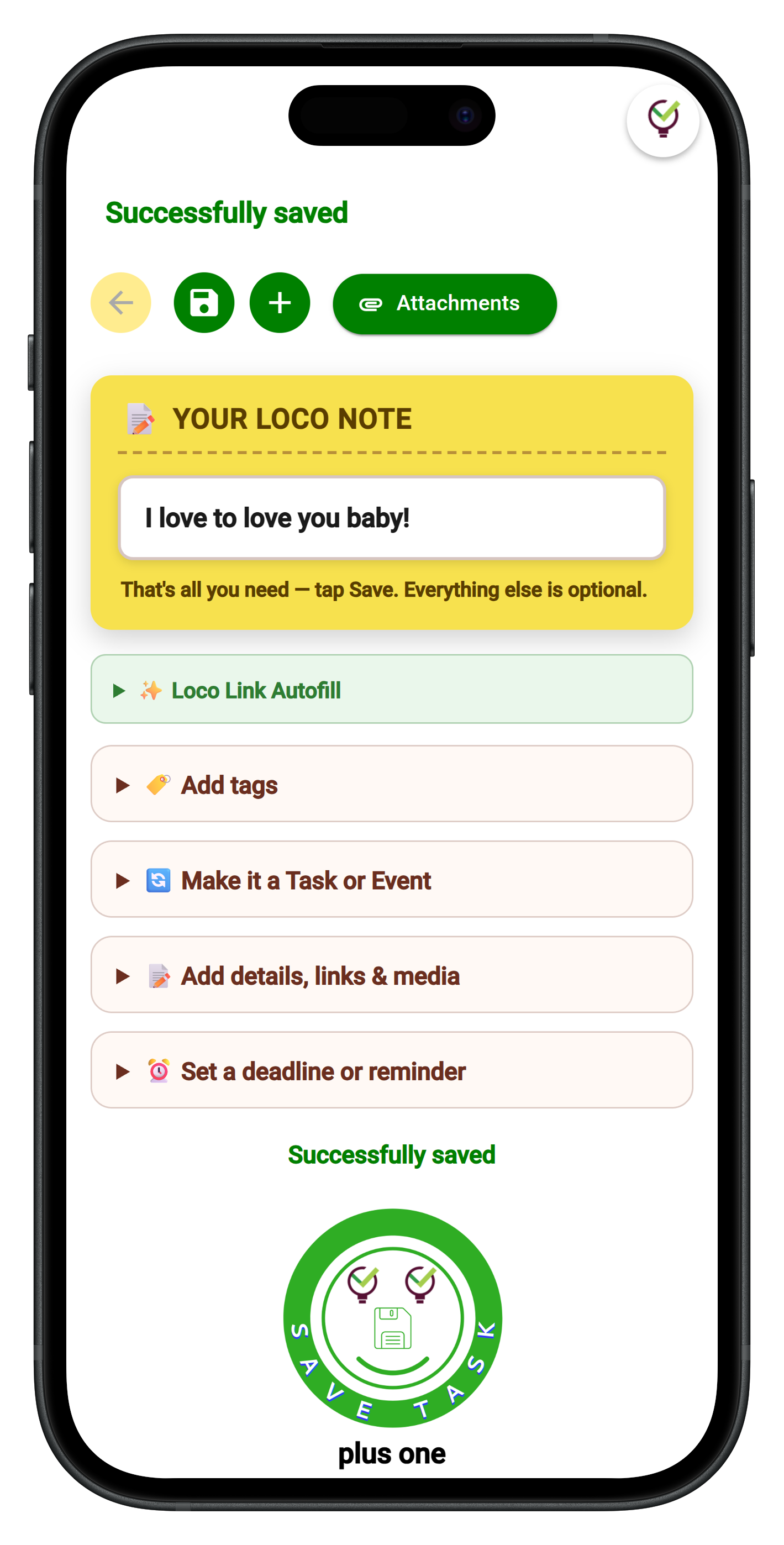
- Native iPhone & Android app
- Completely anonymous — no sign-in
- Data stays on your device
- Up to 20 notes
- Free forever
TaskLoco Lite Plus+
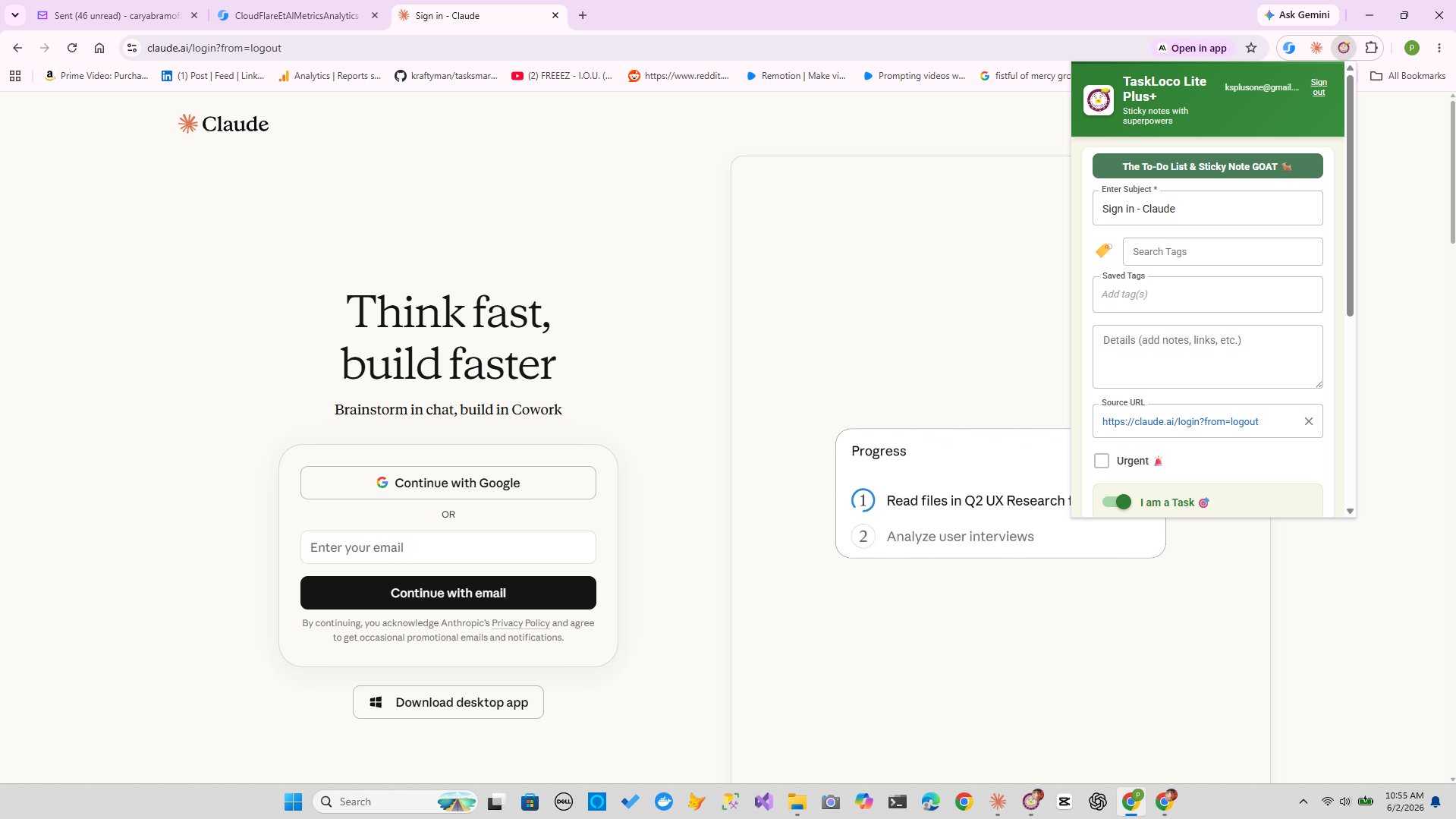
- Web app + Chrome extension
- Sign in with Google
- Wall syncs across all devices
- Up to 30 notes
- Free forever
Lock In 50% Off — Forever
7-day free trial. No charge until day 8. CHARTER50 auto-applies at checkout.
🔒 Lock In My Charter SpotSee TaskLoco in Action
Frequently Asked Questions
How long should a GTD Weekly Review take?
Allen's own estimate is one to two hours for a thorough review, but that assumes a well-maintained system. In practice, most people with a reasonably clean system finish in 30 to 45 minutes. If your review consistently takes longer than 90 minutes, the issue is usually a bloated project list or an inbox that wasn't processed during the week — not the review process itself.
What day should I do my Weekly Review?
Friday afternoon is the most commonly recommended slot because your week is still fresh, you have natural motivation to clear your desk before the weekend, and you can use the weekend as a mental reset. Sunday evening works well for people who like to start Monday with full clarity. The specific day matters far less than consistency — pick a slot that has the least competition from other commitments and protect it.
What's the difference between a Weekly Review and weekly planning?
A Weekly Review is a system-integrity check: you're verifying that every open loop is captured, every project has a next action, and your lists accurately reflect reality. Weekly planning is a separate activity where you decide what to prioritize and schedule for the coming week. GTD's design separates these deliberately. Doing your review first gives you an accurate picture of what's actually on your plate, which makes any subsequent planning far more realistic.
What is the GTD trigger list and do I actually need it?
The trigger list is a structured prompt Allen includes in Getting Things Done — a multi-page catalog of life areas (professional projects, personal commitments, pending communications, finances, health, etc.) designed to surface things you've forgotten to capture. You use it at the end of the clearing phase to do a final mind sweep. Whether you need it depends on your capture discipline during the week. If you're rigorous about capturing in the moment, a shorter personal trigger list may suffice. If you frequently discover things mid-week that should have been on your list, the full trigger list is worth using.
Can I do a GTD Weekly Review if I only have 20 minutes?
Yes — a compressed review is far better than no review. Prioritize in this order: process your inboxes to zero, scan your calendar (past week and next two weeks), and check each active project for a current next action. Skip the mind sweep if you're short on time. A 20-minute review maintains the core function of the system even if it doesn't achieve full closure. Just don't make 20 minutes your permanent standard — build toward the fuller version as your system matures.
How do I keep my project list from getting out of control?
The most effective constraint is Allen's own definition: a project is a desired outcome that requires more than one action step. Every item on your list should pass two tests — it has a clearly written outcome (not a vague activity) and it has at least one next action already in your system. If a project fails either test during the review, either fix it on the spot or move it to Someday/Maybe. Ruthless pruning is not giving up; it's keeping your active list trustworthy.
What tool should I use for my GTD Weekly Review?
GTD is tool-agnostic — Allen designed it to work with paper, digital apps, or any combination. The right tool is the one you actually trust and use. Key requirements: fast capture, reliable lists you can view cleanly during the review, and some way to attach project reference material so context is in one place. If you're evaluating digital options, look for a system that makes the review phase fast rather than one that optimizes for elaborate setup. $9.99/month per person (currently $4.99/month per person for first 500 charter members with code CHARTER50)
Born in Brooklyn. Powered by AWS. Your data stays yours.
TaskLoco is available on iPhone, Android, Chrome, and every web browser.