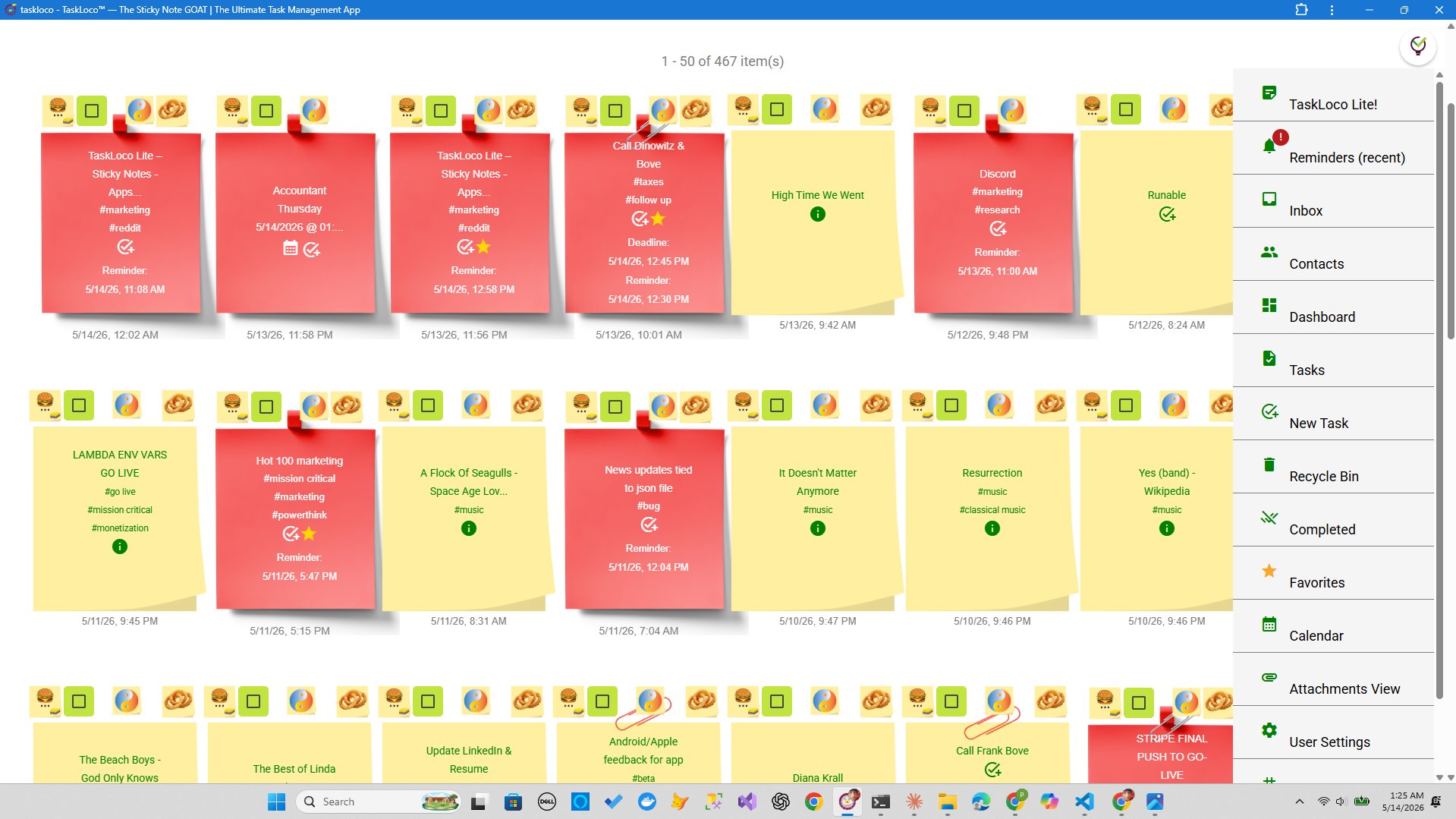
Long to-do lists are not a productivity tool for ADHD brains. They are a source of paralysis. The longer the list, the harder it becomes to pick a starting point — and when you can't pick a starting point, the whole day quietly disappears. The one-task-per-note method cuts through that by making the decision for you: each note holds exactly one thing, and that one thing is the only thing you need to see right now.
This isn't a new concept — therapists, coaches, and ADHD researchers have pointed to task isolation as a key strategy for reducing executive function load. What's changed is that the right tool can now make the method automatic instead of aspirational. When your app is literally built around sticky notes — one idea, one card, one action — the system runs itself.
What to Look for in a One-Task-Per-Note App for ADHD
Before any specific app enters the conversation, it helps to understand what actually makes a tool work for ADHD — because most productivity apps are designed for neurotypical workflows, and those workflows assume a level of sustained attention that ADHD brains simply don't operate on by default.
There are three things that genuinely matter when choosing a one-task-per-note system:
- Visual separation. Each task needs to exist as a discrete, bounded object — not a line in a list. When tasks bleed into each other visually, the brain treats them as one undifferentiated blob. Cards, notes, and tiles force separation at the interface level, which reduces the mental work of isolating what to focus on.
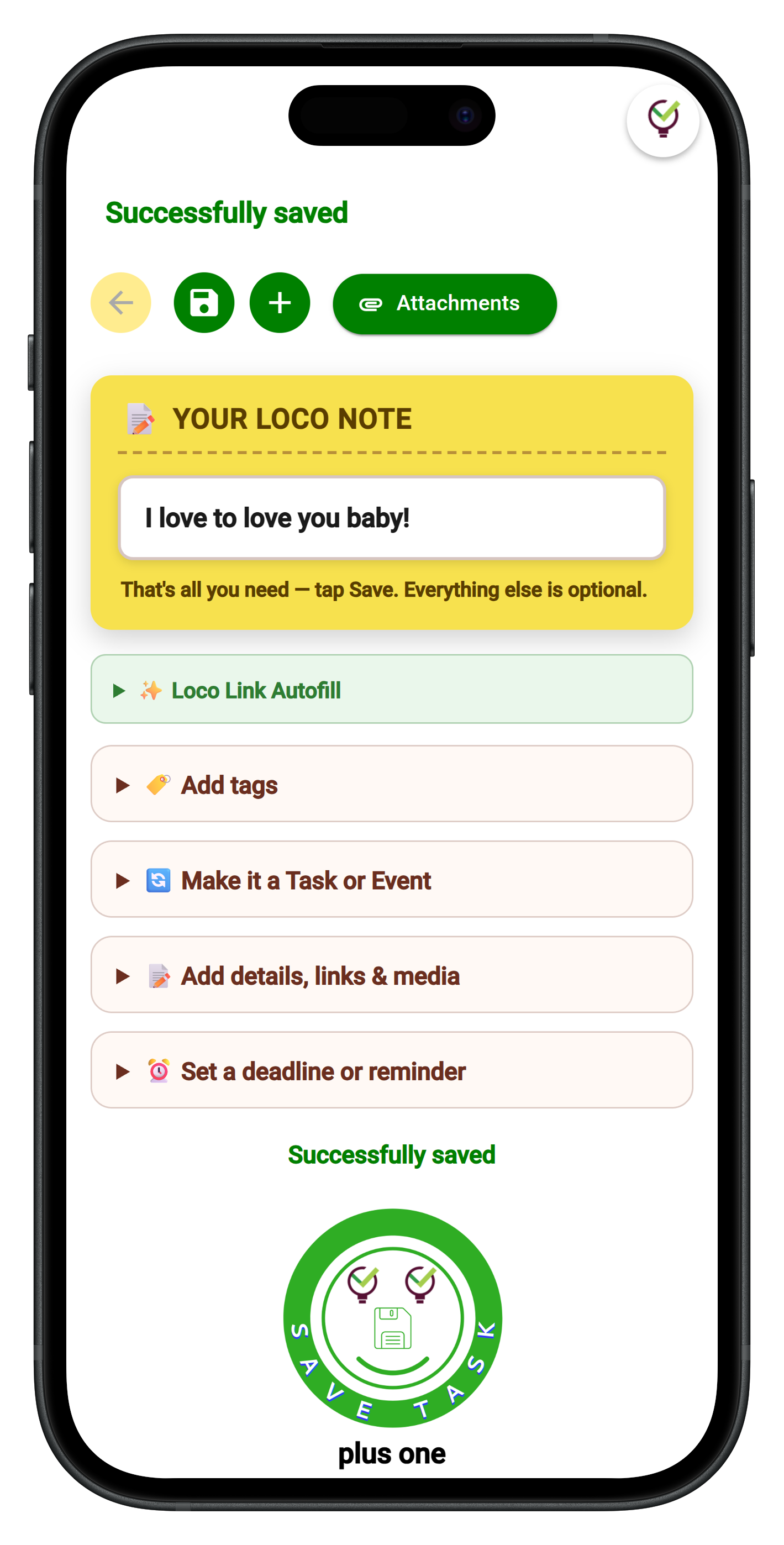
- Minimal friction to capture. ADHD thoughts arrive fast and leave faster. If capturing a new task takes more than two or three taps, the thought is gone. The capture experience needs to be nearly instant — open, type, done.
- Reminders that reconnect you to the task. A reminder that just says "hey, remember that thing" is useless. A reminder that deep-links you directly back to the specific note — so you land on exactly the task with no searching — is the difference between a nudge that works and one that gets dismissed.
Why the One-Task-Per-Note Method Works for ADHD
Executive dysfunction — the difficulty of initiating, organizing, and prioritizing tasks — is one of the most disruptive aspects of ADHD. It's not laziness. It's a neurological bottleneck. Long, nested to-do lists make this worse because they require the brain to perform multiple sorting operations before it can even begin working. The one-task-per-note method removes those sorting operations entirely.
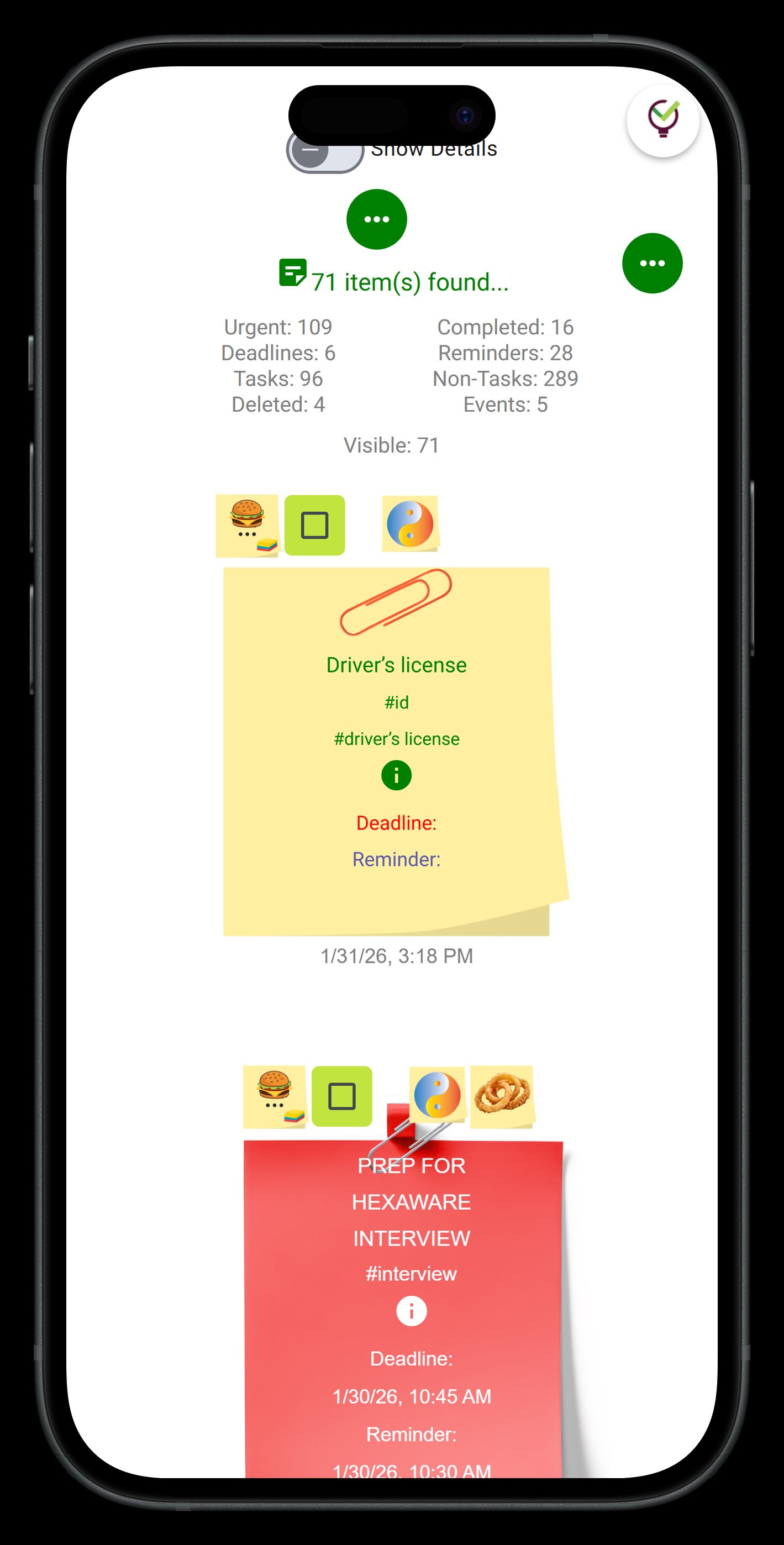
When every task is its own card, a few powerful things happen. First, you can't hide a task inside a sub-bullet under another task. Everything is visible, discrete, and equal. Second, you can physically move, archive, or discard a note when the task is done — which provides a tactile sense of completion that a checkbox in a list rarely delivers. Third, the visual wall of notes serves as an external working memory. ADHD brains often struggle to hold multiple items in working memory simultaneously; a visible task wall offloads that job to the screen.
The method also plays well with hyperfocus. When you lock in on a single note, everything outside it fades. That's not a bug — it's exactly what you want. You're not supposed to see forty tasks at once. You're supposed to see one.
How TaskLoco Makes the One-Task-Per-Note Method Effortless
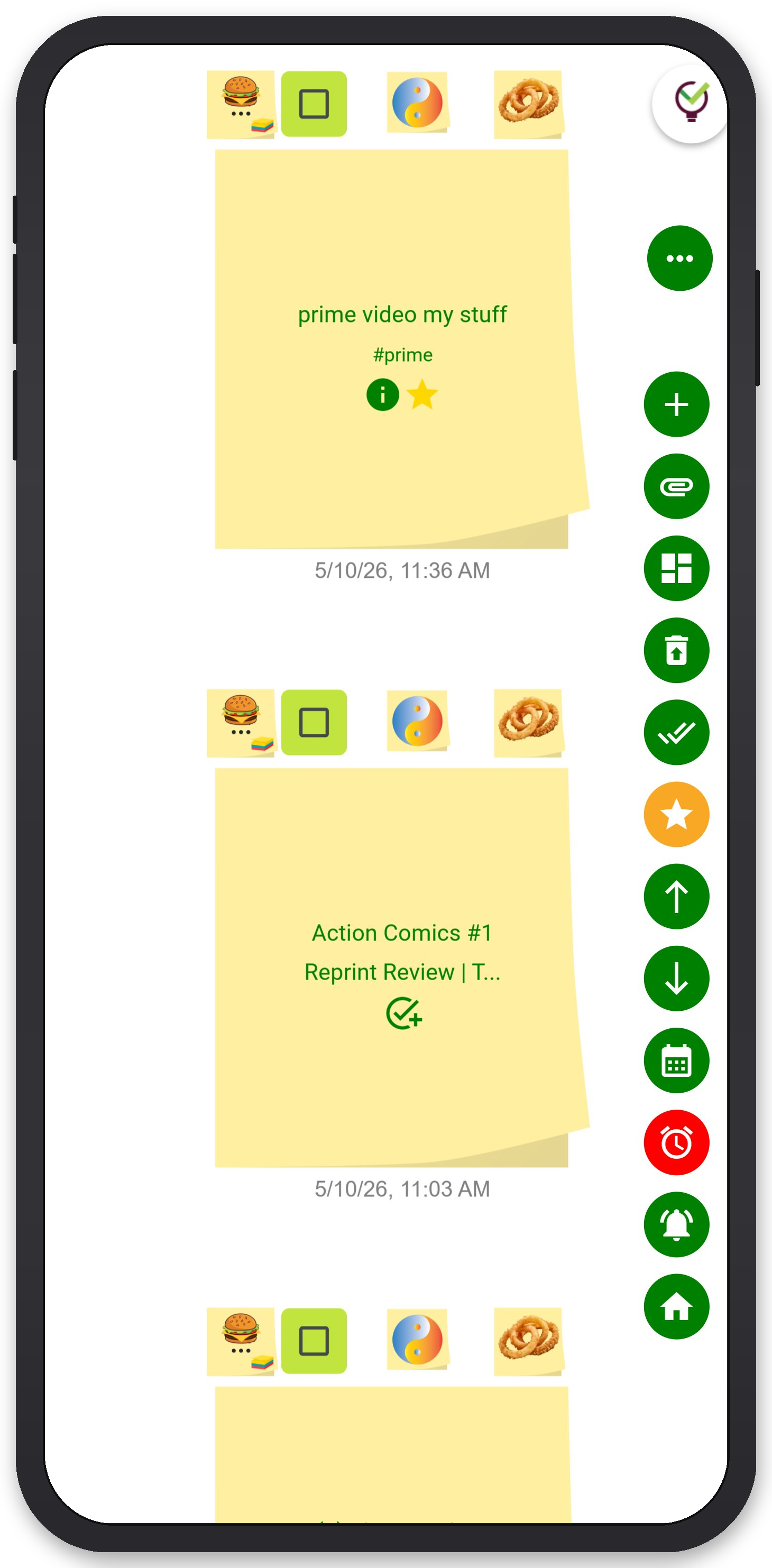
TaskLoco was designed around sticky notes as the core unit — not as an afterthought or a view mode. That design decision makes it a natural fit for the one-task-per-note approach, because the app already thinks the way the method requires: one idea, one card, arranged on a visual wall you can scan in seconds.
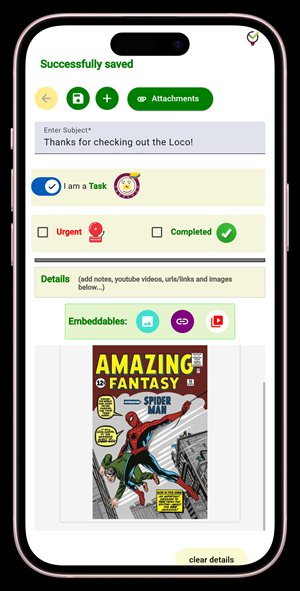
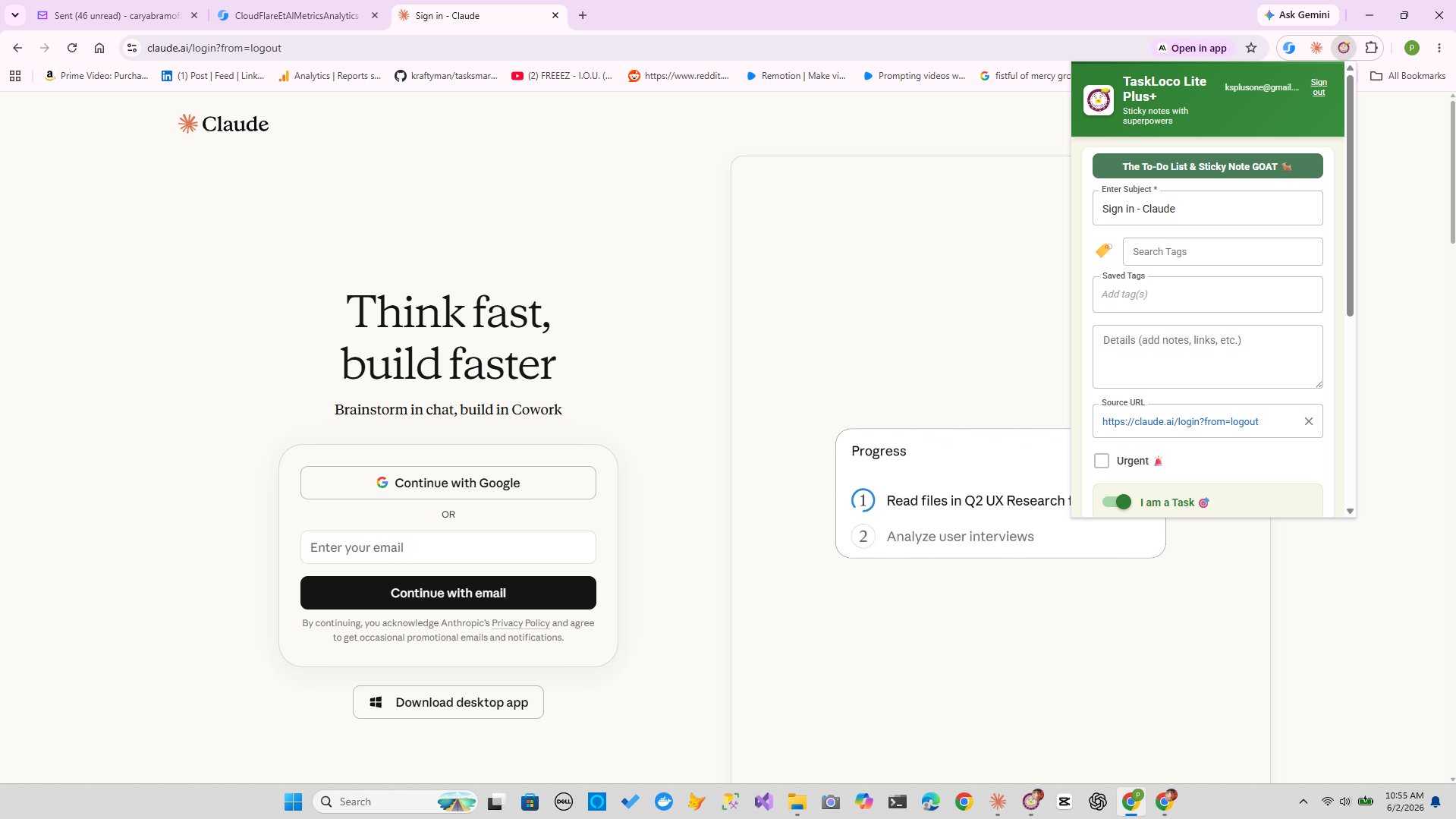
Capture is fast. Open a note, type the task, done. There's no project hierarchy to navigate, no template to fill out, no workflow to configure. You can also capture a webpage in one click using the Chrome extension — which is genuinely useful for ADHD brains who research a topic and immediately want to turn a URL into a task before the impulse disappears.
The reminder system is built around deep-linking. When a reminder fires, it arrives as a push notification on your phone or computer — and tapping it takes you directly to the note. Not to a dashboard. Not to an inbox. To the exact note. For ADHD users, that difference is enormous: there's no re-navigation required, no risk of getting distracted before finding the task.
Premium users get unlimited notes, so there's no pressure to consolidate tasks or delete old ones to make room — a friction point that disrupts the system for free-tier users on other platforms. File attachments (10GB included) mean that supporting materials — reference docs, screenshots, voice memos — live on the same card as the task. No context-switching to find the file.
Building Your ADHD Note Wall in TaskLoco
The setup is intentionally simple — which matters, because an elaborate system that requires ongoing maintenance will eventually be abandoned. Here's how the method translates into TaskLoco specifically:
- One action per note, always. Resist the urge to list sub-steps inside a single note. If a task has multiple steps, each step gets its own note. The wall is your task queue, not a document.
- Use color to signal urgency, not category. ADHD brains respond well to visual cues. Use a bold color for today's priority notes and a neutral color for everything else. Don't over-engineer the color system — two or three colors, max.
- Set a reminder on anything with a deadline. The reminder fires as a push notification and drops you directly back into the note. That's the loop: see the task, do the task, close the note.
- Attach everything relevant. If you need a document to complete the task, attach it to the note (Premium includes 10GB storage). Context-switching to find files mid-task is an ADHD focus-killer.
- Archive, don't delete, when done. Seeing completed notes disappear from the wall gives a clear, visual sense of progress — important for motivation when ADHD makes progress feel invisible.
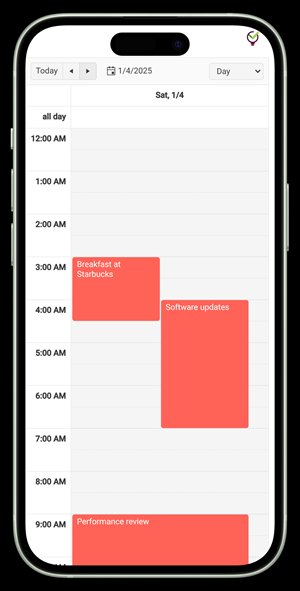
The calendar view in Premium also lets you see which notes have reminders scheduled across the week — useful for spotting overloaded days before they happen, rather than discovering the collision when it's too late.
TaskLoco Lite Plus+ (free, web app) gives you up to 30 synced notes across all your devices — enough to test the method before committing. Premium removes the note cap entirely and adds reminders, file attachments, and team sharing, which matters if you work with others and need to share a task note without managing permissions.
TaskLoco Premium is regularly $9.99/month per person. Right now, charter members can lock in 50% off the regular price — forever. That means $4.99/month per person today. And if our price ever goes up, you still pay half. Always.
Code CHARTER50 auto-applies at checkout. First 500 spots only — once they're gone, this offer is gone permanently. Act fast while spots last.
Every Premium subscription includes unlimited notes, 10GB file storage, reminders, calendar, and team sharing. Each team member requires a separate subscription. 7-day free trial — no charge until day 8. Cancel anytime.
Free Options: TaskLoco
TaskLoco Lite
- Native iPhone & Android app
- Completely anonymous — no sign-in
- Data stays on your device
- Up to 20 notes
- Free forever
TaskLoco Lite Plus+
- Web app + Chrome extension
- Sign in with Google
- Wall syncs across all devices
- Up to 30 notes
- Free forever
Lock In 50% Off — Forever
7-day free trial. No charge until day 8. CHARTER50 auto-applies at checkout.
🔒 Lock In My Charter SpotSee TaskLoco in Action
Frequently Asked Questions
Why is one task per note better for ADHD than a regular to-do list?
To-do lists require your brain to scan, sort, and prioritize before you can even start working — and for ADHD brains, that pre-work is often where the day stalls. One task per note eliminates that sorting step. Each note is already isolated, already visible, and already a single action. You don't decide what to do; you just pick a note.
How many notes should I have on my task wall?
There's no magic number, but most people find that 10–20 active notes is a manageable visual field. Beyond that, the wall starts to feel like a list again. The key is that notes on the wall represent active, in-progress work. Anything that's waiting, someday, or low priority can be archived or moved to a separate board — out of the main view.
Does TaskLoco have a free version I can use to try this method?
Yes. TaskLoco Lite Plus+ is free — it's a web app that syncs across all your devices with up to 30 notes. No reminders or file attachments on the free tier, but it's enough to build the habit and see whether the one-task-per-note method works for you before upgrading. $9.99/month per person (currently $4.99/month per person for first 500 charter members with code CHARTER50)
How do TaskLoco reminders help with ADHD specifically?
The key difference is that TaskLoco reminders deep-link back to the specific note. When the push notification fires, tapping it takes you directly to the task — not to a home screen where you have to remember which task the reminder was for. That single step of re-navigation is often enough for an ADHD brain to lose the thread. Deep-linking closes that gap. Optional email and SMS notifications are also available if you want multiple channels.
What if a task has multiple steps — do I make one note or several?
Make several. That's the point of the method. If 'plan the presentation' feels too big to start, break it into 'write the outline,' 'find three reference stats,' and 'draft the opening slide' — each on its own note. Smaller, more specific tasks are easier to initiate, and the ADHD brain responds much better to a clearly bounded action than to a vague, multi-step project.
Can I share task notes with a teammate or family member?
Yes, with TaskLoco Premium. Team sharing works like email — you share a note and the recipient can clone it and make it their own. No permissions to manage, no access levels to configure. It's the same one-task-per-note experience, just extended to another person.
Is the Chrome extension useful for the one-task-per-note method?
Very much so. ADHD brains often research something impulsively and then lose the tab — and the intention. The TaskLoco Chrome extension lets you capture any webpage as a note in one click. That URL becomes a task card immediately, with the page title and link already inside. The capture happens before the thought evaporates.
Born in Brooklyn. Powered by AWS. Your data stays yours.
TaskLoco is available on iPhone, Android, Chrome, and every web browser.