Monday mornings don't have to feel overwhelming. A well-designed reset routine transforms the start of your week from chaotic scrambling into focused momentum. Instead of diving straight into emails and meetings, successful people use Monday morning to step back, assess, and set clear intentions for the week ahead.
The most effective Monday routines share three core elements: they review what happened last week, plan what needs to happen this week, and create the mental and physical space to execute those plans. This isn't about rigid schedules or perfect productivity systems — it's about building a sustainable weekly rhythm that actually works.
What Makes a Monday Reset Routine Effective
The best Monday reset routines balance three key elements: reflection on the past week, planning for the upcoming week, and organizing your tools and workspace. Without reflection, you repeat the same mistakes. Without planning, you react instead of taking control. Without organization, even great plans get lost in clutter.
Effective routines are also time-bounded. Spending three hours on weekly planning defeats the purpose — you need energy left to actually execute your plans. Most successful Monday resets take 30-60 minutes and happen before you check email or dive into reactive work.
Your routine should feel sustainable, not overwhelming. Start small and build habits that you can maintain even during busy weeks. A five-minute Monday reset is infinitely better than an hour-long routine you abandon after two weeks.
Step 1: Review Last Week's Wins and Lessons
Start by acknowledging what went well last week. This isn't just feel-good motivation — celebrating wins reinforces the behaviors that created them. Note specific accomplishments, both big and small. Maybe you finished a project ahead of schedule, had a great client conversation, or simply maintained your exercise routine during a stressful week.
Then examine what didn't go according to plan. Look for patterns rather than isolated incidents. Did you consistently underestimate how long tasks would take? Were you derailed by unplanned meetings? Did certain types of work consistently get pushed to the end of the day?
Write these insights down somewhere you'll see them during the week. The goal is learning, not self-criticism. Each week's lessons become inputs for better planning and more realistic expectations going forward.
Steps 2-4: Plan Your Week Like You Mean It
Step 2: Identify Your Top 3 Weekly Priorities — Before diving into task lists, clarify what would make this week feel successful. Choose three main outcomes you want to achieve. These might be completing a project milestone, having important conversations, or making progress on a longer-term goal. Everything else is secondary.
Step 3: Time-Block Your Big Rocks — Look at your calendar and block time for your top priorities first. If client work is priority one, block those hours before meetings fill up your schedule. If deep thinking is crucial this week, protect your best thinking hours. Schedule priorities like appointments with yourself.
Step 4: Brain Dump Everything Else — Now capture all the smaller tasks, follow-ups, and random to-dos floating in your head. Don't organize them yet — just get them out of your mental storage and into a trusted system. This clears mental space and ensures nothing important gets forgotten.
Steps 5-7: Set Up Your Week for Success
Step 5: Organize Your Digital Workspace — Clean up your desktop, close unnecessary browser tabs, and organize any files from last week. Set up folders or notes for this week's projects so you're not hunting for documents when you're trying to focus. A cluttered digital workspace creates mental friction throughout the week.
Step 6: Prepare Your Tools and Materials — Whatever tools you use for productivity — whether digital apps, physical notebooks, or project management systems — make sure they're ready for the week. Update your task list, set up templates you'll need, and ensure you have access to everything required for your priority work.
Step 7: Set One Small Daily Intention — Choose one simple thing you'll do each day to maintain momentum. This could be reviewing your priorities every morning, taking a short walk between meetings, or ending each day by noting tomorrow's most important task. Small daily practices compound into significant weekly progress.
The most successful people treat their Monday reset as non-negotiable time. Block it on your calendar, turn off notifications, and give yourself this gift of intentional weekly planning. Your future self will thank you by Thursday.

TaskLoco Premium is regularly $9.99/month per person. Right now, charter members can lock in 50% off the regular price — forever. That means $4.99/month per person today. And if our price ever goes up, you still pay half. Always.
Code CHARTER50 auto-applies at checkout. First 500 spots only — once they're gone, this offer is gone permanently. Act fast while spots last.
Every Premium subscription includes unlimited notes, 10GB file storage, reminders, calendar, and team sharing. Each team member requires a separate subscription. 7-day free trial — no charge until day 8. Cancel anytime.
Free Options: TaskLoco
TaskLoco Lite
- Native iPhone & Android app
- Completely anonymous — no sign-in
- Data stays on your device
- Up to 20 notes
- Free forever
TaskLoco Lite Plus+
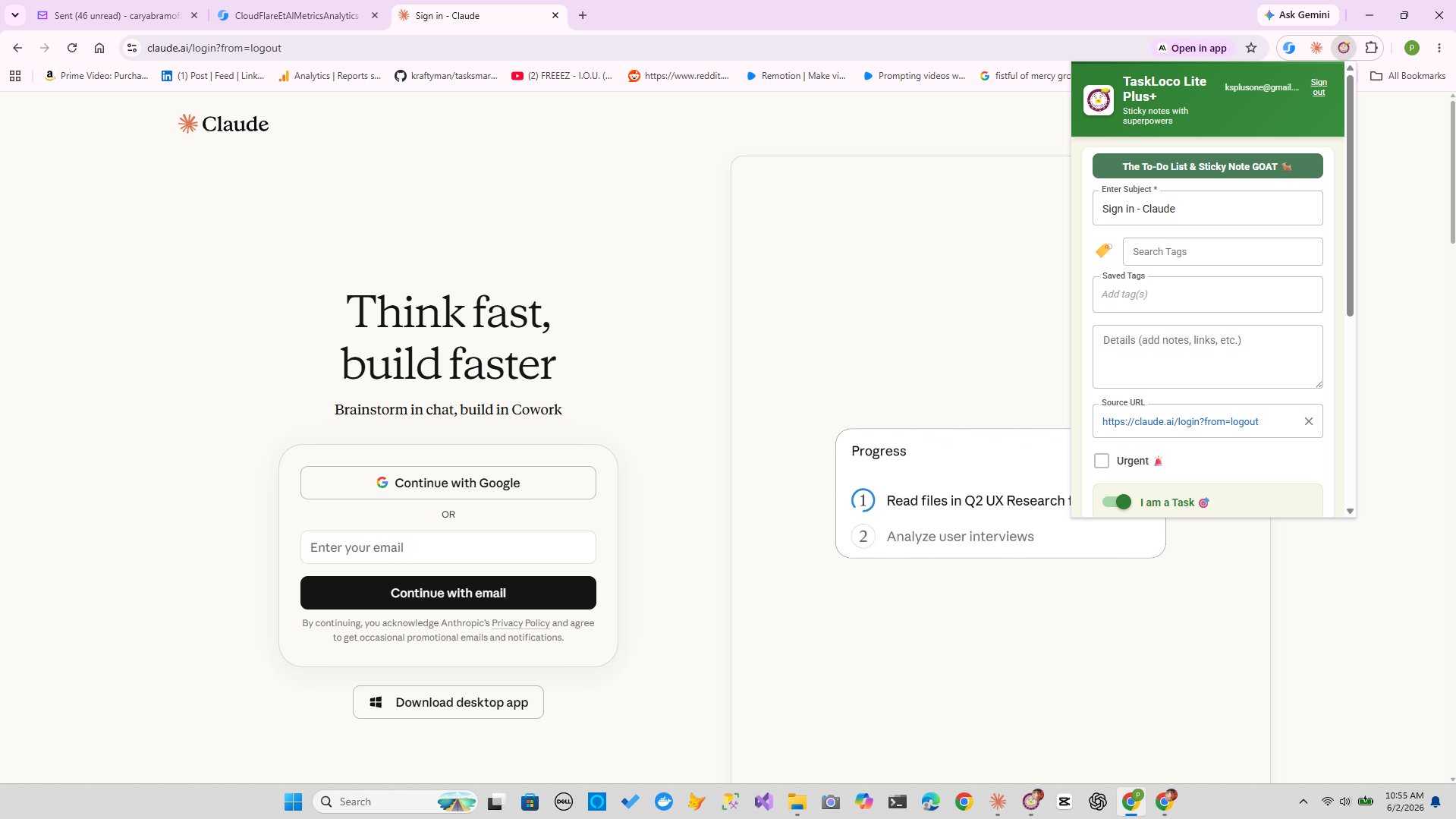
- Web app + Chrome extension
- Sign in with Google
- Wall syncs across all devices
- Up to 30 notes
- Free forever
Lock In 50% Off — Forever
7-day free trial. No charge until day 8. CHARTER50 auto-applies at checkout.
🔒 Lock In My Charter SpotSee TaskLoco in Action
Frequently Asked Questions
How long should a Monday reset routine take?
Most effective Monday reset routines take 30-60 minutes. Start with 15 minutes if you're building the habit, but don't exceed an hour — you need energy left to execute your plans, not just make them.
What if I don't have time for a Monday reset routine?
Even 10 minutes of intentional weekly planning beats diving straight into reactive work. Try a micro-routine: 3 minutes to review last week, 5 minutes to identify this week's top priority, 2 minutes to clear your workspace.
Should I do my Monday reset on Sunday night or Monday morning?
Both work, but Monday morning is often better for maintaining work-life boundaries. Sunday night planning can create weekend anxiety. Monday morning resets help you transition from weekend mode to work mode more naturally.
What tools do I need for a Monday reset routine?
Start simple — just a notebook or note-taking app works fine. The key is consistency, not perfect tools. $9.99/month per person (currently $4.99/month per person for first 500 charter members with code CHARTER50) Many people find that having one place for notes, tasks, and weekly planning reduces friction and makes the routine more sustainable.
How do I stick to my Monday reset routine long-term?
Start smaller than you think you need, link it to an existing Monday habit (like your first coffee), and track just whether you did it — not how perfectly. Missing one Monday isn't failure; missing two in a row means you need to simplify the routine.
What if unexpected things derail my weekly plan?
That's normal and expected. The Monday reset isn't about creating an inflexible schedule — it's about having clear priorities so you can make good decisions when things change. Review and adjust mid-week if needed.
Can I customize my Monday reset routine for different types of work?
Absolutely. Creative professionals might focus more on project phases and inspiration, while service providers might emphasize client priorities and communication. The core elements — review, plan, organize — work across different roles and industries.
Born in Brooklyn. Powered by AWS. Your data stays yours.
TaskLoco is available on iPhone, Android, Chrome, and every web browser.