Most productivity advice is secretly about perfect days. Clear your inbox. Hit your deep work block. Review your OKRs. But most days aren't perfect — and that gap between the ideal system and real life is exactly where projects go quiet and goals slowly die. Minimum Viable Progress is the antidote: the deliberate practice of making the smallest meaningful move that keeps momentum alive, even on the hardest days.
This isn't a new framework with a trademarked name or a six-week certification. It's a thinking pattern borrowed loosely from the Minimum Viable Product idea in software — stripped down to one question: what is the least I can do today that still counts as forward motion? Answer that honestly, do it, and you've had a productive day. Miss it, and you haven't — regardless of how many meetings you attended.
What Is Minimum Viable Progress — and Who Actually Needs It?
Minimum Viable Progress (MVP) is the practice of defining, in advance, the smallest unit of work that constitutes real forward movement on a goal — and then protecting that unit as the non-negotiable floor of every workday. It is not about doing less. It is about doing the right less when capacity is constrained.
The concept matters most for three types of people: independent creators and freelancers who carry multiple projects simultaneously and have no team accountability to fall back on; knowledge workers inside larger organizations who lose entire days to meetings and async communications; and anyone running a side project alongside a full-time job, where the project gets whatever energy is left over — which is often nothing.
When choosing a system or tool to support a Minimum Viable Progress habit, three criteria actually determine whether it works:
- Capture speed. If logging the day's MVP takes more than ten seconds, you won't do it consistently. The system has to be faster than your hesitation.
- Visibility. Out of sight, out of mind is fatal to this habit. Your MVP must be somewhere you'll actually look — not buried in a folder, not inside a project management app you open once a week.
- Low cognitive load at the point of decision. When you sit down to work, you should spend zero time figuring out what the MVP is. It was decided earlier. It's right there. You just do it.
The Psychology Behind Why Small Wins Keep You Moving
There is solid research behind why small, completed actions build momentum rather than just satisfying a checklist. Teresa Amabile's Progress Principle — drawn from decades of diary studies with knowledge workers — found that the single biggest driver of a good inner work life is making progress on meaningful work, even incremental progress. The size of the win matters far less than the fact that a win happened.
This is exactly why Minimum Viable Progress works as a daily habit and not just a crisis tactic. Every completed MVP — no matter how small — triggers a mild but real sense of forward motion. That feeling makes it easier to start again tomorrow. Skip a few days, and the psychological cost of restarting rises sharply. The gap becomes a story: I've been neglecting this, which generates avoidance, which creates more days without progress, which deepens the story. MVP breaks that cycle at its root.
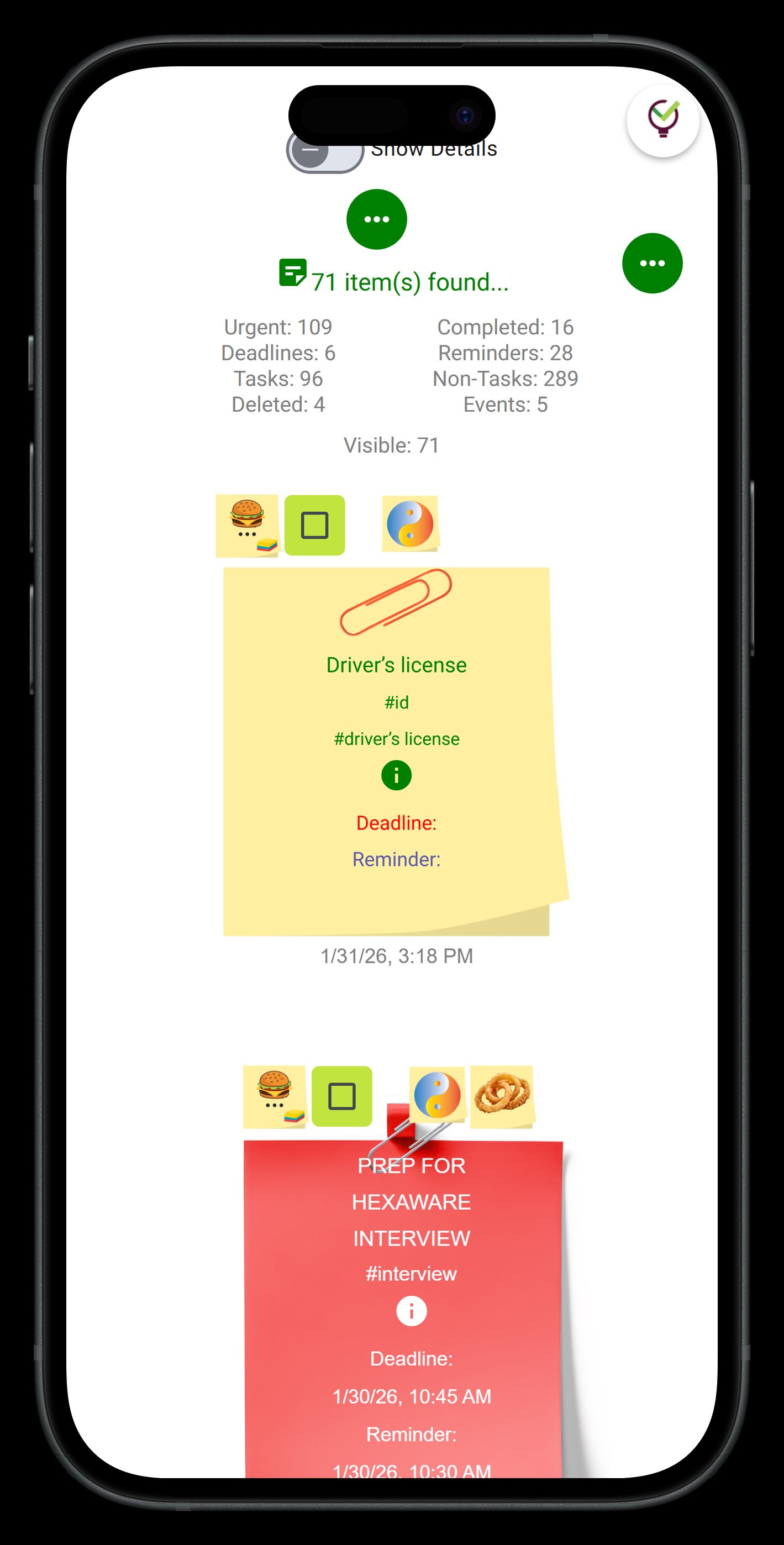
The design implication is important: your MVP system should make completion feel satisfying, not clinical. A checkbox inside a project hierarchy three levels deep does not deliver that. A sticky note on a visible wall that you can mark done — that does. There's a reason physical sticky notes have survived every wave of productivity software for forty years. The act of writing something down by hand, placing it somewhere visible, and physically removing it when done engages the brain differently than clicking a button in a nested task list.
How to Build a Minimum Viable Progress System That Actually Holds
Building the habit has three stages: definition, placement, and review. Each one has a failure point that kills most attempts.
Definition — done the night before, not the morning of. Willpower is highest in the evening after the day's decisions are behind you. Spend two minutes before you close your laptop asking: what is the one thing, for each active project, that I must touch tomorrow? Write it down. Not a list of five things — one. If you genuinely can do more, you will. But one is the floor. This is your MVP. The failure point here is vagueness: work on the proposal is not an MVP. Write the executive summary section of the proposal is.
Placement — in your line of sight, not in your filing system. The MVP note needs to live somewhere you look first thing. A sticky note on your monitor works. A digital note app that opens to your wall of current work also works — provided you actually open it at the start of your day as a ritual. The failure point is depth: if finding your MVP requires navigating to it, you've already introduced friction that will eventually cause drift.
Review — weekly, not daily. Once a week, look back at your MVPs. Did you hit them? If you missed three days out of five on one project, that's signal — either the MVP was too large, the project isn't actually a priority, or something in your schedule needs to change. The weekly review is where the habit becomes a system. Without it, you're just crossing things off.
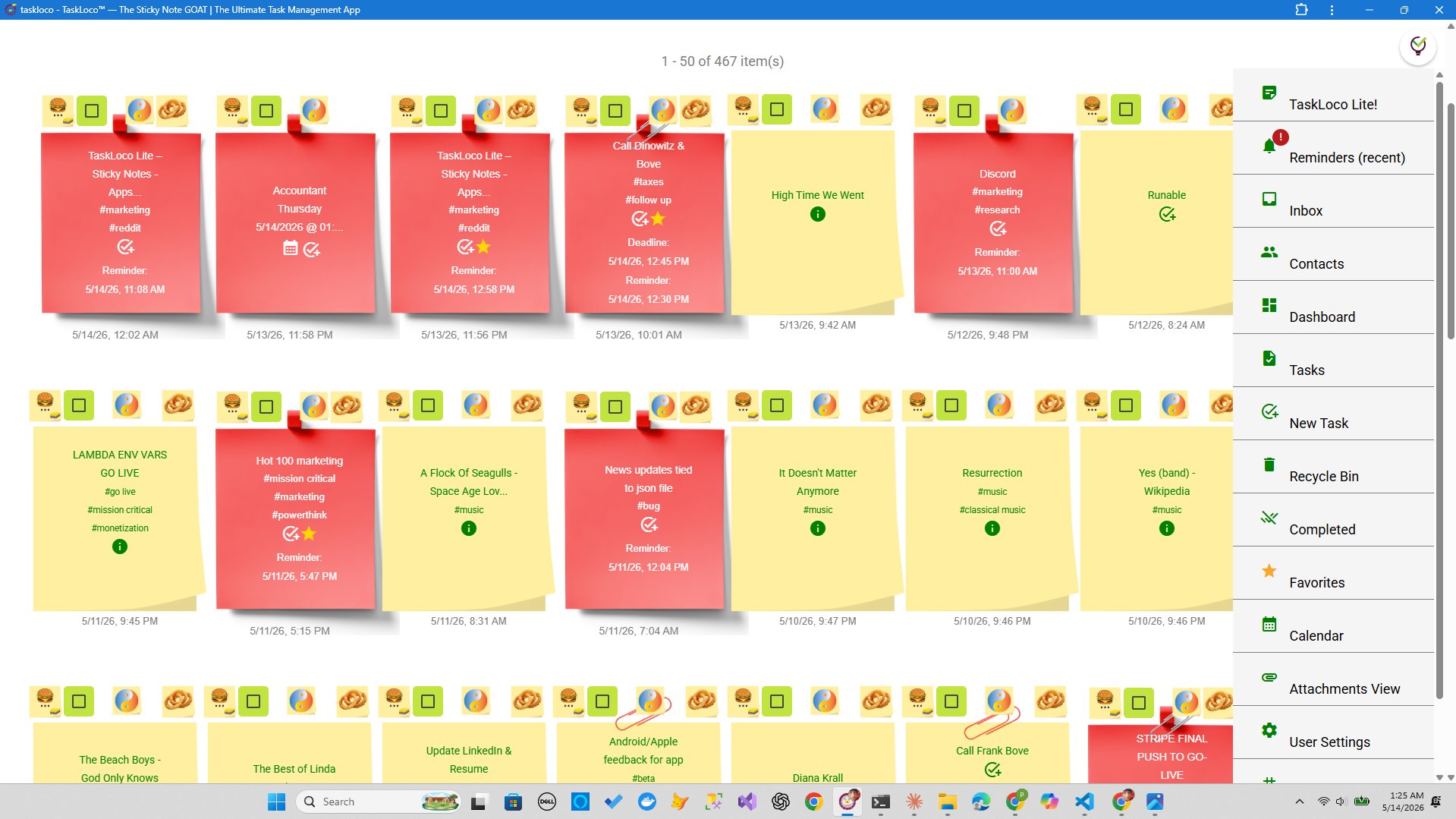
TaskLoco is built around exactly this workflow. Each project gets its own sticky note or note group on your wall. You write tomorrow's MVP on that note tonight. When you open your browser tomorrow morning, it's the first thing you see — not inside a project, not behind a login, just there on the wall. When it's done, you mark it. The visual wall means you see the status of every active project at once, which makes the weekly review a two-minute scan instead of an archaeological dig.
TaskLoco and the Minimum Viable Progress Habit
TaskLoco was built around the sticky note as the fundamental unit of work — which makes it a natural fit for a Minimum Viable Progress workflow. The wall view gives you a literal dashboard of every active commitment. You can see at a glance which projects have been touched recently and which haven't. That visibility alone is a forcing function most productivity apps accidentally remove by hiding work inside hierarchies.
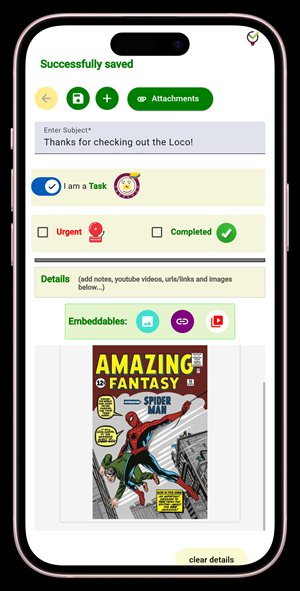
A few specific features make the habit stick. Reminders in TaskLoco are delivered as push notifications directly to your phone and computer — and each reminder deep-links back to the original note. That means your end-of-day reminder to set tomorrow's MVP doesn't just buzz at you; it drops you directly into the note you need to update. Optional email and SMS notifications are available as add-ons if you want backup channels, but the push notification is the core — it's immediate and it takes you exactly where you need to go.
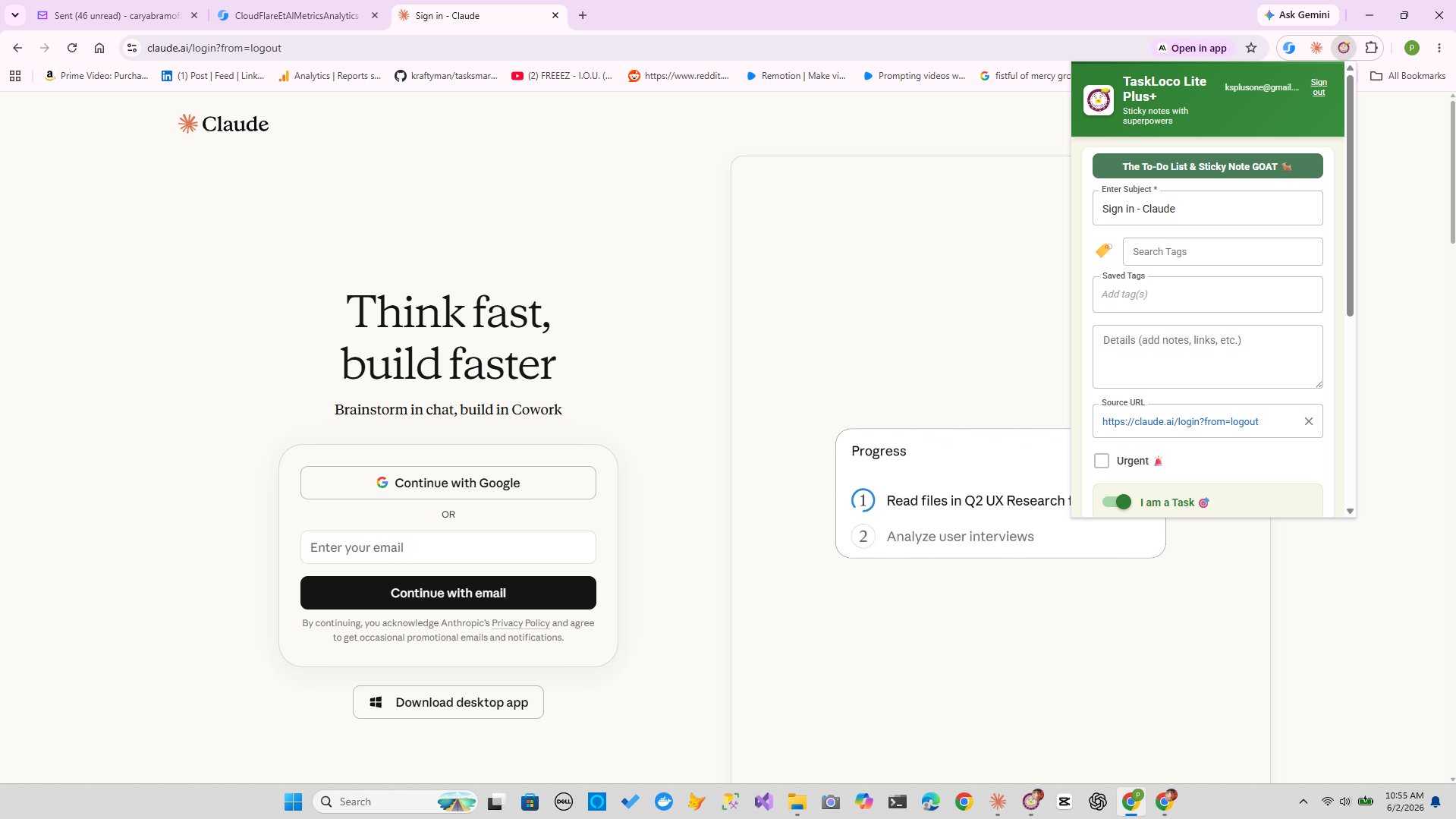
The Chrome extension handles capture speed, which is the first criterion that matters when choosing any MVP system. If you're reading an article, reviewing a document, or skimming your email and something triggers a project thought, one click captures it as a note. It never gets lost in a browser tab or a mental note that evaporates by lunch. The free Chrome extension works alongside both Lite Plus+ (the free web tier) and Premium.
For teams using MVP thinking together — where each person surfaces their daily MVP so the group can align — TaskLoco Premium's team sharing works the way email does: the person sharing sends the note, and recipients can clone it and make it their own. There are no permission levels to configure, no access tiers to manage. You share the note, they get it, they own their copy. It keeps the lightweight feel of the MVP habit even when multiple people are involved.
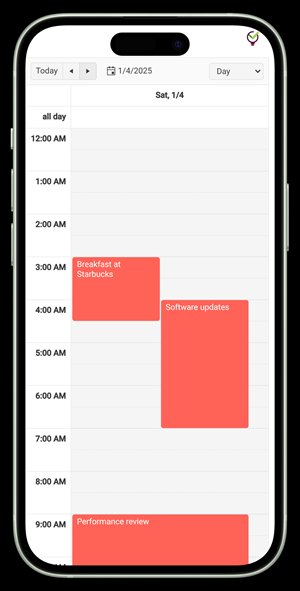
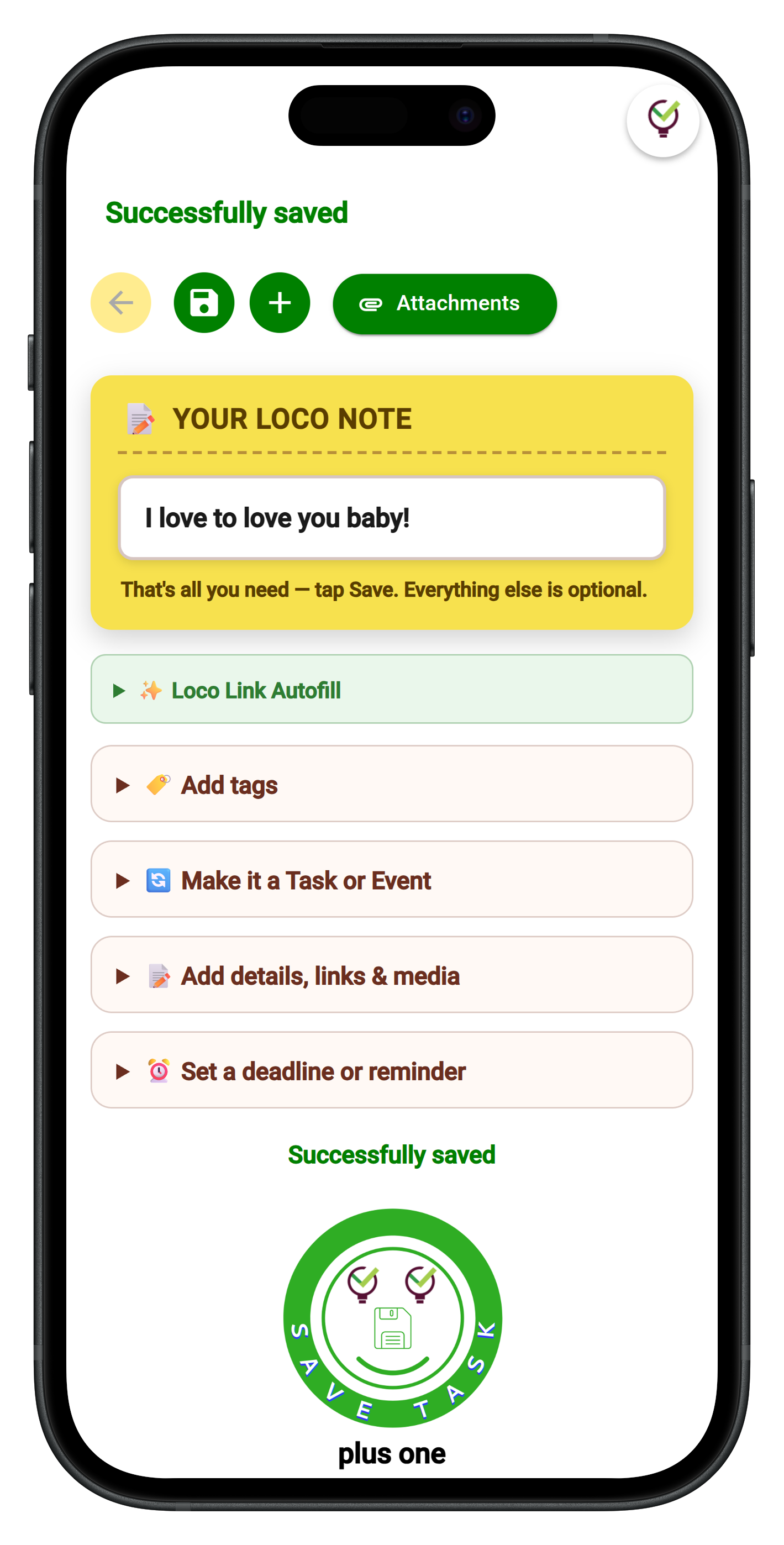
TaskLoco Lite (the free native app on iPhone and Android) is the right starting point if you want to try the habit with zero commitment — no sign-in, no account, completely anonymous, up to 20 notes stored on your device. For cross-device sync and the Chrome extension, Lite Plus+ is free and covers most solo MVP workflows up to 30 notes. When reminders, file attachments, calendar view, and team sharing matter, that's Premium.
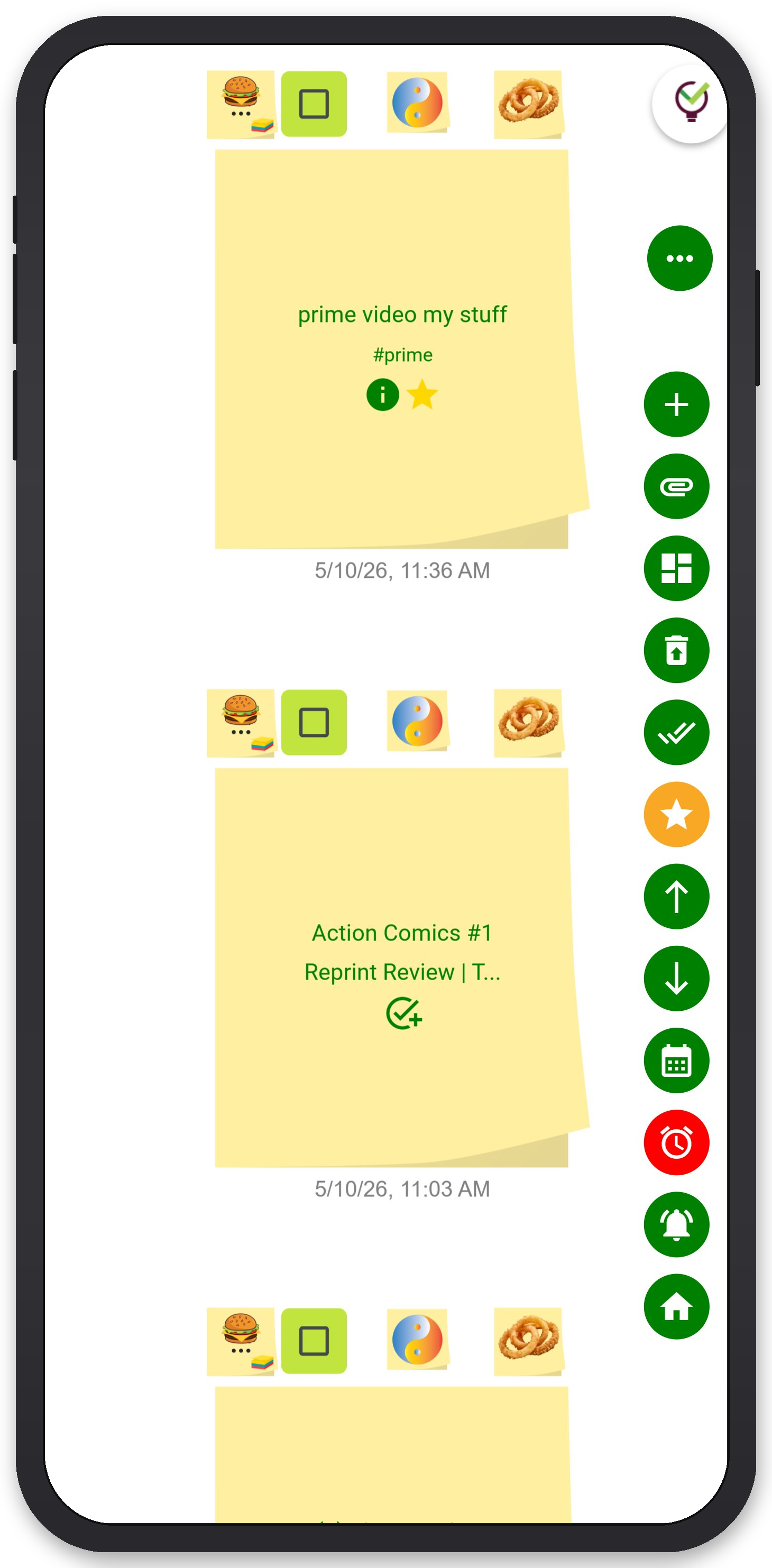
TaskLoco Premium is regularly $9.99/month per person. Right now, charter members can lock in 50% off the regular price — forever. That means $4.99/month per person today. And if our price ever goes up, you still pay half. Always.
Code CHARTER50 auto-applies at checkout. First 500 spots only — once they're gone, this offer is gone permanently. Act fast while spots last.
Every Premium subscription includes unlimited notes, 10GB file storage, reminders, calendar, and team sharing. Each team member requires a separate subscription. 7-day free trial — no charge until day 8. Cancel anytime.
Free Options: TaskLoco
TaskLoco Lite
- Native iPhone & Android app
- Completely anonymous — no sign-in
- Data stays on your device
- Up to 20 notes
- Free forever
TaskLoco Lite Plus+
- Web app + Chrome extension
- Sign in with Google
- Wall syncs across all devices
- Up to 30 notes
- Free forever
Lock In 50% Off — Forever
7-day free trial. No charge until day 8. CHARTER50 auto-applies at checkout.
🔒 Lock In My Charter SpotSee TaskLoco in Action
Frequently Asked Questions
What is Minimum Viable Progress?
Minimum Viable Progress is the practice of defining the smallest unit of work that constitutes real forward movement on a goal — and treating that unit as the non-negotiable floor of every workday. It is not about doing less; it is about ensuring that even on constrained days, meaningful momentum is preserved. The concept draws from the Minimum Viable Product idea in software but applies it to daily personal productivity.
How is Minimum Viable Progress different from a to-do list?
A to-do list is a catalog of everything that needs to happen. Minimum Viable Progress is the answer to a different question: of everything that could happen today, what is the one thing that must happen to keep this project alive? A to-do list is a menu; your MVP is the order you're actually placing. The two can coexist — your full list lives in your system, but your MVP is pulled out and placed somewhere unmissable before the day starts.
How do I decide what counts as my Minimum Viable Progress for the day?
A useful test: if you did only this one thing today and nothing else, would the project still be moving forward? If yes, it qualifies. If completing it would leave the project exactly where it was — or if it's a maintenance task rather than a progress task — it probably doesn't qualify. Good MVPs are specific (not 'work on the report' but 'write the introduction section'), completable in under 90 minutes, and unambiguously done or not done at end of day.
What kind of tool works best for tracking Minimum Viable Progress?
Three things matter: capture speed (you must be able to log an MVP in under ten seconds), visibility (the MVP must live somewhere you look first, not somewhere you navigate to), and low cognitive load at the moment of starting work. Physical sticky notes score well on all three but don't sync across devices or support reminders. Digital tools that mimic the visual wall of sticky notes — like TaskLoco — can match the immediacy of physical notes while adding reminders, file attachments, and cross-device access.
Can Minimum Viable Progress work for a team, not just individuals?
Yes — and it often works better in teams than heavyweight sprint planning, because it scales to any team size and cadence. Each person surfaces their daily MVP, the group can see alignment or gaps in real time, and there's no overhead of updating a shared project hierarchy. TaskLoco Premium's team sharing supports this exactly: share a note with a teammate, they clone it and own their version, no permission levels or access management required.
How does TaskLoco support a Minimum Viable Progress habit?
TaskLoco's wall view gives you a visual dashboard of every active project simultaneously — which makes it easy to set and spot each project's MVP at a glance. Push notification reminders deep-link back to the original note, so an evening reminder to set tomorrow's MVP drops you directly where you need to be. The Chrome extension captures project thoughts instantly from any webpage. And the Lite tier (free, no sign-in required) lets you try the habit with zero commitment on your iPhone or Android device. $9.99/month per person (currently $4.99/month per person for first 500 charter members with code CHARTER50)
What's the difference between TaskLoco Lite and TaskLoco Premium for this workflow?
TaskLoco Lite is the free native app for iPhone and Android — completely anonymous, no sign-in, stores up to 20 notes on your device. It's ideal for getting started with the MVP habit at zero cost. TaskLoco Premium adds reminders (delivered as push notifications to your phone and computer), file attachments, unlimited notes, calendar view, and team sharing — the full toolkit for anyone treating MVP as a serious daily system. $9.99/month per person (currently $4.99/month per person for first 500 charter members with code CHARTER50)
Born in Brooklyn. Powered by AWS. Your data stays yours.
TaskLoco is available on iPhone, Android, Chrome, and every web browser.