You know the project. The one that's been 80% done for three weeks because it's not quite right yet. The email draft sitting unsent. The plan you haven't started because the plan isn't perfect. Perfectionism isn't a quality standard — it's a fear response, and it's costing you more than any mistake ever would.
Progress over perfection isn't a motivational slogan. It's a system design principle. When you build your work around momentum instead of correctness, you learn faster, ship more, and actually finish things. This article breaks down what that mindset looks like in practice, what kills it, and how to set up a workflow that makes showing up every day the path of least resistance.
What 'Progress Over Perfection' Actually Means
The phrase gets thrown around a lot, but most people misread it as permission to do sloppy work. That's not what it means. Progress over perfection is a prioritization framework: when the choice is between moving forward imperfectly or staying still waiting for ideal conditions, choose movement every time.
The three things that actually determine whether this mindset works in practice are:
- Visibility: You need to see what you're working on. When your tasks live in your head, perfectionism wins by default — nothing is ever good enough to write down. Externalizing your work into a visible system breaks that loop.
- Low friction to capture: If starting a task requires five clicks or a login ritual, you'll avoid it. The best systems let you capture and begin in seconds. That's the entire argument for sticky notes as a productivity format — they have no overhead.
- Tolerance for rough drafts: A system that doesn't judge your first attempt removes the psychological cost of starting. Notes that look the same whether they're polished or raw make it easier to commit early drafts and iterate later.
Why Perfectionists Build Bad Systems
Ironically, perfectionists tend to build the most overcomplicated productivity systems. They spend hours choosing the right app, setting up the perfect folder structure, designing a color-coded tagging system — and then abandon it a week later when the system itself becomes the thing that needs to be perfected.
This is the productivity trap: the system becomes the work. Signs you're in it include reorganizing your task manager instead of doing tasks, reading about productivity methods instead of picking one, and feeling like you can't start capturing ideas until you've decided on the 'right' tool.
The fix isn't more system design. It's constraints. A good productivity tool for progress-minded people does a few things very well and stays out of the way. Sticky notes — digital or physical — work so well for this exact reason. They have no hierarchy to maintain, no workflow to configure, no approval gates. You write the thing, you do the thing, you move the thing.
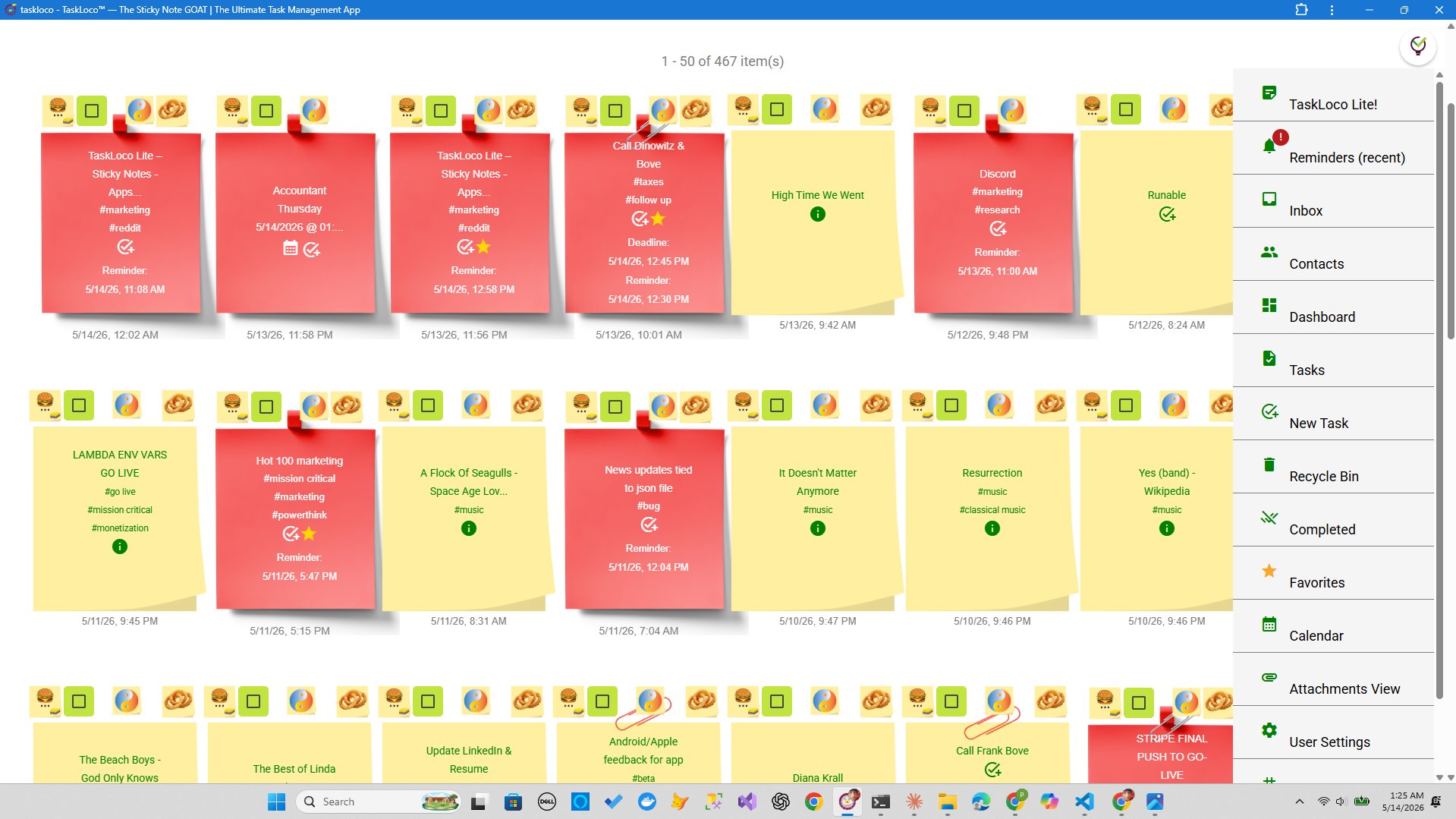
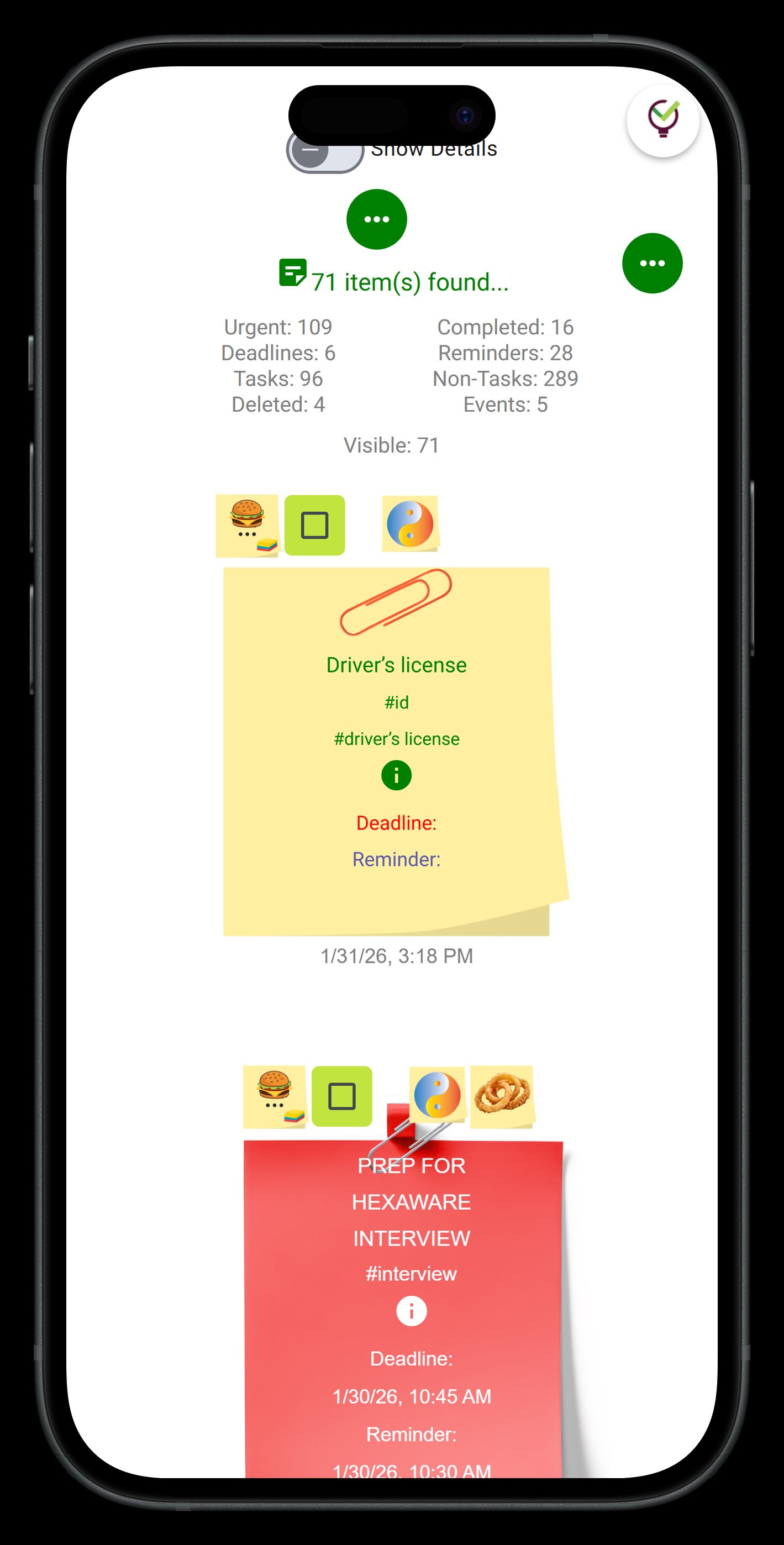
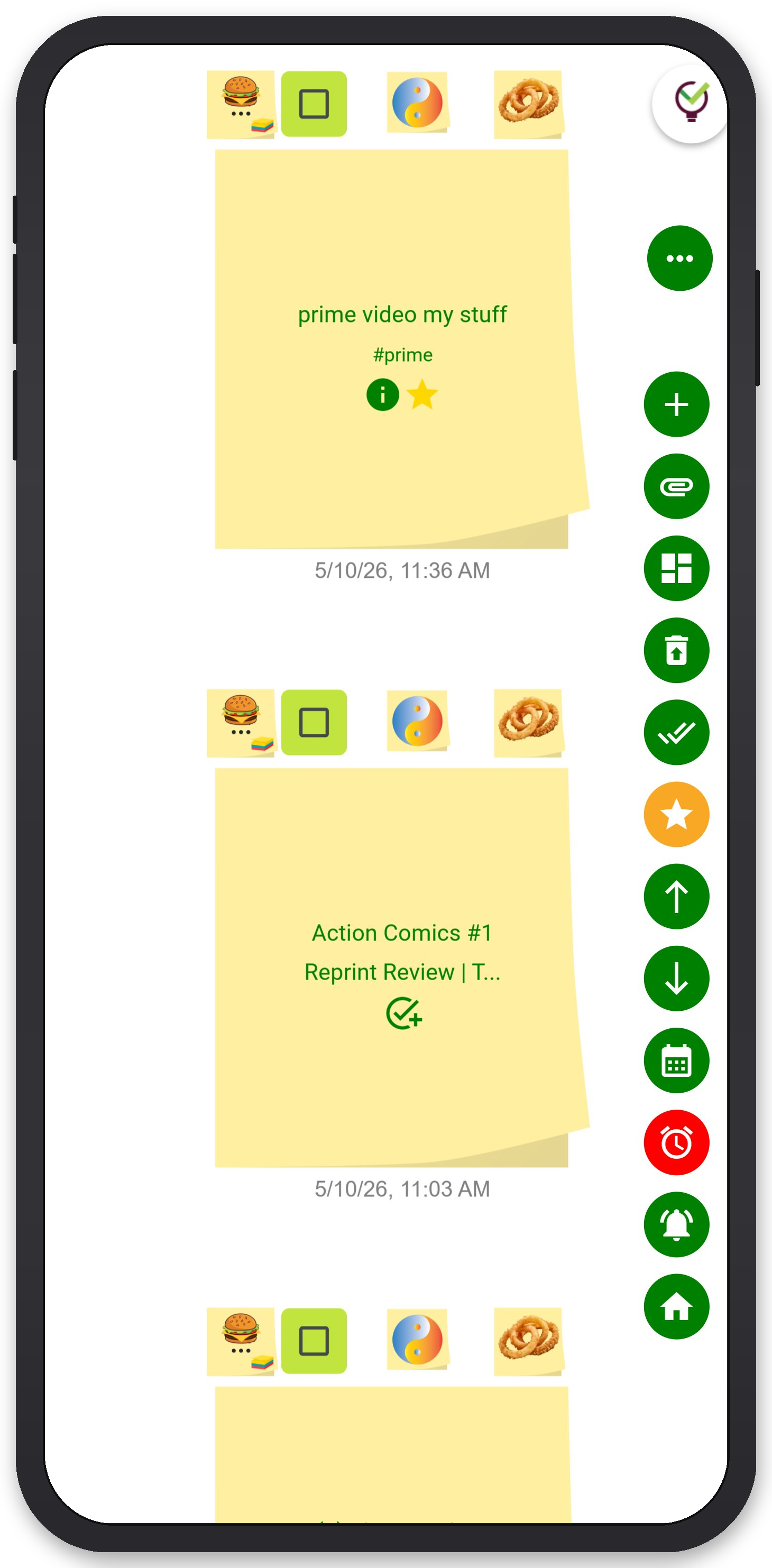
TaskLoco is built on this philosophy. Notes live on a visual wall you can scan at a glance. You add a reminder, attach a file, and share with your team — but none of that is required just to start. The default state is a blank note and a cursor. That's it.
Building a Progress-First Workflow That Actually Sticks
Here's what a genuine progress-over-perfection workflow looks like in practice — not theory:
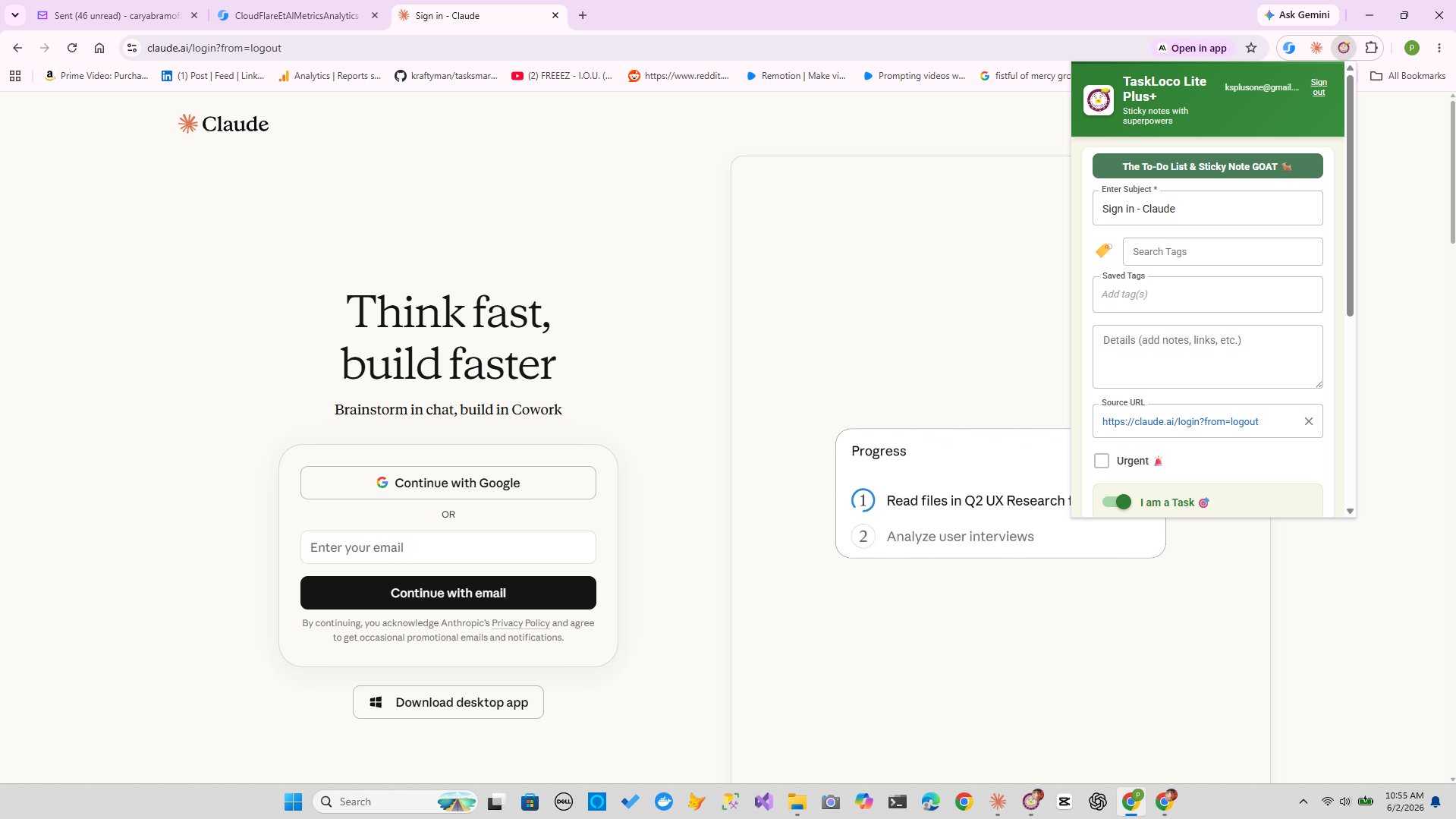
1. Capture everything ugly. When an idea, task, or worry surfaces, get it out of your head and into your system immediately — exactly as it is, unpolished. A note that says 'email sarah re: budget thing' is infinitely better than a beautifully formatted task that doesn't exist yet. TaskLoco's Chrome extension lets you clip a webpage into a note in one click, so even half-formed research gets captured before your brain moves on.
2. Use reminders as commitment devices. Setting a reminder on a note isn't about time management — it's about making a promise to your future self. When a reminder fires as a push notification and deep-links you back to the exact note you were working on, re-entry friction drops to near zero. You don't have to remember context. The note has it.
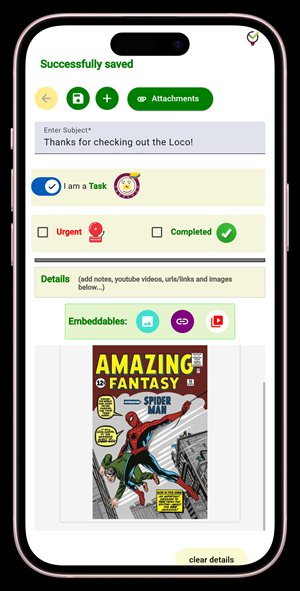
3. Attach the mess. Reference screenshots, draft documents, rough sketches — attach them directly to the relevant note. TaskLoco Premium includes 10GB of file storage, with larger tiers available as add-ons. Keeping the artifact with the intention means nothing gets lost in a folder you'll forget to check.
4. Share before it's ready. The single best antidote to perfectionism is accountability. TaskLoco's team sharing works like email — you share a note, the recipient clones it and makes it their own. No permissions to configure, no access levels to manage. Send the draft. Share the rough plan. The feedback loop is the polish.
The Tools That Support This Mindset (and the Ones That Fight It)
Not every productivity tool is built for momentum. Some are built for control — and control systems, however powerful, often become perfectionism enablers. If your project management tool requires you to fill in owners, deadlines, priority levels, dependencies, and status fields before a task even exists, it's training you to front-load all your thinking before you've done any of the work.
That's fine for complex cross-team projects with real dependencies. But for the daily driver — the place where ideas land, tasks get done, and work moves forward — you want a tool that respects your time to start.
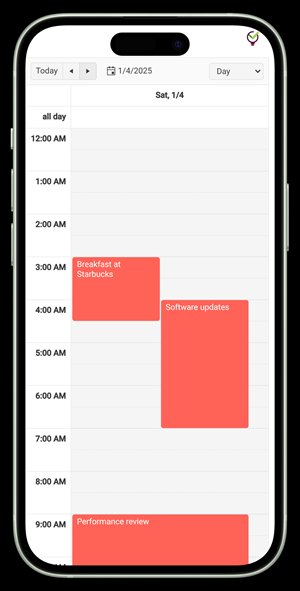
TaskLoco Premium is designed to be that daily driver. The wall view gives you a bird's-eye scan of everything in flight. Calendar view shows you what's due and when. Reminders fire as push notifications — with optional email and SMS — and link you straight back to the note. File attachments keep context collocated with intent. And when you're ready to loop in a teammate, sharing a note takes seconds.
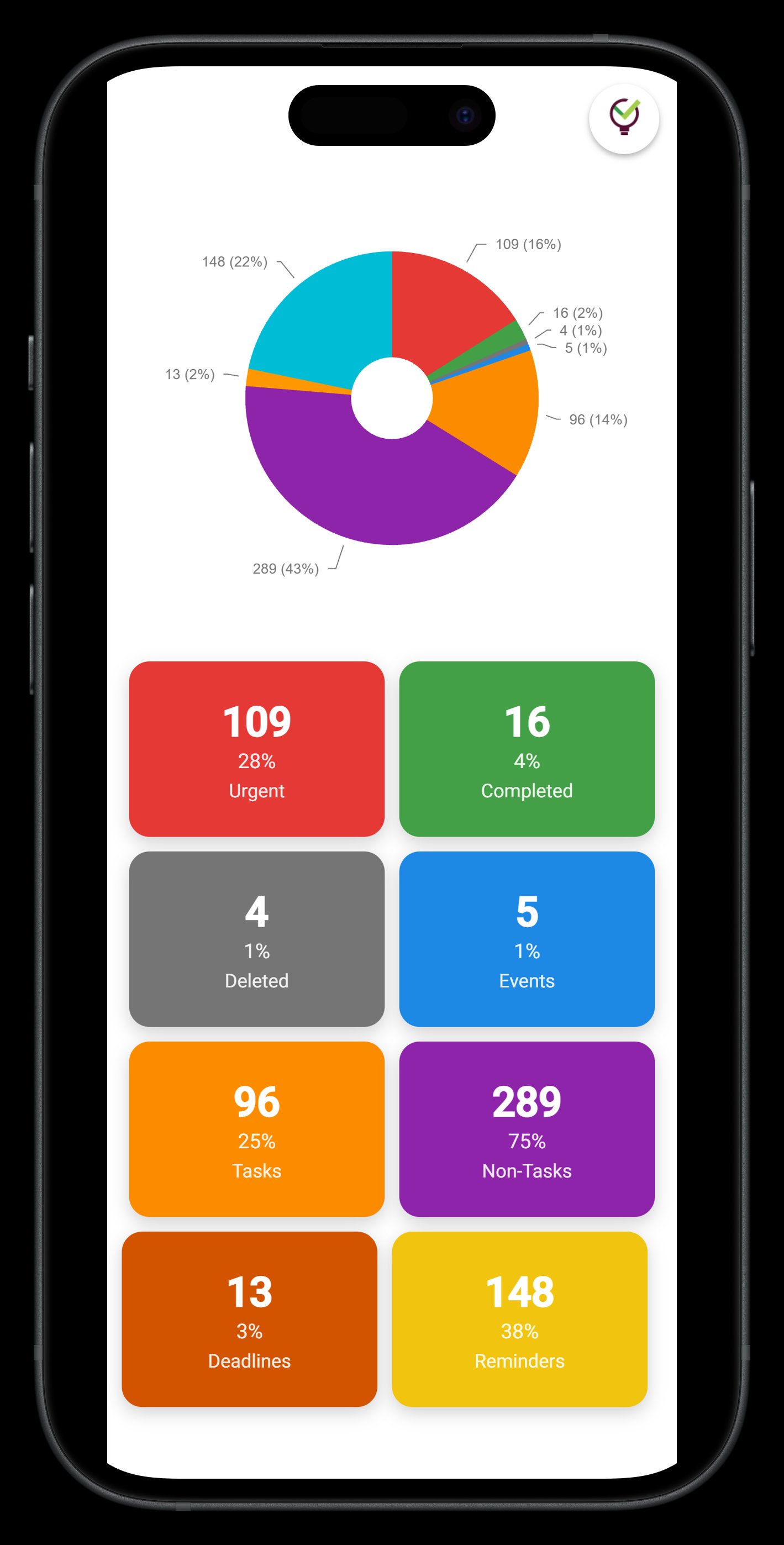
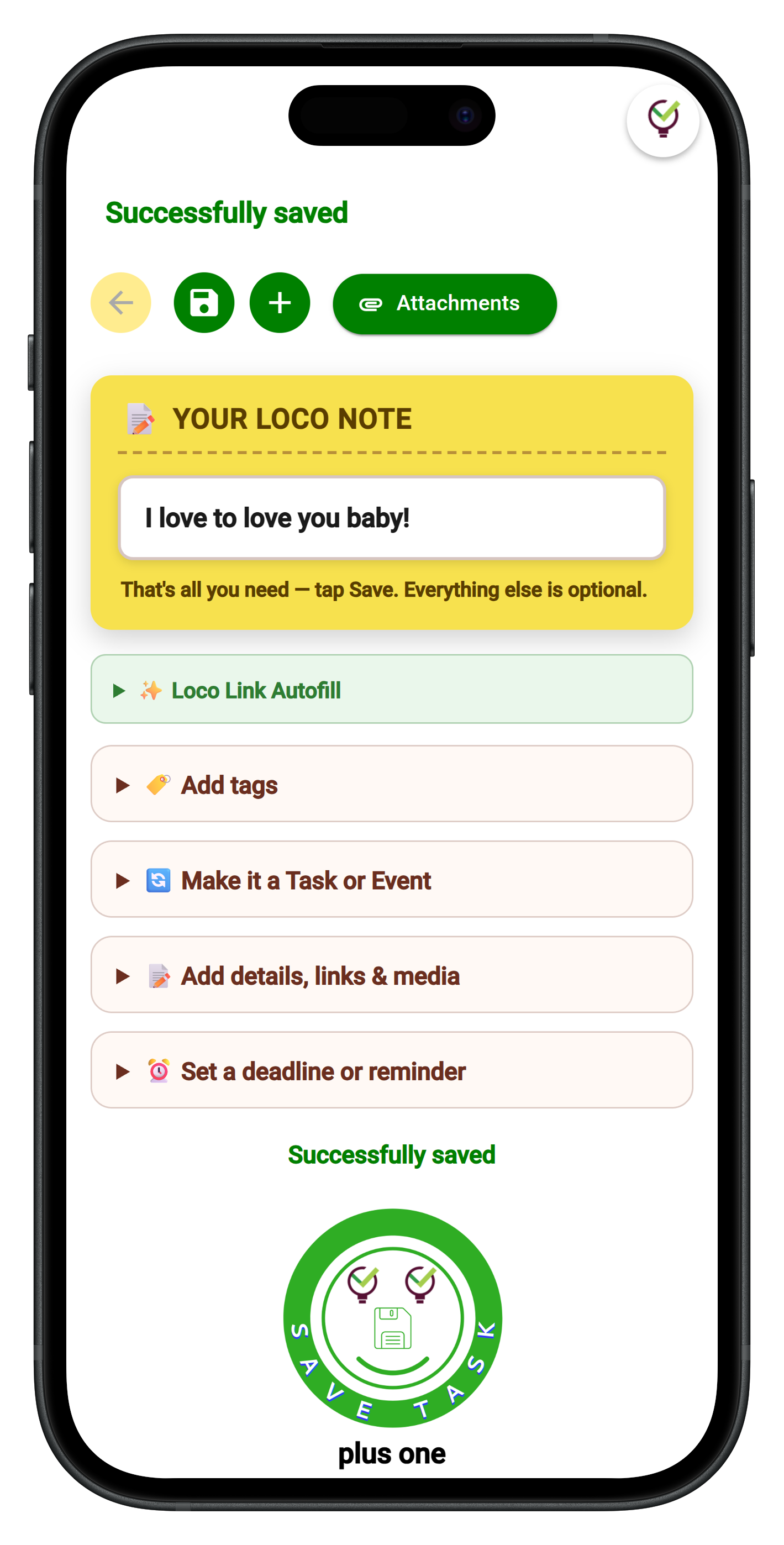
TaskLoco Lite (the native iPhone and Android app) gives you a completely anonymous, no-sign-in starting point — 20 notes stored on your device, no account required. It's the cleanest possible on-ramp for someone who just wants to try the format before committing to anything. Lite Plus+ (the web app and Chrome extension, free) steps it up to 30 synced notes across all your devices. And Premium removes every limit and adds the features that make a progress-first workflow actually stick at scale.
TaskLoco Premium is regularly $9.99/month per person. Right now, charter members can lock in 50% off the regular price — forever. That means $4.99/month per person today. And if our price ever goes up, you still pay half. Always.
Code CHARTER50 auto-applies at checkout. First 500 spots only — once they're gone, this offer is gone permanently. Act fast while spots last.
Every Premium subscription includes unlimited notes, 10GB file storage, reminders, calendar, and team sharing. Each team member requires a separate subscription. 7-day free trial — no charge until day 8. Cancel anytime.
Free Options: TaskLoco
TaskLoco Lite
- Native iPhone & Android app
- Completely anonymous — no sign-in
- Data stays on your device
- Up to 20 notes
- Free forever
TaskLoco Lite Plus+
- Web app + Chrome extension
- Sign in with Google
- Wall syncs across all devices
- Up to 30 notes
- Free forever
Lock In 50% Off — Forever
7-day free trial. No charge until day 8. CHARTER50 auto-applies at checkout.
🔒 Lock In My Charter SpotSee TaskLoco in Action
Frequently Asked Questions
What does 'progress over perfection' really mean?
It means choosing forward movement over waiting for ideal conditions. It's not about lowering your standards — it's about recognizing that the fastest path to a high-quality outcome runs through a lot of imperfect iterations, not one perfect attempt.
How do I stop being a perfectionist when it comes to productivity?
Start by making the cost of starting as low as possible. Use a tool with no mandatory fields, no hierarchy to maintain, and no setup ritual. Capture ideas in their rough state. A note that says 'figure out pricing page' is a better start than a blank screen you're afraid to touch.
What kind of productivity app supports a progress-over-perfection mindset?
One that lets you capture fast, see everything at a glance, and take action without navigating a complex interface. Sticky-note-based tools like TaskLoco are purpose-built for this — there's no required structure, no workflow to configure, and no overhead between having an idea and acting on it.
Does TaskLoco have a free version?
Yes — two of them. TaskLoco Lite is a native iPhone and Android app, completely anonymous with no sign-in required. It stores up to 20 notes locally on your device. TaskLoco Lite Plus+ is the web app and Chrome extension — free, sign in with Google, up to 30 notes synced across all your devices. Premium adds unlimited notes, reminders, file attachments, calendar view, and team sharing.
How do reminders work in TaskLoco?
Reminders in TaskLoco Premium are delivered as push notifications to your phone and computer. Each notification deep-links directly back to the original note, so you're dropped right back into context with zero friction. Optional email notifications are also available, and SMS is an optional add-on.
What is the TaskLoco Chrome extension?
The Chrome extension lets you capture any webpage into a TaskLoco note in one click — no copy-pasting, no switching tabs, no interruption to your research flow. It's part of TaskLoco Lite Plus+ (free) and Premium. Exactly the kind of frictionless capture that a progress-first workflow depends on.
How much does TaskLoco Premium cost?
$9.99/month per person (currently $4.99/month per person for first 500 charter members with code CHARTER50)
Born in Brooklyn. Powered by AWS. Your data stays yours.
TaskLoco is available on iPhone, Android, Chrome, and every web browser.