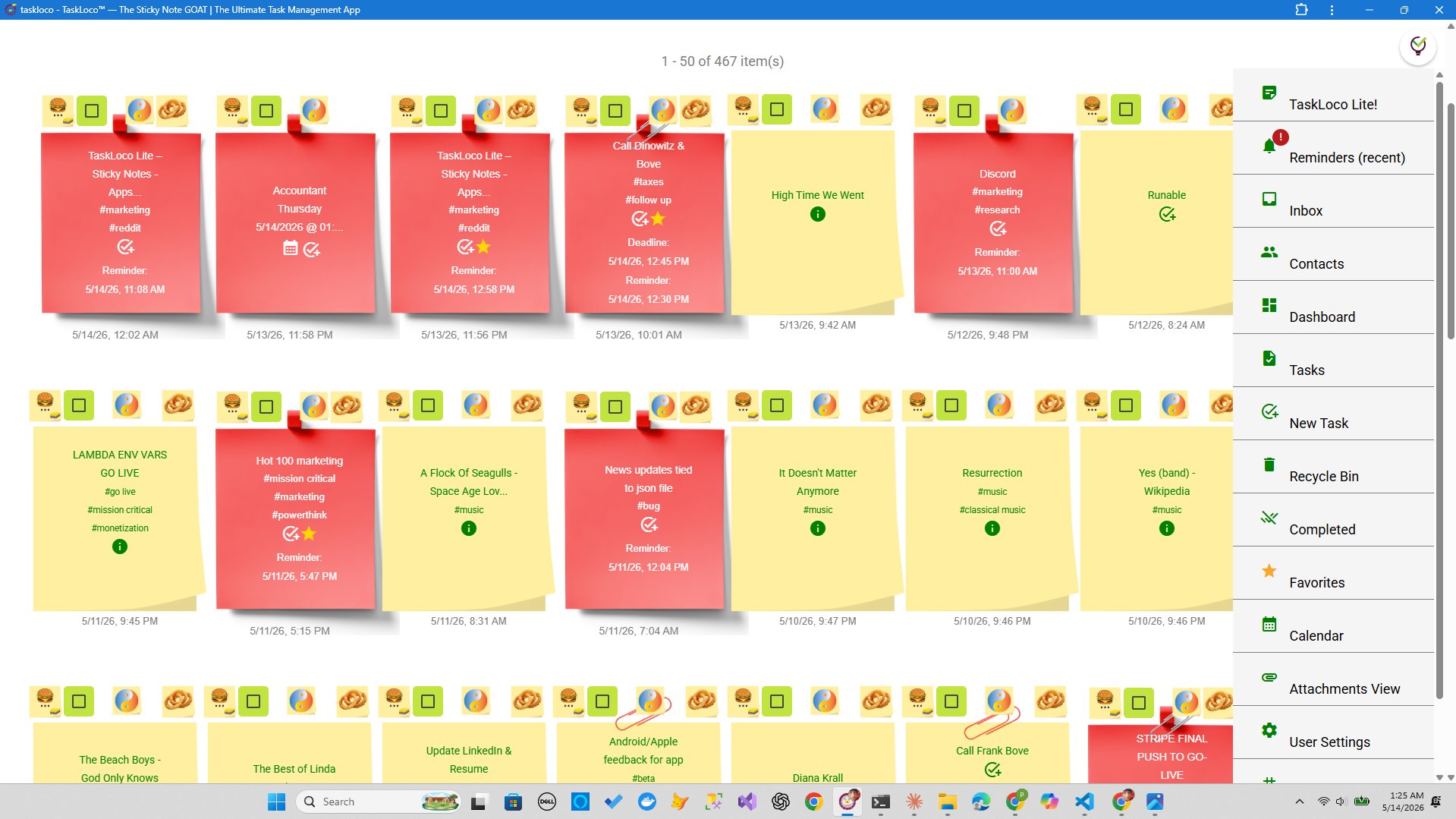
Milanote is genuinely beautiful. If you're a creative director building a mood board or a UX team laying out a user journey for a client presentation, it's hard to beat. Miro, on the other hand, is a whiteboarding powerhouse — infinite canvas, real-time multiplayer, dozens of diagram templates, and integrations that plug into almost everything. Both tools do what they're designed for extremely well.
The problem shows up the moment the brainstorm ends. Neither Milanote nor Miro was built to turn those sticky notes and post-its into actual work — the reminders, the files attached to tasks, the calendar view showing what's due Friday. You're left exporting, copying, re-entering. TaskLoco was built specifically to close that gap: visual thinking that doesn't stop at the whiteboard.
Where Milanote and Miro Genuinely Shine
Let's be honest about what these tools get right, because the comparison only means something if we start there.
Milanote is purpose-built for creative professionals. Its card-and-board system is elegant — you can arrange images, text, links, and color swatches into something that looks like a proper mood board without fighting the interface. If your deliverable is a visual document that a client or stakeholder will read, Milanote produces something polished. Its free tier is also genuinely usable, not a crippled teaser.
Miro operates at a completely different scale. Infinite canvas, sticky notes, mind maps, flowcharts, Kanban boards, voting sessions, timers for workshops — Miro is what you reach for when you need to run a remote design sprint with twelve people or map out a complex system architecture. Its integration library is one of the deepest in the category. If your team lives in Jira, Slack, Figma, and Google Workspace simultaneously, Miro plugs into all of them.
That distinction matters more than it sounds. Both tools are optimized for a specific phase of work — the divergent, generative, visual-thinking phase. The moment you need to assign ownership, attach a file, set a deadline with a push notification, or see everything due this week in a calendar view, you're reaching for a second tool. That handoff is where work falls through the cracks.
What Neither Tool Was Built to Do
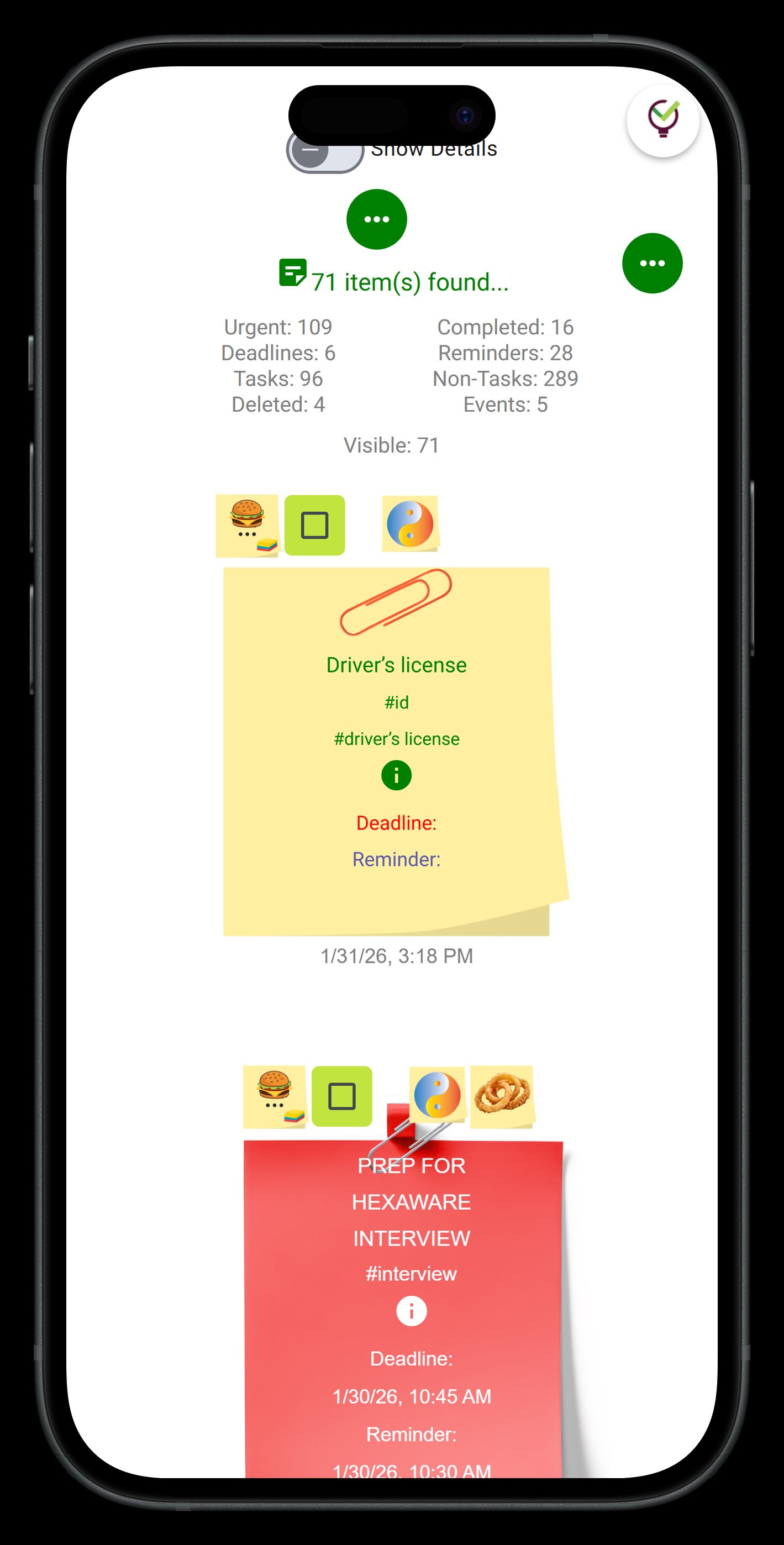
The gap between visual brainstorming and actual task execution is where most teams quietly lose hours every week. You finish a Miro sprint review with thirty sticky notes and action items. Someone screenshots the board. Someone else types the action items into a project management tool. A third person sends follow-up emails. By Tuesday, half the decisions from Friday's session are either forgotten or duplicated.
Milanote has a similar problem. A beautiful board with linked images and research cards is great for presenting a concept, but there's no mechanism to say "this card is due Thursday" and have a push notification land on your phone and computer when Thursday arrives. There's no way to attach the 40MB design brief PDF directly to the note that references it.
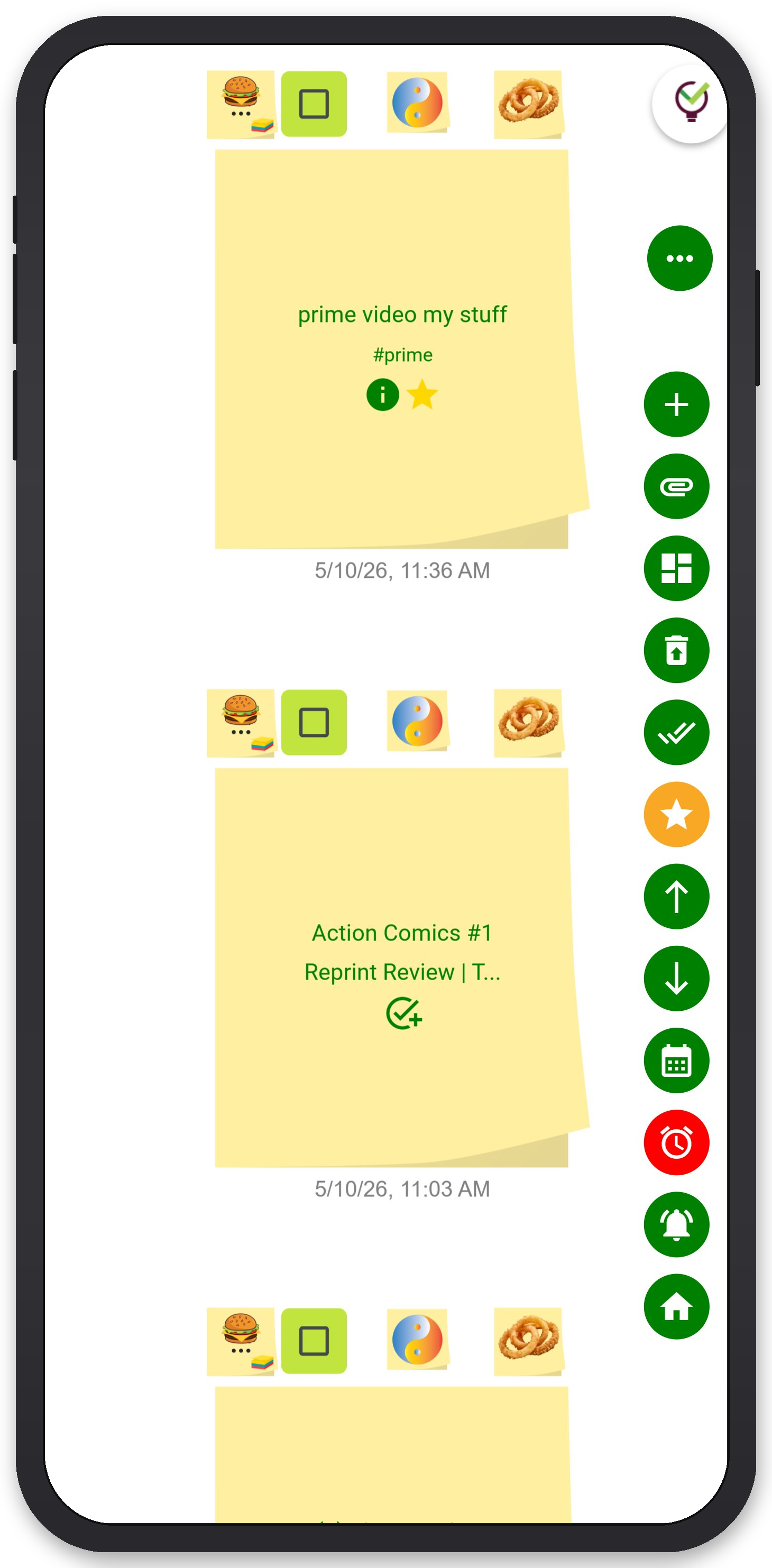
TaskLoco's sticky note system is built to survive past the brainstorm. Every note on your wall can carry a reminder — delivered as a push notification to your phone and computer, with optional email and SMS — that deep-links back to the exact note that triggered it. You're not hunting through a board looking for context. The reminder brings you back to the source.
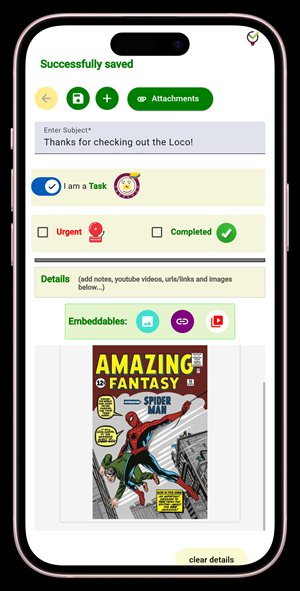
File attachments work the same way. Each Premium note can hold files directly — 10GB of storage included — so the brief, the asset, and the deadline all live in one place. No Dropbox link hunting, no version confusion.
Team Sharing: The Difference Between Viewing and Actually Collaborating
Both Milanote and Miro let you share boards with collaborators. Miro's multiplayer is impressive — you can see cursors moving in real time, leave comments on sticky notes, and run facilitated sessions with dozens of participants. For a live workshop, that's hard to replicate.
But here's what's often overlooked: once a shared Miro board stops being actively edited, it becomes a static artifact. Nobody gets a push notification when an item becomes urgent. Nobody has the board's content in their own personal task system.
TaskLoco's team sharing works more like email than like a shared whiteboard. When you share a note with someone, they receive it and can clone it — making it fully their own, with their own reminders, their own files, their own edits — without needing permissions granted, access levels configured, or admin approval. The note travels. It becomes part of each person's own workflow instead of living on a board that people forget to check.
Real-time sync means everyone on the team always sees the current state of shared notes. But the design philosophy is different from Miro: TaskLoco is built around individual ownership of information that can be shared, not a shared canvas that individuals dip into.
Getting Started: Free Tiers, the Chrome Extension, and What Premium Unlocks
TaskLoco offers two free entry points, and they're genuinely useful rather than just marketing hooks.
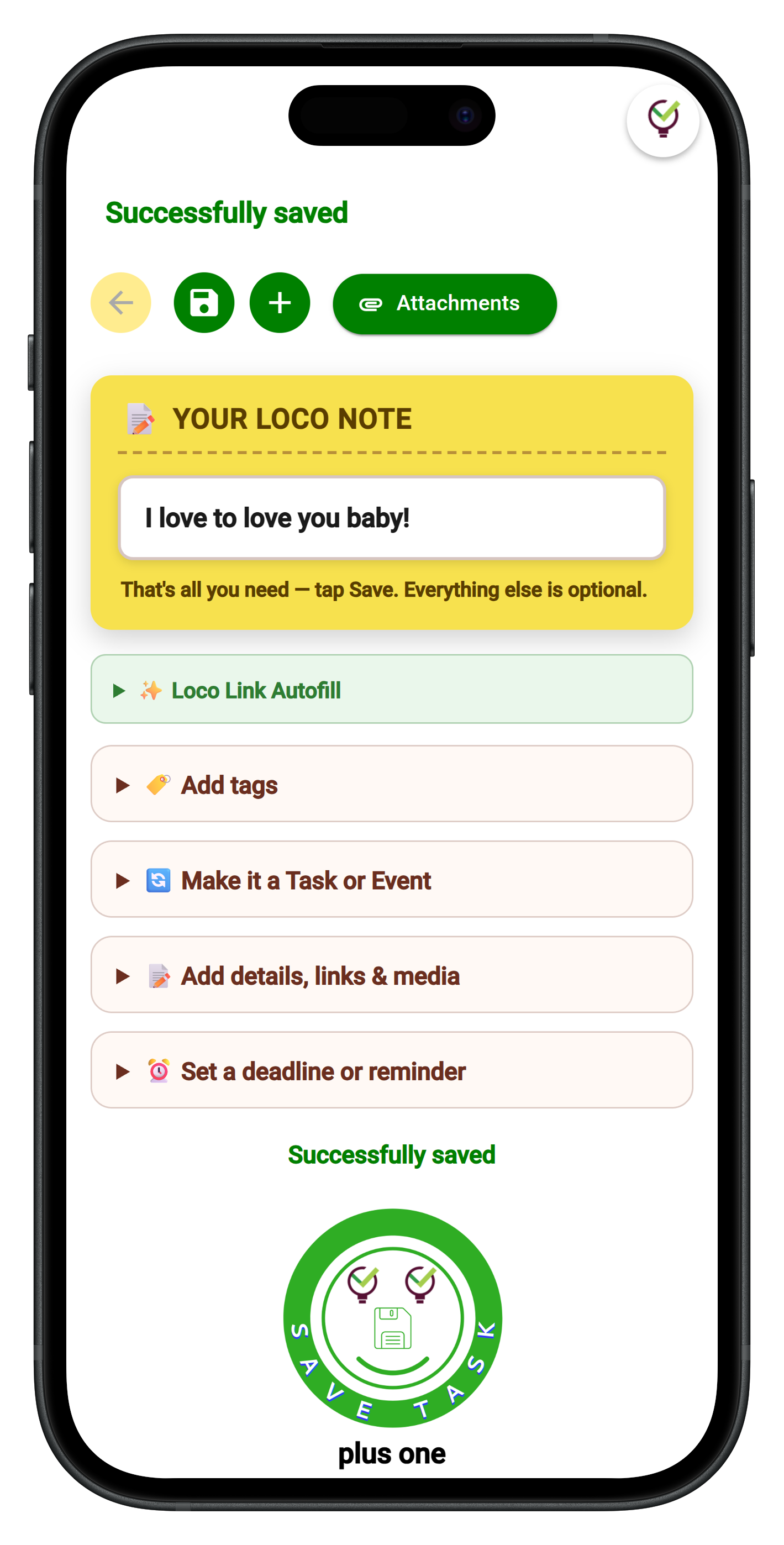
TaskLoco Lite is the native iPhone and Android app — completely anonymous, no sign-in required, no account, no data sent anywhere. It stores up to 20 notes as a JSON file directly on your device. If you want zero friction and zero data footprint, this is it. It's purely a standalone tool — it never syncs to any server, and it doesn't share features with the other tiers.
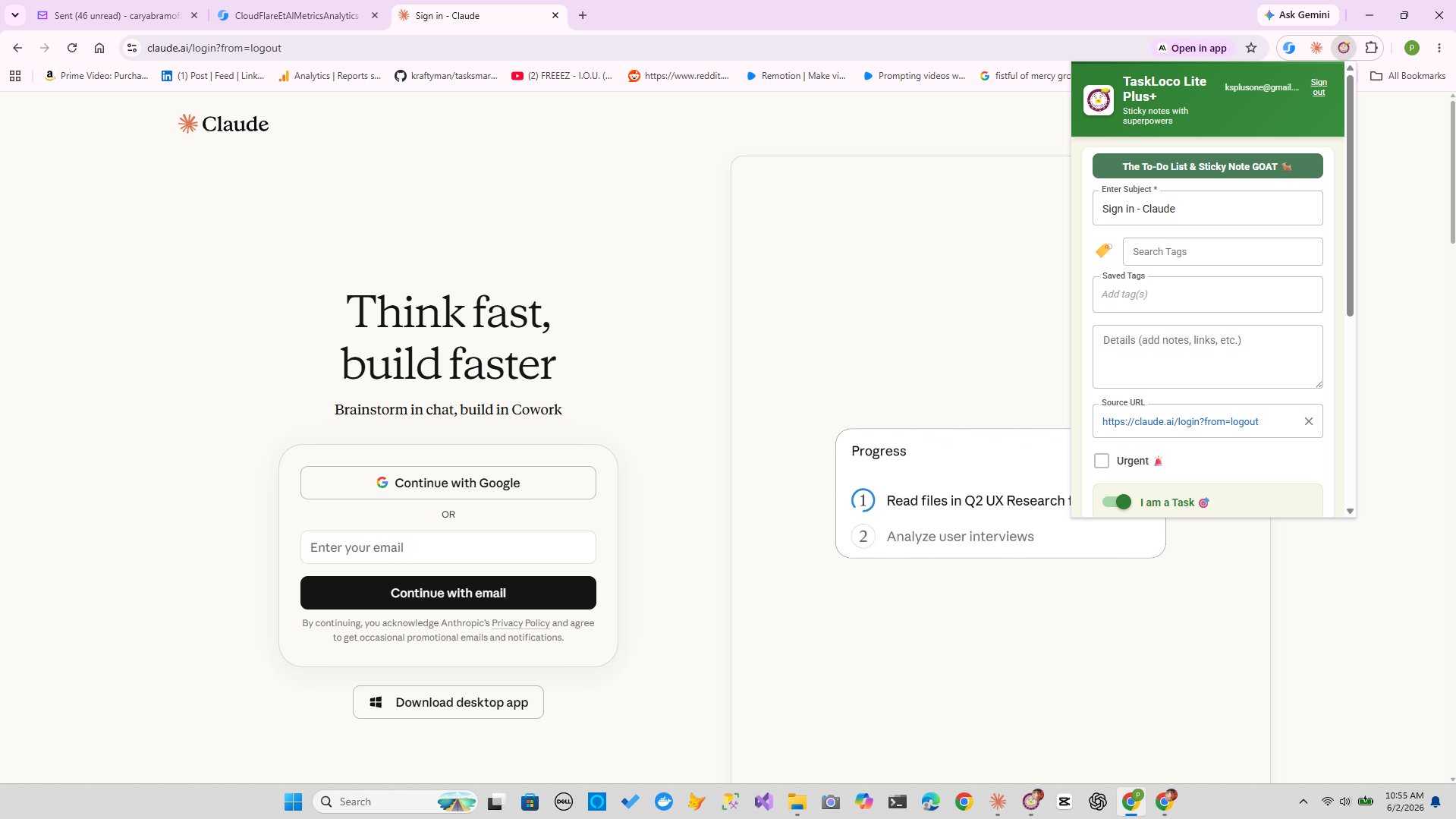
TaskLoco Lite Plus+ is the web app and Chrome extension, free with a Google sign-in. You get up to 30 notes, synced across all your devices. The Chrome extension is worth calling out specifically: one click captures any webpage you're on, turning it into a note. No copy-paste, no tab-juggling. For research-heavy workflows — exactly the kind that Milanote users do — it's a genuinely fast way to build a collection of sources without leaving your browser.
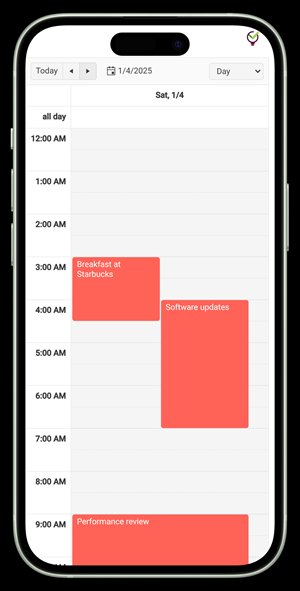
Premium is where the full system comes together: unlimited notes, 10GB file storage, reminders with push notifications to your phone and computer (optional email and SMS add-ons available), a calendar view, and team sharing. Each team member needs their own Premium subscription — pricing is per person.
The Honest Comparison
| Feature | TaskLoco | Milanote vs Miro |
|---|---|---|
| Free tier available | Two free tiers — Lite (native app, 20 notes, no sign-in) and Lite Plus+ (web app, 30 notes, synced) FREE | Both Milanote and Miro offer free tiers with limited boards/items |
| Visual / canvas interface | Wall view with sticky notes, drag-and-drop organization across boards | Milanote: elegant mood-board canvas; Miro: infinite whiteboard with multiplayer cursors — both purpose-built for visual work |
| Real-time multiplayer editing | Real-time sync across team members on shared notes | Miro excels here — live cursors, comments, facilitated sessions for large groups |
| Reminders with push notifications | Push notifications to phone and computer; optional email and SMS add-on; deep-links back to the original note | Neither Milanote nor Miro has built-in task reminders |
| File attachments | 10GB file storage included with Premium — attach files directly to any note | Milanote supports file uploads; Miro supports attachments on sticky notes — both have storage limits |
| Calendar view | Full calendar view of notes with deadlines — included in Premium | Neither offers a native calendar view for note deadlines |
| Team sharing model | Yes — included with Premium. Each team member requires a separate subscription — currently $9.99/month per person, but TaskLoco is offering a Charter Member special: 50% off for life, currently $4.99/month per person for the first 500 subscribers with code CHARTER50. | Shared boards with permission levels; viewers see the same board but don't own individual items |
| Chrome extension | One-click webpage capture into a note — free with Lite Plus+ FREE | Miro has a Chrome extension for capturing content; Milanote has web clipper functionality |
| Native mobile app | TaskLoco Lite is a native iPhone and Android app — anonymous, no sign-in, 20 notes stored on device | Both Milanote and Miro have native mobile apps with fuller feature access than TaskLoco's native offering |
| Unlimited notes / tasks | Unlimited notes, tasks, and calendar events with Premium | Free tiers cap board/item counts; paid plans expand limits — check current plan details |
| Cross-device sync | Full sync across all devices with Lite Plus+ (free) and Premium FREE | Both sync across devices on paid plans; free tiers may have restrictions |
| Mood boards / creative presentations | Wall view supports visual organization — not purpose-built as a design presentation tool | Milanote is best-in-class for mood boards and creative briefs |
| Diagramming / flowcharts | Not a diagramming tool | Miro has extensive diagramming, flowchart, and mind-map templates |
| Third-party integrations | Limited integrations — Google sign-in, push notifications, optional SMS | Miro integrates deeply with Jira, Slack, Figma, Asana, and dozens more; Milanote has select integrations |
| Anonymous / no-account use | TaskLoco Lite requires zero sign-in, zero account — fully anonymous FREE | Both require an account to use |
| Extra storage add-ons | 10GB / 50GB / 200GB / 1TB storage tiers, stackable up to 100x | Storage upgrade options vary by plan and tool |
| Gantt charts / project timelines | Not available | Miro supports timeline views and Gantt-style planning templates |
| Per-person pricing model | Single straightforward Premium tier per person — no seat tiers or enterprise minimums | Both use per-seat pricing with multiple plan tiers |
Who Should Use Each
Use the TaskLoco if…
- You brainstorm visually but need your notes to turn into real deadlines, reminders, and assigned tasks — not just pretty boards
- You want reminders delivered as push notifications directly back to the note that triggered them
- You need file attachments living on the same note as the task, not linked from a separate storage system
- You want a free, anonymous, no-sign-in starting point before committing to anything
- You do research-heavy work and want to capture webpages in one click from your browser
- You want team sharing that works like email — recipients own their copy, no permissions to manage
- You want a calendar view of everything with a deadline, not just a wall of cards
Use Milanote vs Miro if…
- You need a best-in-class mood board tool for creative presentations and client-facing visual documents — Milanote is the pick
- You run large remote workshops, design sprints, or live facilitated sessions with real-time multiplayer — Miro is the pick
- You need deep integrations with Jira, Figma, Slack, or Asana as part of a complex toolchain — Miro's integration library is unmatched
- You need Gantt charts, dependency tracking, or complex project timelines
- Your organization requires enterprise SSO, compliance certifications, or API access for custom tooling
- Diagramming, flowcharts, or mind-mapping are core to your daily workflow
TaskLoco Premium is regularly $9.99/month per person. Right now, charter members can lock in 50% off the regular price — forever. That means $4.99/month per person today. And if our price ever goes up, you still pay half. Always.
Code CHARTER50 auto-applies at checkout. First 500 spots only — once they're gone, this offer is gone permanently. Act fast while spots last.
Every Premium subscription includes unlimited notes, 10GB file storage, reminders, calendar, and team sharing. Each team member requires a separate subscription. 7-day free trial — no charge until day 8. Cancel anytime.
Free Options: TaskLoco vs Milanote vs Miro
TaskLoco Lite
- Native iPhone & Android app
- Completely anonymous — no sign-in
- Data stays on your device
- Up to 20 notes
- Free forever
TaskLoco Lite Plus+
- Web app + Chrome extension
- Sign in with Google
- Wall syncs across all devices
- Up to 30 notes
- Free forever
Lock In 50% Off — Forever
7-day free trial. No charge until day 8. CHARTER50 auto-applies at checkout.
🔒 Lock In My Charter SpotSee TaskLoco in Action
Frequently Asked Questions
Is Milanote or Miro better for remote teams?
For live remote workshops and design sprints with multiple participants, Miro is stronger — its real-time multiplayer and facilitation tools are purpose-built for that use case. Milanote is better for individual creative work and polished presentations. If your team needs the output of those sessions to drive actual follow-through — reminders, files, deadlines — TaskLoco is what you add to close the loop.
Can I use TaskLoco as a Milanote alternative?
Depends on what you use Milanote for. If you're building mood boards for client presentations, Milanote remains the cleaner tool. If you're using Milanote to organize research, track creative tasks, or manage project notes — yes, TaskLoco handles all of that and adds reminders with push notifications, file attachments, a calendar view, and team sharing that Milanote doesn't offer.
Can I use TaskLoco as a Miro alternative?
If you need infinite-canvas whiteboarding, live multiplayer editing, or facilitated workshop sessions, Miro is the right call and TaskLoco isn't trying to replace it. But if you're using Miro to organize tasks, track project notes, or share information with your team, TaskLoco does that with a system built around actual follow-through — reminders, attachments, and calendar — that Miro doesn't have.
What does TaskLoco's free tier include?
Two free tiers. TaskLoco Lite is a native iPhone and Android app — no sign-in, no account, no data sent anywhere, stores up to 20 notes on your device. TaskLoco Lite Plus+ is the web app and Chrome extension — sign in with Google, sync up to 30 notes across all your devices, and capture any webpage in one click. Neither free tier includes reminders, file attachments, or team sharing — those are Premium features.
Does TaskLoco work on mobile?
TaskLoco Lite is a native app available on the App Store and Google Play — anonymous, no sign-in, 20 notes stored on device. TaskLoco Lite Plus+ and Premium are web apps that run on mobile through your phone's browser — they are not native apps. Premium features like reminders, file attachments, and team sharing are available through the browser on any device.
How does TaskLoco's team sharing differ from Milanote or Miro?
Milanote and Miro share boards — everyone views and edits the same canvas, with permission levels controlling who can do what. TaskLoco shares notes more like email: when you share a note, the recipient receives it and can clone it as their own, complete with their own reminders and edits, without needing permissions configured. It's designed for individual ownership of information rather than a shared canvas everyone dips into.
How much does TaskLoco Premium cost?
$9.99/month per person (currently $4.99/month per person for first 500 charter members with code CHARTER50)
Born in Brooklyn. Powered by AWS. Your data stays yours.
TaskLoco is available on iPhone, Android, Chrome, and every web browser.