Some days you sit down to work and nothing fires. The list is long, the motivation is flat, and every task feels like it weighs twice as much as it did yesterday. That's not laziness — that's your nervous system telling you something. The question isn't how to override it. The question is how to work intelligently inside it.
Low energy isn't the exception — it's part of every productive person's reality. Athletes have recovery days. Writers have days where they edit instead of draft. The professionals who burn out fastest are the ones who treat every day as if it should feel the same. The ones who last learn to tier their output, match their work to their state, and use low-energy windows strategically instead of spending them in guilt.
Understand Why Your Energy Drops — and Stop Blaming Yourself
Before you can work with low energy, you need to stop treating it as a character flaw. Energy fluctuates for biological, psychological, and environmental reasons that have nothing to do with discipline. Circadian rhythms create natural dips — most people hit one between 1pm and 3pm regardless of sleep quality. Stress hormones disrupt focus. Poor sleep the night before cuts working memory by measurable amounts. Emotional weight from life events doesn't clock out when you sit down to work.
The first step is honest awareness. Ask yourself: Is this a temporary dip, or am I depleted? A temporary dip — post-lunch, post-meeting, post-deadline — usually passes within an hour or two. Depletion, the kind that builds over days or weeks, requires actual recovery, not just a cup of coffee and a guilt spiral.
Recognizing which one you're dealing with changes your strategy entirely. A temporary dip calls for a low-friction task to ease back in. Real depletion calls for triage: protect your most important output, cut the rest, and restore.
The Practical Method: Energy Tiering and Task Matching
The most effective framework for low energy days is task tiering — sorting your work into three categories based on the mental load they require, not their priority. Then you match the category to your current state.
- High-energy tasks: Deep work — writing, strategy, problem-solving, creative work, complex decision-making. These require full focus and should never be forced on a depleted day. Reschedule them.
- Medium-energy tasks: Meetings you can contribute to meaningfully, reviewing documents, structured planning, responding to complex messages. These can work on a mild dip but not full depletion.
- Low-energy tasks: Filing, organizing, replying to routine emails, updating task statuses, sorting notes, light research, admin. These are your low-energy-day allies. They still move things forward and they don't cost you tomorrow.
On a low energy day, your job is simple: identify the one high-value task you will protect and finish, even if it takes longer than usual. Fill the rest of the day with low-energy tasks. Do not attempt to run your normal output level — you will produce lower quality work, make worse decisions, and arrive at tomorrow even more depleted.
This is not a productivity hack. It's basic resource management. A surgeon doesn't schedule elective surgery when they're sick. You shouldn't schedule your hardest thinking when your brain is running on fumes.
Protecting Recovery Without Falling Behind
The anxiety of a low energy day often makes it worse. You spend the dip worrying about what you're not doing, which consumes the mental energy you'd need to actually do it. Breaking this cycle requires two things: a system you trust, and permission structures you've built in advance.
Capture everything. When you're low on energy, your brain is bad at holding context. Write things down the moment they appear — tasks, ideas, things you're worried about forgetting. Getting them out of your head and onto a surface eliminates the background hum of trying to remember things, which quietly drains cognitive resources all day.
Set a hard stop. Low energy days are the worst days to work late. Grinding through exhaustion produces diminishing returns fast and extends recovery time. A hard stop at a fixed time — even if you didn't finish what you wanted — protects the next day's energy and sends a clear signal to your nervous system that rest is structured, not optional.
Use momentum tasks to re-enter. If you've been stalled for an hour, don't try to jump straight into deep work. Pick something tiny — a two-minute task — and complete it. Completion triggers a small dopamine response that genuinely makes the next task feel more accessible. It's not a trick; it's how motivation actually works. Action produces motivation more reliably than motivation produces action.
Audit your environment. On low energy days, friction kills productivity faster than usual. Cluttered workspace, too many tabs open, notifications going off — these amplify distraction in proportion to how depleted you are. Simplify aggressively before you start.
How TaskLoco Fits Into Low Energy Days
One reason low energy days spiral is that the system you use to manage work adds friction instead of removing it. If you have to dig through nested project folders, remember which tool has which task, or load a heavy interface just to check what's next — you're spending energy on the tool itself.
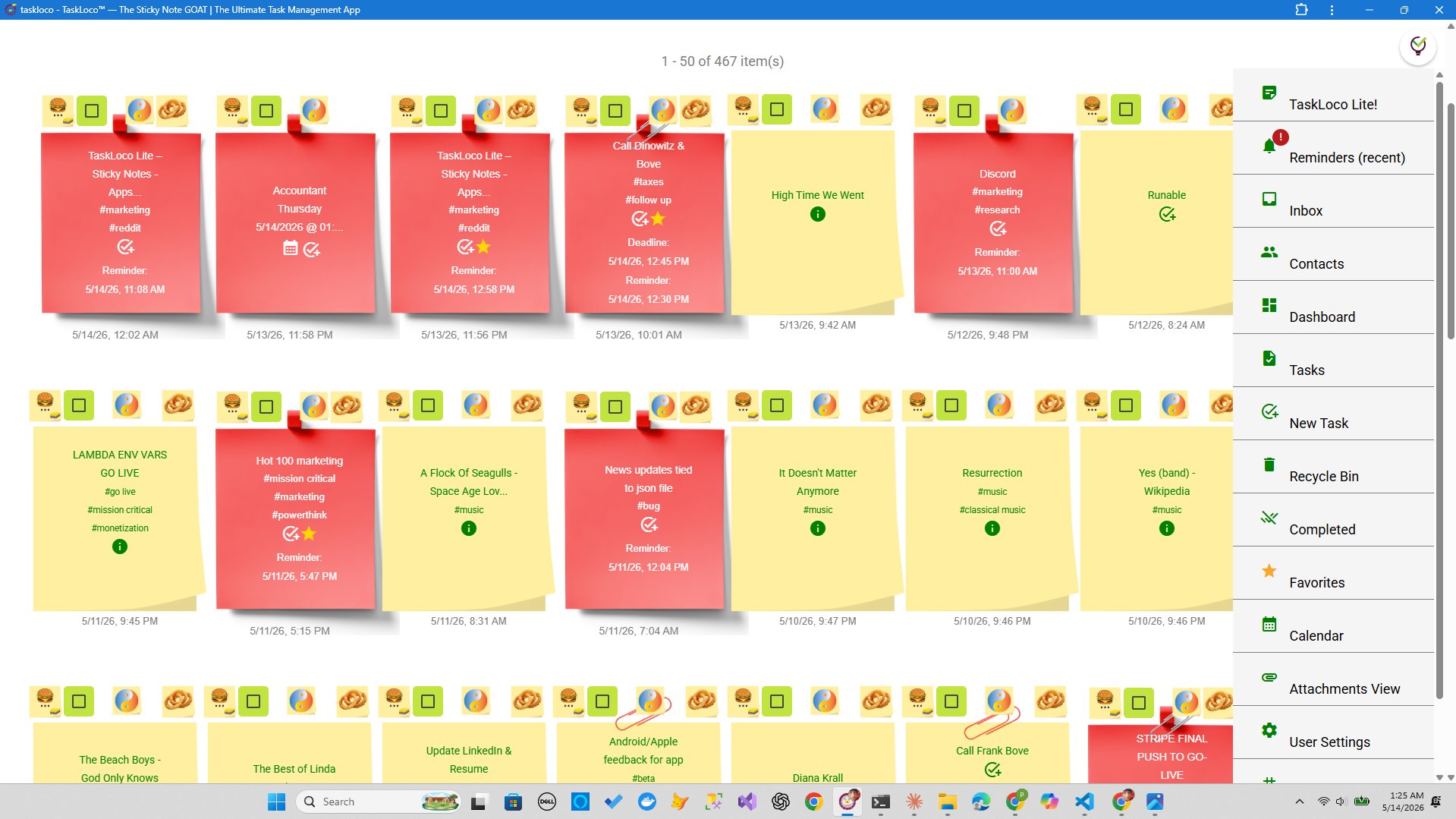
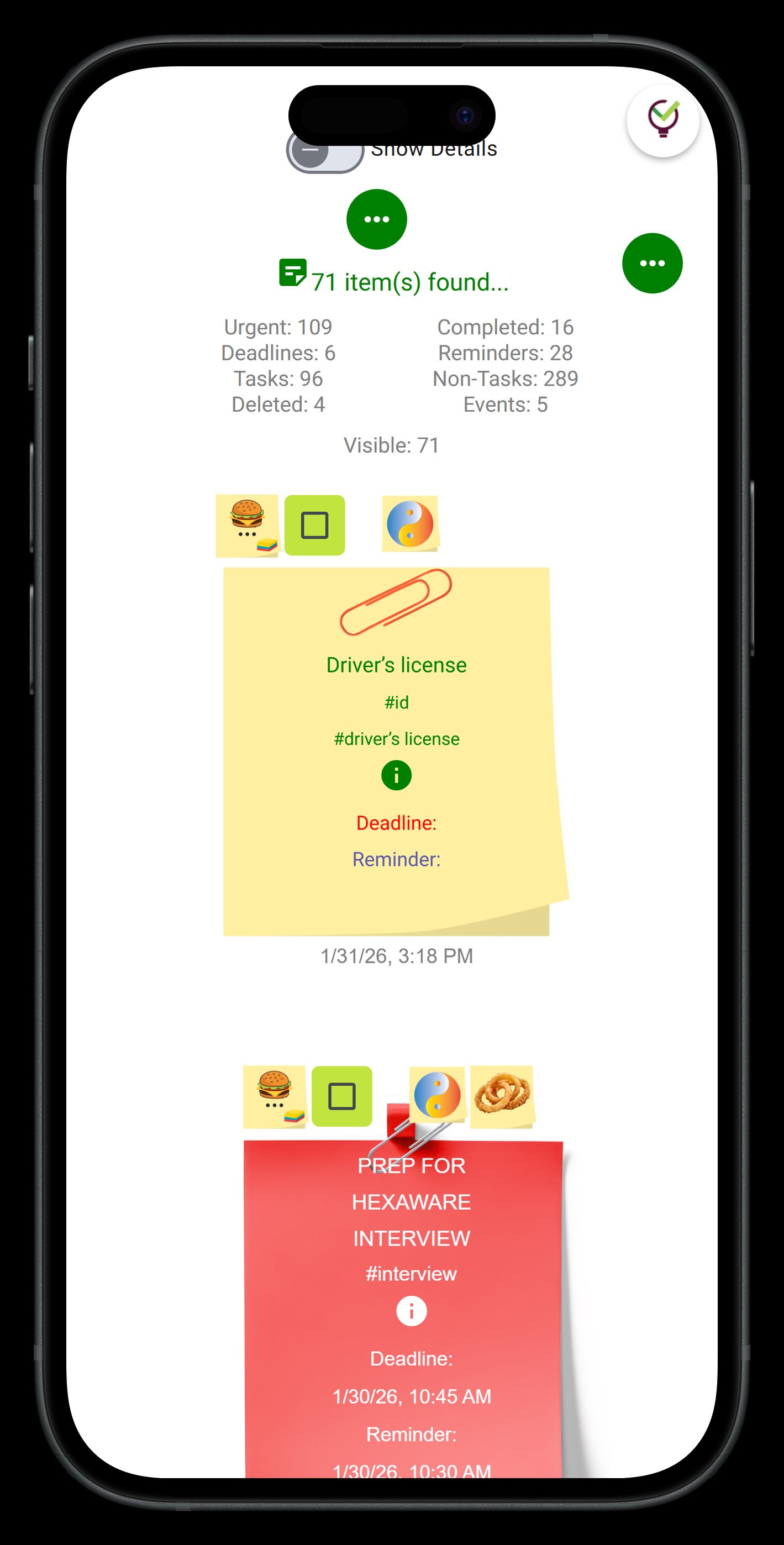
TaskLoco is built around sticky notes: fast, visual, low-friction by design. On a low energy day, that matters. You can open your wall, see your tasks laid out spatially, and immediately know what needs attention without clicking through layers of menus.
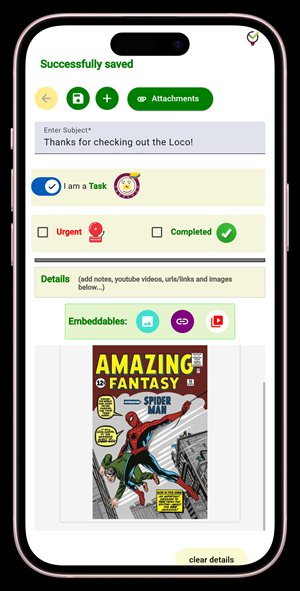
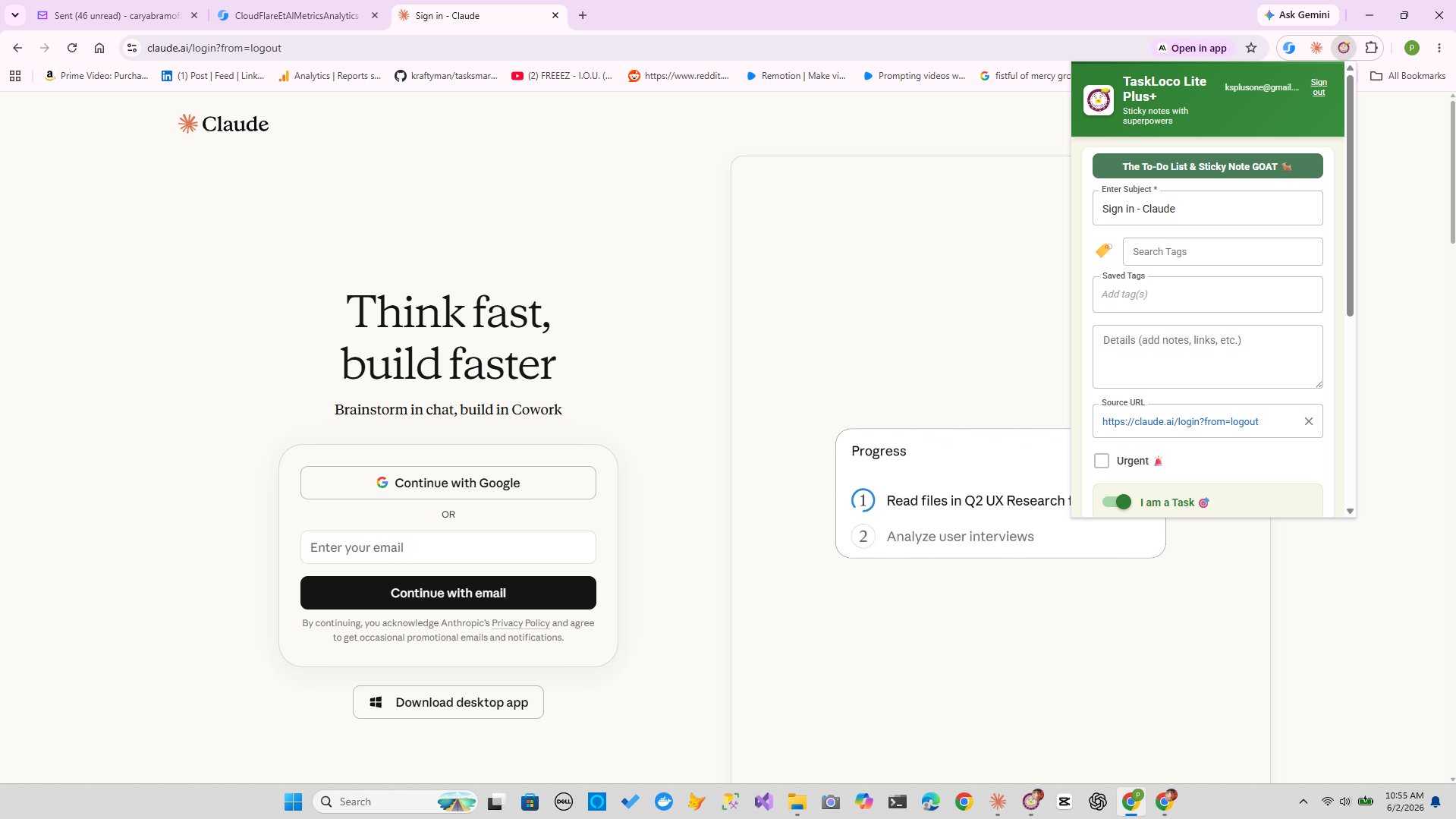
With TaskLoco Premium, you can attach files directly to notes — so context lives next to the task, not two apps away. Reminders deliver as push notifications to your phone and computer, deep-linking back to the exact note so you land exactly where you need to be, no hunting required. Optional email and SMS notifications are available too, if you want a backup channel. And if you use Chrome, the Chrome extension lets you capture a webpage into a note in one click — useful when you're too low-energy to process something right away but don't want to lose it.
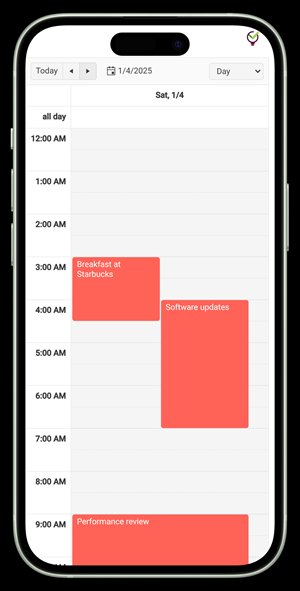
The calendar view gives you a time-based layout of what's ahead without requiring you to mentally reconstruct your schedule from a flat list. And because notes sync across devices in real time, whatever you capture on your phone shows up at your desk instantly.
None of this replaces the actual work of managing your energy. But using a tool that gets out of your way on hard days is a real, non-trivial advantage.
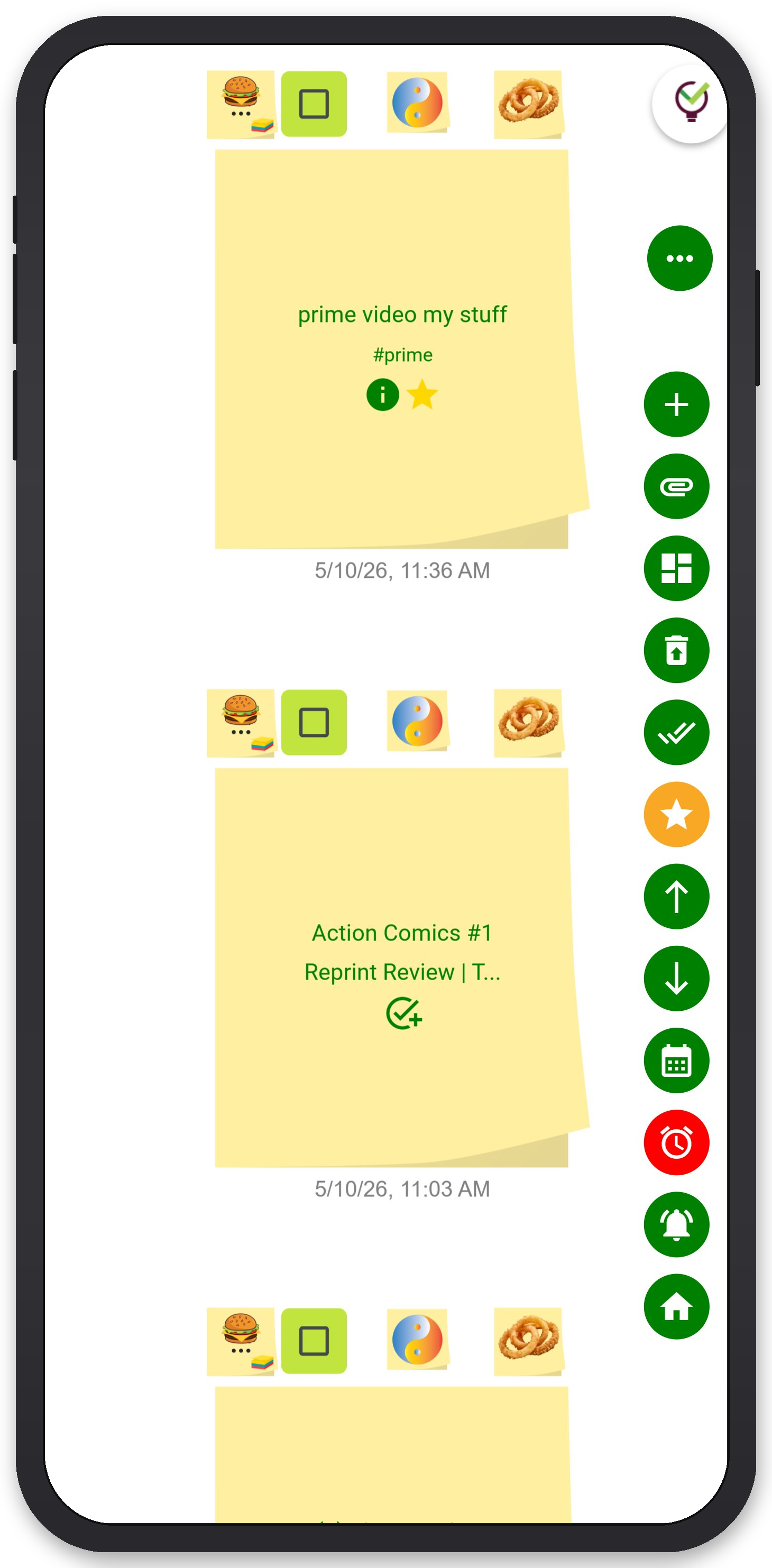
TaskLoco Premium is regularly $9.99/month per person. Right now, charter members can lock in 50% off the regular price — forever. That means $4.99/month per person today. And if our price ever goes up, you still pay half. Always.
Code CHARTER50 auto-applies at checkout. First 500 spots only — once they're gone, this offer is gone permanently. Act fast while spots last.
Every Premium subscription includes unlimited notes, 10GB file storage, reminders, calendar, and team sharing. Each team member requires a separate subscription. 7-day free trial — no charge until day 8. Cancel anytime.
Free Options: TaskLoco
TaskLoco Lite
- Native iPhone & Android app
- Completely anonymous — no sign-in
- Data stays on your device
- Up to 20 notes
- Free forever
TaskLoco Lite Plus+
- Web app + Chrome extension
- Sign in with Google
- Wall syncs across all devices
- Up to 30 notes
- Free forever
Lock In 50% Off — Forever
7-day free trial. No charge until day 8. CHARTER50 auto-applies at checkout.
🔒 Lock In My Charter SpotSee TaskLoco in Action
Frequently Asked Questions
Is it okay to do less work on a low energy day?
Yes — and trying to force full output on a depleted day usually backfires. Low-quality decisions, slower work, and harder recovery the next day are the real cost of grinding through depletion. Doing less, done well, is a better outcome than doing more, done poorly. The goal is sustainable output over time, not maximum output today at the expense of tomorrow.
What's the best thing to do when you have zero motivation to work?
Start with the smallest possible task — something that takes two minutes or less. Completion itself generates motivation; action almost always comes before motivation, not after. Once you've finished one thing, the next task feels more accessible. Don't wait to feel motivated before starting. Start something tiny, finish it, and let the momentum build from there.
How do I decide which tasks to do on a low energy day?
Use energy tiering: sort your tasks by mental load — high, medium, and low. On a low energy day, protect one high-value task and do your honest best with it, then fill the rest of the day with low-energy tasks like admin, organizing, and routine replies. Avoid scheduling creative work, complex problem-solving, or important decisions for when you're depleted — those require cognitive resources you don't have available.
Why do I feel low energy even after a full night of sleep?
Sleep quality matters as much as sleep quantity. Stress, anxiety, or late-night screen exposure can prevent the deep sleep stages your brain needs for full restoration even if you hit eight hours. Other factors include dehydration, poor nutrition, blood sugar crashes, sedentary behavior, and accumulated emotional load. If low energy is chronic and unexplained, it's worth talking to a doctor — persistent fatigue can signal underlying health issues that productivity habits won't fix.
How do I avoid falling behind during a low energy period?
Triage ruthlessly. Identify the two or three things that genuinely cannot slip, and protect them above everything else. Communicate proactively with anyone who might be waiting on you. Use low-energy time for maintenance tasks so they don't pile up. And resist the urge to catch up by working longer — that strategy usually extends the low-energy period by preventing recovery.
Can a productivity app actually help on low energy days?
The right one can, because friction is your enemy when you're depleted. A tool that requires significant navigation or mental overhead just to see your tasks adds to the cognitive load you're already struggling with. A fast, visual system — one where your tasks are surfaced immediately without digging — genuinely removes a real obstacle. TaskLoco's note wall and push notification reminders that deep-link directly back to the relevant note are designed for exactly this kind of quick access. $9.99/month per person (currently $4.99/month per person for first 500 charter members with code CHARTER50)
How do I stop feeling guilty about low energy days?
Recognize that energy fluctuation is biological, not a moral failing. High performers across every field — athletes, writers, executives — build recovery into their systems deliberately. The guilt usually comes from holding yourself to a single-speed standard that no one actually maintains. Reframe low energy days as a scheduled part of your productivity cycle, not a deviation from it. Your long-term output depends on recovery as much as it depends on effort.
Born in Brooklyn. Powered by AWS. Your data stays yours.
TaskLoco is available on iPhone, Android, Chrome, and every web browser.