You find a great article mid-meeting, mid-commute, mid-something-else. You think: I'll read this tonight. You bookmark it. It disappears into a folder named 'Articles' alongside 340 other things you also never read. We've all done it.
The problem isn't saving — it's that saving something invisibly is the same as forgetting it. A reminder to read an article only works if you can't lose sight of it. This guide walks through the real methods for turning a webpage into something that actually nags you to come back.
Why Bookmarks Don't Work as Read-It-Later Reminders
Bookmarks were designed to store a URL, not to remind you to do anything with it. The moment you click 'Bookmark this page,' the article is filed away — alphabetically, chronologically, or under a folder you chose two years ago — and your brain lets go of it completely. Out of sight, genuinely out of mind.
The same applies to most read-it-later apps when they default to an inbox view that scrolls endlessly. Saving an article to a list of 200 other articles is not a reminder. It's a different archive.
A real reminder has to interrupt your attention at the right moment. That means the saved article needs to be visible, named, and placed where you actually look.
Methods That Actually Work (No App Required)
Here are concrete techniques you can use right now, regardless of what tools you have:
- Email it to yourself with a subject line that forces action. Copy the URL and email it to yourself with a subject like 'Read before Friday: [article title].' Your inbox is a place you actively process — a bookmarks folder is not. The downside: your inbox fills up fast, and this habit degrades quickly.
- Keep a pinned browser tab. Pin the article tab in Chrome so it sits at the left edge of your tab bar. It stays visible every time you open your browser. This works well for one or two articles — it breaks down completely when you have twelve pinned tabs and can't tell what any of them are.
- Drop the link into a notes app with a tag or color. Apple Notes, Google Keep, and similar tools let you paste a URL and tag it 'to-read.' If you open your notes app regularly, this works. If you don't, it's just a different invisible list.
- Write the title on a physical sticky note. Old-fashioned but genuinely effective for one or two high-priority reads. You can't scroll past a piece of paper on your desk. Obviously doesn't scale.
- Add the URL to your to-do list as a task. Treat 'Read [article title]' as a real task in your task manager. This is probably the most reliable method for people who live in their task app — it creates genuine accountability and can be scheduled or prioritized.
The common thread in what works: the article has to stay visible and named in a space you actively monitor. Anything that hides it kills the reminder.
How to Make the Reminder Stick at the Browser Level
If the article you want to read is on a webpage, the fastest place to create a visible reminder is right there in your browser — before you ever leave the page.
The issue with most browser-level saves is that they strip the article down to a URL or plain text with no visual identity. When you're scanning a list of saved links later, you can't tell at a glance what anything is or why you cared about it.
What you actually want from a browser-level reminder is:
- The article's title preserved automatically — so you don't have to rename anything
- A visual format — something that looks like a note, not a line in a database
- Cross-device visibility — so the reminder follows you to your phone, not just stays in your desktop browser
- One step to create it — if saving the reminder takes more than a single click, you'll skip it when you're in a hurry, which is always
This is where browser extensions earn their keep. A good clipper creates the reminder the moment you click — no copy-pasting, no form to fill out, no folder to navigate. The article becomes a named, visual object that you can find and act on later.
One Practical Way to Apply This: The Sticky Note Web Clipper
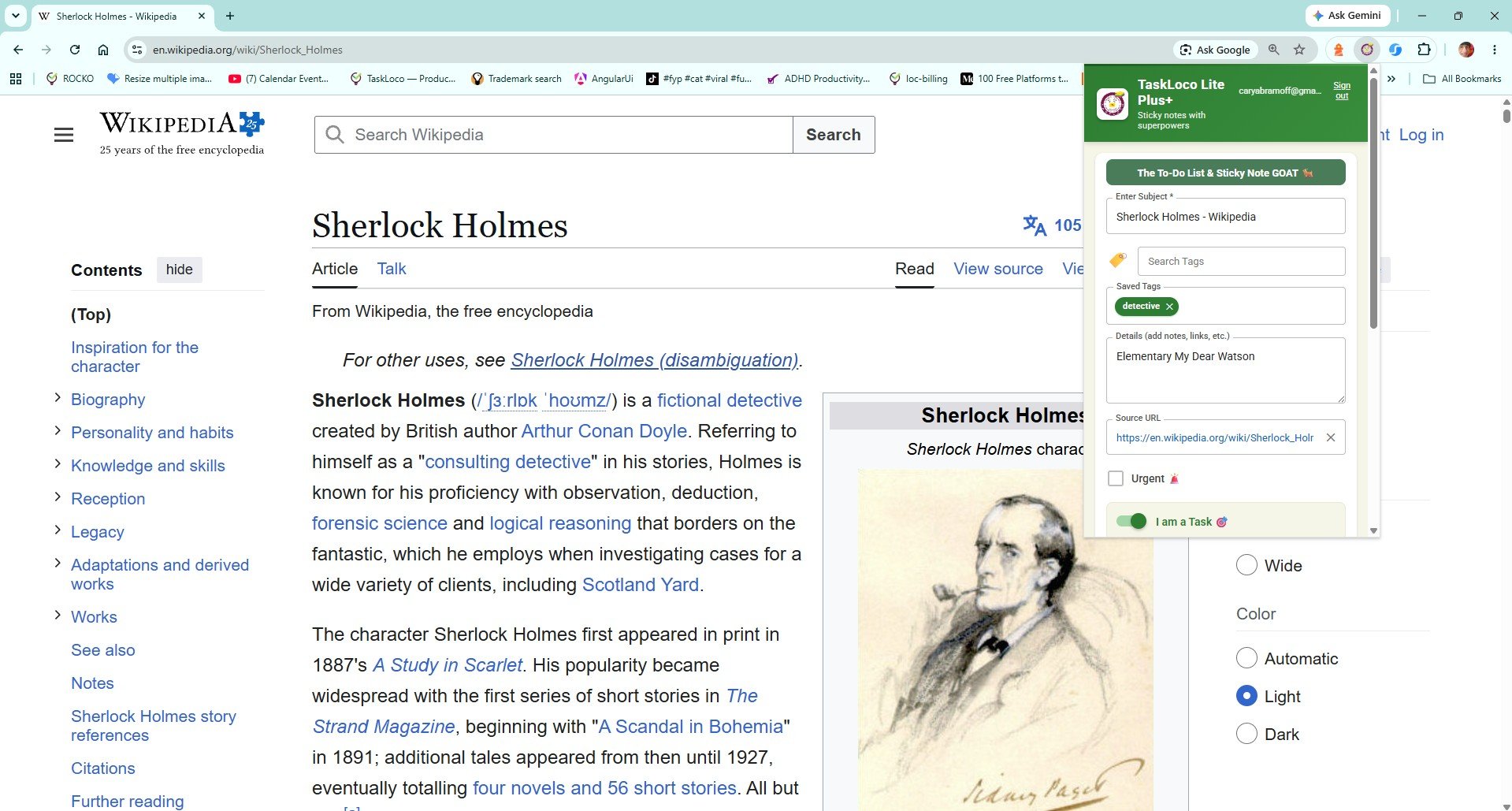
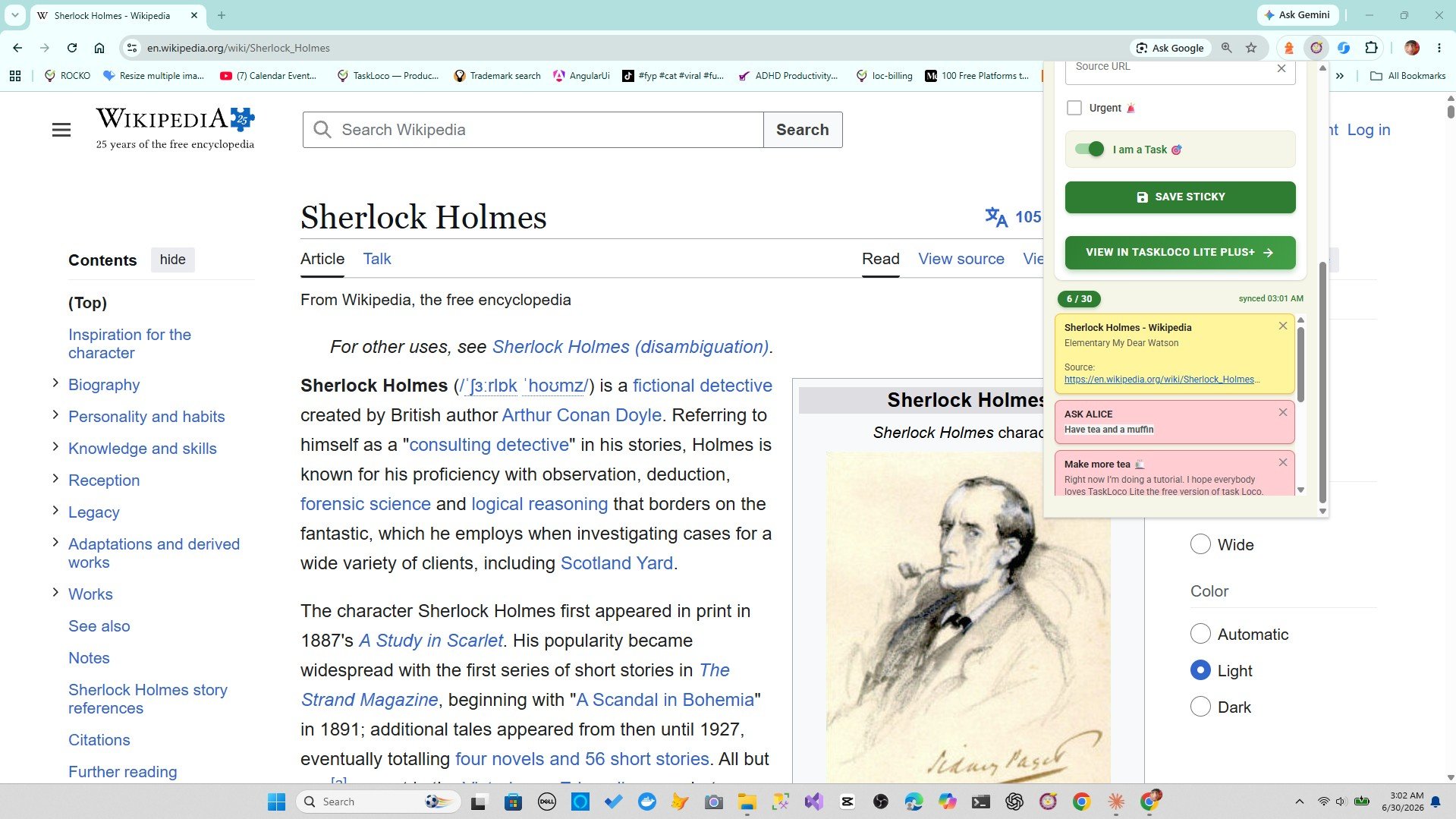
The Sticky Note Web Clipper is a free Chrome extension from TaskLoco that handles exactly this workflow. When you're on an article you want to read later, you click the toolbar icon once — and that's it. The page title and URL are auto-filled into a visual sticky note. You don't type anything. You don't choose a folder. You don't paste a link.
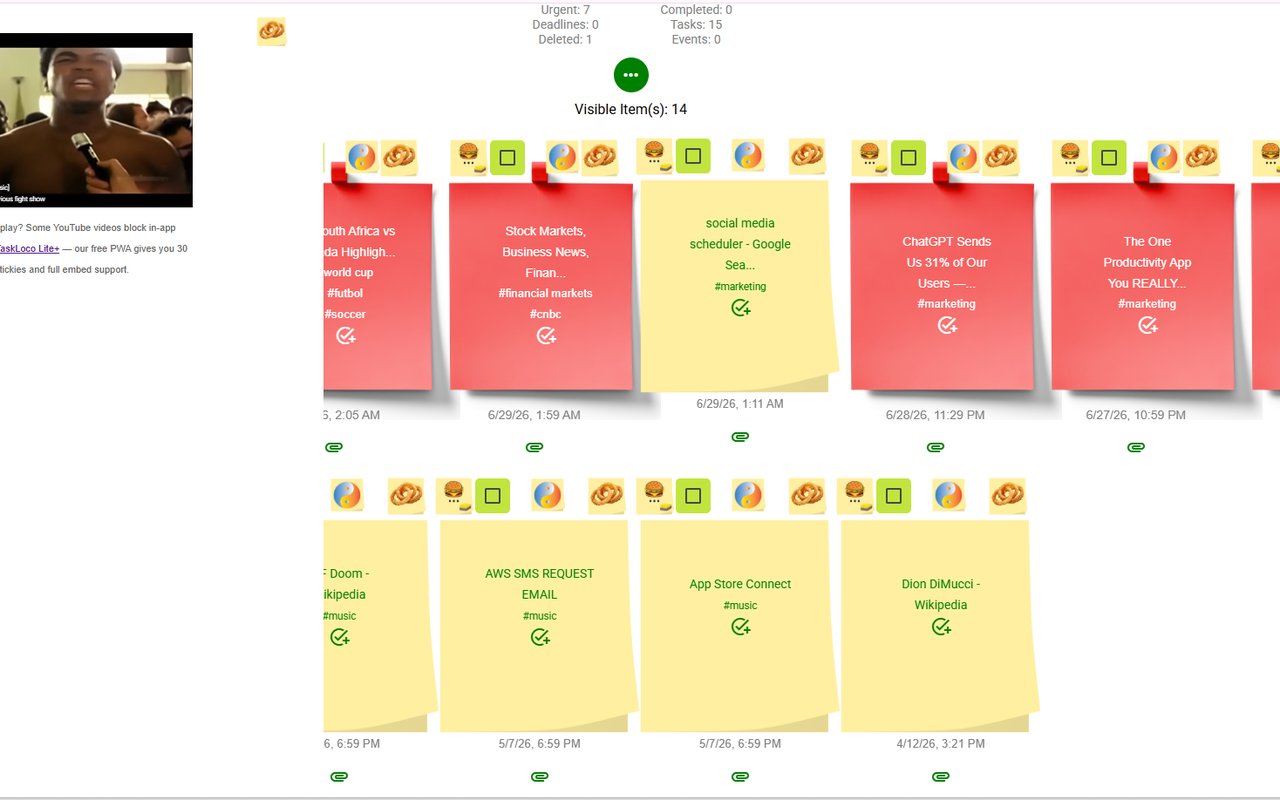
The note lands on your TaskLoco wall, which syncs to your phone and desktop. So when you're on your couch with your iPhone later, the article is already there waiting — not buried in a bookmark folder on your laptop.
Because the saved note looks like a sticky note (not a raw URL in a list), it's visually distinct and easy to scan. You can see at a glance what you've saved and what you haven't opened yet. Tags let you group things by topic if your reading list grows.
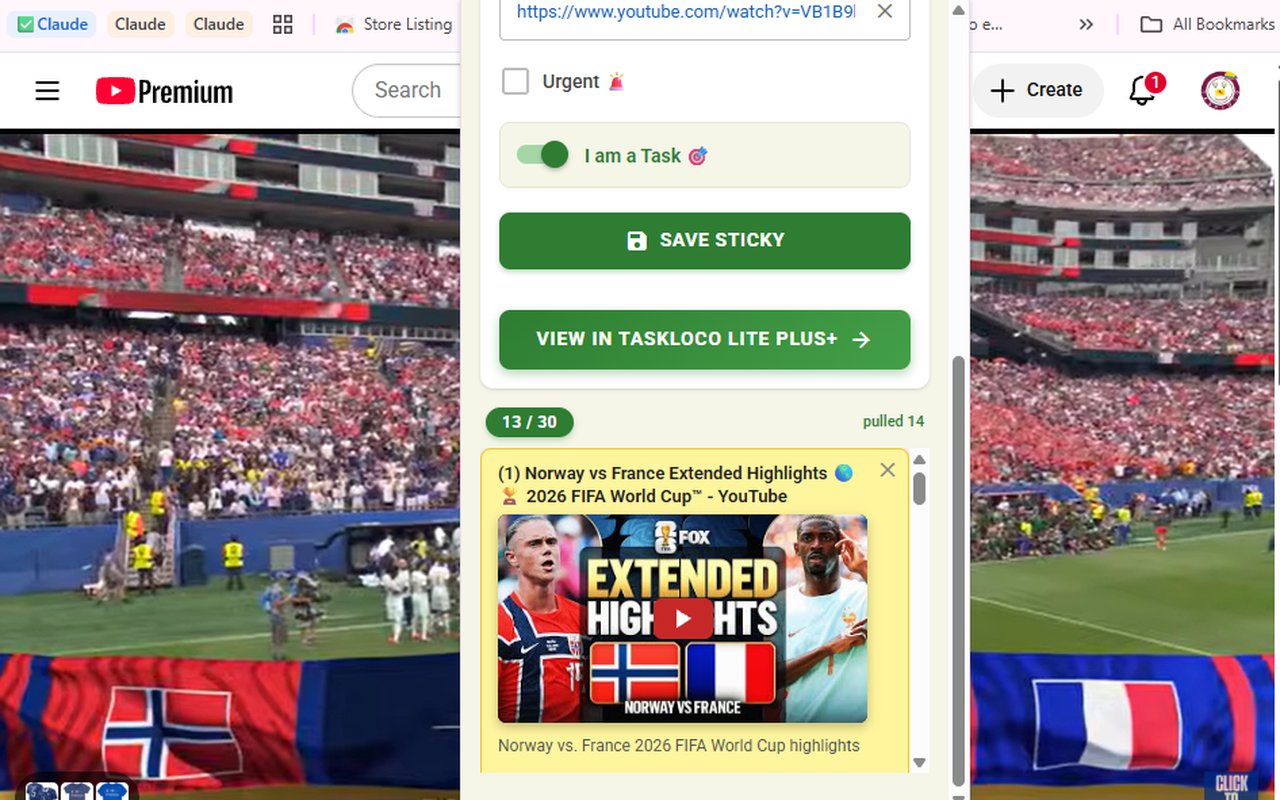
YouTube videos work the same way — clip a video you want to watch later and it embeds directly in the note so you can play it without leaving TaskLoco.
It's free to install from the Chrome Web Store, and signing in takes a Google account — nothing else required.
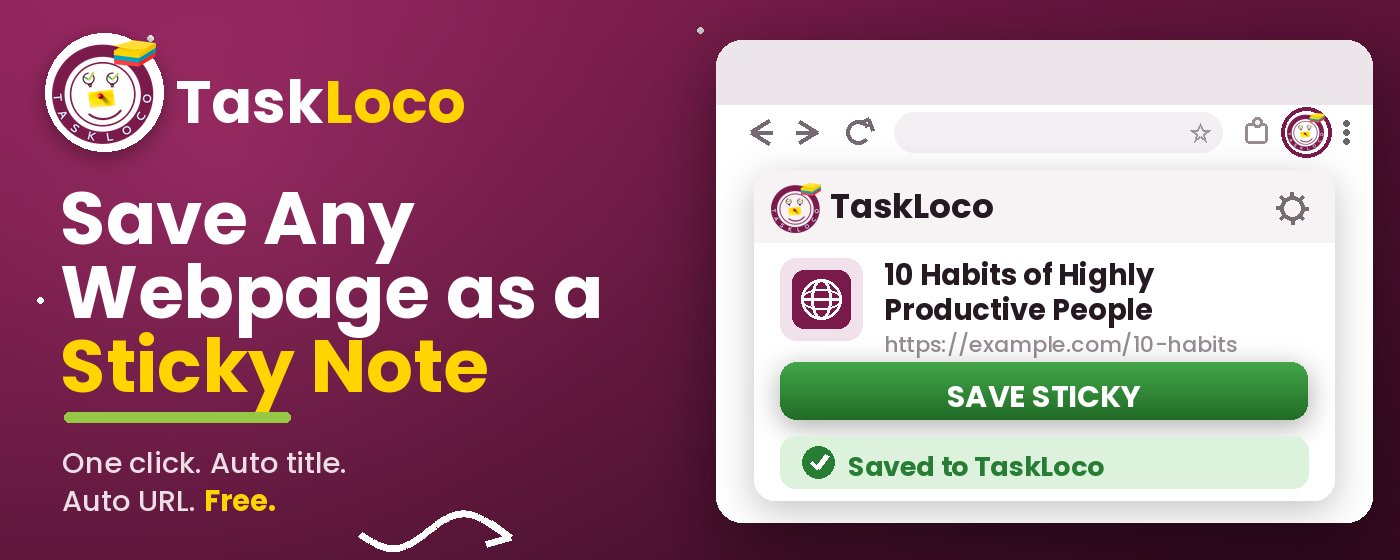
The Sticky Note Web Clipper is free. Install it from the Chrome Web Store, sign in with Google, and every page you clip becomes a sticky note you can find later.
Your clipped notes sync to TaskLoco across Chrome, desktop, iPhone, and Android — also free to start. No credit card to begin.
Get the Free Clipper
Sticky Note Web Clipper
- Free Chrome extension
- One-click save — any page, article, or video
- Title & URL auto-filled
- Tags & search
- Free forever
Synced to TaskLoco
- Sign in free with Google
- Your wall on Chrome, desktop, iPhone, Android
- YouTube videos embed & play in notes
- Visual sticky-note wall
- Free to start
Add It to Chrome — Free
One click saves any page, article, or YouTube video as a sticky note. Title and URL auto-filled.
Add to Chrome — FreeSee TaskLoco in Action
Frequently Asked Questions
What's the easiest way to save an article to read later?
Click the Sticky Note Web Clipper icon in your Chrome toolbar. The article title and URL are saved automatically as a sticky note — no typing, no folder selection. It takes one click and the tab can close.
Why don't bookmarks work as read-it-later reminders?
Bookmarks are invisible once saved. They go into a folder you rarely open, with no visual identity and no urgency. A reminder only works if you can see it in a place you actively look — which is why visual, named notes work better than raw bookmark lists.
How do I make sure I actually go back and read saved articles?
Save them somewhere you actively monitor — your task list, a pinned note, or a visual wall like TaskLoco. The more visible and named the saved item, the more likely you'll act on it. An article buried in a folder has essentially no reminder power.
Can I save YouTube videos as reminders to watch later?
Yes. The Sticky Note Web Clipper works on YouTube pages the same way it works on articles. Click the toolbar icon and the video is saved as a note — it embeds inside the note so you can play it directly without hunting for the original tab.
Will my saved articles sync to my phone?
Yes. Notes saved via the Chrome extension sync to TaskLoco, which is available on iPhone, Android, and desktop. So an article you clip on your laptop is there when you pick up your phone.
Is the Sticky Note Web Clipper free?
Yes — the extension is free, and TaskLoco has a free tier. Install it from the Chrome Web Store, sign in with Google, and start clipping immediately.
What if I save too many articles and forget about them anyway?
That's a real risk with any read-it-later system. The best approach is to keep your saved list short and review it regularly — treat unread articles as tasks, not archives. The Sticky Note Web Clipper's visual wall format helps because you can see everything at once rather than scrolling an endless text list.
Born in Brooklyn. Powered by AWS. Your data stays yours.
TaskLoco is available on iPhone, Android, Chrome, and every web browser.