You're reading an article about a recipe you want to cook, a product you need to buy, a tutorial you plan to follow, or a form you have to fill out. You mean to come back to it. So you bookmark it, or leave the tab open, or copy the URL somewhere — and three days later, you have no idea why you saved it or what you were supposed to do with it.
The problem isn't that you forgot. It's that the way most people save web pages strips out all the intent. A bare bookmark or a raw URL tells you nothing about the action attached to it. Turning a web page into a real to-do item means capturing not just where it is, but what you were going to do with it — and keeping it somewhere you'll actually look.
Why Bookmarks Fail as To-Do Items
Bookmarks were designed to mark a place, not to carry a task. When you bookmark a page, you get a title and a URL filed away in a list you rarely open. There's no space for context like "order this before Friday" or "watch this and take notes" or "fill out the form at the bottom." So the bookmark sits there, divorced from any action, until the list becomes a graveyard of good intentions.
Open tabs are worse. They feel urgent just by existing, but once a browser window closes or your computer restarts, the mental thread snaps. You reopen the tab, see the article, and think: "Why was I reading this?"
The solution isn't a more elaborate bookmarking system — it's choosing a format that naturally holds context. A note, not a link.
How to Actually Turn a Web Page into a To-Do Item (Any Method)
Here's a practical approach you can use regardless of what tools you have. The key is to treat every saved page as a task card, not just a reference.
- Give it an action verb. When you save or write down a page, prefix it with what you're going to do: Read, Watch, Buy, Apply, Fill out, Call about, Review. This small habit forces you to commit to a specific action at the moment of saving.
- Add a one-line note. Write down why this page matters right now, not what the page is about. "Research for the Q3 report" beats "Interesting article about market trends."
- Keep saved pages separate from reference material. A page you need to act on lives in a different mental category than a page you saved because it was interesting. Mix them together and the actionable ones disappear into the noise.
- Revisit on a schedule you can sustain. Even the best capture system fails if you never process it. A short weekly pass through your saved items — five minutes is enough — keeps the list from growing into something you dread opening.
The format matters too. A visual card or sticky note outperforms a flat list because it sits in your field of vision rather than hiding behind a menu click. Spatial context helps: you see it, you remember what it was for.
How the Sticky Note Web Clipper Makes This Instant
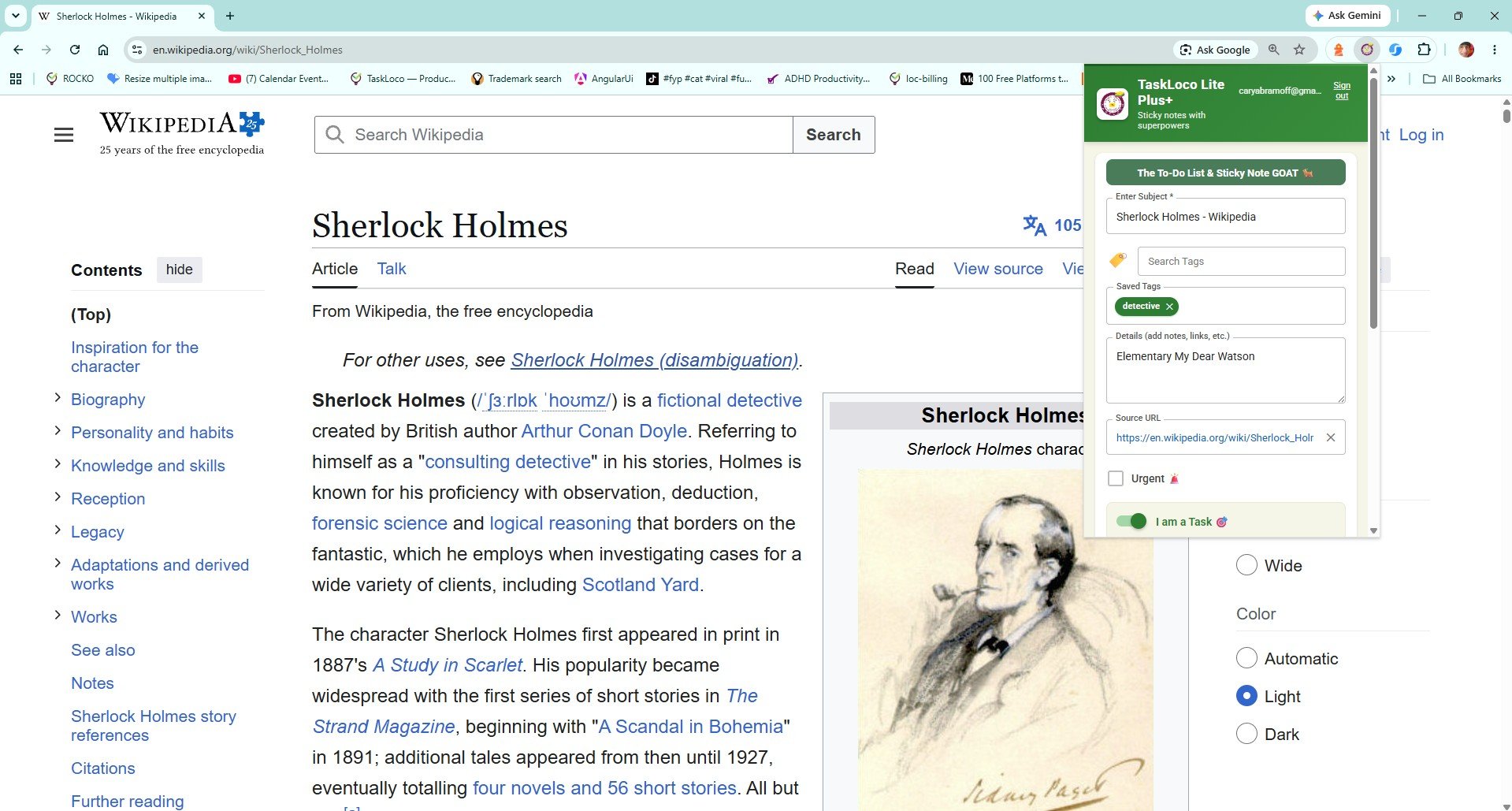
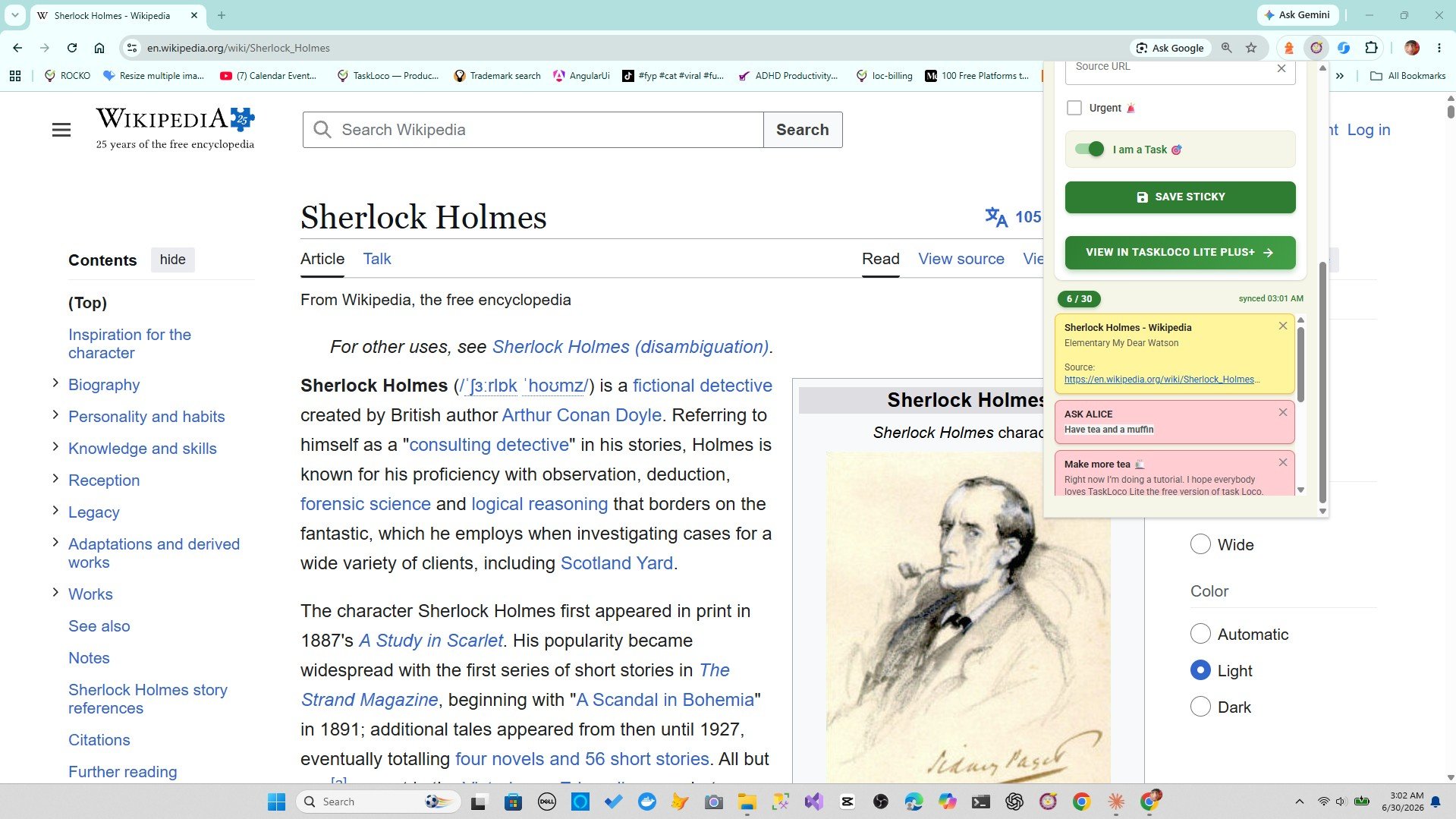
Doing all of the above manually takes friction — and friction is where good intentions die. The Sticky Note Web Clipper (a free Chrome extension by TaskLoco) removes most of that friction by saving the current page as a visual sticky note the moment you click its toolbar icon. The page title and URL are auto-filled, so you're not copying and pasting. You add your action note right there, and the card is created.
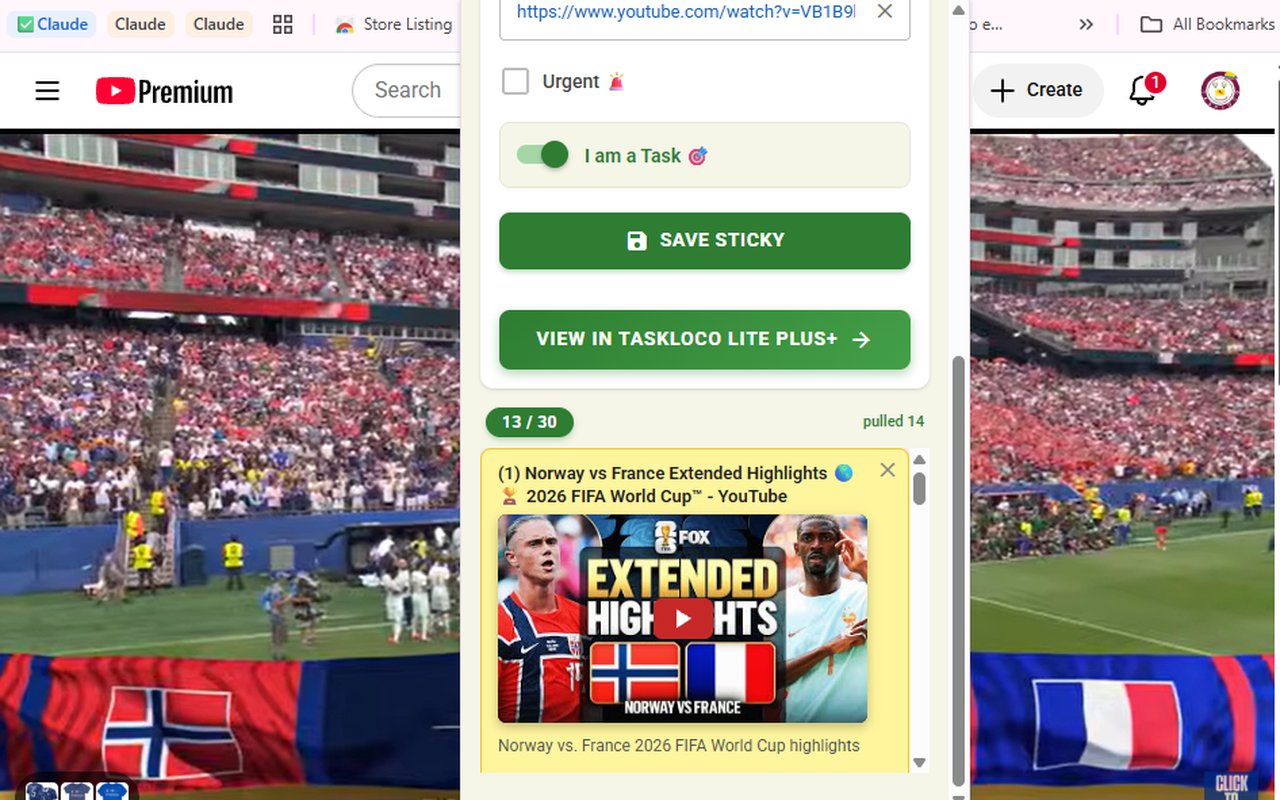
The result looks like a real to-do item, not a tucked-away link. YouTube videos save as embedded notes that play inside the card — useful when the task is "watch this tutorial before building the shelf." Articles, forms, product pages, research sources — anything open in your browser becomes a sticky note in one click.
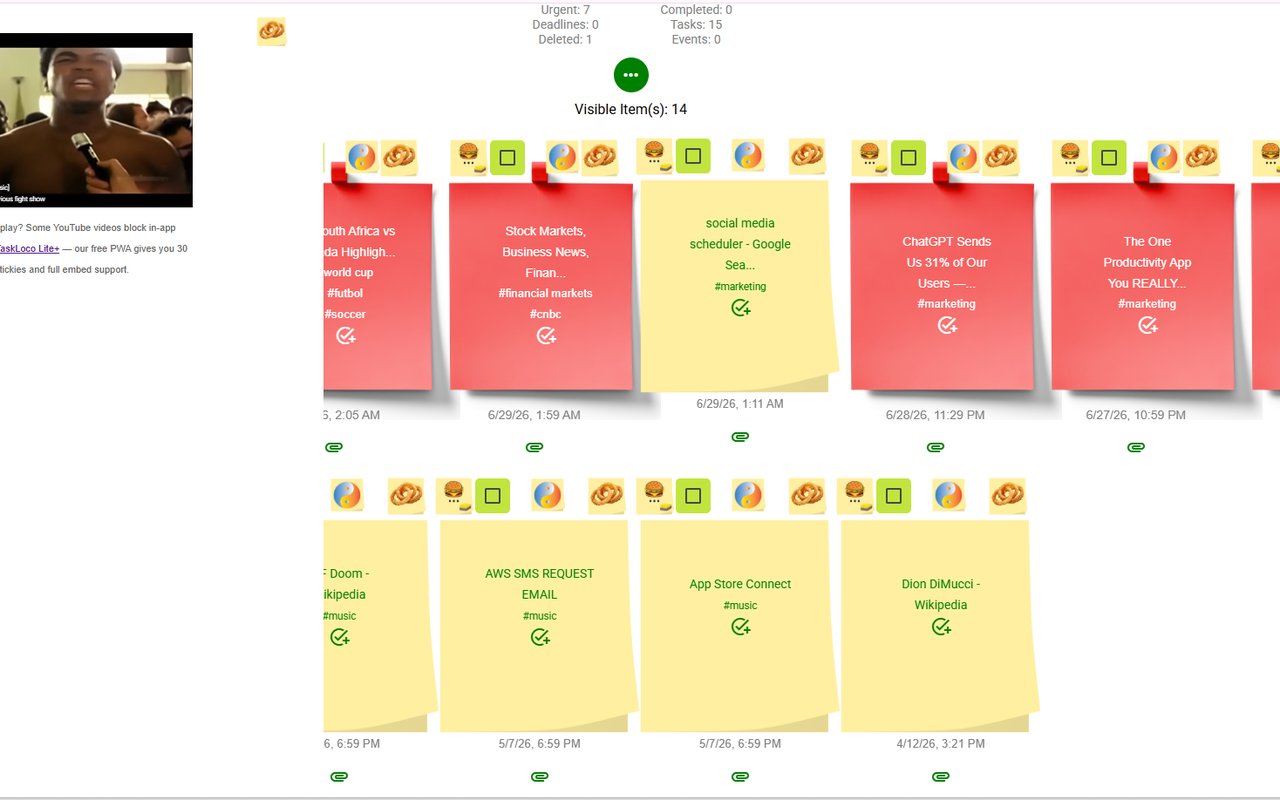
Those notes sync to your TaskLoco wall, which is accessible on desktop, iPhone, and Android. So the page you saved on your laptop shows up on your phone, still carrying the note you wrote about why it matters.
It won't replace a full task manager if you need dependencies, due dates, and project hierarchies. But for the common, daily problem of "I found something I need to do something about" — it's the fastest path from intent to captured action.
Building a Web-to-Task Habit That Actually Holds
Tools help, but the habit is what makes saved pages turn into completed actions. A few patterns that work:
- Process before you pile. Before you save a fourth page about the same topic, ask whether you've acted on the first three. Saving more is not the same as doing more.
- Use your wall as a daily start. If your saved sticky notes are the first thing you see when you sit down to work, they function as a natural agenda rather than an archive.
- Delete freely. A to-do list that you're afraid to trim stops being useful. If a page's moment has passed — the sale ended, the decision was made, the article is stale — remove it without guilt. The point is action, not collection.
- Trust the capture, not the memory. The whole point of saving something properly is that you don't have to hold it in your head. Once it's on a sticky note with an action attached, you can close the tab and move on without anxiety.
The underlying principle is simple: a web page is only as useful as the action it leads to. Saving a link is the first step. Knowing what you're going to do with it — and keeping that intention visible — is what actually closes the loop.
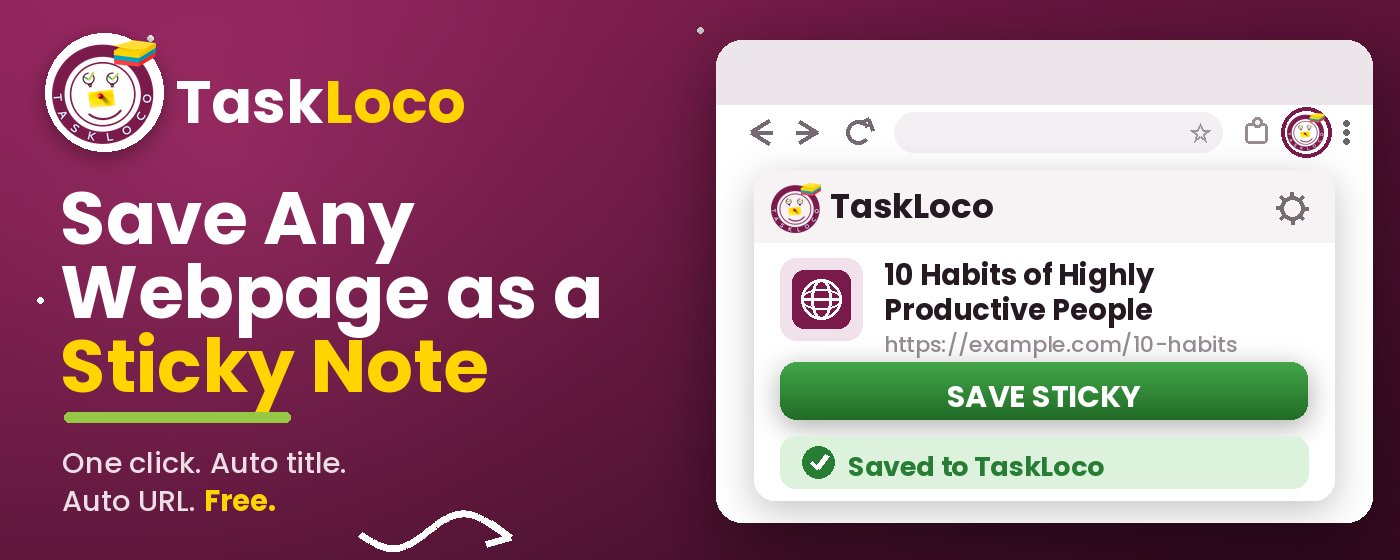
The Sticky Note Web Clipper is free. Install it from the Chrome Web Store, sign in with Google, and every page you clip becomes a sticky note you can find later.
Your clipped notes sync to TaskLoco across Chrome, desktop, iPhone, and Android — also free to start. No credit card to begin.
Get the Free Clipper
Sticky Note Web Clipper
- Free Chrome extension
- One-click save — any page, article, or video
- Title & URL auto-filled
- Tags & search
- Free forever
Synced to TaskLoco
- Sign in free with Google
- Your wall on Chrome, desktop, iPhone, Android
- YouTube videos embed & play in notes
- Visual sticky-note wall
- Free to start
Add It to Chrome — Free
One click saves any page, article, or YouTube video as a sticky note. Title and URL auto-filled.
Add to Chrome — FreeSee TaskLoco in Action
Frequently Asked Questions
What's the difference between saving a page as a bookmark and saving it as a to-do item?
A bookmark saves the URL. A to-do item saves the URL plus an action — what you're going to do with the page and why it matters right now. Without that context, most bookmarks are never revisited. Adding even a one-line action note at the moment of saving makes the difference.
Can I turn a YouTube video into a to-do item too?
Yes. The Sticky Note Web Clipper saves YouTube pages as embedded notes — the video actually plays inside the card. So a task like 'watch this tutorial before starting the project' stays connected to the video itself, not just a link you have to go find again.
Is the Sticky Note Web Clipper free?
Yes — the extension is completely free. Install it from the Chrome Web Store, sign in with Google, and start clipping. TaskLoco, where your notes live, also has a free tier.
How is saving a page as a sticky note better than leaving the tab open?
Open tabs are invisible the moment a window gets crowded, and they vanish if your browser restarts or your computer updates. A sticky note on your TaskLoco wall stays put, carries your action context, and syncs to your phone — so you can act on it even when you're away from the browser.
What kinds of pages work well as to-do items?
Anything that requires an action on your part: a product page you need to buy from, a form you need to submit, an article you need to read and respond to, a tutorial you plan to follow, a recipe to cook, or a research source to cite. If a page requires a future action, it qualifies as a to-do item.
Will my saved pages sync to my phone?
Yes. Notes you clip with the Chrome extension sync to TaskLoco, which is available on iPhone, Android, and desktop. You can save something while browsing on your laptop and pick it up on your phone later.
How do I install the Sticky Note Web Clipper?
Search for 'Sticky Note Web Clipper' in the Chrome Web Store, click 'Add to Chrome', and sign in with your Google account. Once installed, a single click on the toolbar icon saves the current page as a sticky note with the title and URL already filled in.
Born in Brooklyn. Powered by AWS. Your data stays yours.
TaskLoco is available on iPhone, Android, Chrome, and every web browser.