You found a great article. You don't have time to read it now. So you do one of three things: leave the tab open and forget about it, copy the URL into a note app and then have to type the title yourself, or drag it into a bookmarks folder that you'll never look at again. None of those actually work.
What you want is dead simple: click once, and the article is saved — with its title already there, the URL attached, and the whole thing waiting for you in a place you'll actually return to. That's what this guide covers: how to save articles for later reading without the manual busywork, starting with methods that require nothing at all, and ending with the approach that makes it a genuine habit.
The Problem with Saving Articles the Normal Way
Browser bookmarks were designed for pages you want to revisit, not articles you want to read once. Over time, most people's bookmarks folder becomes a graveyard of links with no context. You see a URL and have no idea whether it was important or idle curiosity. The title often gets truncated or auto-filled with something unhelpful like the site name instead of the article headline.
Copy-pasting into a notes app is more intentional but adds friction at exactly the wrong moment — the moment when you're busy and just want to capture something quickly. You open a new note, paste the URL, then go back to the article to copy the title, paste that too, maybe add a line of context. By the time you're done, 90 seconds have passed and you've broken your reading flow.
Open tabs are the worst habit of all. Studies on browser behavior consistently show that tabs kept open as a reading reminder are rarely returned to. The more tabs you have open, the harder it becomes to find the one you actually meant to revisit — and browser restarts wipe them out entirely unless you've set up session saving.
How to Save an Article with Its Title Already Filled In — Step by Step
There are a few ways to do this, ranging from no-install methods to one-click extensions. Here's what actually works:
- Use your browser's reading list (built-in). Chrome, Edge, and Safari all have a native reading list accessible from the bookmarks menu or a keyboard shortcut. In Chrome, right-click the page and choose Save to Reading List. The title is auto-captured. The downside: the list is browser-local, has no visual layout, and doesn't sync neatly to your phone as a readable collection.
- Share to a notes app from mobile. On iPhone or Android, the share sheet lets you send a page directly to apps like Apple Notes or Google Keep, which auto-fill the page title and URL. This works well on mobile but is clunky when you're on a desktop browser and need to act fast.
- Use a browser extension that captures title and URL automatically. This is the most reliable desktop method. A good web clipper reads the page title from the document metadata the moment you activate it — no copying required. You click once, the note is created with the title and URL already there, and you move on.
The third approach is the one worth building a habit around, because it removes every step that causes hesitation. When saving feels instant, you actually save things.
What to Look for in a Read-Later Clipper
Not all clippers handle title capture the same way. Some prompt you with a dialog box and pre-fill the title, but still require you to click through two or three confirmation steps. Others clip the full page content (which is great for archiving, less great for quick read-later capture). Here's what actually matters for the use case of saving articles to read later:
- Auto-filled title, not prompted title. The extension should read the
<title>tag or the Open Graph title of the page automatically. You should never type a name. - URL attached by default. The saved item should always link back to the original page so you can open it and read the full article in context.
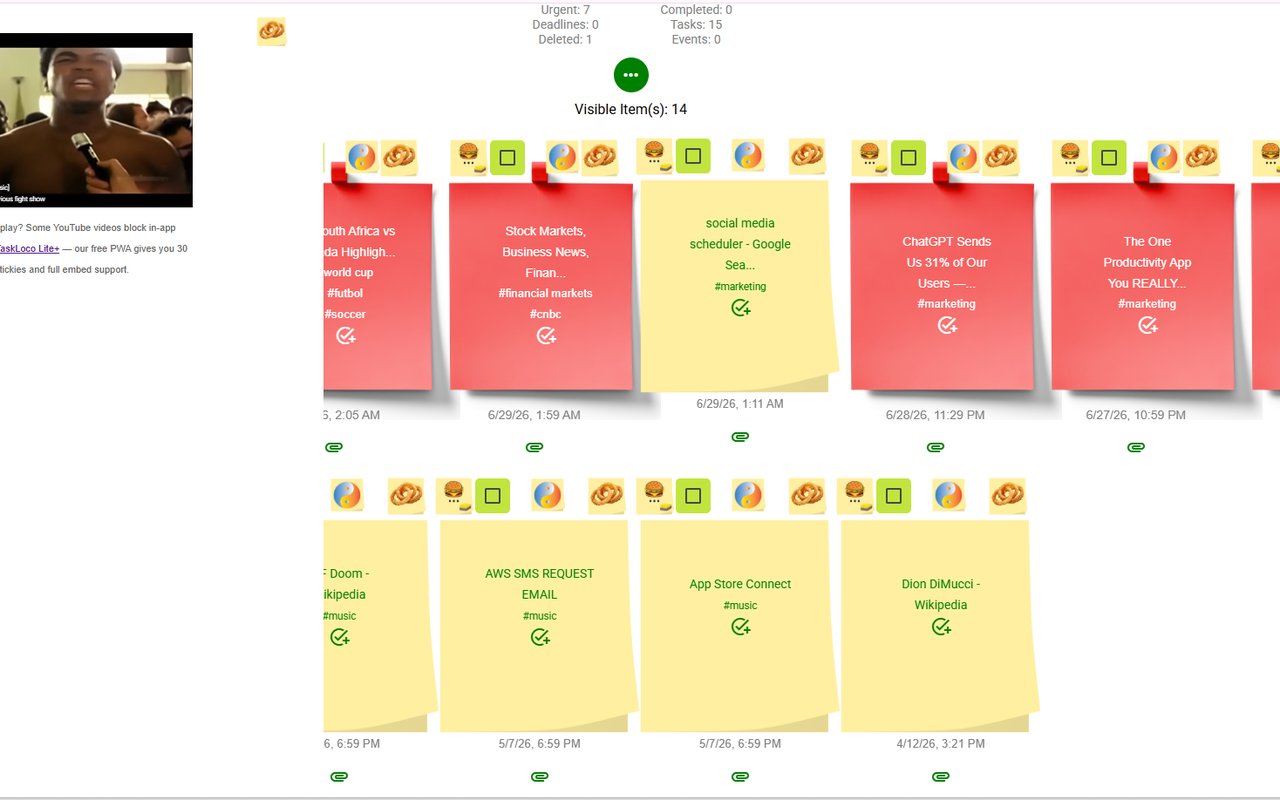
- A visual collection you'll actually look at. A list of plain links in a sidebar is easy to ignore. A wall of sticky notes — each showing a title and source — gives your saved articles a presence that prompts you to return.
- Sync to your phone. Most reading happens on mobile. If your saved articles don't appear on your phone, the whole system breaks down the moment you close your laptop.
- Works on YouTube too. Research and learning don't only happen in text articles. A clipper that saves YouTube videos — and lets them play inside the note — covers the full range of things you want to come back to.
These aren't premium features. They're the baseline for a clipper that's actually useful day-to-day.
How the Sticky Note Web Clipper Handles This
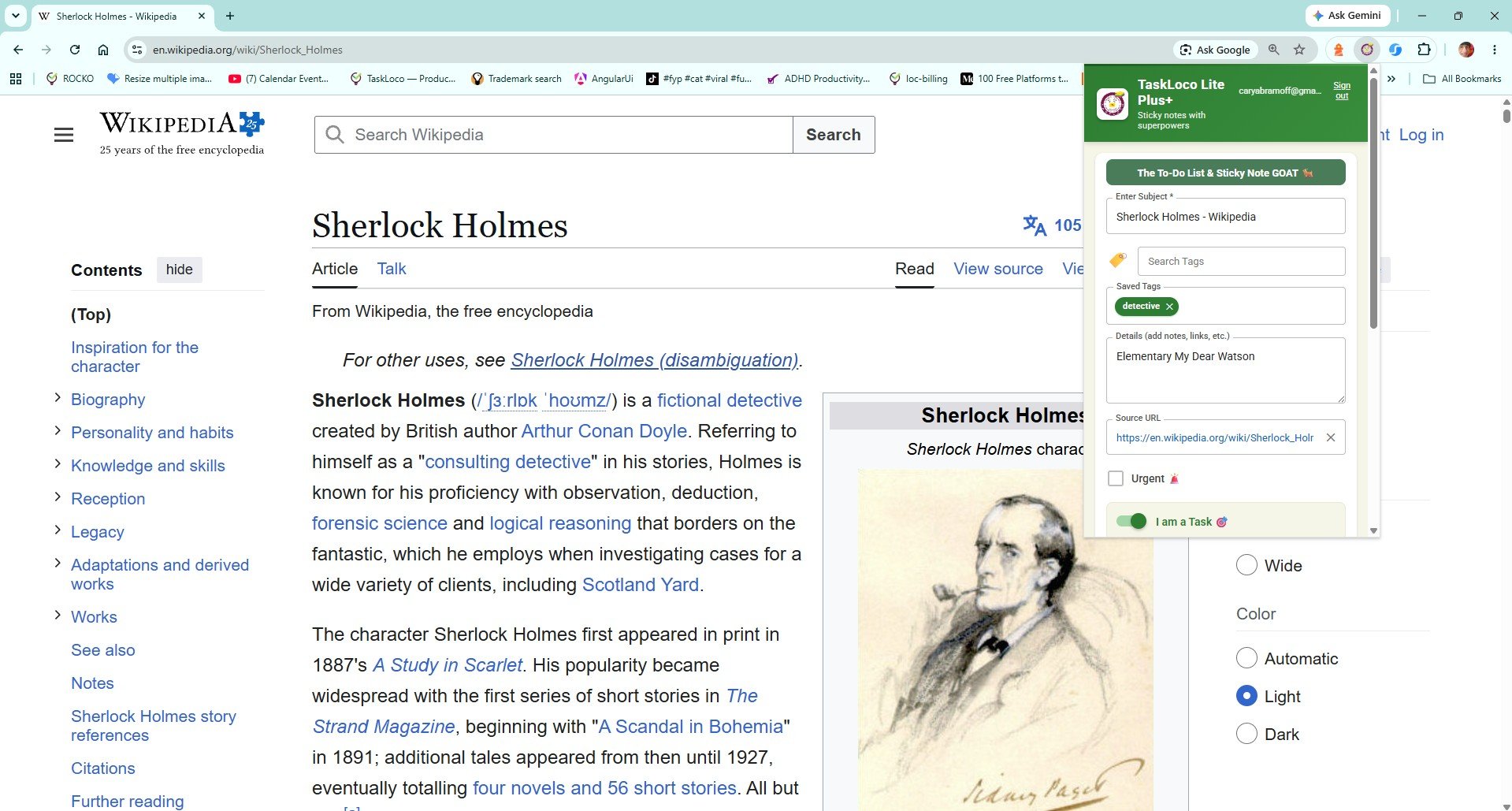
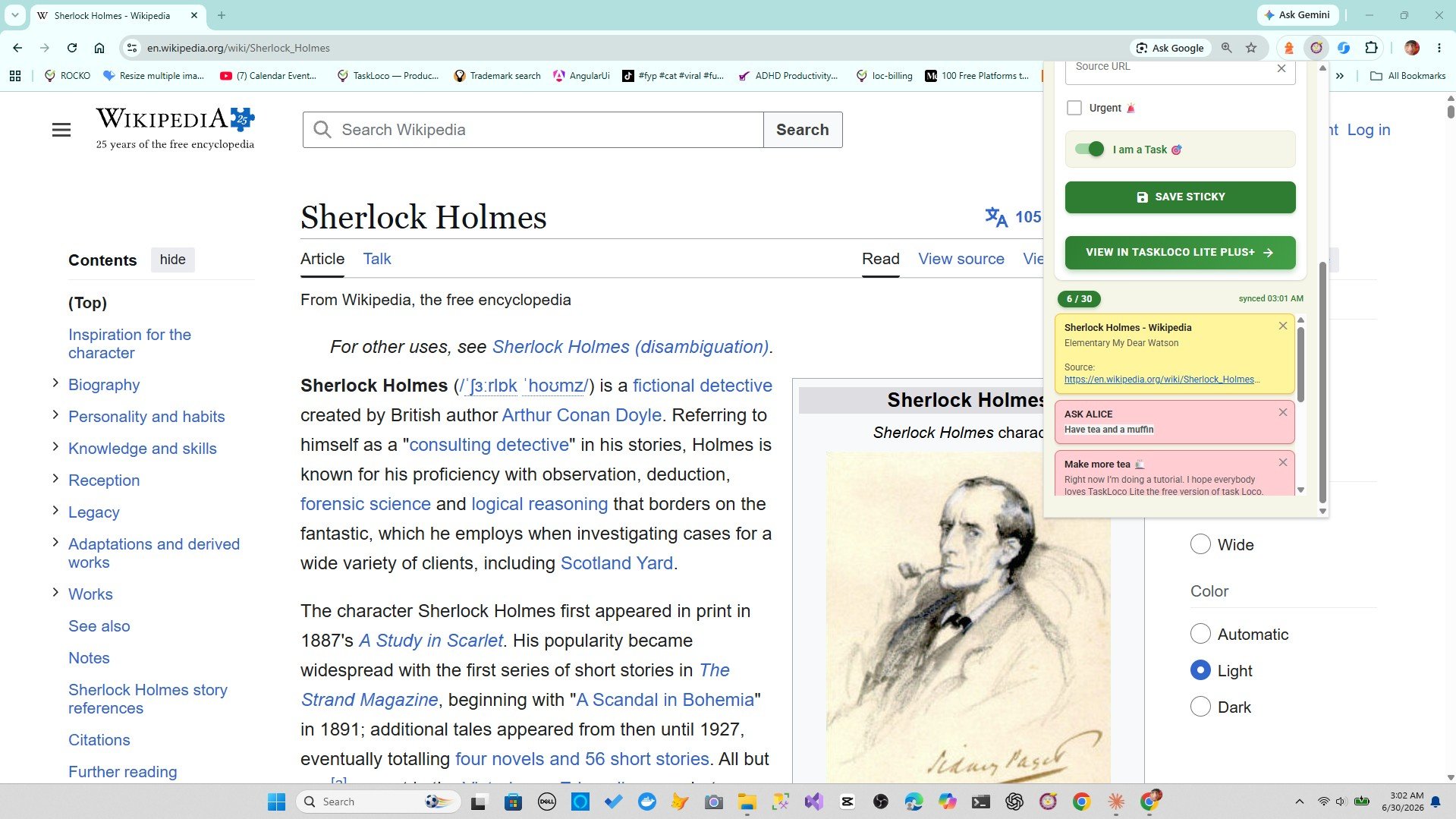
The Sticky Note Web Clipper by TaskLoco is a free Chrome extension built around exactly this workflow. When you're on any article, page, or YouTube video and want to save it for later, you click the toolbar icon once. A sticky note is created with the page title auto-filled and the URL embedded. That's the entire process.
The saved note lives on your TaskLoco wall — a visual board of sticky notes you can tag, search, and scroll through. Because it syncs across Chrome, desktop, iPhone, and Android via the free TaskLoco experience, the article you save on your laptop is waiting for you when you pick up your phone on the couch.
Sign-in is free with Google. There's no form to fill out, no payment required to install the extension, and no setup beyond clicking Add to Chrome and pinning the icon to your toolbar. The first time you try it on a real article you want to read later, the habit tends to stick — because there's genuinely nothing to slow you down.
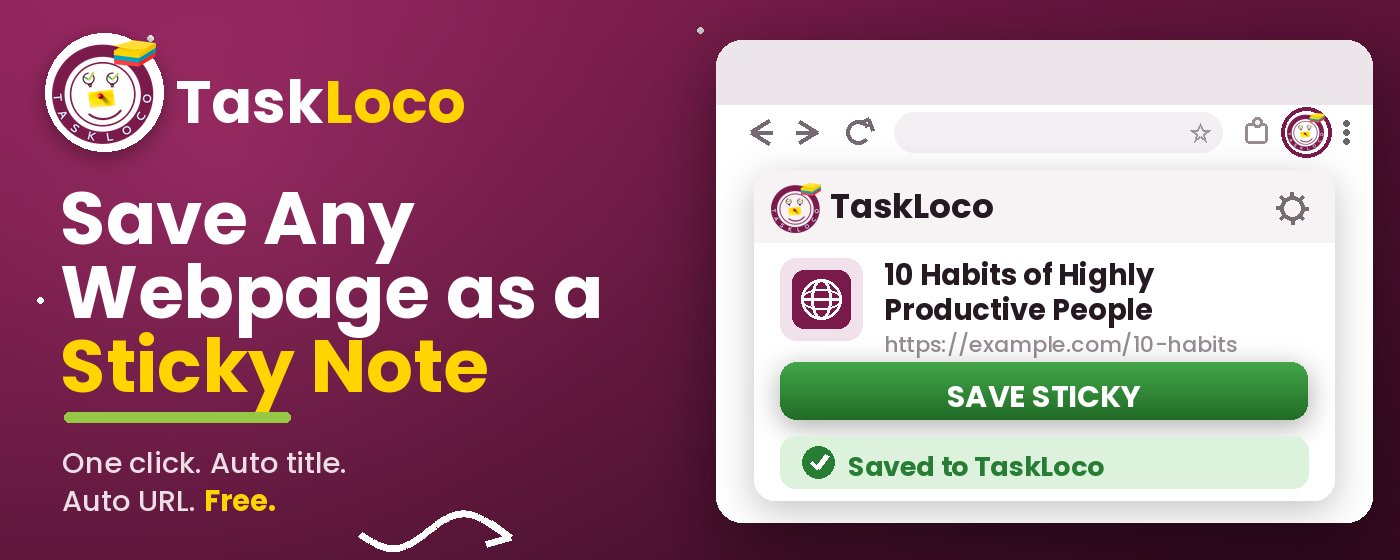
The Sticky Note Web Clipper is free. Install it from the Chrome Web Store, sign in with Google, and every page you clip becomes a sticky note you can find later.
Your clipped notes sync to TaskLoco across Chrome, desktop, iPhone, and Android — also free to start. No credit card to begin.
Get the Free Clipper
Sticky Note Web Clipper
- Free Chrome extension
- One-click save — any page, article, or video
- Title & URL auto-filled
- Tags & search
- Free forever
Synced to TaskLoco
- Sign in free with Google
- Your wall on Chrome, desktop, iPhone, Android
- YouTube videos embed & play in notes
- Visual sticky-note wall
- Free to start
Add It to Chrome — Free
One click saves any page, article, or YouTube video as a sticky note. Title and URL auto-filled.
Add to Chrome — FreeSee TaskLoco in Action
Frequently Asked Questions
Does the extension really fill in the article title automatically?
Yes. When you click the toolbar icon on any webpage, the Sticky Note Web Clipper reads the page title directly from the page metadata — the same title you see in the browser tab — and fills it into the sticky note automatically. You don't type anything.
What's the difference between saving to a reading list and using a clipper?
A browser reading list saves links locally in your browser and typically shows them as a plain list. A clipper like the Sticky Note Web Clipper saves items as visual sticky notes that sync across your devices, support tags and search, and include YouTube video embedding. The reading list is fine for one-off saves; a clipper is better if you save regularly and want to actually find things again.
Can I save YouTube videos the same way as articles?
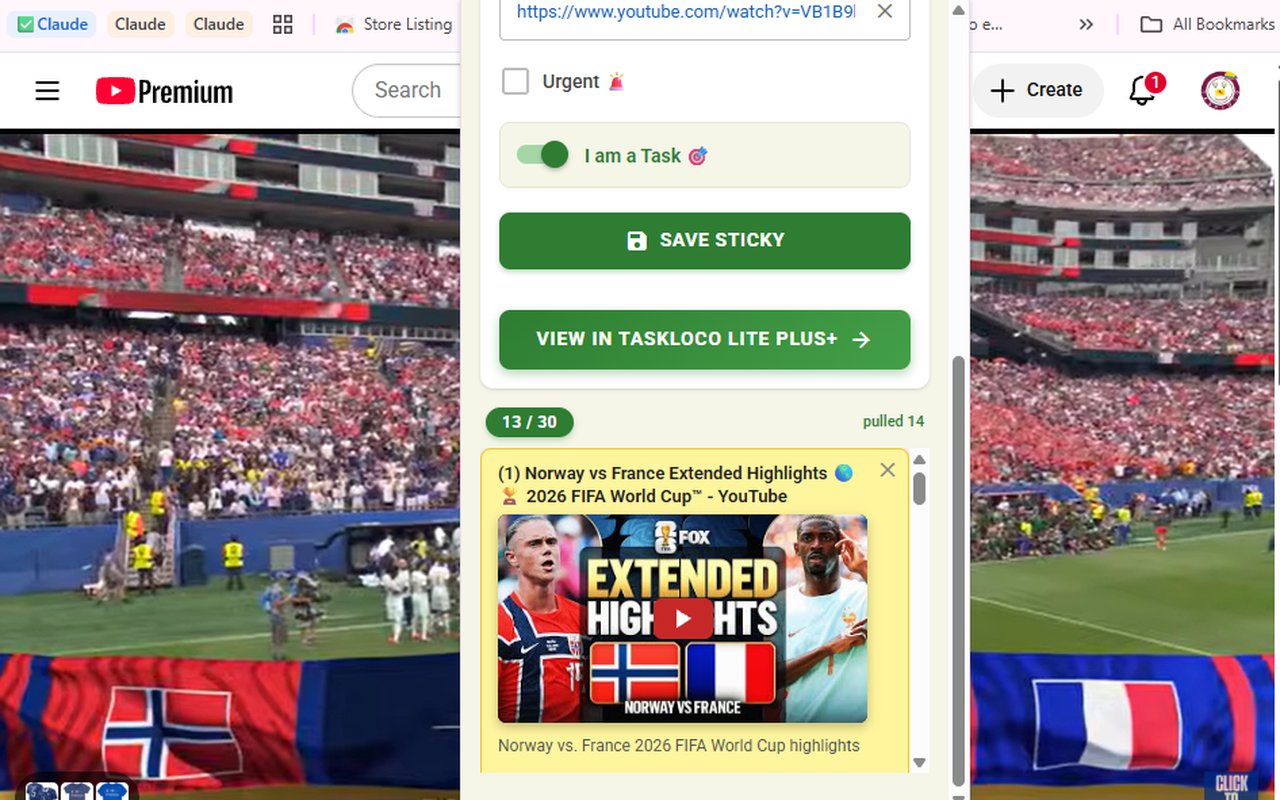
Yes. Clicking the clipper icon on a YouTube page saves it as a sticky note with the video title auto-filled. The video also embeds directly inside the note, so you can play it from your TaskLoco wall without opening a new tab.
Will my saved articles be available on my phone?
Yes. Sticky notes you save via the Chrome extension sync to TaskLoco, which is available on iPhone, Android, and desktop. Sign in with the same Google account you used when installing the extension and all your saved items will be there.
Is the Sticky Note Web Clipper free?
Yes — the extension is completely free. TaskLoco also has a free tier. Install the extension from the Chrome Web Store, sign in with Google, and start clipping immediately with no payment required.
What if I want to add context or a note to a saved article?
Once a sticky note is created, you can open it and add your own text — a quick summary, a reason you saved it, or questions it raised. The title and URL are already there; anything you add is optional.
How do I find a saved article later when I have dozens of saved notes?
The Sticky Note Web Clipper integrates with TaskLoco's search and tagging features. You can tag articles by topic as you save them, or just use the search bar to find a saved note by its title or any word you remember from it.
Born in Brooklyn. Powered by AWS. Your data stays yours.
TaskLoco is available on iPhone, Android, Chrome, and every web browser.