At some point, every curious person on the internet hits the same wall: a great article appears at the wrong moment, you don't have time to read it now, and you don't want to pay a monthly fee just to remember it exists. The read-later app industry has built a surprisingly expensive solution to what is, at its core, a pretty simple problem.
The good news is that the simple problem has simple solutions — most of them free. What separates the good free options from the frustrating ones is whether you can actually find what you saved, whether it looks like something worth revisiting, and whether it follows you to your phone when you leave your desk. This guide covers every real method, honestly, so you can pick the one that fits how you actually browse.
The Free Methods That Actually Work (No App Required)
Before reaching for any extension or tool, it helps to understand what's already available to you in a plain browser — and where those built-in options fall short.
Browser bookmarks are the obvious starting point. Every browser has them, they're free, and they work. The problem is organization. Most people accumulate hundreds of bookmarks with no real structure, no visual preview, and no way to remember why they saved something. A bookmark is just a URL with a title. Six months later, a folder called "Interesting" is useless.
Open tabs are popular as an informal read-later system — pin the tab, come back later. This works for a day. For anything longer, tabs multiply, browser performance suffers, and the original context disappears. It's not really saving; it's just procrastinating the close button.
Copy-pasting links into notes apps — your phone's notes app, a Google Doc, an email to yourself — is genuinely effective if you stay disciplined. The friction is that it's a four-or-five-step process for every single link. Most people do it once or twice, then stop.
Email newsletters with a "save for later" feature only help for content that arrives in your inbox. Anything you find while browsing is still on you.
So the real question is: how do you reduce that friction to almost zero, keep things visually organized, and sync them to wherever you actually read — without paying for it?
What Free Browser Extensions Can Do That Bookmarks Can't
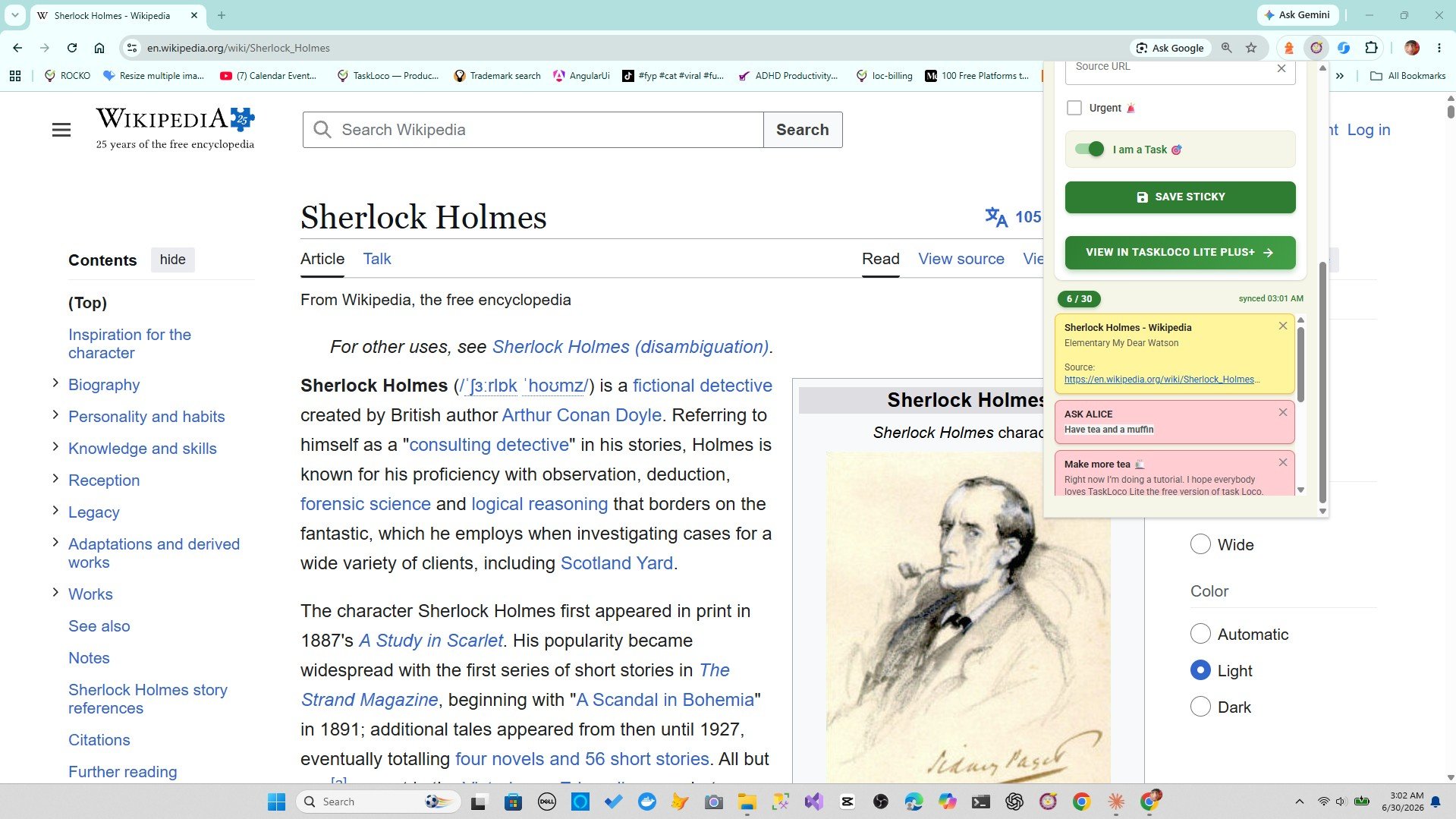
A good browser extension eliminates the multi-step problem. Instead of copying a URL, opening a notes app, pasting, adding context, and then saving — you click once. That's the entire difference in practice, but it's enormous in terms of how many articles you'll actually save and revisit.
The key things to look for in a free clipper:
- One-click capture — if it takes more than one intentional action, people stop using it
- Visual format — a thumbnail or card view means you remember what you saved; a plain list doesn't
- Auto-filled metadata — the title and URL should appear automatically; you shouldn't have to type anything
- Cross-device sync — you save on desktop, you read on your phone; the two need to connect
- Search — when your collection grows, you need to find things fast
Some free extensions clip content as raw text or PDF snapshots of a page, which sounds useful but creates large files and doesn't work well for long-term browsing collections. Others require you to create an account with a paid tier as the obvious nudge, making the free version feel intentionally limited.
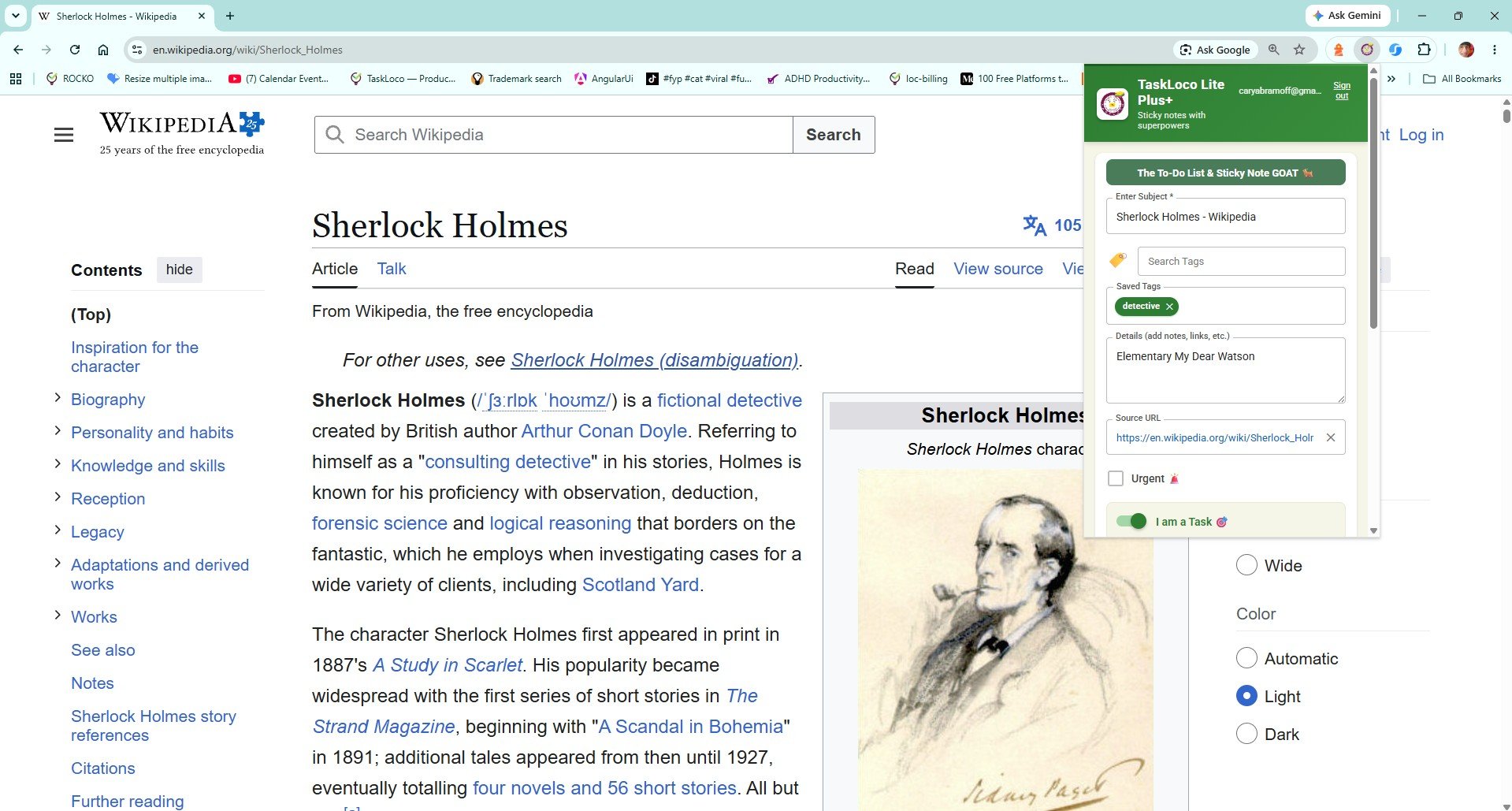
The Sticky Note Web Clipper by TaskLoco takes a different approach: it saves the page as a sticky note — a visual card showing the title, the URL, and any note you add — rather than trying to archive the full page content. This keeps things lightweight, scannable, and genuinely useful when you return to your saved collection later.
How to Use the Sticky Note Web Clipper to Replace a Read-Later App
Installing and using the Sticky Note Web Clipper takes about two minutes from start to reading your first saved note. Here's exactly how the workflow runs:
- Install the extension from the Chrome Web Store — it's free, no credit card, no trial period
- Sign in with Google — one tap, no new password to create
- Browse normally — when you find an article, video, or page you want to save, click the toolbar icon
- The note appears with the page title and URL already filled in — you can add a tag or a quick thought, or just save immediately
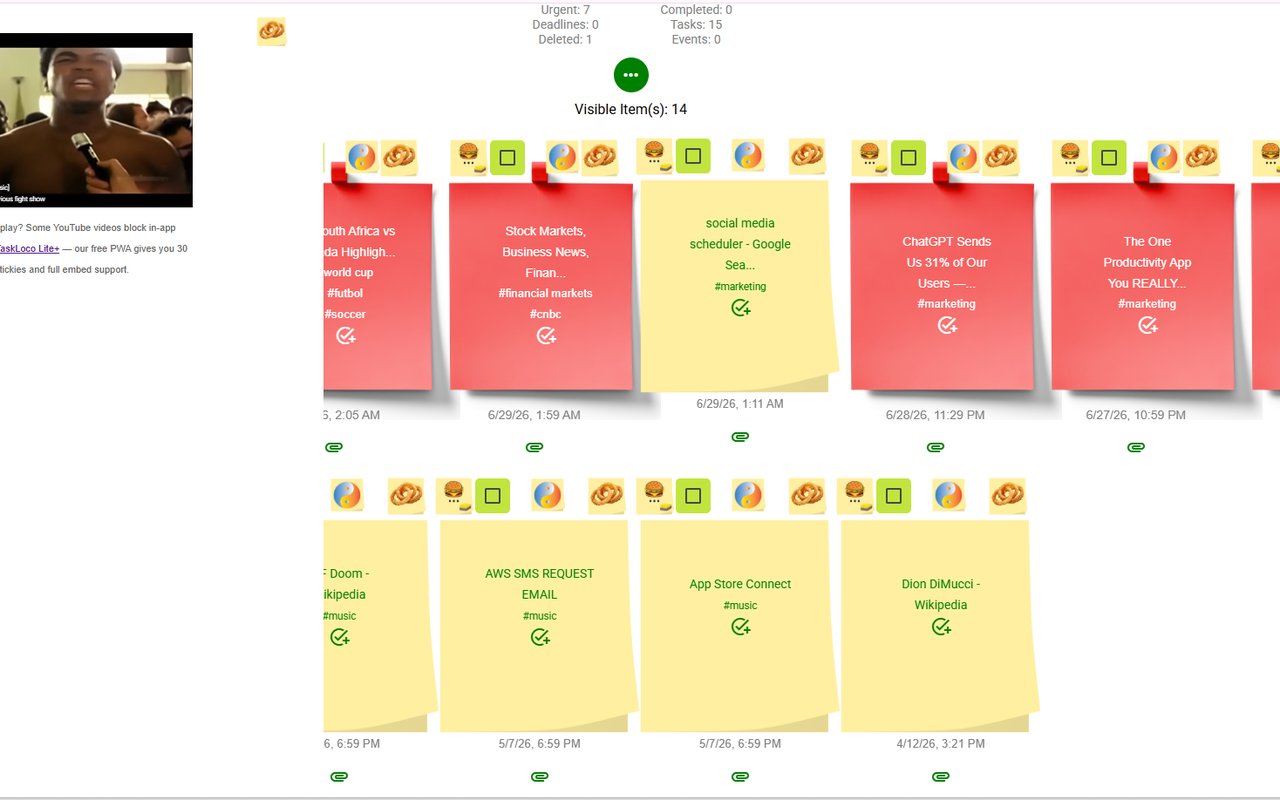
- Access your notes on the TaskLoco wall, which syncs across Chrome, desktop, iPhone, and Android
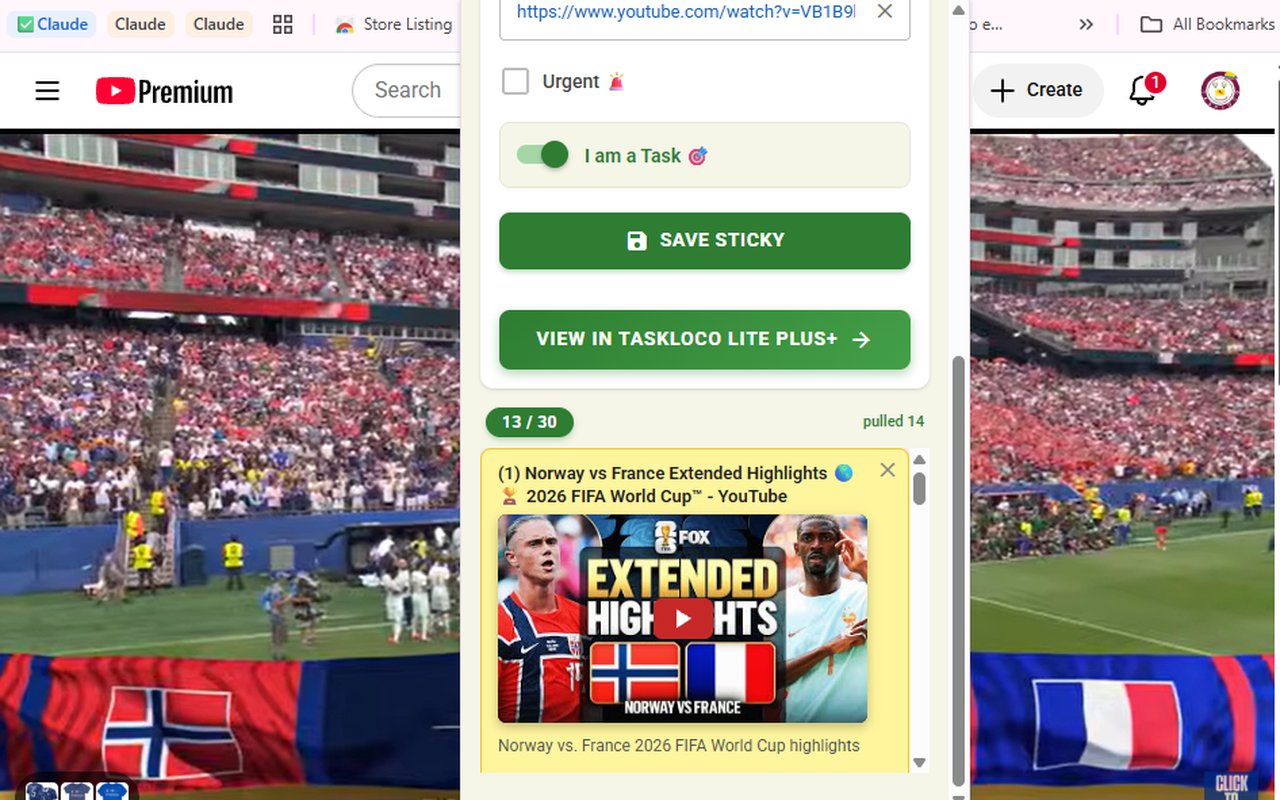
YouTube videos get special treatment: when you clip a YouTube URL, the video embeds directly inside the sticky note and plays from there. This is useful if you're collecting tutorials, talks, or video essays you intend to watch later — no separate playlist needed.
Tags and search mean your collection stays findable even as it grows. If you saved a dozen articles about a research topic last month, typing one keyword surfaces all of them. This is the part that makes the difference between a read-later system and a graveyard of forgotten links.
There's no paywall on the core save-and-sync workflow. You're not being nudged toward an upgrade every time you clip something. The extension does one thing well — gets the page into your collection fast — and the TaskLoco free tier handles the rest.
When a Paid Read-Later App Is Actually Worth It (And When It Isn't)
Paid read-later apps justify their cost for a specific type of reader: someone who processes very large volumes of content daily, wants full text archiving, uses advanced features like highlights and annotations across dozens of sources, and needs team-sharing across an organization. If that's your workflow, a paid tool might genuinely earn its subscription.
For everyone else — the person who wants to remember an article they found while commuting, save a YouTube video to watch tonight, or keep research links organized across a few projects — the free options cover it. The honest reality is that most people who pay for a read-later app use about fifteen percent of its features.
The real cost of a paid read-later app isn't the subscription. It's the mental overhead of managing yet another paid tool, the guilt when you don't use it enough to justify the fee, and the export problem if you ever want to leave. A free, lightweight clipper that syncs across your devices doesn't come with any of that baggage.
If you've tried paid read-later apps and found yourself not going back to them, the solution probably isn't a better paid app. It's a lower-friction free one. Install the Sticky Note Web Clipper, save three things today, and see whether the visual sticky note format makes you more likely to actually return to what you saved.
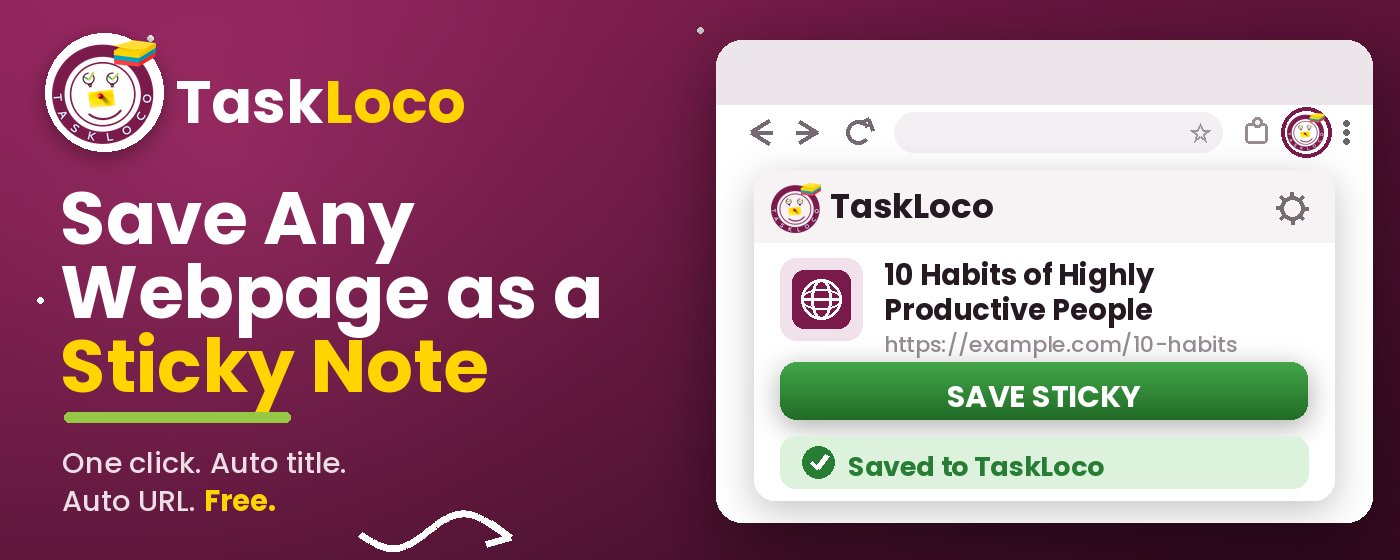
The Sticky Note Web Clipper is free. Install it from the Chrome Web Store, sign in with Google, and every page you clip becomes a sticky note you can find later.
Your clipped notes sync to TaskLoco across Chrome, desktop, iPhone, and Android — also free to start. No credit card to begin.
Get the Free Clipper
Sticky Note Web Clipper
- Free Chrome extension
- One-click save — any page, article, or video
- Title & URL auto-filled
- Tags & search
- Free forever
Synced to TaskLoco
- Sign in free with Google
- Your wall on Chrome, desktop, iPhone, Android
- YouTube videos embed & play in notes
- Visual sticky-note wall
- Free to start
Add It to Chrome — Free
One click saves any page, article, or YouTube video as a sticky note. Title and URL auto-filled.
Add to Chrome — FreeSee TaskLoco in Action
Frequently Asked Questions
Is the Sticky Note Web Clipper actually free?
Yes — the extension is completely free. Install it from the Chrome Web Store, sign in with Google, and start clipping immediately. TaskLoco, where your notes live and sync, also has a free tier. No credit card is required.
Can I save articles to read later without a subscription?
Absolutely. Browser bookmarks, a notes app, and free Chrome extensions like the Sticky Note Web Clipper all let you save articles without paying anything. The clipper is the fastest option — one click saves the page as a visual sticky note with the title and URL auto-filled.
What's the difference between saving a bookmark and using a web clipper?
A bookmark saves just the URL in a plain list. A web clipper like the Sticky Note Web Clipper saves the page as a visual card — with the title, URL, and any note you add — that syncs across your devices and stays searchable. The visual format makes it much easier to remember why you saved something and find it later.
Do saved notes sync to my phone?
Yes. Notes saved with the Sticky Note Web Clipper sync to TaskLoco, which is available on iPhone, Android, and desktop. Save something on Chrome at your desk and it appears on your phone when you're ready to read.
Can I save YouTube videos with the clipper?
Yes — and this is one of the most useful things about it. When you clip a YouTube video, it embeds directly inside the sticky note and plays from there. No separate playlist needed. Great for tutorials, talks, or any video you want to come back to.
How do I find articles I saved a long time ago?
The Sticky Note Web Clipper integrates with TaskLoco's tags and search. Add a tag when you save — a topic, a project name, anything — and later you can search or filter by it. Even without tags, the search bar finds notes by title or content, so old saves stay surfaceable.
Is there a limit to how many articles I can save for free?
The extension itself is free with no usage caps on clipping. TaskLoco has a free tier that covers the core save-and-sync workflow. Install the extension from the Chrome Web Store and sign in with Google to get started — no payment information needed.
Born in Brooklyn. Powered by AWS. Your data stays yours.
TaskLoco is available on iPhone, Android, Chrome, and every web browser.