You're mid-conversation, someone asks for that article you mentioned last week, and you have absolutely no idea where it went. It was a tab. Then it wasn't. That's the gap between finding something useful and actually being able to share it — and it's a gap that costs you credibility, time, and occasionally relationships.
Saving pages you intend to share isn't about hoarding links. It's about being the person who follows through. Whether it's a recipe, a news story, a product page, a research source, or a YouTube video you want your team to watch — saving it properly the moment you find it is what separates "I'll send it to you" from actually sending it.
The Real Problem With Saving Pages to Share
Most people rely on one of three broken methods: keeping a tab open indefinitely, copying a URL into a chat message to themselves, or dropping a link into a notes app buried under a hundred other items. Every one of these fails in a predictable way.
Open tabs evaporate the moment your browser crashes, your laptop restarts, or you accidentally swipe them away on mobile. They also give you zero context when you return — a row of favicons tells you nothing about why you saved something or who you meant to send it to.
Copy-pasting URLs into Slack or iMessage to yourself works until it doesn't — the link sits in a conversation you never re-read, sandwiched between grocery lists and calendar alerts. Retrieval is a nightmare.
Browser bookmarks are technically persistent, but they're also invisible. Bookmarks have no visual preview, no notes, no indication of urgency, and they don't sync well across devices unless you've carefully set that up. Most people's bookmark bar is a graveyard of links they've never returned to.
How to Actually Save a Page You Want to Share Later
Here's the method that works, regardless of what tool you use: save the page the instant you find it, not when you're ready to share it. Intention fades. The tab closes. The moment passes. Capture it immediately while the page is in front of you.
If you want to do this with no tools at all, your best bet is to copy the full URL and paste it into a dedicated note in your phone's default notes app — something with a title like "Links to Share" — along with a quick reminder of who you're saving it for. This works. It's not elegant, but it works if you're consistent.
- Step 1: Open the page in your browser.
- Step 2: Copy the URL from the address bar.
- Step 3: Open your notes app and paste into a running list, adding a one-line note about who it's for or why it matters.
- Step 4: When the conversation comes up, search your note, find the link, and send it.
The weakness here is that notes apps aren't built for link management. Search works until your list gets long. Visual context is zero. And if the person you want to share it with needs to watch a YouTube video, a raw URL in a notes app is three taps away from playing.
Why a Visual Clip Beats a Raw Link Every Time
When you're trying to share something with someone, context is everything. A bare URL — even to yourself — communicates nothing about why you saved it. A visual note with the page title, the URL, and optionally a few words of your own does three things a raw link never can: it jogs your memory instantly, it helps you find it fast, and it makes the handoff feel intentional rather than accidental.
This is exactly why sticky-note-style clipping works so well for the share-later use case. You see the headline. You remember why it mattered. You send it with confidence.
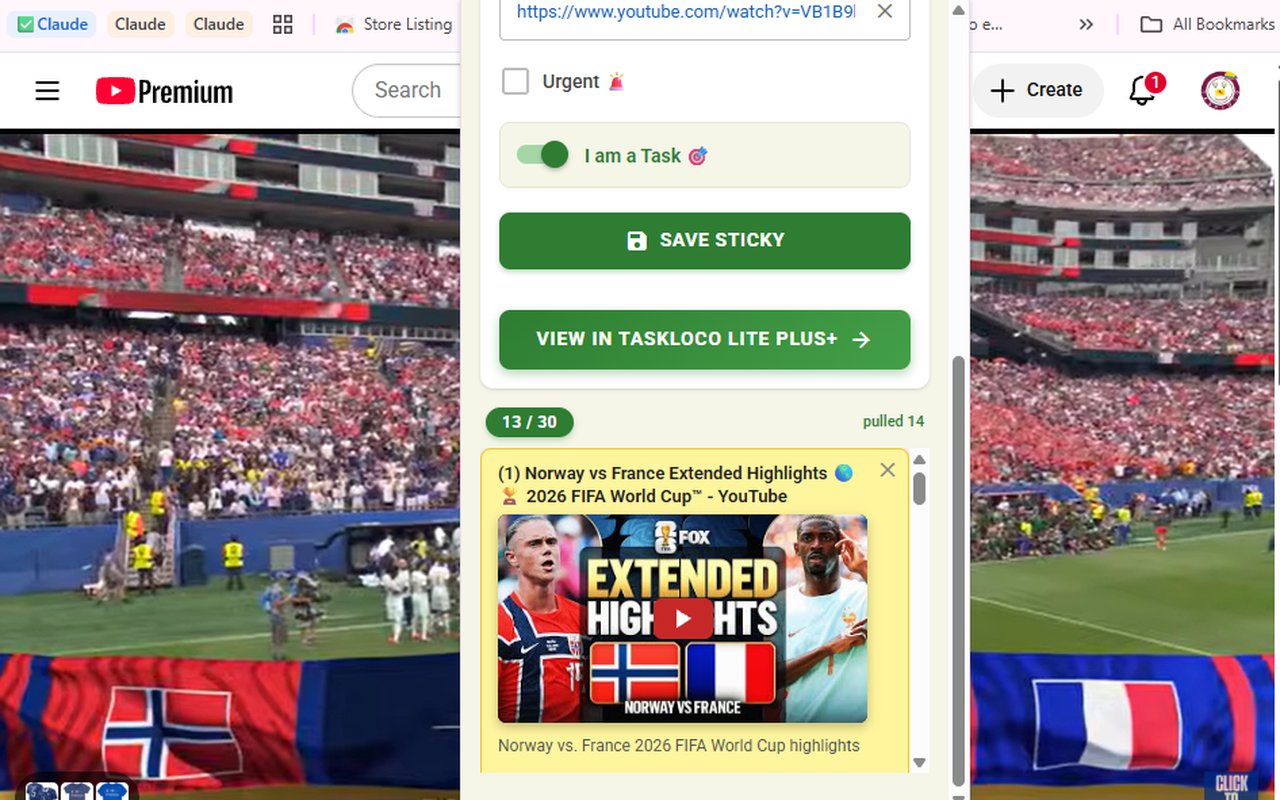
For YouTube videos specifically, a visual clip is a significant upgrade — because instead of sending someone a link they have to open separately, you can share the context of the clip and the video together. The person receiving it understands immediately what they're getting and why.
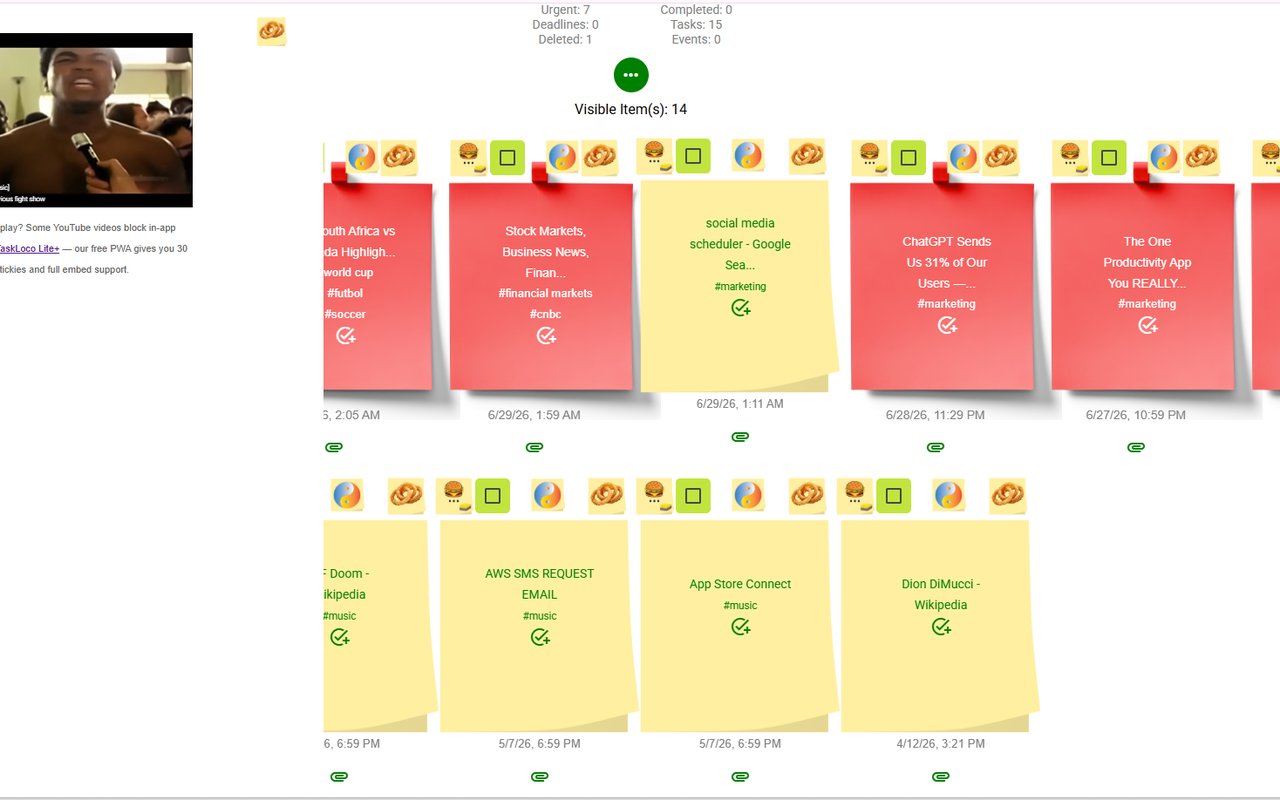
A browser extension that clips pages as visual notes also means your saved items are organized on a wall you can actually scan — not buried in a flat list or a folder hierarchy that takes four clicks to navigate. When someone says "hey, you mentioned an article about that" you want to be able to pull it up in ten seconds, not ten minutes.
One Tool That Makes This Effortless: Sticky Note Web Clipper
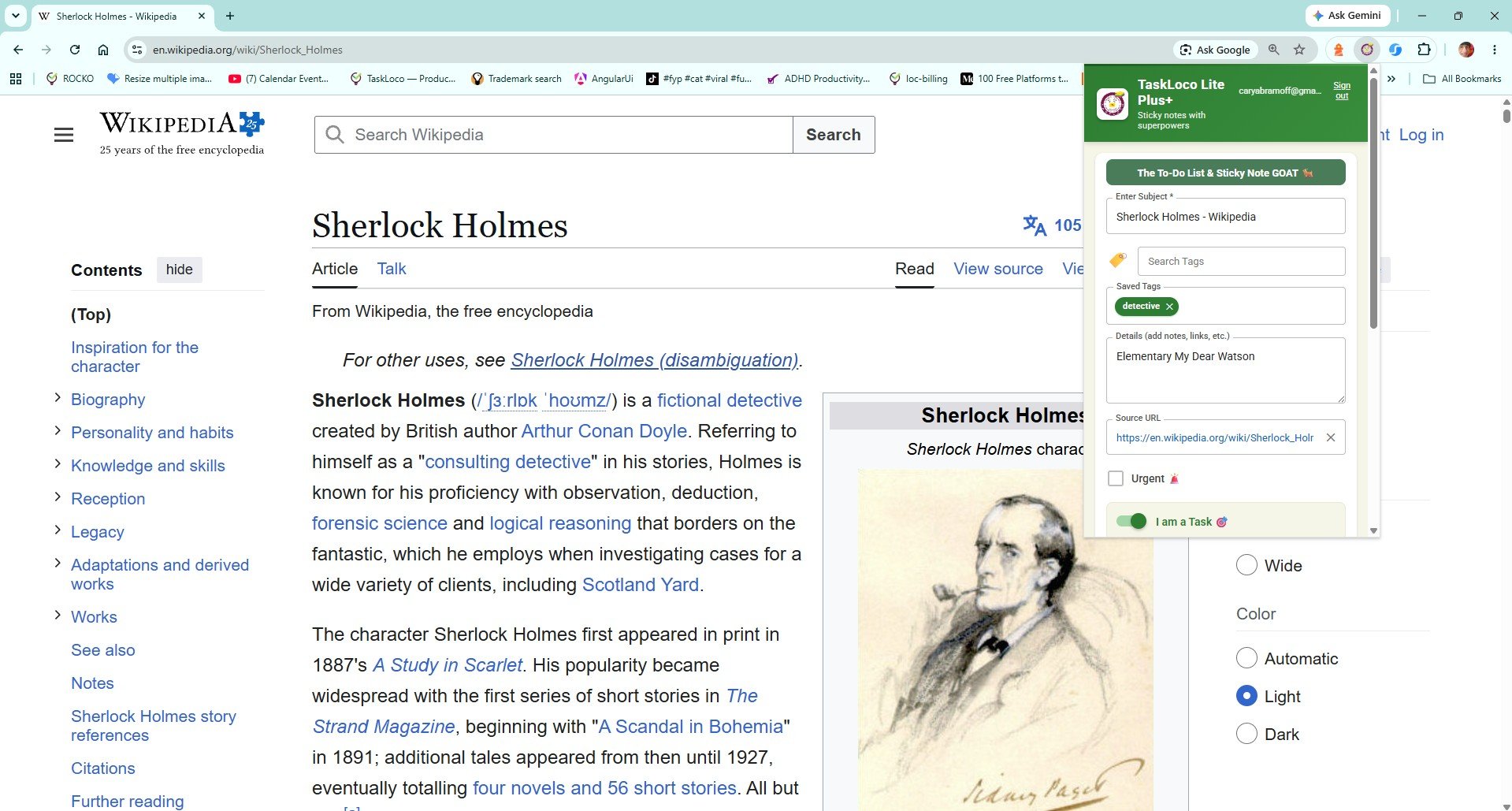
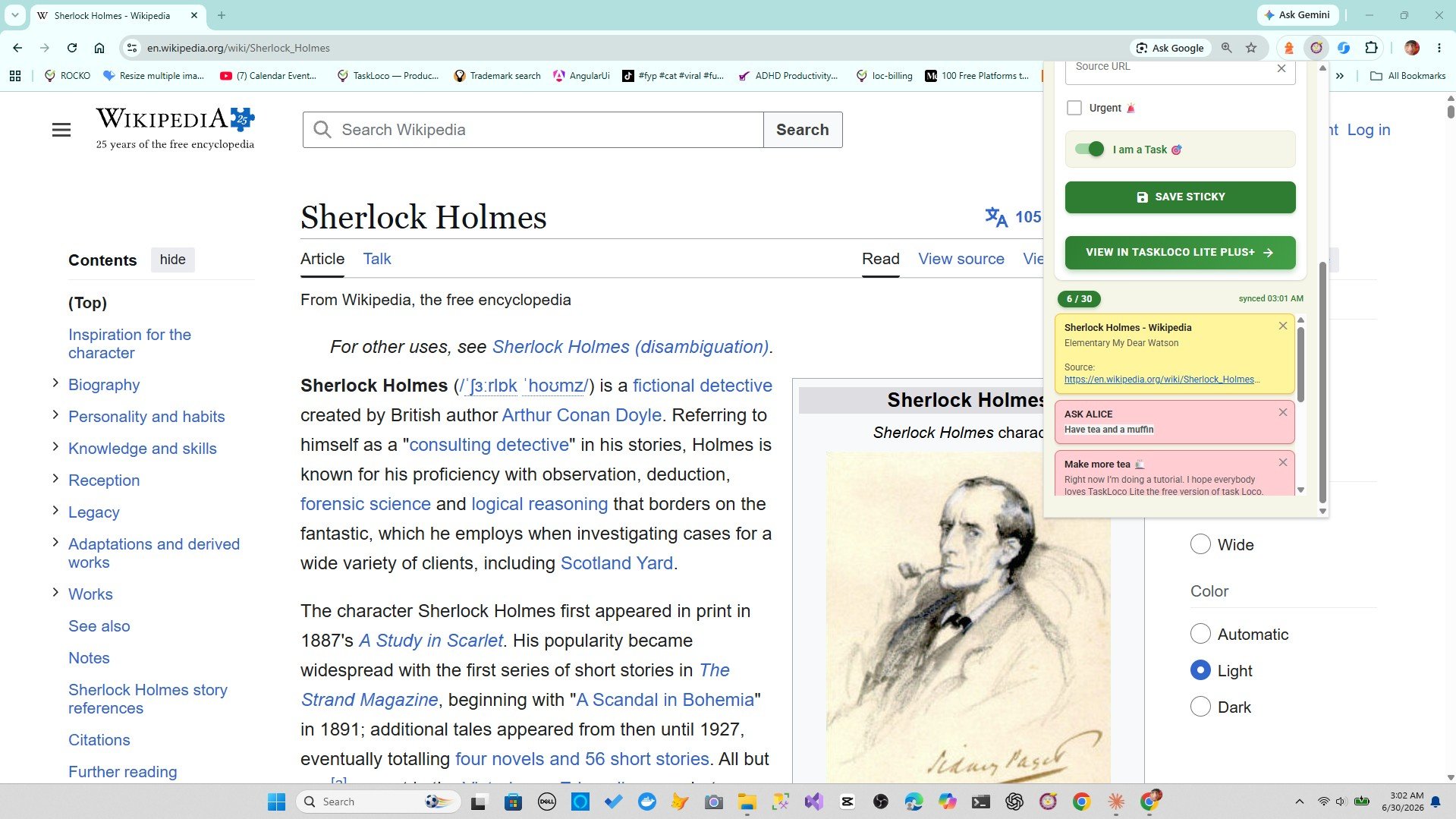
If you want a faster version of the save-now-share-later workflow, the Sticky Note Web Clipper is worth installing. It's a free Chrome extension from TaskLoco. You click its icon in the browser toolbar and the current page is instantly saved as a sticky note — title and URL already filled in — no copy-pasting, no switching apps, no extra steps.
The notes live in TaskLoco, which syncs across Chrome, desktop, iPhone, and Android. So the page you clip on your laptop is sitting in your wall when your phone is in your hand during the conversation where you need it. You search, find the note, and send the link — all without scrambling.
YouTube videos are a particular strong point: when you clip a YouTube page, the video embeds directly inside the note and plays there. That's useful for showing someone exactly what you found, not just sending them a link and hoping they understand the context.
Tags let you label clips by project, person, or topic — so if you regularly save things for a specific colleague or a recurring conversation, you can filter to those instantly. The extension is free, sign-in is with Google, and there's no setup beyond clicking "Add to Chrome."
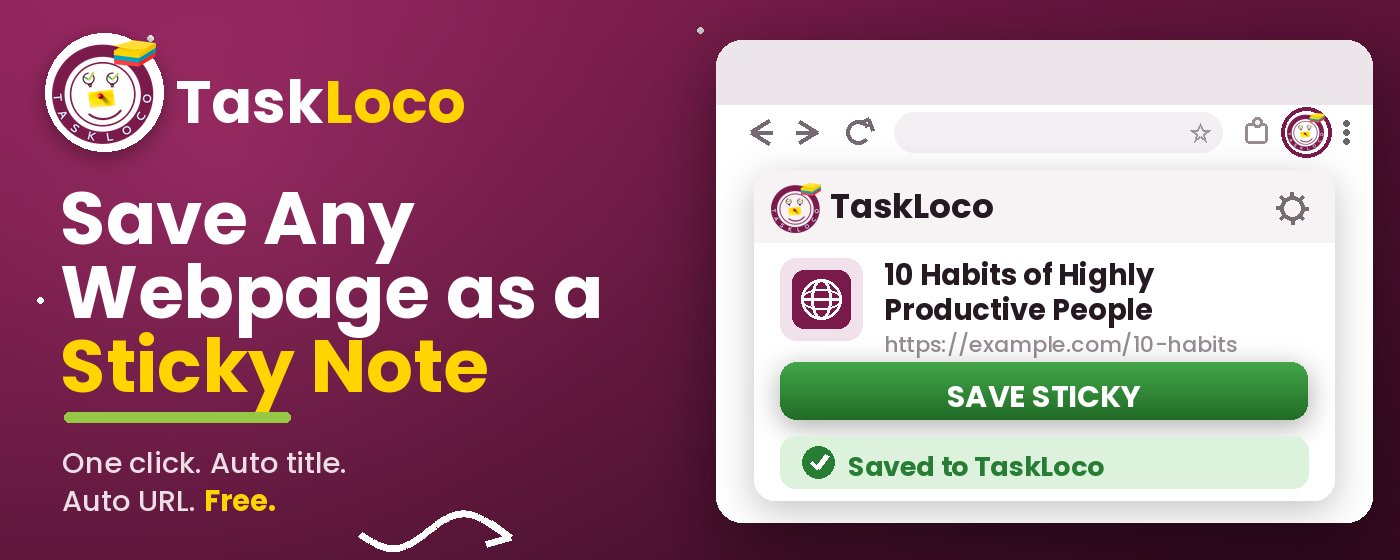
The Sticky Note Web Clipper is free. Install it from the Chrome Web Store, sign in with Google, and every page you clip becomes a sticky note you can find later.
Your clipped notes sync to TaskLoco across Chrome, desktop, iPhone, and Android — also free to start. No credit card to begin.
Get the Free Clipper
Sticky Note Web Clipper
- Free Chrome extension
- One-click save — any page, article, or video
- Title & URL auto-filled
- Tags & search
- Free forever
Synced to TaskLoco
- Sign in free with Google
- Your wall on Chrome, desktop, iPhone, Android
- YouTube videos embed & play in notes
- Visual sticky-note wall
- Free to start
Add It to Chrome — Free
One click saves any page, article, or YouTube video as a sticky note. Title and URL auto-filled.
Add to Chrome — FreeSee TaskLoco in Action
Frequently Asked Questions
What is the easiest way to save a web page to share with someone later?
The easiest method is to save the page the instant you find it, not when you're ready to share it. If you're in Chrome, the Sticky Note Web Clipper lets you do this in one click — the page title and URL are auto-filled into a visual sticky note that syncs to your phone. When the moment comes to share, you search, find the clip, and send the link.
Why don't browser bookmarks work well for pages I want to share?
Bookmarks are persistent but invisible. They have no visual preview, no context about why you saved something, and no easy way to see at a glance what you were planning to do with a link. When you're trying to recall something specifically to share with another person, a flat alphabetical bookmark list is a slow and unreliable retrieval system.
How do I save a YouTube video to share with someone later?
The Sticky Note Web Clipper handles YouTube especially well — when you clip a YouTube page, the video embeds directly inside the sticky note and plays right there. So instead of just saving a raw URL, you have a visual card that makes it obvious what the video is when you go to share it. One click while you're on the YouTube page is all it takes.
Is the Sticky Note Web Clipper free?
Yes — the extension is completely free. TaskLoco, where your notes sync, also has a free tier. You install it from the Chrome Web Store, sign in with Google, and start clipping immediately. No payment information required.
Will my saved pages be available on my phone when I need to share them?
Yes. Pages you clip in Chrome sync to TaskLoco, which is accessible on iPhone, Android, and desktop. So something you clip at your desk is available on your phone when you're in a meeting or a conversation and someone asks for that link you mentioned.
How do I find a page I saved if I have a lot of clips?
The Sticky Note Web Clipper supports search and tags inside TaskLoco. You can tag clips by person, project, or topic when you save them, then filter to find exactly what you're looking for. Search works across titles and URLs. Even without tags, scanning a visual wall of sticky notes is considerably faster than digging through a flat list of browser bookmarks or a notes app full of raw URLs.
What if I forget to save a page and lose the tab?
That's the scenario the one-click clipper is designed to prevent. The habit shift is simple: the moment a page catches your attention as something you'll want to share, clip it before you move on. One click while the tab is open takes less than a second. Reconstructing a lost link from memory can take twenty minutes — or never happen at all.
Born in Brooklyn. Powered by AWS. Your data stays yours.
TaskLoco is available on iPhone, Android, Chrome, and every web browser.