You found the perfect weeknight pasta recipe at 7am, a great batch-cooking article on your lunch break, and a YouTube video on knife skills before bed. By the time Sunday meal-prep arrives, you can't find any of them. That is the real meal-planning problem — not planning itself, but the scattered saving.
This guide covers the practical methods for collecting recipes and articles as you browse, how to organize them so you actually use them, and how a one-click browser clipper makes the whole system effortless. No expensive apps required, no elaborate folders to maintain — just a fast, reliable way to go from "I want to make that" to a real plan on the table.
The Real Problem With Saving Recipes While You Browse
Most people do one of three things when they spot a recipe they like: open a new tab and leave it, smash the bookmark button and forget where it went, or screenshot it on their phone and never find it again. All three methods work in the moment and fail within days.
Browser bookmarks are the worst offender for this particular habit. There is no visual thumbnail, no quick-glance reminder of what the recipe actually was, and to the article you saved alongside it about seasonal vegetables or a cheap protein swap. A bookmark named "Chicken Thighs – Simply Recipes" tells you almost nothing when you're staring at forty bookmarks trying to build a shopping list.
Open tabs carry their own tax. Every recipe you leave open slows your browser and creates low-grade mental pressure — those tabs are a to-do list you never formally made. When you close the browser or restart the machine, they're gone.
What you actually need is something between a bookmark and a note — something that saves the page and gives you a visual anchor, so you remember at a glance why you saved it and what you planned to do with it.
How to Build a Workable Meal-Planning Save System
A good meal-planning save system has three properties: it has to be fast enough that you actually use it mid-browse, it has to be visual enough that you can scan your saved items and immediately know what they are, and it has to be accessible from your phone when you're standing in a grocery aisle.
Step 1 — Capture as you go, not at the end. The moment you think "I want to make that this week," save it. Waiting until you "have time to organize" means the tab is gone and the intention is forgotten. A one-click toolbar clipper removes every excuse not to save immediately.
Step 2 — Group by week or theme, not by cuisine. Most meal-planning advice suggests organizing by recipe type (soups, mains, sides), but for practical weekly planning, grouping by intended week or theme — "this week," "next week," "quick weeknights" — makes it far easier to turn a collection of saved pages into an actual shopping list. Tags work perfectly here.
Step 3 — Save the supporting articles too. Recipes rarely exist alone. You might save a recipe alongside a piece about batch-cooking grains, a video on efficient freezer use, or a guide to substituting ingredients for dietary restrictions. Saving these together in the same place — not in separate apps — means your meal plan has context, not just a list of dishes.
Step 4 — Review on your phone, not just your laptop. Meal planning happens in kitchens and grocery stores, not just at desks. Whatever you save while browsing on your laptop needs to be on your phone without any manual transfer. Cloud sync is non-negotiable for this to work in practice.
Saving YouTube Cooking Videos Is Part of the Plan Too
Recipe videos are genuinely useful — technique is easier to learn by watching than reading — but they are particularly bad at surviving in a browser. A YouTube link saved as a bookmark is just a blue line of text. You won't remember whether it was the slow-cooker chili video or the sheet-pan salmon one until you click it and watch thirty seconds of it again.
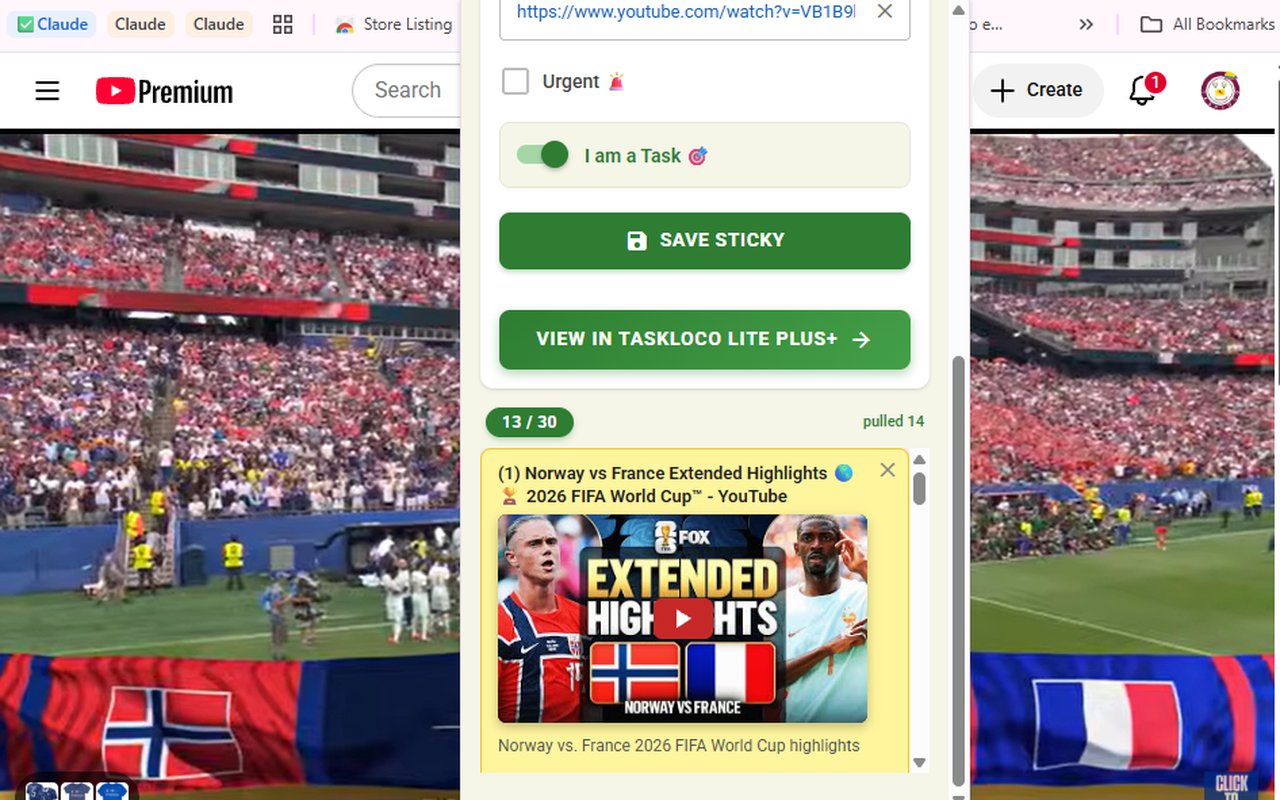
This is where saving YouTube videos as visual notes pays off in a specific way. When a YouTube page is clipped, the video embeds directly inside the note and plays right there — you don't have to navigate back to YouTube, search for it again, or remember the channel name. Your cooking video collection becomes a watchable shelf, not a list of indistinguishable links.
For meal planning specifically, this means you can clip a recipe page and the technique video that goes with it, keep them in the same workspace, and have both ready when you're standing in the kitchen on a Sunday afternoon. That's a meaningful time-saver when you're already elbow-deep in prep.
One-Click Saving With the Sticky Note Web Clipper
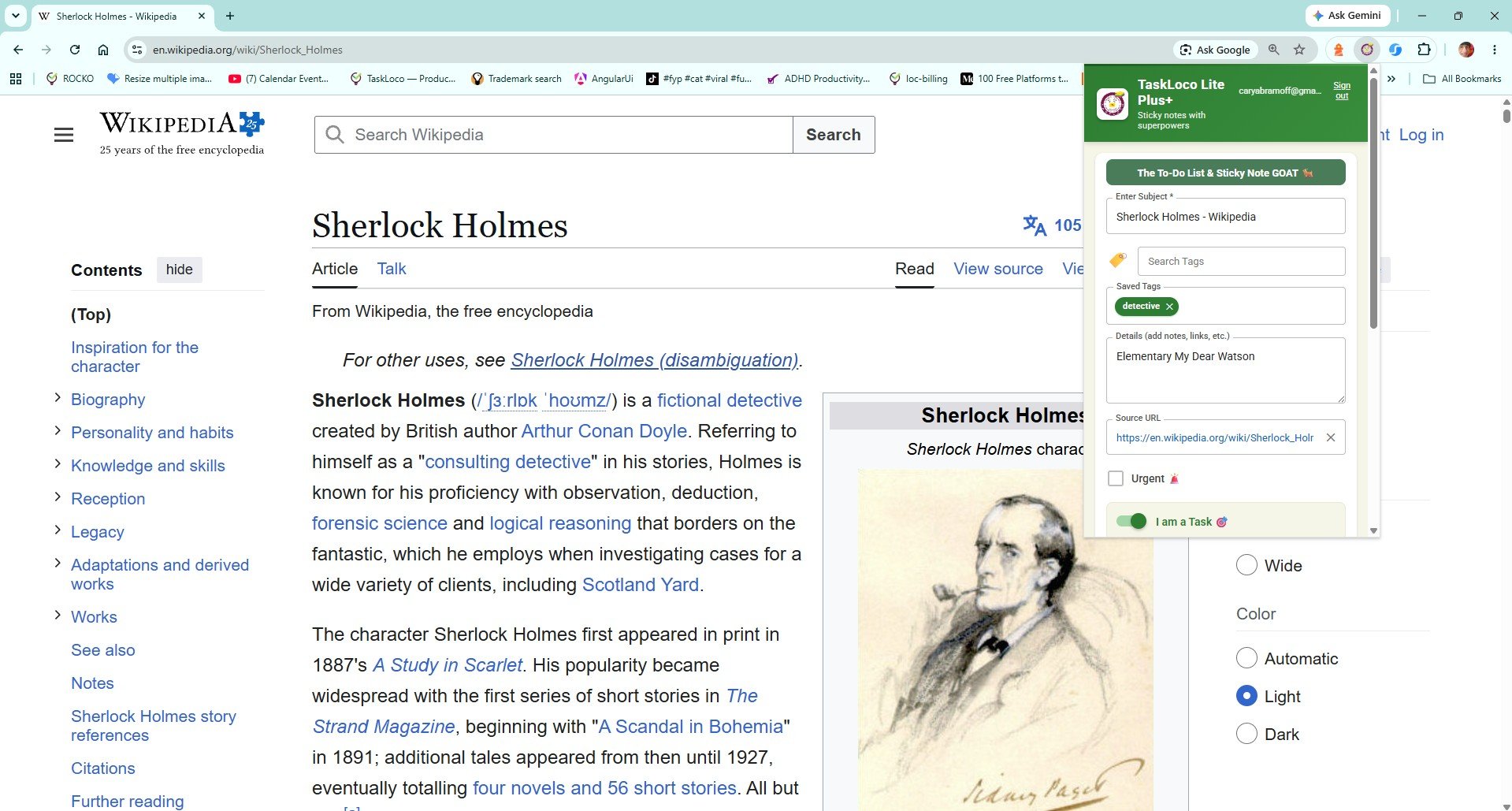
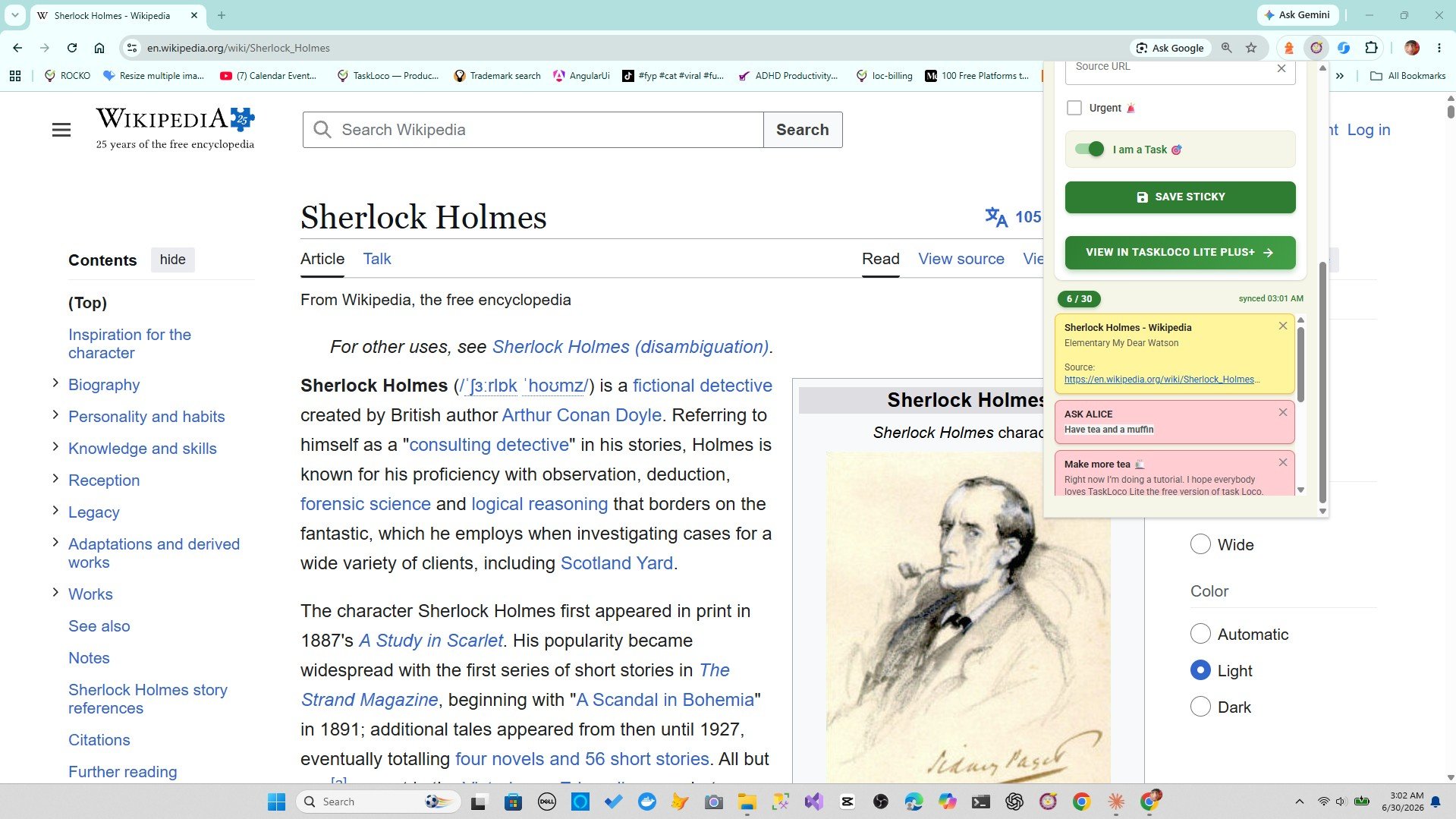
The Sticky Note Web Clipper is a free Chrome extension by TaskLoco. When you're on any recipe page, article, or YouTube video, you click the toolbar icon once — the page is saved as a visual sticky note with the title and URL already filled in. There is nothing to copy, nothing to paste, and no form to fill out. It takes about one second.
Each saved note lives on your TaskLoco wall, which you can access from your phone and desktop. So a recipe you clip on your laptop Monday morning is waiting for you on your iPhone when you're at the grocery store Wednesday evening. No emailing yourself links, no AirDrop, no texting yourself reminders.
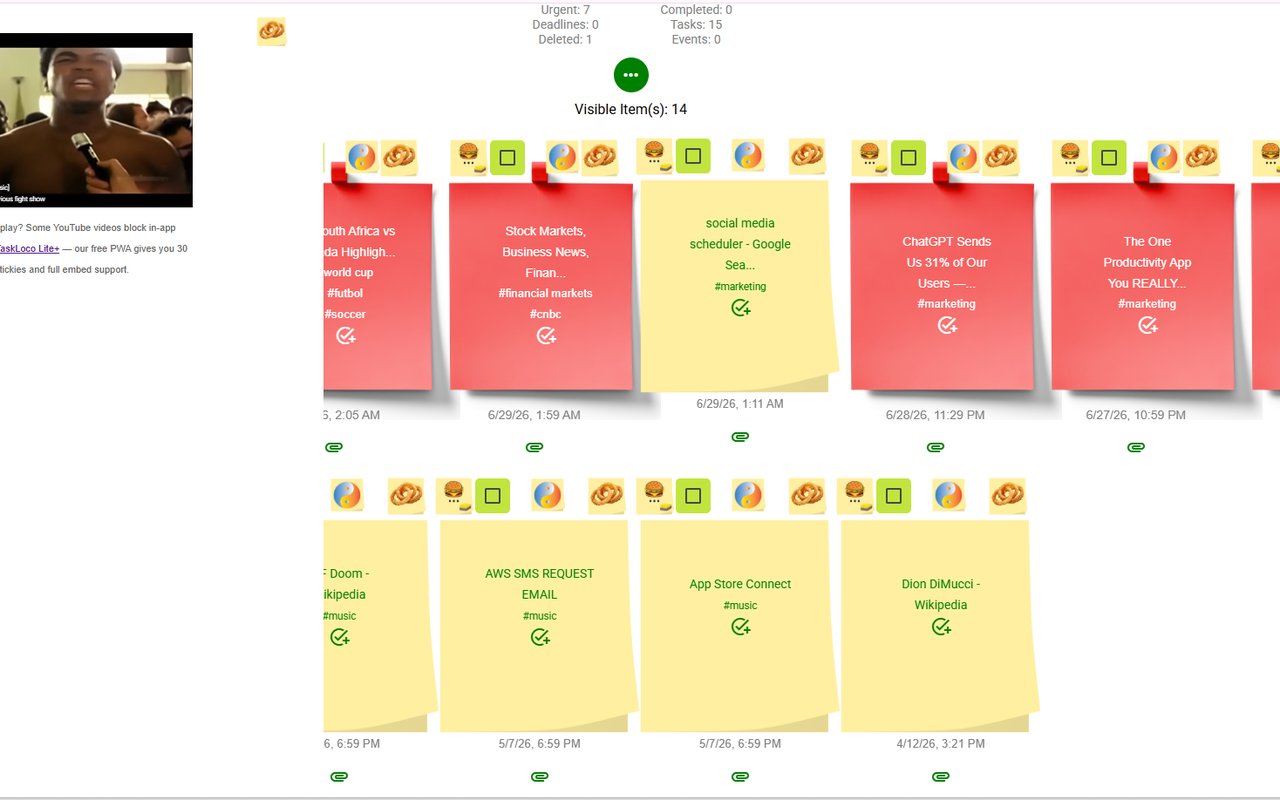
Tags let you sort your saved items into groups — "this week," "sheet pan," "freezer meals," "30-minute" — and search lets you find anything instantly even if you saved dozens of items. The visual card layout means you can scan your whole plan at once, not scroll through an undifferentiated list of blue links.
If you've been losing good recipes to forgotten tabs and buried bookmarks, the fix is simple: add the Sticky Note Web Clipper to Chrome, sign in free with Google, and start clipping every page worth keeping. Your meal plans will be there when you need them.
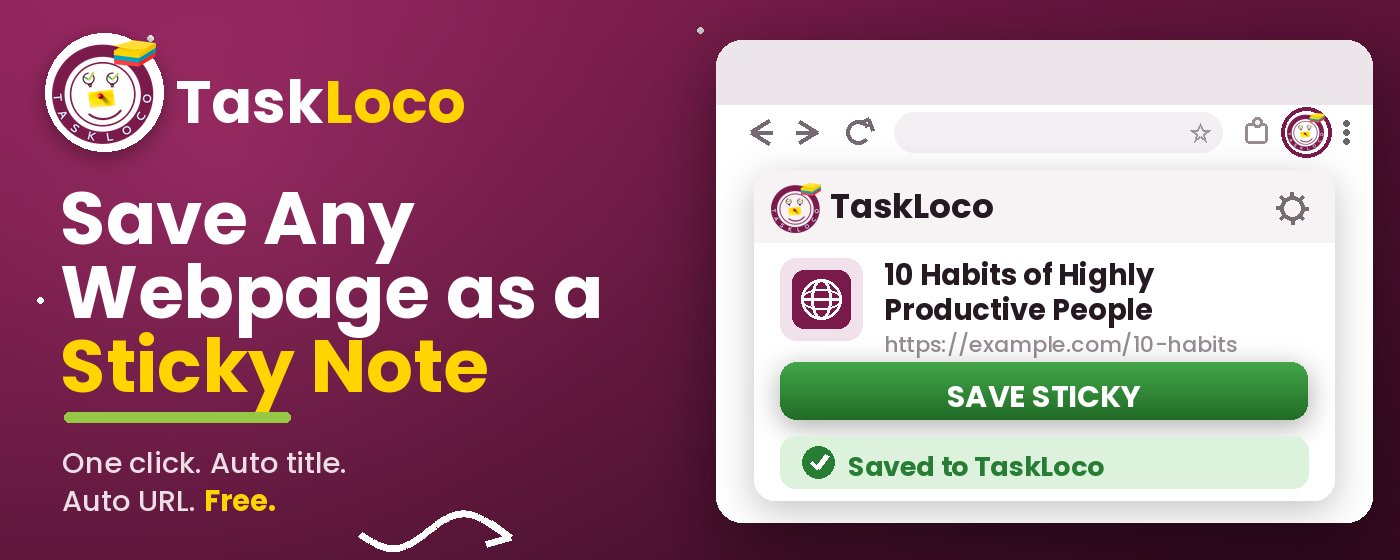
The Sticky Note Web Clipper is free. Install it from the Chrome Web Store, sign in with Google, and every page you clip becomes a sticky note you can find later.
Your clipped notes sync to TaskLoco across Chrome, desktop, iPhone, and Android — also free to start. No credit card to begin.
Get the Free Clipper
Sticky Note Web Clipper
- Free Chrome extension
- One-click save — any page, article, or video
- Title & URL auto-filled
- Tags & search
- Free forever
Synced to TaskLoco
- Sign in free with Google
- Your wall on Chrome, desktop, iPhone, Android
- YouTube videos embed & play in notes
- Visual sticky-note wall
- Free to start
Add It to Chrome — Free
One click saves any page, article, or YouTube video as a sticky note. Title and URL auto-filled.
Add to Chrome — FreeSee TaskLoco in Action
Frequently Asked Questions
What is the best way to save recipes while browsing?
The most reliable method is to save recipes the moment you see them, using a tool that keeps the title, URL, and any visual context attached. The free Sticky Note Web Clipper for Chrome does this in one click — the page becomes a sticky note with the title and URL auto-filled, ready to find later without digging through bookmarks.
How do I save a recipe from any website to use later?
With the Sticky Note Web Clipper installed in Chrome, you just click the toolbar icon while you're on the recipe page. The note is created instantly with the page title and URL already in it. You can add a tag like "this week" or "dinner" to keep things organized, then access everything from your phone or desktop when it's time to cook or shop.
Can I save YouTube cooking videos along with recipes?
Yes. When you clip a YouTube video with the Sticky Note Web Clipper, the video embeds directly inside the note and plays there — you don't have to navigate back to YouTube to watch it. This makes it easy to keep a technique video alongside the recipe page it goes with, all in one place.
How do I organize saved recipes for weekly meal planning?
Tags are the most practical way to organize saved recipes for meal planning. Instead of rigid folders by cuisine, try tags like "this week," "next week," "quick," or "batch cook." That way you can build your weekly plan by pulling from a tagged group rather than scrolling through everything you've ever saved. The search function lets you find anything instantly when tags aren't enough.
How do I access saved recipes on my phone?
When you save a recipe using the Sticky Note Web Clipper, it syncs automatically to TaskLoco. You can open TaskLoco on your iPhone or Android device and all your saved notes — including recipe pages and articles — are there without any manual transfer. This is especially useful at the grocery store when you need the recipe in hand.
Is the Sticky Note Web Clipper free?
Yes — the extension is completely free. Install it from the Chrome Web Store, sign in with Google at no cost, and start clipping recipes and articles immediately. TaskLoco, where your notes live and sync, also has a free tier to get you started.
Why not just use browser bookmarks to save recipes?
Browser bookmarks save the URL but give you almost no visual context — a folder of forty recipe bookmarks all look identical until you click each one. There's no thumbnail, no note you can add, and no easy way to sync them to your phone for grocery shopping. A sticky note clipper keeps each saved recipe as a visual card you can scan at a glance, tagged and searchable, and available on any device.
Born in Brooklyn. Powered by AWS. Your data stays yours.
TaskLoco is available on iPhone, Android, Chrome, and every web browser.